
ARCHIVE


ABOUT DOPAMINE
Dopamine is a neurotransmitter that is critical for mental health. Dopamine plays a role in many important behavioral and physical functions, including motivation, learning, mood, attention, movement, sleep, and more. Often referred to as a “feel good” neurochemical, dopamine works in myriad ways and is an essential component of your brain’s reward system and pleasure centers. The brain’s reward pathways include structures such as:- Ventral tegmental area (VTA)
- Nucleus accumbens
- Caudate nucleus (part of the basal ganglia)
- Substantia nigra
WHAT IS A DOPAMINE DETOX?
Several years ago, Dr. Cameron Sepah, a researcher and psychiatrist from the University of California, San Francisco, coined the term dopamine detox. The catchy name is a bit of a misnomer though, because a dopamine detox is actually not about detoxing from dopamine, because it is essential for our brains. It focuses on curbing or abstaining from the impulsive and/or addictive behaviors and activities that trigger a large surge or dump of dopamine in the brain’s pleasure centers, and focusing instead on healthy habits. The concept of a dopamine detox is rooted in cognitive behavioral therapy (CBT), according to scientific studies. Dopamine fasting is also focused on breaking the classic conditioning response that drives an individual to engage in excessive behaviors. This might mean a dopamine-fasting individual allows themselves to feel uncomfortable, bored, or even feel lonely. They may choose simple activities rather than going for the high-octane ones that deliver a dysregulating dopamine dump. Ultimately, it’s aimed at targeting problematic habits, and restoring some level of control over behaviors that bring pleasure. Amen Clinics similarly interprets a dopamine detox to mean limiting unhealthy behaviors and activities that dramatically increase dopamine or “dump” dopamine (i.e. nonstop screen time), while cultivating behaviors and activities that “drip” dopamine moderately and make you feel good over the long haul.HOW TO DOPAMINE DETOX
You can experience the brain health benefits of dopamine detoxes by abstaining from the technology or behavior that is dumping an overload of dopamine into your brain’s reward centers. Do it for a few hours, a full day, a weekend, or an entire week. Simply take a break from the intense stimulation and give your brain’s pleasure centers a chance to reset and recalibrate to a higher sensitivity. That way, you can gain control of your behaviors and not need as much dopamine to feel good. Natural, sustaining rewards such as conversation with a loved one, taking a walk in nature, reading an insightful spiritual passage, or playing a piece of music will likely be satisfying again. These are dopamine-balancing activities as they “drip” dopamine moderately and provide a more sustainable feeling of well-being. To moderate the effects of technology, consider taking mini-breaks during the day. Just 15 minutes of a digital detox can be good for your brain. Consider making tech off limits in some of your rooms so you can unplug on a regular basis.DOPAMINE-DUMPING ACTIVITIES TO LIMIT
Here are a number of so called “pleasurable activities” (they actually hurt you!) and compulsive behaviors to limit:- Consuming high-fat/high-sugar food combinations
- Alcohol and substance use
- Online porn
- Consuming caffeine
- Playing video games
- Watching TikTok
- Thrill seeking (skydiving, motorcycle racing, heli-skiing, running with bulls, etc.)
- Gambling
- Shopping
- Getting into relationships for the “falling in love” feeling
DOPAMINE-DRIPPING ACTIVITIES TO PRACTICE
In addition to avoiding dopamine-dumping activities, embrace new behaviors and healthy activities that drip dopamine. Dopamine producing activities that promote healthy dopamine production and enhance the brain’s pleasure centers without wearing them out include:- Regularly engage in exercise
- Begin every day by thinking of 3 things you’re grateful for
- Savor quiet pleasure that comes from simple things in your life (picking flowers from the garden, holding hands with your significant other, attending an inspiring lecture, or cooking a delicious meal)
- Spending time in nature often
- Meditate
- Make time to laugh with friends or watching a humorous show
- Bring together meaningful activities and pleasure, such as volunteering for activities you love
- Drawing or painting
- Playing with your pet
- Yoga
- Hugging
- Spending time with loved ones
- Listening to pleasurable music
WHAT IS ADHD?
Attention-deficit disorder (ADD), more commonly called attention-deficit/hyperactivity disorder (ADHD), is a neurodevelopmental disorder characterized by attention issues, impulse-control problems, and hyperactivity (in some cases). Come people who are diagnosed with ADD/ADHD in childhood continue struggle from symptoms as an adult. The brain-imaging work using SPECT scans at Amen Clinics show that ADD/ADHD is not a singular condition. To date, Amen Clinics has identified 7 different brain patterns associated with ADD/ADHD. Each type has its own set of symptoms, and each type requires a targeted treatment plan.WHAT IS OVER-FOCUSED ADHD?
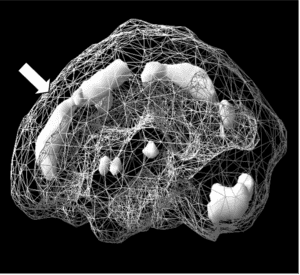
Based on the patients at Amen Clinics, over-focused ADD/ADHD is the third most common type of the condition. Basically, people with this type can have difficulty shifting their attention. They become hyper-focused on one thing while tuning out everything else. Individuals with over-focused ADD/ADHD have troubles with cognitive processing. They aren’t inattentive, rather, they are over-attentive. People with over-focused ADHD tend to get “stuck” in negative thought patterns and behaviors. In addition, they can be argumentative or oppositional. And they may have outbursts when things don’t go a certain way. In some cases, this form of the neuropsychiatric disorder has been mistaken for obsessive-compulsive disorder (OCD). A pivotal difference between the two conditions is impulsivity. People with OCD typically aren’t impulsive, whereas those with over-focused ADD/ADHD tend to make more impulsive decisions. Another common trait among those with this type of the condition is having a substance use disorder. It is also more likely to be found in the children and grandchildren of alcoholics.HALLMARK SYMPTOMS OF ADHD
The SPECT scans and clinical work at Amen Clinics shows that each ADHD subtype has unique symptoms. However, the following symptoms can be seen in all of the 7 ADHD types:- Inattention
- Easily distracted
- Procrastination
- Forgetfulness
- Problems with follow-through
- Impulse-control issues
- Disorganization
OVER-FOCUSED ADHD SYMPTOMS
In addition to the hallmark symptoms mentioned above, the unique characteristics of over-focused ADD/ADHD include:- Excessive worry
- Argumentative and oppositional
- Struggle to see options
- Get locked into negative thinking patterns
- Tendency to hold grudges
- Obsessive and inflexible thinking
- Tendency toward compulsive behaviors
- Obsessive organization
- Hold onto their own opinion without listening to others
- Can get locked into a course of action (even when it doesn’t serve you)
- Must have things done in a specific way
- May or may not be hyperactive
Over-Focused ADD SPECT Scan During Concentration
OVER-FOCUSED ADHD TREATMENT
Strategies that can help manage the symptoms of over-focused ADD/ADHD include the following:- Boost serotonin and dopamine levels.
- Focus on complex carbohydrates.
- Ensure quality sleep.
- Use the 3-thought cutoff.
- Review goals daily.
- Take targeted supplements.
- Get a personalized treatment plan.
- Do you have adult ADD?
- What is your ADD type?
WHAT IS ADULT ADHD?
ADD/ADHD is a disorder that affects brain development. It typically begins in childhood and can persist into adulthood. It is associated with a short attention span and behavior issues that can interfere with school, work, and relationships. It is estimated that 4.4% of American adults currently have ADD/ADHD, but experts suggest the condition is underreported in adults, so the number could be much higher. This indicates that many adults are likely unaware that they have the condition and remain untreated. Having undiagnosed ADHD or untreated ADHD can lead to consequences that lower your quality of life and can keep you from reaching your potential.ADULT ADD AND THE BRAIN
Individuals with ADD/ADHD are considered “neurodivergent.” Simply, this means their brains work differently than the brains of people who are “neurotypical.” A person who is neurotypical has healthy brain function. The brain-imaging work using SPECT scans at Amen Clinics shows that children and adults with ADD/ADHD typically have low activity in an area of the brain called the prefrontal cortex (PFC). In particular, activity in the PFC decreases when people with the condition try to concentrate. This is the opposite of what occurs in neurotypical individuals. In the healthy brain, concentration increases activity levels in the PFC.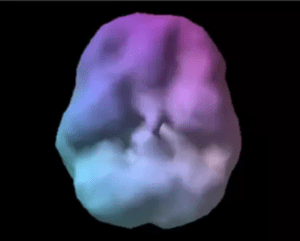 Healthy SPECT Scan
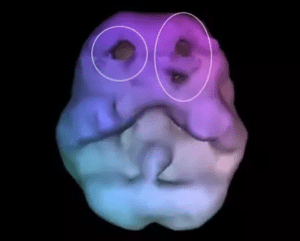 ADD/ADHD SPECT Scan
In the ADD/ADHD SPECT scan here, the “holes” indicate areas of low blood flow and activity in the prefrontal cortex.
The PFC is responsible for planning, judgment, organization, follow-through, impulse control, empathy, and more. These are known as executive functions. When there is low activity in the PFC, people tend to have trouble with these functions.
ADD/ADHD SPECT Scan
In the ADD/ADHD SPECT scan here, the “holes” indicate areas of low blood flow and activity in the prefrontal cortex.
The PFC is responsible for planning, judgment, organization, follow-through, impulse control, empathy, and more. These are known as executive functions. When there is low activity in the PFC, people tend to have trouble with these functions.
10 ADULT ADHD SYMPTOMS
Adults with ADD/ADHD may experience a wide range of emotional and behavioral symptoms, including the following. 1. Having a short attention span A lack of focus is one of the hallmark symptoms of ADD/ADHD. In adults, this can include having a hard time with routine tasks, not paying attention to details, making careless mistakes, and having trouble staying focused in conversations. If you have this brain-based disorder, you may start a lot of things but have difficulty completing them. Having a slew of unfinished projects lying around is a sign of adult ADD/ADHD. 2. Being disorganized Adults with ADD/ADHD often have trouble keeping things organized. At work, you might have a hard time finding what you need to finish a task because your desk is messy, your computer files are scattered randomly, and your emails are unorganized. This can make projects seem more challenging and take longer to complete. Disorganization also includes have trouble prioritizing assignments and keeping track of them. When you aren’t sure which task to tackle first, it can lead to procrastination. 3. Being easily distracted Having adult ADD/ADHD makes you more likely to notice more things in your environment compared to others. This means you can be easily distracted by external stimuli, including sounds, lights, scents, touch, or some tastes. For example, you may be overly aware of a tag in the back of your shirt, a flickering light, or a beeping noise. This acute sensitivity can prevent you from focusing on an important task at hand. 4. Having poor internal supervision Many people with ADD struggle with impulse control and judgment. You may say or do things reflexively without thinking about the consequences of your actions. This can lead to problems at work, at home, and in relationships. Another one of the common signs of adult ADHD is having a hard time learning from your mistakes. Making the same errors over and over is an indicator that you might have this condition. 5. Procrastinating and being chronically late Individuals with ADD/ADHD often have trouble with time management. You may put things off until the last minute. For example, you may wait until the night before a project is due to start working on it. ADHD adults are also notorious for being late for everything. Showing up 15 minutes, 30 minutes, or an hour late for work, appointments, and events is a red flag. 6. Being hyper focused Surprisingly, research shows that many adults with ADD/ADHD can achieve laser-like focus for certain things. In general, hyperfocus is more likely to occur when a person engages in something that they love to do or in things that are highly stimulating, frightening, fun, or novel. When hyperfocused, people become completely absorbed in an activity and tune out everything else. In these instances, you may not notice external stimuli, such as your spouse asking you a question, the doorbell ringing, or your dog barking because they need to go outside. 7. Being forgetful Forgetfulness is common in ADD/ADHD and can become a major issue on the job and in relationships. People with this condition often forget birthdays, anniversaries, and deadlines. You may leave your work materials at home or forget that it’s your day to pick up your child after school. In some cases, forgetfulness may be related to distractibility. If you aren’t paying attention to what someone is saying to you, it’s going to be harder to remember what they said. 8. Lacking motivation Some types of ADD/ADHD are associated with low levels of the neurotransmitter dopamine, which is heavily involved in motivation. Because of this, adults with this disorder may feel unmotivated. This can hold you back in your career and in other areas of your life. 9. Low self-esteem Self-doubt and a lack of confidence are common in people with ADD/ADHD. In part, this may come from growing up with people talking about you in a negative way due to your symptoms. Many ADHD types grow up hearing people say that they are “lazy,” “dumb,” or “troublemakers.” These hurtful comments can have lasting repercussions on a person’s self-image. 10. Misusing substances Adults with ADD/ADHD are at a greater risk for substance use disorders compared with people who don’t have the condition, according to research. If you turn to alcohol, marijuana, nicotine, or other substances to self-medicate or to improve focus, it’s a problem.SEEKING AN ADULT ADHD DIAGNOSIS
Adults who suspect they may have the condition often wait to seek help. At Amen Clinics, which has helped tens of thousands of mental health patients over the past 30-plus years, adults typically don’t get diagnosed with ADD until they are experiencing the following:- Concerns about a child with ADD/ADHD: Most adult patients at Amen Clinics are only diagnosed with ADHD after they bring in one of their children for an evaluation. During a thorough history, the child psychiatrists at Amen Clinics always ask about family history. Through these questions, many parents discover that they have the same symptoms of ADD/ADHD as their children.
- Poor work performance: Adults may wait to seek an evaluation until they’re having problems at work. They may be passed over for promotions, demoted, or at risk of getting fired.
- Emotional, cognitive, or behavioral issues: Many people seek help only after they have been suffering from problems, such as moodiness, chronic anxiety, restlessness, addictions, uncontrolled anger, marital problems, financial problems, or impulse control problems.
TAKE THE ADHD QUIZ
Take Dr. Amen’s simple, confidential 4-minute ADD quiz . This will help you discover if you potentially have the condition. In addition, the brain-imaging work at Amen Clinics has helped identify 7 types of ADD/ADHD. Taking this quiz can help you determine if you may be struggling with one of these types.ADULT ADHD TREATMENT
If you are diagnosed with ADD/ADHD, be aware that in some cases, treatment may require medication. However, many people see improvement with natural treatments for ADD/ADHD. ADD/ADHD and other mental health issues can’t wait. At Amen Clinics, we’re here for you. We offer in-clinic brain scanning and appointments, as well as mental telehealth, clinical evaluations, and therapy for adults, teens, children, and couples. Find out more by speaking to a specialist today at 888-288-9834 or visit our contact page here. This post has been updated since its original publication date. If you think attention-deficit disorder (ADD), or attention-deficit/hyperactivity disorder (ADHD) as it is more commonly called, is just one thing, you’re wrong! The brain-imaging work at Amen Clinics—over 300,000 SPECT scans—shows that it is not a single or simple disorder. In fact, there are 7 types of ADD/ADHD. Each type has a unique set of symptoms that requires a personalized treatment plan. Knowing your type or your child’s type can help you find the most effective treatment to manage symptoms. The brain-imaging work using SPECT scans at Amen Clinics shows that there are 7 types of ADD/ADHD and each has a unique set of symptoms that requires a customized treatment plan. In this 7-part blog series, you’ll discover the basics about each of the ADD/ADHD types, their unique symptoms, SPECT scan findings, and science-backed interventions.WHAT IS CLASSIC ADHD?
Classic ADD is often referred to as ADHD. The “H” is for hyperactivity and is one of the more notable symptoms of this type. Classic ADD/ADHD is the most common diagnosis of the 7 types and is the easiest to recognize. That’s because hyperactivity is one of the more notable symptoms of this type. The hyperactive-impulsive ADHD type is seen more frequently in boys. As babies, they tend to be colicky, active and wiggly. As children, they tend to be noisy, impulsive and demanding. Their hyperactivity, constant need for excitement, and conflict-seeking behavior typically make them the center of attention. Parents of these kids are often tired, overwhelmed and even embarrassed by the behavior of their non-stop, hard-to-control children. In adolescence and adulthood, people who suffer from Classic ADD typically have difficulties handling stress and maintaining relationships. As a group, these individuals also have low self-esteem, which can have negative consequences at work, at home, and in relationships. The standard treatment for Classic ADD in both children and adults is stimulant medications, such as Ritalin or Adderall. Sometimes negative reactions to these medications can be extreme, such as hallucinations, violent outbursts, psychosis, and suicidal behavior.ADD/ADHD IN THE BRAIN
Most of the 7 types of ADHD and ADD share a common feature of brain function. In people who don’t have ADD, concentration increases blood flow in the prefrontal cortex (PFC). This brain region is involved in focus, planning, organization, judgment, empathy, and impulse control. When activity increases in this region, it helps us focus and stay on task. In people with ADD, however, the opposite occurs. Blood flow decreases during concentration. This makes it difficult to focus. In fact, the harder they try, the harder it gets! This shows that this condition is not due to a lack of willpower or laziness. ADD/ADHD is a neurobiological disorder with serious psychological and social consequences. In fact, research shows that having ADD/ADHD increases the risk of having other mental health disorders, such as clinical depression and substance use disorders.CORE ADD/ADHD SYMPTOMS
Though each of the ADD subtypes has its own set of symptoms, they all share the same core symptoms:- A short attention span for regular, routine, everyday tasks (homework, chores, etc.)
- Distractibility
- Organization problems (like having a messy room, always running late, etc.)
- Procrastination
- Forgetfulness
- Problems with follow-through
- Poor impulse control (saying or doing something before thinking it through)
TYPE 1: CLASSIC ADD SYMPTOMS
In addition to the core characteristics, Classic ADD entails a number of additional signs and symptoms, including:- Inattentiveness
- Has trouble listening when others are speaking; frequently interrupts
- Makes careless mistakes/poor attention to detail
- Hyperactivity
- Restlessness
- Has difficulty waiting their turn
- Acts as though they’re driven by a motor
- Talks excessively
CLASSIC ADHD TREATMENT
Medication isn’t the only way to treat ADD/ADHD. In fact, there are many natural ways to help ADD symptoms. Here are 6 lifestyle interventions that can help manage symptoms.- Keep moving.
- Make it fun.
- Be a stand-up employee.
- Get good sleep.
- Create a support structure.
- Get a customized solution.
- Do you have adult ADHD?
- What is your ADD type?
ABOUT ADULT ADHD AND DEMENTIA
ADD/ADHD is a neurodevelopmental disorder characterized by pervasive attention problems, and often impulsive or hyperactive behavior too. While it is commonly known as a disorder affecting children and teens, it affects about 5.4% of adult men and 3.2% of adult women as well, according to the Institute of Mental Health. What’s more, fewer than 20% of adults with the disorder are properly diagnosed or treated, experts report. The signs of ADHD manifest differently in adults, which too often allows the disorder to persist unrecognized. In fact, brain SPECT imaging work at Amen Clinics has revealed that there are 7 types of ADD/ADHD. Dementia is a general term that refers to an entire category of progressive neurodegenerative diseases that impact brain function, which may lead to memory loss, trouble with language, compromised cognition, and changes to personality and behavior. More than 55 million people around the world have one of several types of dementia. It is among the world’s leading causes of disability and mortality. Alzheimer’s disease is the most common and recognized form of dementia. About 6.5 million U.S. adults are estimated to have Alzheimer’s disease and that figure is expected to double by 2050. The biggest risk factor for dementia is aging. Thus, dementia usually develops later in life, typically in one’s mid-60s or later. Approximately 300,000 Americans under the age of 65 (sometimes in their 30s and 40s) have early-onset Alzheimer’s disease. Frontotemporal dementia is usually diagnosed between age 45 and 60.HOW ADHD RELATES TO DEMENTIA
When ADD/ADHD goes undiagnosed and untreated in adults, it can have a detrimental effect on many areas of life. It’s important to understand that mental health disorders that negatively affect the mind also have adverse impacts on the brain, and there’s a marked brain component to every disorder. ADD/ADHD is associated with lower activity in the cerebellum, prefrontal cortex, and basal ganglia. Hallmark ADHD symptoms such as short attention span, being easily distracted, disorganization, restlessness, the tendency to procrastinate, and impulsivity tend to make afflicted individuals more vulnerable to a host of disorders. These individuals are more likely to be depressed, experience traumatic brain injury (TBI), and to have addictions to food, alcohol, drugs, and tobacco (smoking). Any one of these conditions comes with its own set of challenges, but they all also increase the chances of dementia later in life. Since there’s a level of brain compromise with ADD/ADHD, older individuals have a double whammy of lower brain and cognitive resilience plus the higher dementia risk that comes with aging.ADHD AND DEMENTIA RESEARCH
Researchers are just beginning to uncover and understand the association ADHD has with the development of dementia. An Argentinian study published in the European Journal of Neurology in 2011 first got the attention of scientists when it found an association between ADD/ADHD and a certain form of dementia called Lewy Body dementia. The two more recent studies are the latest adding to this body of research on ADHD and dementia. The first is a cohort study published in October 2023 in JAMA Network Open, involving more than 100,000 participants. The participants—aged 51 to 70 and born between 1933 and 1952—entered the cohort on January 1, 2003 without an ADD/ADHD or dementia diagnosis. They were followed until February 28, 2020. The researchers evaluated the data collected from 2022 to 2023. After adjusting for multiple confounding factors, the researchers found that adults with ADD/ADHD have a 2.77-fold greater risk of dementia than people without the condition. Interestingly, participants who were diagnosed with ADD/ADHD and treated with psychostimulant medication showed no clear increased risk of dementia. This appears to reflect separate research that indicated ADHD treatment with prescription stimulant medication might improve several aspects of cognition. However, the scientists involved with this newer study caution against making any conclusions and encourage more research on how medications may impact dementia risk. They also encourage natural ways to treat ADHD. The second study conducted by University of Pittsburgh School of Medicine researchers involved 212 individuals between the ages of 55 to 90 with high genetic risk of ADD/ADHD. The participants were evaluated regularly over a six-year period. The data revealed an association between having genetic markers for ADD/ADHD and cognitive deterioration and the development of Alzheimer’s Disease. While the findings again highlight an ADHD-dementia association, the study’s authors encouraged further research on clinically confirmed ADHD participants and the development of Alzheimer’s disease.RECOGNIZE ADD/ADHD AND DEMENTIA SYMPTOMS
Until more is understood, adults showing ADD/ADHD symptoms are encouraged to get proper diagnosis and treatment. There are many effective natural approaches to treating ADD/ADHD, including:- Psychotherapy
- Neurofeedback
- Meditation
- Vigorous exercise
- Goal setting
- Consuming a higher-protein diet
- Taking well-studied nutraceuticals
What is the “Executive Center” of the Brain?
Your brain is responsible for every aspect of your life—how you think, how you feel, how you act, and how you interact with others. But do you know which region of the brain plays the biggest role in your ability to think, problem-solve, plan ahead, and communicate effectively? It’s the prefrontal cortex, otherwise known as the executive center of the brain. This region makes up about 30% of the total human brain. Compare that with just 11% for chimpanzees, 7% for dogs, 3% for cats, and 1% for mice. Learning to love and care for your brain’s executive center can mean the difference between struggling in life or living the life you want. Healthy habits contribute to a well-functioning brain while unhealthy habits increase the risk of brain dysfunction.PREFRONTAL CORTEX BASICS
The prefrontal cortex (PFC) is the most evolved part of the brain. It occupies the front third of the brain, behind the forehead. The PFC is divided into three sections: • Dorsal lateral section, located on the outside surface of the PFC • Inferior orbital section, located on the front undersurface of the brain • Anterior cingulate gyrus, running through the middle of the frontal lobes The PFC is involved with executive functions, such as: • Focus • Empathy • Judgment • Organization • Impulse control • Learning from mistakes Our ability as a species to think, plan ahead, use time wisely, and communicate with others is heavily influenced by this part of the brain. The PFC is responsible for helping you be goal-oriented, socially responsible, and productive in every area of your life. Brain-imaging research shows that the PFC continues to develop throughout childhood, into late adolescence, and even into a person’s mid-20s. As such, an individual’s daily habits greatly impact how the brain develops. The brain-imaging work using SPECT scans at Amen Clinics clearly shows that healthy habits contribute to a well-functioning brain while unhealthy habits increase the risk of brain dysfunction.THE PREFRONTAL CORTEX AND SELF-CONTROL
Why are some people able to say no to cocktails, drugs, potato chips, gambling, and other behaviors that aren’t good for them, while others impulsively partake in risky activities? It has to do with self-control. In large part, self-control is tied to the PFC. When the brain’s reward system drives you to seek out things that bring you pleasure, it’s the PFC that puts on the brakes to prevent you from engaging in risky behavior. In a healthy self-control circuit, an effective PFC provides impulse control and good judgment. At the same time, the reward system offers an adequate dose of motivation, so you can plan and follow through on your goals. But what happens when the PFC isn’t working well?PROBLEMS IN THE PFC
Think of the PFC as your boss at work. When the PFC is low in activity, it’s as if the boss is on vacation, so there’s little to no supervision and nothing gets done. On the other end of the spectrum, when the PFC works too hard, it’s as if the boss is micromanaging everyone and people are left with anxiety and worry. Decreased activity in the PFC has been associated with lack of forethought, poor judgment, impulse control problems, and poor internal supervision. If the PFC is underactive, it can create an imbalance in the reward system and cause you to lose control over your behavior. When this is the case, you’re more likely to fall victim to your cravings.HEAD INJURIES AND THE PFC
Due to its location, the PFC is especially susceptible to concussions. Unfortunately, much of the PFC sits on top of several sharp, bony ridges inside the skull, and it lies just behind the area where many blows to the head occur. Your brain wasn’t made to endure the punishment of soccer headers, tackle football, or boxing. Even mild traumatic brain injuries (mTBI) can have far-reaching health consequences. Post-concussion syndrome can lead to brain fog, aggression, substance abuse, and more. A growing body of research shows that head injuries are a major cause of psychiatric disorders including anxiety, depression, and even memory issues and Alzheimer’s disease. ADD/ADHD AND THE PFC Attention-deficit/hyperactivity disorder (ADHD), also referred to as attention-deficit disorder (ADD), typically occurs as a result of neurological dysfunction in the PFC. When people with ADD/ADHD try to concentrate, PFC activity tends to decrease. Normally, the PFC sends inhibitory signals to certain areas of the brain, quieting stimulation from the environment so that you can concentrate. When the PFC is underactive, it doesn’t adequately dampen the sensory parts of the brain. As a result, too many stimuli bombard the brain at once. For those who struggle with ADD/ADHD, distractibility is evident in many different settings. Common ADD/ADHD symptoms include:- Poor internal supervision
- Short attention span
- Disorganization
- Hyperactivity (although only half the people with ADD are hyperactive)
- Difficulty learning from past errors
- Lack of forethought
- Procrastination
4 WAYS TO STRENGTHEN THE EXECUTIVE CENTER OF YOUR BRAIN
- Get your heart pumping.
- Get adequate sleep.
- Balance your blood sugar.
- Ask yourself this question.
SUPPORT YOUR PFC
Taking care of your brain is the single most important thing you can do for your health, your life, and the lives of those around you. When your executive center works optimally, it helps you be smarter, healthier, happier—and even wealthier. Isn’t that what you want? ADD/ADHD and other mental health issues can’t wait. At Amen Clinics, we’re here for you. We offer in-clinic brain scanning and appointments, as well as mental telehealth, clinical evaluations, and therapy for adults, teens, children, and couples. Find out more by speaking to a specialist today at 888-288-9834 or visit our contact page here. Having can negatively impact your life in many ways. Most people are familiar with the neurodevelopmental disorder’s trademark short attention span, distractibility, impulsivity, disorganization, and procrastination. What many people don’t realize is that having ADD/ADHD also puts you at increased risk for substance use disorders, such as alcoholism or drug abuse. In fact, as many as half of all adolescents and adults with substance use disorders have been diagnosed with ADD/ADHD at some point during their lives, according to research. As many as half of all adolescents and adults with substance use disorders have been diagnosed with ADD/ADHD at some point during their lives. What’s the link between ADD/ADHD and addictions? And what can you do to reduce your risk of alcohol abuse, nicotine use, or drug dependence?THE DISTURBING STATISTICS ABOUT ADHD AND ADDICTIONS
Decades of research show that individuals with attention-deficit/hyperactivity disorder (ADHD), also called attention-deficit disorder (ADD), are more likely to develop substance use disorders than those without the mental health disorder. For example, adults with ADD/ADHD are about three times more likely to struggle with a substance use disorder (SUD) than their peers. Similarly, compared to kids who don’t have ADD/ADHD, children with the condition are two to three times more likely to abuse substances, according to a study in Clinical Psychology Review. In particular, research shows that children with ADD/ADHD are:- More than twice as likely to use nicotine
- Almost twice as likely to develop a dependence on alcohol
- Almost three times as likely to use marijuana and 1.5 times more likely to develop a cannabis dependence
- Twice as likely to develop cocaine dependence
ADHD AND THE BRAIN
ADD/ADHD is a brain-based disorder. The brain-imaging work using SPECT at Amen Clinics shows that the brain functions differently in people with this condition. Specifically, SPECT scans show abnormal activity in a part of the brain called the prefrontal cortex (PFC). This brain region is responsible for executive functions, such as planning, judgment, forethought, impulse control, and follow-through. In the healthy brain, concentration stimulates activity in the PFC. Not so in the ADD/ADHD brain. In people with this disorder, there’s a reduction in activity in the PFC when they try to concentrate. Effectively, this makes it harder for them to pay attention. The decreased activity in the PFC also helps explain the symptoms associated with the disorder. Brain imaging shows that having ADD/ADHD symptoms is not due to a lack of willpower or failing to try hard enough. Rather it’s related to the way the brain functions.ADHD AND THE BRAIN’S SELF-CONTROL CIRCUIT
ADD/ADHD is also associated with other brain functions, such as the self-control circuit. This circuit involves the brain systems that drive you to seek out things that bring you pleasure and the prefrontal cortex (PFC), which puts on the brakes when you are about to engage in risky behavior. In a healthy self-control circuit, an effective PFC provides impulse control and good judgment while the deep limbic system offers an adequate dose of motivation so you can plan and follow through on your goals. You can say no to alcohol, marijuana, cocaine, cigarettes, and other substances. When activity in the PFC is decreased, the drive circuits take control and cause you to lose control over your behavior. When this is the case, you’re more likely to fall victim to your cravings. Having low activity often results in a tendency for impulse-control problems and poor internal supervision. These contribute to the increased risk of addiction.SELF-MEDICATION AND THE ADHD BRAIN
Many people with ADD/ADHD self-medicate with substances in order to feel better—more focused, less anxious, less depressed, or less overwhelmed. Because the PFC is underactive in the ADD/ADHD brain, it can lead people to use substances as a way to stimulate brain activity. And those with hyperactivity may turn to other substances to calm down. Although these individuals abuse substances as a way to treat their underlying problems, it is bad medicine. Over time, substance abuse often exacerbates ADD/ADHD symptoms. The brain-imaging work at Amen Clinics clearly shows that substance abuse is harmful to brain function. Alcohol, marijuana, nicotine, cocaine, methamphetamines, and even caffeine reduce brain activity over time. In some cases, the reduction in brain activity can be significant. This means that when a teen with ADD/ADHD drinks alcohol to calm internal feelings of restlessness, it soothes them but only temporarily. At the same time, it damages cellular activity, which can lead to a worsening of symptoms in the long run. One study out of UCLA found that cocaine addicts had 23% less overall brain activity compared to individuals who had never taken drugs. In this study, the people addicted to cocaine who also smoked cigarettes had 45% less activity in their brain. Based on the clinical experience at Amen Clinics, people tend to use different substances based on which type of ADD/ADHD they have. The SPECT scans at Amen Clinics have helped identify 7 types of ADD/ADHD. People with Classic or Inattentive ADD/ADHD tend to use stimulants, such as cocaine or methamphetamine. Individuals with Overfocused ADD/ADHD are more likely to abuse alcohol. Having Temporal Lobe or Limbic ADD/ADHD makes people more inclined to use marijuana or stimulants. People with Anxious or Ring of Fire ADD/ADHD tend to abuse alcohol and marijuana.ADHD STIMULANT TREATMENT AND ADDICTION
Substance abuse often complicates the treatment of ADD/ADHD. As mentioned earlier, as many as 50% of adolescents and adults with ADD/ADHD also have substance abuse issues. Some people fear that stimulant medications may be a gateway drug to other substances. However, research has found that this is not the case. In fact, a 2016 study found that people who are taking prescription stimulants for ADD/ADHD are 7.3% less likely to develop a substance use disorder. However, many health care providers feel uncomfortable prescribing stimulant medications such as Ritalin or Adderall to people who have a substance use disorder. Physicians have to be very careful when this is the case. If you have an active addiction, you may need to wait until you’re enrolled in an addiction treatment program before a physician will prescribe stimulant medication for ADHD. After showing a sustained commitment to sobriety, you may be prescribed ADD/ADHD stimulants. Be aware that you will likely need to be monitored frequently. If you have ADD/ADHD, several lifestyle changes can also help prevent substance abuse. A healthy diet, daily exercise, and meditation are all natural ways to boost activity in the PFC to help you regain control. ADD/ADHD, addictions, and other mental health issues can’t wait. At Amen Clinics, we’re here for you. We offer in-clinic brain scanning and appointments, as well as mental telehealth, clinical evaluations, and therapy for adults, teens, children, and couples. Find out more by speaking to a specialist today at 888-288-9834 or visit our contact page here Are you finding it harder to pay attention these days? You’re not alone. A study by Microsoft found that the human attention span has dwindled to just 8 seconds. That’s less than the 9-second attention span of a goldfish! In part, you can blame our fast-paced, digital society for the dramatic decrease. With our phones, laptops, tablets, and digital personal assistants pinging and buzzing constantly, it’s nearly impossible not to get distracted. That’s bad news for anyone who wants to succeed in life. Whether you’re working on a big project at work, developing a new product line for your business, or taking a professional course, concentration is key. What can you do to regain your mental focus in the face of distractions? The first step is optimizing your brain, especially a region called the prefrontal cortex that’s heavily involved in focus, planning, and follow-through. With our phones, laptops, tablets, and digital personal assistants pinging and buzzing constantly, it’s nearly impossible not to get distracted. That’s bad news for anyone who wants to succeed in life.WHAT IS THE PREFRONTAL CORTEX?
The prefrontal cortex (PFC) is the most evolved part of the brain. As such, it is essential in helping you reach your goals. The PFC is responsible for executive functions, which are higher-level cognitive skills. These brain functions include concentration, attention span, judgment, impulse control, organization, follow-through, empathy, and critical thinking. This brain region controls your ability to look at situations, organize your thoughts, plan what you want to do, and carry out your plans. When the PFC is healthy, it makes it easier for you to carry out these functions. When your prefrontal cortex is low in activity, it’s more challenging. Functional brain imaging with a technology called SPECT proves it. At Amen Clinics, which has built the world’s largest database of SPECT scans, the images from tens of thousands of patients show that blood flow and activity in the prefrontal cortex are critical for focus. Low blood flow and activity in the PFC are associated with difficulty concentrating, poor impulse control, disorganization, poor judgment and more. It is also a common sign of attention-deficit/hyperactivity disorder (ADHD), also called attention-deficit disorder (ADD). People with ADD/ADHD also have lower levels of the neurotransmitter dopamine. This is linked to decreased motivation and focus. The good news is that you can boost activity in the PFC and improve focus and attention with some simple lifestyle changes. Here are 5 neuroscience-based tips to enhance prefrontal cortex function to help you have better focus.5 LIFESTYLE STRATEGIES FOR BETTER FOCUS
- Eat a diet that’s higher in protein.
- Listen to classical music.
- Meditate or pray daily.
- Focus on what you love.
- Do your best to stay organized.
STAY FOCUSED ON YOUR ABILITY TO PAY ATTENTION
Focus and attention are so important in life. Make it a priority to keep an eye on your ability to concentrate. By implementing the strategies in this blog, you’ll be better able to stay on track to reach your goals. If you find that after putting these tips into action, you’re still struggling, seek help from a mental health professional. Be sure to look for a provider who understands that the brain’s prefrontal cortex is the key to improving focus and attention and who provides brain-based treatment plans. ADD/ADHD and other mental health issues can’t wait. At Amen Clinics, we’re here for you. We offer in-clinic brain scanning and appointments, as well as mental telehealth, clinical evaluations, and therapy for adults, teens, children, and couples. Find out more by speaking to a specialist today at 888-288-9834 or visit our contact page here. This post has been updated from it’s original publish date. If you have ADHD, also called ADD—or if you have a child with ADHD—it can make life more challenging in so many ways. For example, people may think you’re lazy because you show up late for work, or because you wait until the last minute to start your household chores or work assignments. Your child may impulsively say rude things, which makes it hard for them to make friends. And that can have a negative effect on the trajectory of their life. It can make them feel like a failure. What you may not realize is that attention-deficit/hyperactivity disorder (ADHD), or attention-deficit disorder (ADD), isn’t your fault. It’s due to faulty brain activity in an area called the prefrontal cortex. Learning more about this important brain region and how it functions in people with the mental health disorder can change the way you view yourself or your child. And it can lead the way to better control over ADD/ADHD symptoms. What you may not realize is that ADD/ADHD isn’t your fault. It’s due to faulty brain activity in an area called the prefrontal cortex.WHAT IS THE PREFRONTAL CORTEX?
The prefrontal cortex (PFC), also known as the brain’s “executive center,” is the most evolved part of the brain. It occupies the front third of the brain, behind the forehead. It is often divided into three sections: • Dorsal lateral section—on the outside surface of the PFC • Inferior orbital section—on the front undersurface of the brain • Anterior cingulate gyrus—which runs through the middle of the frontal lobes The PFC is involved in many functions, such as: • Focus and attention • Planning • Organization • Forethought • Judgment • Empathy • Impulse control • Learning from mistakes • Follow-through Healthy PFC activity helps people think through the consequences of their behavior, which is essential for effective living in nearly every aspect of life. It impacts decisions related to: • Choosing a good mate • Interacting with customers • Dealing with difficult children • Spending money wisely • Driving safely on the freeway Without proper PFC function, it’s difficult to act in consistent, thoughtful ways, and impulses can take over. Damage to the prefrontal cortex can have far-reaching effects, such as with YouTube star Logan Paul. The YouTuber’s decision-making often lands him in hot water and made him the most hated celebrity in 2018.ADD/ADHD IS A BRAIN-BASED DISORDER
ADD/ADHD is a neurodevelopmental disorder. Functional brain imaging with SPECT scans shows that it is associated with abnormal function in the prefrontal cortex. On SPECT scans of people with healthy brain function, the act of concentrating increases activity in the PFC. However, when those with ADD/ADHD try to concentrate, PFC activity decreases rather than increases. Healthy Brain SPECT Scan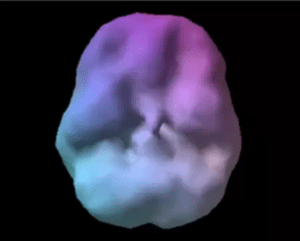
In the healthy brain, there is full, even, symmetrical blood flow/activity.
ADD/ADHD Brain SPECT Scan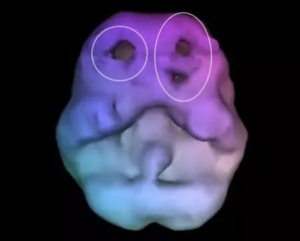 In the ADD/ADHD brain, there is low blood flow/activity in the prefrontal cortex. In the image here, the holes indicate areas of low blood flow.
Due to low activity in the PFC, people can struggle with a range of ADD/ADHD symptoms, such as:
In the ADD/ADHD brain, there is low blood flow/activity in the prefrontal cortex. In the image here, the holes indicate areas of low blood flow.
Due to low activity in the PFC, people can struggle with a range of ADD/ADHD symptoms, such as:
- Poor internal supervision
- Short attention span
- Distractibility
- Disorganization
- Hyperactivity (although only half the people with ADD are hyperactive)
- Impulse control problems
- Difficulty learning from past errors
- Lack of forethought
- Procrastination
ADD/ADHD AND THE PREFRONTAL CORTEX
Here are some common characteristics of ADD/ADHD that clearly connect this disorder to the PFC:-
The harder you try, the worse it gets.
-
You have difficulty paying attention.
-
You get easily distracted.
-
You say and do things impulsively.
-
You like drama.
SUPPORT THE PREFRONTAL CORTEX
Anyone with ADD/ADHD needs to support the brain for better prefrontal cortex function. Strategies to optimize the PFC include:- Neurofeedback: Studies show that neurofeedback treatment improves ADD/ADHD symptoms.
- Goal setting: Knowing what you want out of life can help you match your behavior to achieve your goals.
- Meditation: Studies show that meditation enhances function in the PFC.
- Higher-protein diet: Eating a diet that is higher in protein and lower in simple carbohydrates improves focus.
- Nutraceuticals: Take supplements, such as omega-3 fatty acids, rhodiola, green tea extract, zinc, ginseng, and ashwagandha.