
ARCHIVE
When you think about hypnosis, what’s the first thing that comes to your mind? A stage act where some celebrity hypnotist makes you do stupid and embarrassing things in front of the audience just for laughs? You’re not alone.
Many people are unaware of what hypnosis can do for you, especially when it comes to using it as a mental health treatment or for medical conditions. The American Medical Association recognized hypnotherapy as a standard medical treatment back in 1958, and the American Psychological Association followed suit by endorsing it as a branch of psychology in 1960. Since then, it has been used to help people overcome a variety of symptoms and conditions, including:
1. Soothe anxiety
If you’re suffering from anxiety, hypnosis can help. Think of hypnosis as your body’s natural soothing power source. It can help you change your state of mind from anxious to calm.
2. Lose weight
Hypnosis can help you change the way you think, feel, and react to food. It can also alter the way you view exercise and other lifestyle habits that can contribute to achieving and maintaining a healthy weight.
3. Stop smoking
Smoking is highly addictive, but hypnosis can help you break the habit. Even people who have tried quitting several times without success have given up cigarettes through hypnosis.
4. Conquer chronic pain
Research shows that hypnosis can help you take control of your thought patterns and breathing methods to manage and overcome chronic pain.
5. Get better sleep
Hypnosis and self-hypnosis can calm a busy brain, so you can fall asleep faster and get a better night’s rest.
In a 4-part series on The Brain Warrior’s Way Podcast with special guest Dr. Jeffrey Zeig, the founder and director of the Milton H. Erickson Foundation, who has studied with one of the world’s most famous hypnotists, you’ll discover more about the many benefits of hypnosis.
In this remarkable series, you’ll learn:
- What hypnosis does in the brain (hint: it doesn’t decrease brain activity)
- The many ways hypnosis is used in the medical field for pain relief
- How hypnosis can help people with depression, panic disorders, and other psychiatric conditions
- How the principles of hypnosis can help you make your adolescents more responsible
- Why psychologists don’t use hypnosis to give their patients information
- How hypnosis can help you stop smoking, stop gambling, or stop any unwanted habit
- Why some elite athletes use hypnosis as part of their training
Listen to the 4-part series on hypnosis with Dr. Jeffrey Zieg on the Brain Warrior’s Way Podcast.
At Amen Clinics, we have used hypnosis as part of a comprehensive treatment plan to help thousands of people with mental health issues so you can minimize your symptoms and stick with a brain-healthy program. If you or a loved one might benefit from a brain-body approach to healing, call 888-288-9834 or schedule a visit online.
EMDR (eye movement desensitization and reprocessing) is a special psychotherapeutic technique that can be a very powerful treatment for people who have been emotionally traumatized. EMDR therapy uses eye movements or other alternate hemisphere stimulation to remove the emotional charges of traumatic memories.
As part of EMDR therapy sessions, a therapist may direct you to hold specific memories in mind while tracking the therapist’s hand as it moves back and forth across your field of vision. Diverting your attention in this way while you recall a traumatic event has been found to minimize the emotional response connected to the memory. Researchers believe the therapy activates mechanisms in the brain that help you process the memory and distressing emotions.
Processing Traumatic Memories in the Brain
The brain is naturally wired to help us recover from traumatic events and distressing memories. The healing process involves communication between a variety of brain regions, such as the hippocampus (memory-making center), amygdala (fear center), and prefrontal cortex (behavior center). In some people, however, events can be so traumatic it disrupts the normal flow of neural communication and memories get stuck, making you can feel like you are frozen in time. EMDR helps you get unstuck by restoring the communication process.
What Research Shows About EMDR
Numerous studies show that EMDR therapy offers benefits for emotional trauma and PTSD that typically take years to achieve in psychotherapy alone. A 2014 review of the existing research indicates that 24 randomized controlled studies point to benefits from EMDR treatment for emotional trauma and adverse life events. This review also showed that in some studies, 84% to 90% of people who have experienced a single trauma found relief from PTSD symptoms after just 3 EMDR sessions that lasted 90 minutes each.
In a controlled study by Kaiser Permanente, 67 individuals who had experienced trauma were assigned either to standard care treatment or EMDR. Compared to standard care, the EMDR group showed significantly more improvement on measures of anxiety, depression, and PTSD. In a subsequent study from the same team at Kaiser Permanente, follow-ups on the original study participants at 3 months and 6 months showed that improvements from EMDR had been maintained. The authors concluded that long-lasting benefits can be achieved with relatively few EMDR sessions.
Based on this growing body of research, the American Psychiatric Association and the Department of Veterans’ Affairs have recognized EMDR therapy as an effective treatment for PTSD. A growing body of research on EMDR therapy shows promising results in its effectiveness for other conditions, such as depression, addictions, and more.
Who Can Benefit from EMDR?
EMDR is primarily used to treat people suffering from emotional trauma, but it may also be beneficial for people struggling with other problems. According to the EMDR International Association, practitioners currently use EMDR therapy to address a wide array of issues, including but not limited to:
- PTSD
- Depression
- Bipolar disorder
- Anxiety
- Panic attacks
- Phobias
- Substance abuse
- Eating disorders
- Dissociative disorders
- Personality disorders
- Grief
What’s Involved in EMDR Therapy?
EMDR therapy involves 8 phases that incorporate a variety of elements. It includes looking at past memories, current triggers, and skills and behaviors that can help you in the future.
Phase 1: History and Treatment Planning
A therapist will review your history, identify specific memories to target, and create a treatment plan.
Phase 2: Preparation
The therapist will share several techniques to help you cope with any emotional distress that may arise during treatment.
Phases 3: Assessment
During this portion of the treatment, you will be directed to identify 3 things associated with the targeted memory to be processed:
- a visual image related to the memory
- a negative belief about yourself
- any physical bodily sensations associated with the memory
Phase 4: Desensitization
As you hold these things in mind, the EMDR processing begins. After the therapist performs the hand movements or other stimulation, you will be asked to let your mind go blank. Then you may either return to continue processing that same memory or move on to process other memories.
Phase 5: Installation
Here you replace the negative belief you had about yourself with a positive belief. For example, a victim of assault may go from believing “I am powerless” to believing “I am in control.”
Phase 6: Body Scan
During this phase, your therapist will work with you to resolve any remaining physical tension or bodily sensations related to the memory.
Phase 7: Closure
The therapist will ensure that at the end of each session, you feel better than when it started. Your therapist will also provide you with strategies to help you handle any distressing emotions that come up in between sessions and will ask you to maintain a journal where you write down any issues that arise.
Phase 8: Reevaluation
At each session, you and your therapist will assess your progress so far and adjust your treatment plan as needed.
Steven’s EMDR Story
To help you understand how EMDR can work for emotional trauma like PTSD, take a look at Steven’s story.
Steven, a 33-year-old bicycle repair mechanic working in Santa Monica, California, took an early lunch on a summer day in 2003 and walked to the local farmer’s market. Within minutes, disaster struck when an 87-year-old man lost control of his car and barreled through the throngs of people at the market. The car was headed straight for Steven, who later said, “I thought he was going to run over my legs…I thought I would lose my legs.”
At the last possible moment, Steven was able to jump out of the way, but 10 people were killed and more than 50 were injured. Traumatized, Steven went back to work. But for months, he couldn’t sleep, and he shook constantly. As in the case of most people who develop PTSD, the Santa Monica farmer’s market disaster was not Steven’s only trauma. He grew up in a severely abusive alcoholic home and also faced death as a tank commander during the Gulf War.
Steven decided to undergo an evaluation and EMDR therapy as a component of his treatment. As part of his assessment, Steven underwent 3 brain scans using brain SPECT imaging technology—before treatment, during his first EMDR session, and after 8 hours of EDMR treatments.
Initially, his brain scan showed a diamond pattern that is often seen in PTSD, with an overactive limbic area, basal ganglia, and anterior cingulate. Then with the help of a trained EMDR therapist, Steven began clearing out the traumas—one by one. His brain actually showed benefit during the first treatment and was markedly improved after only 8 hours of treatment. Steven’s shaking had subsided, and he felt significantly better. With EMDR, Steven was able to change his brain and change his life for the better.
PTSD, emotional trauma, and other mental health issues can’t wait. At Amen Clinics, we’re here for you. We offer in-clinic brain scanning and appointments, as well as mental telehealth, clinical evaluations, and therapy for adults, teens, children, and couples. Find out more by speaking to a specialist today at 888-288-9834 or visit our contact page here.
When you are chained by an addiction, you know it affects every area of your life. It’s no secret that substance abuse ruins lives, devastates families, destroys relationships, and negatively impacts careers and schoolwork. It also leads to physical health problems and is commonly connected to mental health disorders like depression and anxiety.
What you may not realize is that it ravages the brain. The brain scans of substance abusers show dramatic damage—even worse than the brain scans of severely depressed people, schizophrenics, or even serial killers.
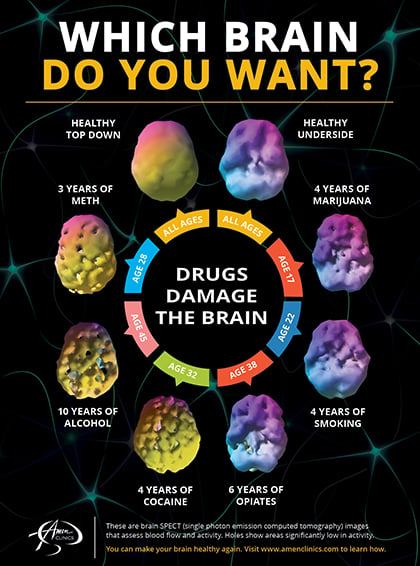
Brain imaging technology called SPECT looks at blood flow and activity in the brain. In surface scans, SPECT shows areas of the brain with healthy activity and areas with too little activity. The underactive areas look like holes or dents. The scans of healthy brains show full, even, symmetrical activity. The brains of substance abusers look like Swiss cheese.
Arnie was 56 when he got a brain SPECT scan. Sure, he was having 3 or 4 drinks a day, but he didn’t consider himself an alcoholic because he didn’t feel drunk or out of control. His brain told another story. His daily drinking was harming his brain, reducing his mental sharpness, and impacting his work.

The good news is that the brains of substance abusers have the potential for some of the greatest improvement. The before-and-after scans often reveal a stunning level of recovery. No matter what you are addicted to—drugs or alcohol or both—your brain can recover too. You need to follow these 10 steps.
10 Steps to Breaking Free from Addictions
1. Know your motivation.
To drive your desire to change, you must know why you want to get clean and sober.
2. Get the right evaluation.
The road to recovery starts by assessing the 4 circles of your life—biological, psychological, social, and spiritual—and optimizing any areas that need improvement.
3. Know your brain type.
Not all addicts are the same. Brain imaging shows there are 6 different types of addicts:
Type 1: Compulsive addicts
Type 2: Impulsive addicts
Type 3: Impulsive-compulsive addicts
Type 4: Sad or Emotional addicts
Type 5: Anxious addicts
Type 6: Temporal lobe addicts
Knowing your type will help you find the most effective solutions for your situation.
4. Boost your brain to gain control.
Enhancing your overall brain health will make it so much easier for you to stick with a recovery program and avoid relapse. And treating any co-existing conditions, like depression or anxiety, will help you heal your brain.
5. Learn to control cravings.
Make simple changes to your daily habits to avoid triggers. If your team at work usually goes to happy hour after work, suggest doing a group hike or some other activity. Daily exercise is another way to reduce cravings.
6. Eat right to think right.
Consuming brain healthy foods can help you make better decisions. For example, keeping your blood sugar levels balanced—think eating small amounts of protein at every meal and avoiding refined carbohydrates and sugary sweets—can improve impulse control in the brain.
7. Kill the ANTs.
You don’t have to believe every stupid thought in your head. Learn to overcome the automatic negative thoughts (ANTs) that infest your brain and keep you locked in your unhealthy ways. Any time you have a bad, sad, or hopeless thought, ask yourself if it is true and then talk back to it.
8. Manage your stress.
Meditation, prayer, and deep breathing exercises can help you calm the stress that can trigger a relapse. Practicing gratitude on a daily basis can also help calm stress.
9. Practice the H-A-L-T PLUS strategy.
Never get too hungry, too angry, too lonely, or too tired. Plus, learn to deal with the people, companies, and advertisers who will try to push things on you that will sabotage your brain healthy habits and your recovery.
10. Look beyond yourself.
Stop focusing on yourself and start learning to give back to your family, friends, and community. Volunteering and serving others can give you a sense of purpose in life. It helps you feel like your life matters, which is one of the best ways to break free from the addictions that steal your life.
After Arnie saw his brain scan, he made a commitment to boost his brain health by following these steps to help him stop drinking. With regular exercise, mental exercise, a brain healthy diet, and nutritional supplements targeted to his brain type, his follow-up brain scans showed great improvement. He felt more energetic, smarter, and more articulate. And his business improved. He hadn’t realized that his drinking was holding him back at the office.
At Amen Clinics, brain SPECT imaging is performed as part of a brain-body evaluation for people dealing with addictions and other conditions. The Amen Clinics Method also assesses the biological, psychological, social, and spiritual factors of your life to identify areas that can be optimized.
If you (or a loved one) are struggling with addiction, call 888-288-9834 to talk to a specialist today or schedule a visit.
Suicide rates among teens and young adults have skyrocketed to their highest levels in two decades, according to a study released in JAMA on June 18, 2019.
Alarmingly, suicide rates among teens ages 15-19 have seen the greatest jump, increasing by 10% from 2014-2017. Although previous studies have pointed to a rise in suicide among female teens—the number of girls ages 15-19 dying by suicide increased 8% from 2016 to 2017—this latest research found a surge in teenage boys taking their own lives. Compared to 2016, there was a 21% rise in 2017 in boys in the same age group dying by suicide.
This sobering research comes on the heels of another study showing that “deaths of despair” from suicide, drugs, and alcohol have reached a historic high. This deeply distressing news comes from a 2019 study by the Commonwealth Fund, which analyzed state-by-state data from 2005 to 2017. Here’s a closer look at the rise in deaths:
- Drug overdoses: The rate of deaths from drug overdoses—primarily due to the opioid epidemic—rose by 118% across the nation in the 12 years studied. States with the highest death rates from drug overdoses are West Virginia, Ohio, Pennsylvania, Washington DC, Kentucky, Delaware, and New Hampshire.
- Alcohol-related deaths: Deaths from alcohol rose by 37% and have been increasing at a faster pace since 2013—growing 4% annually compared to 2% prior to 2013. The Midwest and West account for the biggest jump in alcohol-related deaths.
- Suicide: Suicide rates are up nearly 30% nationally since 2005 with the most suicides occurring in states, such as Montana, the Dakotas, Alaska, Idaho, Nevada, and Colorado. Sadly, the suicide rate increased the most dramatically from 2016 to 2017.
The research stops short of explaining why these deaths of despair are skyrocketing. What’s wrong? Why are we headed in the wrong direction? Shouldn’t our mental health care system and the growing number of addiction treatment centers be helping reverse these trends?
What’s Wrong with Mental Health Care in America?
America has an outdated, stigmatizing mental health paradigm that taints people with disparaging labels, preventing them from getting the help they need. And when they do seek help, they are faced with a field that is still diagnosing patients the same way it did over 100 years ago.
Mental health as it is currently practiced in the United States—making diagnoses based on symptom clusters with no biological information, then prescribing multiple medications where the mechanism in individual patients is unknown—does not have a prayer of fixing the epidemic problems of depression, suicide, and addictions.
The Problem with Addiction Treatment in the U.S.
Similarly, most of the nation’s addiction treatment programs are missing the essential organ of intervention—the brain. Brain dysfunction is the number-one reason why people fall victim to addiction, why they can’t break the chains of addiction, and why they relapse.
Brain imaging studies using a technology called SPECT show that opioids, Vicodin, methamphetamines, cocaine, marijuana, and alcohol all seriously impair brain function. Unless we heal the brain, there’s little chance of breaking free from addiction.
We need to do better.
A New Brain-Centered Model for a Brighter Future
What if mental health was really brain health? And what if we replaced the outdated treatment model with a modern brain-based, whole-person program rooted in neuroscience and hope?
No one is shamed for cancer, diabetes, or heart disease, even though they have significant lifestyle contributions. Likewise, no one should be shamed for depression, suicidal thoughts, addictions, panic disorders, bipolar disorder, schizophrenia, and other brain health issues.
Brain imaging helps eliminate the stigma currently attached to mental illness and addiction because people see that their problems are medical in nature, not moral. They aren’t due to a personal weakness or character flaw.
It decreases shame and guilt and increases forgiveness and compassion from their families. Reframing the discussion to brain health is also more accurate and elevates hope, increases the desire to get help, and increases compliance to make the necessary lifestyle changes. Once people understand that the brain controls everything they do and everything they are, they want a better brain so they can have a better life.
Brain Imaging Reveals Hope for Healing
The good news is that brain imaging studies show that the brain can heal. People with depression and suicidal thoughts can change their brain and change their lives. And people suffering from addictions have the potential for some of the most dramatic improvement in terms of brain function. In fact, before-and-after scans often reveal a stunning level of recovery.
Now is the time to adopt this new paradigm of brain-centered healing, so we can put the brakes on these staggering statistics and start reversing these trends.
If you are having suicidal thoughts, call the National Suicide Prevention Lifeline at 1-800-273-TALK (8255).
At Amen Clinics, we have the world’s largest database of functional brain scans related to behavior. We use brain SPECT imaging in addition to assessing the biological, psychological, social, and spiritual factors that may be contributing to mental health/brain health disorders and addictions. With this comprehensive evaluation, we are better able to accurately diagnose and personalize treatment solutions for your needs.
If you are struggling with depression, suicidal thoughts, or addiction, we’re here for you. We have helped thousands of people change their brain and get their life back. Find out more about our unique approach to mental health care by speaking to a specialist at 888-288-9834 or you can schedule a visit online.
Does your child get irritable and upset if they don’t get their Fortnite fix? Are you worried they might be addicted to video games? You could be right.
In a landmark 2019 decision, the World Health Organization (WHO) has declared that video game addiction is officially a mental health disorder. “Gaming disorder” has been added to the WHO’s International Classification of Diseases, putting it on a par with depression, anxiety disorders, bipolar disorder, and other mental illnesses.
Gaming Disorder Can Steal Your Life
Research shows that 97% of Americans 12 to 17 years old play video games, and as many as 23% of gamers of all ages show signs of addictive behavior. According to the WHO, these signs include impaired control over gaming and “continuation or escalation of gaming despite the occurrence of negative consequences.” And these repercussions can be seen in a person’s personal relationships, career, schoolwork, or daily life.
Gaming disorder also puts people at greater risk for other detrimental issues, including:
- Depression
- Anxiety
- ADD/ADHD
- Sleep disturbances
- Irritability
- Bad moods
- Fatigue
- Fearfulness
- Suicidal thoughts
The link between gaming and ADD/ADHD goes both ways. In addition to gaming contributing to the condition, a 2019 study shows that people who have ADD/ADHD may be at increased risk for developing a gaming addiction.
The Risk for Addiction Lies in the Brain
It’s important to understand that gaming addiction is not a character flaw or personal failure. Brain imaging studies using a technology called SPECT show that addiction is, in fact, a brain disorder. The health of your brain plays a major role in your risk for addiction—whether it’s to alcohol, drugs, or video games.
In particular, it is your brain’s self-control circuit that helps you rein in your behaviors or that drives you to addiction.
The brain’s self-control circuit includes:
- Neurotransmitters: These chemical messengers, including dopamine, drive you to pursue your passions.
- Nucleus accumbens: The pleasure and motivation center of the brain, the nucleus accumbens is one of the primary drivers of behavior.
- Deep limbic system: Housing your brain’s emotional memory centers, the deep limbic system can push you to repeat pleasurable actions and gives you motivation so you can plan and follow through on your goals.
- Prefrontal cortex (PFC): The prefrontal cortex (PFC) is responsible for impulse control and judgment and is intended to keep the brain’s drivers in check. It acts as the brain’s brake, making you think twice before doing something you might regret.
When this self-control circuit is in balance, you can be motivated, focused, goal-oriented, and have control over your gaming and other behaviors. In the addicted brain, the PFC is weakened, allowing the drive systems to take control.

Not All Gaming Addicts are the Same
Designating video game addiction as a mental health disorder is a powerful first step in encouraging people to seek treatment. But most healthcare professionals will view it as a single or simple disorder and will treat everyone the same way. This will never work because not all people with gaming addictions are the same. In fact, SPECT brain scans reveal that there are 6 types of addicts.
Type 1: Compulsive Addicts
Type 2: Impulsive Addicts
Type 3: Impulsive-Compulsive Addicts
Type 4: Sad or Emotional Addicts
Type 5: Anxious Addicts
Type 6: Temporal Lobe Addicts
Knowing your type is essential to getting the right treatment plan to help you regain control of your life.
4 Key Ways to Break Free from Addiction
The brain is the ultimate key to overcoming gaming addiction and other bad behaviors. Strengthening your PFC is one of the best ways to balance your brain’s self-control circuit. Here are 4 ways to boost your PFC.
1. Get your heart pumping.
Regular aerobic exercise boosts blood flow to the PFC and has been shown to improve focus and impulse control. Aim for 30-45 minutes a day of fast walking (walk like you are late for an important appointment.)
2. Practice saying no.
Every time you say no to extra gaming time, you train your PFC and help create new neural pathways that strengthen your control. Eventually, saying no to unhealthy gaming behavior becomes easier and can even feel automatic.
3. Eat a brain healthy diet.
Did you know that a sugar-filled junk-food diet can fuel your addiction? Getting a quick sugar rush from soda, cookies, or candy weakens the PFC and can make you more impulsive. Eating lean protein throughout the day and eliminating sugar can help stabilize blood sugar levels, which is beneficial for your PFC, moods, and impulse control.
4. Supplement your diet.
Nutritional supplements, such as omega-3 fatty acids, green tea, and Rhodiola can boost blood flow to the PFC and help you stay focused on your goals.
If you or your child is struggling with addiction to video games or any other substance, we’re here for you. At Amen Clinics, we have helped thousands of people overcome bad behaviors and improve every aspect of their life. We use brain SPECT imaging to help identify your addiction type in addition to assessing the biological, psychological, social, and spiritual factors that may be contributing to addiction. With this comprehensive evaluation, we are able to personalize treatment solutions for your needs.
Don’t let addiction steal your life. Speak to a specialist today at 888-288-9834 or schedule a visit online.
Have you ever plopped your preschooler on the couch with a tablet, gaming device, or smartphone to keep them occupied while you get a few chores done around the house? If so, you could be putting them at increased risk for attention problems and hyperactivity.
Kids with more than two hours a day of screen time by the age of 5 are almost eight times more likely to meet the criteria for ADD/ADHD than youngsters who spend less than 30 minutes a day looking at a screen, according to a 2019 Canadian study in Plos One.
Having untreated ADD/ADHD as a child can have lasting impacts into adulthood. Research shows that adults diagnosed with the condition as a child tend to:
- do more poorly in school
- have more trouble getting and keeping a job
- don’t make as much money financially
- are more likely to get divorced
- are at higher risk for substance abuse
This is why it is so important to get diagnosed and to get the right treatment. Brain imaging shows there are 7 types of ADD/ADHD and each type needs its own treatment plan.
Decreasing your child’s risk for the condition can help. The next time you’re tempted to use screen time as a sort of babysitter, think twice. You could be setting up your child for a lifetime of struggle. It’s best to limit your preschooler’s screen time to no more than 30 minutes a day. Here are three ways to do it.
3 Tips to Limit Your Preschooler’s Screen Time
1. Use parental controls.
Tablets and smartphones come equipped with control options that allow parents to monitor and limit screen time.
2. Set and enforce screen rules.
No screens at the dinner table. No screens in the car. No screens before bedtime. Whatever rules you set, be sure to enforce them. This will help preschoolers develop a healthier relationship with their tech gadgets.
3. Encourage physical activity.
Take your child to the park, swimming pool, or activity center or sign them up for group sports so they can burn off energy while having fun and learning new skills. Exercise increases blood flow to all parts of the body, including the brain, and it boosts focus and attention. In the Canadian study mentioned above, kids who spent at least two hours a week playing organized sports were less likely to have behavioral issues. When ADD patients play sports, such as basketball, which involves intense aerobic exercise, they tend to do better in school.
At Amen Clinics, we have helped thousands of children overcome ADD/ADHD. With the world’s largest database or function brain scans, we can accurately diagnose which of the 7 types of ADD/ADHD a child has and target treatment to their needs. We believe in taking a whole brain-body approach to healing that may include nutrition coaching, supplements, medication when needed, and other therapies.
If your child is struggling with inattention, lack of focus, or hyperactivity, reach out today to speak to a specialist at 888-288-9834 or schedule a visit online.
Rachel, 42, had gone to six alcohol addiction treatment programs and failed every one of them. She really wanted to follow the programs and quit drinking, but she was so impulsive she couldn’t stop herself if she was around alcohol. When she had her brain scanned using technology called SPECT, it revealed abnormal activity in an area called the prefrontal cortex (PFC), which is involved in impulse control. It’s like the brain’s brake, making you stop before engaging in risky or unhealthy activities.
After seeing her SPECT brain scan, Rachel remembered that as a child she was kicked in the head by a horse. Because of this, the part of her brain that was supposed to keep her behavior in check wasn’t working right. If the underlying problem with her PFC wasn’t addressed, she would never be able to follow any recovery program. With treatment to improve her PFC function, Rachel was finally able to stick with a program and stop drinking.
Here are 10 ways SPECT brain scans can help you understand and treat addictions.
1. Brain scans don’t lie.
SPECT brain scans can clearly show toxic exposure from drugs and alcohol. These addictive substances negatively impact areas of the brain that play an important role in your ability to live your best life. To see the effects of drugs and alcohol on the brain, look at the following poster, which hangs in over 100,000 schools, prisons, and therapist’s offices around the world.
2. Revealing the effects of everyday drugs.
Brain imaging shows that substances like marijuana (now legal in some states), nicotine, caffeine, and even too much sugar compromise brain function.
3. Brain imaging reveals there is more than one type of addiction.
One of the most important things brain imaging shows is that addiction is not a single or simple disorder. There are 6 types of brain patterns associated with addiction, and each type requires individualized treatment. The 6 types of addiction are:
Type 1: Compulsive Addicts
Type 2: Impulsive Addicts
Type 3: Impulsive-Compulsive Addicts
Type 4: Sad of Emotional Addicts
Type 5: Anxious Addicts
Type 6: Temporal Lobe Addicts
4. SPECT brain scans reduce shame and stigma.
If you’re like most people who struggle with substance abuse, you probably think it is all your fault or that you are a bad person. Brain imaging helps erase these untrue and unhelpful thoughts. When you see that addiction is a brain disorder, it helps lift the stigma that typically comes with addiction.
5. Brain scans help break denial.
Addicts are usually the last one to admit that they have a problem. Take Chase, for example. At 18, he was drinking and using OxyContin, coke, meth, and more, but he didn’t think he had a problem. His mother eventually took him in for a brain scan, which revealed a very toxic brain. When Chase saw his brain scans, it hit him hard. Even though he didn’t think the drugs and drinking were a problem, he couldn’t deny the damage he saw in his scans. That was what he needed to finally get clean and sober.
6. Seeing your brain scan helps your family understand better.
Parents of substance abusers often feel like it’s their fault, or they blame each other for their child’s addiction. Seeing that addiction is a brain disorder eliminates these feelings and helps the entire family get focused on helping the substance abuser heal their brain.
7. Brain imaging reveals co-morbid conditions.
It is common for people with addictions to suffer from other issues, such as depression, anxiety, ADD/ADHD, bipolar disorder, or head injuries (like Rachel, who was kicked in the head by a horse). In order to heal from addiction, these other issues also need to be addressed.
8. Seeing your brain motivates you to follow a treatment plan.
For many people, like Chase, seeing how toxic their brain looks is one of the greatest motivators for treatment. When they understand that it is their brain health that is the key to having success at school, at work, and in relationships, it increases that motivation.
9. Follow your progress.
Seeing before-and-after SPECT brain scans is the best way to objectively know when an addiction treatment plan is working effectively or when it should be adjusted to promote faster healing.
10. SPECT scans give you hope.
The before-and-after scans of substance abusers show some of the greatest improvements in brain health. When you see these, it gives you hope that no matter what you are addicted to—drugs, alcohol, smoking, or even overeating—your brain can recover too.
At Amen Clinics, we use SPECT brain imaging as part of a comprehensive evaluation to help people of all ages heal from all types of addictions. We use an integrated brain-body approach to treatment that includes biological, psychological, social, and spiritual elements to identify areas of your life—or a family member’s life—that can be optimized. To learn more, call 888-288-9834 to talk to a specialist today or schedule a visit.
One of the hottest—and most controversial—topics in the field of health and wellness right now is CBD. At every mental health conference, an audience member inevitably asks, “What about CBD?” The same question pops up every day on Facebook, Instagram, and Twitter.
If you’re like most people, you may be wondering if CBD can decrease your anxiety, help your aging mother’s chronic pain, or even help your dog’s arthritis. What it can and can’t do is still being explored.
To delve into the pros and cons of CBD, Dr. Rebecca Siegel, a child, adolescent, and adult psychiatrist, recently joined Dr. Daniel Amen and Tana Amen on the Brain Warrior’s Way Podcast. In this 4-part series, you’ll find the answers to many questions about CBD, THC, and medical marijuana, such as:
- Can CBD minimize chronic pain? Alleviate anxiety? Improve your sleep issues? Decrease PTSD symptoms? Can it help with other conditions?
- What is CBD legally approved for?
- What’s the difference between CBD and THC?
- What’s the difference between CBD and medical marijuana?
- Is CBD addictive?
- Can CBD make you feel stoned?
- Is CBD bad for your brain?
- Is it helpful for people with mental health issues or does it make people worse?
- What does cannabis do to the teenage brain?
- What does the research say about CBD?
Click here to tune into the Brain Warrior’s Way podcast series with Dr. Amen, Tana Amen and special guest Dr. Rebecca Siegel from Amen Clinics New York.
Part 1: http://brainwarriorswaypodcast.com/lets-talk-about-cbd-with-dr-rebecca-siegel/
Part 2: http://brainwarriorswaypodcast.com/cbd-use-what-does-the-research-say-with-dr-rebecca-siegel/
Part 3: http://brainwarriorswaypodcast.com/medical-marijuana-whats-medically-correct-with-dr-rebecca-siegel/
Part 4: http://brainwarriorswaypodcast.com/is-cbd-good-for-your-health-with-dr-rebecca-siegel/
If you’d like more information or you’re struggling with mental health issues and are wondering about treatment options, understand that at Amen Clinics, we believe in using the least toxic, most effective treatments available. Speak with a specialist today by calling 888-288-9834 or schedule a visit.
Matthew was a very successful real estate developer who had amassed a sizable retirement nest egg for his family. But within a few years after turning 60, that retirement fund was completely gone, Matthew was in debt, and the IRS was coming after him. His loving wife of 41 years discovered that in the span of just a couple years, Matthew had gambled away their entire life’s savings even though he had never been a gambler prior to that. On top of this, he was acting like such an insensitive jerk she was contemplating divorcing him. What had happened to her husband, the man who had been so smart with his money and such a kind, caring guy for all of his life? How could someone with no history of addiction become addicted to gambling so quickly?When gambling addiction isn’t really an addiction.
Matthew had already gone through a traditional addiction program for treatment, but it didn’t work. His wife had heard that there is more than one type of addiction and that brain imaging can help with diagnosis and treatment, so she took her husband for a brain scan. The results of his brain SPECT imaging test didn’t correlate with any of the 7 types of addiction. Instead, the scan showed that he was suffering from an underlying neurodegenerative disease called frontotemporal dementia.What is frontotemporal dementia?
Frontotemporal dementia is precipitated by the progressive loss of nerve cells in the frontal or temporal lobes, resulting in shrinkage of these important brain regions.What are the symptoms of frontotemporal dementia?
This type of dementia is associated with changes in behavior, personality, and language, and sometimes symptoms of mental illness. Symptoms can include: • Lack of impulse control • Lack of judgment • Inappropriate behavior • Overeating or binge eating • Compulsive behaviors (like gambling disorders) • Neglecting hygiene • Mood swingsWhy can the condition be hard to diagnose?
“But his memory is perfect,” said his wife, who was having trouble understanding how her husband could have dementia. She always thought memory loss was the hallmark of dementia. Although problems with memory are the main sign of Alzheimer’s disease, the most common form of dementia, it is not associated with all types of dementia.Can frontotemporal dementia be treated?
The best way to reduce brain atrophy, or shrinkage, is to eliminate, prevent, and treat any of the risk factors that steal your brain health. For Matthew, getting an accurate diagnosis gave him a blueprint for treatment. First, he agreed to hand over all financial matters to his wife, then he addressed his risk factors, which resulted in improvement in his behavior. Amen Clinics, where Matthew had his brain scanned and underwent treatment, helps people with all types of dementia and has developed a program that addresses the 11 most important risk factors that affect the health of your brain. If you or a loved has experienced sudden, concerning, or worsening changes in behavior or personality, schedule a visit or call 888-288-9834 for a comprehensive evaluation. Steve was living on the streets of San Francisco. Suffering from paranoid schizophrenia and addiction, he had violent outbursts and displayed erratic behavior. But he refused to seek treatment and had stopped taking his medication, which is why he had been kicked out of his home. After years of trying, Steve’s mother finally convinced her son to get a comprehensive psychiatric evaluation.Steve’s First Appointment: A Potential Disaster
The patient outcome manager who was doing his clinical interview was so alarmed by Steve’s psychotic behavior and intense agitation, she didn’t feel comfortable being alone in the same room with him. He scared her. When Steve met with the psychiatrist, he declared loudly that he would not take any medication and that no one could convince him otherwise.Shifting the Talk from Medication to Brain Imaging
To settle the tension, the psychiatrist shifted the conversation away from medication to the brain and asked if it would be okay to scan Steve’s brain using brain SPECT imaging. Brain SPECT is a state-of-the-art brain mapping tool that evaluates blood flow and activity in the brain and can give psychiatrists more information to help their patients more effectively. Steve was curious and agreed to be scanned. Looking at his scan with the psychiatrist, Steve learned that his brain showed high levels of damage. The psychiatrist showed Steve a healthy scan and compared it to his scan. Steve just stared at them without saying a wordHealthy SPECT Scan
 The underside surface of a healthy brain: full, even, symmetrical activity.
Steve’s Brain SPECT Scan
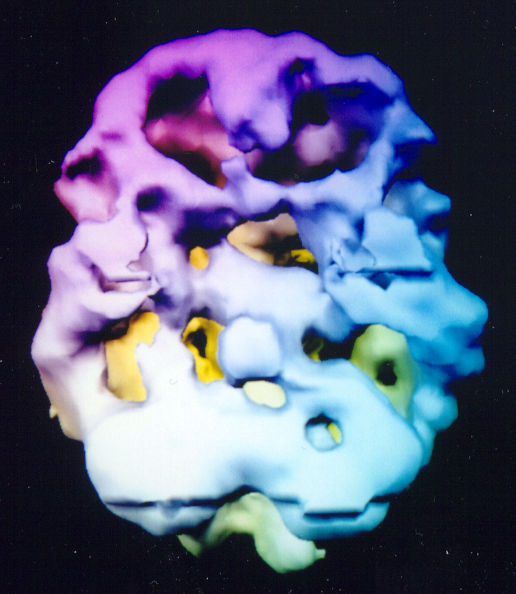 The underside of Steve’s SPECT scan shows overall low blood flow and activity.