Dave and Bonnie were getting frustrated with marital therapy. They had been going to an experienced therapist for three years and had spent a lot of money trying to save their marriage, but they weren’t making any progress. Despite the strategies and relationship tools the therapist had taught them, they were still bickering and feeling unhappy in their marriage. Dave was admittedly a big part of the problem. He had been a nice, thoughtful guy when they first married, but now he would explode with anger, was narcissistic, and antisocial, and he wasn’t getting any better from the psychotherapy sessions.
After much consideration, the therapist finally gave the couple an “F” in marital therapy and told them it was time to get divorced… unless they wanted to try one last option—getting brain scans to see if there might be some other underlying issue.
What Brain Scans Can Reveal About Psychotherapy Patients
Bonnie and Dave agreed and underwent brain imaging tests called SPECT, which measures blood flow and activity in the brain. The results changed everything. All of a sudden, it became clear why they weren’t having any success with marital therapy despite having a great therapist. And they realized why therapy probably never would have worked for them no matter how many years they devoted to it.
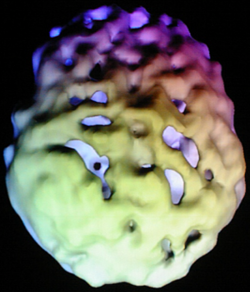
Bonnie’s brain scan looked healthy. Dave’s, however, looked very unhealthy—shriveled and full of holes. Dave’s brain pattern is one that is commonly seen in people who abuse drugs or alcohol. But Dave swore he didn’t drink or use drugs, and Bonnie confirmed it. “That is not his problem,” Bonnie said. “He’s just a jerk.”
Why Did Dave’s Brain Look so Toxic?
Other than drug or alcohol abuse, there are many things that can contribute to a toxic-looking brain, including brain infections, hypothyroidism, and environmental toxins. The problem became clear when Dave said he worked in a factory finishing furniture. The chemicals and solvents Dave was using every day at work were eating away at his brain.
No wonder he was acting like such a jerk. And no wonder he was incapable of following through on any of the proven strategies the therapist had taught him. No amount of psychotherapy was going to heal Dave’s brain.
Healing Dave’s Brain
Dave took a medical leave of absence and eventually returned to a job at the factory that didn’t involve exposure to harmful chemicals. With a treatment plan focused on healing his brain, Dave made great strides.
For Bonnie, understanding that her husband’s problem was biological in nature made her more willing to support him as he went through treatment. When Dave’s brain was healthier, he was finally able to put the relationship tools and strategies from therapy into practice, and their marriage improved. Divorce was no longer on the table.
5 Ways Brain Imaging Can Help Psychotherapy
1. Like with Dave, getting a SPECT brain scan can reveal underlying biological factors, such as abnormal blood flow or activity, that may be contributing to behavioral issues that prevent you from getting what you need out of therapy.
2. Brain imaging helps you get a more accurate diagnosis, so you can get more effective treatment for any brain-related issues.
3. By healing the brain, it makes it easier to follow through with the strategies and tools provided in psychotherapy—whether it’s couples therapy, family therapy, individual therapy, cognitive behavioral therapy, or some other form.
4. When your brain is working right, you can take full advantage of psychotherapy, which can be a very powerful piece of a treatment plan.
5. Brain scans eliminate the guesswork involved with psychotherapy, which helps you get the benefits faster.
Dave was scanned, diagnosed, and treated at the Amen Clinics, where brain imaging and lab work are essential components of the evaluation process. If you aren’t making the progress you’d like to in psychotherapy and would like to investigate potential causes, speak to a specialist today by calling 888-288-9834. You can also schedule a visit online.
Rachel, 42,
had gone to six alcohol addiction treatment
programs and failed every one of them. She really wanted to follow the programs
and quit drinking, but she was so impulsive she couldn’t stop herself if she
was around alcohol. When she had her brain scanned using technology called
SPECT, it revealed abnormal activity in an area called the prefrontal
cortex (PFC), which is involved in impulse control. It’s like the
brain’s brake, making you stop before engaging in risky or unhealthy
activities.
After seeing her SPECT brain scan,
Rachel remembered that as a child she was kicked in the head by a horse. Because
of this, the part of her brain that was supposed to keep her behavior in check
wasn’t working right. If the underlying problem with her PFC wasn’t addressed,
she would never be able to follow any recovery program. With treatment to improve
her PFC function, Rachel was finally able to stick with a program and stop
drinking.
Here are 10 ways SPECT brain scans can help you
understand and treat addictions.
1. Brain
scans don’t lie.
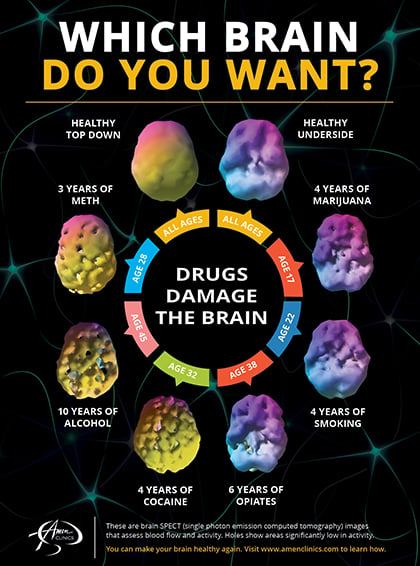
SPECT brain scans can clearly show toxic exposure from drugs and alcohol. These addictive substances negatively impact areas of the brain that play an important role in your ability to live your best life. To see the effects of drugs and alcohol on the brain, look at the following poster, which hangs in over 100,000 schools, prisons, and therapist’s offices around the world.
2. Revealing
the effects of everyday drugs.
Brain imaging shows
that substances like marijuana (now legal in some states), nicotine, caffeine,
and even too much sugar compromise brain
function.
3. Brain imaging reveals there is more than one type of addiction.
One of the most important things brain imaging
shows is that addiction is not a single or simple disorder. There are 6 types
of brain patterns associated with addiction, and each type requires individualized
treatment. The 6 types of addiction
are:
Type 1: Compulsive Addicts
Type 2: Impulsive Addicts
Type 3: Impulsive-Compulsive Addicts
Type 4: Sad of Emotional Addicts
Type 5: Anxious Addicts
Type 6: Temporal Lobe Addicts
4. SPECT brain scans reduce shame and stigma.
If you’re like most
people who struggle with substance abuse, you probably think it is all your
fault or that you are a bad person. Brain imaging helps erase these untrue and
unhelpful thoughts. When you see that addiction is a brain disorder, it helps
lift the stigma that typically comes with addiction.
5. Brain scans help break denial.
Addicts are usually the last one to admit that they have a problem. Take Chase, for example. At 18, he was drinking and using OxyContin, coke, meth, and more, but he didn’t think he had a problem. His mother eventually took him in for a brain scan, which revealed a very toxic brain. When Chase saw his brain scans, it hit him hard. Even though he didn’t think the drugs and drinking were a problem, he couldn’t deny the damage he saw in his scans. That was what he needed to finally get clean and sober.
6. Seeing your brain scan helps your family understand better.
Parents of substance
abusers often feel like it’s their fault, or they blame each other for their
child’s addiction. Seeing that addiction is a brain disorder eliminates these
feelings and helps the entire family get focused on helping the substance
abuser heal their brain.
7. Brain imaging reveals co-morbid conditions.
It is common for people with addictions to suffer
from other issues, such as depression,
anxiety, ADD/ADHD, bipolar disorder,
or head injuries
(like Rachel, who was kicked in the head by a horse). In order to heal from
addiction, these other issues also need to be addressed.
8. Seeing your brain motivates you to follow a treatment plan.
For many
people, like Chase, seeing how toxic their brain looks is one of the greatest
motivators for treatment. When they understand that it is their brain health
that is the key to having success at school, at work, and in relationships, it
increases that motivation.
9. Follow your progress.
Seeing before-and-after
SPECT brain scans is the best way to objectively know when an
addiction treatment plan is working effectively or when it should be adjusted
to promote faster healing.
10. SPECT
scans give you hope.
The before-and-after
scans of substance abusers show some of the greatest improvements in brain
health. When you see these, it gives you hope that no matter what you are
addicted to—drugs, alcohol, smoking, or even overeating—your brain can recover
too.
At Amen Clinics, we use SPECT brain imaging as part of a comprehensive evaluation to help people of all ages heal from all types of addictions. We use an integrated brain-body approach to treatment that includes biological, psychological, social, and spiritual elements to identify areas of your life—or a family member’s life—that can be optimized. To learn more, call 888-288-9834 to talk to a specialist today or schedule a visit.
When we grow up under stress, it changes the way we think. All adults begin as children with developing brains, and many find that they may be diagnosed with a condition as an adult that began in childhood.
Dr. Daniel Amen entered this field of study as a child psychiatrist, and has practiced psychiatry by focusing on brain scans to take a look into how different factors, such as stress, physically shape the brain.
Dr. Amen and his wife, Tana Amen, have created the Brain Warrior’s Way podcast to help educate those with mental illness or those helping loved ones with mental illness. There is always hope to improve and overcome symptoms to live a normal, healthy adult life.
https://www.youtube.com/watch?v=Xa1kLhCpNzE
The Impact of a Parent’s Drug Abuse on a Child’s Mind
Each April is Alcoholism Awareness Month, and on this episode, Dr. Amen discusses the lifelong impact alcoholism of a parent can have on the children.
When it comes to which parent, Dr. Amen explains a family dynamic where alcoholism affects the mother as the primary caretaker. His wife and co-host, Tana Amen, joins him in the discussion.
TANA AMEN: So what I wanted to point out is that family dynamics are so complicated. My parents were divorced, and my half sisters grew up in a house where there was substance abuse, and I think that I ended up with more stability, as bad as it was. There was more stability because my mother didn’t abuse substances.
DR. AMEN: Interestingly in our research and other people’s research on children of alcoholics, if the Dad’s an alcoholic, that’s a big problem. If the Mom’s an alcoholic, it’s a freaking disaster because women are still primary caretakers for children. Not a disaster you can’t fix, and I remember when we first met and I could see the trauma in your brain, remember, when we scanned you, and getting a couple of sessions of EMDR, a specific psychological treatment for trauma, was super helpful for you.
TANA AMEN: Yeah, no, EMDR is amazing. I actually really, really liked it and it sort of helped me unwind some things. I remember meeting you and you saying, “Don’t you think that some of these things are connected?” And I’m like, “Nope!” Not at all, like I was a warrior, I was ready to fight.
DR. AMEN: You’re not gonna talk.
TANA AMEN: Right, I’m ready to fight about it .
DR. AMEN: And you’re not gonna trust, and we’re not gonna feel, and we’re not gonna go there.
TANA AMEN: Not gonna get hurt, not willing to do the hurt thing again.
DR. AMEN: And so it took us a while to work through all of that. You had to break my heart once or twice, but it’s all for the better because we’re closer than we’ve ever been. It’s part of the reason we bring this up, that if you grew up in a hurtful environment, there is healing for you. You are not stuck with the brain you have.
Alcoholic Mother vs Father
In households that follow a traditional nuclear dynamic, a mother with alcoholism can be very detrimental. Mothers who are the primary caretakers and would be responsible for most daily care can induce chronic stress with unexpected outbursts and challenges that children must cope to handle.
Once this child grows into adulthood, their mind has already developed to survive through those traumatic events and their behavior will continue as a pattern throughout life until treated.
Tana goes on to explain how the trauma still affects her, and how treatment has helped lessen the severity of her symptoms.
Growing Up With Alcoholic Parents & Effects On Child
DR. AMEN: What happens in the brain for the children of alcoholics and other children who’ve been traumatized… those children who grow up with trauma have the same brain as a soldier of war. So, growing up with the trauma, it changed your brain to be more vigilant, to be more watchful.
TANA AMEN: So, to give you an example, we stay a couple nights a week up in Los Angeles. I’ve got my own little nest very protected where we live. So I drive up to Los Angeles and there’s just something about it, it’s like this ground floor, it’s a very nice neighborhood, but I cannot sleep. I’ve got the windows secured, I just can’t explain it, but I can hear every single noise and any noise I hear, even near my daughter’s bedroom, I am up out of bed and I’m over there. And I know that’s because of that past and that’s probably never going to go away. So it does things that change you.
DR. AMEN: But it’s not as bad as it’s been, and over time by working on it, you can feel better and it can last.
TANA AMEN: Oh yeah, I feel more empowered now, that’s the difference. I feel empowered, I don’t feel out of control, but that’s just something that happens when you grow up like that, you’re always aware.
While these traumatic memories still remain, their impact is lessened with treatment. Tana feels empowered and in control of her anxious habits now that she has experienced PTSD therapy to understand her mind and take charge of her life.
There are other types of therapy for treating PTSD as this condition has been studied and treated since its classification in 1980. Dr. Amen also discusses how other past experts have approached symptoms.
DR. AMEN: So, as I began to learn about this, I had no idea there was a whole body of literature already about what’s the psychological impact of people who grow up with chronic trauma. There were three things.
Claudia Black had written a book right about that time and I actually later became friends with her. The book is called “Adult Children of Alcoholics,” and she discusses how children of addicts learn “not to talk,” because we don’t talk about this stuff, “not to trust,” I mean I just married her why are you not trusting me, and then “not to feel.” So they block trusting, talking, and feelings so it comes out in oh so many other ways from panic attacks to depression to suicide to substance abuse for many.
It just completely blew my mind, so I went on to study children and grandchildren of alcoholics and I found they actually had a very high incidence of ADD (attention deficit disorder), but not the kind that responds to stimulants. They had a kind we call “Overfocused ADD”, so they have a lot of ADD symptoms, but in addition, they’re worrying, they’re rigid, they’re inflexible when things don’t go their way, they get upset. In 1994 I actually wrote a book about this called “Healing the Chaos Within” because what I found is a combination of substances to increase Dopamine for the ADD and increased Serotonin from the worrying, it was remarkable.
The way psychiatrists observe their patients’ behavior for treatment has evolved over time, and that is why Dr. Amen has turned to brain SPECT imaging, to take a look at the organ that is experiencing symptoms.
When it comes to children of alcoholics and addicts, it’s all too common for the children to abuse substances early in life as well. It’s very important to put a stop to this cycle, as Tana and Dr. Amen explain how drugs can create steep challenges for adolescents.
TANA AMEN: We’ve got to do a better job of educating them on why not to do drugs and alcohol. It’s not just about like, “Oh, we don’t want you to not, we don’t want you to, you know, not do drugs because of the morality issue”. Yes, there’s all of that involved. That isn’t just the only issue. We’ve got to be educating them about what it’s doing to their development.
DR. AMEN: Right, and most kids don’t really get that their brain is not actually fully developed until they’re 25, and if they go with the early drug use option, it’s actually damaging.
TANA AMEN: It’s affecting their ability to get into the college they want, to get the job they want, their employability.
DR. AMEN: It’s damaging and delaying their development. So, in the addiction world, we often say if you started using drugs when you were fifteen and didn’t stop until you’re 30, well, emotionally you’re still fifteen. Your brain has not fully developed and the brain has windows where it will develop during a certain period and then it won’t develop after that. So, early drug use can actually have lifelong negative implications.
Alcoholic Symptoms in Children
Dr. Amen highlights a very important developmental issue where early substance abuse can affect the emotional maturity of a child, teen or young adult for the rest of their lives. When drug abuse begins in these early years, the individual’s brain doesn’t emotionally mature normally as they age into adulthood.
When the age the brain stops developing is 25 years old, all young adults must understand the impact as it influences the rest of their lives.
Parents of Alcoholic Children
DR. AMEN: When you talk to kids, if you actually teach them to fall in love with their brains, they’re so much better at it. So, if you take concussions and she, this person we’re talking about, had nineteen car accidents. If you take concussions, mix it with drug addictions, you actually have a recipe for suicide. I often tell my patients suicide is a permanent solution to a temporary feeling or process.
TANA AMEN: It’s really important to leave a message of hope here. So this person had really hit, I mean if there is a lower bottom than rock bottom, had hit a lower bottom than rock bottom and we worked with her. So, it was really bad, and so, in working with her I’m like really putting a lot of energy in and working with this person over about a year’s time. What was really fun for me, just recently I spoke with her and she not only is working now, has two jobs, is thriving, and then there were times where I actually questioned, “Is this gonna happen? Are we gonna be able to turn this thing around?” and so all of a sudden it was so much fun for me. Just recently she said to me, “I was going through some of your materials, and the same stuff that I couldn’t comprehend a year ago, I see where I was a year ago and I see where I am now.” And she was stunned. It was just so cool. There’s a hope there.
DR. AMEN: And I talked to her 13-year-old daughter, or 8-year-old-daughter, all the time about protecting their brain and loving their brain.
TANA AMEN: It had to be all of it. We did everything.
DR. AMEN: So if you want to be part of the solution you have to first love your brain and then teach other people how to love theirs.
How to Help Child of Alcoholic Parent Syndrome
In the end, we can always strengthen ourselves to overcome obstacles our brains developed throughout childhood. There is hope to improve your symptoms and take charge of your life again, even after years of emotional trauma, physical trauma and substance abuse.
Call us today at 888-288-9834 or tell us more online for availability at a clinic near you, and watch the video below on the full discussion on how alcoholism can cause childhood trauma in a household.
Most people have heard a glass of wine before bed isn’t always bad but that is false.
Relying on a drink to fall asleep is an unhealthy crutch many people depend on. While alcohol can initially deepen sleep during the early part of the night, it also disrupts sleep during the latter part of the night; this is called a “rebound effect.”
According to recent findings, alcohol does allow healthy people to fall asleep quicker and sleep more deeply for a while, but it reduces rapid eye movement (REM) sleep.
Alcohol Before Bed is Linked to Dysfunctional Sleep Patterns
Drinking alcohol before bed is linked with more slow-wave sleep patterns called delta activity. That’s the kind of deep sleep that allows for memory formation and learning. At the same time, another type of brain pattern—alpha activity—is also turned on.
While you may fall asleep quickly after drinking, it’s also common to wake up in the middle of the night. One explanation is that alcohol may affect the normal production of chemicals in the body that trigger sleepiness when you’ve been awake for a long time, and subside once you’ve had enough sleep.
After drinking, the production of adenosine (a sleep-inducing chemical in the brain) is increased, allowing for a fast onset of sleep. But it subsides as quickly as it came, making you more likely to wake up before you’re truly rested.
Alcohol Before Bed Blocks REM Sleep
Another reason people get lower-quality sleep following alcohol is that it blocks REM sleep, which is often considered the most restorative type of sleep. With less REM sleep, you’re likely to wake up feeling groggy and unfocused.
Alcohol causes your whole body to relax, including the muscles of your throat. And that makes you more prone to snoring and sleep apnea.
Alcohol is Not Good For Your Brain
Not only will alcohol disrupt your sleep but it’s also bad for your brain. Even moderate amounts of alcohol can affect brain function and studies show that people who drink every day have smaller brains than nondrinkers. And when it comes to the brain, size matters!
Sleep Your Way to A Better Brain
The Amen Clinics biomedical evaluation is part of the Amen Method Four Circles Approach to mental and physical health. We treat each patient as an individual and take a full personal history before beginning SPECT imaging or recommending any treatment program. Call us today at 888-288-9834 or schedule an appointment online.
Drinking red wine in moderation, and more recently alcohol, in general, has been thought of as something that can improve one’s health. The constant messaging from the alcohol industry has people feeling they must drink two glasses of wine a day to feel healthy.
SPECT Shows Brain Toxicity From Alcohol
In fact, the evidence from our brain imaging studies demonstrates that alcohol is the exact opposite. Even ONE glass of beer or wine per day can be directly toxic to brain function. The SPECT scans of people who drink too much alcohol – more than three drinks a week – look toxic. Alcohol use negatively affects the brain and body in a number of ways.
It is associated with fatty liver disease, peripheral neuropathies (pain and tingling in hands, legs, and feet), damage to neurons, especially those in the cerebellum, which is involved in physical and thought coordination, and mood. It interferes with the absorption of vitamin B1, which predisposes people to serious cognitive problems. Alcohol decreases firing in the prefrontal cortex, the most human and thoughtful part of the brain. It also disrupts sleep.
Additionally, alcohol predisposes you to sugar abuse, stimulates your appetite, prolongs the time you sit during a meal and is associated with continued eating even though you feel full. Alcohol exerts substantial influence on the circulation in your pancreas, increasing the production of insulin, which can lead to low blood sugar levels, which worsens your decision-making.
And it gets worse. In 2015, the prestigious journal Lancet published a review of 115,000 subjects in which researchers found that although alcohol use decreased the risk of heart attacks, it increased the risk of cancer and physical injuries. Alcohol is a known carcinogen and associated with 5.8% of all cancer deaths. Jürgen Rehm, Ph.D., Director of the Social and Epidemiological Research Department at the Center for Addiction and Mental Health in Toronto, Ontario, Canada, wrote, “Very simply, the cancers that have been determined previously to be caused by alcohol have been confirmed. There is no discussion about whether alcohol causes these cancers. The fact that alcohol is a carcinogen has been clearly confirmed.”
There are other ways to decrease your risk of heart disease that doesn’t increase your risk of cancer.
Furthermore, alcohol affects the brain by reducing nerve cell firing; it blocks oxygen getting into the cell’s energy centers; and it reduces the effectiveness of many different types of neurotransmitters, especially those involved in learning and remembering. And a 2008 study appearing in the Archives of Neurology found that people who drink just one to seven drinks per week have smaller brains than nondrinkers, and those who have two or more drinks a day have even more brain shrinkage. When it comes to the brain, size matters!
At Amen Clinics, we want to help you learn more about your brain and how you can make it better, not only for yourself but for the generations that follow. Call us today at 888-288-9834 or visit our website to schedule an appointment.
We all know the feeling. The desperation and frustration as we watch someone we love struggling in a fight that they can’t seem to win by themselves. It can make you feel hopeless, dejected, and helpless as you are stuck on the sidelines, watching them suffer.
And it isn’t just themselves they are hurting, whether they are struggling with ADD, alcoholism, or any other mental health issue, oftentimes the person with the problem has no idea how it is affecting those around them.
They need help, but they either don’t know it yet or don’t know how to ask. But it doesn’t have to be this way. The first step is always the most difficult, and by knowing what to do and simply reaching out, it will not only show that person that you care, you may have just helped them over their biggest hurdle.
Think about how you felt at their stage in life. Was there something you were struggling with? Or a problem you had yet to face? Think about how incredibly daunting that problem felt before you tackled it, were you scared? Anxious? Depressed?
At Amen Clinics, we see many patients every day who know that feeling, but because we are seeing them in our offices, they have at least taken the first step, and many of them can’t believe how relieved they felt once they admitted their problem and took the first step towards fixing it. They often talk about how incredible it feels to have that looming weight lifted from their shoulders, and I have seen just how determined they are once they finally decide to change their brains, and change their lives.
Do you have a loved one who needs a little help helping themselves? Asking for help can be hard, but it is nothing to be ashamed of. Help them take the first step today.
Amen Clinics is here to help you understand the brain and provide treatment options that address more than just symptoms. Call us today at 888-288-9834 or visit us online to schedule a visit.
As marijuana continues to be legalized state after state, the use of marijuana during adolescence and early adulthood is continuing to rise. With decriminalization of marijuana occurring in U.S. states, the tide is turning on public opinion. Many people — particularly adolescents — falsely believe that marijuana is a harmless source of mood alteration.
How do you stop your kids/teens from using marijuana?
By age 14, most young adults have started developing life goals, such as going to college or pursuing a particular career. The most important thing is to encourage your kids to begin thinking about how their brain health will affect their life and their ability to reach those goals, But how?
If you tell your teen what to do, they won’t listen. If you ask the right questions and get your teen to critically think about what they want in their life, they’ll come up with their own solutions — and act on them.
Here’s a place to start:
1. Wait for a time when he/she is open to talking. Be patient — it can take weeks.
2. Don’t lecture! Establish a strong connection by demonstrating an attitude of curiosity.
3. Have them talk about their values/goals, asking open-ended questions such as:
What is most important to you?
You’ve talked about wanting to do [fill in the blank] — How does your current behavior fit with that?
4. If he/she is engaging in behaviors that don’t compliment their goals (such as marijuana/alcohol), ask:
How would things be different a year from now if you made a change?
Suppose you keep engaging in [behavior]. How will things be a year from now?
5. Listen with the intent to understand, repeat what they’ve said and give NO advice.
Using these methods, most teens will come around to their own solutions. We also show kids brain SPECT images of drug users and then asked them: “Which brain do you want?”
We Can Help
At Amen Clinics, we can help you and your loved ones overcome the stigma and suffering associated with ADD/ADHD, anxiety, depression, brain injury, weight loss, addictions, memory issues, brain fog, and other emotional and cognitive issues. If you are ready to regain control over your life or help a loved one do the same, call our brain health advisors at 1-888-288-9834 or click here to ask a question. Brain trauma can cause significantly decreased function in a person’s brain. Even though we have seen that brain damage can be reversed to some degree, for the best quality of life, a never-damaged brain is by far the best option.
At Amen Clinics, we have the largest database of brain scans relating to behavior. We once treated a 42-year-old woman who had failed six alcohol treatment programs. Her impulse control was virtually zero. She could not even be given a prescription for any medication because she would take them all at once. When we initially asked her if she had ever had a brain injury, she said no. But when we asked her again, she remembered that she had been kicked in the head by a horse when she was 10 years old. Her brain SPECT scan showed severe damage to her prefrontal cortex (PFC).
When the PFC shows damage, most people are in serious trouble. Without the high thinking, and executive functions offered by the PFC, this woman had virtually no “supervisor” in her head.
What Research Says About Concussions
This is why new research about the average teenager’s risk of concussion is so concerning. The way they treat their brain today has lifelong implications.
Research shows that one in five teenagers will suffer a concussion, even if they don’t play sports; and the risk rises dramatically if they drink, smoke pot or play a contact sport.
A traumatic brain injury is defined as a head injury that knocked the teenager out for at least five minutes or resulted in overnight hospitalization.
The study involved students in grades 7–12. Here’s what the researchers found:
• Over 20% of teenagers said they had a concussion in their lifetime.
• Nearly 6% said they had suffered at least one concussion in the past year alone.
• 63.5% of concussions in boys were related to sports; 46.9% of concussions in girls were related to sports.
• Teens who drank alcohol, even if just occasionally, were five times more likely to suffer a concussion in the last year than those teens who didn’t drink alcohol.
• Teens who smoked marijuana more than 10 times in the last year were three times more likely to suffer a concussion in the last year than those teens who didn’t smoke marijuana.
Consider This
A person doesn’t have to be knocked out or hospitalized to have suffered a concussion. If a concussion or traumatic brain injury in this study was measured as a 5-minute blackout or hospitalization, then 20% is a very conservative figure.
It is likely that teenagers sustain a higher rate of traumatic brain injury than this study discovered.
What Brain Injuries Can Tell Us
We have treated people who have suffered from brain injuries they did not think were serious until they saw their SPECT scans. These were often unreported and untreated.
These people can suffer from cognitive, mood, and behavior problems.
They don’t understand why, they just feel they are messed up. As in the case of the woman who was kicked in the head by a horse, after many questions from us, they’ll remember a childhood knock to the head or a “ringer” they suffered in a sports match. Brain SPECT studies will show decreased blood flow to these previously injured parts of the brain and, depending on the location of the injury, can have dramatic impact on behavior, temperament and cognitive power.
We Can Help
At Amen Clinics, we know that brain trauma is not a function of not trying hard enough, being lazy, or not having enough willpower. We will work with you to address your specific brain type. Learn more about how Amen Clinics can help, or contact us today at 888-288-9834 or tell us more online.
Addiction is vicious. Not only does substance abuse rewire our brains for the worse, it is also a relationship killer.
Instead of handing down the classic car or the childhood home, some parents are bequeathing their children a future of internal torment. Is the cause physiological or psychological? The answer is unclear. What is clear is that when it comes to addiction, we need to be thinking about our children’s future as much as our own.
In brain SPECT scans of patients struggling with addiction we often see global damage to the brain, including the frontal lobes (which control executive functioning skills like planning, attention span, and impulse control) and in the temporal lobes (which are involved in memory, mood, and understanding speech). Depression is a brain illness, and SPECT scans of patients suffering from anxiety and depression demonstrate several different patterns of brain activity.
Time and again we have seen the generational toll of addiction. We have compassion for all who are involved. The question is, how can you intervene and break the cycle of not only addiction, but also depression, which so often leads to addiction?
Our Recommendations
We have three immediate recommendations to any parent and their adult children who are ready to break the cycle of addiction and depression and start reversing damage that has been done.
Get an Assessment of Your Brain
At Amen Clinics, our full evaluation includes a detailed history, cognitive testing and two brain SPECT studies (at rest and during a concentration task). SPECT (single-photon emission computerized tomography) is a special kind of image of the brain that gives doctors crucial information. How can you change your brain if you do not know anything about it?
Get The Support You Need
You don’t have to be an addict or a manic to have a hard time making change. Major life changes are very difficult for many people. Studies have shown that those who surround themselves with a support group are far more likely to have success implementing major changes.
Accept Hope
In our thirty years, we have collectively performed over 150,000 scans on patients from 120 countries, we have seen many cases of addiction, depression, brain trauma, and illness. But you must know that we have seen an equal or greater amount of recovery, repair and re-engagement with life in patients who had almost given up on the possibility of getting better. The brain is complicated and delicate, but it is also resilient beyond explanation.
We Can Help
We urge you to accept that there is hope. When you do that, taking action to break the cycle is the natural next step. The Amen Clinics biomedical evaluation is part of The Amen Clinics Method approach to mental and physical health. We treat each patient as an individual, and take a full personal history before beginning SPECT imaging or recommending any treatment program. Call us today at 888-288-9834 or schedule an appointment online.
A study at UC Davis has found uncontrolled high blood pressure damages the brain’s structure and function as early as young middle-age. Even the brains of middle-aged people who clinically would not be considered to have hypertension have evidence of silent structural brain damage.
What Research Says
The investigation found accelerated brain aging among hypertensive and pre-hypertensive individuals in their 40s, including damage to the structural integrity of the brain’s white matter and the volume of its gray matter, suggesting that vascular brain injury “develops gradually over the lifetime with discernible effects.”
The study is the first to demonstrate that there is structural damage to the brains of adults in young middle age because of high blood pressure. Structural damage to the brain’s white matter caused by high blood pressure previously has been associated with cognitive decline in older individuals.
Normal vs. Abnormal
Normal blood pressure is considered a systolic blood pressure — the top number — below 120 and a diastolic pressure — the bottom number — below 80. Pre-hypertensive blood pressure range is a top number between 120 and 139 and a bottom number between 80 and 89. Blood pressures above 140 over 90 are considered high.
Elevated blood pressure affects approximately 50 million Americans and is associated with a 62 percent risk of cerebrovascular disease, such as ischemic stroke, and a 49 percent risk of cardiovascular disease. It is the single-greatest risk factor for mortality in the United States. Earlier studies have identified associations between elevated blood pressure and a heightened risk of brain injury and atrophy leading to reduced cognitive performance and a greater likelihood of dementia, making hypertension an important, modifiable risk factor for late-life cognitive decline.
The Outcome
There is evidence, the study says, that lowering blood pressure among people in middle age and in the young elderly can help prevent late-life cognitive decline and dementia.
Get Your Blood Pressure Under Control
There are many ways you can get your blood under control without the use of medication:
1. Lose extra pounds and watch your waistline.
Blood pressure often increases as weight increases. Losing just 10 pounds (4.5 kilograms) can help reduce your blood pressure. In general, the more weight you lose, the lower your blood pressure.
2. Exercise regularly.
Regular physical activity — at least 30 to 60 minutes most days of the week — can lower your blood pressure by 4 to 9 millimeters of mercury (mm Hg). And it doesn’t take long to see a difference. If you haven’t been active, increasing your exercise level can lower your blood pressure within just a few weeks.
3. Eat a healthy diet.
Eating a diet that is rich in fruits, vegetables and lean proteins and skimps on saturated fat and cholesterol can lower your blood pressure by up to 14 mm Hg.
4. Reduce sodium in your diet.
Even a small reduction in the sodium in your diet can reduce blood pressure by 2 to 8 mm Hg. Try to limit sodium to 2,300 milligrams (mg) a day or less. To decrease sodium in your diet, trying keeping a food journal, reading food labels, eating fewer processed foods like potato chips and frozen dinners, and lastly, just don’t add salt. Use herbs or spices, rather than salt, to add more flavor to your foods.
5. Limit the amount of alcohol you drink.
There’s more potential harm than benefit to drinking alcohol. If you drink more than moderate amounts of it, alcohol can actually raise blood pressure by several points and it can also reduce the effectiveness of high blood pressure medications.
6. Avoid tobacco products and secondhand smoke.
On top of all the other dangers of smoking, the nicotine in tobacco products can raise your blood pressure by 10 mm Hg or more for up to an hour after you smoke. Smoking throughout the day means your blood pressure may remain constantly high.
7. Cut back on caffeine.
Drinking caffeinated beverages can temporarily cause a spike in your blood pressure. Too much caffeine restricts blood flow to the brain, dehydrates the brain, body and skin, and fools the brain into thinking it does not need to sleep.
8. Reduce your stress.
Stress or anxiety can temporarily increase blood pressure. Take some time to think about what causes you to feel stressed, such as work, family, finances or illness. Once you know what’s causing your stress, consider how you can eliminate or reduce stress. Try taking breaks for deep-breathing exercises. Get a massage or take up yoga or meditation.