
ARCHIVE
Carissa has a big problem. She can’t stop vaping. In fact, her daughter describes her mother’s 10-year vaping addiction as “absolutely insane.” Carissa is never without her vape—except when she’s asleep. It’s the first thing she reaches for in the morning and the last thing she touches at night. She panics if she accidentally runs out of cartridges. Despite the pressure from her daughter to quit, Carissa sees no harm in the habit. Afterall, she used to be a heavy drinker and cigarette smoker—2 habits she reportedly gave up. Carissa doesn’t believe vaping causes any health problems, because, in her mind, it’s just water vapor and nicotine. She also thinks that if there actually are any consequences, she’s likely immune to them since she’s been doing it for the past 10 years. Even though she experiences a lot of brain fog and attention problems, she doesn’t connect the dots to her addictive habit.How Vaping Hurts the Brain and the Lungs
Carissa and her daughter, Alexa, appeared on the Dr. Phil show after Alexa had contacted them about getting help for her mom. Dr. Phil invited Dr. Daniel Amen, a well-known neuropsychiatrist and founder of Amen Clinics, to educate everyone about the dangers of vaping and to dispel any misconceptions about the real harm caused by this popular but very unhealthy habit. Dr. Amen’s important points included:- The decreased blood flow that results from vaping prematurely ages the brain.
- The changes to the brain caused by vaping lead to low motivation, depression, poor memory, and reduced concentration.
- Like all addictions, the pleasure centers in the brain—the nucleus accumbens and the prefrontal cortex—are affected by vaping and cause a release of the neurotransmitter dopamine. The release of dopamine makes you feel good momentarily, but after it passes, you feel bad until you take another hit. Over time, this wears out these parts of the brain, causing decreased functioning in them.
- In addition to nicotine being highly addictive, when people vape, they are inhaling multiple poisons that constrict blood flow and can lead to heart disease and damage to the lungs.
Vaping and the Addicted Dragons
It is not unusual for people who are hooked on alcohol or a drug (nicotine is a drug!) to deny there is any harm in their behavior. Carissa has a bad case of what Dr. Amen calls the “Addicted Dragons.” In his newly released book, Your Brain is Always Listening, he teaches us about the dragons that breathe fire onto our emotional brain and steal our joy and contentment while driving unhealthy behaviors. In this book, Dr. Amen describes 13 different “Dragons from the Past” that stem from the personal stories we tell ourselves based on our experiences earlier in life. Everyone—regardless of status or success—has at least a few dragons, and some people are better at “taming” them than others. However, if these dragons are left untamed, they can drive a person to engage in unhealthy personal and interpersonal decisions and behaviors. Such is the nature of the Addicted Dragons. They develop when the Bad Habit Dragons and the Scheming Dragons override the Dragon Tamer (the prefrontal cortex), which is the CEO and “the brakes” of the brain. Addicted Dragons are the result of the Bad Habit Dragons and the Scheming Dragons overriding your Dragon Tamer (the prefrontal cortex), which is the CEO and “the brakes” of the brain.Brain-Based Addiction Recovery
To help those who are suffering from untamed Addicted Dragons, Dr. Amen includes a section in the book with his brain-based 12-step program to overcome addiction. Among the steps, the novel approach of this program includes:- Understanding your brain type and nourishing it properly
- Learning how to protect the pleasure centers of the brain by engaging in activities and behaviors that drip, rather than dump, dopamine into your system
- Taming your dragons and killing the ANTS (automatic negative thoughts) that make you feel miserable
By Mark Filidei, DO
Director of Integrative/Functional Medicine at Amen Clinics
In the past year or so, I’ve been fielding so many questions from my patients about using CBD for psychiatric symptoms and other health issues. You may be getting these same questions. In this article, I provide an overview of CBD in neuropsychiatry. To begin, let’s take with a closer look at the endocannabinoid system and how it works.
Endocannabinoid System Basics
The endocannabinoid (eCB) system is involved in modulating a wide range of processes and functions throughout the body, including cognition, pain, mood, fertility, bone metabolism, and immune function.
Experts are still exploring the intricacies of how the system works, but basically, eCBs—also called endogenous cannabinoids—are molecules produced in the human body that are similar to cannabinoids. There are 2 key eCBs in the body—anandamide (AEA) and 2-arachidonoylglyerol (2AG).
In order to activate the system, AEA and A2G bind to endocannabinoid receptors located throughout the body. These cannabinoid receptors are similar to the body’s opioid receptors and nicotinic receptors, which also bind to natural substances. Experts have identified 2 types of eCB receptors—CB1 receptors in the central nervous system (brain, lungs, muscles, GI tract, reproductive organs, immune system, liver, bone marrow, and pancreas) and CB2 receptors in the peripheral nervous system (spleen, bones, skin, immune system, liver, bone marrow, and pancreas).
After eCBs have performed their function, they are degraded by the enzyme fatty acid amide hydrolase (FAAH).
eCBs and Psychiatric Health
Emerging research is showing that the eCB system plays an important role in certain areas of the brain and in various aspects of mental health. For example, CB1 is highly expressed in the brain’s limbic system (involved in setting emotional tone), basal ganglia (involved in setting the body’s anxiety level), and cerebellum (involved in thought processing).
Research shows the eCB system plays an important role in stress-related psychiatric disorders, including post-traumatic stress disorder (PTSD), generalized anxiety, and major depressive disorder. The evidence suggests it is involved in gating and buffering the stress response, dampening anxiety, and regulating mood. This appears to be due to action within the amygdala (the brain’s fear center) and the prefrontal cortex (involved in regulating inhibition of the stress response). Specifically, CBD’s mechanisms of action include the agonism of certain calming serotonin receptors and the inhibition of others.
Cannabinoids for Psychosis and Schizophrenia
A 2018 study in the American Journal of Psychiatry found that CBD has beneficial effects for people with schizophrenia and the researchers concluded that CBD “may represent a new class of treatment for the disorder.” Other research has found that CBD significantly alleviates psychotic symptoms in people with schizophrenia.
CBD and Depression
A growing body of research shows that CBD has antidepressant properties. A 2019 study found that CBD interacts with multiple neurotransmitter systems, including the serotonergic, glutamatergic, and endocannabinoid systems. Plus, it induces cellular and molecular changes in regions of the brain related to depression.
CBD and Anxiety
Current evidence, including a 2015 review of existing research in Neurotherapeutics, strongly supports CBD as a treatment for generalized anxiety disorder, panic disorder, social anxiety disorder, obsessive compulsive disorder, and PTSD.
CBD and Neuroprotection
Among the evidence on CBD and neuroprotection, a 2016 study found that CBD attenuates brain damage associated with neurodegenerative and/or ischemic conditions. In addition, the researchers noted that CBD affects synaptic plasticity and facilitates neurogenesis.
CBD vs. Psychiatric Medications
When it comes to treating mental health disorders, medications often come with a host of unpleasant and potentially unhealthy side effects. CBD, however, is associated with a wide range of additional health benefits, such as reducing sugar levels, decreasing inflammation, and reducing arterial blockages.
If you’re considering recommending CBD to the people you serve, it’s important to be aware of the most up-to-date research and the latest legal status of CBD products in your state. It’s also critical to keep in mind that since it has only recently been legalized in some states, we don’t have a lot of information yet about its long-term effects on brain health. As always, make the most informed decision for your patients.
About the Author: Mark Filidei, DO, Amen Clinics Orange County, CA
Dr. Mark Filidei is an Internal Medicine physician and is the Director of Integrative/Functional Medicine for Amen Clinics. Functional Medicine incorporates the latest developments in systems biology, genetics, and a deep understanding of human physiology to address complex medical and mental health issues. Dr. Filidei’s approach is to find the root cause of a person’s health problems including metabolic, genetic, and environmental factors, and to treat those problems in as natural a way as possible by using targeted nutritional supplements, correcting hormone and metabolic imbalances, improving lifestyle and diet, and detecting and treating toxin exposure and infections like mold and Lyme disease.
With the expanding legalization of cannabis in the U.S., you may think it isn’t such a big deal if your tween or teen is smoking pot. Think again! A wealth of research shows that cannabis harms the teenage brain, but one of the more surprising—and alarming—findings is that regular use of marijuana is associated with a higher risk of psychosis. And the risk is even greater in people who start smoking at a young age.
Parents need to pay close attention considering that cannabis use is widespread among adolescents and teens. Approximately 1.8 million adolescents between the ages of 12 and 17 were cannabis users in 2015. And an estimated 23% of 12th graders, 14% of 10th graders, and 5% of 8th graders use the drug at least once a month, according to the latest statistics.
The Marijuana-Psychosis Connection
A 2017 report on the health effects of cannabis cautions that pot use can have serious psychiatric consequences. Commissioned by the National Academies of Sciences, Engineering, and Medicine, the report points to research showing that using marijuana at an early age, as well as heavy and prolonged usage may increase the risk of triggering the first episode of psychosis.
Psychosis is characterized by losing touch with reality and may include symptoms, such as hallucinations or delusions. Each year, an estimated 100,000 adolescents and young adults experience their first psychotic episode, according to the National Institute of Mental Health. And research shows that cannabis is involved in close to 50% of all cases of psychosis and some types of schizophrenia. and When psychotic disorders, such as schizophrenia, are already present in adolescents and young adults, marijuana use can worsen symptoms.
What’s making the connection even more distressing is that the cannabis being sold today isn’t the same as the weed from the peace and love era of the 1960s. Levels of THC (spell out) have been on the rise for decades, making the new cannabis products—from joints to edibles, tabs, and vaping systems—far more potent.
A 2019 study in The Lancet Psychiatry shows why this is so concerning. This research confirms previous evidence showing that daily cannabis use and exposure at an early age increase the risk of experiencing a psychotic episode. Compared with people who had never tried cannabis, daily pot users were 3 times more likely to experience a psychotic episode. And the risk was higher in adolescents who started using the substance at age 15 or earlier.
What makes this study different from previous findings is that it looked at how using high-potency cannabis affects the risk of developing psychosis. The disturbing results showed that when compared to people who have never used marijuana, using the kind with high levels of THC nearly doubles the chances of experiencing a psychotic episode. Even worse, using high-potency pot on a daily basis increased the odds of a psychotic disorder by nearly 5 times. The researchers suggest that if high-potency cannabis were not available, as many as half of all first-episode psychosis cases could be prevented.


How to Talk to Your Teen About Marijuana
Talking to your teen about drug use can be difficult. You don’t want to come off sounding like you’re preaching, and young people don’t respond well to scare tactics or threats. One of the best ways you can start a conversation and help your teen understand how damaging marijuana can be is to do it with pictures. Show them brain scans of a healthy brain versus the brain of someone who is a regular cannabis user. Seeing is believing.
By sharing the images in this blog (you can find more brain scans of people with drug addiction here), you may be able to help them break their belief that pot is harmless. When teens see what substances can do to their brain function, it helps them develop brain envy. When young people realize that with a better brain comes a better life, they are more likely to want to take care of their brain with healthy habits.
Don’t wait to start this important conversation with your teen. Their brain depends on it.
At Amen Clinics, we use brain SPECT imaging as part of a comprehensive evaluation to help our patients see and understand any underlying brain dysfunction. This is often a powerful first step to breaking the chains of substance use and addiction. We use an integrated brain-body approach to healing the brain and treating any co-occurring mental health problems.
If you want to help your teen join the thousands of people who have already enhanced their brain health and overcome their substance use and psychiatric symptoms at Amen Clinics, speak to a specialist today at 888-288-9834. If all our specialists are busy helping others, you can also schedule a time to talk.
Aaron Hernandez was supposed to be the epitome of the American Dream—overcoming childhood setbacks to earn a spot in the NFL on the New England Patriots. Millions of kids across America wish they could be so lucky. But the 2020 documentary on Netflix, “Killer Inside: The Mind of Aaron Hernandez,” takes a deep dive into his life to investigate how his dream unraveled into a nightmare. Convicted of murdering his friend Odin Lloyd and accused of killing two other men (but found not guilty), Hernandez took his own life in a prison suicide in 2017. He was only 27.
The compelling docuseries explores many of the factors that could have contributed to the tragic end of such a promising life—childhood abuse, unstable parenting, hidden bisexuality. And then there was his brain. The docuseries delivers a fascinating look at his troubled brain, but it misses one key factor that may have contributed to Hernandez’ brain dysfunction.
The Brain of Aaron Hernandez
After Hernandez’s death, his brain was delivered to Boston University, where researchers made razor-thin slices for examination. Their findings? His brain was “riddled” with Stage 3 chronic traumatic encephalopathy (CTE). This neurodegenerative disease, which has 4 stages, has been found in athletes like football players, boxers, and soccer players who endure repeated concussions and other blows to the head. It has been associated with memory loss, cognitive dysfunction, and suicidal thoughts and behavior.
A Boston University publication reported that Ann McKee, director of BU’s Chronic Traumatic Encephalopathy Center, said that his brain was the worst case of CTE ever seen in someone so young. “Especially in the frontal lobes, which are very important for decision-making, judgment, and cognition, we could see damage to the inner chambers of the brain,” she said. The frontal lobes are also involved in impulse control, empathy, and learning from past experiences.
The documentary focuses heavily on CTE and the significant role it likely played in Hernandez’ downfall, and for good reason. The filmmakers also hone in on another aspect of his life that may have contributed to his troubles—cannabis use. It is reported that the football player began smoking marijuana regularly in high school and continued to smoke throughout his pro career. The docuseries calls him a “chainsmoker” with a serious habit, but it neglects to connect the dots between marijuana use and brain dysfunction.
Marijuana and the Brain
A growing body of evidence shows that marijuana use impairs brain activity. In the largest known brain imaging study, which appeared in the Journal of Alzheimer’s Disease, scientists from Amen Clinics, Google, Johns Hopkins University, UCLA, and the UC San Francisco evaluated 62,454 brain SPECT scans of more than 30,000 individuals (ages 9 months to 105 years) to investigate factors that accelerate brain aging. SPECT (single-photon emission computed tomography) is a brain imaging technology that measures brain activity and blood flow. The study found that a number of brain disorders and behaviors predicted accelerated aging. Of all the disorders and behaviors analyzed, cannabis abuse ranked as the second-highest brain ager, topped only by schizophrenia.
The study, which included brain scans from 1,000 cannabis users, 25,168 non-cannabis users, and 100 healthy controls, showed reduced cerebral blood flow among the cannabis users compared to non-users and healthy controls. A significant decrease in blood flow was noted specifically in the right hippocampus, an area of the brain that helps with memory formation. This part of the brain is severely affected in those that suffer from Alzheimer’s disease.

Healthy SPECT Scan

Other research has concluded that marijuana harms the teenage brain in numerous ways. For example, a 2019 review found that it increases the risk of depression and suicidal thoughts and behaviors. And marijuana use at a young age has also been associated with increased impulsivity.
Although pot promoters would argue that most people who smoke marijuana don’t become murderers and don’t die by suicide, it’s important to understand that in vulnerable people it may have negative impacts on brain function that contribute to unhealthy behaviors. Sadly, considering that Hernandez’s brain was so damaged by CTE, marijuana use was likely only making bad brain function worse.
You Can Change Your Brain
Unfortunately, this information is too late to help Hernandez, but it isn’t too late for other football players who have endured years of helmet-to-helmet tackles. A study at Amen Clinics on 30 retired professional football players who had suffered head trauma showed that after following a brain healthy program for 6 months, 80% showed significant improvement in blood flow to the frontal lobes, as well as improvements in overall cognitive functioning, processing speed, attention, reasoning, and memory. Hall of Fame quarterback Terry Bradshaw spoke openly about his own brain rehabilitation after suffering multiple concussions.
Likewise, it isn’t too late for people who grew up in traumatic households. See how a man named Kevin overcame his traumatic upbringing to enhance his brain health using a variety of innovative therapies. And it isn’t too late for people who have been bad to their brain with drug use. Find out how Arnie broke free from the chains of addiction. It’s never too late to start enhancing brain function.
The world’s largest database of brain scans related to behavior—over 160,000 and growing—shows that when you adopt a brain health program, you can change your brain and change your life for the better.
At Amen Clinics, we take a unique brain-body approach that gets to the root cause of your symptoms. Our comprehensive evaluations include brain SPECT imaging, as well as laboratory testing and assessing other important factors that could be contributing to symptoms. By getting to the root cause of your symptoms, we can create a more effective, personalized treatment plan for you.
If you want to join the tens of thousands of people who have already enhanced their brain health, overcome their symptoms, and improved their quality of life at Amen Clinics, speak to a specialist today at 888-288-9834. If all our specialists are busy helping others, you can also schedule a time to talk.
Across the country, over 400 people have been struck with a serious lung illness linked to vaping and as many as 5 have died. U.S. health officials have issued a statement urging people to stop vaping due to the deadly breathing issue.
But lung issues aren’t the only danger associated with vaping. The habit is also damaging the brain and increasing the risk of mental illness.
How Vaping Harms the Brain
Vaping nicotine or THC causes you to inhale into your lungs a host of fine and ultrafine toxins that can also penetrate your brain. Does size matter? Yes! The smaller the particle you inhale, the greater its ability to cause inflammatory reactions and damage your brain.
The Trouble with E-Cigarettes
There’s no question, vaping is addictive, and teens and adults are getting hooked. E-cigarettes contain nicotine, a highly addictive substance that is quickly absorbed into the blood vessels that line the lungs. With vaping, it takes only about 10 seconds for nicotine to reach the brain.
That’s where it hijacks the brain’s reward system. Nicotine binds to receptors in the brain, causing it to pump out large doses of the feel-good neurotransmitter dopamine. This dopamine surge can be 2 to 10 times what your brain releases for natural rewards—think hearing your favorite song on the radio, hitting a home run in baseball, or eating a delicious peach. Over time, this diminishes dopamine’s effectiveness and makes people need more and more of it to get the same effect.
Nicotine causes other problems too. It constricts blood vessels, lowering blood flow to the brain. This deprives the brain of the nutrients it needs and eventually causes lower overall activity. Brain imaging studies show that low blood flow is associated with short attention span, distractibility, disorganization, impulsivity, anxious thoughts, depression, schizophrenia, and addictions.
E-cigarettes raise the risk of mental health problems. A 2019 study found that university students who used e-cigarettes were significantly more likely to have mental health disorders, such as ADD/ADHD, anxiety, PTSD, gambling issues, and drug use.
The problem with vaping is getting worse. In 2018, the U.S. Surgeon General called e-cigarette vaping among youth an “epidemic.” In a report involving over 40,000 teens nationwide, more than 20% of 12th graders said they had vaped nicotine in the previous month. That’s twice the number who had reported vaping in 2017. Younger kids are also jumping on the trend with 11% of 8th graders saying they had smoked e-cigarettes in the past year.
The Dangers of Vaping THC
Vaping THC, the psychoactive substance found in marijuana, is equally troublesome. Research from Amen Clinics has found that marijuana lowers blood flow to an area of the brain called the hippocampus, which is involved with memory, attention, moods, and learning.
A 2019 review of 11 studies involving more than 23,000 people found that using cannabis as an adolescent increased the risk of developing depression and suicidal thoughts or suicide attempts in young adulthood. Other research shows marijuana impairs short-term memory, contributes to learning and attention problems, reduces focus and coordination, and increases the risk for psychosis.
There is no question that vaping is putting America’s youth at risk.
If you’ve taken up vaping or if your teen or tween is vaping, understand that it is addictive and associated with brain and mental health issues. To help patients overcome addictions, Amen Clinics takes a brain-body approach that looks at all the biological, psychological, social, and spiritual factors that may contribute to the problem. For more information or to schedule a visit, call 888-288-9834.
Ever wonder if the media your tweens and teens are watching influences their moods and mental health? Consider this. In the month following the release of the critically acclaimed but controversial Netflix show “13 Reasons Why” the suicide rate among Americans ages 10-17 jumped by nearly 30 percent! The series, which began streaming on Netflix in 2017, follows the story of a teenage girl who took her own life and left behind 13 audiocassettes for her friends that unravel the reasons why she did it.
The study, which was funded by the National Institute of Mental Health (NIMH) and appeared in the Journal of the American Academy of Child and Adolescent Psychiatry, analyzed five years of suicide rates among people between the ages of 10 to 64. Although there was no change in suicide rates for adults in the month after the show’s release, the rate among those under 18 rose dramatically. And it was particularly evident among boys.
These findings are troubling and should be a wake-up call for parents.
Young Brains Still Under Construction
Young people’s brains are still developing until their mid-20s, with girls’ brains typically developing faster than boys’ brains. In particular, the prefrontal cortex is the last area of the brain to mature at about age 25.
This brain region is involved in judgment, planning, forethought, and impulse control. So, you can understand why teens—and especially male teens—are more likely to make rash decisions. Even car insurance companies know this. It’s why they charge more until a driver reaches their mid-20s.
Troubled Teen Brains
Sadly, suicide is a growing problem in our society. The overall rate of suicide has increased 33 percent since 1999. It is the second leading cause of death among people ages 10 to 34. And teens today are more likely to have suicidal thoughts or to suffer from depression compared with Millennials when they were the same age.
Reducing the Teen Suicide Risk
There are many things parents can do to help protect their kids from falling victim to suicide.
1. Monitor their media consumption.
Parents need to understand that what your kids and teens watch on television, online, and on social media can play a role in the development of their brain. Set limits, use parental controls, and talk to your kids about what they’re watching.
2. Don’t let adolescents smoke marijuana.
Research shows that using cannabis as an adolescent raises the risk of depression and increases suicidal thoughts and suicide attempts when they become young adults.
3. Encourage healthy sleep habits.
Did you know that teenagers who average just one hour less of sleep at night are 38 percent more likely to feel sad and hopeless, 42 percent more likely to consider suicide, and 58 percent more likely to attempt suicide?
4. Protect their brain.
Head injuries and concussions—even mild ones that are never diagnosed—increase the risk for suicide. Make sure young people always wear a helmet when riding a bike and don’t let your kids hit soccer balls with their heads.
5. Seek help for mental health issues.
If your child is experiencing symptoms of depression, anxiety, or ADD/ADHD, it’s critical to seek help for those issues. Be aware that medications don’t always work, and in some cases, they can make a teen worse. Getting a comprehensive evaluation is key to finding solutions that work.
If you are having suicidal thoughts, call the National Suicide Prevention Lifeline at 1-800-273-TALK (8255).
At Amen Clinics, we have helped thousands of teens and tweens overcome feelings of anxiety, depression, and suicidal thoughts, as well as to gain control over impulse control issues. We believe in using the least toxic, most effective treatments based on comprehensive evaluations that include brain imaging, lab work, and cognitive testing. If you have concerns about your teen, reach out today by calling 888-288-9834 or schedule a visit online.
Rachel, 42, had gone to six alcohol addiction treatment programs and failed every one of them. She really wanted to follow the programs and quit drinking, but she was so impulsive she couldn’t stop herself if she was around alcohol. When she had her brain scanned using technology called SPECT, it revealed abnormal activity in an area called the prefrontal cortex (PFC), which is involved in impulse control. It’s like the brain’s brake, making you stop before engaging in risky or unhealthy activities.
After seeing her SPECT brain scan, Rachel remembered that as a child she was kicked in the head by a horse. Because of this, the part of her brain that was supposed to keep her behavior in check wasn’t working right. If the underlying problem with her PFC wasn’t addressed, she would never be able to follow any recovery program. With treatment to improve her PFC function, Rachel was finally able to stick with a program and stop drinking.
Here are 10 ways SPECT brain scans can help you understand and treat addictions.
1. Brain scans don’t lie.
SPECT brain scans can clearly show toxic exposure from drugs and alcohol. These addictive substances negatively impact areas of the brain that play an important role in your ability to live your best life. To see the effects of drugs and alcohol on the brain, look at the following poster, which hangs in over 100,000 schools, prisons, and therapist’s offices around the world.
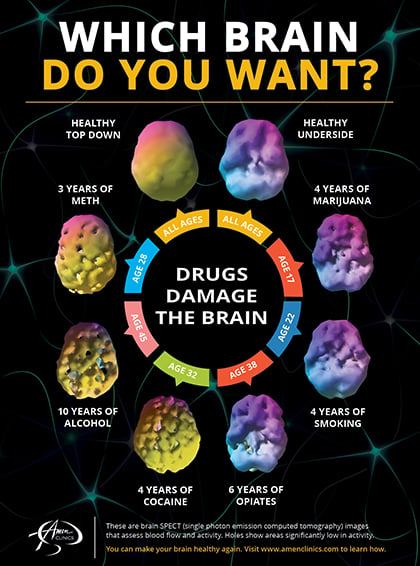
2. Revealing the effects of everyday drugs.
Brain imaging shows that substances like marijuana (now legal in some states), nicotine, caffeine, and even too much sugar compromise brain function.
3. Brain imaging reveals there is more than one type of addiction.
One of the most important things brain imaging shows is that addiction is not a single or simple disorder. There are 6 types of brain patterns associated with addiction, and each type requires individualized treatment. The 6 types of addiction are:
Type 1: Compulsive Addicts
Type 2: Impulsive Addicts
Type 3: Impulsive-Compulsive Addicts
Type 4: Sad of Emotional Addicts
Type 5: Anxious Addicts
Type 6: Temporal Lobe Addicts
4. SPECT brain scans reduce shame and stigma.
If you’re like most people who struggle with substance abuse, you probably think it is all your fault or that you are a bad person. Brain imaging helps erase these untrue and unhelpful thoughts. When you see that addiction is a brain disorder, it helps lift the stigma that typically comes with addiction.
5. Brain scans help break denial.
Addicts are usually the last one to admit that they have a problem. Take Chase, for example. At 18, he was drinking and using OxyContin, coke, meth, and more, but he didn’t think he had a problem. His mother eventually took him in for a brain scan, which revealed a very toxic brain. When Chase saw his brain scans, it hit him hard. Even though he didn’t think the drugs and drinking were a problem, he couldn’t deny the damage he saw in his scans. That was what he needed to finally get clean and sober.
6. Seeing your brain scan helps your family understand better.
Parents of substance abusers often feel like it’s their fault, or they blame each other for their child’s addiction. Seeing that addiction is a brain disorder eliminates these feelings and helps the entire family get focused on helping the substance abuser heal their brain.
7. Brain imaging reveals co-morbid conditions.
It is common for people with addictions to suffer from other issues, such as depression, anxiety, ADD/ADHD, bipolar disorder, or head injuries (like Rachel, who was kicked in the head by a horse). In order to heal from addiction, these other issues also need to be addressed.
8. Seeing your brain motivates you to follow a treatment plan.
For many people, like Chase, seeing how toxic their brain looks is one of the greatest motivators for treatment. When they understand that it is their brain health that is the key to having success at school, at work, and in relationships, it increases that motivation.
9. Follow your progress.
Seeing before-and-after SPECT brain scans is the best way to objectively know when an addiction treatment plan is working effectively or when it should be adjusted to promote faster healing.
10. SPECT scans give you hope.
The before-and-after scans of substance abusers show some of the greatest improvements in brain health. When you see these, it gives you hope that no matter what you are addicted to—drugs, alcohol, smoking, or even overeating—your brain can recover too.
At Amen Clinics, we use SPECT brain imaging as part of a comprehensive evaluation to help people of all ages heal from all types of addictions. We use an integrated brain-body approach to treatment that includes biological, psychological, social, and spiritual elements to identify areas of your life—or a family member’s life—that can be optimized. To learn more, call 888-288-9834 to talk to a specialist today or schedule a visit.
One of the hottest—and most controversial—topics in the field of health and wellness right now is CBD. At every mental health conference, an audience member inevitably asks, “What about CBD?” The same question pops up every day on Facebook, Instagram, and Twitter.
If you’re like most people, you may be wondering if CBD can decrease your anxiety, help your aging mother’s chronic pain, or even help your dog’s arthritis. What it can and can’t do is still being explored.
To delve into the pros and cons of CBD, Dr. Rebecca Siegel, a child, adolescent, and adult psychiatrist, recently joined Dr. Daniel Amen and Tana Amen on the Brain Warrior’s Way Podcast. In this 4-part series, you’ll find the answers to many questions about CBD, THC, and medical marijuana, such as:
- Can CBD minimize chronic pain? Alleviate anxiety? Improve your sleep issues? Decrease PTSD symptoms? Can it help with other conditions?
- What is CBD legally approved for?
- What’s the difference between CBD and THC?
- What’s the difference between CBD and medical marijuana?
- Is CBD addictive?
- Can CBD make you feel stoned?
- Is CBD bad for your brain?
- Is it helpful for people with mental health issues or does it make people worse?
- What does cannabis do to the teenage brain?
- What does the research say about CBD?
Click here to tune into the Brain Warrior’s Way podcast series with Dr. Amen, Tana Amen and special guest Dr. Rebecca Siegel from Amen Clinics New York.
Part 1: http://brainwarriorswaypodcast.com/lets-talk-about-cbd-with-dr-rebecca-siegel/
Part 2: http://brainwarriorswaypodcast.com/cbd-use-what-does-the-research-say-with-dr-rebecca-siegel/
Part 3: http://brainwarriorswaypodcast.com/medical-marijuana-whats-medically-correct-with-dr-rebecca-siegel/
Part 4: http://brainwarriorswaypodcast.com/is-cbd-good-for-your-health-with-dr-rebecca-siegel/
If you’d like more information or you’re struggling with mental health issues and are wondering about treatment options, understand that at Amen Clinics, we believe in using the least toxic, most effective treatments available. Speak with a specialist today by calling 888-288-9834 or schedule a visit.
As the legalization of cannabis expands in the U.S., interest is skyrocketing in the drug’s potential as a therapy for physical and psychological issues. Many teens see legalization as a green light to light up. But even though some research suggests possible therapeutic effects for people with anxiety, depression, and PTSD, other studies point to marijuana’s negative effects on young, developing brains.1. Increases the risk of depression and suicidal behavior
Using marijuana before the age of 18 significantly increases the risk of developing depression, suicidal thoughts, or suicide attempts in young adulthood, according to a 2019 review of 11 studies involving more than 23,000 people. The study concluded, “This is an important public health problem and concern, which should be properly addressed by health care policy.”2. Impairs cognitive function
Decades of research shows that marijuana impairs brain functions, such as memory, learning, and attention. Adolescents who use cannabis frequently have been shown to experience a decline in IQ, perform more poorly in school, and are more likely to drop out. Later in life, they have higher rates of unemployment and tend to have lower rates of satisfaction with their life in general.3. Disrupts the brain’s maturation process
During the teenage years, the brain is undergoing rapid development. A process called myelination takes place, coating neurons with a protective white-colored sheath that helps speed communication in the brain. This important process, which gives the brain’s white matter its color, isn’t completed until a person’s mid-20s. Heavy cannabis use as an adolescent can interfere with this process, damage the brain’s white matter, and result in a higher incidence of impulsivity, especially in teens who started smoking marijuana prior to the age of 16.4. Reduces blood flow to the brain
A 2016 brain imaging study on nearly 1,000 cannabis users showed overall decreased blood flow compared to a healthy group of nonusers. The brain region most likely to be affected in marijuana users in this study was the hippocampus, which is involved in memory, moods, and learning. Low blood flow on brain SPECT imaging has also been seen with ADHD, depression, suicide, bipolar disorder, schizophrenia, and more. Any addictive substance can ruin lives and ruin families, and marijuana is no exception. Amen Clinics takes a 360-degree approach to treating addictions — addressing any co-existing conditions and using a whole suite of strategies to enhance overall brain health. If you’re concerned about an adolescent’s cannabis use, reach out today to make an appointment online or by calling 888-288-9834.Schizophrenia, cannabis use, and alcohol abuse are just several disorders that are related to accelerated brain aging.
COSTA MESA, CA, August 21, 2018 – In the largest known brain imaging study, scientists from Amen Clinics (Costa Mesa, CA), Google, John’s Hopkins University, University of California, Los Angeles and the University of California, San Francisco evaluated 62,454 brain SPECT (single photon emission computed tomography) scans of more than 30,000 individuals from 9 months old to 105 years of age to investigate factors that accelerate brain aging. SPECT tomography) evaluates regional cerebral blood flow in the brain that is reduced in various disorders. Lead author, psychiatrist Daniel G. Amen, MD, founder of Amen Clinics, commented, “Based on one of the largest brain imaging studies ever done, we can now track common disorders and behaviors that prematurely age the brain. Better treatment of these disorders can slow or even halt the process of brain aging. The cannabis abuse finding was especially important, as our culture is starting to see marijuana as an innocuous substance. This study should give us pause about it.” The current study used brain SPECT imaging to determine aging trajectories in the brain and which common brain disorders predict abnormally accelerated aging. It examined these functional neuroimaging scans from a large multi-site psychiatric clinic from patients who had many different psychiatric disorders, including bipolar disorder, schizophrenia and attention deficit hyperactivity disorder (ADHD). Researchers studied 128 brain regions to predict the chronological age of the patient. Older age predicted from the scan compared to the actual chronological age was interpreted as accelerated aging. The study found that a number of brain disorders and behaviors predicted accelerated aging, especially schizophrenia, which showed an average of 4 years of premature aging, cannabis abuse (2.8 years of accelerated aging), bipolar disorder (1.6 years accelerated aging), ADHD (1.4 years accelerated aging) and alcohol abuse (0.6 years accelerated aging). Interestingly, the researchers did not observe accelerated aging in depression and aging, which they hypothesize may be due to different types of brain patterns for these disorders. Commenting on the study, George Perry, PhD, Chief Scientist at the Brain Health Consortium from the University of Texas at San Antonio, said, “This is one of the first population-based imaging studies, and these large studies are essential to answer how to maintain brain structure and function during aging. The effect of modifiable and non-modifiable factors of brain aging will further guide advice to maintain cognitive function.” Co-investigator Sachit Egan, Google Inc. (Mountain View, CA), said, “This paper represents an important step forward in our understanding of how the brain operates throughout the lifespan. The results indicate that we can predict an individual’s age based on patterns of cerebral blood flow. Additionally, groundwork has been laid to further explore how common psychiatric disorders can influence healthy patterns of cerebral blood flow.”Drivers of Brain Aging
 If you or a loved one is experiencing symptoms of Alzheimer’s disease, dementia, or depression, Amen Clinics can help. We will help you learn more about your brain and assist with early diagnosis and intervention. Call us today at (888) 288-9834 or visit our website to schedule a visit.