Relationships are crucial to having a healthy and caring life with those who you value. In Daniel G. Amen, MD’s new book, “Feel Better Fast and Make It Last“, these techniques come from research in the field of interpersonal psychotherapy (IPT). Enhancing interpersonal skill has proven effective in reducing anxiety, depression, and stress, and in improving both business success and marital satisfaction.
The acronym RELATING will help you remember the essential relationship habits:
R IS FOR RESPONSIBILITY
Responsibility is not about blame. It is about your ability to respond to whatever situation you are in. What can you do today to make your relationships better? You win more in relationships when you ask yourself this question and stay away from blaming others.
E IS FOR EMPATHY
Developing empathy involves a number of important skills, including mirroring, treating others in a way you would like to be treated, and being able to get outside of yourself.
L IS FOR LISTENING AND GOOD COMMUNICATION
Poor communication is at the core of many relationship problems. Jumping to conclusions, trying to read minds, and needing to be right are only a few traits that doom communication. Too often in relationships we have expectations and hopes that we never explicitly communicate to our partners or colleagues. Clear communication is essential if relationships are to be mutually satisfying.
A IS FOR ASSERTIVENESS
Assertiveness involves standing up for one’s rights without infringing upon those of others, whereas aggression involves the use of verbal and nonverbal noxious stimuli to maintain rights.
T IS FOR TIME
Relationships require actual, physical time. In this era of commuting, traffic, two-working-parent households, e-mail, the Internet, television, and video games, we have seriously diminished the time we have with the people in our lives. Being present in the moment with your spouse, friend, or colleague can help make the other person feel appreciated and secure.
I IS FOR INQUIRING
Ask yourself what thoughts are repeatedly going through your mind, and then consider how accurate they might be. Often when we tell ourselves little lies about other people, it puts unnecessary wedges between us and them. Relationships require accurate thinking in order to thrive. Whenever you feel sad, mad, or nervous in relationships, check out your thoughts. If there are automatic negative thoughts (ANTs) or lies, stomp them out.
N IS FOR NOTICING WHAT YOU LIKE
Noticing what you like a lot more than what you don’t like is one of the secrets to having great relationships. Paying attention to what you like encourages more of that behavior.
G IS FOR GRACE AND FORGIVENESS
One of the most famous prayers in history commands us to forgive others if we ourselves want to be forgiven. Forgiveness is powerful medicine. Holding on to grudges and hurts, even if they are small, increases stress hormones that negatively impact our moods, immunity, and overall health.
8 Strategies To Enhance Your Ability To Connect By RELATING
1. Ask yourself if you are taking RESPONSIBILITY in your relationships: “How can I respond in a positive, helpful way?”
2. Practice EMPATHY: Treat others as you would like to be treated.
3. In conversations, LISTEN and practice good communication skills.
4. Be ASSERTIVE: Say what you mean and stick up for what you believe is right in a calm, clear, kind way.
5. Spend TIME: Remember that actual, physical time with others is critical to healthy relationships.
6. INQUIRE into the negative thoughts that make you suffer in a relationship and decide if they’re true.
7. NOTICE what you like in the behavior of those around you more than you notice (and complain about) what you don’t like.
8. Give the altruistic gift of GRACE and forgiveness whenever you can.
At Amen Clinics, we’re committed to treating our patients with the least toxic, most effective regimen. For more information on how SPECT imaging can help provide a customized treatment plan to help heal your brain, call us today at 888-288-9834 or visit us online to schedule a visit.
Many women are affected by feelings of hopelessness and depression after giving birth. There is no single cause for this mood disorder, and postpartum depression treatment requires expert care.
What Are the “Baby Blues?”
It’s natural for mothers to feel unhappiness, sometimes referred to as the “baby blues.” This is a temporary and mild feeling that may last a week or two during periods of difficulty while managing the baby.
Postpartum depression (PPD) may onset before the baby is born and affects the early weeks and months of bonding with the baby. This gives the mother extreme symptoms, getting in the way of caring for herself and the baby.
Causes & Symptoms of Postpartum Depression
Mothers with postpartum depression often experience a deep level of despair. They will feel physically exhausted and emotionally burdened while unable to lift themselves from their sadness.
If left untreated, this depression can continue for an extended period of time, possibly into the baby’s early childhood. Women may also feel depressed during pregnancy, and early signs of depression should be made aware to a physician for postpartum depression treatment at the start of symptoms.
Despite popular belief, depression and anxiety are very similar disorders. Mothers with postpartum depression and anxiety may feel they are swinging between two extreme moods. These are the most common symptoms of postpartum depression:
• Feelings of sadness or hopelessness
• Feelings of sudden anger or rage
• Feelings of anxiety or difficulty with decision-making
• Feelings of failing to adopt “motherly instincts”
• Self-isolation from friends and family
• Sleeping too little or too much, and out of sync with the baby
• Eating too little or too much
• Difficulty forming an attachment to the baby
• Thoughts of self-harm or harming the baby
Other mothers may experience postpartum infections in the uterine, bladder or kidney. These infections sometimes don’t become apparent until weeks after delivery. Mothers may also experience breast tenderness, backaches, headaches, hair loss, constipation, and pain with intercourse.
Full recovery from delivery can take months, and women with cesareans may also experience pain around the site of the scar for up to six months.
It’s very common for women to feel overwhelmed by the side effects of giving birth, and to fall into postpartum depression.
Postpartum Depression Treatment & Therapy
The first step all mothers must take if they are feeling the symptoms of postpartum depression is to seek help.
Postpartum depression is never something to feel ashamed of, and treatment is crucial to the health of both the mother and the baby. Mothers are not at fault for their symptoms and require help in order to feel better. Mothers who are depressed put their children at risk of Reactive Attachment Disorder, a disorder where the child can’t properly form attachment due to emotional neglect.
At this time in a women’s life, some mothers may also find they are genetically predisposed to a disease or experience dramatic hormonal changes. The stress of childbirth often affects our bodies to express genes which weren’t previously expressed. In a conversation on “Why Do Mothers Suffer From Depression,” Dr. Amen discusses with his wife, Tana Amen, the significance of women having their thyroid hormones checked. Hashimotos, for example, is an autoimmune disease which primarily affects the thyroid and can have a large influence on swinging between anxiety and depression.
4 Ways to Help Heal Depression in Mothers
Postpartum depression treatment starts with lifestyle changes. Amen Clinics recommends medication when necessary, and prioritizes natural treatments to help women feel themselves again. Treating postpartum depression without medication is our goal, and all cases are treated with a personalized health plan for the greatest possibility of success.
1. Exercise and Return to Fun Hobbies
Exercising is a sure way to boost your dopamine, which affects the pleasure centers of the brain. Starting up your favorite hobbies and surrounding yourself with friends and family can help boost your overall stress resilience, and can get yourself and the baby out of the house.
2. Positive Thinking
Positive thinking can be very difficult for women with postpartum depression. Here at Amen Clinics, we often talk about an acronym called ANTS, which stands for “automatic negative thoughts.” Become aware of these thoughts and learn how to correct them with our help.
3. Omega 3 Fatty Acids
Dr. Amen also recommends taking omega 3 fatty acids, as they play a role in the central nervous system and have been found to influence depressive disorders.
4. Get Assessed
Depression is not one thing, and treatment depends on what kind of depression you have. Seeking expert help is essential for identifying the root cause of the depression and treating it for lasting results. For example, many adults are undiagnosed with ADD/ADHD, and only a professional mental health expert can identify and treat for the root cause of depression and anxiety.
Find a Postpartum Depression Clinic
In addition to the physical stress labor, childbirth, and recovery put on women’s bodies, a newborn baby must also be taken care of. For many mothers, occasional sadness is natural to experience, but there is always help for feelings of depression.
Here at Amen Clinics, we help women with postpartum depression and anxiety so that they are capable of caring for themselves and their babies.
Make an appointment for postpartum depression treatment by calling 888-288-9834 today or scheduling online, and review our locations to find the nearest clinic to your home.
We have eight locations across the country in cities including Atlanta, Chicago, New York, Washington DC, and Los Angeles. We also have locations in Orange County, CA, in Walnut Creek, CA, and in Bellevue, WA.
For more insight, watch the following video from Dr. Amen’s episode of “Why Do Mothers Suffer From Depression,” starting at the 2-min mark.
When you hurt, you want to feel better now, fast, pronto! That is what hurting people want. No one wants to be patient. No one wants a prolonged process. They want to feel better fast, and they want it to last.
Meet Leiza
Leiza was 50 years old when she first came to Amen Clinics Atlanta. She brought her teenage son to us for ADHD because he had not responded to treatment. She also decided to be scanned because, as she said, “I’m very scattered, always late, and my memory is poor. My father and his mother had dementia, and I don’t want it.”
Chronic Memory Problems
She had been an actor and then a stay-at-home mother for 20 years. As her children were becoming more independent, she wanted to act again, but she didn’t believe she could. She told one of her friends, “I could never go back to work. I can’t remember anything. I can’t focus. I can’t make any decisions.”
The two years before Leiza came to see us were the most challenging in her life. She had felt a lot of anxiety while taking care of her son’s learning disabilities, her daughter’s depression, and her father’s dementia, and in dealing with the death of her mother-in-law. With the chronic stress, Leiza noticed more problems with her memory. She would make appointments and then forget to show up, despite having put the appointment on her calendar.
How SPECT Helped Leiza
As part of our workup of Leiza, we did a brain imaging study called SPECT (single photon emission computed tomography), which looks at blood flow and activity—essentially, how the brain works. Her SPECT scan showed severely decreased blood flow across her whole brain, which was very concerning given the family history of Alzheimer’s disease. Our research and that of others has shown that Alzheimer’s disease and other forms of dementia start in the brain decades before people have any symptoms. Leiza was already symptomatic, and her brain showed that she was headed for the same fate as her father and grandmother.
Leiza’s scan was the wake-up call she needed to get serious about rehabilitating her brain now if she wanted to feel better fast. She started taking targeted supplements and doing a treatment called hyperbaric oxygen therapy (HBOT).
Within several months she noticed a significant improvement in her mood, focus, and memory. She started to audition for television and landed a lead role in a TV pilot as the FBI Director. She said none of it would have been possible without rehabilitating and caring for her brain. Her follow-up scan two years later showed remarkable improvement, which is something we have seen repeatedly over the past three decades. Your brain can be better and you can feel better!
The Missing Strategy To Feeling Better Fast
One of the most important secrets to our success at Amen Clinics is that we focus first on understanding, healing, and optimizing the physical functioning of the brain (hardware), and second on properly programming it (software). Both always work together, and if you ignore one while only working on the other, you will have a harder time consistently feeling better.
Dealing with a condition like Leiza’s can be challenging, especially when symptoms are compounded by a number of other issues. Our goal is to help you achieve and maintain optimal brain health. One of the best ways we can accomplish that is with the use of brain SPECT imaging. If you want to read more stories like Leiza’s, we recommend reading Dr. Amen’s new book, “Feel Better Fast and Make It Last.” You can order the book by clicking here.
For more information on how SPECT imaging can help provide a customized treatment plan to help heal your brain, call us today at 888-288-9834 or visit us online to schedule a visit.
Virtually all of us have felt anxious, depressed, traumatized, grief-stricken, or hopeless at some point in life. It’s perfectly normal to go through hard times or experience periods when we feel panicked or out of sorts, whether we have a diagnosable condition or not. How we respond to these challenges makes all the difference in how we feel – not just immediately, but in the long run.
Beware the Quick Fix
All of us want to stop the pain quickly. Plenty of things may help in the short-term but will make us feel worse in the long-term. For example, many people self-medicate with energy drinks, overeating, drugs, alcohol, risky sexual behavior, anger outbursts, or wasting time on mindless TV, video games, social media, or shopping.
Although these substances and behaviors may give us temporary relief from feeling bad, they usually only prolong and exacerbate the problems – or cause other more serious ones, such as energy crashes, obesity, addictions, sexually transmitted diseases, unhappiness, relationship problems, or financial ruin.
Is it Really Possible to Feel Better Fast?
The truth is, we live in an impatient society. When people seek help for mental health issues, the most common number of therapy sessions they receive is one. Either they find benefit from getting their worries and frustrations off their chests and learning simple strategies, or they determine that therapy won’t be helpful for them. Even when they commit to ongoing therapy, the average number of sessions a patient attends are six or seven, regardless of the psychotherapist’s theoretical orientation.
Many people, mental health professionals included, think therapy needs to be long, hard and painful. They believe that if you start medication for anxiety or depression, you’re making a lifelong commitment. Certainly, some people will experience a longer period of recovery than others, but many people can feel better fast if they engage in the right behaviors and strategies, which include knowing about and optimizing their brains.
Stop Waiting, Start Healing
You can make yourself feel worse almost immediately by dwelling on the worst possible outcome of a situation, spending time with highly toxic people, or sabotaging each of your senses with dreadful sounds, smells, tastes, touches, or sights. You can just as easily make yourself feel better through simple choices like practicing gratitude, surrounding yourself with caring people, and using many other brain healthy techniques.
You don’t have to wait for an epiphany to change your behavior. You don’t need to have a heart attack or get cancer to get serious about your health. Most people can change their environment (friends, workplace, church) or the people they surround themselves with, and all of us can make small changes that, over time, create amazing results.
To feel better fast AND make it last, use the simple mnemonic (memory aid) BRAIN-XL:
B is for Brain
Your brain likes to do what it’s always done, even when that isn’t in your best interest. Getting stuck in unhelpful behaviors, holding grudges, and engaging in unproductive worrying all cause immense suffering. Whenever you feel sad, mad, nervous, or out of control, it’s critical to have emotional-rescue techniques. The secret to feeling better fast now and for a lifetime is to immediately work on optimizing the physical functioning of your brain.
R is for Rational Mind
Once the physical functioning of your brain is healthy, it’s critical to know how to strengthen your rational mind. It’s important for you to develop the mental discipline necessary for feeling better fast, including eliminating the ANTs (automatic negative thoughts), quieting your mind, focusing on gratitude, and even welcoming failure. With the help of some basic techniques, it’s possible for you to master your rational mind.
A is for Attachments
Our attachments bring us the greatest joys and the most painful sorrows. When relationships are stressed or break apart, people become unhappy and vulnerable to acting in counterproductive ways. The way the brain functions is often the missing piece in understanding healthy or difficult relationships, trauma, and grief. Learning how to improve your relationships can help you save your job, your marriage, your friendships, and all your relationships.
I is for Inspiration
True inspiration comes from knowing why you are on the planet and grasping the meaning and purpose underlying what you do. Knowing and acting on your “why” is critical to living each day with joy. Purposeful people are happier and healthier, and live longer. Protecting your brain’s pleasure centers can help you live with passion and purpose and avoid addictions and depression. This knowledge can help you feel joyful every day.
N is for Nourishment
Your brain needs a constant source of energy. Think of it as the battery that powers your life. Eating healthy foods can immediately boost your focus, memory and mood. Additionally, a personalized, targeted supplement regimen can help your brain get the nutrients it needs.
X is for X Factor
In any given situation, the X factor is the variable that has the most significant impact on the outcome. For people who have complex psychological or psychiatric problems or are treatment resistant, taking a look at the brain can be the difference between success and failure, healing and remaining ill, even life and death. Getting a brain SPECT scan can literally change everything in your life.
L is for Love
Dong the right thing is the ultimate act of love for yourself and others. Love is the motivation that prompts us to put in the consistent effort and make the changes required to get healthy. The science of epigenetics has shown that caring for your brain and body can impact generations to come. Learning about the different types of love can improve your relationships and your ability to get and stay well.
If you want to learn more about how the BRAIN-XL principles can help you stop the pain quickly, we recommend reading Dr. Amen’s new book, “Feel Better Fast and Make It Last.” You can order the book by clicking here.
For more information on how SPECT imaging can help provide a customized treatment plan to help heal your brain, call us today at 888-288-9834 or visit us online to schedule a visit. In Part 1 of this blog series, you discovered how brain health is the key to a happy, successful, and fulfilling life, and we outlined the first 6 prescriptions for creating a brain healthy life.
Here are the remaining 6 prescriptions:
7. LEARN BRAIN HEALTHY WAYS TO DEAL WITH PAIN
Chronic pain can have a negative impact on a number of areas of life, such as sleep, mood, memory, and concentration. It can also change the way the brain functions. Brain SPECT imaging has taught us that the use of some chronic pain medications, such as opioids, may be harmful to brain function. Long-term use of these medications makes the brain look toxic, like people who drink too much alcohol.
This is not to say we must completely rule out pain medications, they can be necessary until other treatment options are available. Possible alternative treatments for pain are fish oil, acupuncture, music therapy, and hypnosis.
Pain and depression tend to go hand in hand. For some people, taking the natural supplements saffron or SAMe may be helpful for both.
Again, there are many natural ways to help the brain. Of course, you should talk to your doctor before starting or stopping any medications or supplements. If your physician does not know much about natural supplements, a naturopathic doctor or an integrative/functional medicine physician can be helpful.
8. YOU NEED A BRAIN HEALTHY DIET
Fuel your brain with foods that nourish it. What does a brain healthy diet include?
• Lean protein, such as turkey or chicken (choose antibiotic-free, hormone-free options when possible).
• Low-glycemic, high-fiber carbohydrates that do not raise your blood sugar, such as whole grains and green leafy vegetables.
• Healthy fats that contain omega-3 fatty acids found in foods such as tuna, salmon, avocados, and walnuts.
Adequate hydration. Anything that dehydrates you—such as alcohol, caffeine, excess salt, or not drinking enough fluids—is bad for the brain. Drink plenty of water to keep yourself well hydrated.
9. PHYSICAL EXERCISE
Physical activity is literally the fountain of youth because it boosts blood flow to the brain, plus it increases chemicals that are important for learning and memory and stimulating the growth of new brain cells. Research, including a 2014 study, show that physical activity improves mood, anxiety, and even cognitive health. In one study in the Archives of Neurology, exercise was shown to lower the risks of cognitive decline and dementia in older adults. Exercising for 30-45 minutes 3 or 4 times a week is all you need. One of the simplest exercises is to walk fast like you’re late to be somewhere.
10. MENTAL EXERCISE
When it comes to brain health, mental exercise is just as important as physical exercise. If you stimulate new brain cells with new learning, they connect to other cells and become part of the fabric of your brain.
Learning new dance steps is a great mental exercise because it involves learning, coordination, music, AND physical exercise. All those things are great for your brain. Crossword puzzles, learning a musical instrument, or exploring a new language can also help. The key is consistently finding new mental exercises to try.
11. NOTICE WHAT YOU LOVE ABOUT YOUR LIFE A LOT MORE THAN WHAT YOU DON’T LOVE
Dr. Amen once did a study with psychologist Noelle Nelson on the power of appreciation. He scanned her twice: once when she was focused on what she loved about her life, and then again while she focused on what she hated about her life. The scans were radically different. The loving scan looked healthy, while the hateful scan showed negative changes in activity in several important areas of her brain involving emotions and memory.
Other studies have found that focusing on negative thoughts changes the brain in a negative way. Creativity, learning, and imagination all go DOWN with negative emotion while focusing on positive, happy, hopeful thoughts helps both the brain and you work better.
Here is a simple exercise: Write down 5 things you are grateful for EVERY DAY and then meditate on these things throughout the day.
12. NOTICE WHAT YOU LOVE ABOUT OTHER PEOPLE A LOT MORE THAN WHAT YOU DON’T LOVE
Spending time with family, friends, coworkers, and even acquaintances is a part of necessary social interaction as humans. However, with social interaction and with certain types of people in our lives, these situations can be stressful and anxiety-provoking. We’ve all been there. To start, it’s beneficial to surround yourself with positive energy and disassociate from the negative people in your life who don’t contribute to your overall happiness. Then you can focus on the people who truly benefit you and your development throughout life.
The next step is to also be a positive light in people’s lives—focusing on what you love about the meaningful people in your life and being a source of support for them when they need help.
Finally, when you think about the people in your social circle, focus on how they bring joy into your life. By directing your attention to what makes you happy, you will positively influence your brain function and be happier.
CONCLUSION
As you have seen in this 2-part blog series, there are many natural ways to optimize your brain and your mind. You CAN create a brain healthy life by learning how to love and care for your brain, and by focusing on what you love about your life. Take what you have learned here to develop your brain healthy life and teach it to others, including your family members, coworkers, friends, fellow churchgoers, and more. By creating brain healthy families, businesses, and communities, we ALL benefit.
If you’re having mental, emotional, or cognitive health issues, it could be a sign that your brain could benefit from optimization. During these uncertain times, your overall brain health and well-being are more important than ever and waiting until life gets back to “normal” is likely to make your symptoms worsen over time. At Amen Clinics, we’re here for you. We offer in-clinic brain scanning and appointments, as well as mental telehealth, remote clinical evaluations, and video therapy for adults, children, and couples. Find out more by speaking to a specialist today at 888-288-9834 or visit our contact page here. The brain is the organ of learning, loving, and behaving. When your brain works right, you work right. When your brain is troubled—for whatever reason—you tend to have trouble in your life.
Your brain weighs only about 3 pounds or about 2% of your body’s weight. Yet, it uses 20 to 30% of the calories you consume, 20% of the oxygen you breathe, and 25% of the blood flow in your body. It is estimated that the brain has 100 billion nerve cells and more connections in it than there are stars in the universe. There are also trillions of supportive cells in the brain called glia. Each neuron is connected to other neurons by up to 40,000 individual connections (called synapses) between cells.
When your brain works right, you work right. When your brain is troubled—for whatever reason—you tend to have trouble in your life.
A piece of brain tissue the size of a grain of sand contains 100,000 neurons and 1 billion synapses, all “talking” to one another. Information in your brain travels at speeds of up to about 268 miles per hour. If you don’t take care of your brain, you lose on average 85,000 brain cells a day. That is what causes brain aging. With appropriate forethought, however, you can reverse that trend and dramatically slow the aging process and increase your mental agility. Knowing how to care for your brain is the first and most important step to success.
Given the brain’s central role in success, we offer 12 prescriptions to optimize it for a better life in all you do.
Here are the first 6 prescriptions:
1. LOVE YOUR BRAIN
Most people never think about their brain for the simple reason that they can’t see inside their heads. We can see if our bellies start to expand or if we start to get wrinkles on our faces, prompting us to take action to improve our appearance.
At Amen Clinics, brain SPECT imaging gives our patients the ability to see the overall health of their brain and to see areas that could benefit from optimization. Seeing is believing, and it helps people fall in love with their brain and want to take care of it every day.
Loving your brain is the first step toward creating a brain healthy life.
2. INCREASE THE BRAIN’S RESERVE
Have you ever wondered why certain stresses or injuries affect some people and not others? Why do some people get depressed after losing a parent while others, although sad, keep on going? Why do some people struggle with their mental and cognitive health after a minor head injury while others don’t? Why are some people able to roll with being fired or getting divorced while others nearly lose their minds?
After looking at tens of thousands of brain scans, we began to think about the concept of “brain reserve.” Brain reserve is the cushion of healthy brain tissue we have to deal with the unexpected stresses that come our way. The more reserve we have, the more resilient we are in times of trouble. The less reserve, the more vulnerable we are.
For example, if you fell off a bunk bed onto your head at age of 10, were exposed to chronic stress from alcoholic parents, or drank much alcohol, or used drugs as a teenager, you decreased your brain’s reserve. On the other hand, if you protected your head, were raised by reasonably loving and consistent parents, ate a healthy diet, and avoided drugs and alcohol, you increased your reserve.
The exciting news is that it is never too late to work on increasing your brain’s reserve.
3. PROTECT YOUR BRAIN
Your brain is soft and your skull is hard. Concussions and even very minor head injuries can ruin your life, so wear your seat belt, drive in safe vehicles, protect your head in sports or steer clear of contact sports.
4. STOP POISONING YOUR BRAIN
Do not put toxic substances in your body. If you poison your brain, you poison your mind. Avoid alcohol, drugs (including marijuana), and smoking. In addition, limit your caffeine intake, avoid chemical-laden cleaning products and personal care products, and be careful with prescription and over-the-counter medications.
5. PROTECT YOUR MEMORY
It is critical to take early memory problems seriously and not just dismiss them as normal aging. One of the MOST important things you can do to keep your memory strong is exercise. Physical activity boosts blood flow, and on SPECT scans, low blood flow is the #1 predictor of future Alzheimer’s disease. There are also several supplements that have good supporting research for memory including phosphatidylserine, acetylcarnitine, saffron, curcumins, fish oil, ginkgo biloba, sage, and a Chinese moss extract called huperzine.
6. GOOD SLEEP IS ESSENTIAL TO THE HEALTH OF YOUR BRAIN
Unfortunately, 60 million Americans have trouble sleeping, which affects your mood, memory, and ability to concentrate. It is estimated that sleep-deprived people cause more accidents than drunk drivers. Because of sleep problems, doctors are prescribing sleep medications that can affect your moods and memory at alarming rates.
To overcome sleep problems, you need to eliminate anything that might interfere with sleep, such as caffeine or alcohol. Additionally, natural supplements such as melatonin, magnesium, l-theanine, and 5-HTP can be helpful.
Hypnosiscan be an effective natural replacement for sleeping pills or medications. Hypnosis and self-hypnosis are very powerful tools to help us gain mastery over our own minds and bodies and can be helpful not only for sleep but also for anxiety and pain.
To read the next 6 prescriptions for creating a brain healthy life, click here.
If you’re having mental, emotional, or cognitive health issues, it could be a sign that your brain could benefit from optimization. During these uncertain times, your overall brain health and well-being are more important than ever and waiting until life gets back to “normal” is likely to make your symptoms worsen over time. At Amen Clinics, we’re here for you. We offer in-clinic brain scanning and appointments, as well as mental telehealth, remote clinical evaluations, and video therapy for adults, children, and couples. Find out more by speaking to a specialist today at 888-288-9834or visit our contact page here.
Have you ever misplaced your keys or completely forgotten a recent conversation? Have you ever gotten lost while driving a familiar route? We’ve all experienced these moments. And asked ourselves, “Was it a ‘senior moment’ or something more?”
Be warned: Seeing your local doctor about these situations may be fruitless and frustrating. With all the latest medical advances and discoveries, traditional medical practices aren’t up-to-date in dealing with early warning signs of memory loss. A traditional physician may ask you a few questions and do some elementary memory tests, then he or she will most likely say, “Everyone has memory problems as they age. It’s normal.” But is it?
Despite what many healthcare practitioners would have you believe, losing your memory or developing brain fog in your forties, fifties, sixties, or even seventies is not normal—it’s a sign of trouble. But memory loss is not inevitable. If you’re experiencing symptoms of memory problems, early intervention is key to getting results. Now is always the best time to get serious about brain health.
To outsmart your genes, put the brakes on aging and start rescuing your memory, try these three practical strategies:
1. Become a Lifelong Learner
In the BRIGHT MINDS mnemonic, R is for Retirement and Aging. One of the keys to aging well is to continually engage in new learning. Like a muscle—the more you use your brain, the stronger it gets. Whenever you learn something, new neural connections are created. Regardless of your age, mental exercise has an overall positive effect on your brain. On the other hand, when you stop learning, your brain starts dying. Cognitive performance starts to suffer as the internal connections in your brain begin to break apart.
2. Avoid Repetitious Activities
Even if your routine tasks are fairly complicated, such as teaching a college course or fixing a crashed computer network, they won’t help your brain as much as learning something new. Whenever the brain does something over and over, it learns how to do it using less and less energy. Just doing crossword puzzles or Sudoku won’t give you the maximum benefits the brain needs from practicing new learning.
3. Dedicate 15 Minutes a Day
One of the most popular excuses for not taking care of your health is “I don’t have time.” Well, if you don’t have 15-minutes to spare, you may not have a life. Research shows that with just 15 minutes a day, you can significantly improve your brain health. Try a new hobby like painting or playing a musical instrument. Try a new activity like yoga or dancing. Or try learning a new subject matter or language. 15-minutes a day may just change your life.
The best way to sharpen recall, reduce brain atrophy, and address Alzheimer’s disease is to eliminate all of the risk factors with the BRIGHT MINDS strategy.
Need more motivation to shed a few pounds? New research suggests that when you lose weight, your memory can actually get stronger.
In another study, researcher Andreas Stomby, MD shows that losing weight actually alters how your brain works, leading to better memory performance. Being overweight is linked to memory and concentration problems.
Take for example, one of our patients, who was 30 lbs. overweight, which put him in the obese category. His name was Bud. He was 52. He came to Amen Clinics because he was concerned about his memory, focus and energy.
His wife was 20 years his junior and together they had two young children together, ages five and seven. So, he was motivated to rescue his memory to have a healthy mind and memory for his family.
His brain scan showed decreased activity in the frontal and temporal lobes. During his evaluation, he showed significant memory, attention and executive decision making problems.
From his medical history, we learned he had untreated ADHD and bouts of depression that were becoming more frequent as stress piled up at work.
Also, memory loss was in his genes. His mother died of Alzheimer’s disease. He had one copy of the APOE e4 gene variant. Having at least one APOE e4 gene increases your risk of developing Alzheimer’s disease. Bud was clearly headed for serious trouble.
After seeing his scans, Bud was determined to become an active participant in his health. He radically changed his diet and established a regular exercise routine. He started weight lifting twice a week and replaced his typical 30-minute slow walk twice a week with burst training three times a week. Also, Bud became faithful to his supplement regimen.
Over the next year, Bud lost 30 pounds, and his blood sugar and blood pressure dropped to normal levels without any medications. He reported that his memory, focus and energy were better than they had been in 30 years.
Using SPECT imaging, in conjunction with Amen Clinics BRIGHT MINDS Memory Rescue Program, helped our doctors to better understand Bud’s risk factors. This allowed us to recommend more accurate and targeted interventions. Here are three key areas that were addressed in Bud’s treatment plan:
Genetics
In the BRIGHT MINDS mnemonic, G is for genetic risk factors. People who have family members with severe memory challenges, Alzheimer’s disease or dementia have a higher risk for developing memory problems. Those who have a parent or sibling with memory issues are 3.5 times more likely to develop similar symptoms. However, the good news is that your genes don’t have to determine your destiny.
Knowing he had the genetics for memory issues motivated Bud to get tested and be serious about taking care of his brain. Do you know if you have the APOE e4 gene? If you don’t know, you may want to consider getting tested for it.
Diabesity
Both diabetes and obesity are independent risk factors for memory problems and dementia. Occurring together, they are the double-barreled threat called, diabesity. Those who have been exposed to toxins, consume excessive amounts of sugar and high-glycemic foods, abuse alcohol and live a sedentary lifestyle are at a higher risk for diabesity. Always know your health numbers and watch for these warning signs: increased urination, excessive thirst, increased appetite and delayed wound healing.
Bud addressed his diabesity issues by following the Memory Rescue Diet. To name a few simple dietary changes that he implemented: he cut out his six daily sodas, drastically limited his sugar intake, increased the amount of healthy fat and protein in his diet, and reduced grains and processed carbohydrates.
Sleep
A number of studies link sleep problems, such as insomnia and sleep apnea, to a higher risk of memory problems and dementia. Effectively treating these disorders can have a positive impact on memory and brain function. Researchers suggest we aim for seven to eight hours of sleep a night. It seems to be the sweet spot for most people. Getting less than seven hours is associated with lower overall blood flow to the brain and a higher risk of dementia.
Bud had untreated apnea, which can damage brain tissue. This can cause concentration problems and memory loss. Bud started wearing his CPAP machine to treat his sleep apnea, and it improved his ability to think, concentrate and make decisions.
If you want to lose weight and improve your memory like Bud or you want to learn more about how the BRIGHT MINDS Program can help you or a loved one, call Amen Clinics at 888-288-9834 or check out the program HERE.
Although being thankful is commonly associated with the holidays, there are significant health benefits to remaining grateful year-round.
In fact, when you place a priority on the things you’re grateful for in life, your brain actually works better. People who practice gratitude are healthier, more optimistic, make progress towards their goals, have a greater sense of well-being, and are helpful to others.
Starting and maintaining a gratitude journal can benefit you in many ways by:
Stabilizing Emotions:
Keeping a positive outlook can help stabilize your mood. It’s difficult to be anxious or depressed while in a state of happiness.
Boosting Self-esteem:
Jotting down compliments from family members, friends, co-workers or even complete strangers can improve your self-image and produce feelings of well-being.
Reducing Greed:
Materialism has been shown to decrease gratitude and increase the chances of developing a mental disorder. Remaining grateful allows you to place more priority on cultivating relationships than acquiring wealth.
Improving Sleep:
Since journaling can promote feelings of calm, it has been used as a sleep aid. Focusing on the positive things in life can create a state of relaxation, which can help you fall asleep and enjoy restful sleep.
Increasing Longevity:
Although this sounds way too good to be true, different studies have indicated that gratitude can extend lifespan. Gratitude produces optimism which can lead to longevity.
Strengthening Resilience:
People who journal tend to have better coping skills and are more likely to reach out for help during tough times. Accepting assistance allows for quicker recovery from negative circumstances.
Enhancing Memories:
Depending on your outlook, your memories can either be positive or negative. Journaling can help you look on the bright side of life, which can create happier memories.
Journaling Tips
Before you start writing, be intentional about remaining in a positive frame of mind.
In a notebook or journal, write down 3 things you are grateful for every day. Do this 30 minutes before going to sleep at night or at a time that works best in your daily routine. The act of writing will help to solidify the feeling of gratitude in your brain and can help you feel happier almost instantly.
Always record pleasant surprises or memorable experiences in your journal.
Place an emphasis on people, not things, in your entries.
If managing a gratitude diary seems like an impractical goal for your busy lifestyle, you can find a solution that works with your schedule, i.e. shortening the length of time you dedicate to each entry or reducing the number of days per week you set aside to write in your journal.
When you’re having a down day, reading earlier entries in your journal can help lift your spirits. Many people forget to do this, which prevents them from getting the most out of the journaling process.
Keep your journal on a nightstand so that you remember to write down what you’re grateful for before going to sleep.
Gratitude isn’t something we should only express during the holidays. Keeping a gratitude journal can help to improve your memory, mood, energy and focus so that you can be your best self every day of the year. Record your feelings and memories in a paper journal or online in My Daily Journal through BrainFitLife.
There are many reasons children struggle and misbehave. It is important to try to understand because if you know the reasons they are having trouble with their behavior you’re more likely to use the right interventions.
Sometimes children or teens misbehave because of other reasons, such as underlying emotional or neurological problems (ADD, depression, anxiety, learning disabilities, etc.)
Between 10-20% of kids have an emotional or learning problem that interferes with their ability to manage their behavior. It is very common for parents who take my course to have one of these children. Clearly, they are more difficult to parent. For that reason, I will go into depth on this issue. For those parents whose children do not have any of these problems, it is a good time to light candles at church and be thankful (or be thankful in any way that best fits).
Here are some common reasons:
ATTENTION
When a child gets little positive attention they will seek negative attention. Any attention is better than no attention at all. Attention from parents is critical to the development of a child’s sense of themselves and their self-esteem. Without significant attention from parents, they flounder.
CONTROL
Some children misbehave as a way to rule the nest. When parents are too controlling or they allow the child to be too manipulative power issues come into play. Overcontrolling parents breed oppositional behavior in kids. At the same time, if you are a wimp and the child can get his or her way by whining, yelling or screaming you give them power they are more than willing to take. When in doubt, firm and kind is the rule to follow.
HELPLESSNESS
Some kids misbehave as a way to get out of doing things. If they can appear helpless (to clean their room or do the dishes) and the parent buys into it, the helplessness gives them a powerful tool to escape work. Try to never allow a child to get out of doing their responsibilities through feigning helplessness.
LACK OF GOOD TEACHING
Some kids are never taught to behave in an acceptable way. Their parents have the idea that their child is born knowing how to be socially appropriate and they abdicate their parental role as a teacher.
Depression is a common emotional problem in children and teenagers. It is characterized by:
feelings of helplessness, hopelessness or worthlessness,
a tendency to only think negative thoughts, and
suicidal thoughts (often not expressed to anyone)
Attention Deficit Disorders (ADD) are also often overlooked in children and teens and may cause lifelong problems when it is overlooked or misdiagnosed. Many people still think that ADD is just a fad or something that kids outgrow. Yet, when ADD is left untreated it causes serious life problems. For example:
35% of people with ADD never finish high school
43% of boys with ADD will be arrested for a felony by the time they’re 16
52% of people with ADD will have drug or alcohol problems
75% of people with ADD have relationship problems as children and adults
Many people think that ADD is just an excuse for poor grades or bad behavior. Teachers and parents often tell kids with ADD that if only they would try harder they’d do better. Unfortunately, that is not true. In fact, the harder people with ADD try, the worse it gets. Attention Deficit Disorder (ADD) is the most common learning problem among children, teens, and adults. It affects more than 17 million Americans.
At Amen Clinics, we can help you and children loved ones suffering from behavioral issues. If you are ready to help a loved one, give us a call at 1-888-288-9834 or click here to ask a question.

 Leiza’s scan was the wake-up call she needed to get serious about rehabilitating her brain now if she wanted to feel better fast. She started taking targeted supplements and doing a treatment called hyperbaric oxygen therapy (HBOT).
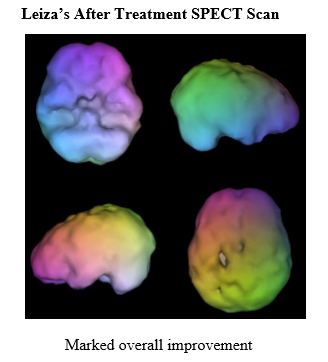 Within several months she noticed a significant improvement in her mood, focus, and memory. She started to audition for television and landed a lead role in a TV pilot as the FBI Director. She said none of it would have been possible without rehabilitating and caring for her brain. Her follow-up scan two years later showed remarkable improvement, which is something we have seen repeatedly over the past three decades. Your brain can be better and you can feel better!