
ARCHIVE
By Kabran Chapek, ND
Head trauma can lead to psychiatric symptoms that steal your happiness and ruin your life. But how can you know if your “mental health” problems are related to a traumatic brain injury (TBI), even one that happened years or decades earlier?
In my book, Concussion Rescue, I outline all of the critical components of an adequate concussion assessment, but here are 3 of the most important you need to know about.
1. Investigate your history.
Have you ever fallen down a flight of stairs, hit your head in a car accident, or smacked your head while playing sports?
These are questions your physician should ask you, but unfortunately, most primary care physicians, psychiatrists, and counselors don’t think about underlying brain trauma as a possible cause for mental health symptoms.
With my patients at Amen Clinics, I ask a lot of questions about possible head injuries, and I typically ask them over and over again—at least 10 times! Some patients wonder why I keep repeating the same questions. Here’s why.
Many people experience amnesia surrounding a head injury. I have met with so many patients who answer “no” to all these questions multiple times before finally recalling falling off a horse or getting whiplash. In some cases, it’s another family member who has to jog their memory about a childhood accident
Also, as a society, we tend to minimize hits to the head and damage to the brain because we can’t see the injury. A person on the street with a broken leg hobbling on crutches will typically get more sympathy than someone with a brain injury.
In addition, many of my patients feel their injury simply wasn’t significant enough to mention. If they didn’t blackout or get diagnosed with a concussion, they think it isn’t worth bringing up. My advice is to bring up any and all incidents, no matter how insignificant you think they might be.
2. Test your cognitive functioning.
Cognitive testing, which involves any kind of examination that measures how your brain works, is another critical part of identifying brain trauma. For example, your doctor might ask you to remember 3 random words—such as purple, gravy, and Chevrolet—and then ask you to recite them 5 minutes later. This type of test measures recall memory, which is often impaired following a concussion or other type of TBI.
A cognitive exam typically involves testing the following functions:
- working memory
- processing speed
- attention
- verbal memory
- visuo-spatial recall
- reaction time
- executive function
Testing may involve using a standard pencil and paper, or it may be computerized. One such exam is WebNeuro, a generalized web-based test used to measure cognitive function. This test, which has been well-validated by the medical community for assessing many areas of brain function, takes about 30 to 45 minutes to complete and covers attention, processing speed, memory, mood, emotion identification, and self-regulation.
If you want to test your own cognitive function, you can do so by signing up to take WebNeuro on MyBrainFitLife. Your results are summarized so you can learn the areas of your cognitive function that are working well and areas that need to be optimized. You can also repeat the test to track your progress as you recover from a TBI.
3. Look at how your brain functions.
MRI (magnetic resonance imaging) or CT (computerized tomography) scans are normally used in brain injury assessment. In some cases, however, an MRI or CT scan will come back normal, even though a person has a brain injury. This is because MRIs and CTs look at the brain’s structure rather than function. It’s like taking a picture of a beautiful sports car that is pristine on the outside, but when you pop open the hood, the engine is a mess. Therefore, this perfect-looking car either won’t start or won’t run at optimum performance. It can be the same with an injured brain.
Functional brain imaging, such as SPECT (single photon emission computed tomography) is different. It can look “under the hood” of your brain rather than just at its structure. In other words, a SPECT scan looks at the activity of the brain and the brain’s blood flow. SPECT scans can show evidence of brain trauma, even if it’s from an accident that occurred decades earlier.
With this information, your physician can create the most effective treatment plan for you.
If you suspect you may have had a head injury that’s contributing to your mental health problems be sure to visit a physician who uses all 3 of these assessment methods, or your underlying injury could be missed. And remember, ruling out a TBI can be just as important in getting an accurate diagnosis.
In Concussion Rescue, author Dr. Kabran Chapek shares even more about the specific assessment methods, lab tests, and protocols he uses at Amen Clinics to help accurately diagnose patients with a TBI. Order your copy here.
If you or a loved one is struggling with symptoms that may be related to a concussion or TBI, understand that treating the underlying damage to the brain is the key to feeling better fast. At Amen Clinics, our Concussion Rescue Program has helped thousands of people heal from concussions and improve their quality of life. Speak to a specialist today at 888-288-9834 or schedule a visit online.
By Kabran Chapek, ND
When someone suffers a concussion or head injury and they go to the emergency room, they usually go through a battery of tests, including brain imaging with a CT scan or MRI scan. If nothing serious is noted—no bleeding, no swelling—they’re typically sent home and told to “watch and wait and take Tylenol for a headache.” That’s standard protocol in the traditional medicine world.
Many people, if not most, do recover from a concussion, but what about those who don’t? Postconcussion syndrome may affect 40-80% of people after they have a concussion. In these cases, “watch and wait” isn’t helpful advice. In fact, some of the recommendations people get after a head injury may inadvertently be slowing or even preventing the healing process.
Why Didn’t Kevin Get Better
That’s exactly what happened to Kevin. During a high school soccer match, Kevin leaped high to make a header, but instead of hitting the ball, his head collided with another player’s skull. There was a sickening thud and the youngster tumbled to the ground, where he cried out in pain.
Fortunately, Kevin didn’t lose consciousness, but his parents insisted on taking him to the ER anyway. Following a long wait, a short examination, and a quick visit to the CT scanner, the ER doc informed Kevin and his parents that based on the results of the CT scan, he had suffered a concussion but would be “just fine.”
But Kevin wasn’t fine. Instead of recovering quickly, as most teen boys do, he experienced splitting headaches, had trouble with his memory, and sank into depression.
That’s when Kevin came to see me. As a doctor of naturopathic medicine, my goal is to treat the root cause of symptoms and heal the underlying brain injury rather than simply recommend over-the-counter pain relievers and rest.
Kevin isn’t alone. I’ve had many patients who have suffered a TBI who are able to function and get through everyday life, but who remain plagued by lingering symptoms, such as anger, focus issues, balance problems, dizziness, tinnitus, depression, anxiety, fatigue, or insomnia. They typically come to me as a last resort when their traditional doctors didn’t have the answers they wanted or the solutions they needed.
The Falsehoods That Prevent Healing
When mild brain injury symptoms persist the way they did in Kevin’s case, traditional doctors typically tell people three things, all of which are false. In my book Concussion Rescue, I write about how these three falsehoods can prevent you from getting better, as well as the three truths that will put you on the path to faster healing.
Lie #1: There is nothing more that can be done.
Truth: There are many things a person can do to heal from a concussion. Telling someone there’s nothing that can be done is like an invitation to wallow in misery. Even worse, it can lead the way to bad lifestyle habits that actually intensify feelings of anxiety, depression, and anger; make it harder to focus, and increase sleep disturbances.
Lie #2: Healing happens over time.
Truth: Time does not necessarily heal all wounds. Although rest and high-quality sleep are important, rest alone is not always enough to heal. This advice causes people to simply sit back and wait for the healing process to occur rather than taking a pro-active approach. This means you spend more time feeling bad rather than getting on the road to feeling better.
Lie #3: If healing doesn’t occur over time, you can take stimulants to help with brain function, antidepressants for mood swings, and muscle relaxers for sore muscles.
Truth: Stimulant medications, antidepressants, and muscle relaxers are not necessarily the best solutions, and in some cases, they can exacerbate symptoms. Healing from a concussion is possible, but because brain injuries are complex, the solution must encompass more than just popping pills. By following a TBI rescue program that takes a comprehensive brain-body approach, you can accelerate the healing process, even if an injury occurred years earlier. It’s never too late to start healing from a TBI.
For Kevin, after just two weeks on an appropriate treatment program, his headaches diminished, he began to regain his memory, and he was feeling much better about his life. He was thrilled with his progress but wished he had known earlier about all the simple things he could do to promote healing.
In Concussion Rescue, author Dr. Kabran Chapek shares the specific programs and protocols he uses at Amen Clinics to put patients on the pathway to healing from TBIs. Order your copy here.
If you or a loved one is struggling with symptoms that may be related to a TBI, understand that treating the underlying damage to the brain is the key to feeling better fast. At Amen Clinics, our Concussion Rescue Program has helped thousands of people heal from concussions and improve their quality of life. Speak to a specialist today at 888-288-9834 or schedule a visit online.
By Kabran Chapek, ND
Having trouble concentrating? Feeling depressed? Struggling with brain fog? You may have been told you have ADD/ADHD, depression, or mild cognitive impairment. But that may not be the whole story. These may actually be warning signs of a past concussion and unless that underlying brain trauma is addressed, no amount of traditional treatments will work for your symptoms.
Just look at Jane, who came to see me at age 35. She had gone back to school to become a nurse and was struggling to keep up with her classwork. She felt overwhelmed, unorganized, forgetful, and depressed. She also complained of frequent headaches. Her previous healthcare provider had diagnosed her with “adult onset ADHD” and prescribed stimulants. The medication helped a little, but not a lot, even at higher doses. Jane’s life eventually became so unmanageable that her aging parents had to step in to support her.
The Secret Jane’s Brain Revealed
I ordered a brain SPECT scan for Jane. This test measures blood flow and activity in the brain and reveals areas with healthy activity, too much activity, and too little activity. Jane’s scan showed something that neither she nor her parents ever expected.
When I met with Jane and her parents, I asked her, “When did you suffer the brain injury?”
“What brain injury?” her mother asked, completely shocked. “I don’t remember Jane suffering from a brain injury.”
As we discussed her scan results, Jane recalled a number of concussions she had sustained as an adult in motor vehicle accidents, the most recent being a rollover accident. In this latest crash, Jane was able to walk away from the accident, although the emergency medical personnel who arrived on the scene insisted that she go to the hospital for an evaluation. At the hospital, she was evaluated and released the same day.
Jane never suffered any symptoms typically associated with a traumatic brain injury (TBI) after the accident—she didn’t lose consciousness, feel dizzy, or even “see stars”—so there was no reason for anyone to suspect she had sustained a brain injury. That’s why when she began experiencing forgetfulness and had trouble concentrating, she didn’t think it had anything to do with the accident.
Why Concussions Are Often Overlooked
Most people don’t know that even mild brain injury can become chronic and cause long-term symptoms. The problem is this type of degenerative reaction is unpredictable. Jane was one of the 10 to 80% of people with a mild traumatic brain injury or concussion who develop chronic symptoms.
She and her family were surprised that her present problems were the result of a long-ago injury, but they were heartened when I told them that now that we knew the problem, we could take the appropriate steps to fix it.
If I had not evaluated her and recommended brain SPECT imaging, Jane probably would have continued down the path of one medication trial after another. Many times, doctors simply don’t ask about possible injury to the brain or actually look at the brain with imaging. Instead, the problems are frequently attributed to a psychiatric condition and the person is treated with medication like Jane was.
SPECT is one of the best tools available to identify areas of the brain hurt by a concussion or TBI. CT scans and MRI scans show damage to the structure of the brain, but they don’t show how the brain is functioning. In fact, it’s common for SPECT to detect functional problems even though a CT or MRI scan was normal.
Know the Warning Signs of TBI
I have treated many patients like Jane who were diagnosed with a psychiatric condition only to discover that a previously undiagnosed brain injury was contributing to the symptoms. Some of the signs and symptoms associated with a persistent brain injury that stubbornly does want to heal include:
- Fatigue (physical or mental)
- Depression
- Anxiety
- Difficulty concentrating
- Memory problems
- Menstrual changes
- Poor motivation
- Impulsiveness
- Migraines
- Dizziness
- Sleep disturbances
- Mood swings
- Anger or irritability
If you or a loved one experiences any of these symptoms that may be related to head trauma, don’t be complacent. Seek help right away from a mindful physician who will take these symptoms seriously and who will look to see if there is underlying damage to the brain that needs to be healed.
In Concussion Rescue, author Dr. Kabran Chapek shares the specific programs and protocols he uses at Amen Clinics to put patients on the pathway to healing from symptoms related to concussions and TBIs. Order your copy here.
If you or a loved one is struggling with symptoms that may be related to a concussion or TBI, understand that treating the underlying damage to the brain is the key to feeling better fast. At Amen Clinics, our Concussion Rescue Program has helped thousands of people heal from concussions and improve their quality of life. Speak to a specialist today at 888-288-9834 or schedule a visit online.
Did you know that a blow to the head or a whiplash-type injury can have lasting impacts long after any immediate symptoms—headaches, dizziness, blurred vision—have resolved? In fact, a concussion can have consequences that remain or emerge decades later.
What Is a Concussion?
A concussion is considered a mild form of traumatic brain injury (TBI), which occurs in over 2 million people each year.
Why is it so easy to damage the human brain?
Your brain is very soft, and it resides within a really hard skull that has multiple sharp, bony ridges. Whiplash, jarring motions (think Shaken Baby Syndrome), blast injuries, and bumps to the head can cause your brain to slam into the hard, interior ridges of the skull.
A concussion can cause the brain to lurch back and forth, stretching and twisting delicate tissues. This can hurt the brain in many ways, including:
- Damage to nerve cell connections
- Ripping open brain cells that spill out proteins like “tau” that cause inflammatory reactions
- Chemical changes
- Bruising
- Broken blood vessels and bleeding
- Increased pressure
- Lack of oxygen
5 Long-term Concussion Consequences
1. Memory loss
A study in PLOS Medical Journal found that people with a traumatic brain injury were 4 to 6 times more likely to be diagnosed with dementia within a year of the injury compared with people who had not suffered a TBI. This same 2018 study also reported that a concussion raises the risk of developing dementia over three decades later.
2. Abnormal tau proteins in the brain
Research shows that repeated concussions and TBIs, especially sports-related injuries in young athletes, can cause a proliferation of tau proteins within the brain. These substances are considered hallmarks of Alzheimer’s disease and have been associated with chronic traumatic encephalopathy (CTE), the neurodegenerative disease that has been documented in professional boxers and football players.
3. Loss of smell
Loss of smell is a common consequence of head trauma, and although it may sound inconsequential, it can be indicative of a serious problem. The area of the brain involved with smell (olfactory cortex) is near the memory centers, and they tend to deteriorate and die together. Having trouble smelling things like peanut butter, lemon, strawberries, or natural gas is associated with a higher incidence of significant memory problems, according to the Journal of Alzheimer’s Disease. Scoring poorly on the University of Pennsylvania Smell Identification Test strongly predicted those who would be diagnosed with Alzheimer’s disease later in life.
4. Addiction
People who suffered a head injury prior to their 5th birthday or between the ages of 16 and 21 are at an increased risk of developing drug abuse, according to a 2014 study. Substances like drugs and alcohol are toxic to the brain and cause further damage that can negatively impact your life in many ways.
5. Mental health problems
Experiencing a head injury raises the risk of developing a mental illness, but surprisingly, few mental health providers are aware of this. Concussions and TBIs—even ones that occurred years earlier—have been linked to a rise in the following conditions:
- ADD/ADHD
- Anxiety and panic disorders
- Depression
- PTSD
- Borderline personality disorders
- Anger issues
- Psychosis
- Suicide
Have You Had a Concussion?
You might assume that you would readily remember if you had suffered a concussion, but a surprising number of people don’t recall experiencing a head injury. Some develop a form of amnesia surrounding the event, others think the bang on the head they got as a kid wasn’t significant enough to cause problems. Take some time to remember (or ask your parents) if you have ever experienced any of the following common causes of concussion:
- Fall out of a tree?
- Fall down the stairs?
- Fall off a horse?
- Fall off a roof?
- Dive headfirst into a shallow pool or the ocean?
- Fall off a fence headfirst?
- Have a car accident?
- Have whiplash?
- Sustain a work-related head injury?
- Suffer a concussion or head injury playing sports?
If you do recall a head injury, and you’re plagued with bothersome symptoms, it’s time to take action.
Consider Getting a Functional Imaging Study
A functional imaging study, such as SPECT or qEEG, may help pinpoint injured areas and is worth investigating if you are experiencing any issues with memory, substance use disorders, or mental health issues. Identifying past brain trauma can be a powerful first step to healing the brain and eliminating your symptoms.
At Amen Clinics about 40% of our patients have experienced a concussion or TBI, but many of them don’t remember it… until they see the damage in their brain scan or QEEG. Seeing the underlying biology of the brain allows us to create a personalized treatment plan to heal the brain and address the root cause of symptoms. For head injuries, we use a combination of the least toxic, most effective therapies, which may include neurofeedback, hyperbaric oxygen therapy (HBOT), nutraceuticals, and medications, as well as simple lifestyle changes that can make a big difference.
If you’re tired of struggling with symptoms and think you may have suffered a concussion or head injury, find out how we can help. Talk to a specialist today by calling 888-288-9834 or schedule a visit online.
Your kindergartner shoved another kid at a birthday party—and it wasn’t the first time. Your second-grader threw a temper tantrum in class—again. Your adolescent child is getting into fights at school—on a regular basis.
What’s a parent supposed to do? If you’ve tried all the most trusted parenting strategies and nothing is working to calm the intense rage in your child, it’s time to look for the underlying cause behind the behavior. Uncontrollable anger is usually a sign of abnormal brain activity and can be associated with a range of mental health conditions and other issues.
1. ADD/ADHD
Children with ADD/ADHD often experience frequent angry outbursts. In part, this is due to the impulsivity that is one of the hallmarks of the condition. Many youngsters with ADD/ADHD have low activity in the prefrontal cortex of the brain. This area is involved with impulse control, judgment, and decision-making. When activity is low in this region, kids tend to speak and act without considering the consequences of their actions. So, they are more likely to throw a temper tantrum when it is inappropriate or cause physical harm to a classmate or themselves.
2. Anxiety Disorders
In some kids, tantrums, meltdowns, and aggressive behavior are signs of anxiety. Anxiety is associated with increased activity in a number of areas of the brain, including the basal ganglia (involved in setting the body’s anxiety level) and the amygdala (the brain’s fear center). Being in a heightened state of alert can cause the body’s fight-or-flight stress response to kick into gear. For some kids, this results in going for the “fight” option rather than avoiding conflict.
3. Obsessive Compulsive Disorder
Research shows that about half of all people, including kids, with obsessive compulsive disorder (OCD), experience intense bouts of rage and anger. People with OCD tend to have excessive activity in the anterior cingulate gyrus (ACG), which is the brain’s gear shifter. Too much activity here can make people get stuck on obsessive thoughts and get locked into actions. Children with OCD may have compulsions that help them cope with the distressing thoughts that loop inside their head. When OCD is left untreated and there is interference with those compulsions, it can cause kids to panic and react with anger.
4. Traumatic Brain Injury (TBI)
If your child has ever taken a tumble off a bike or fallen down the stairs and hit their head, it can lead to lasting consequences, such as problems with anger and aggression. Even a mild head injury where they don’t blackout or get a concussion can cause problems. No amount of talk therapy will help a child overcome these issues unless the underlying brain injury is treated.
5. Temporal Lobe Abnormalities
Aggression is often associated with abnormalities in the left temporal lobes. Located on either side of the brain behind the eyes and underneath the temples, the temporal lobes are involved in mood stability, memory, and learning. Brain imaging research shows that emotional stability is heavily influenced by the left temporal lobes. Problems with this area of the brain are associated with anger, dark or violent thoughts, and emotional instability. Temporal lobe problems are commonly due to genetics, head injuries, exposure to toxins (such as toxic mold, drugs, or alcohol), or infections (such as Lyme disease).
At Amen Clinics, we use brain SPECT imaging as part of a comprehensive evaluation to diagnose and treat children. This helps our Child & Adolescent Psychiatrists identify any dysfunction or damage in the brain, as well as any co-existing conditions, that need to be addressed. Based on this information, we are better able to personalize treatment for your child using the least toxic, most effective solutions for a better outcome.
To find out more about how we can help your child, call 888-288-9834 or schedule a visit.
In 2009, everything was going right for 20-year-old BMX bike rider Josh Perry. He had just won his first pro contest and was the first to complete a 360-barspin-barspin-tailwhip—a mind-blowing maneuver that earned him first place in the best trick contest.
The Accident that Changed Everything
Like all BMX riders, Josh was used to falling and getting back up. He’d had his share of concussions, but after a particularly bad crash in 2010 when he smacked his head hard, he got hit with something completely unexpected. The hospital doctor performed a brain scan then gave him the good news first—there was no swelling or bleeding from the accident. Then came the bad news. Josh had a brain tumor that was taking up nearly the entire left side of his brain, and it might be cancer. His doctor told him he needed to have surgery immediately and warned him, “You may not wake up, and you’ll probably never ride your bike again.”
Josh could barely make sense of the words—cancer, never ride again, not wake up. He was only 21, a professional athlete, and living out his dream. This couldn’t be happening to him. Fear, anxiety, stress, and worry set in. Then he got caught up in a victim mentality, wondering, “Why is this happening to me? What did I do to deserve this?”
Making a Comeback
Things were looking grim for Josh, but he managed to make it through the surgery (the tumor was benign). Remarkably, just 5 weeks later, he was back on his bike. And two months after that, he was competing again. He had figured a way out of that victim mentality to get back to what he loved.
Today, after being diagnosed with 2 more brain tumors, he’s hit the brakes on his BMX career to become a brain and health advocate. And he’s loving every minute of it.
Sharing His Journey
Josh recently joined Dr. Daniel Amen and Tana Amen for a 4-part series of The Brain Warrior’s Way Podcast to talk about his inspiring journey. You don’t have to have a brain tumor to benefit from the insights he’s learned along the way. They can help anyone who’s dealing with any kind of challenge—including the physical or mental consequences of a traumatic brain injury (TBI)—to rise above those difficulties and start living and loving your life again.
In this inspiring series, you’ll discover:
- The 3 things that helped Josh go from fear to fuel—to stop feeling like a victim and start feeling empowered
- What it feels like emotionally to see a big hole on your brain SPECT scan
- Why Josh thinks your mindset is key to overcoming the challenges life throws at you
- The powerful changes Josh made in his everyday life to overcome head trauma that you can learn from
- The one thing that is a major cause of anxiety, depression, suicidal thoughts, ADHD, school failure, drug and alcohol abuse, homelessness, and incarceration…but that traditional doctors don’t look for
- The simple strategy Josh uses to stay focused on his purpose
- What prompted Josh to finally stop competing in 2017 (hint: it wasn’t another injury)
- Three questions you can ask yourself when things are going bad to get your mindset back to a better place
Listen to the 4-part series about brain trauma and recovery with Josh Perry, Dr. Daniel Amen, and Tana Amen on the Brain Warrior’s Way Podcast.
At Amen Clinics, we have helped thousands of adults and children with concussions or traumatic brain injuries (TBIs) to heal their brain. We use a combination of the least toxic, most effective therapies, which may include neurofeedback, hyperbaric oxygen therapy (HBOT), nutraceuticals, and medications, as well as simple lifestyle changes that can make a big difference.
To find out how we can help you overcome the challenges you’re facing, talk to a specialist today by calling 888-288-9834 or schedule a visit online.
If you’ve lived through a traumatic event, it’s natural to think that as time passes, you’ll get over it and move on with your life. But that doesn’t always happen. Symptoms of post-traumatic stress disorder (PTSD) can occur right after a terrible event, or they can emerge weeks, months, or even years after a traumatic incident. PTSD can also be chronic after years of abuse or growing up in an unpredictable and stressful home, such as with an alcoholic or drug-abusing parent. Persistent early childhood trauma can set kids up for PTSD later in life.
Because PTSD symptoms may not emerge immediately, you may not connect your distressing symptoms with the trauma you experienced.
5 Types of Symptoms that May Indicate You’re Suffering from PTSD
1. Memory Issues
PTSD can impact your memories in a number of ways. You might experience recurrent upsetting thoughts or dreams of a past traumatic event. Flashbacks can pop up at any time—even when you’re in a familiar place—and make you feel like you’re experiencing the trauma all over again. You may find that you’re unable to stop thinking about the event, and distressing thoughts loop incessantly in your head. In other cases, you may have lapses in your memory regarding certain aspects of a traumatic event.
2. Increased Anxiety
It’s common for people with PTSD to feel constant anxiety or to experience panic attacks. You may be easily startled or feel like you’re always on guard, expecting something bad to happen at any moment. Some people with PTSD say they feel “jumpy” or “jittery.”
3. Avoidance
If you purposely steer clear of anything—people, places, or things—that reminds you of the traumatic event, it could be a sign of PTSD. You may avoid talking about the event and refuse to share your feelings about what happened.
4. Mood Changes
If you experience a persistent sense of hopelessness, feel emotionally numb, or lose interest in things you used to enjoy, it could be connected to the trauma. You may not make that connection though and might mistake these symptoms as depression rather than PTSD. You may also feel shrouded in a strong sense of guilt and shame.
5. Behavioral Issues
Having PTSD can change the way you behave. You may isolate yourself from your friends and family, which robs you of an important support network and compounds your other symptoms. Increased irritability can cause you to lash out at others in anger. Or you may engage in self-destructive behavior, such as abusing drugs or alcohol.
If you’ve experienced any of these symptoms, it’s a good idea to seek help. However, because many of these symptoms are also associated with other conditions, such as anxiety, depression, or even traumatic brain injury (TBI), it can make it more challenging to diagnose PTSD based on symptoms alone. If PTSD is misdiagnosed, you may be given medication or other treatments that not only don’t help, but that also make your symptoms worse.
Getting an accurate diagnosis is critical to healing from PTSD. Brain imaging can help. Brain SPECT studies can identify patterns associated with PTSD so you can get the right treatment plan to help you begin the healing process.
SPECT Imaging of PTSD Before & After Treatment
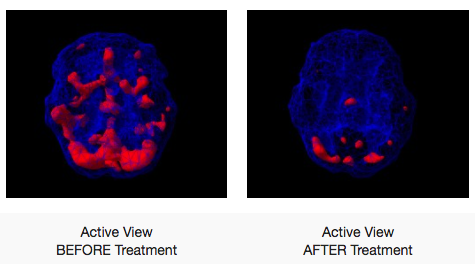
If you or a loved one has experienced a traumatic event and is experiencing symptoms of PTSD, it’s important to seek help. At Amen Clinics, we perform brain SPECT scans as part of a complete evaluation to diagnose and treat PTSD with the least toxic, most effective solutions.
Don’t let PTSD steal your life. Call one of our brain health advisors at 888-288-9834 to see how Amen Clinics can help or schedule a visit online.
By Kabran Chapek, ND
The number one thing that I’ve learned while working at Amen clinics for the past 7 years is that brain injuries are a major cause of mental illness. What’s more, is that it’s not being recognized. Concussions and mild traumatic brain injuries are a silent epidemic because it’s not being recognized as a cause of mental illness. By evaluating the CAUSE of a mental health problem, at Amen Clinics we often find that it is a BRAIN HEALTH problem such as a brain injury, toxin, deficiency in nutrients or hormones, or an infection like Lyme disease. Let’s take the case of Brandon a 17-year-old young man from Kansas who came to see me earlier this year.
It was a warm summer night, and Brandon felt like he was on top of the world racing his four-wheeler back towards his parent’s farmhouse. The earthy smell of the Kansas Prairie filled his nostrils as he accelerated up the hill and headed around the corner, but he was going too fast and when his front right wheel hit a rut, the 400lb vehicle flipped over, and Brandon hit the ground 30 feet away and was knocked completely unconscious. When he woke up, what must have been several hours later, he was disoriented, and his head was pounding. He staggered the ½ mile back to the farmhouse. Brandon hadn’t noticed the blood dripping down the back of his head and soaking his t-shirt. His mother immediately called 9-1-1 and he was taken to the nearest emergency room which was 20 miles away.
At the emergency room, he was evaluated and a CT scan of his head and neck was performed. He had a skull fracture and subdural hematoma which explained the pounding in his head and dizziness. He was flown to the nearest trauma center for stabilization and surgery. After surgery, he felt 100% back to normal and was released shortly thereafter. Brandon was considered essentially cured with directions to not do any strenuous mental or physical activity and to rest for the next month. He was lucky that he had survived, and he was expected to make a full recovery.
However, Brandon had difficulty finishing his senior year of high school. He felt depressed, fatigued, and uninterested in school. He started playing video games all night and smoking pot. He graduated and couldn’t wait to get out of his house and go to college at the University of Kansas. However, when he got there it was more of the same, video games and cannabis were the only things that made sense to him at the time and he didn’t make it through a full semester.
His parents had no idea what to do for him at this point their previously straight A/B student had turned into a video game junkie and pothead. Thinking this was merely video game addiction they sent him to treatment for tech addiction of which there is one near Amen Clinics in Seattle called ReSTART.
He was prescribed Prozac to help with depression and began to make progress, however, he still struggled with motivation, organization, and he was diagnosed with ADD as well.
When we scanned his brain, it was clear that he had had a brain injury because we could see the injury clearly. He had a pattern called “crossed cerebellar diaschisis.”


To make the most out of his treatment and to improve his chances at having a self-sufficient life we needed to make some changes.
We started him on supplements to target the brain damage (Brain & Body Power Max) and supplements for his prefrontal cortex (Focus and Energy). He had more of an “acquired ADD” which was due to brain injury vs. an ADD that he was born with. There are no medications for brain injury that help to heal the brain but there is good evidence that supplements, diet, and lifestyle changes can. Amen Clinics published on this in 2011 with 30 Retired and Active NFL football players who were put on this same program and rescanned to demonstrate improvements.

Things began to come into focus for Brandon. He began to improve his motivation and engage in his recovery in earnest.
Another key to healing was Brandon’s diet. He had an interest in eating good food but didn’t know a frying pan from a pizza pan. Once we discussed that his brain uses 20-30% of the calories in his diet and that an injured brain often has difficulty fueling itself he was eager to try a few things. One of the dishes he learned to make was an egg scramble with vegetables like peppers, chard, and broccoli adding salt and pepper and curry powder. With protein, his blood sugar would be more stable, and his focus improved.
20-50% of patients with brain injury have damage to the pituitary gland. With a simple blood test, we were able to determine that Brandon had low testosterone and that it was due to a problem in his brain vs. of those with his testicles. Brandon had a condition called secondary hypogonadism were because of the damage to the pituitary gland in his brain testes were no longer getting the signal to produce testosterone. Signs of low testosterone are depression, fatigue, low sex drive, and irritability. All symptoms that Brandon was struggling with.
While Brandon’s energy and motivation had improved somewhat in about 8 weeks on the supplements, he received an additional benefit in mood, energy and drive with replenishing his testosterone stores. He found that he was more motivated to begin looking for work part-time while he transitioned out of the intensive stages of his treatment. At this point, Brandon’s depression had entirely lifted and he was hopeful. After 3 months however his treatment had plateaued, and he was still having some lingering memory and energy problems in that his endurance was not quite what it used to be when he was exercising, and he would become very sleepy if he read for too long.
We decided that he would embark on a series of HBOT (hyperbaric oxygen therapy treatments) and after 40 sessions he now felt in many ways better than he did before the accident. In part, he had grown up through the help he gained with treatment at ReSTART to help him structure his life and learn social skills and the day to day life skills that he would need to be independent and the brain function and healing that he would need to perform at an optimal level in both his relationship and his choice of work or schooling for the future.
What started out as a tech addiction, cannabis addiction and depression could be traced back to the sudden change in Brandon’s behavior after his brain injury. However, no one thought that healing his brain would be the key to his healing. Now it makes sense that was the only way he was going to have a chance at living a life with much higher functionality. At Amen Clinics we believe that taking a thorough look at the brain is a key to unlocking the answers that lead to lasting and sustained healing for patients.
About the Author: Kabran Chapek, ND, Amen Clinics Seattle
Dr. Kabran Chapek has been a staff physician at Amen Clinics since 2013. As a graduate of Bastyr University in the Seattle area, he is an expert in the use of functional and integrative treatments and collaborates extensively with many of the Amen Clinics physicians. He has a special interest in the assessment and treatment of Alzheimer’s and dementia, traumatic brain injuries, PTSD, and anxiety disorders. Dr. Chapek is the founding president of the Psychiatric Association of Naturopathic Physicians, an affiliate group of the American Association of Naturopathic Physicians.
- Schneider HJ, Kreitschmann-Andermahr I, Ghigo E, Günter K, Agha A. Hypothalamopituitary dysfunction following traumatic brain injury and aneurysmal subarachnoid hemorrhage. JAMA (2007) 298(12):1429–38.10.1001/jama.298.12.1429. https://www.ncbi.nlm.nih.gov/pubmed/17895459.
- Tanriverdi F, Ulutabanca H, Unluhizarci K, Selcuklu A, Casanueva FF, Kelestimur F.“Three years prospective investigation of anterior pituitary function after traumatic brain injury: a pilot study.” Clin Endocrinol (Oxf). 2008 Apr; 68(4):573-9. https://www.ncbi.nlm.nih.gov/pubmed/17970777.
- Kelly DF, Chaloner C, Evans D, Mathews A, Cohan P, Wang C, Swerdloff R, Sim MS, Lee J, Wright MJ, Kernan C, Barkhoudarian G, Yuen KC, Guskiewicz K. “Prevalence of pituitary hormone dysfunction, metabolic syndrome, and impaired quality of life in retired professional football players: a prospective study.” J Neurotrauma. 2014 Jul 1;31(13):1161-71. doi: 10.1089/neu.2013.3212. Epub 2014 May 8. https://www.ncbi.nlm.nih.gov/pubmed/24552537
As the U.S. women’s soccer team was playing their way into the championship match of the 2019 FIFA Women’s World Cup, two former female soccer stars were raising awareness about a devastating brain disease.
Brandi Chastain and Michelle Akers are spreading the word about chronic traumatic encephalopathy, or CTE, a condition that has been linked to football players who endured repeated blows to the head and suffer from a host of symptoms—memory loss, cognitive dysfunction, even suicidal thoughts. The two women, both World Cup champions in the 1990s, are part of a groundbreaking research effort to study the brains of former soccer players.
In soccer, hitting the ball with your head is common. Akers told “CBS: This Morning” that she averaged about 50 headers a game. Chastain’s experience was similar. Now, 20 years after their championships, they wonder if all those headers could have caused damage to their brains. In their 50s now, they wonder if it might be contributing to lapses in memory.
To find out, the women have teamed up with researchers investigating CTE at The Stern Lab at Boston University School of Medicine. Chastain and Akers are two of twenty women, ages 40 and over, who played on the women’s national or Olympic soccer teams who are participating in the study. They’ll undergo brain imaging and neurocognitive testing.
Previous research from a 2017 study in the journal Neurology has shown that amateur soccer players who averaged 125 headers over a two-week period were more prone to concussions than players who did only 4 headers in two weeks. The players with more headers were more likely to report concussion symptoms, such as headaches, confusion, dizziness, and even unconsciousness. Another study appearing in a 2018 issue of Radiology found that heading soccer balls affects women’s brains more than men’s brains, which makes the current study even more important.
What Does Soccer Do to Young Brains?
Although Chastain, Akers, and the researchers in Boston are digging into the effects of heading soccer balls in women over the age of 40, bouncing balls off the head may also have a significant impact on brain development in younger people.
The brain’s prefrontal cortex, which is involved in decision-making, forethought, judgment, focus, and impulse control, isn’t fully developed until about age 25. Anything that causes damage to the brain, such as concussions, prior to this could compromise the development of the PFC and have lasting consequences.
The Consequences of Concussions and Head Trauma
Concussions, even ones that don’t make you pass out or that go undiagnosed, and repeated head trauma can damage the brain and cause serious consequences. Brain SPECT imaging studies have shown that in football players, repeated head trauma is associated with lower overall blood flow in the brain. Concussions and traumatic brain injuries increase the risk of mental health/brain health disorders, including ADD/ADHD, depression, anxiety, PTSD, addictions, memory problems, psychosis, and sadly, even suicide. They also raise the risk of incarceration.
How Can You Know Unless You Look?
Some impacts to the head can be sub-concussive, meaning they don’t meet the criteria for concussion diagnosis, but they can still compromise brain function. How can you really know if the hits to your head are affecting your brain function unless you get a brain scan?
Brain SPECT imaging is a functional imaging tool that measures blood flow and activity in the brain. It can show areas with healthy activity, too much activity, or not enough activity. It can be very helpful in determining if a concussion or TBI may be contributing to symptoms.
SPECT brain scans can:
- Show if there is brain trauma
- Show problems in brain function that are NOT visible in structural studies, such as MRI or CT
- Identify brain systems that have been affected
- Help determine if there are co-existing conditions that also need treatment
Getting Help for Head Trauma
The good news is that if you have experienced concussions or TBI, there is help. You are not stuck with the brain you have. Many therapies—including hyperbaric oxygen therapy, neurofeedback, nutraceuticals, and simple lifestyle changes—are available that can help heal the brain and minimize symptoms associated with head trauma.
At Amen Clinics about 40% of our patients have experienced head injuries. But many of them don’t remember suffering a concussion until they see the damage in their brain scan. Seeing the underlying biology of the brain allows us to create an individualized treatment plan that helps heal the brain to address the root cause of symptoms.
If you think head trauma may be contributing to your symptoms, don’t wait to seek professional help. Schedule a visit today or call 888-288-9834.
As an NFL Hall-of-Fame quarterback and Super Bowl MVP, Joe Namath had it all. His exceptional performance on the field and natural charisma turned him into a pop culture icon known as “Broadway Joe.”
But Joe didn’t emerge from his football career unscathed. He suffered at least five concussions—the “lights out, smelling salts” kind, Joe said on the June 24, 2019, Howard Stern radio show.
He didn’t really think much about it until the 2000s at his football camp when he saw how gridiron head injuries were affecting one of his former teammates. “I saw a teammate of mine deteriorating over a period of four years,” Joe says. “His mind, he was losing it, he’d forget things. It scared him.”
At the football camp the following year, the teammate was even worse. It was a wake-up call for Joe. “It dawned on me, I said I need to find out about myself. It behooves me, Joe, to find out about myself. And it behooves me to do it for my children.”
What a Brain Scan Revealed About Joe Namath’s Brain
Joe reached out to a hospital in Florida where he lives and underwent a brain imaging test called SPECT, which measures blood flow and brain activity. SPECT shows three things—areas of the brain with healthy activity, too much activity, or not enough activity. SPECT differs from MRI or CT scans, which show structural damage to the brain but do not reveal how the brain is functioning. In fact, in many people who have suffered a head injury, MRI and CT scans will appear normal even when there is functional damage to the brain. Because SPECT looks at brain function, it is the best tool to detect functional damage.
Joe’s SPECT scan revealed that all those concussions on the field had taken a toll on his brain. The brain scan showed evidence of traumatic brain injury (TBI), with low activity in some areas. “With that SPECT scan, they could see the cells on the left side of my head from the forehead back were not getting blood. They were darker than the rest of the other cells,” Joe says.

How Hyperbaric Oxygen Therapy Helped Joe Namath’s Brain
As part of a treatment plan to rehabilitate his brain, Joe began doing hyperbaric oxygen therapy (HBOT). HBOT is a noninvasive treatment that involves breathing 100% pure oxygen in a pressurized chamber. With HBOT, your lungs can take in up to 3 times more oxygen than they do when breathing at normal air pressure. The increased oxygen is picked up via the bloodstream and transported to damaged tissues to facilitate the healing process. HBOT has been used to improve many issues, including TBI, PTSD, memory loss, anxiety and depression, attention problems, and other mental health issues.
After 40 sessions, Joe went back for a follow-up SPECT scan, which showed the dark areas of his brain with low blood flow had started to lighten up, a sign of improved blood flow. He continued with 40 more sessions and then a final 40 sessions. His follow-up brain scan after all 120 HBOT sessions stunned him. His brain “looked normal all over,” he says.
Since then, Joe has made it his mission to spread the word about the benefits of SPECT brain imaging and hyperbaric oxygen therapy through the Joe Namath Neurological Research Center at Jupiter Medical Center in Florida. “This could help millions,” he says, such as “the veterans alone that get concussions, the children that fall off bicycles and hit their head.”
Although Joe Namath was not treated at Amen Clinics, we have used brain SPECT imaging and hyperbaric oxygen therapy to help treat numerous former NFL players and thousands of other people with TBI. In fact, 40 percent of our patients have had TBIs, including mild ones where you don’t pass out. Many of our patients who have undergone HBOT have experienced a dramatic improvement in cerebral blood flow. Benefits they have reported include improved memory, moods, cognition, and sleep, as well as reduced depression, irritability, and headaches.
If you would like more information on brain SPECT scans or HBOT, call 888-288-9834 or make an appointment online.