
ARCHIVE
Dan Garner is a Licensed Mental Health Counselor, a Certified Sex Addiction Therapist Candidate, and a graduate of our Brain Health Coaching Certification Course. Dan practices with Recovering Hope, located in Richland, WA. Through his own experience, Dan Garner knows how difficult it can be to find someone who understands what you are going through. He has his own personal recovery story and strives to provide empathy and insight to help clients find the right next step for them.
“At Recovering Hope, we are passionate about helping individuals and couples heal from anxiety, depression, trauma, and addiction.”
“Life is complicated, people are unique and getting the help you deserve should be tailored to your particular needs. We are committed to working with you to understand where you are in your life’s journey before determining what the next steps need to be. Using skillful questions and powerful assessments we strive to dig down to the roots of whatever is standing in the way of you being the person you want to be and living the life you want to live. Helping people find happier and healthier ways to live their lives is our passion.”
“We believe in addressing biological, psychological, social and spiritual roots to all problems. To that end, we employ many modalities to address the complex issues in people’s lives. These include EMDR, CBT, and Mindfulness as well as addressing diet, exercise, and scientifically proven supplementation to maximize healing.”
“Completing the Brain Health Coaching Certification Course training opened doors for me. The ability to assess and diagnose biological roots to my clients’ struggles ensures that I do not miss important elements of treatment. Also, being able to offer recommendations for diet, exercise and supplements gives my clients confidence in the treatment and increases their engagement with the treatment plan. I’m incredibly grateful for the added level of competence that I gained through the training.”
To learn more about our Brain Health Coaching Certification Course visit our course website or contact our course manager at 949-266-3791 or at BHCCC@AmenUniversity.com.

Dan Garner, LMHC, CSAT-Candidate, Mental Health Specialist
(509) 643-1106
dgarner@recoveringhope.net
When gambling addiction isn’t really an addiction.
Matthew had already gone through a traditional addiction program for treatment, but it didn’t work. His wife had heard that there is more than one type of addiction and that brain imaging can help with diagnosis and treatment, so she took her husband for a brain scan. The results of his brain SPECT imaging test didn’t correlate with any of the 7 types of addiction. Instead, the scan showed that he was suffering from an underlying neurodegenerative disease called frontotemporal dementia.What is frontotemporal dementia?
Frontotemporal dementia is precipitated by the progressive loss of nerve cells in the frontal or temporal lobes, resulting in shrinkage of these important brain regions.What are the symptoms of frontotemporal dementia?
This type of dementia is associated with changes in behavior, personality, and language, and sometimes symptoms of mental illness. Symptoms can include: • Lack of impulse control • Lack of judgment • Inappropriate behavior • Overeating or binge eating • Compulsive behaviors (like gambling disorders) • Neglecting hygiene • Mood swingsWhy can the condition be hard to diagnose?
“But his memory is perfect,” said his wife, who was having trouble understanding how her husband could have dementia. She always thought memory loss was the hallmark of dementia. Although problems with memory are the main sign of Alzheimer’s disease, the most common form of dementia, it is not associated with all types of dementia.Can frontotemporal dementia be treated?
The best way to reduce brain atrophy, or shrinkage, is to eliminate, prevent, and treat any of the risk factors that steal your brain health. For Matthew, getting an accurate diagnosis gave him a blueprint for treatment. First, he agreed to hand over all financial matters to his wife, then he addressed his risk factors, which resulted in improvement in his behavior. Amen Clinics, where Matthew had his brain scanned and underwent treatment, helps people with all types of dementia and has developed a program that addresses the 11 most important risk factors that affect the health of your brain. If you or a loved has experienced sudden, concerning, or worsening changes in behavior or personality, schedule a visit or call 888-288-9834 for a comprehensive evaluation. Steve was living on the streets of San Francisco. Suffering from paranoid schizophrenia and addiction, he had violent outbursts and displayed erratic behavior. But he refused to seek treatment and had stopped taking his medication, which is why he had been kicked out of his home. After years of trying, Steve’s mother finally convinced her son to get a comprehensive psychiatric evaluation.Steve’s First Appointment: A Potential Disaster
The patient outcome manager who was doing his clinical interview was so alarmed by Steve’s psychotic behavior and intense agitation, she didn’t feel comfortable being alone in the same room with him. He scared her. When Steve met with the psychiatrist, he declared loudly that he would not take any medication and that no one could convince him otherwise.Shifting the Talk from Medication to Brain Imaging
To settle the tension, the psychiatrist shifted the conversation away from medication to the brain and asked if it would be okay to scan Steve’s brain using brain SPECT imaging. Brain SPECT is a state-of-the-art brain mapping tool that evaluates blood flow and activity in the brain and can give psychiatrists more information to help their patients more effectively. Steve was curious and agreed to be scanned. Looking at his scan with the psychiatrist, Steve learned that his brain showed high levels of damage. The psychiatrist showed Steve a healthy scan and compared it to his scan. Steve just stared at them without saying a wordHealthy SPECT Scan
 The underside surface of a healthy brain: full, even, symmetrical activity.
Steve’s Brain SPECT Scan
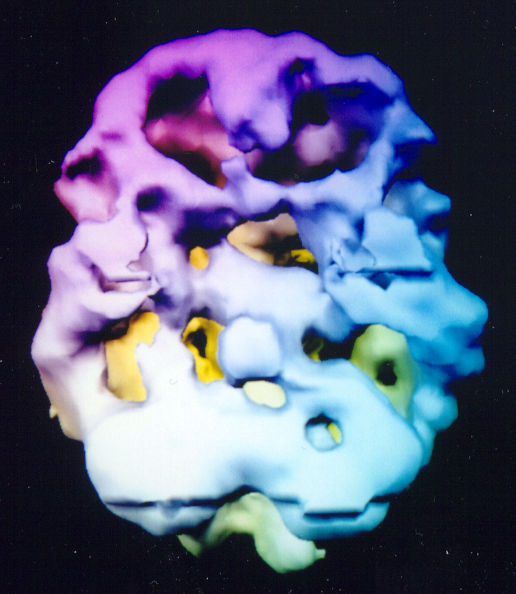 The underside of Steve’s SPECT scan shows overall low blood flow and activity.
Steve’s Brain SPECT Scan: Seeing is Believing
After about 5 minutes Steve looked up, and for the first time made eye contact with the psychiatrist and asked if he could help him heal his brain. The scans helped Steve make the shift from being angry and in denial to being open to making an effort to get a better brain. This was a pivotal moment — one that the scans have provided for thousands of patients. After seeing his brain, Steve was willing to listen when the psychiatrist told him there were better medications than the ones he had been on in the past, and he was open to taking a low dose of a newer antipsychotic medication being prescribed. Steve even agreed to return for a follow-up appointment three weeks later.Before-and-After Brain Scans Give Steve Hope
Just one week later, Steve’s mother paid an unscheduled visit to the psychiatrist, hugged him, and kissed him on the cheek. “You can’t believe how much better Steve is,” she said. “He is not hallucinating, he’s not aggressive and we can have him at home. I am so grateful.” A few weeks later, when Steve showed up for his first follow-up visit, he was remorseful for his prior behavior and grateful he was feeling better. We did a follow-up brain SPECT scan, which showed dramatic improvement already. The psychiatrist placed Steve’s original scan next to his new one and asked, “Which brain do you want?” Steve said, “I want the healthy one.” “Then you have to take your medication,” the psychiatrist replied. And Steve agreed to continue taking his prescription, which helped control his symptoms. The scans made all the difference for Steve and the people he loved. Steve was treated at Amen Clinics, which has been using brain SPECT imaging for over thirty years to help diagnose and treat patients with mental health issues and addictions. If you or a loved one is suffering from mental illness or addiction, visit us online or call us at 888-288-9834. According to the National Institutes of Mental Health – 51 percent of the U.S. population will suffer from a mental health issue at some point in their lives. Regrettably, the matter of mental health remains shrouded by misconceptions and harmful stereotypes. Many people with mental health problems feel that the stigma and discrimination they experience from their family, friends, employer, and society itself, makes their symptoms worse and delays the recovery process. Frequently overlooked in the ongoing mental health conversation are pregnant women. How can these women get help for their mental or emotional challenges? The field of perinatal psychiatry is attempting to answer that question.What is Perinatal Psychiatry?
A relatively new specialty, perinatal psychiatry focuses on the mental health of pregnant women rather than on women who have already delivered their baby. Since mental illness can present differently in pregnancy, it needs to be handled in a specialized manner. The needs of mother and baby must be considered when a mental illness is present. Perinatal treatment methods vary and aren’t always clear-cut. What is clear is the overwhelming need to support expectant mothers with mental health concerns. Sadly, suicide from untreated mental illness is the leading indirect cause of maternal mortality. The field of perinatal psychiatry has provided hope to many struggling mothers who have found relief from their symptoms with the proper treatment. One such success story comes from Dr. Neha Kansara, a psychiatrist at Amen Clinics in Washington D.C., who shares an inspiring story of how she was able to help one of her patients: Sweet, lovely Jane, who normally arrived just in time for her appointment, showed up an hour early. I sensed something wasn’t right. Typically, Jane would be giggling and entertaining my staff, but today she appeared sad. I recognized nervousness the moment our eyes met. “I’m pregnant,” Jane said. She started crying inconsolably. I sat beside her, calm and composed with my hands on her shoulders, providing her with a sense of comfort. “Dr. Neha, you know this is the end and my baby will die again.” Jane suffered from chronic PTSD for repeated childhood sexual and emotional trauma. She was raped by her mother’s boyfriend and was pregnant at the tender age of 13. Facing the ugly complications that came with getting an abortion created fear towards pregnancy. Jane had begun to believe that she could never give birth to a healthy baby. I asked what I could do to help. Jane said, “I want this baby alive. Do you think you can help me?” Having knowledge of the field of Perinatal Psychiatry, I began researching different avenues that would assist a pregnant woman who has suffered through extensive years of trauma. One therapy option that looked promising was EMDR. After a few sessions of EMDR, Jane’s outlook began to improve, and she eventually gave birth to a healthy baby boy.What is EMDR?
EMDR (Eye Movement Desensitization and Reprocessing) is an extensively researched therapy technique that’s been very successful in bringing quick and lasting relief for a variety of symptoms and issues. The focus of EMDR is to resolve or eliminate emotional discomfort by shifting how a memory is triggered in the brain and to help a patient see things in new and less distressing ways. EMDR may aid in reducing stress from painful memories and is particularly useful for people with a history of abuse. Also, EMDR can support people seeking to overcome symptoms of anxiety brought on by alarming or life-threatening experiences. One of the ways EMDR accomplishes this is by helping to remove the emotional charges of traumatic memories.What Are the Benefits?
EMDR can help people by: • Reducing the frequency and severity of nightmares • Managing the debilitating effects of panic attacks • Improving the quality of sleep • Developing coping mechanisms for stressful situations • Minimizing anger outbursts during elevated incidents • Processing negative beliefs and self-talk • Healing emotional trauma from past experiences • Restoring a positive outlook for the future EMDR is non-invasive, has no side effects and is appropriate for people of all ages. It’s ideal for those who have been unsuccessful in managing their symptoms with medications or therapy and who seek a more natural approach to treatment. EMDR was selected by the armed services as the primary treatment modality for returning veterans suffering from PTSD and other traumas. Additionally, the World Health Organization recommends EMDR for treating patients with PTSD. Individuals considering EMDR don’t need to consult with a medical professional before beginning treatment. Not all services are offered at each Amen Clinics location. Call us today at 888-288-9834 or visit our website to schedule a visit. As a parent, you’ll do anything to help your child. It’s so painful to watch your son or daughter struggle. But, where do you go when it seems like you’ve tried everything? Unfortunately, Liz knows how that feels. She felt like she was losing her daughter, Isabella, who had been severely struggling with ADD symptoms at school. Isabella was in third grade when she started to fall behind in her schoolwork. Initially, Liz took notice but didn’t want to overreact. It was only third grade. “By fourth grade, we knew there were definitely some issues,” Liz explained. “By the time we were changing schools, we knew there was more than an educational or behavioral problem.” Liz and her husband spent the next year and a half doing everything they could to help their daughter. Isabella’s older brother helped with after-school efforts too. They tried tutoring, an educational therapist, and even ocular therapy. A local educational foundation evaluated Isabella and said the core challenge was her memory. The whole family worked on memory games with her.When Hard Work Doesn’t Pay Off
“It wasn’t that Isabella wasn’t trying hard,” Liz said. The tutoring and therapy commitments alone were taking two hours a day, four or five days a week. Isabella worked so hard every day and still got D’s and mostly F’s in her schoolwork. Liz and her husband pulled their daughter out of all extracurricular activities; school seemed so much more important. But even that choice appeared to have devastating effects. “She was losing self-confidence. She was turning inward, doubting every move,” Liz said. “We were losing our daughter, and it was killing us.” Then two different family friends heard about Isabella’s challenges. Both made the same recommendation: call Amen Clinics. Something rang true when Liz heard about SPECT scans. In a leap of faith, Liz scheduled a Full Evaluation. At the first consultation looking at Isabella’s brain SPECT scans, Liz and her husband were stunned. The front cortex of her brain looked like “her brain was on fire” due to its overactivity. Isabella’s psychiatrist explained that Isabella’s brain was quite literally exhausted. It didn’t know how to shut down, to calm itself—a vital task in the learning process. Isabella’s psychiatrist spoke with her parents, describing Isabella’s particular form of Attention Deficit Disorder (ADD). ADD is the most common psychiatric challenge for children. However, conventional treatments often fall short in “classic” cases. The explanation for this is simple, according to Dr. Daniel Amen’s findings, there are seven types of ADD, with each type requiring very different treatment.Report Card Improvements
Isabella’s parents looked at their options and chose to begin treatment through exercise, dietary choices, and brain-focused supplements only. “Within three weeks, Isabella’s grades went from mostly F’s to C’s and D’s,” Liz said. “Within six weeks, she went to almost all C’s.” At a follow-up appointment, the family decided to try two prescription medications that could further help Isabella focus while at school. They learned that Isabella’s challenge would not benefit from solely a stimulant medication; rather it would require specific medication to calm the overactive regions of her brain and another to activate the frontal cortex for focus. Using minimal dosages of two different medications, and continuing the dietary and lifestyle choices, Isabella went through a transformation at school. “Within three weeks of being on prescriptions, Isabella became a B-student at a very distinguished private school,” Liz said. Isabella is 14 now, an eighth grader with top grades and involved in sports again and acts in school plays. Most importantly, she feels confident again and even ran for student body president.Pinpointing Problems and Solutions
Amen Clinics brought Isabella and her family an accurate diagnosis, proven solutions, and hope. “They were able to pinpoint exactly what was Isabella’s problem,” Liz said. Through a whole-person approach, she has been able to become her very best—not only in school but in every aspect of her life. “It’s been unbelievable to watch the transformation. We’re very blessed.” What can a Full Evaluation do for you or a loved one? It’s time to stop guessing. Amen Clinics Full Evaluation of your biological-psychological-social-spiritual history including two brain SPECT imaging scans (at rest and concentration), cognitive testing, and clinical assessment is designed to address your unique needs and offer targeted treatment options. At Amen Clinics, we specialize in childhood learning challenges and ADHD. Our holistic treatment approaches are yielding transformative results. Call 888-288-9834 or visit us online to schedule an appointment now. It’s time to open the door to a bright and hopeful future for your child and your whole family. Susan first heard about Amen Clinics when one of her children benefited from their services. At that time, she was very impressed with the success of the targeted treatment plan, but she had no idea she’d eventually seek Amen Clinics services for herself. Several years later, a traumatic event triggered a deep emotional shift for Susan. “I was numb for several weeks, but then started sinking into a deep depression,” Susan explained. It was much more than a case of the blues. The depressive state was compounded by other symptoms that were making her day-to-day life unbearable.When Everyday Life Becomes Unbearable
Susan was only able to sleep for about two hours each night, had virtually lost her short-term memory, and was struggling with long-term memory. She even lost her sense of direction. “All I wanted to do was stay in bed all day with my door locked,” Susan said. “I had to take a leave of absence from work and was just doing the minimum to care for my children.” In the midst of this frightening time, Susan remembered Amen Clinics and made an appointment. Her Amen Clinics psychiatrist recommended specific anti-depressants, but also strongly recommended the Amen Clinics’ Full Evaluation protocol, including brain SPECT imaging.SPECT Imaging Reveals The Truth Behind Susan’s Struggle
The medication did help some, but Susan decided to follow up with the Full Evaluation. She wondered if the brain SPECT scan might reveal any additional clues about her symptoms. The neuroimaging provided a remarkable insight. “My SPECT scan showed a high degree of Post-Traumatic Stress Disorder,” Susan said. Both anxiety and depressive states were cycling repeatedly, and her brain couldn’t shift out of that pattern. With that new information, Susan’s Amen Clinics psychiatrist had a much clearer understanding of her brain’s needs. He explained that Dr. Amen’s research has shown there are actually seven types of anxiety and depression, with each requiring unique treatment strategies. In fact, for some of the types, common anti-depressant medications are not effective. Susan’s psychiatrist knew of an alternative treatment that had been helpful for her particular anxiety-depression pattern. “He recommended Transcranial Magnetic Stimulation (TMS) as a supplement to the anti-depressants,” Susan said. TMS uses large magnets to train neuro-circuits to function appropriately. It acts upon neuro-circuits somewhat like certain medications, but without side effects. Susan “hoped and prayed” that this alternative therapy would work. It did. Within the first week of treatment, Susan felt some improvement. During the next two weeks, her memory came back, she started sleeping better, and she felt hopeful for the first time. “At the end of my course of treatment, my memory was better than ever,” Susan said. Her sense of direction returned, and she felt comfortable taking care of her children and completing day-to-day tasks. “I was able to return to work, and I felt positive about my situation and my future.” Today, Susan enthusiastically refers friends and family. Since her experience, she has recommended Amen Clinics to dozens of people. “Everyone has been very pleased with the life-changing care that they have received.” Innovative approaches to treating anxiety and depression can yield transformative results. Brain SPECT scans often reveal factors that cannot be fully addressed by medication alone. It’s time to open the door to a bright and hopeful future! For information on scheduling an appointment please visit us online or speak to one our skilled professionals by calling 888-288-9834. Attention Deficit Hyperactivity Disorder (ADHD or ADD), is one of the most common psychiatric challenges among adults. Symptoms vary widely, from inattentiveness and procrastination to outbursts and impulsiveness, resulting in a condition that can be challenging to treat. Shedding light on that complexity, Daniel G. Amen, M.D. has successfully defined seven sub-types of ADHD and for four of them, typical stimulant medications make symptoms worse. This is where the cycle of unsuccessful treatment, stress, and despair often begins. There is hope: Amen Clinics has pioneered innovative ADHD treatments that are highly successful. A recent six-month Outcome Study of 500 Amen Clinics’ patients of varying ages revealed that 75% showed significant improvement in their condition, and 85% reported improved quality of life after implementing their personalized protocols. The statistics are impressive. But every ADHD case is unique; it’s the individual success stories that are really inspiring. Just ask Adam, who was diagnosed with ADHD and learning disabilities as a teen. Treatment with Ritalin made no significant improvements for Adam, but he found ways to cope. Then a tragedy happened that made his symptoms much worse.Adam’s Story
When Adam was 18 he was in a motorcycle accident. He survived, but things were not the same afterward; his ADD symptoms got much worse. “I had bad impulse control and anger problems. I lost control of my emotions. I just didn’t know what was wrong with me,” relates Adam. “I would be okay and then all of a sudden lash out in anger…I couldn’t let go of an argument. I was impulsive and bought three cars in two weeks.” Adam’s wife couldn’t ignore how ADD was limiting his everyday life. It was clear he was struggling with focus and attention, impulse control and anger. The couple went through a list of psychiatrists—and medications. But sometimes they made things worse! It was exhausting, but Adam’s wife kept looking for answers. Finally, she found Amen Clinics. “I did the Full Evaluation with a brain SPECT scan and entire personal history,” Adam said. A brain SPECT scan (Single-Photon Emission Computerized Tomography) is a vivid image of the brain’s activity, which helps us better understand how it works and what is going on inside it. Adam’s Amen Clinic psychiatrist showed him a SPECT scan of a healthy brain and compared it to the SPECT scan of Adam’s brain. The comparison was a shock but Adam was grateful for the comprehensive evaluation of his condition. There was no more need for “trial and error meds”. The Amen Clinics Method offered targeted treatment for Adam’s unique brain and defined exactly what was needed in terms of medication and nutrition. “After starting my treatment plan at Amen Clinics, it changed my life dramatically. I was able to regain focus and get my anger under control.” “I had a follow-up brain SPECT scan after one year. We could see how my brain improved!” Adam said. He has continued to have additional scans to follow the progress. Today, Adam regularly refers others to Amen Clinics. He regards his experience as nothing short of life-changing. “I know if my wife hadn’t found Amen Clinics, we would not be married today,” he said. “Now she’s able to rely on me. I’m able to sustain a fairly normal life. Thank God my wife found Amen Clinics.”Amen Clinics Can Help
The Amen Clinics Method of integrative psychiatric care has brought hope to Adam and many others dealing with a wide range of conditions. Using innovative and personal care, our outcomes consistently demonstrate improvement for patients – including many who have tried other unsuccessful treatment approaches in the past. Amen Clinics utilizes a highly unique whole-person clinical intake and strategic brain-focused nutrition alongside conventional treatment options. Leading edge brain SPECT technology literally provides inside information needed to guide treatment strategies and confirm results.What can a Full Evaluation do for you or a loved one?
It’s time to stop guessing. Amen Clinics Full Evaluation of your biological-psychological-social-spiritual history including two brain SPECT imaging scans at rest and at concentration, cognitive testing, and clinical assessment is designed to address your unique needs and offer targeted treatment options. For more information, call us at 888-288-9834 or schedule a visit today. Like many OCD patients, Ryan Davenport first noticed his symptoms during childhood. On the eve of his 20th birthday, Ryan realized that his symptoms were taking a turn for the worse. It was then that he and his father made the decision to come to Amen Clinics. Under the vigilant care of Dr. Larry Momaya, Ryan was able to take the steps necessary to steadily bring his life back into focus.What is OCSD?
Obsessive-compulsive spectrum disorders (OCSD), commonly referred to as “OCD,” are serious and often debilitating disorders that are characterized by obsessions and compulsions. Obsessions are recurrent thoughts, impulses, or images, which are intrusive, usually senseless, sometimes frightening and often repulsive. They are sneaky and may involve repetitive thoughts of: • Contamination • Worry • Doubt • Sexuality • Unacceptable religious thoughts • Violence Compulsions are behaviors that are performed persistently and repetitively without leading to an actual reward or pleasure. Often, compulsions are an attempt to make obsessions go away and to reduce the anxiety caused by the obsessions. There is an urgent insistent sense of “I have to do it” inside. Compulsions are often performed according to certain rules in a very strict or rigid manner and can result in elaborate rituals. The most common compulsions include: • Rituals • Hand-washing • Counting • Checking • Touching (especially in a particular sequence) • Picking skin or hair • Other behaviors that feel necessary to do The course of OCSD is quite varied. Symptoms may come and go, ease over time, or get worse. If the symptoms become severe, OCSD can keep a person from working or carrying out normal responsibilities at home.Why We Are Different And How We Can Help People With OCSD?
OCSD, like many other conditions, is not just a single and simple disorder; therefore, treatment is not a one-size-fits-all solution. It is imperative to find out what is causing the symptoms you are experiencing and treat the underlying cause, rather than just trying to fix the symptoms. If we don’t look at the brain, how do we know exactly what we’re treating? OCSD is an intricate and often misunderstood condition; Amen Clinics can help decipher the right treatments and protocols. If you would like to learn more, please visit us online or call 888-288-9834 today.In a study performed at Cincinnati Children’s Hospital Medical Center and published earlier this month, over 90% of teenagers studied showed that they understood the symptoms of a concussion, but only 54% of them indicated they would “always or sometimes report symptoms of a concussion to their coach.”
It is a finding that should stop every parent in his or her tracks.
I cannot overemphasize the importance of physical exercise in brain health; it is an incredibly powerful brain booster. Exercise is especially important for children and young people, who are forming health habits – for better or for worse – that will have lifelong implications. In our society sports are the go-to avenue for getting our children moving. If you’re a parent, the decisions you make about what sports your child will play can be influenced by many factors, like the sports you played while growing up or the team that your community loves. But your child’s brain should be the first and foremost consideration, hands down.
When it comes to brain safety, not all sports are made equal – a reality to which I can attest firsthand. After spending years immersed in the study of brain SPECT scans and real-life experiences of 150 active and retired NFL players, I can categorically suggest that any sport with high risk of head trauma is not a source of brain-healthy exercise.
Combine high risk of head trauma and the reluctance a teenager might feel to be seen as weak, and you have a losing combination. If the teenager doesn’t report his or her symptoms and continues playing, there is an increased risk of a second trauma occurring before the first trauma heals. This is an especially dangerous scenario often referred to as second impact syndrome, which can lead to permanent disability and even death.
The story of Zackery Lystedt has brought national attention to the issue of concussions in youth sports. As an eighth grader in 2006, Zackery suffered a head injury during a football game, but was returned to the field to complete the game. Before the game was over, Zackery had collapsed. It took emergency brain surgeries to save his life and months of rehabilitation before he even spoke again. Today he is still working on walking and so many other simple functions that we take for granted. Efforts by Zackery’s family have seen laws passed in nearly all 50 states, which require teams to educate players and parents on concussion symptoms, remove a player from play at the time of head trauma and require the player to get approval from a licensed medical professional before he or she can return to play.
I applaud lawmakers for taking action on this issue; I applaud Zackery’s parents for looking out for the safety and well-being of other children; and I applaud Zackery for his unrelenting determination to recover. As I learned in my study of the brains of NFL players, reversal of brain damage is possible in considerable measure, but far better is to avoid this kind of trauma in the first place… so teenagers don’t have to choose between saving face and saving their brains.
Parents, be encouraged! There are many sports that are great for the brain, including rowing, track and field, golf, tennis and (my personal favorite for brain health) table tennis, to name a few.
At Amen Clinics, we have helped thousands of children and adults with concussions or TBIs to heal their brain and minimize their symptoms. We use a combination of the least toxic, most effective therapies, which may include neurofeedback, hyperbaric oxygen therapy (HBOT), nutraceuticals, and medications, as well as simple lifestyle changes that can make a big difference.
If you experienced a head injury in your youth, or if your child has suffered head trauma, Amen Clinics can help. Speak to a specialist today at 888-288-9834. If all our specialists are busy helping others, you can also schedule a time to talk.
First, we must acknowledge there is significant room for improvement in mental health care as there remains an unacceptably high number of suicides among veterans, and the success rates for PTSD, depression, and anxiety disorders have not improved in years. In addition, the fallout from 9/11/01 will forever impact veterans, families and our society for at least 70 more years. PTSD, depression, and traumatic brain injuries (TBI), common among our veterans, all increase the risk of Alzheimer’s disease and other forms of dementia. These problems will not be solved without intense, long-term focus and commitment. Anything this country can do to improve mental health care to our war-injured, we should do. It is more than extending a helping hand.