
Images of Depression

Table of Contents

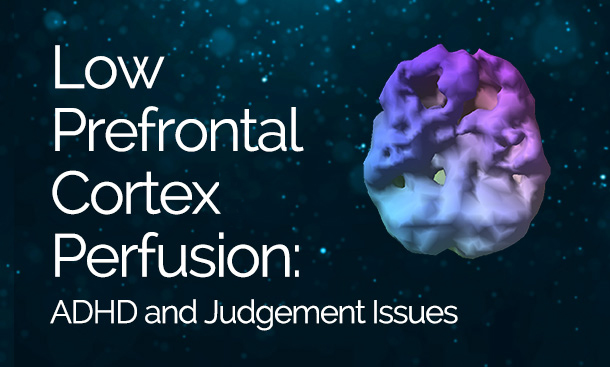
Decreased prefrontal cortex activity at rest, especially on the left side is a consistent SPECT finding in depression. The severity of depression is often related to the degree of frontal hypometabolism. Several studies have indicated that the hypometabolism normalizes after treatment if the patient’s mood improved. Researchers have also seen increased limbic system activity as well in depression (thalamus, amygdala, cingulate gyrus and deep temporal lobes). When depressed patients perform a concentration task the left prefrontal cortex often activates to normal levels, differentiating depression from attention deficit disorder which often shows normal activity at rest and decreased prefrontal cortex activity with concentration.

SPECT can be helpful in the diagnosis and treatment in complex or resistant depressive disorders by differentiating it from other disorders, enhancing compliance by the patient being able to "see the changes in the brain," and by subtyping depression. Here are three subtypes that one of the authors has identified.

  • Decreased prefrontal cortex activity with increased deep limbic system (thalamus) activity. This subtype is often associated with symptoms of moodiness, negativity, low energy, sleep and appetite problems and poor concentration. It often responds best to dopaminergic or noradrenergic interventions such as buprion, imipramine or desipramine.
  • Increased anterior cingulate (this part of the brain is heavily innervated with serotonergic nerve fibers), thalamus and basal ganglia activity. This subtype is often associated with symptoms of sadness, negativity, irritability, worrying, cognitive inflexibility, worrying and getting stuck or locked into negative thought patterns. It often responds best to the serotonergic antidepressants such as fluoxetine, sertraline, paroxetine and venlafaxine.
  • Decreased prefrontal cortex activity with increased or decreased temporal lobe activity. This is often the most serious subtype and it is often associated with symptoms of sadness, irritability, rage (toward others or self in suicidal behavior), mild paranoia, atypical pain (atypical headaches or abdominal pain) and insomnia. We have seen this subtype often made significantly worse by serotonergic medications and it is often helped by anticonvulsants, such as gabapentin or divalproate.

1. Decreased prefrontal cortex activity with increased deep limbic system activity.

Here is an example of deep limbic dysfunction. Leigh Anne came to see me fifteen months after the birth of her first child. Several weeks after her child was born she began experiencing symptoms of nausea, social withdrawal, crying spells and depression. Three months later she sought help through psychotherapy. But her condition did not improve. Her depression progressed to the point where she became unable to care for her daughter on a day-to-day basis. Desperate to function as the good mother she wanted to be to her child, she came to see me. After diagnosing her with major depression I placed her on Prozac and began seeing her in psychotherapy. Her symptoms remitted after only several weeks. After several months Leigh Anne discontinue treatment. She associated taking Prozac with a course of action for " a depressed person." She did not want to see herself in that light or be stigmatized with that label. For several months after stopping she had no adverse reaction. Then the symptoms returned.

When she came to see me again Leigh Anne still didn’t want to believe that anything was "wrong" with her, so she was still resistant to going back on medication. After I ordered a brain study to evaluate her deep limbic system, I was able to point our to her the marked increase in activity in that area of her brain. It provided me with the evidence needed to convince her to go back on Prozac for a while longer.

This case illustrates an important point. It has been my experience as well as that of many other psychiatrists that a patient does not necessarily have to stay on medication forever just because they have started it. However, with certain medications, like Prozac, a minimum period of treatment is necessary before it can successfully be terminated. If a depressed patient is willing to stay on their medication for long enough, about two years in this case, there is a greater chance that they can get off of it in a timely manner yet still remain free from their symptoms.

2. Increased anterior cingulate (this part of the brain is heavily innervated with serotonergic nerve fibers), thalamus and basal ganglia activity.

Brain Images, increased cingulate, deep limbic and basal ganglia activity
left side active views
notice increased cingulate, deep limbic and basal ganglia activity

3. Decreased prefrontal cortex activity with increased or decreased temporal lobe activity.

Brain Images Depression, decreased prefrontal and temporal lobe
underside surface view

marked decreased prefrontal and temporal lobe activity

Cindy is a 17 year old who presented with symptoms of depression, suicidal thoughts and severe irritability. Serotonergic medications increased her irritability, depression and suicidal thoughts. Her SPECT study showed marked decreased activity in the left temporal lobe and prefrontal cortex. She responded positively to a combination of Lamictal and Wellbutrin and psychotherapy.

Brain Images Depression, decreased prefrontal and temporal lobe activity
underside surface view

marked decreased prefrontal and temporal lobe activity

Summer is an 18 year old female who came for evaluation after an overdose of pills combined with alcohol in a suicide attempt. She had 4 prior suicide attempts along with a history of drug abuse, run away behavior, aggressive outbursts and school failure. Her SPECT study showed marked decreased activity in the left temporal lobe and prefrontal cortex bilaterally. She responded positively to a combination of Tegretol and desipramine and psychotherapy.

Table of Contents

More SPECT Brain Images | SPECT Scans FAQ | Why SPECT Scans