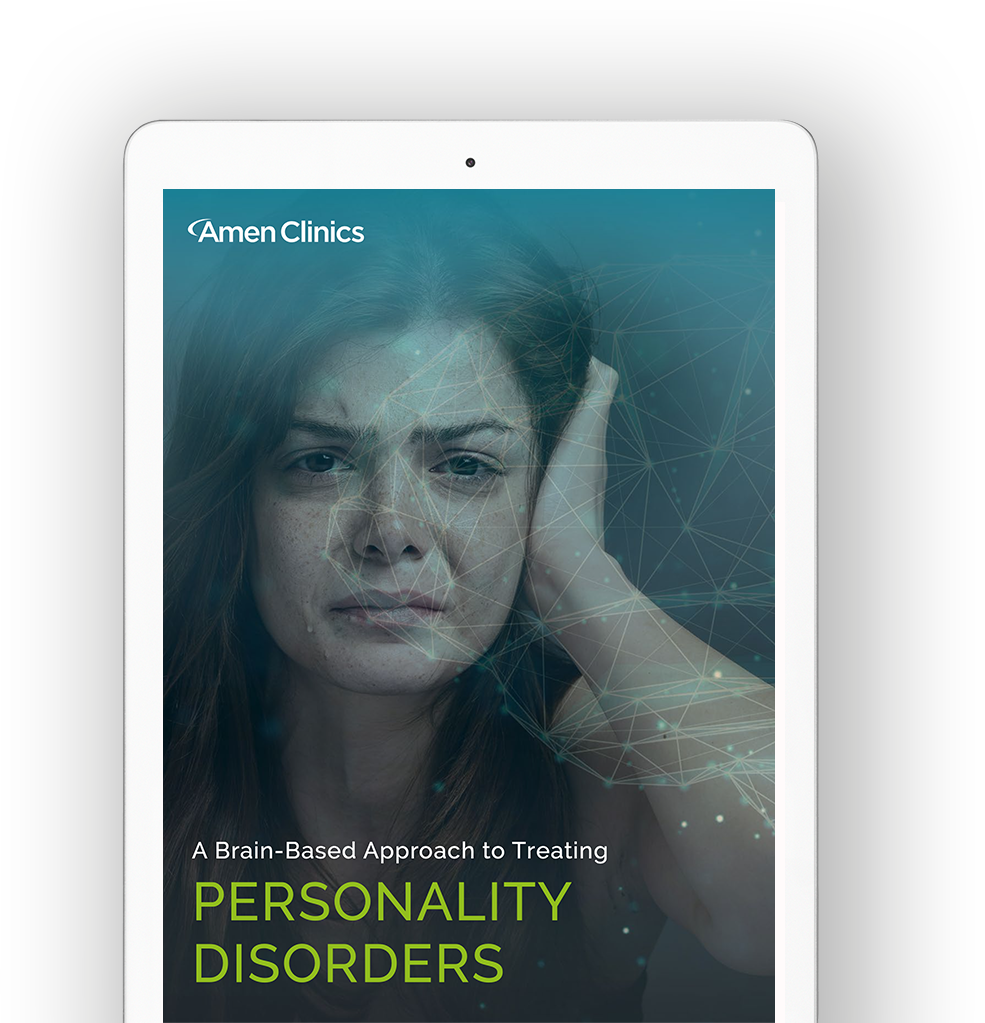
Personality Disorders
Personality disorders often overlap with other mental health conditions, making accurate diagnosis and effective treatment more challenging. At Amen Clinics, we use advanced brain imaging to identify the brain patterns linked to personality disorders and co-occurring issues, allowing for a more comprehensive, individualized treatment plan that gets to the root of the problem.
What are PERSONALITY DISORDERS?
Personality disorders are characterized by unhealthy, inflexible thinking patterns and behaviors that have a negative effect on everyday functioning and relationships. The signs and symptoms of personality disorders typically emerge in late adolescence or in young adulthood. Statistics shows that 67% of people with a personality disorder also suffer from a co-occurring mental health disorder.
Who HAS A PERSONALITY Disorder?
About 9 percent of the U.S. adult population has at least one personality disorder, according to a study in the Journal of Clinical Psychiatry. Borderline personality disorder is the most common type, affecting over 4 million Americans (1.6% of the population). Experts suggest that number could actually be closer to 15 million.

What are the Core Symptoms?
Mental health professionals recognize 10 types of personality disorders, which are grouped into three categories. Also see below on this page for more information about each of these clusters.
- Cluster A: Characterized by eccentric or odd thinking or behavior (paranoid, schizoid, and schizotypal personality disorders)
- Cluster B: Defined by emotional, dramatic, or erratic thinking or behavior (antisocial, borderline, narcissistic, and histrionic personality disorders)
- Cluster C: Anxious or fearful thinking or behavior (avoidant, dependent, and obsessive-compulsive personality disorders)

A PERSONALITY DISORDER CAN CO-EXIST WITH OTHER MENTAL HEALTH CONDTIONS, INCLUDING:
- Anxiety Disorders
- Depression
- Bipolar Disorder
- Eating Disorders
- Substance Use Disorders
- Posttraumatic Stress Disorder (PTSD)
- Other Personality Disorders
- Attention Deficit Hyperactivity Disorder (ADHD), also known as Attention Deficit Disorder (ADD)

What Causes PERSONALITY DISORDERS?
Experts believe that personality disorders are caused by a combination of genetic influences and environmental factors. For example, a genetic susceptibility for personality disorders may be triggered by life events. A traumatic or abusive childhood is associated with increased risk of developing a personality disorder.

Why Choose Amen Clinics FOR TREATING PERSONALITY DISORDERS?
It can be challenging to get people with personality disorders to seek help because they are typically unaware that their thinking patterns, emotional responses, and behaviors are unhealthy and abnormal. In fact, only 39% of those affected by a personality disorder received treatment in the past year, according to the latest data from the National Comorbidity Study Replication. Since 1989, Amen Clinics has helped many people overcome symptoms of personality disorders with targeted solutions. We believe in taking a unique brain-body approach to treatment that involves the least toxic, most effective strategies.
PERSONALITY DISORDERED BRAINS WORK DIFFERENTLY
Personality disorders are actually brain disorders. Neuroimaging studies show that people with personality disorders have structural and functional abnormalities in the brain. Additional factors that may be involved in the development of borderline personality disorder include:
Genetics: Having a close relative, such as a parent or sibling, with a personality disorder may heighten the risk of developing the condition.
Emotional trauma: Exposure to traumatic events or experiencing abuse, neglect, or abandonment as a child appears to be common among people with a personality disorder.
Because so many factors may be at play, it is critical to seek a mental health practitioner who performs a comprehensive evaluation that includes brain imaging, lab testing, and more.
Types of Personality Disorders
Mental health professionals recognize 10 types of personality disorders (PDs), which are grouped into three categories:
Cluster A: Paranoid Personality Disorder
People with this disorder suffer from paranoia and tend to be unreasonably distrustful of others and suspicious of their motives. Those who have this condition often feel like others are trying to deceive, take advantage of, or harm them even though there isn’t any objective evidence of such malicious intent. This condition is more commonly seen in men than in women.
Symptoms include:
- Distrustful, suspicious, and skeptical of other people and their motives
- An unsubstantiated belief that others are trying to deceive or harm them
- A belief that others are untrustworthy and disloyal
- Finding secret, threatening meanings in casual, non-threatening remarks and glances
- A reluctance to share personal details with others based on the unfounded fear that the information will be turned against them
- Reacting with anger or aggression to perceived criticism
- Holding grudges and being unforgiving
- A belief that they are always right
- Unfounded suspicion that their spouse or significant other is unfaithful
Cluster A: Schizoid Personality Disorder
People with schizoid PD tend to appear detached or indifferent in social relationships and seem emotionally flat. Schizoid personality disorder is not the same as schizophrenia. People with schizoid personality disorder tend to have a firm grasp of reality and don’t usually struggle with the hallucinations or delusions that are hallmarks of schizophrenia.
Symptoms include:
- A preference for solitary activities and jobs
- Disinterest in forming close relationships
- Limited range of emotional expression
- Lack of interest or pleasure in most activities, including sex
- Having trouble relating to others
- Appearing to be distant
- Looking like they don’t care about others
Cluster A: Schizotypal Personality Disorder
This type of PD is characterized by strange, superstitious, or unusual beliefs and behaviors. People with this personality disorder tend to have trouble forming strong relationships and usually feel anxious in social settings. Schizotypal personality disorder is not the same as schizophrenia, although a small percentage of individuals with this personality disorder will develop schizophrenia or another psychotic condition.
Symptoms include:
- Odd thinking patterns, behaviors, and beliefs
- Paranoia and suspicion
- Social anxiety
- Difficulty forming close relationships, except with immediate family members
- Distorted perceptions, such as misinterpreting a noise as a voice
- Believing they have psychic powers or other magical thinking
- Appearing to be distant or indifferent to others
Cluster B: Antisocial Personality Disorder
Antisocial personality disorder, which is also referred to as psychopathy or sociopathy, is characterized by routinely exploiting, manipulating, and taking advantage of others. A lack of remorse for this behavior is a hallmark of antisocial personality disorder. Approximately 75 percent of people with this condition are males.
Symptoms include:
- Disregarding and violating the rights of others
- Lack of remorse
- Inflated sense of self-worth
- Repeated lying, stealing, cheating, using aliases, or conning others
- Frequently disregarding laws and social norms
- Heightened irritability
- Aggressive or violent behavior
- Recklessness and lack of concern for safety for themselves or others
- Impulsivity
- Irresponsibility that results in problems with finances and work
Cluster B: Borderline Personality Disorder
Borderline personality disorder is characterized by intense and unstable emotions. People with the condition are prone to impulsive actions and strong emotional reactions that make it hard to maintain relationships.
Symptoms include:
- A distorted sense of self
- Extreme emotional reactions
- Inappropriate emotional responses
- Extreme mood swings
- Excessively impulsive behavior, such as substance abuse, unsafe driving, unprotected sex, or overspending
- Unstable relationships
- Lack of empathy
- Intense feelings for people that swing from love to hate (also known as “splitting”)
- Extreme fear of rejection or abandonment
- Intense anxiety, worry, and depression
- Hostility
- Unstable career goals
- Unrealistic aspirations
- Self-harm, suicidal thoughts or attempts
- “Out of body” feelings (also called dissociative feelings)
- Paranoid thoughts (often related to stress)
Cluster B: Narcissistic Personality Disorder
Narcissistic personality disorder is characterized by an inflated sense of self-importance and an excessive need for admiration. Due to their lack of empathy, people who have this condition can also be manipulative, demanding, and arrogant.
Symptoms include:
- An exaggerated sense of self-importance
- A need for excessive and constant admiration
- A lack of empathy
- Preoccupation with grandiose fantasies of unlimited success, money, or power
- A need to be recognized as superior or special and a belief that they can only keep company with people of equal exceptionalism
- A sense of entitlement to special treatment
- A tendency to exaggerate accomplishments or talents
- Manipulation or exploitation of others
- A belief that others are envious of them, while deep down they are envious of others
- An arrogant, haughty, or demanding attitude
Cluster B: Histrionic Personality Disorder
Individuals with histrionic personality disorder are attention-seeking “life of the party” types who tend to overdramatize everyday events and who engage in inappropriate seductive behaviors. This disorder affects an estimated one percent of the population and is more commonly seen in women.
Symptoms include:
- In need of constant attention and approval
- Overly emotional and dramatic
- Inappropriately sexually suggestive
- Easily influenced by others (highly suggestible)
- Shifts quickly from one strong emotion to another, appearing shallow
- Feeling that casual relationships are more intimate
- Excessively concerned about physical appearance
Cluster C: Avoidant Personality Disorder
Having extreme shyness and fear of rejection or criticism that leads people to avoid social situations are the hallmarks of avoidant personality disorder. Approximately two percent of the U.S. population has this PD.
Symptoms include:
- Overly sensitive and distressed by criticism or rejection
- Fixated belief that others will emotionally harm them or be condescending
- Avoidance of situations or careers that involve socializing
- Extreme shyness in social settings
- Poor self-image and belief they are awkward and not likeable
- Difficulty getting close in relationships
- Fear of trying new things because they might embarrass themselves
Cluster C: Dependent Personality Disorder
People who need to have others around or who are overly clingy may have dependent personality disorder. These individuals experience symptoms of anxiety when they aren’t in the company of other people.
Symptoms include:
- Overly dependent on others and feeling the need to be taken care of
- Taking a submissive role in relationships
- Extremely needy
- Fear of having to take care of oneself if left alone
- Looking to others to make even the smallest decisions
- Hesitant to express disagreement due to fear of disapproval
- Willing to take on unpleasant tasks to gain approval or support
- Desperate to seek out a new relationship as soon as one ends
Cluster C: Obsessive-Compulsive Personality Disorder
People with this personality disorder have inflexible and rigid thinking patterns and behaviors. Despite the similarity in its name, obsessive-compulsive personality disorder is not the same as the anxiety condition known as obsessive-compulsive disorder (OCD).
Symptoms include:
- Stubbornness and inflexibility
- Preoccupation with orderliness, organization, schedules, and rules
- Extreme perfectionism
- Need to feel in control of situations
- Hesitant to delegate tasks
- Excessive dedication to work to the detriment of relationships and hobbies
- Difficulty parting with broken, used, or worthless items with no sentimental value
- Extreme frugality in spending money
“With A Better Brain Comes A Better Life”
– Daniel G. Amen, M.D.
WANT TO LEARN MORE? DOWNLOAD OUR PERSONALITY DISORDERS EBOOK