Many of us are exposed to trauma during our lives, whether we experience it first-hand or witness a frightening event. It is common for people who live through trauma—such as a natural disaster, car accident, physical assault, or mass shooting—to develop symptoms associated with posttraumatic stress disorder (PTSD).
Since our brains are wired to alarm us to the presence of danger, having a physical and psychological response to trauma is normal. But when the distressing feelings don’t diminish over time, it can lead to PTSD. Approximately 1 in 30 U.S. adults suffer from this condition. When left untreated,
PTSD can ruin lives and even lead to suicide.
There are many things you can do to help treat symptoms of PTSD.
5 Ways To Help PTSD
1. Know The Symptoms
When people think about PTSD, they often think about flashbacks or distressing memories, but these are only some of the symptoms associated with the condition. There are many other symptoms associated with PTSD that can easily be mistaken for other issues.
Symptoms of PTSD include:
• Intense recollections, such as flashbacks and nightmares
• Inability to recall certain aspects of what happened
• Avoidance of people, places, or things that are reminders of the event
• Distressing memories
• Inability to stop thinking about the incident
• Increased or excessive anxiety
• Always being on guard or “jumpy”
• Feeling emotionally numb
• Problems with sleep
• Anger and irritability
• Depressive symptoms
• Social isolation
2. Learn From Success Stories
Many PTSD sufferers have successfully minimized their symptoms and are enjoying their life again. Sometimes hearing how someone else lived through a traumatic event can reduce feelings of isolation and shame, while offering reassurance and hope. Listen to U.S. Marine Denny’s journey of healing here.
3. Support Your Brain Health
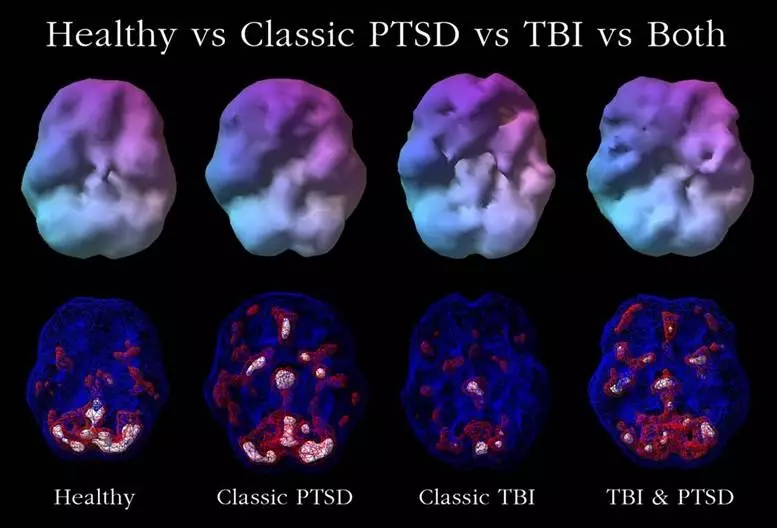
It’s important to understand that having symptoms of PTSD is not a character flaw or a sign of personal weakness. Brain imaging shows that PTSD is a biological problem in the brain. Supporting your brain with healthy habits, including good nutrition, exercise, supplements, and meditation can help. You can hear more about how to enhance your brain health to help you overcome PTSD
here.
4. Use Proven Therapies
Scientific research shows that certain therapies can reduce symptoms of PTSD and improve brain health. Three of the most effective treatments are
neurofeedback,
cognitive behavioral therapy (CBT), and
eye movement desensitization and reprocessing (EMDR). Studies show that neurofeedback significantly reduces PTSD symptoms, CBT has been found to reverse the underlying biology of the disorder within the brain, and
EMDR is especially helpful for people who have experienced abuse.
On
brain SPECT scans, the pattern of PTSD typically reveals over-activity in multiple areas of the brain, which is often referred to as the “diamond plus pattern.” This high activity tends to keep the brain on overdrive, increasing anxiety and irritability and interfering with sleep.
SPECT Imaging of PTSD Before & After Treatment
 |
 |
| Active View
BEFORE Treatment |
Active View
AFTER Treatment |
5. Get An Accurate Diagnosis And Treatment With A Brain Scan
Unfortunately, most doctors never look at the brain with imaging, so people with PTSD often go undiagnosed or are misdiagnosed and given the wrong kind of treatment. Advanced brain imaging technology provides an objective measure of PTSD, which leads to a more accurate diagnosis and more effective treatment.
Brain SPECT imaging shows people with PTSD that their symptoms and behaviors are biological, not mental, which helps eliminate the shame and guilt people feel and encourages healing.

At Amen Clinics, we use leading-edge brain imaging technology to help identify PTSD in the brain. Our comprehensive brain-body approach to treatment involves the least toxic, most effective strategies to heal PTSD, including natural supplements, nutrition, exercise, neurofeedback, helpful forms of therapy, and medication (when necessary)—all personalized for your specific needs.
Don’t suffer from PTSD any longer. Call Amen Clinics at 888-288-9834 or
schedule a visit today.


 At Amen Clinics, we use leading-edge brain imaging technology to help identify PTSD in the brain. Our comprehensive brain-body approach to treatment involves the least toxic, most effective strategies to heal PTSD, including natural supplements, nutrition, exercise, neurofeedback, helpful forms of therapy, and medication (when necessary)—all personalized for your specific needs.
Don’t suffer from PTSD any longer. Call Amen Clinics at 888-288-9834 or schedule a visit today.
At Amen Clinics, we use leading-edge brain imaging technology to help identify PTSD in the brain. Our comprehensive brain-body approach to treatment involves the least toxic, most effective strategies to heal PTSD, including natural supplements, nutrition, exercise, neurofeedback, helpful forms of therapy, and medication (when necessary)—all personalized for your specific needs.
Don’t suffer from PTSD any longer. Call Amen Clinics at 888-288-9834 or schedule a visit today.