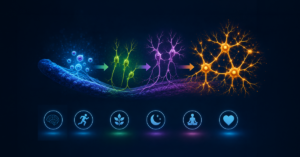

Which of These 4 Types of Alzheimer’s Disease Could You Get?
If you’ve witnessed a parent, grandparent, relative, or friend suffer from the ravages of dementia, you know that it is a condition you wouldn’t wish on anyone. It is devastating and heartbreaking to see previously vibrant, energetic, and smart people you care about develop symptoms and lose their memory and cognitive abilities—or even have personality changes.
Yet it happens all too often. And the trend is likely to continue—especially with the youngest of the baby boomer generation getting closer to their 60s, along with the significant rise of obesity and related inflammatory illnesses—such as diabetes—in the general population.
While there are several different types of dementing diseases, Alzheimer’s disease (AD) is the most common and accounts for 60-80% of all dementia cases. Most people who are diagnosed with it are 65 or older. However, early-onset Alzheimer’s affects about 200,000 younger people in the U.S.—some of whom are in their 30s and 40s.
Basic Brain Biology in Alzheimer’s Disease
Many years ago, doctors and researchers found that the underlying pathology of AD begins decades before the onset of clinical symptoms. Slowly, certain abnormal neurobiological processes start to take place, including these:- Plaques of beta amyloid protein build up between brain cells and interfere with cell-to-cell communication.
- Twisted strands—or tangles—of tau protein accumulate inside brain cells.
Promising New Research in Alzheimer’s Disease
As researchers continue to investigate the molecular underpinnings of this terrible disease, some fascinating results have recently been discovered. Scientists from around the world collaborated on a research study that was recently published in the scientific journal, Nature Medicine. Using positron emission tomography (PET—a type of functional scan, like SPECT) and a tracing agent that attaches to tau proteins, the brains of more than 1,600 people with varying progressions of AD were analyzed. The researchers identified 4 variations in the pattern and spread of tau protein found in the subjects’ brains, and these patterns aligned with the patients’ more pronounced symptoms. The findings from this study include:- 33% of subjects showed the spread of tau primarily in the temporal lobes, which are involved with memory.
- 18% had a greater amount of tau in the cortex (grey matter) and this reflected problems with self-control, ability to focus, and difficulties with executive function.
- The 3rd variant—30% of the cases—had an accumulation of tau in the visual cortex (back of the brain), which affects one’s orientation to space and the ability to identify shapes, contours, and distances.
- An asymmetrical spread of tau across the left hemisphere of the brain was found in 19% of the subjects and reflected their difficulty with language skills.
Risk Factors for Dementia
Generally speaking, age is the biggest risk factor for dementia. It’s estimated that 50% of all people aged 85 and older will be diagnosed with some form of dementia. Genetics can also play a role in developing AD, especially if someone carries the APO E4 gene, which is associated with overall lower blood flow to the brain. But not everyone who inherits this gene will get AD—in fact, 75% won’t. Aside from factors such as these that are largely out of anyone’s control, lifestyle behaviors are known to reduce the risk of developing Alzheimer’s disease—or another type of dementia. Aside from age and the inheritance of certain genes, healthy lifestyle behaviors such as diet, exercising your body and brain, and positive social connections are known to reduce the risk of developing Alzheimer’s disease.Prevention is the Best Cure!
As mentioned above, the pathology of AD and other dementias begins in the brain many years before a person shows symptoms. Therefore, what you do today can have a positive—or negative—impact on your chances of becoming demented down the road. So, if you’ve been on a less-than-healthy path, you can still take steps to make changes that could have big payoffs later on in life. Here are a few recommendations to get you started:- Switch to a diet with lots of fresh produce, healthy fats (like walnuts and avocados), and clean protein, especially fish such as salmon and tuna that are high in omega-3 fatty acids.
- Exercise your body regularly because it increases blood flow to your brain, which helps to ensure your brain cells are getting the glucose and oxygen they need.
- Exercise your brain, too, by learning new things and playing brain games.
- Protect your brain from injury by wearing a helmet when you bike, skateboard, ski, inline skate, snowboard, or ride a motorcycle.
- If you have depression, seek treatment to reduce symptoms, since depression increases your risk for Alzheimer’s disease.
- Connect to others by spending time with friends and loved ones, and volunteering in your community.
- Avoid things that are harmful to your brain, such as toxins (i.e., smoking cigarettes and using alcohol and illicit drugs) and getting concussions.