

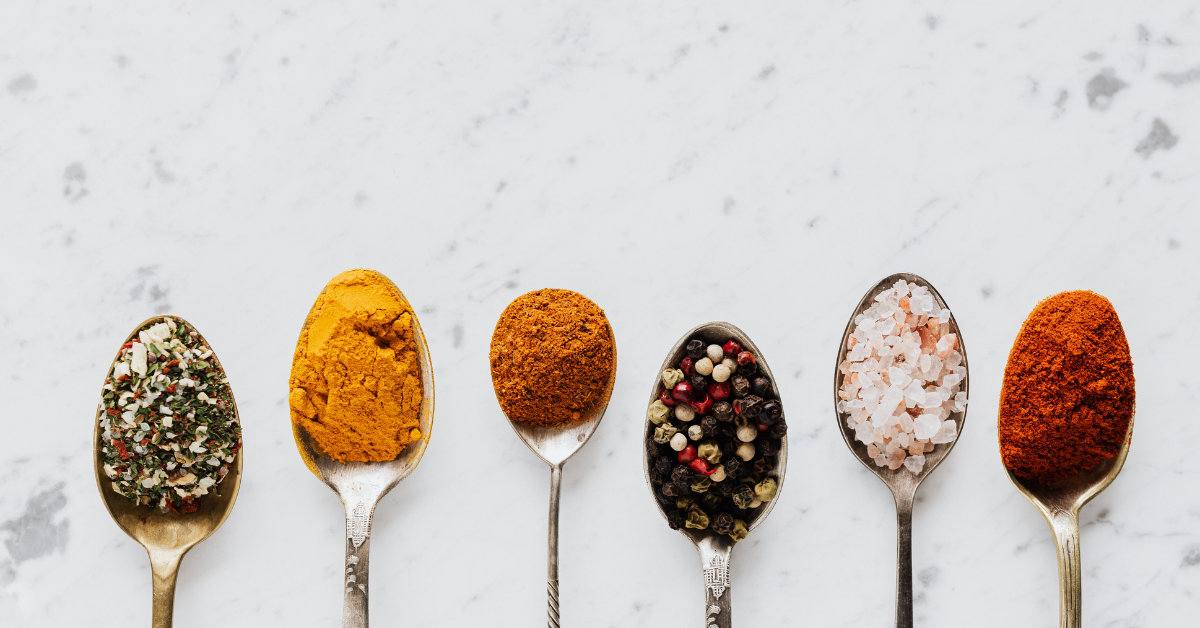
If you’re worried about forgetfulness, you might want to take a look in your kitchen cupboards. Why? Because some of the most common herbs and spices that people use to add flavor to foods may also fight memory loss.
According to research, there’s a growing body of evidence suggesting that spices may prevent or even halt neurodegenerative disorders commonly seen in aging, such as Alzheimer’s disease.
The following nine kitchen staples have solid scientific evidence showing neuroprotective and memory-enhancing properties. Be sure to stock up on them the next time you go to the market.
In this blog, you’ll discover the best herbs for memory loss, tasty ways to consume them, and more.
Is your spice rack stronger than your medicine cabinet? When it comes to memory, your spice rack is a great place to start. Herbs and spices that support memory include cinnamon, curcumin (from turmeric), saffron, sage, and more.
Is your spice rack stronger than your medicine cabinet? When it comes to memory, your spice rack is a great place to start. Common herbs and spices that support memory function and brain health include cinnamon, curcumin (from turmeric), ginger, mint, nutmeg, rosemary, saffron, sage, and thyme.
Cinnamon promotes greater blood flow to the brain. Increased cerebral blood flow is associated with better memory, particularly in older adults and individuals with cognitive impairment. Cinnamon additionally has properties that help to inhibit tau aggregation, a hallmark pathology of Alzheimer’s disease.
It has also been shown to lower cholesterol, fasting glucose, and HbA1c levels and improve insulin sensitivity.
Try This: Cinnamon makes a wonderful addition to hot beverages, smoothies, baked goods, hot cereal, and even some chicken dishes. Sprinkle 1 teaspoon of cinnamon in your morning shake for a brain healthy way to start your day.
A polyphenol mix from turmeric root that is used in curry, curcumin contains at least three curcumoinoids that have been shown to decrease beta-amyloid plaques and inflammation.
In a double-blind, placebo-controlled study, a special curcumin preparation with enhanced absorption (Longvida) improved memory and attention after just 1 hour. After 4 weeks, working memory, energy levels, calmness and contentedness (as measures of mood) and even fatigue induced by psychological stress were all significantly improved.
Try This: Curcumin comes from the turmeric root. Sprinkle 1-2 teaspoons of turmeric spice in soups, stew, or curries.
An anti-inflammatory agent, ginger may protect against neurodegenerative diseases by reducing the oxidative stress that causes brain cells to age and die.
Try This: To make a fragrant ginger tea, grate three teaspoons of fresh ginger root, place it in one cup of boiled water, cover and steep for 10 to 15 minutes. Strain before drinking.
When most of us think of mint, we typically think of toothpaste, gum, or breath fresheners. But mint leaves possess other powerful health benefits. According to a study published in the International Journal of Neuroscience, the scent of peppermint improves memory and focus.
Try This: Add mint leaves to water or smoothies, or chop and add to any salad to give it a fresh, summery twist.
This aromatic spice contains myristicin, which helps to prevent the formation of beta amyloid plaques (the plaques seen in Alzheimer’s disease). It also contains eugenol, a compound thought to be cardioprotective.
Try This: Though commonly used in baking, nutmeg adds a delicious twist to lamb stew.
This well-known herb contains compounds that offer protection from the cognitive decline associated with dementia. Research suggests that rosemary may also provide new hope in the treatment of Parkinson’s disease. Just the smell of rosemary has been shown to help memory.
Try This: Probably one of the most versatile herbs for creating marinades and salad dressings, rosemary adds great flavor to salads, poultry, and meat.
As depression is associated with memory problems and forgetfulness, mood-boosting saffron can help to improve memory in people with memory loss issues.
One study found that saffron may improve memory in people with Alzheimer’s disease. In addition, multiple studies at the University of Teheran in Iran show that saffron is as effective as antidepressant medication in treating people with mild to moderate depression.
Try This: Add about ½ teaspoon of saffron to two cups of quinoa while cooking for a mood-boosting side dish.
This herb helps memory by inhibiting an enzyme that breaks down acetylcholine, which makes more acetylcholine available. Acetylcholine plays a critical role in memory, learning, and attention.
A 2017 review of the existing scientific evidence on sage shows that the aptly named spice revs up memory in both the younger and older generations, and it also minimizes the cognitive decline associated with Alzheimer’s disease.
Try This: Add two tablespoons of chopped fresh sage leaves to enhance the flavor of winter soups.
This flavorful herb helps to protect neurons from premature aging, as well as to increase the amount of active DHA (docosahexaenoic acid) in the brain. These effects support working memory, executive function, and mood, as well as protect against brain atrophy.
Related: 10 Best Brain Foods for Mood, Memory, Focus and Cognitive Health
Try This: The next time you roast a turkey, rub it with two tablespoons of chopped fresh thyme leaves in addition to your other favorite herbs before cooking.
Start to view herbs and spices through the prism of brain health. A great way to enjoy their brain-protective benefits is to begin to use them to enhance foods you already enjoy. Sprinkle them into them into your food daily.
You can also let them inspire you to prepare new types of dishes. They can bring a splash of creativity into your meals! You may even want to consider planting some fresh herbs in your garden or in a planter on your patio or windowsill to have fresh herbs on the ready.
Saffron appears to be the most effective herb in helping to reduce dementia-related symptoms, research has shown.
In a human study, saffron supplementation of 30 mg a day for 16 weeks showed better outcome on cognitive performance than placebo in patients with mild to moderate Alzheimer’s disease (AD).
Additionally, in an extension of the study (a 22-week double-blind, randomized, controlled trial) saffron extract boosted cognitive improvement to the same level as the Alzheimer’s disease medication donepezil in patients with mild to moderate AD, but with fewer side effects.
A later one-year study comparing the effects of saffron supplementation and the Alzheimer’s disease medication memantine showed that saffron performed equally as well as memantine in supporting cognitive improvement, again with fewer side effects.
Researchers believe that saffron’s effects in treating mild-to-moderate AD may possibly be attributed to its ability to inhibit the aggregation and deposition of beta-amyloid plaques.
Typical culinary use of these herbs and spices is generally safe for most people. However, used in larger amounts or over prolonged periods, there’s a greater chance of side effects. Some caution is needed if consuming these herbs with other medications or during pregnancy.
Take note of the following precautions:
Cinnamon
When used in larger amounts or for long periods of time, cinnamon is sometimes associated with side effects, most commonly gastrointestinal problems or allergic reactions. Cassia cinnamon contains a chemical called coumarin, which can be harmful to your liver in high amounts or prolonged use. Ceylon cinnamon in larger amounts during pregnancy is considered unsafe.
Curcumin (from turmeric)
In high amounts, turmeric can cause abdominal pain, nausea, and diarrhea.
Ginger
Ginger can have side effects such as abdominal discomfort, diarrhea, heartburn, and mouth and throat irritation in some people. Additionally, it can act as a blood thinner, and high doses can increase the risk of bleeding, especially for individuals on anticoagulant medication.
Mint
Mint can exacerbate heartburn and gastrointestinal symptoms in some individuals.
Nutmeg
High doses or long-term consumption of nutmeg can be neurotoxic and cause delirium, hallucinogenic effects, and other side effects. Nutmeg can interact with medications that increase acetylcholine levels, such as those for Alzheimer’s and glaucoma, which may increase their side effects.
Rosemary
Taking very large or medicinal amounts of rosemary leaf is considered unsafe and can cause side effects like vomiting, sun sensitivity, and skin redness.
Saffron
Consuming large amounts of saffron can cause nausea, vomiting, dizziness, dry mouth, appetite changes, and stomach problems. Saffron can also trigger allergic reactions and may interact with blood pressure and blood thinner medications. It may be unsafe for pregnant women and people with bipolar disorder or heart conditions.
Sage
Some species of sage, including common sage (S. officinalis), contain a chemical called thujone that can be toxic if consumed in large amounts. It may be unsafe to use sage during pregnancy.
Thyme
Thyme may interact with Alzheimer’s disease medication by affecting levels of certain brain chemicals. It can also interact with the effects of estrogen-based medications.
Research shows that certain herbs and spices like turmeric, rosemary, and saffron contain powerful compounds that reduce inflammation, increase blood flow, and protect brain cells from oxidative stress.
These effects can improve memory, focus, and mood while lowering your risk of age-related cognitive decline.
While natural herbs and spices can support brain health, they shouldn’t replace prescribed treatments without medical supervision.
At Amen Clinics, we use brain SPECT imaging to identify underlying causes of memory loss and then personalize treatment, which may include nutritional support, lifestyle changes, supplements, or medications when needed.
At Amen Clinics, we look at your brain to find the root causes of forgetfulness or cognitive decline.
Using advanced brain SPECT imaging, lab testing, and clinical evaluation, we create a customized plan that may include targeted nutrients, dietary recommendations, cognitive training, and other brain-boosting therapies to optimize memory and slow or prevent further decline.

