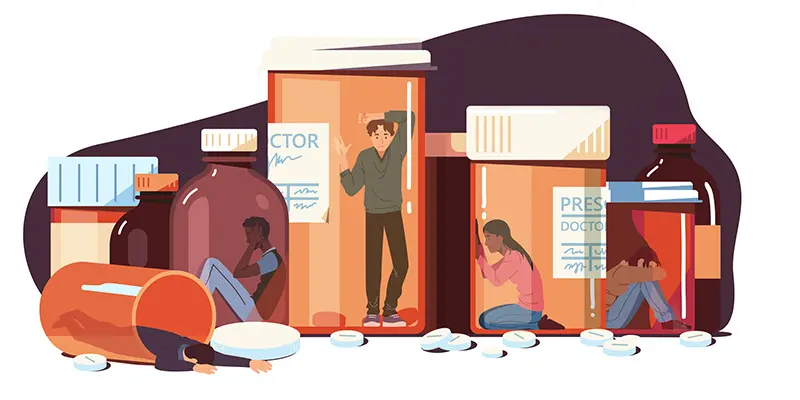
Are you struggling with an unhealthy relationship with alcohol, prescription medications, or street drugs? Most likely, you assume your
addiction is due to weakness, a character flaw, or a lack of self-control. This is not surprising, considering this is probably the overarching message you’re hearing from your friends and family.
“Why are you such a screw-up?”
“Why are you always letting me down?”
“Why can’t you be more reliable?”
When you finally make the decision to seek help for a drinking or drug use problem, you probably feel like you’ve let yourself down and let your loved ones down too. Even worse, you may believe it’s your fault or that you deserve a life of misery. Brain imaging changes these inaccurate and harmful beliefs.
WHAT BRAIN IMAGING SHOWS ABOUT ADDICTION
In working with thousands of substance abusers, we have found that brain
SPECT imaging helps people realize that addiction is clearly a brain disease, not the result of a character flaw or personal weakness that can never be treated. SPECT is a brain imaging technology that measures blood flow and activity in the brain. It shows areas of the brain with healthy activity, too little activity, and too much activity.
Brain imaging helps people to think of addiction in the same way you would think of any other disease. Take diabetes, for example, which is a disease of the pancreas that leads to problems with insulin and blood sugar. Diabetes can lead to medical and behavioral consequences. With the proper treatment, it can often be controlled so that diabetics can live a satisfying life.
Similarly, addiction is a disease that can lead to problems with physical health and behavioral issues. With a
brain-based approach to treatment, addiction can often be controlled so you can regain control of your life.
HOW BRAIN IMAGING HELPS ALLEVIATE ADDICTION STIGMA
Realizing that addiction is a brain disease can be very powerful because it alleviates some of the stigma attached to substance abuse and bad behaviors. No longer do you have to feel like you’re a bad person for having addictions or that the questionable behaviors you engage in while high or drunk define who you are as a person.
Take Nadine, 17, for example. When this teenager entered a drug program, she admitted that she felt like a loser because she would get drunk and then have sex with anyone. She was quick to label herself by saying, “I’m a slut.” But when she was asked if she was also promiscuous when she was sober, she said no. She had never had sex with anyone when she was sober.
After looking at
SPECT scans of brains damaged by alcohol and drug use compared to healthy brains, Nadine began to understand that her problems were not due to a character flaw, but to a brain problem. This helped her stop thinking of herself in such a negative and damaging way and gave her hope that she could change.
BRAIN IMAGING INCREASES UNDERSTANDING AND FORGIVENESS IN FAMILIES
Realizing that addiction and substance abuse are brain diseases can also help parents understand that it isn’t your fault if your child has an addiction. Including the entire family in treatment plans is important. Many parents of substance abusers mercilessly beat themselves up over their child’s problems.
“If only I had taken him to that Giants baseball game when he was seven instead of working, this wouldn’t have happened. It’s all my fault.”
“If I had paid more attention to who she was hanging around with, I could have prevented this.”
“I should have made him transfer to another school.”
Parents often play the blame game with each other too.
“If you would have been home more often, you would have seen what was happening.”
“You were always too lenient with her, letting her do whatever she wanted.”
“You were so strict, you alienated him.”
These thinking patterns are so detrimental to treatment and recovery. By contrast, focusing on addiction as a brain disease helps the entire family look at the brain as the organ that needs to be treated in order for the person with the addiction to get better.
Note that the concept of addiction as a brain disease does not relieve you of taking responsibility for your actions and behaviors. It gives you a better understanding of how your brain plays the central role in your addiction and how taking care of your brain is the key to breaking free from those addictions and behaviors.
BRAIN IMAGING HELPS IDENTIFY COMORBID CONDITIONS
People with addictions often have co-existing conditions, such as
anxiety,
depression,
posttraumatic stress disorder (PTSD), and
ADD/ADHD. Brain imaging helps identify these co-occurring disorders, as well as past
head injuries, which are also associated with increased risk for addictions.
We once treated a 42-year-old woman who had failed 6 alcohol treatment programs. She desperately wanted to stop drinking alcohol, but she couldn’t follow through with any of the programs because she was so impulsive. She just couldn’t say no whenever alcohol was around.
Her brain scans showed severe damage to the
prefrontal cortex (PFC)—a brain region involved in impulse control, judgment, and learning from one’s mistakes—due to a head injury. It turned out that she had been kicked in the head by a horse when she was 10 years old. She had no supervisor in her head.
The PFC acts like the brain’s brake, telling you to stop before engaging in detrimental behaviors. Without this internal supervisor, she constantly gave in to her cravings for alcohol. If we didn’t address the damaged PFC, she would never be able to recover. Giving her a treatment plan to enhance PFC function was very helpful to her and allowed her to follow through on an alcohol treatment program.
Comorbid conditions, such as anxiety, depression, PTSD, ADD/ADHD, or head injuries, all need to be treated in addition to treating the addiction. You can have the greatest addiction treatment plan available or enter the most well-respected
treatment center, but if you have underlying brain dysfunction, chances are you won’t be able to follow through with the program. For lasting success, the brain problems must be treated in addition to the addiction.
BRAIN IMAGING HELPS SHOW PROGRESS
There is no better way to find out if a treatment program is working than to see before-and-after images of the brain. Scans clearly show when a treatment plan is effectively healing the brain or when it needs to be adjusted. Thanks to imaging, small adjustments can be made to a person’s program to promote even faster healing, so it will be easier for you to break free from the addictions that steal your life.
For patients, seeing the progress they have made can be a tremendous motivator to continue on the road to freedom from addiction. Even the slightest improvements in brain health can encourage you to stay on the right track.
Substance abuse disorders, alcohol use disorders, and other mental health issues can’t wait. At Amen Clinics, we’re here for you. We offer in-clinic brain scanning and appointments, as well as mental telehealth, clinical evaluations, and therapy for adults, teens, children, and couples. Find out more by speaking to a specialist today at 888-288-9834 or visit our contact page here.