
Concussions &
Traumatic Brain Injury
Concussions and mild traumatic brain injuries are a major cause of emotional, behavioral, and cognitive issues, but most mental health professionals don’t recognize this because they rarely look at the brain. Amen Clinics uses brain-imaging technology to identify hidden or undetected head injuries that may be contributing to your symptoms.
WHAT are Concussions & Traumatic Brain Injuries?
A concussion is a type of traumatic brain injury (TBI), which is any disruption in healthy brain functioning due to a bump, blow, blast, or other injury to the head. You don’t need to black out or be diagnosed with a concussion to experience lasting cognitive, psychological, or behavioral issues. There are approximately 1.7 million emergency room visits for traumatic brain injury in the U.S. annually, and more than 450,000 U.S. veterans have sustained TBIs during conflicts. On top of this, there are hundreds of thousands of unreported incidents of head trauma, including undiagnosed concussions each year. Unfortunately for many of those who sustain them, brain injuries that don’t result in a loss of consciousness often go unnoticed and are never treated.
Who GETS HEAD INJURIES?
Over 2 million new head injuries occur in the U.S. every year, and the number of concussions is rising, especially among children. From 2010 to 2015, concussion diagnoses jumped 43% among the general population. For young people from 10 to 19 years of age, however, concussion diagnoses skyrocketed 71%. In addition, since 2000, more than 350,000 military veterans have had a TBI.

What are the Core Symptoms?
Research has shown that head injuries are a major cause of mental health problems, but few mental healthcare professionals know it because psychiatry remains the only medical field that rarely looks at the organ it treats. At Amen Clinics, 40% of our patients have experienced a past head injury, and many of them don’t remember it.
Head injuries are serious. They can cause a wide range of problems. They can cause confusion, difficulty concentrating, memory problems, moodiness, angry outbursts, balance issues, increased anxiety and even cause you to have suicidal thoughts.
PHYSICAL
- Nausea
- Vision problems
- Balance issues
PSYCHOLOGICAL
- Moodiness
- Anxiety
- Depression
COGNITIVE
- Confusion
- Memory problems
- Mental fatigue
BEHAVIORAL
- Angry outbursts
- Risky behavior
- Poor judgment

CONCUSSIONS & TBI INCREASE THE RISK OF:
- Depression
- ADHD
- Psychosis
- Aggression
- Dementia
- Anxiety and Panic Disorders
- Drug and Alcohol Abuse
- Posttraumatic Stress Disorder (PTSD)
- Personality Disorders
- Suicide

What Causes HEAD INJURIES?
Concussions and brain injuries are caused by a number of reasons. From sports (such as football, baseball, basketball, hockey, soccer, or rugby) to being in an altercation or fight, to falling or even being in a car accident. Believe it or not a simple “fender-bender” can cause significant issues for your brain.

Why Choose Amen Clinics FOR TRAUMATIC BRAIN INJURY TREATMENT?
Brain SPECT imaging is one of the best tools available to identify areas of the brain hurt by TBI. CT and MRI scans show if there is any damage to the anatomy or structure of your brain, but these scans cannot tell how your brain is functioning. In fact, after a TBI, CT or MRI scans will often appear normal when there is actually functional damage to the brain that can be detected with SPECT. Brain SPECT imaging is also highly accurate in differentiating TBI from other disorders that have many of the same symptoms, such as PTSD. Two research studies published in 2015 by the research team at Amen Clinics and colleagues found that SPECT was able to differentiate PTSD from TBI with high accuracy. This research was recognized by Discover Magazine as #19 of the top 100 science stories of 2015.
You Do Not Need To Hit Your Head To InjurE Your Brain
The brain is a magnificent organ, however, it is very soft—literally the consistency of soft butter. The skull is very hard in order to protect the brain, and there are many sharp boney ridges inside, which hold the brain in place. When you hit your head or when your head bounces around enough (as in a whiplash injury), your brain collides with these boney ridges, causing damage.
While some people experience symptoms immediately following a TBI, others don’t develop symptoms until weeks or months later. As a result of this delay, many people don’t connect their symptoms to a past head injury.
In addition, most mental health professionals don’t ask about past brain injuries, and they don’t look at the brain. Instead, the problems are frequently attributed to a mental health condition and the person is treated with medication. In too many cases, the treatment fails because the underlying brain injury is not being addressed.
INJURED Brains Work Differently
Typically, SPECT findings in TBIs include focal areas of decreased activity from the injury, as well as injuries in a contra-coup (opposing area) pattern. For example, in a whiplash injury, the brain may hit the inside of the front of the skull then ricochet and hit the back of the skull. This can lead to decreased activity in both the front part of the brain (the prefrontal cortex) and the back part of the brain (the occipital lobe). Any area of the brain may be affected by a head injury, but some regions are especially vulnerable to injury, such as the temporal lobes, which are involved in moods, memory, and learning. In addition, the pituitary gland, which regulates hormone production, sits in a vulnerable part of the skull and is often hurt in head injuries, causing major hormonal imbalances.
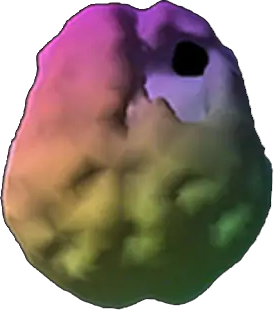
SPECT (single photon emission computed tomography) is a nuclear medicine study that evaluates blood flow and activity in the brain. Basically, it shows three things: healthy activity, too little activity, or too much activity. The healthy surface brain SPECT scan on the top right shows full, even symmetrical activity. The concussion scan below it reveals unhealthy “holes” (areas that represent low blood flow and activity) in the damaged area.
Healthy Brain Scan

Concussion Brain Scan
Concussions and Traumatic Brain Injury Testimonials


Kattie's Car Accident

Brett's TBI Caused Panic Attacks

Shawn's Surfing Accident

Mercedes Surfing Accident

Judy's Brain Injury

Judy's Son's Football Injury