
TL;DR
Anxiety is common, but it’s not one-size-fits-all. The same symptoms can have very different root causes, which is why some techniques work for some people but not others.
Science-backed strategies like breathing exercises, movement, better sleep, and nutrition can help calm your nervous system, especially when practiced consistently.
But lasting relief often comes from understanding what’s driving your anxiety. A brain-based, whole-body approach can uncover root causes and guide more personalized, effective solutions.
Medically reviewed by Daniel Emina, MD, Amen Clinics
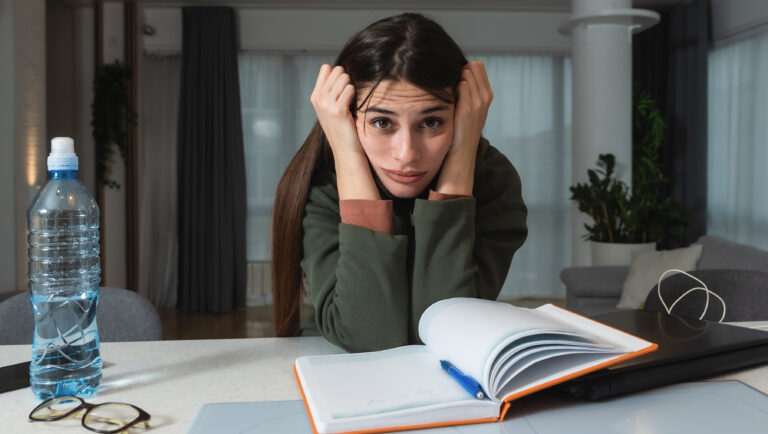
Have you ever found yourself wide awake at 2 a.m., your mind racing through everything that could go wrong? Or felt constantly on edge, like something bad is about to happen, even when everything seems fine?
If that sounds familiar, you’re not alone. Millions of people struggle with anxiety that feels overwhelming, unpredictable, and hard to control. An estimated 31.1 percent of U.S. adults experience some type of anxiety disorder during their lifetime.
The good news is that there are reliable, science-backed anxiety management techniques that can help calm your mind and restore a sense of control. These tools are not magic, but when used consistently and correctly, they can make a meaningful difference in how you think, feel, and respond to stress.
At the same time, anxiety is not one-size-fits-all, and neither are the solutions. What works for one person may not work for another.
In this guide, you will learn practical strategies grounded in brain science, along with insights into what is happening inside your brain so you can find the techniques that work best for you.
Anxiety doesn’t have a single cause. It can arise from a variety of factors, including differences in brain function, biology, and life experiences.
Anxiety is your body’s natural way of responding to unease, dread, fear, or nervousness concerning future uncertainty or threats, real or perceived. In moderation, anxiety serves a purpose. It’s what motivates us to prepare for an interview or exam, or to take measures to protect our health. Too much, however, is a problem. Anxiety can become a disorder if it’s persistent, excessive, and begins to interfere with your daily life.
Common psychological symptoms of anxiety may include:
Common physical symptoms of anxiety may include:
Anxiety is prevalent. Research by the World Health Organization shows that around 359 million people in the world experienced and lived with anxiety in 2021. More studies further show that generalized anxiety disorder affects nearly 7 million U.S. adults. Indeed, anxiety is one of the most common mental health disorders globally.
Anxiety management techniques are strategies designed to help reduce excessive worry, calm the nervous system, and improve emotional regulation.
These approaches can take different forms. Some are mental, focusing on how you think. Others are physical, helping you regulate your body. And some are behavioral, centered on building healthier daily habits.
While these techniques can be helpful in moments of intense anxiety or panic, they tend to be most effective when practiced consistently over time.
It’s also important to remember that anxiety is highly individual. A technique that works well for someone else may not have the same effect for you, and that’s okay. In many cases, the most effective approach is a combination of strategies tailored to your unique needs and situation.
Anxiety doesn’t have a single cause. It can arise from a variety of factors, including differences in brain function, biology, and life experiences.
For some people, anxiety is linked to an overactive fear circuit in the brain that triggers constant false alarms. For others, it may stem from chronic stress that keeps the body’s stress response switched on.
Anxiety can also be rooted in past trauma, which may show up as physical symptoms like nausea or tension. In other cases, it may be influenced hormonal changes or underlying medical conditions. Even poor sleep can increase anxiety, research shows.
In short, two people can experience similar anxiety symptoms, but the underlying causes may be very different. Research and brain imaging have also shown that certain symptom patterns are associated with distinct brain activity and blood flow patterns.
That’s why cookie-cutter solutions don’t always work. The most effective approach is one that takes your unique brain and body into account.
You can start using any of the following techniques to manage anxiety today. Try combining different techniques to maximize the calming benefits.
Have you ever been told to “just take a deep breath” during an anxiety spike? While breathing can help, research shows that slowing down your exhalation matters more than simply taking deep breaths.
Slowing down your exhale, in particular, signals your nervous system to calm down and can quickly reduce feelings of anxiety.
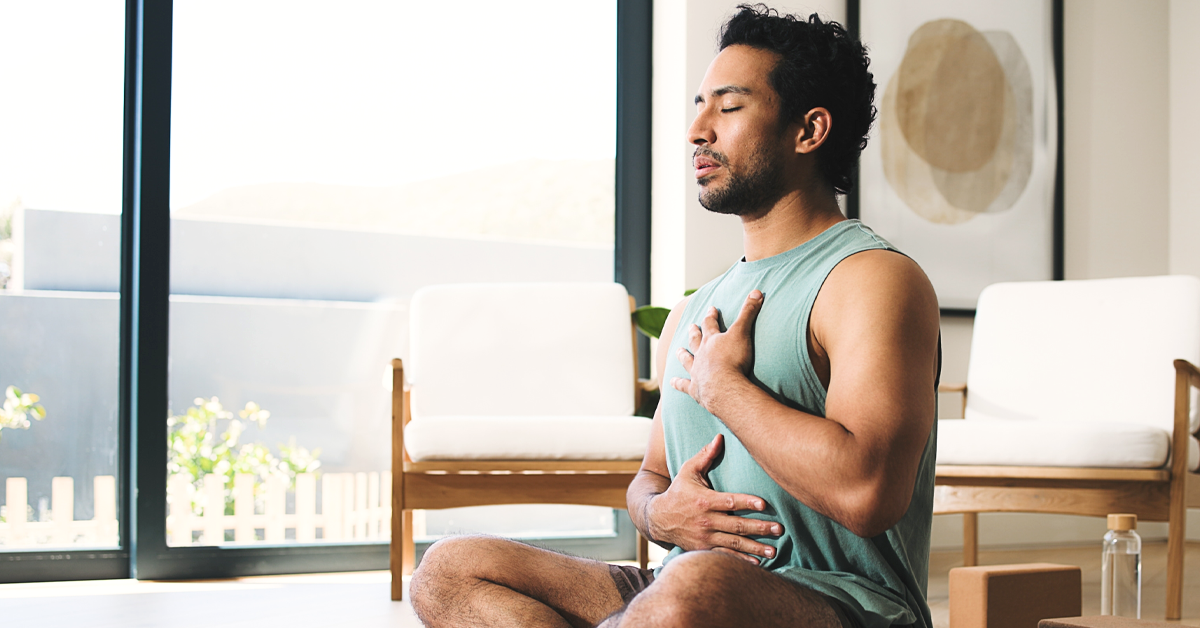
One simple technique to try is the 15-second breath:
Inhale through your nose for 4 seconds, hold for 1.5 seconds, exhale slowly through your mouth for 8 seconds, then hold again for 1.5 seconds. Repeat this cycle four to twelve times.
Try it for a minute or two. Notice how your body feels.
This type of slow, controlled breathing activates your parasympathetic nervous system, the part of your autonomic nervous system responsible for rest and relaxation. It helps counter your body’s stress response and restore balance.
Grounding exercises have been shown to reduce anxiety in research. We’ve seen how anxiety can sometimes come from worrying about what will happen. When your mind is racing, grounding brings your attention back to the present moment by engaging the senses.
Here’s one technique you can use. Simply look around you and name:
By the time you identify all five of your senses, your attention will return to the here and now, and your racing thoughts will begin to settle.
You don’t need to spring for an expensive gym membership or train for a marathon. Move in any way you can. Dance to your favorite music or a YouTube workout, take a short walk, or do some simple stretching.
You might be surprised to discover how much a little regular movement helps to keep stress hormones like cortisol in check and boost brain function.
According to research, regular physical activity is proven to reduce anxiety symptoms in many different groups of people and, in some cases, more effective than conventional distraction techniques. Take a 20-minute walk today and see how you feel afterwards!
Caffeine and sugar can overstimulate your nervous system, triggering symptoms like a racing heart, shaky hands, and that wired-but-tired feeling.
One of the simplest ways to reduce these effects is to cut back gradually. Try limiting yourself to one cup of coffee in the morning, ideally before noon, and replace additional cups with water or herbal tea.
You might also consider switching to green tea. It contains about half the caffeine of coffee and includes L-theanine, an amino acid that promotes calm, focused alertness without the jitters.
When it comes to sugar, opt for whole fruits instead of processed sweets. Lower-sugar options like berries, grapefruit, kiwi, and green apples can help satisfy cravings without causing sharp blood sugar spikes and crashes.
As you make these changes, pay attention to how you feel. Even small adjustments can lead to noticeable improvements in your anxiety levels.
If you’ve been cutting back on sleep to get more done, it may actually be making it harder for you to handle stress. Think about how much bigger and more overwhelming small problems feel when you’re exhausted.
One of the most effective ways to support your mental health is to keep a consistent sleep schedule. Try going to bed and waking up at the same time every day, including weekends.
Aim for seven to nine hours of sleep each night. When your sleep is consistent, your brain is better able to regulate emotions, manage stress, and keep anxiety in check.
When you get unhelpful thoughts like, “I am going to mess this up,” even when you know you are well prepared for that moment, remember, they are just your thoughts, not reality.
The truth is that our thoughts often lie to us. Questioning them can reduce anxiety levels.
So, next time you notice one of those automatic negative thoughts, pause. Ask yourself if it is true. For example, “all-or-nothing” thinking is often flawed. Consider if there’s a more accurate, positive thought. If so, choose that thought!
Challenging yourself to see things differently is not being overly positive or fake. You’re just refusing to believe every worst-case scenario your brain throws at you.
Your worries get louder when you are alone or isolate yourself because there’s nothing to interrupt or challenge them. Being around people you trust, even for a 10-minute call or chat, helps settle your nervous system.
It helps keep you in the present moment instead of getting stuck in worried thoughts. Research shows that people with lower levels of social connection have a higher risk of developing generalized anxiety disorder.
Short, intentional breaks are highly effective to implement because they are low-pressure. They provide enough of a break from stress to help keep tension levels manageable and anxiety in check.
Examples:
You can support your brain health with your food choices. For instance, balanced meals keep your blood sugar stable, preventing the energy crashes that can trigger anxiety.
In addition, foods rich in omega-3s, such as salmon, walnuts, and flaxseeds, give your brain the building blocks it needs to function better. Research shows that people who eat more whole foods, vegetables, and omega-3 fatty acids have lower rates of anxiety disorders. On the other hand, highly processed diets can cause higher rates of anxiety.
Small daily routines, such as a morning ritual, setting a bedtime, and regular weekly grocery shopping, reduce the number of decisions your brain has to stress over. Structure and predictability calm your brain and help it relax.
The type of anxiety management technique that works depends on what the root cause of the anxiety is. Two people may both experience anxious symptoms, but one has an overactive fight-or-flight response, while the other struggles with brain fog and low energy. The first person might benefit from calming techniques like slow breathing. While the second person might need strategies to improve focus and regulation, such as structure and movement.
Same symptoms, but different anxiety management techniques. This is why personalization is critical. When one strategy is not effective for you, it does not mean that you cannot manage anxiety; it likely means that you need different techniques.
Apart from stress, there are other causes of anxiety, such as biological factors, like:
It is important to rule out medical causes. Relaxation techniques may not be able to help these types of anxiety that have biological roots.
Related: 4 Steps to Break An Anxiety Attack
Most of the approaches to anxiety focus on symptoms such as worry, restlessness, or panic. Our focus at Amen Clinics begins with brain health.
With the help of SPECT imaging, our clinicians look at patterns of blood flow and brain activity to see how different regions of the brain are functioning. This brain imaging work has revealed that there are seven subtypes or brain patterns associated with anxiety and depression, and anxiety and depression often co-occur.
In our comprehensive evaluation, our clinicians review this SPECT scan data, plus neuropsychological testing and a detailed personal health history, to better understand what may be driving your anxiety.
And what drives anxiety varies. For some people, it is connected to overactive brain regions; for others, it may be tied to focus issues, stress, or past experiences. Understanding the “why” behind your symptoms makes a real difference in finding the right treatment.
At Amen Clinics, we practice holistic psychiatry, which combines cutting-edge neuroscience with natural ways to treat mental health disorders. Our thorough and detailed evaluation helps our clinicians practice precision medicine to craft more personalized, targeted treatment plans.
Anxiety is not something that just affects your head. It also lives in your body. A whole-body approach to treating anxiety takes into account both your body and your brain. Treatment plans tend to include:
If you’ve already tried different combinations of these techniques, but it doesn’t seem to work, you may need to seek help from a qualified mental health professional.
If you are experiencing any of the following, it’s an indicator to take the next steps for support:
So, when do you know it’s time to get a professional evaluation for anxiety? Watch out for:
There is no single one-size-fits-all solution to anxiety. Your brain patterns, history, and your body are unique to you. Hence, the treatment should also be unique and customized to diverse needs.
With the right interventions that address the root causes of anxiety, brain function can significantly improve, as well as your anxiety symptoms.
Anxiety management techniques are a lifesaver when your brain is spinning. And when done consistently, they can be a long-term way to keep your anxiety in check. What helps even more is knowing the root cause of your anxiety so that you can customize management techniques depending on what you really need.
You don’t have to figure it out alone. If you’re looking for deeper answers beyond general management techniques, consider a comprehensive evaluation that looks beyond symptoms to understand your brain, body, and mind.
A combination of anxiety management techniques such as slow breathing, grounding exercises, regular movement, and consistent sleep will yield the best results.
Try the 15-second breath method. Inhale through your nose for 4 seconds, hold for 1.5 seconds, exhale slowly through your mouth for 8 seconds, then hold again for 1.5 seconds. Repeat this cycle four to twelve times.
It’s very possible to manage anxiety without medication with lifestyle changes, therapy, and stress regulation techniques. But in some cases, medication may be necessary.
There are times when the technique doesn’t align with the root cause. For instance, a breathing exercise might not help if your anxiety if its root cause is a hormonal issue or a nutritional deficiency.
Physical issues such as thyroid issues, blood sugar shifts, heart conditions, and vitamin deficiencies can cause or worsen anxiety.
Anxiety and other mental health conditions can’t wait. At Amen Clinics, we practice precision medicine—using brain SPECT imaging and comprehensive evaluations to understand what’s really happening in your brain, not just your symptoms.
Our whole-body approach to holistic psychiatry combines cutting-edge neuroscience with natural ways to treat mental health conditions, including targeted nutrition, supplements, lifestyle strategies, therapy, and medications (when necessary). Every treatment plan is personalized to address the root causes of your struggles and support the health of your brain, body, and mind.
Don’t settle for guesswork. You deserve answers—and a plan built specifically for you. Speak with a Brain Health Advisor today at 888-288-9834 or visit our contact page to get started.
National Institute of Mental Health website
Accessed April 14, 2026
World Health Organization. (2022). Mental disorders: Key facts. WHO Fact Sheets.https://www.who.int/news-room/fact-sheets/detail/anxiety-disorders
Anxiety and Depression Association of America. (2026). Facts & statistics. https://adaa.org/understanding-anxiety/facts-statistics
Pires, G. N., Tufik, S., & Andersen, M. L. (2012). Relationship between sleep deprivation and anxiety: experimental research perspective. Einstein (São Paulo), 10(4), 519-523. https://pubmed.ncbi.nlm.nih.gov/23386097/
Luo, Q., Li, X., Zhao, J., Jiang, Q., & Wei, D. (2025). The effect of slow breathing in regulating anxiety. Scientific reports, 15(1), 8417. doi: 10.1038/s41598-025-92017-5
Wolfe AHJ, Hinds PS, du Plessis AJ, Gordish-Dressman H, Freedenberg V, Soghier L. Mindfulness Exercises Reduce Acute Physiologic Stress Among Female Clinicians. Crit Care Explor. 2024 Oct 25;6(11):e1171. doi: 10.1097/CCE.0000000000001171. PMID: 39466161; PMCID: PMC11519409.
Anderson, E., & Shivakumar, G. (2013). Effects of exercise and physical activity on anxiety. Frontiers in psychiatry, 4, 27. doi: 10.3389/fpsyt.2013.00027
Taylor, C. T., Pearlstein, S. L., Kakaria, S., Lyubomirsky, S., & Stein, M. B. (2020). Enhancing social connectedness in anxiety and depression through amplification of positivity: Preliminary treatment outcomes and process of change. Cognitive therapy and research, 44(4), 788-800. doi: 10.1007/s10608-020-10102-7
Natacci, L., M. Marchioni, D., C. Goulart, A., Nunes, M. A., B. Moreno, A., O. Cardoso, L., … & M. Bensenor, I. (2018). Omega 3 consumption and anxiety disorders: a cross-sectional analysis of the brazilian longitudinal study of adult health (ELSA-Brasil). Nutrients, 10(6), 663. doi: 10.3390/nu10060663