Imagine this situation…
You head to the orthopedic specialist’s office due to knee pain that you are experiencing. After asking you questions about the knee pain and bending your leg back and forth a few times, he tells you that you need knee surgery. Would you trust this guesswork diagnostic? Of course not!
Unfortunately, this scenario is similar to how psychiatry is commonly practiced today – in much the same way they did in 1840 when Abraham Lincoln was depressed…a doctor assesses your symptoms, forms a diagnosis based on those reported symptoms, and then prescribes a medication at a dosage that may or may not work.
From there, it’s a matter of watching to see if he or she got it right. Many times patients will get multiple diagnoses and prescriptions before they find relief – if at all. Treatment success rates have not improved in decades, even though technology and science have progressed dramatically.
Did you know that psychiatrists are the ONLY medical specialists who rarely look at the organ they treat?
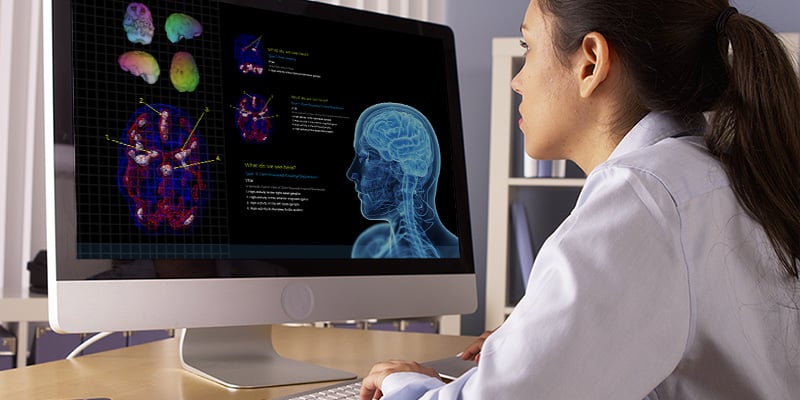
Brain SPECT (single photon emission computed tomography) imaging is demonstrating that there is a better way.
SPECT imaging is a well-established nuclear medicine procedure that looks at blood flow and activity in the brain. It’s different from an MRI or CT scan, which are anatomical studies that examine the brain’s structure or how it physically
looks. SPECT looks at how the brain
works.
SPECT allows physicians to look deep inside the brain and observe three things:
- Areas of the brain that work well
- Areas of the brain that work too hard
- Areas of the brain that do not work hard enough
You’ve heard it said that a picture is worth a thousand words, but a map is worth a thousand pictures. A map tells you where you are and gives you directions on how to get to where you want to go. That is what SPECT imaging does for us at Amen Clinics. It gives us a map to help us better
diagnose and treat our patients.
Here are just a few of the significant things you will discover:
- Why it is so problematic when physicians “fly blind”
- What SPECT scanning causes 8 out of 10 doctors to do
- What oxygen deprivation, mold exposure, and Lyme disease have in common
After now looking at more than 150,000 scans done on people from 120 countries around the world, some of the other important lessons that we’ve learned are:
- Illnesses like ADHD, anxiety, depression, and addictions are NOT single or simple disorders in the brain and they all have multiple types, each requiring a unique treatment intervention.
- Mild traumatic brain injuries are a major cause of psychiatric illness and many mental health professionals miss it in patients because they rarely look at the brains of their patients. Brain injuries are a major cause of drug and alcohol abuse, depression, anxiety, ADHD symptoms, suicide, and homelessness.
- Without looking at the brain, many important pieces of information are missed, which can hurt you or someone you love.
- Alzheimer’s disease and other forms of dementia can be seen with a SPECT scan years before people have symptoms. SPECT is a leading indicator of problems, meaning it shows evidence of the disease process years before people show signs of it. Anatomical studies, such as CT and MRI are lagging indicators. They show the problems later in the course of the illness when interventions tend to be less effective.
- 77% of patients reported experiencing considerable improvement after six months when treated with the Amen Clinics Method.
Imaging changes everything. At Amen Clinics, we can help you and your loved ones overcome the stigma and suffering associated with disorders like ADD/ADHD, anxiety, depression, brain injury, addictions, memory issues, and much, much more. If you are ready to change your brain and change your life, give us a call today at 888-288-9834 or
tell us more to schedule an appointment.