The Prefrontal Cortex and ADD
This post has been updated from it’s original publish date.
If you have ADHD, also called ADD—or if you have a child with ADHD—it can make life more challenging in so many ways. For example, people may think you’re lazy because you show up late for work, or because you wait until the last minute to start your household chores or work assignments.
Your child may impulsively say rude things, which makes it hard for them to make friends. And that can have a negative effect on the trajectory of their life. It can make them feel like a failure.
What you may not realize is that attention-deficit/hyperactivity disorder (ADHD), or attention-deficit disorder (ADD), isn’t your fault. It’s due to faulty brain activity in an area called the prefrontal cortex.
Learning more about this important brain region and how it functions in people with the mental health disorder can change the way you view yourself or your child. And it can lead the way to better control over ADD/ADHD symptoms.
What you may not realize is that ADD/ADHD isn’t your fault. It’s due to faulty brain activity in an area called the prefrontal cortex.
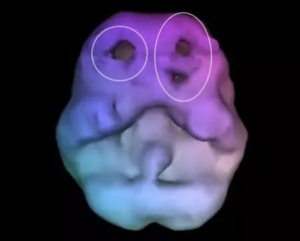 In the ADD/ADHD brain, there is low blood flow/activity in the prefrontal cortex. In the image here, the holes indicate areas of low blood flow.
Due to low activity in the PFC, people can struggle with a range of ADD/ADHD symptoms, such as:
In the ADD/ADHD brain, there is low blood flow/activity in the prefrontal cortex. In the image here, the holes indicate areas of low blood flow.
Due to low activity in the PFC, people can struggle with a range of ADD/ADHD symptoms, such as:
WHAT IS THE PREFRONTAL CORTEX?
The prefrontal cortex (PFC), also known as the brain’s “executive center,” is the most evolved part of the brain. It occupies the front third of the brain, behind the forehead. It is often divided into three sections: • Dorsal lateral section—on the outside surface of the PFC • Inferior orbital section—on the front undersurface of the brain • Anterior cingulate gyrus—which runs through the middle of the frontal lobes The PFC is involved in many functions, such as: • Focus and attention • Planning • Organization • Forethought • Judgment • Empathy • Impulse control • Learning from mistakes • Follow-through Healthy PFC activity helps people think through the consequences of their behavior, which is essential for effective living in nearly every aspect of life. It impacts decisions related to: • Choosing a good mate • Interacting with customers • Dealing with difficult children • Spending money wisely • Driving safely on the freeway Without proper PFC function, it’s difficult to act in consistent, thoughtful ways, and impulses can take over. Damage to the prefrontal cortex can have far-reaching effects, such as with YouTube star Logan Paul. The YouTuber’s decision-making often lands him in hot water and made him the most hated celebrity in 2018.ADD/ADHD IS A BRAIN-BASED DISORDER
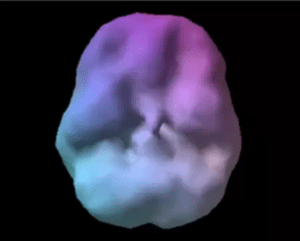
ADD/ADHD is a neurodevelopmental disorder. Functional brain imaging with SPECT scans shows that it is associated with abnormal function in the prefrontal cortex. On SPECT scans of people with healthy brain function, the act of concentrating increases activity in the PFC. However, when those with ADD/ADHD try to concentrate, PFC activity decreases rather than increases. Healthy Brain SPECT Scan
In the healthy brain, there is full, even, symmetrical blood flow/activity.
ADD/ADHD Brain SPECT Scan
In the ADD/ADHD brain, there is low blood flow/activity in the prefrontal cortex. In the image here, the holes indicate areas of low blood flow.
Due to low activity in the PFC, people can struggle with a range of ADD/ADHD symptoms, such as:
- Poor internal supervision
- Short attention span
- Distractibility
- Disorganization
- Hyperactivity (although only half the people with ADD are hyperactive)
- Impulse control problems
- Difficulty learning from past errors
- Lack of forethought
- Procrastination
ADD/ADHD AND THE PREFRONTAL CORTEX
Here are some common characteristics of ADD/ADHD that clearly connect this disorder to the PFC:-
The harder you try, the worse it gets.
-
You have difficulty paying attention.
-
You get easily distracted.
-
You say and do things impulsively.
-
You like drama.
SUPPORT THE PREFRONTAL CORTEX
Anyone with ADD/ADHD needs to support the brain for better prefrontal cortex function. Strategies to optimize the PFC include:- Neurofeedback: Studies show that neurofeedback treatment improves ADD/ADHD symptoms.
- Goal setting: Knowing what you want out of life can help you match your behavior to achieve your goals.
- Meditation: Studies show that meditation enhances function in the PFC.
- Higher-protein diet: Eating a diet that is higher in protein and lower in simple carbohydrates improves focus.
- Nutraceuticals: Take supplements, such as omega-3 fatty acids, rhodiola, green tea extract, zinc, ginseng, and ashwagandha.