

TL;DR: Depression is more common than ever, yet it’s often overlooked or misdiagnosed because symptoms alone don’t tell the full story. Research shows that many people don’t receive the right diagnosis or treatment, leading to poor outcomes.
Brain SPECT imaging, when used as part of a comprehensive evaluation, can reveal how the brain is functioning and help identify activity patterns associated with different types of depression.
These insights help clinicians to more accurately diagnose depression and develop more personalized and effective care plans.
The takeaway? Depression isn’t one-size-fits-all, and treatment shouldn’t be either. A brain-based, whole-body approach can help uncover root causes and lead to more targeted, meaningful solutions.
Medically reviewed by Daniel Emina, MD, Amen Clinics.
Depression has risen to historic highs among U.S. adults. A 2025 Gallup Poll reported that more than 18 percent (an estimated 47.8 million Americans) currently have or are being treated for depression, representing an eight percent increase since 2015.
Yet studies indicates that many cases remain undetected, untreated, or misdiagnosed. Some research suggests that the rate of misdiagnosis may exceed 65 percent, raising an important question: can brain SPECT imaging help identify depression more accurately?
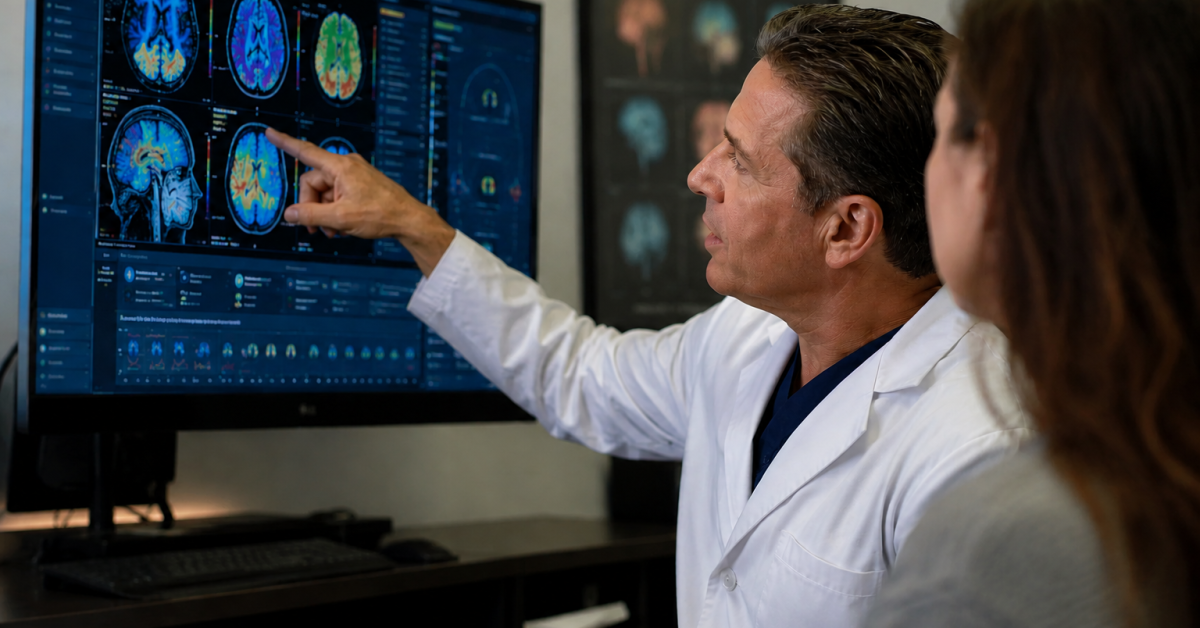
At Amen Clinics, SPECT scans are used as part of a comprehensive evaluation to assess blood flow and activity patterns in the brain. These patterns are often linked to different mental health conditions, including seven distinct types of depression, offering valuable insights for clinicians.
With depression, as with any mental health condition, it’s critical to use tools that help uncover what’s really happening in the brain. While SPECT is not a standalone diagnostic tool, it provides important data that can support a more accurate diagnosis and guide more effective, personalized treatment, going beyond the traditional “symptoms-only” approach.
In this blog, you’ll learn how brain SPECT imaging helps identify depression and supports more accurate diagnosis, informed treatment, and better outcomes.
With seven types of depression, each having their own presentation and symptoms, a one-size-fits-all treatment often does not work. Using brain SPECT imaging helps create a more effective treatment plan because it is customized to treat the individual’s type of depression.
Major depressive disorder is traditionally identified through:
While these are useful steps to take, the symptoms of depression can overlap with other mental health conditions, making accurate diagnosis more difficult. And co-existing factors, including anxiety, trauma, or attention deficit hyperactivity disorder (ADHD), also called attention deficit disorder (ADD), can complicate accurate diagnosis further.
Related: What Doctors Can’t Tell You About Your Depression, Anxiety, or Anger
With traditional diagnosis, there is no biological testing, though numerous biological factors can contribute to depression. Without looking at the very organ affected, the brain, or having an accurate diagnosis, doctors often take a trial-and-error approach to treatment. Unfortunately, this can lead to delayed symptom relief, persistent adverse side effects, and patient discouragement.
SPECT is an acronym for single photon emission computed tomography. This type of imaging provides a functional brain scan, as opposed to structural imaging tools such as MRI or CT scans, which show the brain’s anatomy.
As a state-of-the-art nuclear medicine study, SPECT measures blood flow and activity levels in different areas of the brain. This shows how the brain is working. It identifies areas of healthy activity, overactive activity, or underactive activity in different regions of the brain.
SPECT imaging does not diagnose depression on its own. But it can reveal brain activity patterns commonly associated with depressive symptoms. SPECT may also help differentiate depression from other conditions that are present.
SPECT therefore provides additional data beyond symptom reporting. With a clearer picture of the brain’s workings, SPECT imaging helps guide a more personalized understanding of what may be happening in the brain. This information then helps guide a more accurate diagnosis and targeted treatment.
A variety of brain patterns are associated with depression:
Mental health conditions, including depression, are complex. But research and imaging studies suggest associations between certain symptoms and brain patterns. SPECT helps provide a deeper understanding of depression when used alongside traditional diagnosis methods.
Not all depression looks the same. Different individuals may have:
With a database of nearly 300,000 SPECT scans and having treated more than 100,000 patients over decades, our work at Amen Clinics has revealed that depression is not one thing. In fact, our clinicians have identified seven types of depression and anxiety, each with a distinct pattern of blood flow and brain activity:
With seven types of depression, each having their own presentation and symptoms, a one-size-fits-all treatment often does not work. The treatment protocol for one type might make another type’s symptoms worsen. Using brain SPECT imaging helps create a more effective treatment plan because it is customized to treat the individual’s type of depression.
Video: Seven Types of Anxiety & Depression
Depression symptoms can overlap with other conditions. For example, the same symptoms of depression could also be the symptoms noted for any of the following conditions:
Therefore, symptoms alone may not tell the whole story. Ruling out medical causes is essential before diagnosing major depressive disorder.
With our brain health-first approach, Amen Clinics uses SPECT imaging as an integral part of a comprehensive evaluation.
SPECT is combined with diagnostic tools such as:
This collection of data, including the SPECT scan, helps our clinicians gain a clear understanding of what is really happening in the brain. If you have depression, they will typically be able to identify which subtype you have, plus any co-occurring conditions.
Then, using precision medicine, they can design a treatment plan tailored to address any identified brain dysfunction, as well as boost overall brain and body health.
A clinician reviews your SPECT scan and personalized treatment plan with you in detail.
SPECT scans also help clients and their loved ones understand that the symptoms of depression are not flaws, character defects, or personal weaknesses. Seeing the brain function issues on the brain scan depersonalizes depression. Knowing that this condition is rooted in brain function helps reduce shame and blame.
Moreover, this kind of scientific and compassionate understanding increases the motivation to make meaningful lifestyle changes. At follow-up appointments, the clinician and client can track results over time.
The brain-body connection is crucial in treating any mental health condition. Factors such as diet, physical activity, and sleep all significantly impact mental well-being.
Therefore, holistic psychiatry as practiced at Amen Clinics may include:
This whole-body approach to holistic psychiatry offers many natural ways to treat mental health conditions, including depression. But what works for one type of depression may not work for another. That’s why treatment is always personalized to the needs of the individual.
Related: 9 Natural Ways to Help Depression
Brain SPECT imaging offers numerous benefits for clinicians and their clients. This cutting-edge diagnostic tool:
Individuals are different, and each person’s depression symptoms are unique. Therefore, treatment should be individualized and brain-based.
A brain-based evaluation can be particularly helpful for individuals experiencing any of the following:
Getting a comprehensive evaluation can improve the accuracy of your diagnosis. In our published outcome study, we found that 79 percent of patients who came to Amen Clinics left with a different diagnosis and treatment plan than when they came in.
Additionally, our individualized treatment plan is designed to address your specific brain patterns, symptoms, and lifestyle.
Brain SPECT imaging is not a standalone tool for diagnosis but is used as part of combination of diagnostic measures. Brain imaging also requires professional clinical interpretation. The clinicians at Amen Clinics are equipped to use SPECT as part of a comprehensive evaluation and care plan.
Depression is complex, and symptoms alone don’t always reveal the full picture. That’s why a comprehensive professional evaluation is essential for accurate diagnosis and effective treatment.
Looking at the brain, along with key biological and lifestyle factors, can provide deeper insight into what’s driving symptoms. Tools like SPECT imaging add valuable information that can help guide more targeted, personalized care.
If you’re not finding answers or relief from depression symptoms, a thorough evaluation can help you move beyond guesswork and toward a clearer path to recovery.
Help is available. If you’re looking for deeper answers, consider a comprehensive evaluation at Amen Clinics that looks beyond symptoms to understand and treat your brain, body, and mental health.
A SPECT brain scan is helpful for looking at underlying brain activity and patterns, which can provide important insight when diagnosing depression. This critical data, used in combination with a comprehensive evaluation (such as a detailed personal history, clinical assessments, and lab work when needed), enables the most accurate diagnosis and treatment.
Brain SPECT imaging is a cutting-edge diagnostic tool that shows clinicians how the brain is functioning. It shows what areas are working well, working too hard, or not working hard enough. Based on nearly 300,000 brain scans and treating more than 100,000 patients, Amen Clinics has determined there are seven subtypes of depression. Each has its own brain patterns and requires a targeted treatment plan.
At Amen Clinics, brain scans help identify these different types of depression, as well as consider possible biological factors and distinguish between conditions with similar symptoms. Finally, SPECT enables a personalized treatment plan for better results.
Many psychiatrists diagnose depression without brain imaging. However, a symptoms-only approach to diagnosis fails to look at the very organ it aims to treat: the brain. This can create a trial-and-error method of treatment, which can lead to years or even decades of unnecessary struggles. In some cases, it can make symptoms worse.
Brain imaging allows for more targeted treatment for depression, which accelerates the healing process.
Depression and anxiety occur together 75 percent of the time. Through our imaging work over decades with more than 100,000 patients, SPECT imaging has helped our clinicians identify seven types of depression and anxiety. Each type has associated brain activity patterns and symptoms. Knowing an individuals type helps clinicians create a targeted treatment plan for better results.
Yes. Numerous biological factors are associated with depression symptoms. Possibilities include traumatic brain injury, low thyroid levels, inflammation, mold exposure, infections like COVID, and heart disease. SPECT brain imaging and a comprehensive evaluation help rule out biological factors as potential causes of depression symptoms.
Depression, anxiety, and other mental health conditions can’t wait. At Amen Clinics, we practice precision medicine—using brain SPECT imaging and comprehensive evaluations to understand what’s really happening in your brain, not just your symptoms.
Our whole-body approach to holistic psychiatry combines cutting-edge neuroscience with natural ways to treat mental health conditions, including targeted nutrition, supplements, lifestyle strategies, therapy, and medications (when necessary). Every treatment plan is personalized to address the root causes of your struggles and support the health of your brain, body, and mind.
Don’t settle for guesswork. You deserve answers—and a plan built specifically for you. Speak with a Brain Health Advisor today at 888-288-9834 or visit our contact page to get started.

Dr. Daniel Emina is an Associate Medical Director at Amen Clinics and a child, adolescent, and adult psychiatrist. He earned his medical degree from the UCLA School of Medicine and completed his psychiatry residency and child/adolescent psychiatry fellowship at the University of Hawaii Department of Psychiatry. Dr. Emina uses psychotherapy, pharmacotherapy, pharmacogenomics, brain imaging, TMS, and integrative therapies to optimize brain health and function. He is experienced in treating anxiety, depression, ADHD, autism spectrum disorders, OCD, PTSD, addiction, mood disorders, and traumatic brain injuries in both children and adults.
U.S. Depression Rate Remains Historically High. By Dan Witters. September 9, 2025. https://news.gallup.com/poll/694199/u.s.-depression-rate-remains-historically-high.aspx
Handy A, Mangal R, Stead TS, Coffee RL Jr, Ganti L. Prevalence and Impact of Diagnosed and Undiagnosed Depression in the United States. Cureus. 2022 Aug 14;14(8):e28011. doi: 10.7759/cureus.28011. PMID: 36134073; PMCID: PMC9470500.
Vermani M, Marcus M, Katzman MA. Rates of detection of mood and anxiety disorders in primary care: a descriptive, cross-sectional study. Prim Care Companion CNS Disord. 2011;13(2):PCC.10m01013. doi: 10.4088/PCC.10m01013. PMID: 21977354; PMCID: PMC3184591.