

TLDR; ADHD is a brain-based disorder that is frequently misdiagnosed or undetected for years because its symptoms overlap with dozens of other conditions.
Analysis of nearly 300,000 brain scans at Amen Clinics shows ADHD is not a single condition — it has multiple distinct types, each requiring a different treatment approach. Brain SPECT imaging, when used as part of a comprehensive evaluation, can improve diagnostic accuracy and help identify which type of ADHD is present.
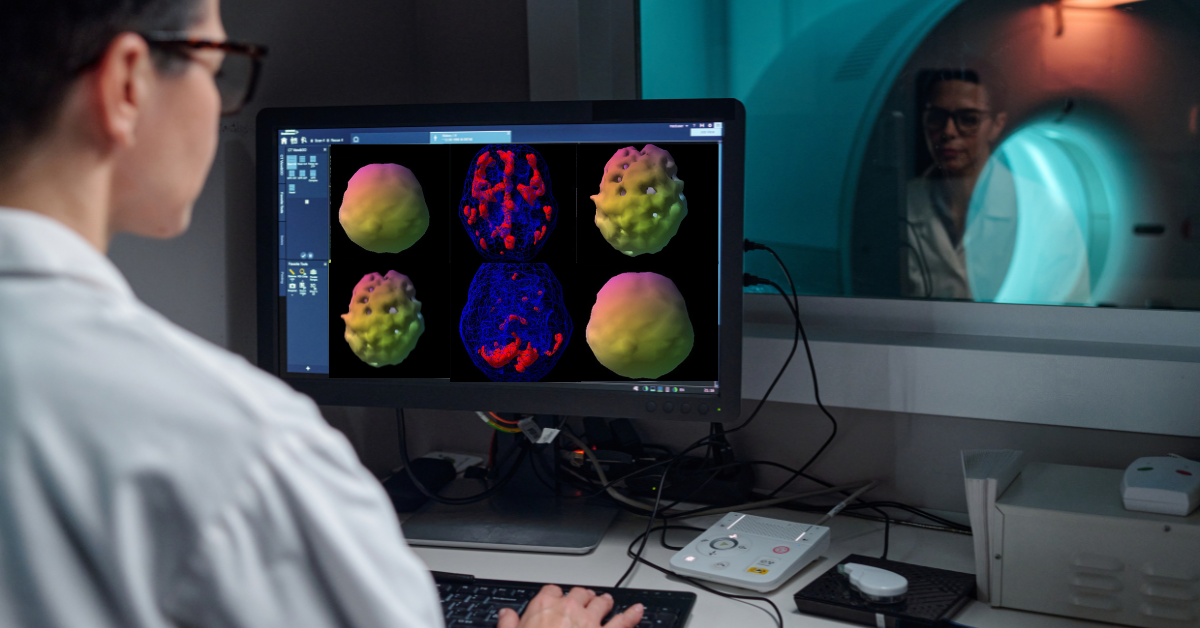
ADHD is being diagnosed more frequently than ever in both children and adults. However, despite increased awareness, it remains widely misunderstood, frequently misdiagnosed, and often treated incorrectly.
Plus, it can go undetected for decades. Among the millions of adults with ADHD, about half were not diagnosed until adulthood. And in one survey, 25 percent of adults said they suspected they may be struggling with undiagnosed ADHD.
One major challenge is that in traditional healthcare, ADHD is diagnosed primarily on symptoms. But ADHD is a brain-based disorder, and diagnosis should involve evaluating the brain itself. This is where brain imaging comes in.
Can brain SPECT imaging help identify ADHD?
While SPECT is not used as a standalone diagnostic tool, it plays an important role as part of a comprehensive evaluation. Brain SPECT imaging measures blood flow and activity in the brain, helping clinicians identify activity patterns associated with ADHD.
This brain-based approach provides deeper insights that improve ADHD diagnostic accuracy and guide more targeted, effective treatment.
Brain scans are beneficial for numerous reasons.
For example, attention deficit hyperactivity disorder (ADHD), also called attention deficit disorder (ADD), shares overlapping symptoms with other mental health conditions, developmental disorders, and medical issues. Research has found that a majority of children with ADHD have at least one co-occurring condition, which can make diagnosis more challenging.
Brain imaging helps rule out other causes of ADHD symptoms and can help identify co-existing conditions.
In addition, the brain-imaging database at Amen Clinics—nearly 300,000 brain scans and growing—has shown there are at least seven types of ADD, each affecting the brain in unique ways and requiring different types of treatment. Brain scans help identify ADHD subtypes for more targeted treatment.
In this blog, you’ll learn how critical it is to get an accurate ADHD diagnosis, and how brain SPECT imaging is often the missing piece in the puzzle.
SPECT imaging identifies underlying brain patterns and helps to pinpoint an individual’s specific subtype of ADHD. Because the treatment for one type could be unhelpful or even harmful to another type, this differentiation is crucial.
While these steps can be helpful in determining diagnosis, this approach has limitations. First, ADHD often involves symptoms that overlap with other conditions, such as anxiety, depression, and trauma.
According to CDC statistics, nearly 78 percent of children with ADHD have at least one other co-occurring condition, including:
One study found that nearly one million children in the U.S. may be misdiagnosed with ADHD.
There are many reasons for this but one major factor is immature behavior being misinterpreted as ADHD symptoms. The study found that the youngest kindergarteners are approximately 60 percent more likely to be diagnosed with ADHD than the oldest children in the same grade.
In addition, the standard model of ADHD diagnosis doesn’t include any biological testing.
Most patients and doctors wouldn’t imagine treating the heart without fully examining it, but modern psychiatry often avoids looking at the very organ it aims to treat: the brain.
This traditional model can lead to misdiagnosis or incomplete understanding of the individual’s ADHD and any co-occurring conditions. It also fails to recognize that ADHD is not a straightforward, single condition.
Research suggests that less than 20 percent of adults with the condition are appropriately diagnosed and treated for their symptoms.
On a brighter note, informed by decades of performing SPECT brain scans, Amen Clinics has identified seven subtypes of ADHD. Understanding what types of brain function issues are associated with specific symptoms has helped our clinicians in making precise diagnoses and targeted, effective treatment plans associated with better outcomes.
SPECT stands for single photon emission computed tomography. It is a state-of-the-art nuclear medicine study that measures blood flow and activity levels in different regions of the brain.
Unlike structural imaging tools such as MRI or CT scans, which show the brain’s anatomy, SPECT provides functional information. It allows clinicians to see how the brain is working by identifying areas with healthy activity, as well as areas that are overactive or underactive.
SPECT imaging does not diagnose ADHD on its own, but it can reveal patterns of brain activity often associated with attention difficulties. It may also help distinguish ADHD from other conditions with similar symptoms.
By adding objective data beyond symptom reports, SPECT gives clinicians a clearer understanding of what may be happening in the brain, helping guide more accurate diagnosis and targeted treatment.
The brain’s executive center, the prefrontal cortex, is a key region in tasks such as attention, focus, and impulse control. In individuals with ADHD, this area often shows underactivity in SPECT imaging. There is also irregular activity observed in attention networks.
Variations can occur within the brain patterns, depending on the subtype, and different brain patterns may correspond to different symptom clusters. Looking at the brain with SPECT gives a clearer picture of the brain activity behind the symptoms.
The brain SPECT imaging work conducted at Amen Clinics has revealed seven types of ADHD, each with a distinct pattern of blood flow and brain activity. They are as follows:
1. Classic ADD: In this type, which is the most common of the seven types, there is normal activity at rest, but during concentration there tends to be decreased activity in the prefrontal cortex, cerebellum, and basal ganglia. This type may “act out” more and is associated with hyperactivity.
2. Inattentive ADD: The second most common ADD type, this involves normal activity at rest, but during concentration there tends to be decreased activity in the prefrontal cortex, cerebellum, and basal ganglia. This type is not hyperactive and tends to be perceived as daydreaming, spacy, or slow.
3. Overfocused ADD: This type has increased activity at rest and during concentration in the anterior cingulate gyrus, as well as decreased activity in the prefrontal cortex, cerebellum, and basal ganglia. People with this type tend to get stuck in negative thinking patterns, get hyper-focused, and have difficulty shifting attention. They may or may not be hyperactive.
4. Temporal Lobe ADD: This type shares the hallmark findings of reduced activity in the prefrontal cortex, cerebellum, and basal ganglia during concentration in addition to decreased or increased activity in the temporal lobes. This type may occur with a head injury and often involves issues with learning, memory, mood instability, and aggression. Hyperactivity may or may not be present.
5. Limbic ADD: This type shows the same underactivity during concentration as types 1-4. However, there is overactivity in the deep limbic system (involved in emotions). There is a tendency toward low energy, moodiness, and negativity. Some, but not all, people with this type display hyperactivity.
6. Ring of Fire ADD: Unlike the other types, this type is characterized by a pattern of too much activity in several areas of the brain. These individuals may experience irritability, impulsivity, and insensitive behavior, and there are some similarities with bipolar disorder. Stimulant medication tends to make this type worse.
7. Anxious ADD: This type combines low activity in the prefrontal cortex and overactivity in the basal ganglia. People with this type are frequently anxious, tense, and conflict avoidant. They fear being judged, predict the worst, and may or may not be hyperactive.
As you can see, not all ADHD looks the same. Some individuals have low activity in specific brain regions, while others have too much activity throughout the brain. Others have mixed patterns. Each type requires a personalized treatment plan although they may have some of the same symptoms.
Brain SPECT imaging helps differentiate between these types. This is especially important to assess, because a one-size-fits-all treatment may not work. In fact, a helpful treatment for one type may actually worsen the symptoms of another.
ADHD symptoms can overlap with many other conditions and symptoms, including:
ADHD is frequently misdiagnosed as other mental health conditions, such as insomnia, dyslexia, anxiety, depression, autism, OCD, and more. In addition, ADHD often co-occurs with other mental health conditions, including depression, anxiety, bipolar disorder, substance use disorder, and behavioral disorders. This is called complex ADHD.
Related: Not Just ADHD: How to Spot the Signs of Complex ADHD
It is critical to rule out any medical, biological, and lifestyle-related causes before diagnosis. Many factors, such as traumatic brain injury, infections such as Lyme disease, or poor diet can have a strong impact on both mental health and behavior.
At Amen Clinics, we take a brain-based method to diagnosing and treating ADHD. SPECT brain scans are used as part of a comprehensive evaluation that includes:
The data our clinicians collect, including your SPECT scan, helps them gain a clear understanding of what is really happening in your brain. Using precision medicine, they can design a treatment plan tailored to your brain and body’s needs.
Your SPECT scan and personalized treatment plan are then reviewed with you in detail. One of the most powerful aspects of this process is seeing your own brain. For many people, it creates a shift in understanding. ADHD is not a character flaw or a lack of effort, but a condition rooted in brain function.
This perspective helps individuals and their loved ones move away from blame and toward a more scientific and compassionate understanding. As a result, shame decreases, and motivation to make meaningful lifestyle changes often increases.
Because the brain and body are so closely intertwined, Amen Clinics’ targeted treatment takes a whole-body approach. Our clinicians are trained in holistic psychiatry, which combines cutting-edge neuroscience with natural ways to treat mental health conditions, including ADHD.
An ADHD treatment plan usually includes a combination of the following:
Prescribing medication is not the first or only line of treatment for ADHD, but it can be a helpful aspect of a whole-body approach in some cases.
Treatment includes follow-up appointments to evaluate progress and make adjustments if needed.
Related: 7 Natural ADHD Treatments You Can Start Today
SPECT imaging identifies underlying brain patterns and helps to pinpoint an individual’s specific subtype of ADHD. Because the treatment for one type could be unhelpful or even harmful to another type, this differentiation is crucial.
For example, traditional treatment will typically call for stimulant medication, such as Adderall or Ritalin, for most individuals with ADHD.
However, at Amen Clinics, with data from brain SPECT imaging, we’ve found that stimulant medications can worsen symptoms for some subtypes of ADHD, including:
The valuable insights that come from SPECT combined with data from taking a detailed personal history, clinical assessments, and lab work, if needed, supply our clinicians with the information they need to make treatment choices that make sense for your brain. This kind of tailored care often improves outcomes.
ADHD is complex and varied. Successful treatment protocols should be personalized, not one-size-fits-all.
Do you suspect that you or a loved one has ADHD? Consider a brain-based ADHD evaluation if:
Thoughtful evaluation can help better address these complex factors and supply you with an effective treatment plan.
While brain SPECT imaging plays an important role in accurate ADHD diagnosis, it is not a standalone diagnostic tool. Imaging results must be interpreted by trained professionals. Scans provide nuanced insight alongside clinical evaluation which give Amen Clinics’ clinicians a complete picture of the condition.
ADHD is complex and often misunderstood. Relying on symptoms alone can lead to misdiagnosis, missed diagnoses, or treatment that does not fully work.
A more accurate diagnosis requires a comprehensive evaluation that looks at the whole picture, including brain function, lifestyle, and underlying biological factors.
Advanced tools like SPECT imaging can provide valuable insight into brain function, helping guide more targeted and personalized treatment. When ADHD is properly treated based on brain science and a whole-body approach, lives are transformed.
If you are still searching for answers, consider an evaluation that looks beyond symptoms to better understand your brain and what it needs to perform at its best.
A SPECT brain scan is helpful for looking at underlying brain activity and patterns, which can provide valuable insight to inform ADHD diagnosis. It offers critical data that is used in combination with a comprehensive evaluation (such as a detailed personal history, clinical assessments, and lab work when needed) for the most accurate diagnosis and treatment.
SPECT imaging allows clinicians to see what areas of the brain are working well, working too hard, or not working hard enough. Based on nearly 300,000 brain scans and decades of treating tens of thousands of patients, Amen Clinics has determined there are seven subtypes of ADHD. Each has its own brain patterns and requires targeted treatment plans.
At Amen Clinics, brain scans help identify ADHD types, so people can get a personalized treatment plan for better results.
Many psychiatrists diagnose ADHD without brain imaging. However, a symptom-only approach to diagnosis fails to look at the very organ it purports to treat: the brain. This can create a trial-and-error method of treatment, which can lead to years or even decades of unnecessary struggles. In some cases, it can make symptoms worse.
Brain imaging allows for more targeted treatment for ADHD, which accelerates the healing process.
Many medical professionals diagnose ADHD based on clinical interviews, behavioral history, and symptom checklists as outlined in the Diagnostic and Statistical Manual of Mental Disorders (DSM-5-TR). Most traditional medical and mental health professionals never look at any biological data in the ADHD diagnosis process.
At Amen Clinics, our comprehensive evaluation incorporates brain SPECT imaging, a detailed personal history that considers lifestyle factors, additional clinical assessments, and lab work, if necessary. This level of data collection allows our clinicians to practice precision medicine and diagnose with greater accuracy. This leads to more effective, targeted treatment plans.
Common symptoms of ADHD—such as short attention span, distractibility, and impulsivity—may be due to other mental health conditions, brain health problems, or medical issues. For example, depression, anxiety disorders, PTSD, traumatic brain injuries, and thyroid dysfunction have overlapping symptoms and may be misdiagnosed as ADHD.
These shared symptoms make diagnosis more challenging. Brain-based tools like SPECT are particularly helpful in obtaining an accurate diagnosis, especially with complex ADHD cases.
ADHD, ADD, and other mental health conditions can’t wait. At Amen Clinics, we practice precision medicine—using brain SPECT imaging and comprehensive evaluations to understand what’s really happening in your brain, not just your symptoms.
Our whole-body approach to holistic psychiatry combines cutting-edge neuroscience with natural ways to treat mental health conditions, including targeted nutrition, supplements, lifestyle strategies, therapy, and medications (when necessary). Every treatment plan is personalized to address the root causes of your struggles and support the health of your brain, body, and mind.

Dr. Storage is a dual board-certified child, adolescent, and adult psychiatrist at Amen Clinics in Southern California. Trained at UC Berkeley, UCLA, Stanford, and USC — where he remains Adjunct Clinical Professor of Psychiatry — he brings academic excellence and deep clinical expertise to every patient. He specializes in ADHD, anxiety, depression, autism, OCD, PTSD, and more, using a comprehensive, integrative approach to help patients become the best version of themselves.
The Ohio State University Wexler Medical Center. “Survey finds 25% of adults suspect they have undiagnosed ADHD.” Oct. 14, 2024. https://wexnermedical.osu.edu/mediaroom/pressreleaselisting/survey-finds-25-percent-of-adults-suspect-they-have-undiagnosed-adhd
Centers for Disease Control and Prevention. Facts About ADHD in Adults. Accessed April 1, 2026. https://www.cdc.gov/adhd/php/adults/index.html
Centers for Disease Control and Prevention. Data and Statistics on ADHD. Accessed March 31, 2026. https://www.cdc.gov/adhd/data/index.html
Danielson, Melissa L et al. “ADHD Prevalence Among U.S. Children and Adolescents in 2022: Diagnosis, Severity, Co-Occurring Disorders, and Treatment.” Journal of clinical child and adolescent psychology : the official journal for the Society of Clinical Child and Adolescent Psychology, American Psychological Association, Division 53 vol. 53,3 (2024): 343-360. doi:10.1080/15374416.2024.2335625
Elder TE. The importance of relative standards in ADHD diagnoses: evidence based on exact birth dates. J Health Econ. 2010 Sep;29(5):641-56. doi: 10.1016/j.jhealeco.2010.06.003. Epub 2010 Jun 17. PMID: 20638739; PMCID: PMC2933294.
Rivas-Vazquez RA, Diaz SG, Visser MM, Rivas-Vazquez AA. Adult ADHD: Underdiagnosis of a Treatable Condition. J Health Serv Psychol. 2023;49(1):11-19. doi: 10.1007/s42843-023-00077-w. Epub 2023 Jan 28. PMID: 36743427; PMCID: PMC9884156.