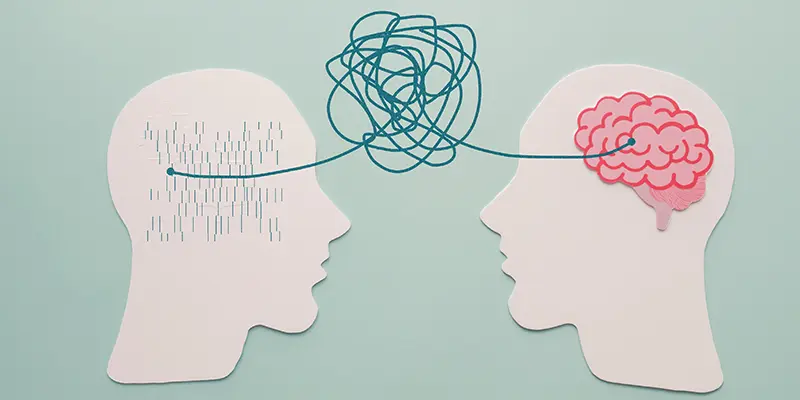
Feeling depressed or anxious? If you seek help from a primary care physician or a traditional psychiatrist, you’re likely to walk away with a prescription for antidepressants or antianxiety medication and not much else. But pills aren’t enough to deliver optimal mental health. In fact, because most conventional healthcare provides make diagnoses based on symptom clusters alone, it’s not uncommon to be misdiagnosed or given the wrong treatment. This can make your mental health problems worse.
In order to have a healthy mind, you must first have a healthy brain. To do that you must optimize the 4 circles of a whole life—biological, psychological, social, and spiritual. Integrative psychiatry helps you do it.
Integrative psychiatry, a form of
integrative medicine or functional medicine, takes a whole-person approach to mental health by helping you enhance all these areas of your life to promote better psychological well-being and cognitive function. Integrative psychiatry is based on solid science, and as science advances, so does this form of mental health with more sophisticated diagnostic testing, more effective therapies, and more powerful solutions. Integrative
psychiatrists assess, diagnose, and treat patients based on the most cutting-edge scientific findings.
Treatment may include standard-of-care options in addition to science-backed complementary and alternative therapies to foster healing. One study in the journal
Psychiatric Services found that 35% of people use at least one form of complementary and alternative medicine for mental health, and that was over 10 years ago. That percentage is estimated to be much higher now as integrative psychiatry continues to grow in popularity.
Here are 7 ways integrative psychiatry can help your mental health.
1. Discover brain health issues that are holding you back.
Many people who are experiencing psychological issues have underlying brain health problems that are contributing to their
anxiety,
depression, lack of focus,
memory loss, or
brain fog. Integrative psychiatrists who use
brain SPECT imaging can help identify undetected issues, such as
traumatic brain injury, areas that are overactive, and areas that are underactive. With these insights, an integrative psychiatrist can provide precision treatment plans to enhance brain health.
2. Identify biological causes for mental health problems.
Issues such as mood swings, short attention span, and anxiousness can be related to physical issues. With integrative psychiatry, diagnostic lab tests can help root out biological problems that cause mental health symptoms. For example,
Lyme disease,
hormonal imbalances, and
blood flow problems have been linked to psychiatric symptoms. In addition, comprehensive testing can reveal if there are any toxic substances that may be affecting your brain and mental health.
3. Find the best healing foods and nutritional supplements for your needs.
The foods you eat can either drive depression and anxiety or they can promote positive moods and calm. Psychiatrists who take an integrative approach to treatment evaluate your diet and assess any micronutrient deficiencies and make food and supplement recommendations based on your individual needs.
4. Provide strategies to improve the health of your mind.
For many people, negative thinking patterns and an undisciplined mind can fuel symptoms associated with mental illness. As part of a whole-person treatment plan, trained integrative psychiatrists provide patients with scientifically proven strategies to challenge the
ANTs (automatic negative thoughts) that steal your happiness and gain control of your mind. And sophisticated neuropsychological testing performed by integrative psychiatrists can provide valuable insights into your cognitive function.
5. Develop routines that help reduce stress.
A highly stressful lifestyle can keep you stuck in psychological hell. Integrative psychiatrists provide people with evidence-backed relaxation protocols that help your brain and your mind. Learning to manage
stress is an important part of any integrative treatment plan.
6. Learn how to create a support network.
Integrative psychiatrists know that who you spend time with matters. If you surround yourself with people who are negative or conflict-driven, or who engage in bad habits such as
heavy drinking or drug abuse, it can drag you down. Working with a professional to assess your social circle and identify the “accomplices” who harm your psychological well-being and the “friends” who support your brain healthy habits can make a big difference.
7. Find your “why.”
Experts understand that having a sense of purpose in life can provide the motivation to get and stay healthy. An integrative psychiatrist can work with you to pinpoint what gives your life meaning.
When you have a personalized integrative treatment plan that addresses all of your needs—biological, psychological, social, and spiritual—it helps put you on a faster path to a lifetime of healing.
Symptoms of depression, anxiety, and other mental health issues can’t wait. During these uncertain times, your mental well-being is more important than ever and waiting until life gets back to “normal” is likely to make your symptoms worsen over time.
At Amen Clinics, we’re here for you. We offer in-clinic brain scanning and appointments, as well as mental telehealth, remote clinical evaluations, and video therapy for adults, children, and couples. Find out more by speaking to a specialist today at 888-288-9834 or visit our contact page here.