

Why do some people stay mentally sharp well into their 80s and beyond, while others experience memory decline?
Scientists have been trying to answer this question for decades. A breakthrough new study published in Nature may offer an intriguing clue: the brains of older adults with exceptional memory, called superagers, continue to generate significantly more new neurons than their peers, and even much younger individuals. This discovery highlights a unique form of neurogenesis that may help explain why some brains stay resilient during aging. This discovery may actually be one of the superager brain secrets scientists have been hunting for.
Although researchers are still piecing together the full story, the findings could represent an important step toward understanding how the brain maintains cognitive health over time.
Medically reviewed by Kandace Licciardi, MD, Medical Director, Amen Clinics
A new, breakthrough study found that the brains of older adults with exceptional memory, called superagers, continue to generate significantly more new neurons than their peers, and even much younger individuals.
Superagers are individuals typically 80 years or older whose memory performance rivals people in their 50s and 60s. Structurally, their brains look younger as well with less shrinkage and fewer Alzheimer’s disease-type changes. Superagers are rare, accounting for less than 10 percent of the elderly population.
Northwestern University has been studying superagers for more than 25 years in their Northwestern University Superaging Research Program. Scientists have noted biological and behavioral differences in this group, including slower cortical thinning, greater gray matter volume, and stronger social engagement.
Superagers have better mental health, with less self-reported depression and anxiety, and fewer complaints of poor sleep than their peers, research has found.
Related: Healthy Brain at Every Age
In the study, led by scientists at University of Illinois Chicago, researchers examined post-mortem brain tissue from several groups:
The scientists focused on the hippocampus, a brain region essential for learning and memory. Using advanced genetic and molecular analysis techniques, they studied hundreds of thousands of cells from the hippocampus to understand how brain cell development differs between these groups.
One of the most striking findings involved neurogenesis.
For years, scientists debated whether the human brain continues producing new neurons during adulthood. Evidence has gradually suggested that it does, particularly in the hippocampus. This study provides new support for that idea and suggests that superagers may have a unique pattern of neurogenesis.
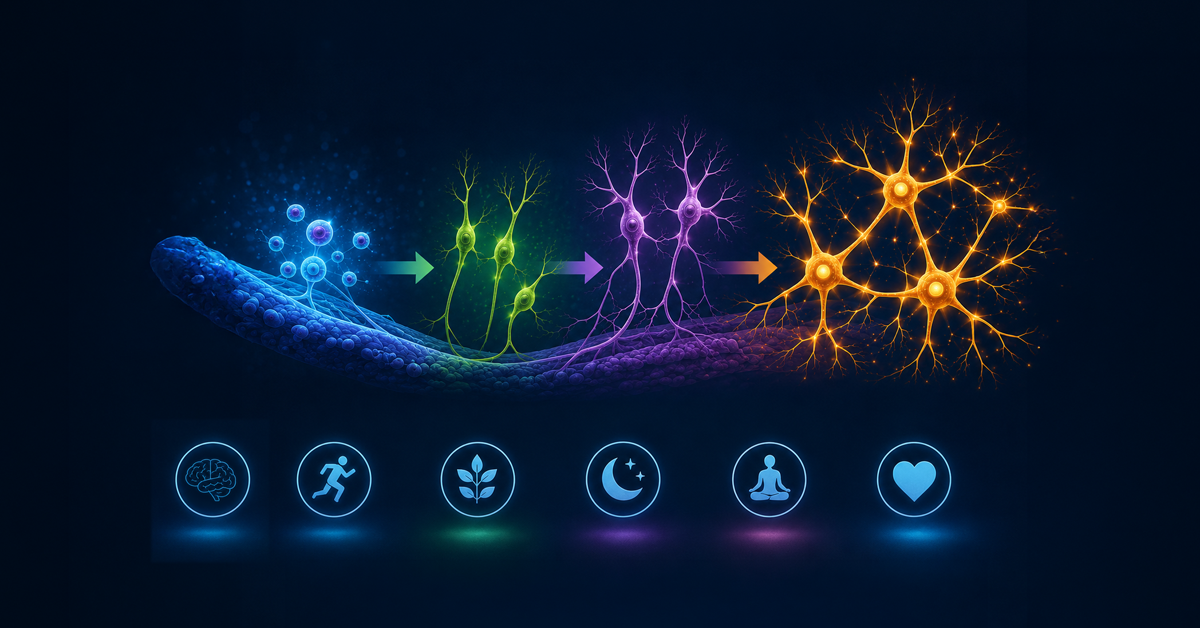
Researchers identified neural stem cells, neuroblasts, and immature neurons in the hippocampus. (One expert likens neural stem cells to babies, neuroblasts to teenagers, and immature neurons to near adults.) These indicate the early stages of brain cell development that eventually become mature neurons. Compared with typical aging brains, superagers showed a distinct neurogenesis profile, which the scientists described as a possible “resilience signature” in the brain.
Overall, superagers showed substantially more new neurons in their hippocampi. They had more of these immature neurons than young adults, roughly twice as many as normal adults their age, and about two and a half times more than those with Alzheimer’s disease.
In simple terms, superager brains appeared better able to generate new neurons and support their survival.
The hippocampus plays a major role in forming and storing memories.
In animal studies, newly generated neurons help integrate new information into memory circuits and support learning. When neurogenesis declines, memory function often declines as well. The new research suggests that in humans, maintaining neurogenesis may help preserve memory and cognitive abilities with age.
By contrast, the study also found that individuals with Alzheimer’s disease had fewer immature neurons, as well as disrupted neurogenesis pathways. This difference hints that the brain’s ability to generate new neurons could be an important factor in cognitive resilience.
Another key discovery involved the molecular signals that regulate neurogenesis.
The researchers examined neurogenic cells and found differences in gene activity and chromatin accessibility, which are mechanisms that control which genes turn on or off. These changes were found in two types of neurogenic cells: astrocytes and CA1 neurons.
These molecular patterns appeared to distinguish:
These findings suggest that these immature neurons have unique genetic and epigenetic characteristics that may make them resilient to aging, which may protect memory as people age.
The study does not mean scientists have discovered the secret to staying mentally young forever.
But it does suggest that ongoing neuron growth may be one important piece of the puzzle.
Understanding how the brain maintains neurogenesis could eventually lead to new strategies aimed at:
Researchers note that identifying the biological mechanisms behind this resilience could help guide future therapies designed to preserve brain function in aging populations.
Related: The 5-Minute Morning Routine to Boost Your Brain
Healthy aging is influenced by many factors, including genetics, lifestyle, brain health, and environmental exposures. There are many actions you can take to reduce your risk of Alzheimer’s disease and other types of dementia. This can include simple things like diet, improving social connections, and using methods to boost recollection.
This study offers an encouraging insight: some brains maintain the ability to renew themselves even in later life. If scientists can better understand how superagers’ brains achieve this, it could help unlock new ways to protect memory and cognitive function for more people as they age.
The research adds to a growing body of evidence that the brain remains more dynamic and adaptable than once believed. And that is good news for anyone interested in keeping their brain healthy for the long run!
A Superager is typically someone aged 80 or older whose memory performance is comparable to people decades younger. Researchers study them to understand why some brains resist age-related cognitive decline.
Neurogenesis is the process by which the brain produces new neurons (brain cells). In adults, this primarily occurs in the hippocampus, a region involved in memory and learning.
Although not everyone may reach superager status, research indicates that brain-healthy habits, such as staying socially connected, eating well, exercising, and keeping your mind active, can protect memory and slow cognitive decline. At Amen Clinics, we practice precision medicine, using brain SPECT imaging as part of our comprehensive evaluation to understand what is really happening in your brain. Our whole-body approach helps our clinicians develop personalized treatment plans that include natural ways to boost brain health and protect against cognitive decline, medication only when necessary, and other innovative therapies to help you strengthen your brain at any age.
Not yet. The research shows a strong association between increased neurogenesis and exceptional memory in superagers, but more studies are needed to confirm cause and effect.
The hippocampus is central to memory formation and learning. Changes in this region are commonly seen in aging and in conditions like Alzheimer’s disease.
Memory loss, dementia, and other mental health conditions can’t wait. At Amen Clinics, we practice precision medicine—using brain SPECT imaging and comprehensive evaluations to understand what’s really happening in your brain, not just your symptoms.
Our whole-body approach to holistic psychiatry combines cutting-edge neuroscience with natural ways to treat mental health conditions, including targeted nutrition, supplements, lifestyle strategies, therapy, and medications (when necessary). Every treatment plan is personalized to address the root causes of your struggles and support the health of your brain, body, and mind.
Don’t settle for guesswork. You deserve answers—and a plan built specifically for you. Speak with a Brain Health Advisor today at 888-288-9834 or visit our contact page to get started.
Disouky, A., Sanborn, M.A., Sabitha, K.R. et al. Human hippocampal neurogenesis in adulthood, ageing and Alzheimer’s disease. Nature (2026). https://doi.org/10.1038/s41586-026-10169-4
Garo-Pascual M, Gaser C, Zhang L, Tohka J, Medina M, Strange BA. Brain structure and phenotypic profile of superagers compared with age-matched older adults: a longitudinal analysis from the Vallecas Project. Lancet Healthy Longev. 2023 Aug;4(8):e374-e385. doi: 10.1016/S2666-7568(23)00079-X. Epub 2023 Jul 13. PMID: 37454673; PMCID: PMC10397152.
Toda T, Parylak SL, Linker SB, Gage FH. The role of adult hippocampal neurogenesis in brain health and disease. Mol Psychiatry. 2019 Jan;24(1):67-87. doi: 10.1038/s41380-018-0036-2. Epub 2018 Apr 20. PMID: 29679070; PMCID: PMC6195869.