18 Simple Ways to Say No to Alcohol
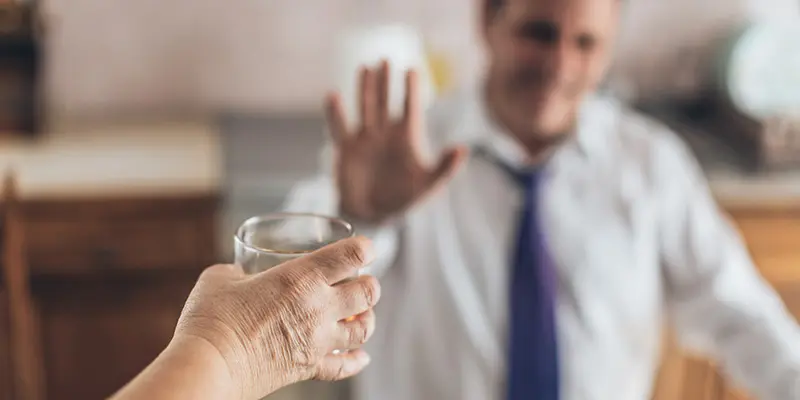
When influencer and musician Stephen Hilton posted a video about how alcohol is the only drug you have to explain why you’re not using it, he couldn’t have been more right. Have you ever been at a social gathering and had somebody try to force you to have a drink even though you said, “No, thank you” more than once? Why do drinkers feel the need to ask why you aren’t having wine, beer, or a hard seltzer as if there must be something wrong with you for not wanting to consume alcohol? Buzzed people often wrongly assume that non-drinkers must be boring, incapable of letting loose, too sheltered, or just no fun.
Now think about other addictive substances. Has anyone ever grilled you about not smoking cigarettes or questioned why you don’t want to use drugs like cocaine, ecstasy, or heroin? Of course not. But when it comes to alcohol, people are routinely subjected to pressure to drink even when they’ve already said no. This kind of peer pressure can push you to drink excessively to the detriment of your own mental health, cognitive function, and physical well-being. It’s time to fight back with some effective strategies to resist the booze pushers.
When it comes to alcohol, people are routinely subjected to pressure to drink even when they’ve already said no.
PEER PRESSURE TO DRINK ALCOHOL
Feeling pressured to drink is common. One study out of Finland found that in the previous 12 months, roughly 50% of people had felt pressured to drink. Social drinkers and heavy drinkers are more likely to say they have been pressured to drink, according to research in Drug and Alcohol Review. The researchers suggest this may be due in part to a “collective aspect” of alcohol consumption as imbibers tend to associate with others who have the same drinking habits. A 2020 systematic review in BMC Public Health looked at 13 studies on peer pressure and alcohol consumption. The review shows that peer pressure may lead to excessive drinking, which comes with consequences for mental health and physical well-being. And that peer pressure can come in many forms, including:- Direct influences: This is when someone offers you a drink and doesn’t want to take no for an answer. They may question why you said no or make you feel like you aren’t any fun or that you’re an outsider if you refuse to join them in drinking. In addition, someone may buy you a drink, hand you one at a party, or fill (or refill) your glass even though you’ve said you don’t want one. This may also include being pressured to participate in drinking games, which increase overconsumption of alcohol. According to the BMC Public Health study mentioned above, people who drink little to no alcohol are more commonly confronted with direct pressure to imbibe more.
- Indirect influences: Merely being in a social setting where you are observing others who are consuming alcohol can make you feel tempted to join in even when you don’t want to.
- Societal influences: Our society encourages drinking in so many ways. Images and scenes involving alcohol are commonplace in TV shows and movies; at sporting events, concerts, and other entertainment events; and on social media. In addition, drinking is part of our culture and an accepted aspect of many traditions—just think of the typical wedding toast with champagne, for example.