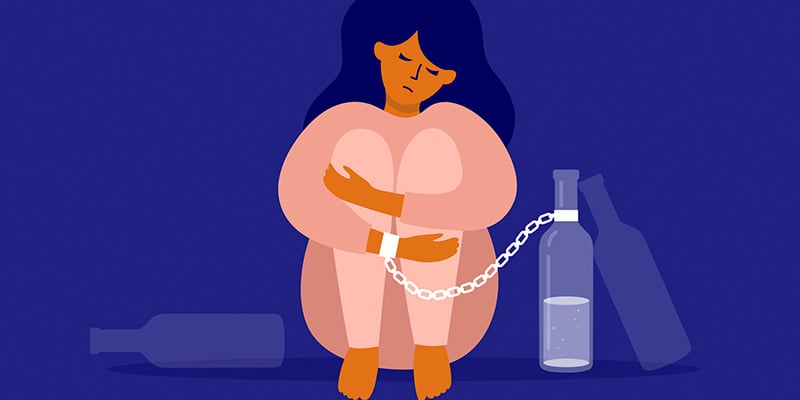
Alcohol problems creep up slowly. A phenomenon called denial—the refusal to admit the truth or reality of something—allows people to ignore the signs of growing dependence. For example, you may tell yourself you don’t have a problem because you don’t typically get falling-down drunk or because your friends drink a lot more than you do. Or maybe you tell yourself that you don’t have a problem because
you only drink beer or wine. Meanwhile, as you continue drinking regularly, your
brain is essentially rewiring itself, driving you to drink more, regardless of the shame, guilt, or repercussions.
The truth is that an
alcohol use disorder can be mild, moderate, or severe. Most people with a problem will show signs in several or all of these areas: physical health, mental health, social (work,
family, and friendships) connections, or spiritual well-being. There are many clinical tools—such as the
CAGE Assessment—to gauge whether a person has an addiction, but below are typical scenarios that may indicate you have or on your way to having a problem with alcohol.
12 WARNING SIGNS YOU HAVE A DRINKING PROBLEM
1. You have more drinks than planned.
You are headed out to meet some colleagues for drinks, but you intend to have only one drink and plan to return home at a reasonable hour as you need to be fresh in the morning for work. You meet them at a Mexican restaurant where there are endless pitchers of margaritas served. You have one and decide an extra one can’t hurt. Then someone buys a round of tequila shots, and you end up partaking. It becomes a heavy night of drinking. You get home late. You feel horrible the next morning and fail to do your best work.
2. Alcohol occupies a featured role in your life, and you spend a lot of time thinking about drinking, obtaining alcohol, drinking alcohol, or recovering from drinking (hangover).
You are the social planner amongst your hard-drinking friends. You come up with exciting new social activities always involving alcohol. You spend time and money procuring fine wine or a particular brand of hard liquor for poker night, a chili cook-off, a boating trip, or game day. Your Sundays are often a wash as you can pretty much guarantee you’ll have a hangover.
3. The day after drinking you feel bad and experience brain fog, irritability, tiredness, or low motivation.
You meet your friends for a couple of beers on a Friday night, and you wake up feeling horrible on Saturday. You cancel plans, stay home, get nothing done on your to-do list, and isolate.
4. It’s causing conflict in your relationships.
You
fight with your spouse every time you go out and have wine with dinner. Or perhaps you come home every Thursday evening from an evening out with boys, perhaps too late and having had one too many. Your partner won’t talk to you the next day because they are disgusted by your lack of responsibility and failure to care about your own well-being.
5. You’re getting into trouble at work, at school, with your money, or with the law.
You don’t answer the phone because the credit card company is calling you asking for payment for the bill that’s two months late. You missed another day of work due to a hangover and you are afraid of being fired. You’re in danger of being kicked out of college because you failed to maintain a passing average last semester because you blew off too many papers and exams due to your
partying lifestyle. You can’t drive because you had a second DUI citation.
6. You’re getting sick physically or psychologically.
Your doctor tells you your blood pressure is too high, or you drink to cope with uncomfortable emotions like anxiousness, emptiness, or hopelessness. But when you stop drinking you feel even more
anxious and
depressed and do not want to face work on Monday.
7. You withdraw from life and from hobbies you normally enjoy.
You’ve stopped showing up to play tennis on the weekend with your friends. You do not socialize outside of work and instead choose to stay home alone, sometimes drinking.
8. You take dangerous risks while drinking that could harm yourself or others such as driving, skiing, or swimming.
It’s Saturday morning, you can’t quite remember how you got home the night before. Then you remember you drove your friends home after a night of drinking, knowing you put yourself and others at risk.
9. When you drink, your behavior is out of character, and you say or do things that make you feel ashamed, guilty, and remorseful.
You went out with your girlfriends to a party. You abandoned them during the party to cozy up to a guy. You leave the party to spend the night at this man’s house and awake the next day, embarrassed and ashamed that you abandoned your friends and had sex with a stranger.
10. You’ve developed a tolerance and need more alcohol to get the same effect.
You used to get a happy buzz from drinking one glass of wine, but now you need to finish an entire bottle to achieve that same feeling.
11. You’ve tried unsuccessfully to reduce your drinking.
You decide you are only going to drink a beer or glass of wine on special occasions, but somehow you end up drinking every day. When you try to quit completely, you get the shakes or feel nauseous.
12. You keep drinking despite negative consequences.
Even though your drinking is causing real problems, you keep doing it. Alcohol has become more important to you than other aspects of your life.
YOU THINK YOU HAVE A DRINKING PROBLEM, NOW WHAT?
First, recognize that an alcohol problem is not a moral failing, but a
brain disorder that needs treatment. The brain SPECT imaging work at Amen Clinics shows that brain dysfunction is the primary reason why people drink too much. Finding the root causes—such as past
emotional trauma,
ADD/ADHD, anxiety, depression, or
head injuries—that are driving your need to drink is an important step in the process. Treating any such underlying issues is key to overcoming an alcohol use disorder.
Problems with alcohol, drug addictions, and other mental health issues can’t wait. At Amen Clinics, we’re here for you. We offer in-clinic brain scanning and appointments, as well as mental telehealth, clinical evaluations, and therapy for adults, teens, children, and couples. Find out more by speaking to a specialist today at 888-288-9834 or visit our contact page here.