

When depression—or even the medications meant to help your symptoms of depression—start to chip away at things that bring you pleasure, it can be deeply upsetting. Indeed, depression can steal the pleasure and well-being you previously found in certain hobbies, relationships, and even your sex life.
If you’re experiencing depression, and you’ve noticed your sexual desire shrinking or your body reacting differently, it may have to do with your mental health condition and its treatment.
If you’re experiencing depression, and you’ve noticed your sexual desire shrinking or your body reacting differently, it may have to do with your mental health condition and its treatment.
Understanding depression’s associated negative effects on your sexual function is the first step toward regaining control of your mind, body, and sexuality.
As antidepressants are usually a first line of treatment for moderate to severe major depressive disorder, it’s equally important to be aware of the sexual side effects of antidepressants as well.
When you learn how depression and antidepressants can disrupt sexual function, it helps you to be a better advocate for yourself when getting care. You’ll be more likely to find treatment that addresses your depression without affecting such a vital and important part of your life.
In this blog, you’ll discover how depression and medication impact sexual function, and what you can do to minimize their effects.
While depression is often rooted in general feelings of sadness, it impacts much more. Depression is associated with changes in your brain chemistry, energy levels, self-esteem, and motivation, too.
Cumulatively, these depression effects can blunt sexual desire and make intimacy feel like too much work. Research on mental health patients shows that those with more severe depression report significantly lower sexual drive.
In fact, a meta-analysis found a bidirectional relationship between depression and sexual dysfunction: depression raises the risk of sexual problems, and sexual dysfunction itself can increase the likelihood of depression.
So, if you’re experiencing low libido, difficulty becoming aroused, or trouble reaching orgasm, depression may be the culprit.
Sometimes trying to heal your mood can come with unintended costs. The sexual side effects of antidepressants may be more common than you think. People who take antidepressants may experience any of the following common side effects:
These challenges may persist while on the medication. In some instances, persistent sexual dysfunction lasts after stopping medication. Sexual side effects are largely determined by the type of antidepressant an individual takes.
For example, selective serotonin reuptake inhibitors (SSRIs) are commonly associated with sexual dysfunction, whereas bupropion (Wellbutrin) has low reported sexual side effects.
It’s important to discuss concerns about antidepressants and sexual side effects with your medical or mental health care provider. Of course, there are many natural treatments for depression to consider and discuss as well.
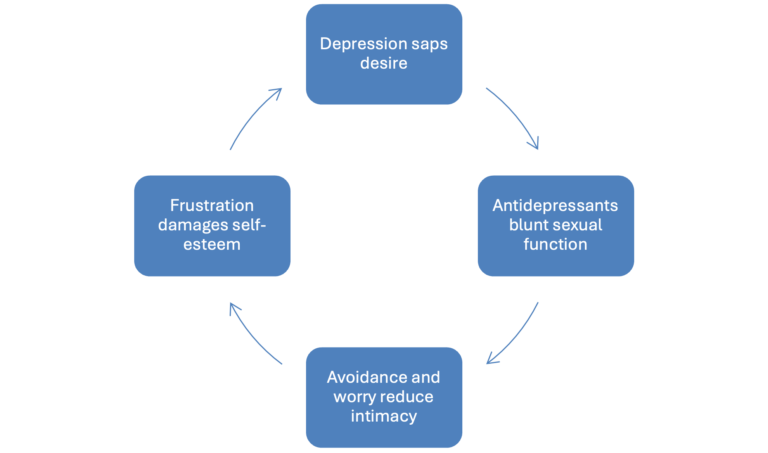
Unfortunately, sexual side effects can intensify symptoms of persistent low mood. What begins as a temporary dip in desire or arousal can turn into a repeating cycle: anxiety about sex, avoidance, relationship strain, and then guilt and shame—all of which can deepen depression.
Once this cycle begins, each factor feeds the others: depression saps desire; antidepressants blunt sexual function; avoidance and worry reduce intimacy; frustration damages self-esteem. And the loop continues.
Understanding how depression and antidepressants each uniquely impact brain function can help clarify why changes in sexual function happen, and why they matter.
With depression, neurotransmitters like serotonin, dopamine, and norepinephrine often shift. These neurochemicals regulate mood, but they also influence sexual desire, arousal, and reward. Lowered dopamine and norepinephrine, and imbalanced serotonin, can decrease the desire for intimacy and make sex feel uninteresting or exhausting.
Studies in depressed women show significantly lower sexual desire and reduced overall sexual functioning compared with their non-depressed peers. Moreover, depression brings fatigue, low self-worth, and emotional numbness. All of that can contribute to loss of interest in sex, even when someone is physically capable.
Antidepressants, especially SSRIs, work by increasing serotonin levels in the brain. That increase improves mood, but it can also interfere with sexual response. Research shows serotonin has an inhibitory effect on the neural systems that drive arousal, orgasm, and desire.
In particular, higher serotonin levels may lead to reduced dopamine signaling (important for desire), altered norepinephrine levels, or direct impacts on the neurological circuits that regulate sexual function.
That difference, between what depression does to your brain and what the medication does, helps explain why even when the depression lifts, the sexual side effects associated with antidepressants may linger or even intensify.
Here’s a real-world example shared by a happily married woman and patient of Amen Clinics. This woman went to see a traditional psychiatrist, where she complained of depressive feelings and an inability to sleep.
In less than ten minutes, the woman was diagnosed with depression and anxiety and was prescribed an SSRI (fluoxetine/Prozac), anti-anxiety medication, and a strong sleep aid.
She was feeling much better within a few days of taking the medication when something unusual and alarming happened. She was at a stoplight in her car when a man in the car next to her winked at her. She smiled at him then unbuttoned her shirt and revealed her breasts to the man.
Right after doing this, she was shocked and mortified by her out-of-character behavior. That’s when she quit taking the medications and came to Amen Clinics to seek out answers to help her understand her unusual behavior.
A comprehensive evaluation at Amen Clinics, including brain SPECT imaging, showed that the woman had low activity in her prefrontal cortex, which is commonly seen in ADHD. The antidepressant she was prescribed further reduced brain activity, leading to her impulsive sexual behavior. On a more targeted treatment plan, her depression improved without the impulsivity.
This story illustrates how easily a hasty, one-size-for-all prescription for antidepressants can result in unexpected behavior.
In this case, it appears to have increased impulsivity and a lack of inhibitions, especially around sex and intimacy. It’s a vivid reminder that sexual side effects aren’t only about desire or performance. Sometimes they impact identity, impulse control, and relationships.
Instead of guessing based on reported symptoms, emerging research using brain imaging, including single photon emission computed tomography (SPECT), suggests that observing images of brain activity and blood flow might provide a greater understanding of an individual’s brain function. And this could lead to more effective, targeted treatment plans for patients.
Using SPECT imaging at Amen Clinics, our clinicians have observed that depression and medications physically alter brain function in areas tied to mood, arousal, reward, and decision-making.
Interestingly, research indicates SSRIs can broadly alter neural activity in brain regions regulating sexual desire and arousal. For instance, research reveals a strong correlation between the binding affinity of an antidepressant to the serotonin transporter and reported sexual side effects.
Although imaging research specifically linking SPECT findings to long-term sexual dysfunction remains limited, such methods highlight how antidepressants rewire brain chemistry and alter neurotransmitter pathways.
At the same time, these insights pave the way for more personalized, brain-based interventions. By understanding someone’s unique brain activity, clinicians may in the future tailor treatments to support both mood and sexual health, a central philosophy at Amen Clinics.
SSRIs come with more than sexual side effects. In addition to low libido and potential for hypersexuality, side effects associated with SSRIs may include:
Experiencing even one of these side effects could be debilitating, negating any benefit the medication offers.
The cost of sexual dysfunction is great. It can negatively impact self-esteem and lead to frustration, anxiety, and anger. Hypersexuality, on the other hand, can cause psychological, relational, and even physical harm with a higher risk of sexually transmitted diseases.
Given these risks, SSRIs may not be right for everyone. As depressive disorders are the most common mental health disorders after anxiety in the U.S., it’s critical to have other effective medications and holistic alternatives for treating depression.
Thankfully, there are effective ways to treat depression that don’t compromise your sexual well-being. Healing shouldn’t have to come at the cost of intimacy. Being open and honest with your doctor is essential to finding a treatment approach that truly works for you.
You can choose an antidepressant with fewer sexual side effects. For example, as noted above, studies show medications such as bupropion (which works more on dopamine and norepinephrine) show a lower risk for sexual side effects.
When appropriate and under careful supervision, other non-serotonergic treatments may also be considered to preserve sexual function while treating depressive symptoms.
Natural supplements are a great alternative or adjunctive therapy to antidepressants. Consult an integrative or functional medicine practitioner to learn more as they typically are knowledgeable about herbal and nutritional supplements known to boost mood with few side effects. (Of course, any change to a treatment plan should be discussed with a medical doctor first.)
Saffron has been studied in placebo-controlled trials and found to improve mood without causing sexual dysfunction. In some cases, it even enhanced arousal and satisfaction.
Psychotherapy, sex therapy, and lifestyle interventions remain cornerstones in healing sexual dysfunction caused by medication and lifestyle choices. Working with a mental health professional (ideally one trained to address sexual function) can help unpack how depression, medication, self-esteem, relationship dynamics, and brain chemistry are interacting.
Lifestyle changes such as improving sleep, reducing stress, exercising, and nurturing emotional intimacy, can also help rebuild desire, arousal, and satisfaction.
Related: Antidepressant Withdrawal: What You Need to Know to Quite Safely
When depression is treated thoughtfully and under the guidance of a qualified mental health professional, you can continue to enjoy sexual intimacy or start to enjoy it again.
Sometimes, the missing piece isn’t a one-size-fits-all antidepressant, but a more comprehensive brain-based, personalized treatment plan.
Whether that means exploring alternative medications, integrating natural therapies, working with a therapist, or adjusting lifestyle habits, there are paths that support both mood and sexual well-being.
If you’re struggling, reach out to a qualified mental health professional who understands the complex interplay between mood, brain function, and intimacy. With clarity, compassion, and the right guidance, you can rekindle desire, strengthen connection, and reclaim this essential part of your life.
Depression, sexual dysfunction, and other mental health conditions can’t wait. At Amen Clinics, we provide personalized, science-backed treatment plans designed to target the root causes of your symptoms. Our 360-approach includes brain SPECT imaging, clinical evaluations, innovative therapeutic techniques, medications (when necessary), and holistic lifestyle recommendations to promote the health of your brain, body, and mind. Speak to a specialist today at 888-288-9834 or visit our contact page here.
No. While many antidepressants (especially SSRIs and SNRIs) are associated with a high risk of sexual side effects, others like bupropion, mirtazapine, and certain newer agents tend to carry a lower risk.
Depression influences neurotransmitters and brain circuits tied to desire, energy, reward, and self-esteem. The mood disorder itself, even without medication, often leads to reduced libido, lower arousal, and less interest in intimacy.
Some people find relief through lifestyle changes, psychotherapy, stress management, and supplements like saffron. While natural alternatives won’t replace medication for everyone, they may offer mood support without compromising sexual health. Just be sure to use them under guidance of a licensed doctor or therapist.
Oftentimes, yes. Clinics that use brain-based assessments—such as SPECT imaging at Amen Clinics—can better understand how depression and medications may be affecting a person’s brain function.
These insights can help to guide a personalized treatment approach that supports mood and sexual well-being with fewer or no sexual side effects depending on the treatment.