

TL;DR
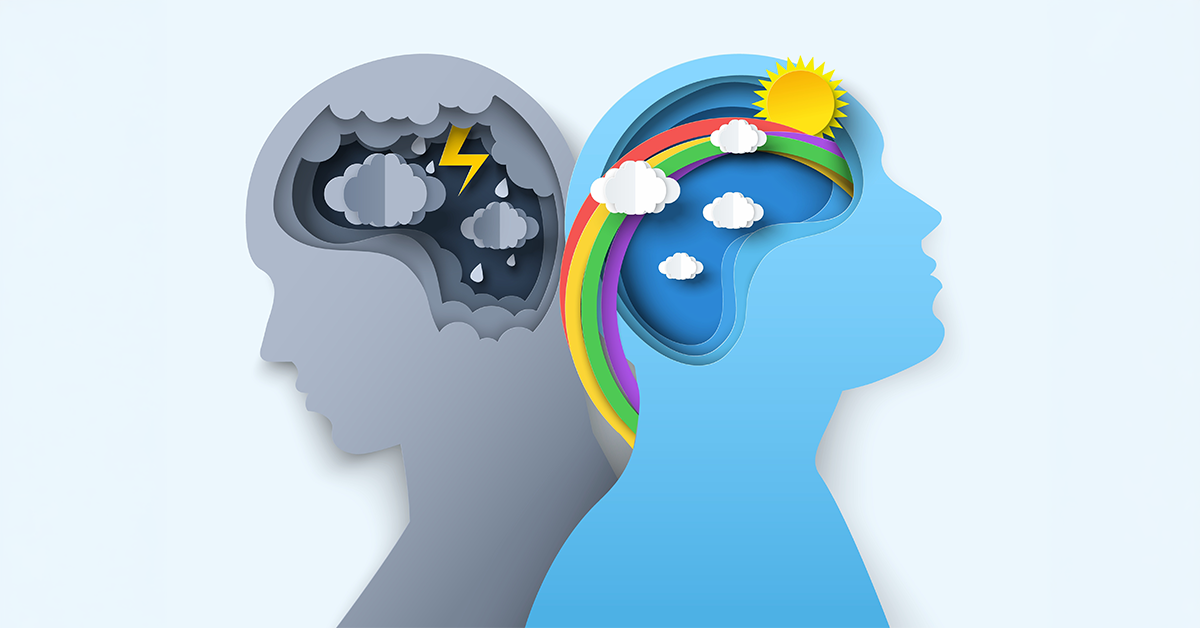
Have you ever found yourself stuck in worst-case thinking? Replaying mistakes, expecting things to go wrong, or constantly criticizing yourself?
When negative thoughts take over, it’s easy to assume it’s just a bad habit or even a personality flaw. But what if there’s more going on beneath the surface? You may be wondering, can negative thinking change your brain?
New brain-imaging research suggests the answer is yes. A groundbreaking SPECT study of 1,984 people with anxiety disorders found that stronger negativity bias is linked to measurable changes in brain function.
These changes are especially pronounced in areas responsible for focus, decision-making, and emotional regulation. In other words, persistent negative thinking may not just affect how you feel, it may also influence how your brain works.
In this article, you’ll learn what negativity bias really is, what the brain scans revealed, and most importantly, what you can do to start shifting your thinking in a healthier direction.
Negative thinking isn’t just a bad habit—it may change how your brain functions. Brain scans show stronger negativity bias is linked to lower activity in areas for focus and emotional control. The good news? Your brain can change.
Negativity bias is your brain’s tendency to focus more on the negative than the positive.
Negative bias means the brain prioritizes potential threats, problems, and mistakes over neutral or good experiences.
This means you’re more likely to notice criticism than praise, remember what went wrong instead of what went right, and interpret unclear situations in a negative way. Even when something is neutral, your brain may fill in the gaps with worst-case assumptions.
Negativity bias isn’t just about having a gloomy outlook. It can shape how your brain processes the world on multiple levels.
It influences:
Over time, this bias can create a pattern where negative experiences feel more intense, more frequent, and more important than they actually are.
Negativity bias is especially common in people with anxiety. In fact, research points to it as a core symptom of anxiety. When your brain is wired to scan for danger, it becomes hyper-focused on anything that could go wrong.
This can lead to a constant loop of worry, overthinking, and emotional reactivity. Small concerns feel bigger, and uncertainty feels threatening.
Over time, this pattern can disrupt both emotional balance and clear thinking, making it harder to regulate your mood, stay focused, or feel resilient under stress.
Related: Why Are We So Negative?
What can brain imaging reveal about negative thinking? The 2025 brain-imaging study mentioned earlier teaches us what functional brain scans like SPECT can show.
To explore the link between negative thinking and brain function, researchers used a type of brain scan called SPECT (single photon emission computed tomography).
SPECT measures blood flow and activity patterns in the brain. Healthy areas show balanced activity, while overactive or underactive regions can point to functional challenges.
In this study, researchers used SPECT to examine how negativity bias is associated with blood flow across different regions.
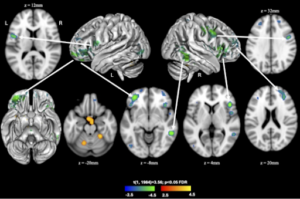
The results suggest that negative thinking is not just a mental habit. It may also have a measurable footprint in the brain.
Researchers found that stronger negativity bias was associated with changes in blood flow in multiple brain regions. Some areas showed lower activity, while others showed increased activity. These patterns were linked to key systems involved in thinking, emotional regulation, and stress response.
While this doesn’t mean brain scans can “read” your thoughts, it does suggest that consistent patterns of negative thinking are associated with identifiable changes in brain function.
Other research from Yale University also found that depression, which is linked to chronic negativity, shrinks the brain.
For many people, this finding is deeply validating.
If you’ve struggled with persistent negative thoughts, you may have been told to “just think more positively” or try harder to control your mindset. But this research suggests it’s not simply about willpower.
Chronic negative thinking may reflect real, underlying brain-function patterns. Understanding this can reduce shame and open the door to more effective, brain-based strategies for change.
If you struggle with anxiety, this research may help you understand why your mind often goes skews negative, even when you don’t want it to.
What can negativity bias do to the brain? When you have anxiety, your brain may be wired to look for what could go wrong.
Instead of noticing what’s safe or neutral, your attention is pulled toward potential threats. This can include negative facial expressions, uncertain situations, or even harmless comments that feel critical.
Over time, this constant scanning can strengthen negativity bias, making it feel automatic and hard to turn off.
This pattern doesn’t just stay in the background. It shows up in your everyday life.
You might:
In relationships, this can lead to misinterpretations. At work, it can fuel stress and self-doubt. Internally, it can create a loop of rumination that’s difficult to break.
Here’s the most important part: this is not a personal failure. If your brain has learned to focus on the negative, it likely developed that way for a reason. Often, it’s an attempt to protect you by preparing for potential threats.
The good news is that the brain can change. With the right strategies and support, you can begin to shift these patterns and train your brain to respond in healthier, more balanced ways.
One of the most important findings from the study was this: higher negativity bias was linked to lower blood flow in key parts of the brain.
Specifically, in this study, reduced activity was seen in the frontal, temporal, and parietal lobes. These regions play a critical role in cognitive control, decision-making, attention, and emotional regulation.
When these areas are underactive, it can make it harder to shift your thinking, manage emotions, and stay mentally flexible, especially under stress.
At the same time, researchers found increased activity in parts of the cerebellum, particularly in regions linked to both movement and emotional processing.
The cerebellum is often thought of as a movement center, but it also plays a role in how you process emotions and react to your environment. Heightened activity here may reflect increased emotional and physical reactivity tied to negative thinking patterns.
These brain patterns weren’t just abstract findings. They closely matched what patients were actually experiencing.
Higher negativity bias was associated with:
It was also linked to cognitive challenges, including:
In other words, the brain changes aligned with real-world struggles, helping explain why negative thinking can feel so persistent and hard to break.
If negative thinking patterns are affecting your mood and mindset, the good news is they can be changed with the right strategies.
The encouraging news is that negativity bias is not fixed. The study highlights the importance of addressing it directly in therapeutic settings.
By targeting patterns of negative thinking, treatment may help improve both emotional well-being and cognitive function. This aligns with approaches like cognitive behavioral therapy (CBT), which focus on identifying and reshaping unhelpful thought patterns.
At Amen Clinics, the clinicians teach patients to “kill the ANTs (automatic negative thoughts).” This simple strategy can make a major difference in a person’s mood, outlook, and life.
Because negativity bias is linked to brain function, changing how you think may also influence how your brain works.
Practicing healthier thought patterns may help support better emotional regulation, clearer thinking, and improved resilience over time. While this doesn’t happen overnight, consistent effort can begin to shift long-standing patterns in a more positive direction.
It’s important to be clear about what this does, and doesn’t, mean.
Reducing negativity bias isn’t about forcing yourself to “think positive” or ignoring real problems. In fact, unrealistic optimism can lead to poor decisions and unnecessary risks.
The goal is more accurate, balanced thinking. That means learning to question negative assumptions, consider alternative perspectives, and respond to situations based on evidence rather than fear.
Changing negativity bias doesn’t require perfection. It starts with small, consistent habits that help you become more aware of your thoughts and gently shift them over time.
Here are some practical ways to begin:
These strategies aren’t quick fixes. But over time, they may help you build a more balanced, flexible, and resilient way of thinking.
Related: How to Stop Being So Critical
At Amen Clinics, we believe that if you’ve been struggling with negative thinking, looking at your brain may provide answers that traditional approaches miss.
We take a different approach to mental health. Instead of guessing based on symptoms alone, we look at the brain.
Why? Because your brain is the organ involved in your thoughts, feelings, and behaviors. When you understand how it’s working, you can make more informed decisions about how to improve it.
Brain SPECT imaging helps us see patterns of activity in the brain, including areas that may be overactive or underactive.
These patterns can provide important clues about what may be contributing to symptoms like negative thinking, anxiety, or low mood. Rather than labeling someone based only on behavior, this approach helps uncover the “why” behind what they’re experiencing.
No two brains are exactly alike, which is why a one-size-fits-all approach often falls short.
By combining brain imaging with a detailed understanding of your biology, psychology, and lifestyle as part of our comprehensive evaluation, we create personalized treatment plans designed to support your unique needs. This whole-person approach helps guide more targeted, effective strategies for improving both brain health and mental well-being.
Negative thinking is not always “just in your head” in the dismissive sense. Emerging brain-imaging research suggests that stronger negativity bias is linked to measurable changes in how the brain functions.
In particular, it’s associated with lower blood flow in the frontal, temporal, and parietal lobes—areas critical for focus, decision-making, and emotional regulation—along with increased activity in parts of the cerebellum.
At the same time, it’s important to keep this in perspective. These findings do not mean that negative thinking literally shrinks your brain or qualifies as its own neurological disorder.
What they do suggest is this: chronic negative thinking may leave a real imprint on your brain. And that makes it something worth understanding, addressing, and improving with the right tools and support.
The hopeful takeaway is that your brain can change. By taking steps to shift your thinking patterns, you may also begin to support healthier brain function and a more balanced, resilient mindset.
A brain scan cannot read your thoughts directly. However, this brain-imaging study found that stronger negativity bias was associated with measurable differences in brain blood flow on SPECT imaging.
Negativity bias is the tendency to focus more on negative information and give it greater weight than positive or neutral experiences.
Higher negativity bias was linked to lower blood flow in the frontal, temporal, and parietal lobes. It was also associated with increased activity in parts of the cerebellum.
Yes. Chronic negativity can shrink the brain. According to a study by Yale researchers, depression, which is associated with negativity, can shrink the brain.
The findings suggest that targeting negativity bias in therapy may help improve emotional and cognitive outcomes. Approaches that focus on changing thought patterns may be beneficial over time.
Negativity, anxiety, depression, and other mental health conditions can’t wait. At Amen Clinics, we practice precision medicine—using brain SPECT imaging and comprehensive evaluations to understand what’s really happening in your brain, not just your symptoms. Our whole-body approach to holistic psychiatry combines cutting-edge neuroscience with natural ways to treat mental health conditions, including targeted nutrition, supplements, lifestyle strategies, therapy, and medications (when necessary). Every treatment plan is personalized to address the root causes of your struggles and support the health of your brain, body, and mind. Don’t settle for guesswork. You deserve answers—and a plan built specifically for you. Speak with a Brain Health Advisor today at 888-288-9834 or visit our contact page to get started.
About the Reviewer
Associate Medical Director and board-certified adult, child, and adolescent psychiatrist, Dr. Rishi Sood has been with Amen Clinics since 2014. He completed the prestigious Triple Board Residency and Fellowship Program at Mount Sinai Medical Center, where he served as Chief Resident. Also board-certified in pediatrics, Dr. Sood treats children, adolescents, and adults with a wide range of conditions. He is known for his personalized, whole-person approach, integrating evidence-based therapies, brain health strategies, and compassionate, client-centered care.
Norris, S, Salgada, F, Murray, S, Amen, D, Keator, D: The Role of Negativity Bias in Emotional and Cognitive Dysregulation: A Neuroimaging Study in Anxiety Disorders. Journal of Depression and Anxiety 20 May 2025,
Vaish, Amrisha et al. “Not all emotions are created equal: the negativity bias in social-emotional development.” Psychological bulletin vol. 134,3 (2008): 383-403. doi:10.1037/0033-2909.134.3.383
Carlisi, Christina O, and Oliver J Robinson. “The role of prefrontal-subcortical circuitry in negative bias in anxiety: Translational, developmental and treatment perspectives.” Brain and neuroscience advances vol. 2 2398212818774223. 8 May. 2018, doi:10.1177/2398212818774223
Hathaway, B. “Yale Team Discovers How Stress and Depression Can Shrink the Brain,” YaleNews. Aug 12, 2012.