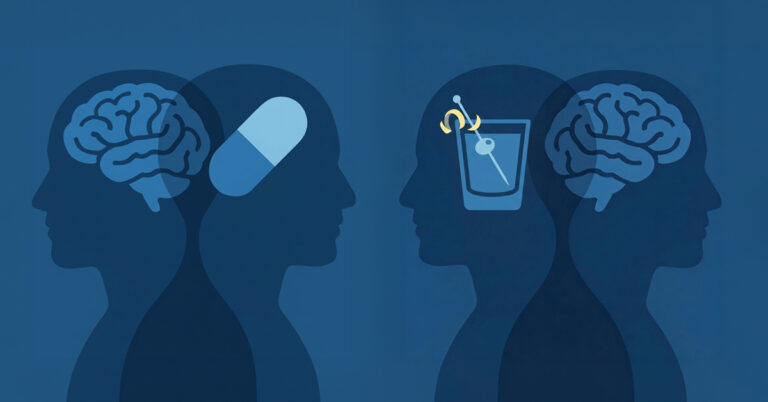


Do you wonder what people mean when they talk about their mental health? Does mental health have more than one meaning? Is emotional health the same as mental health?
If so, you are not alone. The term mental health can have different meanings. And the terms mental health and emotional health are often conflated and misunderstood.
Let’s clarify a few things right away.
At Amen Clinics, we define mental health in a broad sense. Mental health is the overarching term that includes emotional, psychological, and social well-being. It affects every area of your life including how you think, feel, and act.
But there’s a more specific use of the term “mental health,” which is likely the source of some confusion.
Mental health, in this specific sense, refers to cognitive functions like thinking, reasoning, judgment, attention, memory, decision-making, and problem-solving, This specific aspect of mental health plays an important role in your overall mental health.
On the other hand, emotional health is the feeling aspect of your greater mental health. It refers to awareness, expression, empathy, and emotional regulation.
When you have good emotional health, you can recognize, understand, and manage your feelings and reactions to life events in a relatively healthy and balanced manner. Emotional health is a major component of your greater mental health.
Thoughts (mental health) and feelings (emotional health) also strongly influence each other, and brain function affects both, but in different ways. Through decades of performing brain SPECT scans and working with thousands of clients, Amen Clinics has studied each of these facets.
This blog will compare and contrast mental health (the thinking definition) and emotional health, including their differences, overlaps, and how they intersect with brain health and behavior.
Mental health is tied to thought patterns; emotional health relates to feeling patterns. Mental health affects reasoning; emotional health affects mood. Different brain regions and circuits are involved with emotional vs. mental health.
In the broad sense, mental health is the term used to describe your overall psychological well-being. It is determines how you think, feel, and act when faced with life challenges.
Good mental health includes sound judgment, clear thinking, emotional well-being, healthy behavior, freedom from disabling symptoms, strong relationships, and the ability to handle everyday life demands and stressors.
Your mental health is essential for leading a healthy, balanced life, and brain health is the foundation of good mental health.
The brain’s interconnected regions and related networks contribute to its daily functioning and your overall mental health.
Some of the brain’s crucial parts and their associated tasks include:
| Brain Region | Responsible For: |
|---|---|
| Prefrontal Cortex | Judgment, forethought, planning, and impulse control |
| Temporal Lobes | Memory, mood stability, and temper issues |
| Parietal Lobes | Sensory processing and direction sense |
| Occipital Lobes | Vision and visual processing |
| Cerebellum | Motor and thought coordination, processing speed, and judgment |
| Basal Ganglia | Integrates thoughts, feelings, and movements; involved with pleasure |
| Anterior Cingulate Gyrus | Shifting attention |
| Amygdala and Limbic Areas | Sets emotional tone; involved with mood and bonding |
As mentioned, especially in academia and research, mental health also refers to the thinking aspect of your brain functioning. For the remainder of this blog, we will primarily be referring to mental health in this specific way.
When this aspect of mental health is compromised, thinking-related symptoms may arise. These include challenges with concentration, negative thinking cycles, impulsivity, or cognitive fatigue.
In simple terms, emotional health is the ability to name, understand, and respond to emotions. As noted above, the limbic system (including the amygdala and hippocampus) influences emotional intensity.
Functions such as emotional resilience, emotional expression, and recovery after stress are governed by emotional health. When it is compromised, an individual might feel overwhelmed by small triggers or have difficulty calming down. Alternatively, they may emotionally “shut down” altogether.
In other words, emotional health involves how a person feels, while the cognitive aspect of mental health involves how a person thinks. Both are necessary aspects of well-being, and they interact with each other in both subtle and obvious ways every day.
While mental and emotional health are different, they also share overlaps. Here are some key ways in which they differ:
Here are areas in which they overlap:
Therefore, though the two can intersect, they function independently. For example, a person may be thinking clearly (mental health) yet feel overwhelmed emotionally (emotional health), or vice versa.
Mental and emotional health have a strong impact on behavior. Here are three examples based on thousands of patients treated at Amen Clinics:
Racing thoughts, also called “overthinking,” affect a large percentage of the population. This symptom may appear alongside anxiety disorders, or as a result of major life changes or lifestyle habits.
Racing thoughts can interrupt sleep, destroy focus, and erode peace of mind. A person with mental overload or worry cycles may avoid tasks, appear distracted, or procrastinate. This can create problems with work, school, or relationships.
Related: 5 Natural Ways to Calm Racing Thoughts
Occasionally feeling strained by life’s demands and stressors is normal. But people with particularly high stress levels can experience symptoms of anxiety and/or depression, as well as weight changes and problems with sleep.
These conditions, as well as others, often accompany emotional overwhelm. In prolonged or severe cases, someone experiencing strong emotional reactions may withdraw from social situations or become irritable.
Combinations of emotional and mental health symptoms are common among patients who visit Amen Clinics. Because these symptoms are so closely related, clients often struggle with both, and one easily impacts the other.
Symptoms of a combined pattern include difficulty managing both thoughts and emotions. This can lead to impulsive decisions, conflict with loved ones, or trouble completing daily responsibilities.
Amen Clinics uses brain SPECT imaging to determine the underlying brain patterns that correspond with mental and emotional health symptoms. Because many conditions and symptoms overlap, brain imaging can help pinpoint root causes, thereby optimizing treatment and recovery.
Among its many possibilities, SPECT imaging can reveal:
Various factors may influence emotional health, mental health, or both. Here are some common culprits behind imbalances in these areas:
Mental and emotional health significantly influence thoughts and actions. When an individual’s emotional or mental health is compromised, they can experience:
Maintaining optimal mental and emotional health, both byproducts of optimizing brain health, are crucial to maximizing your daily life, well-being, and relationships. Without a solid foundation in these areas, it’s very challenging to perform at your best.
When emotional and/or cognitive mental health symptoms arise, seeking professional help is not a sign of weakness, but a sign of strength. Because mental and emotional health relate to brain health, they must be treated as legitimate medical problems, not moral failings.
If you are experiencing any of the signs below, it’s a strong indication to seek evaluation from a professional:
If you or a loved one is experiencing any of these mental or emotional health symptoms, seeking help from a qualified mental health professional can help. Our clinicians at Amen Clinics conduct a comprehensive evaluation, which includes brain SPECT imaging, clinical assessments, and diagnostics as part of holistic, brain-based approach.
However, if you are in immediate need of assistance, go to your local emergency room or call 988 for the Suicide & Crisis Hotline, a national hotline that offers one-on-one mental health support for anyone in crisis at any time of day or night.
Remember that reaching out is a positive step. Many basic lifestyle changes can improve outcomes, and seeking help can pinpoint or rule out specific root causes so that symptoms don’t worsen over time. Being proactive about your brain health will benefit both your mental and emotional health, as well as every area of your life.
Amen Clinics’ brain SPECT imaging helps reveal brain function and patterns and, importantly, how those patterns affect mental and emotional health. It allows clinicians to see three critical things:
Traditional psychiatry too often treats mental health without directly examining the organ involved: the brain. Without objective insight into brain function, diagnoses are frequently based on clusters of symptoms, and treatment decisions may rely on trial and error, especially when medication is involved.
Related: SPECT Research Overview
At Amen Clinics, brain SPECT imaging adds a deeper level of clarity. Along with a thorough evaluation of lifestyle factors, personal history, and symptoms, SPECT scans reveal brain activity patterns that influence thoughts, emotions, and behavior. This information helps guide more precise, personalized treatment.
Rather than relying on opinion or guesswork, treatment plans are built around how an individual’s brain is functioning. These plans may include targeted lifestyle strategies (such as nutrition, sleep, exercise, and stress management), evidence-based therapies and interventions, nutritional supplements, and medication when appropriate, which are all tailored to the person.
Over the decades, brain SPECT imaging at Amen Clinics has helped uncover underlying issues that might otherwise go unnoticed, including past brain injuries, infections such as Lyme disease, and the lasting effects of emotional trauma. For many people, seeing these patterns helps them finally make sense of long-standing symptoms, such as difficulty regulating emotions or persistent mood struggles.
While emotional and mental health (related to cognition) are closely linked, and both intersect with brain health, understanding the difference between them helps people recognize what they’re experiencing.
Whether you’re dealing with brain fog or attention issues, emotional outbursts or mood swings, it’s also important to examine the brain patterns underlying your symptoms.
As both mental and emotional health influence behavior in meaningful ways, taking steps to optimize them will ensure you feel your best as you carry out your daily tasks. If needed, seeking the help of a qualified mental health professional can help create lasting change in these areas.
To learn more about your mental, emotional, and brain health, explore the evaluations and imaging options available at Amen Clinics. Being proactive about your mental and emotional health is one of the best ways to improve your overall well-being and life satisfaction, which positively impacts everyone around you.
While both are related to brain health and function, mental health relates to thoughts and cognitive performance. Emotional health relates to feelings and emotions. Both are closely interrelated, however, and each one can affect the other.
At Amen Clinics, a brain SPECT scan determines the underlying brain patterns associated with different mental and emotional health symptoms. Then a targeted treatment plan is designed to treat the whole person, from diet and exercise to sleep hygiene and stress-reducing practices, as well as appropriate therapy, medication when necessary, and other integrative interventions. A holistic strategy promotes lasting results for greater overall well-being.
If your mental or emotional health symptoms are interfering with your daily functioning, including work and relationships, consider seeking professional help. Many all-natural, non-pharmaceutical interventions will boost brain health, making a positive impact on both mental and physical health.
Our Epidemic of Loneliness and Isolation: The U.S. Surgeon General’s Advisory on the Healing Effects of Social Connection and Community, 2023. https://www.hhs.gov/sites/default/files/surgeon-general-social-connection-advisory.pdf