

Most Patients Have Already Tried Everything.Nearly 80% of Our Patients Finally Get Better Here.
Among 16,000+ Amen Clinics patients tracked over six months, nearly 80 percent of fully compliant patients reported meaningful improvement across ADHD, anxiety, depression, PTSD, TBI, and more.
Amen Clinics tracked over 16,000 patients for six months and found that nearly 80 percent of those who were fully compliant reported meaningful improvement across all emotional, behavioral, and cognitive issues. And the improvement rate is even higher with some of the most common mental health conditions. This analysis represents what is likely the largest clinical brain-imaging outcomes database in psychiatry. It includes nearly 300,000 brain scans and over 16,000 patients with structured six-month outcome follow-up. Outcomes were collected across 11 clinical sites nationwide in routine care. This is not a small academic study, but rather real patients, in our care, tracked over time.
Amen Clinics Outcomes Database at a Glance

These outcomes compare favorably to published benchmarks, and they involve patients with more complex conditions than those in most studies. Our patients have, on average, already seen 3.3 providers and tried five medications without getting lasting results.
Providers Average # of prior providers before coming to Amen Clinics
Medications Average # of medications before coming to Amen Clinics
All patients, all compliance levels
Fully compliant patients
Meaningful improvement starts with understanding your brain.
Call 949-427-8195 to speak to a Brain Health Advisor.
Amen Clinics Outcomes by Condition
How effective is personalized treatment for ADHD, anxiety, depression, posttraumatic stress disorder (PTSD), obsessive-compulsive disorder (OCD), traumatic brain injury (TBI), and other mental health conditions at Amen Clinics? The following six-month outcomes reflect patients who were fully compliant with their personalized treatment plans and provide insight into how a brain-based, individualized approach can help people achieve meaningful improvement.
83.3% Improvement
Among patients with posttraumatic stress disorder (PTSD), 83.3 percent reported improvement after six months when they fully followed their treatment recommendations.
For many people living with the effects of trauma, this indicates that a comprehensive brain-based approach may help reduce symptoms and support meaningful improvements in daily life and overall well-being. Learn more about our approach to PTSD treatment.
82.0% Improvement
For patients with anxiety, 82.0 percent reported improvement after six months when they fully followed their personalized treatment plans.
These results suggest that many people struggling with excessive worry, nervousness, and chronic stress can experience meaningful relief through a comprehensive, brain-based approach to care. Get more insight into our brain-based approach to anxiety treatment.
81.8% Improvement
Among patients with attention deficit hyperactivity disorder (ADHD), 81.8 percent reported improvement after six months of following their personalized treatment plans.
This means that with the right treatment plan, many individuals with ADHD are able to improve focus, reduce impulsivity, strengthen executive functioning skills, and perform better at work, school, and home. Learn more about our ADHD treatment programs and the seven types of ADHD.
81.3% Improvement
For fully compliant patients dealing with the effects of traumatic brain injury, 81.3 percent reported improvement after six months.
These outcomes suggest that patients experiencing the cognitive, emotional, or behavioral effects of brain injuries may benefit from personalized treatment strategies designed to support brain healing and optimize function.
Brain SPECT imaging shows that 40 percent of Amen Clinics patients have experienced a brain injury, but many of them don’t recall any head trauma. Discover how Amen Clinics approaches traumatic brain injury treatment.
80.4% Improvement
In the OCD patient population at Amen Clinics, 80.4 percent reported improvement when they followed their targeted treatment plan for six months.
Many patients with OCD experience fewer intrusive thoughts, reduced compulsive behaviors, and greater confidence in managing their symptoms through a personalized, brain-based approach to care. Find out more about our comprehensive strategies for treating OCD.
80.0% Improvement
For patients struggling with depression, 80.0 percent reported improvement after six months when they fully complied with treatment recommendations.
Many patients report improvements in mood, motivation, energy, and overall functioning when depression is addressed through a personalized, whole-person approach to care. Learn more about our approach to depression treatment and the seven types of depression and anxiety.






Overall Outcomes
Across all conditions studied, 79.8 percent of fully compliant patients reported meaningful improvement after six months.
These findings reinforce the value of a personalized, brain-based approach and highlight the importance of actively participating in treatment.
While no treatment can guarantee results, our data suggests that patients who fully engage in their care often experience significant benefits that can improve their quality of life.
*Six-month follow-up, fully compliant patients at Amen Clinics
| Condition | Improvement |
|---|---|
| PTSD | 83.3% |
| Anxiety | 82.0% |
| ADHD | 81.8% |
| TBI | 81.3% |
| OCD | 80.4% |
| Depression | 80.0% |
What is the Biggest Predictor of Patient Success?
One of the strongest predictors of patient success is treatment compliance. Among Amen Clinics patients who fully followed their personalized recommendations for six months, nearly 80 percent reported meaningful improvement.
Nearly 80% of Fully Compliant Patients Reported Improvement
Across every major diagnosis, a patient who fully implements their recommendations has a much higher chance of experiencing improvement compared to a patient who does not follow their plan.

All patients, all compliance levels
Fully compliant patients
In addition, at the six-month mark, 70.5% reported improvement associated with their supplement recommendations.
This highlights the importance of consistency and reinforces a key principle of the Amen Clinics Method: when treatment is tailored to the individual and patients actively engage in the process, outcomes can be significantly better.
What Success Looks Like for Amen Clinics Patient Madison
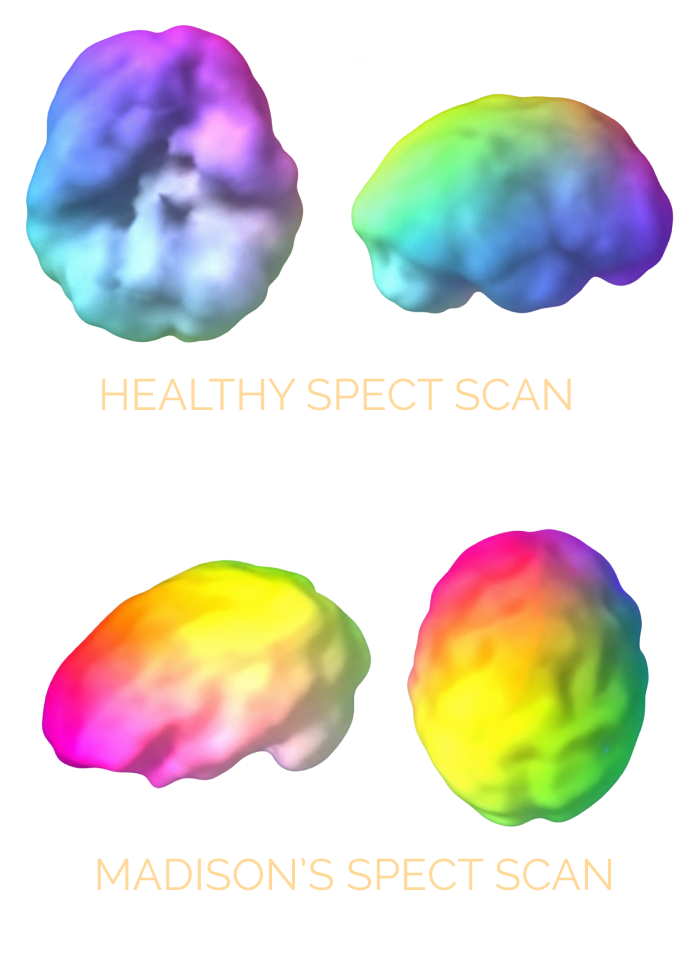


For Madison, mental health struggles started when she was young. “I was diagnosed with anxiety and depression, and I had an eating disorder,” she says. Growing up, Madison managed to continue functioning at a high level, but over time, things worsened.
“There was a moment, where I don’t know what happened in my head, but it felt like something broke,” she remembers. “I became super hyper-focused on the fact that I was a horrible person. And I didn’t deserve to be here.”
Madison dropped into a deep depression and overdosed. That’s when her mom stepped in and made an appointment at Amen Clinics. At first, Madison resisted, but eventually, she agreed to have her brain scanned and go through the evaluation process.
“The fact that my doctor could look at my brain and recommend me something,” she says tearfully, made all the difference. Her previous doctors were trying to help her, but their recommendations were making her symptoms worse.
Madison’s SPECT scans showed some scalloping, which involves low overall blood flow. It also revealed signs of past head trauma and some areas of underactivity.
Under the advisement of her Amen Clinics psychiatrist, Mark Anderson, DO, she stopped taking all the medications she was previously prescribed. He told her he wanted her to try a different prescription, starting at a very low dose.
She followed his recommendation, and within a few days, she no longer had those scary, inescapable thoughts. And within two weeks, she was getting up out of bed, going to the gym, and feeling like herself again.
“Just to be me again was huge,” she says.
The new medication was only one part of a comprehensive treatment plan that included recommendations to address biological, psychological, social, and spiritual factors in Madison’s life.
“What I love most about Amen Clinics is the push towards holistic health,” she says. “Yes, it’s this organ, but it’s also maintaining that organ with other lifestyle changes.”

Ready to become our next success story?
Call 949-427-8195 to speak to a Brain Health Advisor.
How these outcomes were measured
- Patient-reported follow-up surveys
- 16,000+ six-month respondents
- Fully compliant subgroup shown for condition-specific outcomes
- 6-week, 12-week, and 6-month follow-up
- “Improvement” based on patient-reported change
- Observational real-world data, not a randomized controlled trial
*individual outcomes vary
How Do Amen Clinics Patient Outcomes Compare to Other Outcomes?
Amen Clinics patient outcomes are higher than other published outcomes in psychiatry. For example:
Findings in a 2021 study in the journal Nature found that up to 60 percent of patients with psychiatric disorders experience treatment resistance, meaning they don’t see meaningful improvement. Compare that to roughly 80 percent of fully compliant Amen Clinics patients who experience improvement.
PTSD
Statistics show that the best evidence-based therapies are effective in only 67 percent of people with PTSD. Our fully engaged PTSD patients report improvement above that range with 83.3 percent.
Anxiety Disorders
Research in The Mental Health Clinician shows that approximately half of all patients treated for generalized anxiety disorder (GAD) do not respond to standard treatment, such as antidepressant medication. More than four out of five Amen Clinics patients with anxiety report improvement.
ADHD
About 20 to 40 percent of patients with ADHD don’t respond to first-line treatment, according to research. For comparison, 81.8 percent of Amen Clinics patients say they get better.
OCD
Remission rates for OCD in traditional mental healthcare range from 32-70 percent compared to 80.4 percent at Amen Clinics.
Depression
The landmark STAR*D Study, psychiatry’s largest depression trial, found roughly 35 percent cumulative remission across four treatment steps. Our complex patients who have already failed multiple medications report meaningfully higher improvement at 80 percent.


| Mental Health Conditions | Standard Outcomes | Amen Clinics Outcomes |
|---|---|---|
| Overall | As low as 40% | ~80% |
| PTSD | 67% | 83.3% |
| Anxiety | Less than 50% | 82% |
| ADHD | As low as 60% | 81.8% |
| OCD | 32-70% | 80% |
| Depression | 35% | 80% |
You’ve seen the outcomes. Now discover what’s possible for you.
Call 949-427-8195 to speak to a Brain Health Advisor.
How Does Amen Clinics Measure Patient Outcomes?
At Amen Clinics, our outcomes data is collected through follow-up surveys that ask patients to report on their progress, experience, satisfaction, and treatment plan compliance. These surveys are completed at meaningful stages of care, including six weeks, 12 weeks, and six months after treatment begins.
This ongoing tracking helps us evaluate whether patients are improving, whether treatment adjustments may be needed, and how closely following recommendations may influence long-term results.
By measuring both improvement and compliance, we can better understand what helps patients succeed and where we can continue to strengthen education, follow-up, and accountability. Our analysis includes large patient sample sizes across a wide range of mental health and brain health concerns, giving us a clearer picture of patient progress and helping us continually refine the care experience.

- Overall Improvement
- Improvement associated with supplements
- Satisfaction score (scale of 1-10)
- Connection with doctor
- Understanding of treatment recommendations
How Does Amen Clinics Achieve Higher Patient Outcomes?
Amen Clinics achieves better patient outcomes thanks to a whole-person approach that begins with understanding how the brain is functioning and continues with personalized support, education, and accountability throughout the treatment journey.
The Amen Clinics Method includes:
Brain SPECT Imaging
Most mental health evaluations focus on symptoms alone. Amen Clinics uses brain SPECT imaging to look at how the brain is functioning. SPECT (single photon emission computed tomography), which measures blood flow and activity levels, helps uncover patterns that may contribute to emotional, behavioral, or cognitive challenges.
Whole-Person Evaluation
Mental health is influenced by many factors. Our comprehensive assessments explore the Four Circles of Life—biological, psychological, social, and spiritual influences—to identify potential root causes and opportunities for improvement.
Personalized Treatment Plans
No two brains are exactly alike. That’s why treatment recommendations are tailored to each individual based on their brain health, symptoms, medical history, lifestyle factors, and personal goals.
Ongoing Support
Healing is a process, not a single appointment. Through follow-up visits, education, and accountability, we help patients stay engaged with their treatment plans and make meaningful changes that support long-term success.
As part of our ongoing support, all Amen Clinics patients have access to:
- Brain Warriors Alumni Network—offering peer-to-peer support and exclusive resources
- BrainFitLife App—free one-year membership to our app, which is like having a brain health coach in your pocket




Learn how brain SPECT imaging changes treatment and outcomes.
Call 949-427-8195 to speak to a Brain Health Advisor.
What Patients Value Most About the Amen Clinics Experience
At Amen Clinics, success is about helping patients feel understood, supported, and empowered throughout their journey toward better brain health. In follow-up surveys, patients consistently report positive experiences with both their evaluations and treatment plans.
Many patients come to Amen Clinics after years of struggling without fully understanding why. By looking at brain function and taking a comprehensive approach to evaluation, we help many patients gain greater insight into the factors affecting their thoughts, feelings, behavior, and overall well-being.
Patients often tell us they finally get the answers they’ve been missing. Rather than relying on guesswork, our evaluations explore potential underlying contributors, helping patients uncover answers to questions they may have had for years.
Understanding the problem is only part of the solution. Patients value receiving clear, personalized recommendations that outline practical next steps they can take to support their brain health and recovery.
For many people, the most meaningful outcome is renewed hope. Whether they have struggled for months or decades, patients often leave with a greater sense of optimism, knowing there is a plan and a path forward.
Our Commitment to Transparency and Continuous Improvement
At Amen Clinics, we believe measuring outcomes means being honest about both our successes and our opportunities for improvement. By tracking patient outcomes and gathering feedback, we identify what’s working, where patients need additional support, and how we can continue to improve the care experience.
We regularly analyze this data to strengthen our systems, enhance communication, and make it easier for patients to succeed. Patient feedback has also highlighted several areas where people would like additional support throughout their treatment journey:
- Follow-up and accountability
- Continued care access
- Communication and clarity
- Implementation support
We view these findings not as shortcomings, but as opportunities to improve the patient experience and help even more people succeed.

FAQs About Amen Clinics Outcomes
Amen Clinics measures outcomes through follow-up surveys completed by patients after beginning treatment. These surveys evaluate patient-reported improvement, satisfaction, treatment compliance, and overall experience.
Outcomes are tracked at multiple time points, including six weeks, 12 weeks, and six months, allowing us to better understand how patients progress over time and how different factors may influence results.
Amen Clinics patient outcomes are higher than many other published outcomes in psychiatry. For example:
- Overall: Nearly 80 percent of fully compliant patients at Amen Clinics report meaningful improvement at six months compared to as few as 40 percent of psychiatric patients in traditional care.
- PTSD: 83.3 percent of patients who follow their treatment recommendations at Amen Clinics see improvement compared to 67 percent in traditional care.
- Anxiety: 82 percent of anxiety patients who stick with their treatment plan at Amen Clinics say they get better compared to less than 50 percent in standard care.
- ADHD: 81.8 percent of those who follow their treatment recommendations at Amen Clinics improve compared to as few as 60 percent in standard care.
- OCD: 80.4 percent of Amen Clinics patients saw improvement when they followed their targeted treatment plan for six months compared to 32-70 percent in traditional care.
- Depression: 80 percent of depressed patients treated at Amen Clinics report improvement compared to just 35 percent who improve using standard first-line antidepressant treatment.
Our outcomes analysis includes data from tens of thousands of patients. More than 34,000 patients were evaluated at six weeks, more than 27,000 at 12 weeks, and more than 16,000 at six months.
These large sample sizes provide valuable insights into patient experiences and help us continuously improve the care we provide.
Fully compliant patients are those who consistently follow the personalized recommendations provided by their Amen Clinics care team. These recommendations may include:
- Medication
- Follow-ups and check-ins
- Therapy and other treatment modalities
- Lifestyle changes
- Nutritional guidance
- Supplements
- Sleep improvements
- Additional individualized strategies
Greater adherence to the treatment plan is generally associated with better outcomes.
No treatment can guarantee results, and individual outcomes vary based on many factors. While many patients report meaningful improvement, some experience limited progress and others may require additional time or adjustments to their treatment plan.
Estimates from the National Institutes of Health and The British Journal of Psychiatry show that 5-15 percent of people who seek psychiatric or psychological treatment experience a worsening of symptoms. At Amen Clinics, our outcome data shows that the percentage is less than 5 percent.
Tracking outcomes helps us better understand what contributes to success and where additional support may be beneficial.
Among fully compliant patients in our six-month outcomes analysis, some of the strongest improvement rates were seen in posttraumatic stress disorder (PTSD), anxiety disorders, traumatic brain injury (TBI), ADHD, and depression.
While outcomes differ from person to person, these findings suggest that many patients with these conditions can experience significant benefits when they actively participate in their treatment plans.
Every patient is different, but many people report positive changes within the first several weeks of treatment. In our outcomes data, more than two-thirds of patients reported improvement by six weeks, with improvement rates continuing to increase at 12 weeks and six months.
Lasting change often requires consistency and ongoing engagement with treatment recommendations.
Yes. The outcomes reported on this page are based on data collected from actual Amen Clinics patients who completed follow-up surveys after receiving care.
These findings reflect real-world patient experiences and provide valuable insight into how individuals respond to our personalized, brain-based approach to treatment.
Many factors can influence treatment outcomes, including the severity of symptoms, underlying health conditions, lifestyle habits, stress levels, social support, and treatment plan compliance.
Patients who consistently follow their personalized recommendations generally report better outcomes than those who only partially follow or do not follow their treatment plans.
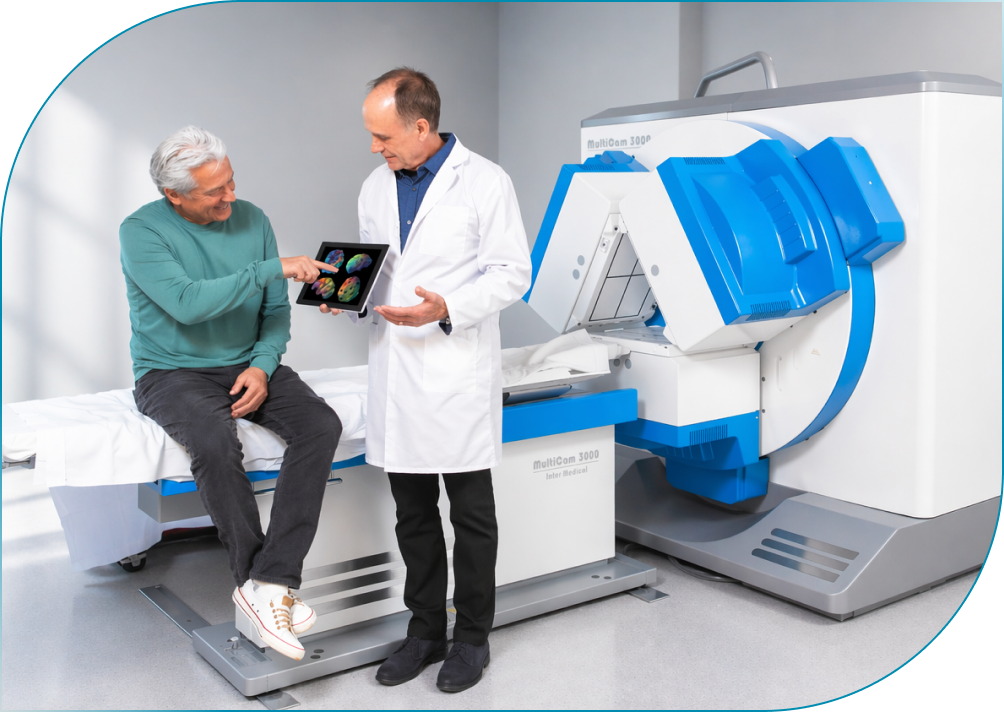
Most people wait too long to seek brain-based help for ADHD, depression, anxiety, and other mental health issues. Get the answers you’ve been missing and gain a partner in your healing journey.
Call 949-427-8195 to speak to a Brain Health Advisor.