
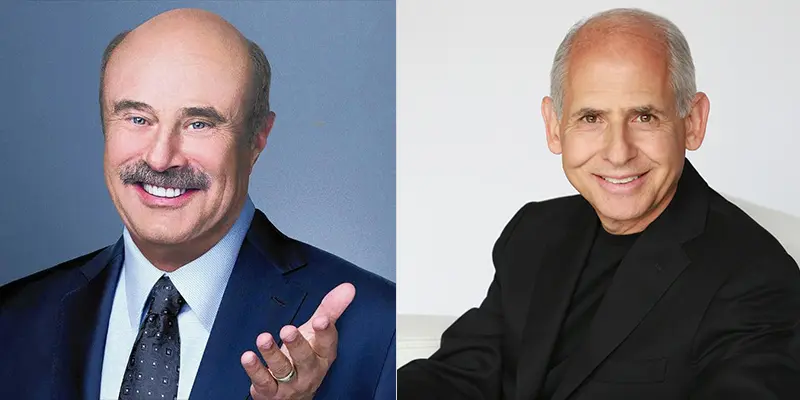
Dr. Amen on Dr. Phil: What’s Wrong with Cameron?
Can being dropped 10 feet on your head as a small child change the trajectory of your life?
“Anxiety can paralyze me. The older I get, the worse it seems to get. It rules my life.” That’s how Cameron, 21, describes his anxiety, which started when he was just a youngster in grade school. That’s also the time when depression first set in. At school, he felt like he didn’t fit in, people made fun of him, and he cried every day. That eventually led to substance abuse as a teen when he started using cocaine, crack, opiates, and benzodiazepines. He became short-tempered, grumpy, and mean and began experiencing panic attacks. He tried Ativan (an anti-anxiety medication), but he says it made him “angry, heavy and put me in a weird mood at night.” It all escalated to a point where Cameron was using substances all day and all night. “I was hoping to die,” he says.
The young man, who still hasn’t graduated high school, has since been to rehab at least 5 times and struggled through 3 stays in psychiatric wards. He’s been sober from “hard drugs” for about a year, but still smokes marijuana and has used LSD. And anxiety and depression? They remain his constant companions, holding him back and keeping him from living the life he wants.

 Cameron’s brain was clearly troubled, which helps explain why he had so much trouble in his life. As Dr. Amen explained on The Dr. Phil Show, mental health problems are really brain health problems that steal your happiness and can ruin your life.
LOOKING INSIDE CAMERON’S BRAIN
Cameron revealed all this on The Dr. Phil Show on November 4, 2020, which featured neuropsychiatrist Daniel G. Amen, MD, the founder of Amen Clinics and a 12-time bestselling author. In search of help, Cameron visited Amen Clinics where he took neuropsychological assessments and underwent a series of brain SPECT scans. SPECT is a functional brain imaging technology that measures blood flow and activity in the brain. Basically, it shows 3 things: areas with healthy activity, areas with too little activity, and areas with too much activity. On the Dr. Phil Show, Dr. Amen shared Cameron’s brain scans, which revealed evidence of:- Head trauma—mild traumatic brain injuries (TBIs) are a major cause of psychiatric symptoms but few people know it because traditional psychiatry rarely looks at the organ it treats. So the answer to our initial question is ABSOLUTELY YES.
- Decreased activity in the frontal lobes—often seen in people with ADD/ADHD
- Increased activity in the limbic region—commonly seen in people with depression
- Overactivity in the basal ganglia—associated with anxiety
- Too much activity in the right frontal lobe—often seen in people with obsessive thoughts and behaviors
- Scalloping—associated with substance abuse or exposure to toxins
Cameron’s brain was clearly troubled, which helps explain why he had so much trouble in his life. As Dr. Amen explained on The Dr. Phil Show, mental health problems are really brain health problems that steal your happiness and can ruin your life.
DIGGING DEEPER INTO CAMERON’S LIFE
At Amen Clinics, which is the global leader in brain health, the team of neuropsychiatrists, integrative medicine (also called functional medicine) physicians, nutritionists, and other specialists take a brain-body approach to treatment that looks at 4 circles of wellness or illness. To end mental illness, you need to understand all the factors in one’s life that can contribute to mental health (or brain health) problems and optimize them. At Amen Clinics, these factors are called the “4 Circles” of a whole life. The 4 Circles are:- Biological: how your physical body and brain function
- Psychological: developmental issues and how you think
- Social: social support, your current life situation, and societal influence
- Spiritual: your connection to God, the planet, past and future generations, and your deepest sense of meaning and purpose
- Biological: His brain isn’t healthy and shows signs of trauma. It turns out that at the age of 2, Cameron fell 10 feet down and landed on his head. At age 4, he broke a snow globe on his face, requiring stitches. And he’s suffered several concussions from skateboarding and basketball. In addition, he has a poor diet, is underweight, has trouble sleeping, and is fatigued, among other issues.
- Psychological: He has negative thinking patterns and has experienced emotional trauma. At the age of 17, he was stabbed and when he was 18, he was held at gunpoint in the woods by people he thought were his friends.
- Social: He used to go to AA and NA (Narcotics Anonymous) meetings, which can provide a good social network for recovering addicts, but he stopped going because he didn’t think they were working for him.
- Spiritual: He hasn’t found his purpose in life yet.
TREATMENT SOLUTIONS FOR CAMERON
Among the personalized solutions recommended for Cameron are:- Medications: targeted to his needs
- Nutraceuticals: everyday essentials including a multivitamin, omega-3 fatty acids, and vitamin D, plus targeted supplements including GABA, l-theanine, magnesium, and vitamin B6 to calm anxiousness; saffron to promote more positive moods; melatonin and 5-HTP for more restful sleep
- Brain healthy diet: higher-protein/lower-carbohydrate meals with foods like salmon, walnuts, fruits, and vegetables
- Protect his head: prevent further head injuries and do hyperbaric oxygen therapy (HBOT) to help heal the existing damage to his brain
- Relaxation exercises: meditation, deep breathing, yoga
- Calming music: to help support temporal lobe function
- Kill the ANTs (automatic negative thoughts): challenge his anxious and worrisome thoughts every day
- Optimize neurohormones: check levels and optimize
- Improve sleep: develop a healthy sleep routine
- Coordination exercises: activities like table tennis, air hockey, or dancing