Dr. Amen on Dr. Phil: Did the TV News Cause Her Psychosis?
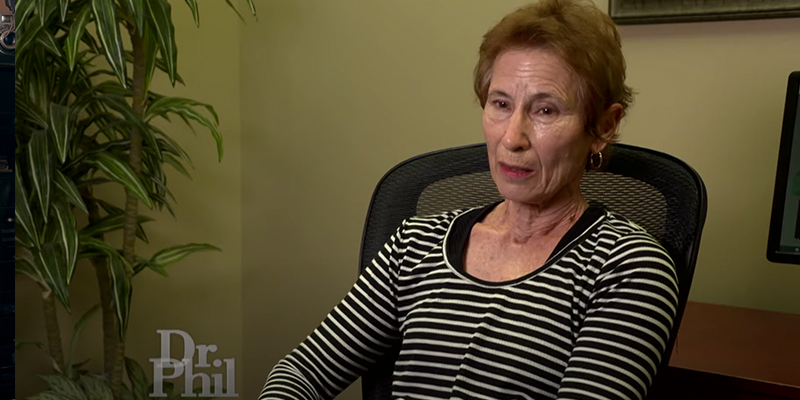
Before her thought processes and behavior changed, Chris was a loving wife, mother, and grandmother. Although she was always considered a bit on the eccentric side, she and her family members were very close.
As the days of the 2020 lockdown persisted during a year of political vitriol, Chris became obsessed with the TV news and spent countless hours each day watching it. She developed an increasing disdain and fear of the sitting president and began to believe he had brainwashed her daughter into supporting him. In Chris’s mind, there was no other plausible explanation for why her daughter would have changed from one political party to another.
Chris’s obsession led her to handwrite a “manifesto” for the incoming president regarding the brainwashing along with other delusional concerns and sent it to the news station. She felt certain her revelations would become a breaking story on the news. Of course, this did not happen.
Her odd and increasingly paranoid behavior along with the nonsensical ramblings in the “manifesto” were clear signs to her family that Chris had become psychiatrically impaired in some way, but they did not understand what was happening. Prior to this time, Chris had no reported mental health history and had been sober for 47 years.
What is Brief Psychotic Disorder?
The Dr. Phil Show asked Dr. Daniel Amen, neuropsychiatrist and founder of Amen Clinics, to join Chris and her family to discuss her case. Dr. Amen thinks Chris most likely had a brief psychotic episode which is consistent with a condition called brief psychotic disorder (BrPsy). The pandemic-related increased isolation and anxiety, fixation on the news, and diminished self-care could have contributed to her losing touch with reality. The pandemic-related increased isolation and anxiety, fixation on the news, and diminished self-care could have contributed to losing touch with reality and having a brief psychotic episode. Of note, BrPsy is not specific to the pandemic. It is included among the psychotic disorders listed in the Diagnostic and Statistical Manual of Psychiatric Disorders, 5th Edition (DSM-5).Prevalence and Symptoms of Brief Psychotic Disorder
Approximately 9% of first-onset psychosis cases are diagnosed as BrPsy. This condition is twice as common in women as it is in men. It can occur almost anytime throughout a lifespan, although on average, first episodes are more common during the mid-30s. It is quite possible for someone who has had one such episode to have more during their life. The diagnostic criteria for a brief psychotic episode include one or more of the following symptoms:- Delusions – Beliefs a person develops that are inconsistent with reality and are tightly held despite contrary evidence related to those beliefs
- Hallucinations – Hearing (usually voices) or seeing things that others cannot, or having strange sensory perceptions
- Incoherent, derailed, or disorganized speech
- Severely disorganized or catatonic behavior
COVID-19 and Psychosis: A Growing Concern Around the World
As more case studies are published about the mental health impact of the COVID-19 pandemic, it is evident that Chris’s case is not an isolated one. Very stressful situations, such as traumatic experiences or loss, are known to be triggers for brief psychotic disorder. This is consistent with what many health care professionals believe is the underlying cause for many of the cases in the past 12 months—chronic emotional and psychological stressors related to the pandemic. The medical journal, Schizophrenia Bulletin, described 6 cases of patients with a first psychotic episode that happened during the lockdown in Italy. Among them was an otherwise healthy 73-year-old man who became delusional and believed he had been infected with COVID-19 by his wife (although he hadn’t) and was the world’s sole survivor. He threatened to commit suicide by jumping out of a window. With appropriate treatment in the hospital, his symptoms were in remission after 25 days.Vulnerability to Brief Psychotic Episodes
Certainly, most people who have been under a lot of duress since the start of the pandemic will not have a psychotic break; however, there are some who are more vulnerable, including those who have these disorders or traits:- Borderline or schizotypal personality disorders
- Unusual perceptual experiences, such as feeling out-of-body at times
- A tendency for odd or eccentric behavior
- Suspiciousness and/or paranoia
- Eat a healthy, balanced diet that is low in sugar and processed food
- Take time each day to get some exercise
- Focus on the things you can control, instead of the things you can’t