

TL;DR: What Brain-Imaging Study Reveals About Bipolar Brains
Medically reviewed by Daniel Emina, MD, Amen Clinics.

If you or someone you love has bipolar disorder, you know how intense and unpredictable the symptoms can feel. The dramatic shifts in mood, energy, and behavior aren’t just frustrating. They can be confusing and, at times, overwhelming.
For years, many people have wondered: what’s actually happening in the brain during these cycles?
New research using brain SPECT imaging is beginning to offer answers. A groundbreaking study examining brain blood flow patterns in bipolar individuals found widespread brain overactivity, especially in key circuits involved in mood regulation.
Even more surprising, this pattern appears to move in the opposite direction of normal brain aging.
In this blog, you’ll learn what these brain scan findings mean, why the affected brain circuits matter so much, how this research may help explain the long-term course of bipolar disorder, and what you can do about it.
A groundbreaking study examining bipolar disorder brain blood flow found that people with the condition may have widespread brain overactivity, especially in key circuits involved in mood regulation.
In general, SPECT (single photon emission computed tomography) scans are not used as a stand-alone diagnostic tool. They are part of a comprehensive clinical evaluation that examines symptoms, lifestyle habits, and overall health.
Brain imaging with SPECT can be a valuable tool in diagnosing bipolar disorder. SPECT measures blood flow and activity in the brain and can help clinicians identify areas with healthy activity, too much activity, or too little activity.
When used alongside a thorough assessment, it can provide additional insight that may help clinicians better understand what is happening beneath the surface.
SPECT imaging looks at bipolar disorder brain blood flow and activity levels in different regions of the brain. This allows clinicians and researchers to see how the brain is functioning, not just how it looks structurally.
Research, including the 2023 study highlighted in this article, shows that people with bipolar disorder may have distinct patterns of bipolar disorder brain overactivity, especially in circuits involved in mood regulation.
At Amen Clinics, brain SPECT imaging is used to identify these functional patterns. This brain-based approach can help reveal differences that cannot be ascertained through documenting symptoms alone and may support more informed decision-making.
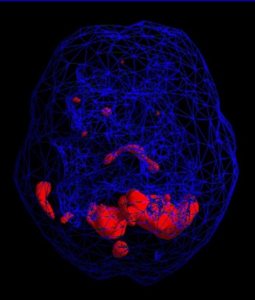
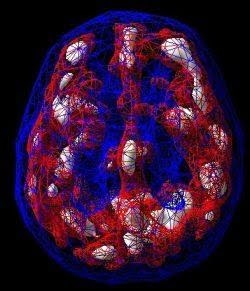
A healthy “active” scan shows the most active parts of the brain with blue representing the average activity and red (or sometimes red and white) representing the most active parts of the brain. In the healthy scan, the most active area is in the cerebellum, at the back/bottom part of the brain. In the other scan from a person with bipolar disorder, there is overactivity in many areas of the brain.
Understanding that bipolar disorder involves real, measurable differences in brain function can be life-changing.
It shifts the conversation away from blame and toward biology. Bipolar disorder is not a character flaw or a lack of willpower. It is a brain health condition that is highly heritable and can involve disruptions in how the brain regulates mood, energy, and behavior.
For many people, seeing this evidence provides relief, validation, and a clearer path forward.
One of the strengths of this research is its size. The study analyzed brain SPECT scans from 313 adults diagnosed with bipolar disorder and compared them to healthy individuals.
Participants underwent comprehensive evaluations along with brain imaging, giving researchers a detailed look at how brain function differed between the two groups. This larger sample size helps strengthen confidence in the patterns that were observed.
The most striking finding was widespread bipolar disorder brain overactivity. Researchers found elevated blood flow across many regions of the brain, a pattern known as hypermetabolism.
This is what people mean when they say bipolar brains “run hot.” It does not refer to temperature. It reflects increased activity and blood flow in the brain, which can signal that certain systems are working harder than they should.
Rather than being limited to one small area, this overactivity appeared across multiple brain regions, suggesting a more global pattern of dysregulation.
Related: The Hidden Signs of Bipolar Disorder Even Doctors Can Miss
Although the overactivity was widespread, it was especially pronounced in frontostriatal circuits. These brain pathways connect the frontal lobes, which are involved in decision-making and self-control, with deeper structures like the basal ganglia and thalamus.
These circuits play a central role in regulating mood, behavior, and impulse control. When they are overactive, it may contribute to the emotional highs, lows, and instability often seen in bipolar disorder.
This finding provides an important clue about the brain systems most involved in the condition.
Another important discovery involved how these patterns changed over time. In healthy individuals, certain aspects of brain activity tend to decrease with age.
In this study, the opposite pattern appeared in the bipolar group. The abnormalities in brain activity increased with age across much of the brain.
This does not mean that every person with bipolar disorder will experience worsening symptoms. It does suggest that, at the group level, the underlying brain changes may become more pronounced over time.
Other research using MRI also reveals structural changes over time in the bipolar brain. In particular, this multicenter study involving 1,232 individuals found faster cortical thinning, especially in the prefrontal cortex, in people with more manic episodes.
In simple terms, overactivity means there is too much activity in key brain systems. Your brain is designed to have balanced activity. Some areas should be more active at certain times, while others quiet down as needed.
In bipolar disorder, this balance can be disrupted. Certain systems stay overly active when they should be more regulated. This is what shows up on SPECT imaging as higher levels of activity across multiple regions.
It might seem like more brain activity would be a good thing. In reality, too much activity in key regions can make it harder for the brain to function smoothly.
An overactive brain can lead to increased emotional intensity, faster shifts in mood, and difficulty calming down once a reaction starts. It can also make it harder to think clearly, pause before acting, or maintain steady focus.
In this way, more activity can mean less efficiency. The brain may be working harder, but not in a way that supports stability or control.
Related: 5 Things Not to Do If You Have Bipolar Disorder
The frontostriatal circuits help regulate mood, impulse control, and decision-making. These networks play a key role in how you regulate your emotions, control impulses, and make decisions.
They help you pause before reacting, weigh consequences, and stay balanced in your responses to everyday situations. When these circuits are working well, they support stability, focus, and thoughtful behavior.
When activity is too high in these circuits, it can disrupt that balance. Instead of helping regulate emotions, the system may become overly reactive.
This can make mood states more intense or harder to shift. You may feel stuck in a high-energy or low-energy state, or find it difficult to return to baseline after an emotional reaction.
Overactivity in these regions can also affect impulse control and decision-making, which may contribute to behaviors that feel hard to manage in the moment.
These findings offer a possible brain-based explanation for some of the patterns seen in bipolar disorder.
If frontostriatal circuits are overactive, it may help explain why mood changes can feel so powerful and difficult to regulate. It may also shed light on the swings between elevated and depressed states, as well as the instability that many people with bipolar disorder experience.
The finding that bipolar brains worsened with age highlights the importance of taking bipolar disorder seriously as a long-term brain health condition. It reinforces the value of early recognition, consistent care, and lifelong strategies that support healthy brain function.
At the same time, this is not a prediction of inevitable decline. Many people with bipolar disorder improve with the right treatment and lifestyle support. Understanding the brain patterns involved can help guide more proactive and personalized approaches to care over the long term.
Not necessarily. The study found that brain activity differences increased with age in the bipolar group as a whole.
That does not mean every individual with bipolar disorder will experience worsening symptoms over time. People respond differently based on factors like treatment, lifestyle, support systems, and overall health.
At the same time, the results offer a possible explanation for why some individuals report that their symptoms become more difficult to manage as they get older.
If underlying brain activity becomes more dysregulated over time in some cases, it could contribute to greater mood instability, more intense episodes, or a harder time returning to baseline.
This does not apply to everyone, but it provides a useful framework for understanding why the course of bipolar disorder can vary so widely.
These findings reinforce the value of paying attention to brain health early and consistently over time.
Getting an accurate diagnosis, following an effective treatment plan, and supporting the brain through healthy habits may help improve stability and long-term outcomes.
There is real hope here. With the right approach, many people with bipolar disorder can feel better, function better, and build a more stable future.
Bipolar disorder is not one thing. There are multiple types, including bipolar 1 and bipolar 2, and the symptoms you experience depend on which type you have.
While symptoms help guide diagnosis, they do not always reveal what is happening in the brain. Different patterns of brain function can lead to similar outward behaviors, which is why a one-size-fits-all approach does not always work.
Looking at the brain can provide additional clues about what may be contributing to mood instability.
SPECT imaging shows patterns of activity and blood flow that may help identify overactive or underactive regions. In some cases, this added layer of information can help clinicians better understand why symptoms are occurring or why certain treatments have not been effective.
When you have a clearer picture of how the brain is functioning, it becomes easier to make more informed decisions about care.
At Amen Clinics, brain-imaging technology is used to identify patterns associated with bipolar disorder and other mental health conditions. This brain-first approach helps guide a more personalized evaluation process.
Better information does not guarantee a specific outcome, but it can support more thoughtful planning and a more targeted path forward.
At Amen Clinics, we go beyond traditional psychiatry with a whole-body approach. The focus starts with the organ that drives thoughts, feelings, and behavior: the brain.
Instead of relying on symptoms alone, this approach looks at how the brain is functioning. This helps shift the conversation from labels to underlying biology and opens the door to more targeted care.
After analyzing nearly 300,000 brain scans from more than 100,000 patients, we understand that every brain is different, and effective care often begins with understanding those differences.
By combining brain imaging with a comprehensive clinical evaluation, Amen Clinics works to build a more complete picture of each individual. This allows for a more personalized approach that considers brain function, biology, and life experience.
This 2023 SPECT study adds an important piece to the understanding of bipolar disorder. The findings suggest that bipolar disorder is associated with widespread brain overactivity, known as hypermetabolism, with especially strong effects in frontostriatal circuits involved in mood and behavior.
The research also found that these brain activity patterns may become more pronounced with age, which differs from what is typically seen in adults without bipolar disorder.
These results do not mean that every person with bipolar disorder will experience worsening symptoms over time. However, they do support a more brain-based view of the condition. Bipolar disorder is not just about mood swings. It can involve measurable differences in how the brain functions.
Understanding these patterns may help explain why consistent, thoughtful care matters. With the right approach, it is possible to support better brain health, improve stability, and build a more hopeful path forward.
Brain SPECT scans are not used as a standalone tool to diagnose bipolar disorder. At Amen Clinics, SPECT is used as part of a comprehensive clinical evaluation that includes symptoms, history, and overall functioning.
SPECT imaging shows blood flow and activity levels in different parts of the brain.
In this 2023 study, individuals with bipolar disorder showed widespread overactivity, known as hypermetabolism, especially in frontostriatal circuits involved in mood and behavior.
Although this study identified clear patterns, not every person with bipolar disorder will show the exact same brain activity.
Bipolar disorder is complex and can present differently from person to person. Brain function is influenced by many factors, including genetics, environment, treatment history, and lifestyle.
It is important to avoid assuming that one pattern applies to everyone.
“Bipolar brains run hot” is a simple way to describe increased brain activity. It refers to higher levels of blood flow and function in certain brain regions, not actual heat. The term reflects the pattern of overactivity seen in brain-imaging studies.
This study found that brain activity differences increased with age in the bipolar group, which was the opposite pattern seen in individuals without the disorder.
This does not mean symptoms will worsen for everyone. It reflects a group-level trend in brain function, not a guaranteed outcome for each person.
Frontostriatal circuits are brain pathways that connect the frontal lobes with deeper structures such as the basal ganglia and thalamus.
These circuits help regulate mood, decision-making, and impulse control. The study found that these areas showed some of the strongest overactivity in bipolar disorder, which may play a role in mood instability.
About the Reviewer
Dr. Daniel Emina is an Associate Medical Director at Amen Clinics Orange Country Metro Area and a child, adolescent, and adult psychiatrist. He earned his medical degree from the UCLA School of Medicine and completed his psychiatry residency and child/adolescent psychiatry fellowship at the University of Hawaii Department of Psychiatry. Dr. Emina uses psychotherapy, pharmacotherapy, pharmacogenomics, brain imaging, TMS, and integrative therapies to optimize brain health and function.
Belur P, et al. “A SPECT Study of Regional Cerebral Blood Flow in Bipolar Disorder.” Biological Psychiatry, Volume 93, Issue 9, Supplement S143 (2023). https://www.biologicalpsychiatryjournal.com/article/S0006-3223(23)00436-5/abstract
Clark, Luke, and Barbara J Sahakian. “Cognitive Neuroscience and Brain Imaging in Bipolar Disorder.” Dialogues in Clinical Neuroscience vol. 10,2 (2008): 153-63. doi:10.31887/DCNS.2008.10.2/lclark
Abé C, et al. “Longitudinal Structural Brain Changes in Bipolar Disorder: A Multicenter Neuroimaging Study of 1232 Individuals by the ENIGMA Bipolar Disorder Working Group.” Biological Psychiatry, Volume 91, Issue 6, (2022): 582-592. https://doi.org/10.1016/j.biopsych.2021.09.008