

TL;DR:
Postpartum depression (PPD) is a serious, treatable condition that can affect mood, thinking, bonding, and daily functioning after childbirth.
The high-profile Lindsay Clancy case has brought renewed attention to the serious mental health challenges women can face after giving birth.
New Amen Clinics research found that women with postpartum depression showed several distinct brain-function patterns—not one single PPD pattern.
The distribution of these brain patterns differed significantly from those seen in a much larger group of people with major depression.
These findings suggest that postpartum depression vs. depression may involve meaningful biological differences that symptoms alone don’t reveal.
Looking at brain function as part of a comprehensive evaluation may provide additional information to help guide more personalized treatment.
Medically reviewed by Kandace Licciardi, MD, Medical Director, Amen Clinics

The high-profile Lindsay Clancy case has brought renewed attention to the serious mental health challenges women can face after giving birth.
Clancy, a Massachusetts mother who killed her three young children in 2023, had sought psychiatric help and received numerous medications in the months before the tragedy. Her defense argued that she was experiencing postpartum psychosis and had not received appropriate treatment, while prosecution experts disputed this claim.
It has sparked a critical conversation about postpartum mental health care and how biology factors into psychiatric diagnosis and treatment. For example, are there functional brain differences between postpartum depression vs depression?
Postpartum depression, like most psychiatric conditions, is diagnosed primarily based on symptoms, not biological information about how an individual patient’s brain is functioning. Yet, two women can meet the criteria for the same diagnosis while having very different underlying brain patterns, which may need different treatment approaches.
Now, new research from Dr. Daniel Amen and colleagues, currently in preparation for publication, is using brain SPECT imaging to more fully understand the underlying brain function patterns associated with postpartum depression (PPD). Using SPECT, the researchers examined whether women diagnosed with PPD share a common brain pattern and whether their patterns differ from those seen in depression more broadly.
What they found challenges the idea that PPD looks the same in every brain and could potentially have implications for more targeted treatment.
Related: Paternal Postpartum Depression: Signs, Symptoms, and Support
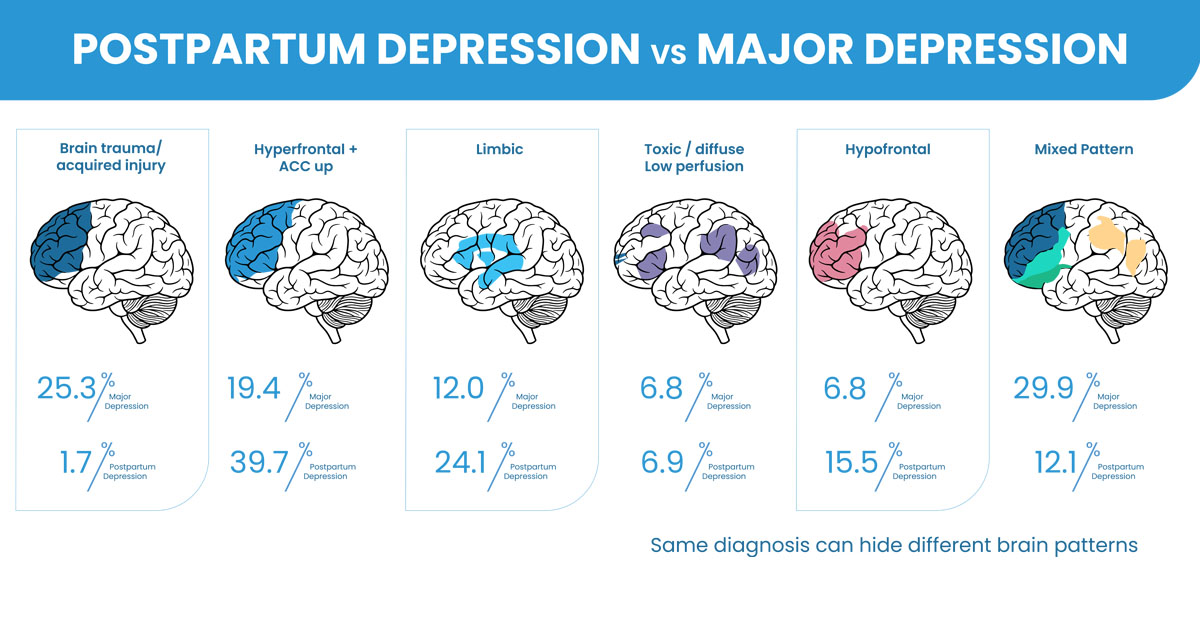
New Amen Clinics research showed women with postpartum depression had several distinct patterns of brain function, which differed significantly to those in a larger depression group.
Postpartum depression is a serious and treatable mental health condition that occurs after childbirth. Recent statistics estimate that about 1 in 8 women with a recent live birth report symptoms of PPD. Yet, only half of women with symptoms get treatment.
PPD is different from the “baby blues,” which can cause worry, sadness, and fatigue in the days following childbirth but typically resolve relatively quickly. Postpartum depression is more intense, lasts longer, and can interfere with daily functioning and a mother’s ability to care for herself or her baby.
Although postpartum depression is the more familiar term, psychiatry’s diagnostic manual does not classify it as a separate disorder. Instead, PPD falls under the broader umbrella of perinatal depression, which includes depression that occurs during pregnancy or after childbirth.
Symptoms can include:
There is no single cause of postpartum depression. Instead, a combination of factors may play a role in its development, including dramatic hormonal shifts after childbirth, sleep deprivation and physical exhaustion, the physical demands of recovery, emotional stress, and the major life transition of caring for a newborn.
And although PPD shares symptoms with major depression, the new brain imaging findings from Amen Clinics suggest there may be meaningful differences in the brain activity patterns associated with the two conditions.
Postpartum depression should not be confused with postpartum psychosis.
Postpartum psychosis is a rare but severe psychiatric condition that can involve a loss of contact with reality. Symptoms may include severe confusion, disorganized thinking, delusions, hallucinations, paranoia, dramatic mood changes, and unusual beliefs or behaviors.
Unlike typical postpartum depression, postpartum psychosis is a psychiatric emergency because it can put the mother and her baby at immediate risk.
Anyone experiencing signs of psychosis or thoughts of harming themselves or their baby needs immediate medical attention.
When postpartum depression goes untreated, it can affect a mother’s well-being, interfere with bonding, and make it harder to care for and engage with her baby.
Research has also linked maternal postpartum depression with developmental, cognitive, and emotional difficulties in children, including problems managing stress and an increased risk for anxiety and depression later in life.
For mothers, the consequences can be serious, including an increased risk of suicide. Getting an accurate diagnosis and appropriate treatment as early as possible can help protect a mother’s mental health while supporting her child’s healthy development and well-being.
New research from Amen Clinics, currently in preparation for publication, is examining whether postpartum depression is associated with distinct patterns of brain function and how those patterns compare with depression more broadly.
Dr. Amen and colleagues reviewed brain SPECT scans from 58 women with postpartum depression and compared them with scans from 26,077 people with major depression. The scans were grouped into six brain-function patterns, including hyperfrontal/anterior cingulate cortex (ACC), limbic, hypofrontal, toxic/diffuse low perfusion, brain trauma/acquired injury, and mixed patterns.
The findings showed that women with postpartum depression did not all have the same brain pattern. Nearly 40 percent showed a hyperfrontal/ACC pattern, compared with 19.4 percent of those with major depression. Limbic patterns were also about twice as common, occurring in 24.1 percent versus 12 percent, while hypofrontal patterns appeared in 15.5 percent versus 6.8 percent.
One of the most striking differences involved the brain trauma/acquired injury pattern. It appeared in 25.3 percent of the major depression group but just 1.7 percent of the postpartum depression group.
These new research findings from Amen Clinics reinforce an important point: The same psychiatric diagnosis can encompass different patterns of brain function. Understanding those differences may help explain why women with similar symptoms can respond differently to treatment and why a more individualized approach to care may be beneficial.
The new Amen Clinics research adds to a growing body of evidence suggesting that psychiatric diagnoses based on symptoms alone may not tell the whole story. Women with postpartum depression in the study showed several distinct patterns of brain function, and those patterns differed significantly from those seen in the much larger major depression group.
Why does that matter? Because people who share the same diagnosis may not necessarily have the same underlying biology. Looking at brain function as part of a comprehensive evaluation, alongside symptoms, medical and mental health history, neurocognitive testing, lifestyle factors, and other clinical information, may provide additional clues about what is contributing to an individual’s symptoms. That information can help clinicians move toward more personalized care rather than assuming that everyone with the same diagnosis needs the same treatment.
This concept is gaining attention throughout psychiatry. A 2026 paper in the American Journal of Psychiatry notes that the DSM remains largely based on descriptive symptoms and explores how validated biological markers could eventually be incorporated into psychiatric assessment. The authors suggest that integrating biological information could help advance more tailored treatment, as well as earlier detection and prevention.
The Lindsay Clancy case brings some important questions to light. In the months before the deaths of her children, Clancy repeatedly sought psychiatric help and received a changing combination of medications. Testimony at her trial documented diagnoses including generalized anxiety disorder, adjustment disorder with depressed mood, insomnia associated with a mental health condition, and a history of suicidal thoughts. Her defense maintained that she was suffering from postpartum psychosis, while clinicians and prosecution experts disputed aspects of that diagnosis.
Clancy was prescribed thirteen different psychiatric medications over approximately four months, including antidepressants, benzodiazepines, sleep medications, a mood stabilizer, and an antipsychotic. Her symptoms nevertheless continued to be a concern, and the adequacy and effects of her treatment became major points of dispute at trial.
What if symptoms alone are not giving clinicians enough information about how an individual patient’s brain is functioning? Without looking at brain function, there is no way to know whether Clancy had one of the patterns identified in the new postpartum depression research or an entirely different pattern. Nor can we know whether brain imaging would have changed her diagnosis, treatment, or the tragic outcome.
But that uncertainty is precisely the point. How would we know unless we looked?
For decades, Amen Clinics has used brain SPECT imaging as part of a comprehensive evaluation of mental health conditions.
SPECT, which stands for single photon emission computed tomography, is a functional brain imaging technology that measures blood flow and activity patterns. Unlike structural scans, such as CT or MRI, which primarily show brain anatomy, SPECT provides information about how the brain is functioning.
It can reveal areas with normal, healthy activity — as well as areas of dysfunction, showing either too much or too little activity.
Based on a database of more than 300,000 SPECT scans, Amen Clinics clinicians have identified certain brain patterns, or brain dysfunction, associated with different mental health conditions.
Below are SPECT images showing healthy function on the left and abnormal activity on the right associated with a particular mental condition:
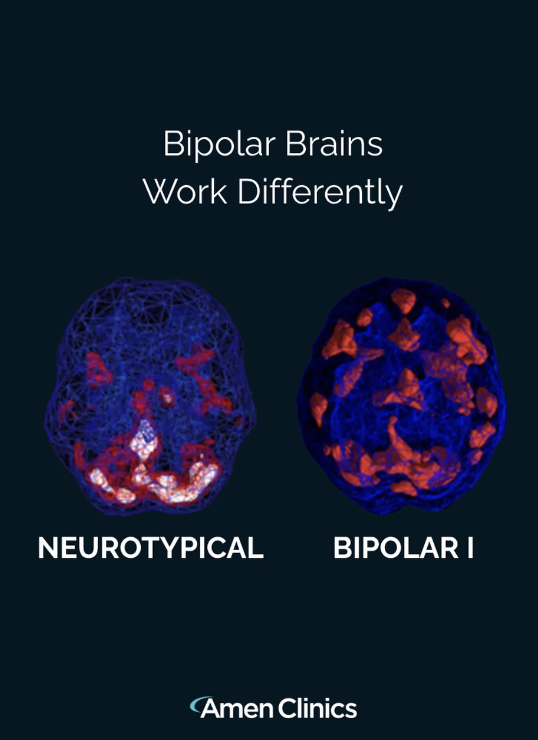
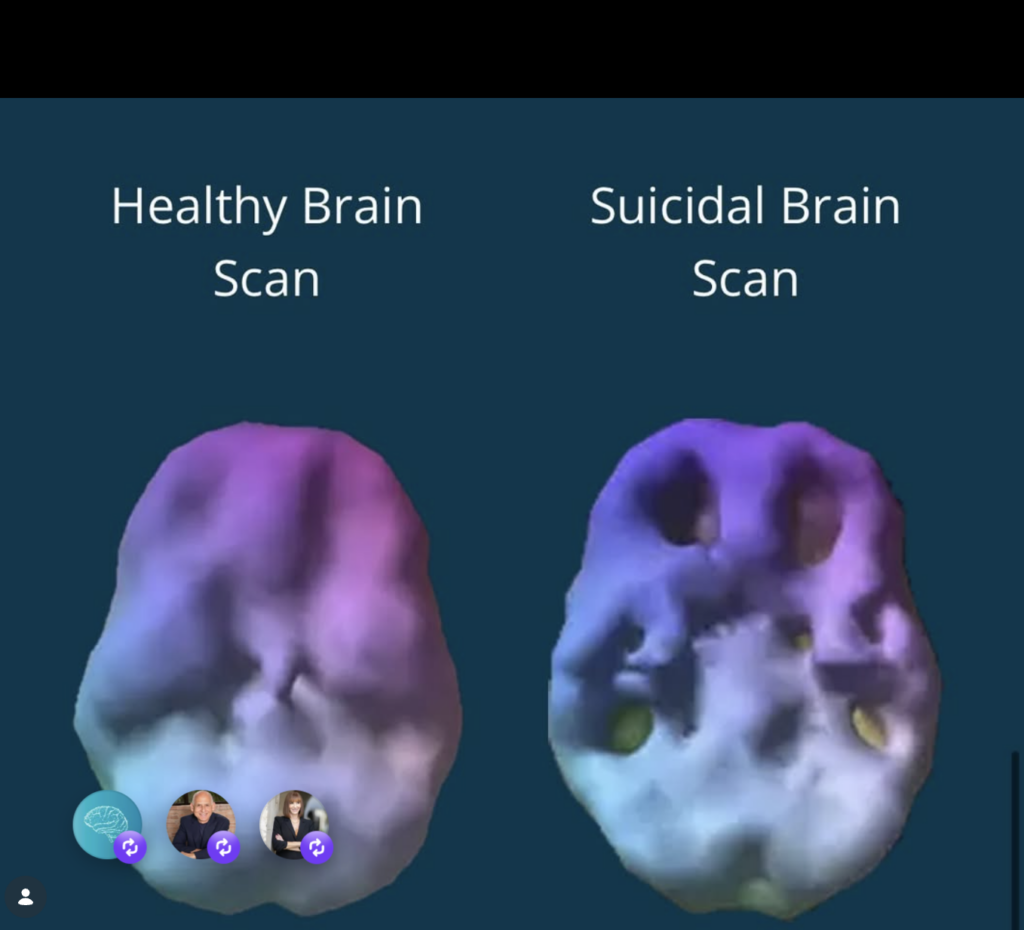
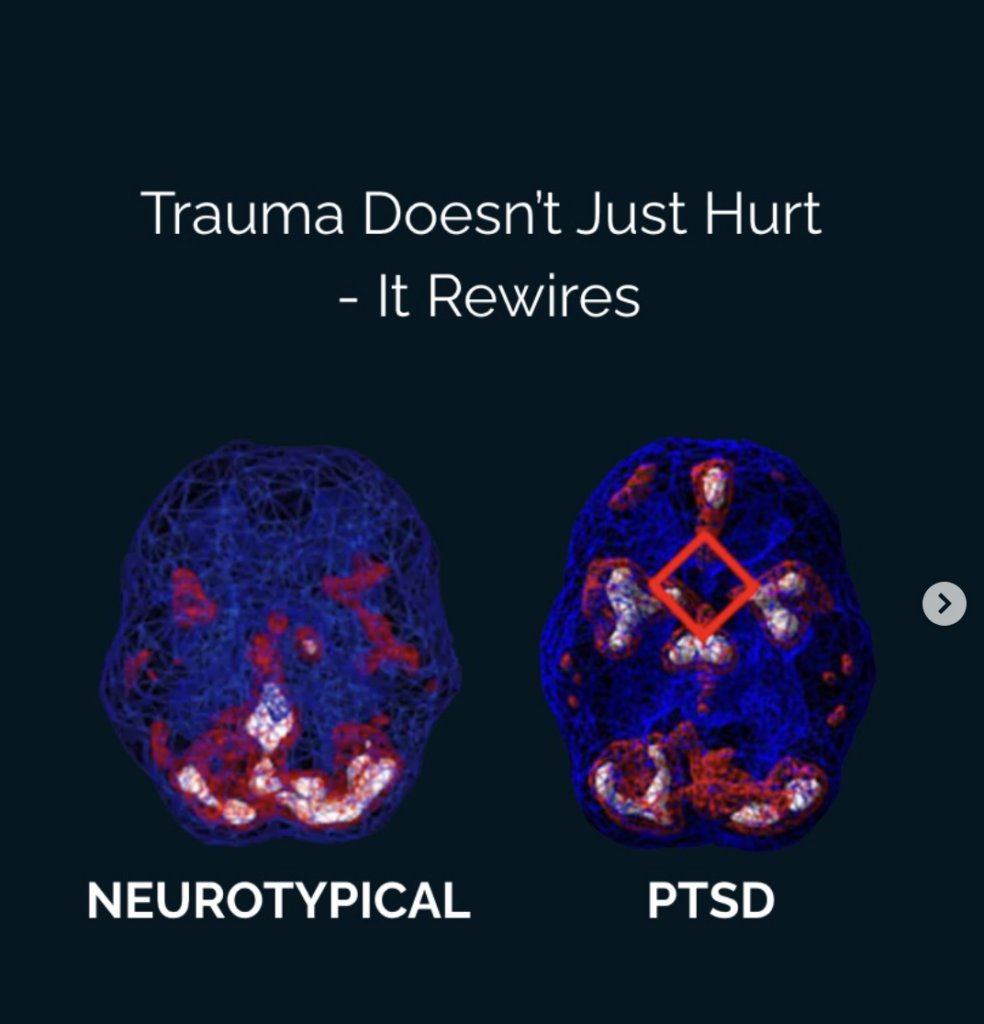
In many cases, such as depression, there are several types of patterns associated with one diagnosis. That means that two people with the same diagnosis may have very different underlying brain patterns, which respond to different treatments.
These nuanced differences prove to be very significant when considered alongside symptoms, personal history, neurocognitive testing, clinical evaluation, and other relevant data.
This whole-body approach informs how our physicians develop personalized, holistic treatment plans that combine natural ways of treating mental health conditions with cutting-edge neuroscience.
At Amen Clinics, brain SPECT imaging is not used in isolation to diagnose postpartum depression or determine treatment. It is one component of a comprehensive evaluation designed to provide clinicians with more information about the individual patient.
The emerging postpartum depression research suggests why that additional information may matter: The same symptoms and diagnostic labels can be associated with different patterns in the brain, and understanding those differences may ultimately help support more individualized care.
No. Postpartum depression shares many symptoms with major depression, including persistent sadness, fatigue, changes in sleep or appetite, and difficulty concentrating. However, PPD occurs in the context of pregnancy and childbirth and may involve unique hormonal, physical, sleep, and psychosocial factors. Preliminary Amen Clinics research also found differences in the distribution of brain SPECT activity patterns between women with PPD and a much larger group of people with depression.
In an internal Amen Clinics study of 58 women with postpartum depression, the three most common SPECT patterns involved overactive frontal lobes/anterior cingulate, limbic system overactivity, and underactive frontal lobes. The findings suggest that PPD is associated with multiple brain patterns rather than a single pattern. These preliminary findings have not yet been published in a peer-reviewed journal.
No. SPECT imaging is not a standalone diagnostic test for postpartum depression. It measures brain blood flow and activity and can provide additional biological information as part of a comprehensive evaluation that also includes clinical history, symptoms, neurocognitive testing, and other relevant assessments.
Postpartum depression typically involves symptoms such as persistent sadness, anxiety, irritability, exhaustion, guilt, and difficulty bonding with the baby. Postpartum psychosis involves a loss of contact with reality and may cause delusions, hallucinations, severe confusion, disorganized thinking, or bizarre beliefs. Postpartum psychosis is a medical emergency and requires immediate psychiatric evaluation.
Postpartum depression, depression, and other mental health conditions can’t wait. At Amen Clinics, we practice precision medicine—using brain SPECT imaging and comprehensive evaluations to understand what’s really happening in your brain, not just your symptoms.
Our whole-body approach to holistic psychiatry combines cutting-edge neuroscience with natural ways to treat mental health conditions, including targeted nutrition, supplements, lifestyle strategies, therapy, and medications (when necessary). Every treatment plan is personalized to address the root causes of your struggles and support the health of your brain, body, and mind.
Don’t settle for guesswork. You deserve answers—and a plan built specifically for you. Speak with a Brain Health Advisor today at 888-546-3124 or visit our contact page to get started.
About the Reviewer
Kandace Licciardi, MD, Medical Director, Amen Clinics
Dr. Kandace Licciardi is a double board-certified psychiatrist in adult and forensic psychiatry and serves as Medical Director of Amen Clinics Dallas Metro Area. She takes a comprehensive, whole-person approach to care, integrating evidence-based psychiatric treatment with lifestyle, social, and wellness factors. Dr. Licciardi has extensive experience treating depression, anxiety, bipolar disorder, psychotic disorders, and borderline personality disorder, with special expertise in early psychosis intervention. She completed her psychiatry residency at Maimonides Medical Center and her forensic psychiatry fellowship at New York University.
ABSTRACT
Objective: We wanted to see whether postpartum depression shows different brain patterns, and whether those patterns are different from depression in general.
Methods: We looked at brain SPECT scans from 58 women with postpartum depression. Each scan was placed into one of six brain pattern groups: overactive frontal lobes/anterior cingulate, limbic system overactivity, underactive frontal lobes, toxic or diffuse low blood flow, brain injury-like pattern, or no clear pattern. We compared these results with a larger depression group of 26,077 people.
Results: The women with postpartum depression did not all have the same brain pattern. The most common patterns were overactive frontal lobes/anterior cingulate, limbic overactivity, and underactive frontal lobes. Compared with depression in general, postpartum depression had more of these three patterns and fewer brain injury-like or no-clear-pattern cases. Five of the six pattern differences were still statistically significant after correction for multiple tests.
Conclusion: Postpartum depression is not one single brain pattern. It appears to include several different brain types. This may help explain why women with postpartum depression can have different symptoms and may need different treatment approaches.
Postpartumdepression.org
https://www.postpartumdepression.org/resources/statistics/
Accessed September 18, 2026
Slomian J, Honvo G, Emonts P, Reginster JY, Bruyère O. Consequences of maternal postpartum depression: A systematic review of maternal and infant outcomes. Womens Health (Lond). 2019 Jan-Dec;15:1745506519844044.
Cuthbert B, et al. The Future of DSM: Role of Candidate Biomarkers and Biological Factors. Am J Psychiatry. 2026 May 1;183(5):317-324.
New Amen Clinics Research on Postpartum Depression vs. Depression
Dr. Daniel Amen, Dr. Dave Keator, et al.
September 21, 2026