Can Hyperbaric Oxygen Therapy Improve Long COVID Symptoms?
Experiencing a bout of COVID-19 is bad enough. But for far too many people, surviving COVID leads to lingering neurocognitive, neuropsychological, or physical symptoms called long COVID, also known as post-COVID-19 syndrome or COVID-Brain. Of the over 40% of Americans who have had COVID-19, an estimated 19% of them meet the criteria for long COVID, according to the Household Pulse Survey. This means that over 25 million people are still struggling with symptoms related to infection with SARS-CoV-2. A 2022 brain-imaging study in Nature Medicine has identified an astounding 62 symptoms related to long COVID. These symptoms include but are not limited to:
But new research shows there is hope for those dealing with long COVID. Results from a 2022 study in Scientific Reports show that hyperbaric oxygen therapy (HBOT), a noninvasive treatment, can produce changes in the brain that improve long COVID symptoms.
Results from a 2022 study in Scientific Reports show that hyperbaric oxygen therapy (HBOT), a noninvasive treatment, can produce changes in the brain that improve long COVID symptoms.
WHAT IS HBOT?
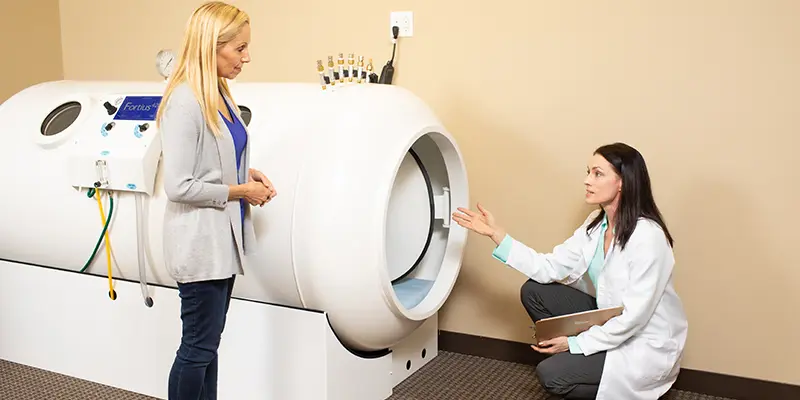
Hyperbaric oxygen therapy is a well-researched treatment that involves breathing 100% pure oxygen in a pressurized chamber. HBOT allows a person to increase the amount of oxygen taken into the lungs by as much as 3 times what is inhaled with normal air pressure. The blood then carries this extra oxygen throughout the body and brain, where it can accelerate the healing process of any damaged tissues.HBOT BENEFITS LONG COVID AND OTHER CONDITIONS
HBOT is best-known for treating decompression sickness in deep-sea divers, but it has solid research showing that it is also beneficial for a wide range of other conditions, such as carbon monoxide poisoning, burns, wound healing, and fighting infections. People have reported benefits from HBOT treatment for many other issues, such as:- Concussions and traumatic brain injuries (TBIs)
- Memory loss
- Alzheimer’s disease
- Vascular dementia
- Posttraumatic stress disorder (PTSD)
- Depression
- Anxiety
- Attention issues
- Autism spectrum disorder (ASD)
- Lyme disease
- Stroke
- Migraine