Depression. It’s a word that many of us are all too familiar with. Whether we’re living with it ourselves or seeing the impact it has on a loved one, it may turn into devastating suicidal depression.
At Amen Clinics, we understand how monumentally important it is to distinguish between depression and situational sadness or despair. Sadness and despair are universal human emotions – something we’ve all felt at one time. Suicidal depression, however, is an all-encompassing state of being that is more than a mood, more than an emotion, and more than most can handle and tackle on their own.
Thankfully, handling and tackling suicidal depression on your own is not necessary. There is hope, and there is help. Amen Clinics was founded with a goal of offering our clients the best of both.
Suicidal Depression Help: You Are Not Alone
The World Health Organization (WHO) estimates that more than 300 million people globally suffer from depression, and that “depression is the leading cause of disability worldwide.” It’s been reported that as many as 55% of the population have considered suicide at some point in their lives.
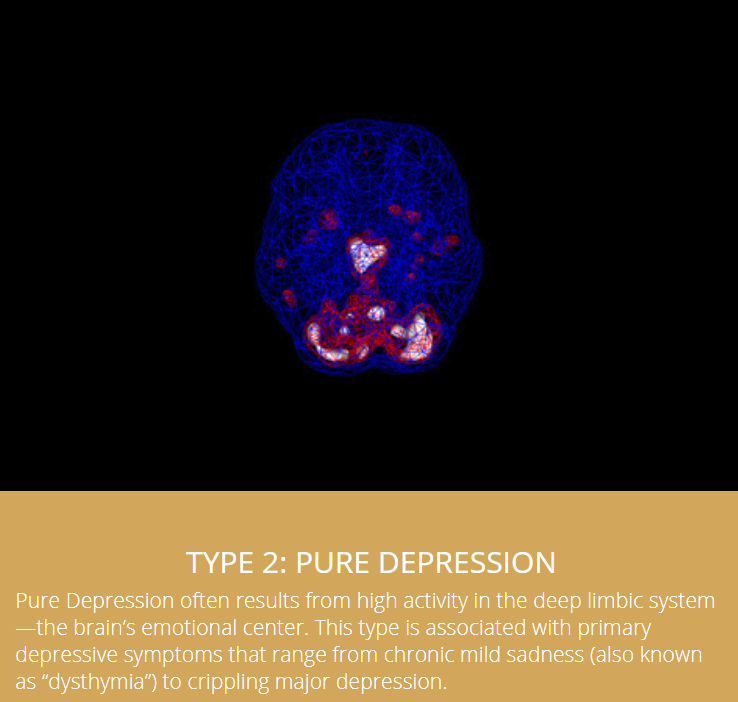
At Amen Clinics, we’ve identified seven types of anxiety and depression. The main signs of each depression vary, but pure depression contains the following symptoms:
• Persistent sad or negative mood
• Loss of interest in usually pleasurable activities
• Restlessness, irritability or excessive crying
• Feelings of guilt, worthlessness, helplessness, hopelessness or pessimism
• Sleeping too much or too little, or early morning awakening
• Decreased appetite and/or weight loss or overeating and weight gain
• Decreased energy, fatigue or feeling “slowed down”
• Thoughts of death or suicide, or suicide attempts
• Difficulty concentrating, remembering or making decisions
• Persistent physical symptoms that don’t respond to treatment, such as headaches, digestive problems or chronic pain
• Chronic low self-esteem
• Persistent feeling of being dissatisfied or bored
It’s important to remember that friendship and community play a large role in continued depression. You may experience symptoms of depression, and a turn towards suicidal depression warrants additional support from friends, loved ones and even acquaintances in the community, as every connection can play a role in helping ease the deep sense of loneliness.
Suicidal depression calls for the most urgent and comprehensive approach to care. We understand and honor that sense of urgency at Amen Clinics, and are committed to helping you on your path toward a healthier mind and body, every step of the way.
Overcoming Suicidal Depression
First and foremost, overcoming suicidal depression calls for an ally in the battle against your illness, and we will employ whatever resources, recommendations, and advanced testing we have at our disposal. The Amen Clinics Method takes a four-pronged approach:
1. We will explore your specific biological, psychological, social and spiritual influences.
2. Perform neuropsychological tests to measure various aspects of your brain function
3. Perform two brain SPECT scans: one at rest and one during concentration
4. Order lab tests to rule out nutritional deficiencies, hormone imbalances, toxicity, etc.—if deemed necessary
We offer comfort in discovering if you may be experiencing a physical component to your depression in the brain itself. With advanced testing, we can identify physical abnormalities in the brain to help cure your suicidal depression.
Brain SPECT Imaging: The Amen Clinics Difference for Suicidal Depression Help
Brain SPECT Imaging provides an essential layer of insight that is missing from many other depression treatment plans, allowing us unparalleled clarity in regards to what your depression actually looks like.
Oftentimes, there is a functional problem in your brain that is an integral component of your suicidal depression. Not many people know that brain injury is a leading cause of depression. Chances are good that any possible previous attempts to tackle your depression did not consider and address this functional issue. As well-meaning and well-developed as those previous treatment plans may have been, it is often the additional information and insight we learn from your SPECT scan that is the missing piece of the puzzle in treating your depression.
Are SPECT Scans a New Tool?
We understand that many of the people we work with have never heard of SPECT scans, and that it sounds like a new technology, which can cause a certain degree of apprehension. SPECT is a proven imaging technology that helps measure the way an organ works, such as by mapping blood flow.
We are proud to say that the SPECT imaging scans Amen Clinics offers are not new technology, rather they have served as the backbone of our health care clinics for nearly three decades. We are the best in the world when it comes to administering and reading brain SPECT imaging, and have performed more than 150,000 brain SPECT scans over the past 30 years.
Many of the people we’ve worked with arrive at Amen Clinics after months, years, or even decades of being misunderstood. You may have been told everything from “it’s all in your head” to “don’t sweat the small stuff.” You will never be treated that way at Amen Clinics. That is our enduring commitment and promise to help you through your suicidal depression
Our team has nothing but the utmost respect and compassion for your journey, and the significant step you have taken in trusting us to help you move past suicidal depression into the life you so deserve. A range of patients enter our facility with illnesses varying from postpartum depression, borderline personality disorder, panic disorder, reactive attachment disorder, toxic exposure, PTSD, dementia, and many who are undiagnosed with a problem aside from experiencing depression and anxiety.
We are honored to be your partner and care provider and will apply our extensive knowledge and tools in helping you become free from suicidal depression. Depression may have been such a huge part of your life for so long that you can’t remember a time before it and can’t envision a life without it. But we urge you to consider that just because you’ve been living with something for a long time does not mean that it’s the only way. It simply means that you haven’t yet found the right treatment plan for you. But that was then, and this is right now.
Amen Clinics Treatment for Suicidal Depression
The team of experienced professionals at Amen Clinics brings extensive knowledge, compassion, empathy, and an unwavering commitment to your treatment in all they do. We understand that you are a complex individual whose suicidal depression has been shaped by many things, including your life experiences, your physical and mental health, a possible family history of mental health issues or other issues that contribute to depression, and, importantly, your brain itself.
Through extensive research, our clinics have come to understand how brain SPECT imaging can predict treatment outcomes in depressed patients. We will thoughtfully study your scan to see which personalized treatment plan is most likely to help your unique situation.
We are strong proponents of highly individualized plans that might include a physical wellness plan, dietary recommendations, transcranial magnetic stimulation, psychotherapy including hypnotherapy and cognitive behavioral therapy, traditional antidepressants only as needed, and more. We are steadfast in our commitment to design the plan that will work for you.
Find Suicidal Depression Help with Amen Clinics
To be sure, sometimes depression can feel like such an integral part of who you are that you fear what will remain if you overcome it. But we promise that you are so much more than your depression.
You deserve more than your depression wants for you.
You deserve to be in charge of your present and your future.
You deserve to take the time and necessary steps to get at the root of your suicidal depression and work towards unraveling yourself from its web.
You are a whole, complex, one-of-a-kind person that deserves a life free from suicidal thoughts and depression. You deserve the help that Amen Clinics can provide.
If you or someone you love is suffering from suicidal depression, please reach out to us online or call us at 888-288-9834. If you fear that your life, or the life of someone you know, is in imminent danger, please dial 911 or reach out to one of the rescue lines below immediately:
In the US:
Crisis Text Line: Text HOME to 741741 from anywhere in the USA, at any time, about any type of crisis
The National Suicide Prevention Lifeline: 1-800-273-8255
The Trevor Project: 1-866-488-7386
Outside the US:
The International Association for Suicide Prevention lists several suicide hotlines by country.
For more information on the Amen Clinics approach to anxiety and depression, watch the following intimate talk between Dr. Amen and his wife, Tana Amen.
As a leader in the field of mental health, Amen Clinics has treated an array of psychiatric conditions over the past 30 years and has amassed the world’s largest database of brain scans at 300,000 and growing. Though many people have come to know about us due to the remarkable results we’ve seen with brain SPECT imaging, we also offer a wide range of therapy options at the nationwide Amen Clinics locations. One of the brain health and wellness services we are excited to recommend is Cognitive Behavioral Therapy (CBT).
What is Cognitive Behavioral Therapy?
Cognitive Behavioral Therapy (CBT) is the most widely used practice for improving mental health. CBT is an evidence-based, action-oriented psychological treatment that focuses on the way people think (cognitive) and act (behavioral). CBT can help individuals cope with personal challenges by breaking them down into smaller areas to concentrate on. CBT addresses five fundamental areas:
• Actions
• Emotions
• Physical feelings
• Situations
• Thoughts
CBT focuses on correcting negative thinking patterns and developing accurate, more positive thinking skills, which in turn can change your behavior and help boost your mood, motivation and determination. In head-to-head studies, taking fish oil, exercising, and CBT has been found to be as effective as medication.
How Does It Work?
CBT sessions can occur one-on-one or in groups. During the first session, a therapist will make sure the patient is comfortable and then ask a few questions pertaining to the patient’s background and current situation. Future sessions may focus on various aspects of what the patient is struggling with, breaking down the problem into manageable parts and implementing practical solutions or strategies (which may include homework) to address those concerns and improve the patient’s situation.
Who Does It Treat?
CBT can benefit a wide range of psychiatric and mental health conditions, including: ADD/ADHD, anxiety, anger, autism spectrum disorders, bipolar, depression, eating/weight issues, OCD/ODD, pain management, PTSD, sleep dysregulation, traumatic brain injury (TBI) and toxic exposure.
What Are the Benefits?
CBT can help you:
• Learn how to slow down and relax
• Change your beliefs about yourself
• Control anxious or negative thoughts
• Prevent addiction relapse
• Manage your anger
• Cope with grief and loss
• Deal with chronic pain
• Resolve relationship challenges
CBT and Insomnia
Research has shown that CBT can help to relieve the effects of insomnia. CBT-I therapy seeks to undo the notion that sleep requires effort or that it needs to be fixed. CBT-I teaches patients to:
• Establish a regular wake-up time and stick to it
• Get out of bed during waking periods
• Avoid eating, reading, watching TV or similar activities in bed
• Refrain from taking daytime naps
CBT and PTSD
CBT helps people identify, challenge, and modify automatic negative thoughts (ANTs) and abnormal mental scenarios. People learn how to identify cognitive distortions, find evidences for and against thoughts, create alternatives, and finally reappraise their beliefs about themselves and the trauma by creating a new narrative of the traumatic event. CBT not only helps to reduce symptoms of posttraumatic stress disorder PTSD, but also reverses the underlying biology of the disorder within the brain. If you experience reoccurring stress from traumatic memories, CBT combined with a psychotherapeutic treatment technique called EMDR (eye movement desensitization and reprocessing) may help.
How Many Sessions Are Recommended?
The number of sessions will be determined by the therapist. Sessions typically last either 30 or 60 minutes. For medication management, a 90-minute consult may be recommended.
Is it Safe?
CBT is non-invasive, has no side effects and is safe for people of all ages.
Not all services are offered at each Amen Clinics location. Call us today at 888-288-9834 for availability at a clinic near you, or tell us more online for additional guidance.
New research from Amen Clinics shows that brain SPECT (single photon emission computed tomography) imaging, a study that measures blood flow and activity patterns, identifies who is more likely to get better from depression. The study is published in the Journal of Alzheimer’s Disease, because depression is a highly treatable risk for cognitive decline and Alzheimer’s disease.
Depression remains an important risk factor for Alzheimer’s dementia, yet few neuroimaging biomarkers are available to identify treatment response in depression.
The researchers compared the SPECT scans of 507 depressed patients who responded to treatment to the scans of 106 patients who were considered non-responders. The objective was to analyze and compare functional perfusion neuroimaging in persons with treatment resistant depression (TRD) compared to those experiencing full remission. The study found that patients who did not respond to treatment had lower overall cerebral blood flow, especially in the frontal, temporal, and parietal lobes and in brain regions known to be affected by Alzheimer’s, including the right hippocampus and left precuneus.
Lead author psychiatrist Daniel G. Amen, MD says, “This is a critically important study. Knowing who is likely to get better from depression and who is not, will help treating physicians be sensitive to which patients are likely to need more help and need to be monitored more closely.” Treatment resistant depression is a major risk factor for suicide, divorce, and job loss. Dr. Amen also says, “This finding will also lead to more personalized treatment. For patients with low brain activity, stimulating the brain will be more important than standard serotonin enhancing drugs that tend to lower brain activity.”
Our findings identify imaging based biomarkers in persons with depression related to treatment response. These findings have implications in understanding both depression to prognosis and its role as a risk factor for dementia.
If you or a loved one is experiencing symptoms of Alzheimer’s disease, dementia or depression, Amen Clinics can help. We will help you learn more about your brain and assist with early diagnosis and intervention. Call us today at (888) 288-9834 or visit our website to schedule a visit.
It is important to maintain strong relationships with people, but just how important?
The United Kingdom appointed a Minister for Loneliness to address the finding that nine million British people often or always feel lonely. To some, this may come as a surprise. It should not.
Loneliness and social isolation are on the rise, leading many to call it an epidemic.
Why?
In recent decades, the number of people with zero confidants has tripled, and most adults do not belong to a local community group. Consequently, more than one third of Americans over the age of 45 report feeling lonely, with prevalence especially high among those under 25 and over 65 years old.
While this alarming trend has grown, so has understanding of its impact. By now, the evidence is abundant and decisive: social connection significantly affects health. When you believe that you have people in your life who care about you, and you interact with them regularly, you are better off. For instance, you may be less likely to catch a cold, slip into early cognitive decline, and develop depression.
What Does Research Tell Us?
A study at Harvard University that followed hundreds of people for 75 years identified the quality of people’s relationships as the single clearest predictor of their physical health, longevity, and quality of life.
Limbic System + Loneliness
Do you know people who see every situation in a bad light? Or someone who struggles with feelings of sadness, loneliness, lack of motivation, or hopelessness? If so, they could be experiencing troubles with the functioning of the limbic system in their brain.
The limbic system, also called the emotional brain, lies near the center of the brain. Considering its size – about that of a walnut – it is packed with functions critical for human behavior and survival. The limbic system processes our sense of smell, stores highly charged emotional memories, and affects sleep and appetite cycles, moods, sexuality, and bonding.
What Can You Do?
It has been shown that enhancing emotional bonds between people will help heal the limbic system. How you get along with other people can either help or hurt your limbic system! The better you get along with those around you, the better you will feel.
We Can Help
You CAN change your brain, and change your life. At Amen Clinics, we want to help you. Call us today at 888-288-9834 or visit here to schedule an appointment.
It’s been reported as many as 55% of the population have seriously considered suicide at some point in their lives. Unfortunately, suicidal behavior and completed suicides are also common. Often associated with untreated anxiety and depressive disorders, suicidal behavior often occurs when a person feels as though he or she has no other option in life.
That’s how Olympian, Michael Phelps felt
Michael Phelps is the most decorated Olympian of all time. He’s won 28 medals in swimming, 23 of them gold. But he’s just as human as the rest of us, and he’s experienced serious bouts of depression in his life. And he revealed to CNN this week that at one point, he even contemplated suicide.
This week Phelps spoke to CNN’s David Axelrod at the Kennedy Forum, a behavioral health advocacy group, and opened up about his experience with depression, anxiety, and suicidal thoughts.
When Success Isn’t Enough
To be such a successful athlete and make the most of his talent and potential, Phelps had to be dedicated, intense, and unforgiving of himself. When the Olympics were over, Phelps said he began to feel a big let-down, and it started to get more habitual.
“Really, after every Olympics I think I fell into a major state of depression,” said Phelps when asked to pinpoint when his trouble began. He noticed a pattern of emotion “that just wasn’t right” at “a certain time during every year,” around the beginning of October or November, he said. “I would say ’04 was probably the first depression spell I went through.”
Depression is a real illness
If you or a loved one suffers with this debilitating condition, we want you to know you are not alone. Over 40 million Americans struggle with anxiety disorders, roughly 18 percent of the population, and only one-third of those suffering will receive treatment.
Depression and suicide devastates families, often leaving parents, spouses, and children feeling abandoned, guilt-stricken, and depressed.
We Can Help
If you are having suicidal thoughts, call the National Suicide Prevention Lifeline at 1-800-273-TALK (8255).
It is very important to determine the nature and origin of these behaviors because that will predict appropriate treatment. If you or someone you know is suffering from depression or suicidal thoughts we would love to speak with you today. Please reach out at 888-288-9834 or schedule a visit. You are not alone.
Suicidal thoughts are more common than you may think and here’s why.
It’s been reported as many as 55% of the population have seriously considered suicide at some point in their lives. Unfortunately, suicidal behavior and completed suicides are also common. Often associated with untreated anxiety and depressive disorders, suicidal behavior often occurs when a person feels as though he or she has no other option in life.
Suicide devastates a family, often leaving parents, spouses, and children feeling abandoned, guilt-stricken, and depressed.
Suicide is the 8th Leading Cause of Death in the United States
Women attempt suicide three times as often as men, yet men actually succeed in killing themselves three times more than women. Women typically use suicide as a cry for help, while men typically hold back their feelings until they are overwhelmed and see no other option for healing their pain.
Treating Depression & Suicidal Behavior in a New Way
Brain SPECT studies have been useful in helping to further understand suicidal behavior. We have scanned more than 300 people who have attempted suicide. The majority of these patients had a tendency to get stuck on negative thoughts, had a short fuse, were easily irritable, impulsive and showed poor judgment.
Most suicidal thoughts are brief in duration. Suicide is possible when someone gets locked into negative thoughts and has a short fuse and problems with impulsivity. Half of the suicides in America are committed when a person is intoxicated, because alcohol further suppresses prefrontal cortex function, taking the lid off of impulse control.
How Brain Imaging Can Change Someone’s Life
Our SPECT studies provide a useful window into the brain of these patients and help bring together the diversity of biological findings. We have studied hundreds of children, teenagers, and adults who exhibited suicidal, cutting and violent behavior and compared them to people who have never had these issues.
Clearly, the brain patterns of these patients are different from those of the nonviolent person. We have found clinically and statistically significant differences between the suicidal aggressive group and the non-suicidal and nonaggressive group. The results cluster around three major findings: decreased activity in the prefrontal cortex, increased anterior cingulate activity, and increased or decreased activity in the left temporal lobe.
It is very important to determine the nature and origin of these violent behaviors because that will predict appropriate treatment. If you or someone you know is suffering from depression or suicidal thoughts we would love to speak with you today. Please reach out at 888-288-9834 or schedule a visit. You are not alone. The brain-body connection is real and more apparent than you might think. While some disease is hereditary, bad health is often born out of unhealthy choice and behaviors. When your brain suffers, so does your body, but it’s never too late to change your brain, and your life.
Alzheimer’s disease is expected to triple by 2050, and there is no cure on the horizon. Alzheimer’s disease affects 50 percent of people age eighty-five and older. If you are fortunate to live until you are eighty-five or beyond you have a one-in-two chance of losing your mind along the way. To make matters worse, recent brain-imaging research has demonstrated that Alzheimer’s disease and other forms of dementia actually start in the brain decades before you have any symptoms.
Depression is one of the greatest killers of our time. It affects 50 million Americans at some point in their lives and has increased 400 percent since 1987. Depression is associated with suicide, divorce, job failure, heart disease, obesity, and dementia. Depression doubles the risk of Alzheimer’s disease in women and quadruples it in men.
Attention deficit disorder (ADD), also called attention deficit hyperactivity disorder (ADHD), is now being diagnosed more frequently than ever. Statistics from the Centers for Disease Control and Prevention report that nearly one in five high-school-age boys and 11 percent of school-age children overall have received a diagnosis of ADD, including an estimated 6.4 million children between the ages of six and seventeen. Many people underestimate the devastating consequences of ADD. Yet, when left untreated, it is associated with school underachievement and failure (35 percent never finish high school), drug and alcohol abuse, job failure, divorce, incarceration, obesity, depression, and dementia.
Obesity is a serious national crisis with two-thirds of Americans over- weight and one-third obese. Obesity increases inflammation, which is a low-level fire in the body that destroys our organs and is a risk factor for more than thirty medical illnesses, including cancer, diabetes, depression, and dementia. There are many published studies, including two by the research team at Amen Clinics, that report as your weight goes up, the size and function of your brain go down.
If you are not a warrior for the health of your brain and the brains of those who depend on you, ADD, depression, dementia, premature aging, diabetes, obesity, and premature death are the consequences for your loved ones and yourself. Do not be a victim; if you are ready to start fighting for yourself and your loved ones we can help you! Call Amen Clinics at 888-288-9834 or visit us at online.
What is toxic exposure? How do you know if you have it? Toxic exposure can cover a variety of things, including self-inflicted toxins (such as drugs, and alcohol), medical treatments such as chemotherapy, and environmental exposures to carbon monoxide or mold. It can be very difficult to know that you are suffering from one of these toxins, unless you know specifically to look for it.
Can Toxins Attack Your Brain?
Too often, memory problems are dismissed as something that happens with age, or because of life being too busy and we don’t take the proper steps to realize that this may be a symptom of something larger.
When these toxins attack the brain, they affect one’s ability to learn, love, and behave. It may feel like your spouse is always forgetting something, but could it be something bigger? When there is a sudden change in personality, mood, memory, or sleep, it’s important to investigate the possible causes that may not seem as obvious.
Is it Depression or is it Mold?
Toxic mold exposure has also been linked to more serious, long-term effects such as:
• Memory loss
• Insomnia
• Anxiety
• Depression
• Confusion
• Trouble concentrating
In many cases mold, carbon monoxide poisoning, or other toxins damage the brain and result in decreased neurological function including memory loss, small personality changes, difficulty concentrating and other symptoms that often lead to misdiagnosis. It’s important to realize that this toxic exposure and its effects on the internal structure of your brain can trigger both long and short-term effects that may be treatable.
What Can You Do If Your Suffering from Toxic Exposure?
In our experience, there is a way for recovery. At Amen Clinics we have successfully treated many people with toxic looking brains, which is why it is important to look at your brain before we try to treat it. Get information on how Amen Clinics can help by calling 888-288-9834 or schedule a visit online today.
Depression in children and teens can take many forms and is increasing at a shivering rate affecting their social, academic, and familial functioning. Many children become depressed because of their difficult home life and tense family relations. However, depression can occur at any point in a child’s life even when things seem to be going well and those affecthed may have difficulty dealing with everyday activities and responsibilities. For instance, depression may affect the way kids behave at home and at school, how they interact with others, and how they feel about themselves.
In a recentstudydone by Columbia University was the first of its kind distinguishing trends in depression by gender, income, and education. This study looked at children who are the age 12 and older for a ten-year period. The study concluded in 2015 and found that children who are aged 12 to 17 increased from 8.7% in 2005 to 12.7% in 2015. The authors note, major depression is associated with “significant disability, morbidity, and mortality.” Be proactive in noticing depression in children and teens with these tips:
Some of the factors that may predispose children to depression are:
Parents’ functional level
Mental illness in a family member
A family history of mental illness (genetic markers)
Substance abuse in family
Loss of a parent through illness, separation, or divorce
A history of neglect and/or physical, emotional, or sexual abuse of a child
Know the Signs:
Persistent sadness and hopelessness
Withdrawal from friends and activities once enjoyed
Increased irritability or agitation
Changes in eating and sleeping habits (e.g. significant weight loss, or insomnia)
Indecision, lack of concentration, or forgetfulness
Feelings of worthlessness or excessive guilt
Frequent physical complaints, such as headaches and stomachaches
Lack of enthusiasm or motivation
Low energy and chronic fatigue
Thoughts of suicide
Know the Facts:
Children under stress, who have experienced loss, or who have attention, learning, or conduct disorders, are at a higher risk for depression
Adolescent girls are more likely than adolescent boys to develop depression
Adolescents and particularly children who develop depression are likely to have a family history of the disorder
Four out of every five runaway youths suffer from depression
As many as one in every 33 children and one in eight adolescents may have depression
Two-thirds of children with mental health problems do not get the help they need
Once a child or adolescent has experienced an episode of depression, he or she is at risk for developing another depression within the next five years
Depression in childhood may predict more severe depressive illness in adulthood
Depression in children and adolescents is associated with an increased risk for suicidal behaviors
Distinguishing “normal” misbehaviors of childhood from more worrisome problems can be challenging. Do you find yourself asking questions such as “Are my child’s behaviors causing problems in his/her life, at home, in school, or in relationships with family or friends?” and “Are my child’s behaviors holding him/her back from gaining confidence or success?” If left untreated, childhood depression can ultimately lead to school failure, alcohol and drug use, and even suicide. Depression in children, teens, and adults is not a personal weakness; it is a mental health problem.
The good news, however, is that childhood depression is treatable, especially when it is diagnosed early. In addition, anxiety and depression interfere with school, work, health, relationships and more. Contact us today at 888-288-9834, or havesomeone reach out to you.
A new study published by the University of Liverpool revealed that by the age of 14, 25% of teenage girls and 9% of teenage boys suffer from depression.
The study focused on 10,000 children born in 2000-01. At ages, 3, 5, 7, and 11, parents reported on their children’s status of mental health. When the children reached 14, the children were themselves asked to answer questions regarding their mental health. Based on the children’s responses to the questions, researchers were able to determine that by the age of 14, 25% of teenage girls and 9% of teenage boys suffer from depression.
The parent’s reports of emotional issues were about the same for both boys and girls early in the study. Still, by the time the children reached age 14, emotional troubles became much more prevalent in girls.
Something to note is that the 14-year-olds’ own reports of their emotional issues did not match their parent’s evaluations of their own children. This lends credence to the importance of considering young people’s views of the world and their own mental health.
Why are 25% of girls depressed?
Women produce less Serotonin. Serotonin is the positive, “don’t worry, be happy” neurotransmitter in the brain.
Social Media is a constant distraction that can be dangerous. Young children, especially girls, tend to compare themselves to others in a negative way.
Poor diet and Lack of exercise. Children today are consuming too much sugar and not enough of what their brain needs (blueberries, red bell peppers, yellow squash, Saffron).
Automatic Negative Thoughts (ANTs) are thoughts that come into your mind and ruin your day. Sometimes we let these thoughts dictate our feelings and our self-worth, but we need to combat these thoughts and regain control of our lives.
Suicide is the 2nd leading cause of death amongst teenagers, which is unacceptable because depression is a highly treatable and manageable illness. We should not allow depression to steal the hopes and dreams of our children. If you would like to pick up a copy of “Captain Snout and the Superpower Question”, you can get a copy here.
Amen Clinics specializes in the personalized diagnosis of anxiety and depression. Often, there are underlying reasons or brain trauma that need to be realized and treated. Get more information on the Amen Clinics Method regarding depression by calling 888-288-9834 or schedule a visit today.

 We are proud to say that the SPECT imaging scans Amen Clinics offers are not new technology, rather they have served as the backbone of our health care clinics for nearly three decades. We are the best in the world when it comes to administering and reading brain SPECT imaging, and have performed more than 150,000 brain SPECT scans over the past 30 years.
Many of the people we’ve worked with arrive at Amen Clinics after months, years, or even decades of being misunderstood. You may have been told everything from “it’s all in your head” to “don’t sweat the small stuff.” You will never be treated that way at Amen Clinics. That is our enduring commitment and promise to help you through your suicidal depression
Our team has nothing but the utmost respect and compassion for your journey, and the significant step you have taken in trusting us to help you move past suicidal depression into the life you so deserve. A range of patients enter our facility with illnesses varying from postpartum depression, borderline personality disorder, panic disorder, reactive attachment disorder, toxic exposure, PTSD, dementia, and many who are undiagnosed with a problem aside from experiencing depression and anxiety.
We are honored to be your partner and care provider and will apply our extensive knowledge and tools in helping you become free from suicidal depression. Depression may have been such a huge part of your life for so long that you can’t remember a time before it and can’t envision a life without it. But we urge you to consider that just because you’ve been living with something for a long time does not mean that it’s the only way. It simply means that you haven’t yet found the right treatment plan for you. But that was then, and this is right now.
We are proud to say that the SPECT imaging scans Amen Clinics offers are not new technology, rather they have served as the backbone of our health care clinics for nearly three decades. We are the best in the world when it comes to administering and reading brain SPECT imaging, and have performed more than 150,000 brain SPECT scans over the past 30 years.
Many of the people we’ve worked with arrive at Amen Clinics after months, years, or even decades of being misunderstood. You may have been told everything from “it’s all in your head” to “don’t sweat the small stuff.” You will never be treated that way at Amen Clinics. That is our enduring commitment and promise to help you through your suicidal depression
Our team has nothing but the utmost respect and compassion for your journey, and the significant step you have taken in trusting us to help you move past suicidal depression into the life you so deserve. A range of patients enter our facility with illnesses varying from postpartum depression, borderline personality disorder, panic disorder, reactive attachment disorder, toxic exposure, PTSD, dementia, and many who are undiagnosed with a problem aside from experiencing depression and anxiety.
We are honored to be your partner and care provider and will apply our extensive knowledge and tools in helping you become free from suicidal depression. Depression may have been such a huge part of your life for so long that you can’t remember a time before it and can’t envision a life without it. But we urge you to consider that just because you’ve been living with something for a long time does not mean that it’s the only way. It simply means that you haven’t yet found the right treatment plan for you. But that was then, and this is right now.