
TL;DR
Autism has a strong genetic component, but there is no single “autism gene” or one clear cause. Research suggests that inherited genetic factors, along with environmental and developmental influences during early brain development, may all play a role.
Autism is also highly individual. People on the spectrum can have different strengths, challenges, communication styles, and support needs. Co-occurring conditions such as anxiety, ADHD, sleep problems, or gastrointestinal issues may also influence how symptoms appear.
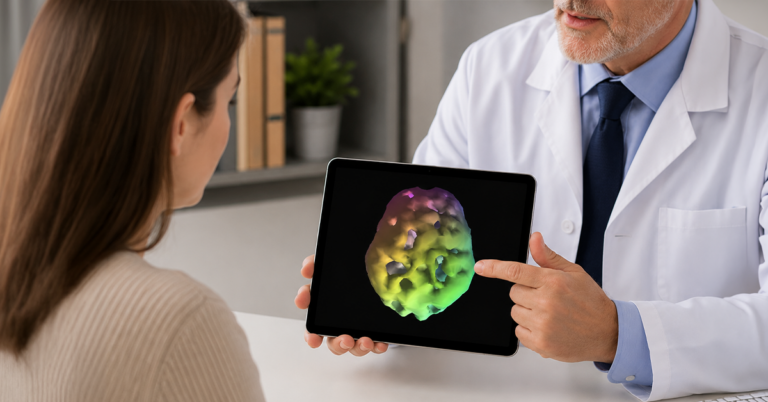
At Amen Clinics, brain SPECT imaging is used as part of a comprehensive evaluation to help clinicians better understand brain function and contributing factors. This added information supports precision medicine, allowing for more accurate diagnoses and highly personalized treatment plans.
Treatment recommendations are guided by holistic psychiatry, which focuses on caring for the whole person through lifestyle strategies, nutrition, supplements, therapy, and medication when necessary.
Medically reviewed by Kandace Licciardi, MD, Medical Director, Amen Clinics

If you’re a parent, caregiver, or someone trying to better understand autism, you’ve probably asked the question: Is autism genetic?
The short answer is yes, genetics appear to play a major role in autism. But the full answer is far more complex, and more hopeful, than many people realize.
Research shows that autism spectrum disorder (ASD) is strongly linked to inherited genetic factors. At the same time, scientists also believe that early brain development, environmental influences, and biological factors may affect how autism traits appear and develop over time. In other words, autism is not caused by one single gene or one single event.
Understanding this matters because autism is not a character flaw, a parenting failure, or a one-size-fits-all condition. Every person on the spectrum has a unique brain, unique strengths, and unique challenges.
In this blog, you’ll learn what current science says about the genetic roots of autism, whether autism is hereditary, how environmental factors may influence risk, and how Amen Clinics approaches autism through a personalized, brain-health-focused perspective.
Related: The Many Faces of Autism
Is autism genetic? No single genetic case is clearly identified with autism. The risk of autism more likely involves multiple genes that are working together alongside complex biological pathways that may affect brain development.
Autism spectrum disorder is a neurodevelopmental condition that can influence brain function, shaping how an individual communicates, interacts socially, and understands or even responds to information.
Autism is fairly common. According to the Centers for Disease Control and Prevention (CDC), about 1 in every 31children in the U.S. is diagnosed with ASD.
According to the World Health Organization, about 1 in 127 people globally are on the autism spectrum, which underscores how widely it affects populations around the world.
Research shows that autism has a strong genetic component, but it is not usually considered a single-gene disorder.
Some people with autism also have known genetic conditions or identifiable genetic differences. According to the CDC certain individuals with ASD have genetic conditions linked to autism, while many others do not have one clear genetic explanation.
Part of the confusion comes from the term “genetic disorder,” which can mean different things. Some genetic disorders are caused by a mutation in a single gene. Others involve many genes and complex biological pathways working together.
Autism is generally understood as a neurodevelopmental condition influenced by multiple genes, rather than one specific “autism gene.” In fact, researchers believe that many different genetic variations may contribute to autism risk in different people.
That’s why autism is described as highly genetic, but also highly complex. Genetics may strongly influence autism, yet there is no single genetic cause that explains every person on the spectrum.
Sometimes, autism may be connected to particular genetic syndromes. For instance, according to research, conditions like Down syndrome or Fragile X syndrome have been known to increase the chances of autism.
For many, however, no single genetic case is clearly identified with ASD. The risk of autism more likely involves multiple genes that are working together alongside complex biological pathways that may affect brain development.
That explains why autism is usually described as polygenetic, which means it can be influenced by the combined influence of multiple genes and not a single or specific gene.
Autism is not believed to be caused by genetics alone or environment alone.
The CDC suggests that both likely play a role in early brain development and that there is no single cause of autism. Instead, a combination of genetic, biological, and environmental factors may contribute to autism risk.
The National Institute of Mental Health (NIMH) also supports the understanding that with ASD, inherited genes along with certain environmental influences may affect how the brain develops during pregnancy and early childhood.
This does not mean that one specific environmental factor causes autism. Rather, experts believe autism develops through a complex interaction of many influences over time.
Some people inherit genetic differences that can increase the chances of developmental traits that are related to autism. Those gene factors may affect the formation and functioning of the brain, which creates a certain level of vulnerability; however, they don’t determine outcomes on their own.
Researchers believe that environmental influences during pregnancy and early childhood may interact with inherited genetic risk factors. This is a critical stage of development because the brain is growing and changing rapidly.
According to NIMH and the National Institute of Child Health and Human Development (NICHD), autism likely develops through a combination of genetic, biological, and environmental influences that work together over time to shape early brain development.
Risk factors are different from direct causes. An environmental association doesn’t imply that the autism in a particular child was caused by a specific factor. Researchers believe autism risk is influenced by a combination of factors that affect early brain development.
Researchers continue to study how non-genetic influences may affect autism risk, especially in people who are already genetically susceptible. The NIMH lists factors associated with increased likelihood, including having older parents and having a very low birth weight. The CDC also reports that environmental and biologic factors may make a child more likely to have ASD.
These factors can’t directly cause autism but they are part of a broader pattern of influences that researchers are still working to understand. Environmental factors may have a role in the development of the risk of autism, but it seems like they work within a larger picture, including early brain development and genetics.
Oversimplified explanations about autism and genetics can create confusion, stress, and unnecessary guilt for families. Research does not support the idea that autism is caused only by genes or only by environmental factors.
It is also important not to assume that every autistic person has the same underlying biology or developmental pathway. Experts continue to study the many factors that may influence brain development, and understanding is still evolving.
Another harmful misconception is blaming parents or caregivers for autism. Autism is not caused by parenting choices, and framing it that way can leave families feeling blamed instead of supported.
Families deserve clear, balanced information rooted in science and compassion. Autism is a neurodevelopmental condition, not a character flaw or a reflection of bad parenting.
Autism is called a spectrum condition because it can look very different from one person to another. Individuals on the spectrum may have different strengths, challenges, communication styles, and support needs.
According to NIMH, autism can affect social interaction, communication, behavior, and learning. However, the way these traits appear, and how strongly they affect daily life, varies widely.
Some people with autism may need significant day-to-day support, while others live highly independent lives but still experience challenges related to sensory processing, social communication, attention, or mood.
This variation is important when it comes to evaluation and treatment. Having treating more than 100,000 patients, clinicians at Amen Clinics have observed that many children and adults with autism also experience co-occurring medical or mental health conditions, such as anxiety, ADHD, sleep problems, or mood issues, which can influence how symptoms appear.
In some cases, brain SPECT imaging may be used as part of a broader evaluation to help clinicians better understand individual patterns of brain activity related to behavior, attention, learning, and emotional regulation.
These differences are one reason personalized assessment and individualized support strategies are so important for people on the autism spectrum.
Children and adults with autism may also experience other medical or mental health conditions that affect daily functioning and influence how symptoms appear.
From more than 35 years of clinical experience at Amen Clinics, we have seen that co-occurring conditions such as anxiety, ADHD, epilepsy, sleep problems, and gastrointestinal issues are common in people on the spectrum. These issues can affect mood, attention, behavior, learning, and overall quality of life.
That’s why it is important not to assume every challenge is caused by autism alone. Identifying co-occurring conditions can provide a clearer understanding of what a person is experiencing and help guide more effective support and treatment strategies.
Personalized care is especially important because each individual may have a different combination of strengths, challenges, and underlying health concerns.
Traditional approaches to autism often focus primarily on diagnosing symptoms and managing behaviors. While these strategies can be helpful, they do not always address the underlying differences in how each person’s brain functions.
At Amen Clinics, care is guided by a brain-health-focused approach that looks beyond symptoms to better understand what may be affecting mood, behavior, learning, attention, and daily functioning.
With a comprehensive evaluation at Amen Clinics, our clinicians use brain SPECT imaging to examine patterns of blood flow and brain activity, which helps them identify co-occurring issues that may be influencing symptoms. This approach recognizes that two people with the same diagnosis may have very different brain function patterns and support needs.
We practice holistic psychiatry, which means we combine targeted nutrition, supplements, therapy, lifestyle strategies, and medication when appropriate. It is a whole-body approach that supports the mind and body.
By identifying individual brain patterns and related health concerns, clinicians can develop more personalized treatment plans designed to support each person’s unique needs and strengths.
Single photon emission computed tomography (SPECT) imaging looks at blood flow and activity patterns in the brain, offering insight into how the brain functions. This differs from scans such as CT or MRI, which primarily show brain structure. By focusing on function, brain SPECT imaging can help identify areas of the brain that may be underactive or overactive.
At Amen Clinics, brain SPECT imaging is used as part of a comprehensive evaluation that may also include a detailed personal history, symptom assessment, neuropsychological testing, and lab work when appropriate. This broader approach helps clinicians better understand factors that may be affecting mood, attention, learning, behavior, and overall functioning.
Drawing from decades of experience and one of the world’s largest databases of brain scans, Amen Clinics uses these insights to support precision medicine and more individualized care plans for people on the autism spectrum.
Our whole-body approach to holistic psychiatry combines brain-based insights with targeted nutrition, supplements, therapy, lifestyle strategies, and medication when needed. Rather than relying on a one-size-fits-all approach, treatment is tailored to the unique needs of each individual.
If developmental, behavioral, social, or communication challenges are beginning to interfere with daily life, it may be helpful to seek a professional evaluation.
It is especially important to look for support when concerns go beyond what can be managed through school accommodations or self-help strategies alone, or when there are additional issues such as anxiety, sleep problems, attention difficulties, or other medical concerns.
An evaluation can also help if you are unsure whether autism fully explains what you or your child is experiencing, or if you want a clearer understanding of strengths, challenges, and support needs.
Early and accurate autism diagnosis is critical. The CDC reports that early intervention can improve outcomes for children with autism, which is why it is important to seek guidance when concerns arise. In a study published in Autism Research, it was found that 25 percent of children with autism under the age of 8 fail to get diagnosed, especially in minority populations.
A comprehensive evaluation can help identify whether autism, co-occurring conditions, or other factors may be contributing to symptoms and daily functioning.
Autism is strongly genetic, but it is not only genetic. The best current evidence points to a mix of inherited risk and environmental or developmental influences that affect early brain development.
The goal is not just to ask whether autism is genetic. It is to better understand the individual person, identify co-occurring challenges, and build support around what their brain and body need most.
If you are trying to understand autism more clearly and want a more personalized view of what may be affecting brain function, a comprehensive evaluation may help you find more useful answers.
Genetics play a major role in autism, which means autism can run in families. However, there is not one single “autism gene,” and inherited risk can involve many different genes working together.
Current research does not support the idea that one environmental factor directly causes autism. Researchers believe environmental influences may interact with genetic factors during early brain development.
Autism is a spectrum condition, so strengths, challenges, communication styles, and support needs can vary widely. Some people may need significant daily support, while others live independently but still experience social, sensory, or behavioral challenges.
At Amen Clinics, brain SPECT imaging is used as part of a comprehensive evaluation that may also include medical history, symptom assessment, cognitive testing, and other clinical tools. This allows our clinicians to practice precision medicine, rendering more accurate diagnoses, especially when there may be co-occurring conditions, and more targeted, personalized treatment plans.
Plans are guided by holistic psychiatry, which takes a whole-body approach. They prioritize natural ways to treat mental health conditions and and incorporate lifestyle recommendations (diet, sleep, supplements, exercise, etc.), therapy, and medication when necessary.
|
Autism spectrum disorder and other mental health conditions can’t wait. At Amen Clinics, we practice precision medicine—using brain SPECT imaging and comprehensive evaluations to understand what’s really happening in your brain, not just your symptoms. Our whole-body approach to holistic psychiatry combines cutting-edge neuroscience with natural ways to treat mental health conditions, including targeted nutrition, supplements, lifestyle strategies, therapy, and medications (when necessary). Every treatment plan is personalized to address the root causes of your struggles and support the health of your brain, body, and mind. Don’t settle for guesswork. You deserve answers—and a plan built specifically for you. Speak with a Brain Health Advisor today at 888-288-9834 or visit our contact page to get started. |
About the Reviewer
Kandace Licciardi, MD, Medical Director, Amen Clinics
Dr. Kandace Licciardi is a double board-certified psychiatrist in adult and forensic psychiatry and serves as Medical Director of Amen Clinics. She takes a comprehensive, whole-person approach to care, integrating evidence-based psychiatric treatment with lifestyle, social, and wellness factors. Dr. Licciardi has extensive experience treating depression, anxiety, bipolar disorder, psychotic disorders, and borderline personality disorder, with special expertise in early psychosis intervention. She completed her psychiatry residency at Maimonides Medical Center and her forensic psychiatry fellowship at New York University.
La Monica, I., Di Iorio, M. R., Sica, A., Rufino, F., Sotira, C., Pastore, L., & Lombardo, B. (2025). Autism spectrum disorder: genetic mechanisms and inheritance patterns. Genes, 16(5), 478. doi: 10.3390/genes16050478
El-Fishawy, P., & State, M. W. (2010). The genetics of autism: key issues, recent findings and clinical implications. The Psychiatric Clinics of North America, 33(1), 83. https://doi.org/10.1016/j.psc.2009.12.002
Lorang E, Sterling A; Expressive Language Consortium. The impact of autism spectrum disorder symptoms on gesture use in fragile X syndrome and Down syndrome. Autism Dev Lang Impair. 2017 Jan-Dec;2:10. https://pmc.ncbi.nlm.nih.gov/articles/PMC6191055/
Centers for Disease Control and Prevention. (n.d.). Autism spectrum disorder (ASD): About autism spectrum disorder. https://www.cdc.gov/autism/about/index.html
National Institute of Mental Health. (n.d.). Autism spectrum disorder. U.S. Department of Health and Human Services, National Institutes of Health. https://www.nimh.nih.gov/health/topics/autism-spectrum-disorders-asd
Centers for Disease Control and Prevention. (n.d.). Autism spectrum disorder: Accessing services. U.S. Department of Health and Human Services. https://www.cdc.gov/autism/treatment/accessing-services.html
Wiggins LD, Durkin M, Esler A, Lee LC, Zahorodny W, Rice C, Yeargin-Allsopp M, Dowling NF, Hall-Lande J, Morrier MJ, Christensen D, Shenouda J, Baio J. Disparities in Documented Diagnoses of Autism Spectrum Disorder Based on Demographic, Individual, and Service Factors. Autism Res. 2020 Mar;13(3):464-473. doi: 10.1002/aur.2255. Epub 2019 Dec 23. PMID: 31868321; PMCID: PMC7521364.
Centers for Disease Control and Prevention. (n.d.). Data and research on autism spectrum disorder. U.S. Department of Health and Human Services. https://www.cdc.gov/autism/data-research/index.htm
World Health Organization. (2025, September 17). Autism spectrum disorders. https://www.who.int/westernpacific/newsroom/fact-sheets/detail/autism-spectrum-disorders