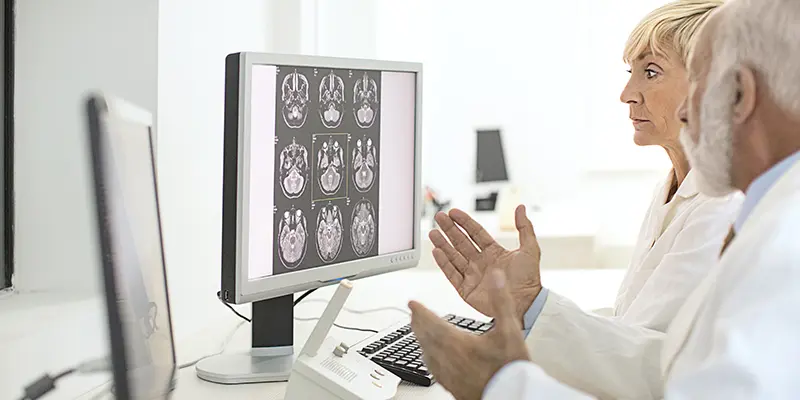
The MRI is Normal, But I Feel Different. Are MRIs Conclusive in TBI Cases?
So, you fall off a ladder, get whiplash in a car accident, or wipe out on your bike and whack your head. You may get diagnosed with a concussion or traumatic brain injury (TBI) and told to “take it easy.” But then you start experiencing brain fog, a fuzzy memory, irritability, blue moods, or other issues.
In a pro-active move, you decide to seek professional help and are advised to get a magnetic resonance imaging (MRI) scan. You’re hoping it will reveal answers that could lead to effective solutions for these problems. But then your physician tells you that your MRI results are normal and that’s the end of the line in terms of any treatment. But you’re still experiencing bothersome symptoms. How frustrating!
When it comes to your cognitive, emotional, and psychological health following a head injury, MRI is not conclusive, and it isn’t the best brain imaging tool. Before exploring why MRI falls short and why other types of brain imaging are more effective, let’s look at how TBIs impact mental health.
When it comes to your cognitive, emotional, and psychological health following a head injury, MRI is not conclusive, and it isn’t the best brain imaging tool.
HEAD TRAUMA AND MENTAL HEALTH
Many people, including many mental health professionals, don’t realize that head trauma is associated with an increased risk of mental health problems. Some of the problems that can develop following a TBI include:- Anxiety
- Panic disorders
- Depression
- ADD/ADHD
- PTSD
- Dementia
- Psychosis
- Suicide
- Learning problems
- Borderline and antisocial personality disorders
- Aggression
WHY MRI DOESN’T TELL THE WHOLE STORY FOLLOWING A TBI
MRI isn’t the most useful scanning technology when psychological or cognitive issues develop after a head injury. This is because MRI, which uses a strong magnetic field and radio waves to provide detailed pictures, only shows the structure and anatomy of the brain. The 3-D images it creates can reveal anatomical problems in the brain or brain stem, such as swelling, inflammation, tumors, cysts, blood vessel problems, or infections. The problem with MRI is that it doesn’t provide any information about the way the brain is functioning. And mental, emotional, and behavioral issues are all related to brain function. In fact, many times an MRI will appear normal after a TBI when there is actually functional damage to the brain that could be contributing to mental health symptoms.SPECT: A BETTER BRAIN IMAGING TOOL FOR HEAD INJURIES
Functional brain SPECT imaging is a better way to identify areas of the brain that aren’t working optimally after a concussion, TBI, or repetitive sub-concussive traumas (like contact from tackle football, blows from boxing, or heading soccer balls). SPECT (single-photon emission computed tomography) is a nuclear medicine study that evaluates blood flow and activity in the brain. Basically, this state-of-the-art brain mapping tool shows three things:- Areas of the brain with healthy activity
- Areas of the brain with too little activity
- Areas of the brain with too much activity