
ARCHIVE
Many women are affected by feelings of hopelessness and depression after giving birth. There is no single cause for this mood disorder, and postpartum depression treatment requires expert care.What Are the “Baby Blues?”
It’s natural for mothers to feel unhappiness, sometimes referred to as the “baby blues.” This is a temporary and mild feeling that may last a week or two during periods of difficulty while managing the baby. Postpartum depression (PPD) may onset before the baby is born and affects the early weeks and months of bonding with the baby. This gives the mother extreme symptoms, getting in the way of caring for herself and the baby.Causes & Symptoms of Postpartum Depression
Mothers with postpartum depression often experience a deep level of despair. They will feel physically exhausted and emotionally burdened while unable to lift themselves from their sadness. If left untreated, this depression can continue for an extended period of time, possibly into the baby’s early childhood. Women may also feel depressed during pregnancy, and early signs of depression should be made aware to a physician for postpartum depression treatment at the start of symptoms. Despite popular belief, depression and anxiety are very similar disorders. Mothers with postpartum depression and anxiety may feel they are swinging between two extreme moods. These are the most common symptoms of postpartum depression: • Feelings of sadness or hopelessness • Feelings of sudden anger or rage • Feelings of anxiety or difficulty with decision-making • Feelings of failing to adopt “motherly instincts” • Self-isolation from friends and family • Sleeping too little or too much, and out of sync with the baby • Eating too little or too much • Difficulty forming an attachment to the baby • Thoughts of self-harm or harming the baby Other mothers may experience postpartum infections in the uterine, bladder or kidney. These infections sometimes don’t become apparent until weeks after delivery. Mothers may also experience breast tenderness, backaches, headaches, hair loss, constipation, and pain with intercourse. Full recovery from delivery can take months, and women with cesareans may also experience pain around the site of the scar for up to six months. It’s very common for women to feel overwhelmed by the side effects of giving birth, and to fall into postpartum depression.Postpartum Depression Treatment & Therapy
The first step all mothers must take if they are feeling the symptoms of postpartum depression is to seek help. Postpartum depression is never something to feel ashamed of, and treatment is crucial to the health of both the mother and the baby. Mothers are not at fault for their symptoms and require help in order to feel better. Mothers who are depressed put their children at risk of Reactive Attachment Disorder, a disorder where the child can’t properly form attachment due to emotional neglect. At this time in a women’s life, some mothers may also find they are genetically predisposed to a disease or experience dramatic hormonal changes. The stress of childbirth often affects our bodies to express genes which weren’t previously expressed. In a conversation on “Why Do Mothers Suffer From Depression,” Dr. Amen discusses with his wife, Tana Amen, the significance of women having their thyroid hormones checked. Hashimotos, for example, is an autoimmune disease which primarily affects the thyroid and can have a large influence on swinging between anxiety and depression.4 Ways to Help Heal Depression in Mothers
Postpartum depression treatment starts with lifestyle changes. Amen Clinics recommends medication when necessary, and prioritizes natural treatments to help women feel themselves again. Treating postpartum depression without medication is our goal, and all cases are treated with a personalized health plan for the greatest possibility of success.1. Exercise and Return to Fun Hobbies
Exercising is a sure way to boost your dopamine, which affects the pleasure centers of the brain. Starting up your favorite hobbies and surrounding yourself with friends and family can help boost your overall stress resilience, and can get yourself and the baby out of the house.2. Positive Thinking
Positive thinking can be very difficult for women with postpartum depression. Here at Amen Clinics, we often talk about an acronym called ANTS, which stands for “automatic negative thoughts.” Become aware of these thoughts and learn how to correct them with our help.3. Omega 3 Fatty Acids
Dr. Amen also recommends taking omega 3 fatty acids, as they play a role in the central nervous system and have been found to influence depressive disorders.4. Get Assessed
Depression is not one thing, and treatment depends on what kind of depression you have. Seeking expert help is essential for identifying the root cause of the depression and treating it for lasting results. For example, many adults are undiagnosed with ADD/ADHD, and only a professional mental health expert can identify and treat for the root cause of depression and anxiety.Find a Postpartum Depression Clinic
In addition to the physical stress labor, childbirth, and recovery put on women’s bodies, a newborn baby must also be taken care of. For many mothers, occasional sadness is natural to experience, but there is always help for feelings of depression. Here at Amen Clinics, we help women with postpartum depression and anxiety so that they are capable of caring for themselves and their babies. Make an appointment for postpartum depression treatment by calling 888-288-9834 today or scheduling online, and review our locations to find the nearest clinic to your home. We have eight locations across the country in cities including Atlanta, Chicago, New York, Washington DC, and Los Angeles. We also have locations in Orange County, CA, in Walnut Creek, CA, and in Bellevue, WA. For more insight, watch the following video from Dr. Amen’s episode of “Why Do Mothers Suffer From Depression,” starting at the 2-min mark. Depression. It’s a word that many of us are all too familiar with. Whether we’re living with it ourselves or seeing the impact it has on a loved one, it may turn into devastating suicidal depression. At Amen Clinics, we understand how monumentally important it is to distinguish between depression and situational sadness or despair. Sadness and despair are universal human emotions – something we’ve all felt at one time. Suicidal depression, however, is an all-encompassing state of being that is more than a mood, more than an emotion, and more than most can handle and tackle on their own. Thankfully, handling and tackling suicidal depression on your own is not necessary. There is hope, and there is help. Amen Clinics was founded with a goal of offering our clients the best of both.Suicidal Depression Help: You Are Not Alone
The World Health Organization (WHO) estimates that more than 300 million people globally suffer from depression, and that “depression is the leading cause of disability worldwide.” It’s been reported that as many as 55% of the population have considered suicide at some point in their lives. At Amen Clinics, we’ve identified seven types of anxiety and depression. The main signs of each depression vary, but pure depression contains the following symptoms: • Persistent sad or negative mood • Loss of interest in usually pleasurable activities • Restlessness, irritability or excessive crying • Feelings of guilt, worthlessness, helplessness, hopelessness or pessimism • Sleeping too much or too little, or early morning awakening • Decreased appetite and/or weight loss or overeating and weight gain • Decreased energy, fatigue or feeling “slowed down” • Thoughts of death or suicide, or suicide attempts • Difficulty concentrating, remembering or making decisions • Persistent physical symptoms that don’t respond to treatment, such as headaches, digestive problems or chronic pain • Chronic low self-esteem • Persistent feeling of being dissatisfied or bored It’s important to remember that friendship and community play a large role in continued depression. You may experience symptoms of depression, and a turn towards suicidal depression warrants additional support from friends, loved ones and even acquaintances in the community, as every connection can play a role in helping ease the deep sense of loneliness. Suicidal depression calls for the most urgent and comprehensive approach to care. We understand and honor that sense of urgency at Amen Clinics, and are committed to helping you on your path toward a healthier mind and body, every step of the way.Overcoming Suicidal Depression
First and foremost, overcoming suicidal depression calls for an ally in the battle against your illness, and we will employ whatever resources, recommendations, and advanced testing we have at our disposal. The Amen Clinics Method takes a four-pronged approach: 1. We will explore your specific biological, psychological, social and spiritual influences. 2. Perform neuropsychological tests to measure various aspects of your brain function 3. Perform two brain SPECT scans: one at rest and one during concentration 4. Order lab tests to rule out nutritional deficiencies, hormone imbalances, toxicity, etc.—if deemed necessary We offer comfort in discovering if you may be experiencing a physical component to your depression in the brain itself. With advanced testing, we can identify physical abnormalities in the brain to help cure your suicidal depression.Brain SPECT Imaging: The Amen Clinics Difference for Suicidal Depression Help
Brain SPECT Imaging provides an essential layer of insight that is missing from many other depression treatment plans, allowing us unparalleled clarity in regards to what your depression actually looks like. Oftentimes, there is a functional problem in your brain that is an integral component of your suicidal depression. Not many people know that brain injury is a leading cause of depression. Chances are good that any possible previous attempts to tackle your depression did not consider and address this functional issue. As well-meaning and well-developed as those previous treatment plans may have been, it is often the additional information and insight we learn from your SPECT scan that is the missing piece of the puzzle in treating your depression.Are SPECT Scans a New Tool?
We understand that many of the people we work with have never heard of SPECT scans, and that it sounds like a new technology, which can cause a certain degree of apprehension. SPECT is a proven imaging technology that helps measure the way an organ works, such as by mapping blood flow.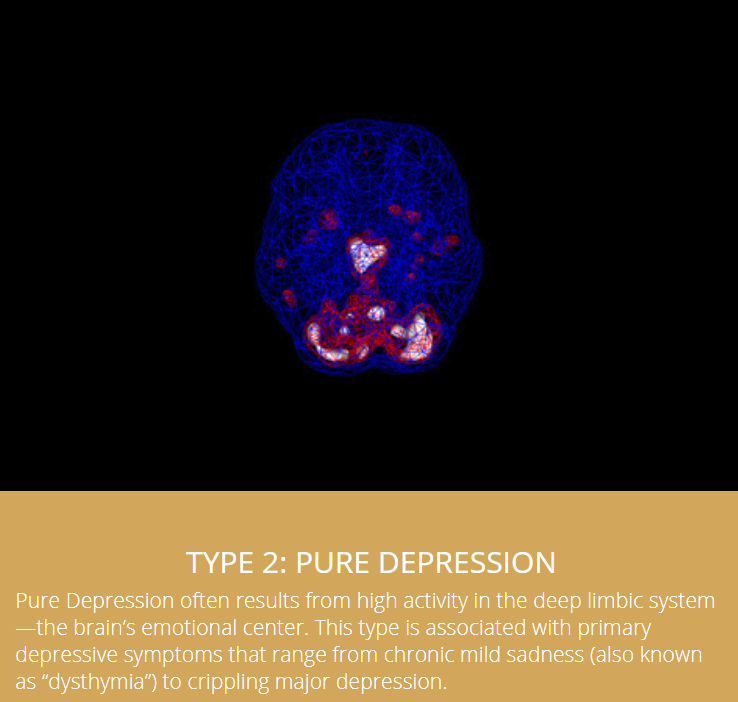 We are proud to say that the SPECT imaging scans Amen Clinics offers are not new technology, rather they have served as the backbone of our health care clinics for nearly three decades. We are the best in the world when it comes to administering and reading brain SPECT imaging, and have performed more than 150,000 brain SPECT scans over the past 30 years.
Many of the people we’ve worked with arrive at Amen Clinics after months, years, or even decades of being misunderstood. You may have been told everything from “it’s all in your head” to “don’t sweat the small stuff.” You will never be treated that way at Amen Clinics. That is our enduring commitment and promise to help you through your suicidal depression
Our team has nothing but the utmost respect and compassion for your journey, and the significant step you have taken in trusting us to help you move past suicidal depression into the life you so deserve. A range of patients enter our facility with illnesses varying from postpartum depression, borderline personality disorder, panic disorder, reactive attachment disorder, toxic exposure, PTSD, dementia, and many who are undiagnosed with a problem aside from experiencing depression and anxiety.
We are honored to be your partner and care provider and will apply our extensive knowledge and tools in helping you become free from suicidal depression. Depression may have been such a huge part of your life for so long that you can’t remember a time before it and can’t envision a life without it. But we urge you to consider that just because you’ve been living with something for a long time does not mean that it’s the only way. It simply means that you haven’t yet found the right treatment plan for you. But that was then, and this is right now.
We are proud to say that the SPECT imaging scans Amen Clinics offers are not new technology, rather they have served as the backbone of our health care clinics for nearly three decades. We are the best in the world when it comes to administering and reading brain SPECT imaging, and have performed more than 150,000 brain SPECT scans over the past 30 years.
Many of the people we’ve worked with arrive at Amen Clinics after months, years, or even decades of being misunderstood. You may have been told everything from “it’s all in your head” to “don’t sweat the small stuff.” You will never be treated that way at Amen Clinics. That is our enduring commitment and promise to help you through your suicidal depression
Our team has nothing but the utmost respect and compassion for your journey, and the significant step you have taken in trusting us to help you move past suicidal depression into the life you so deserve. A range of patients enter our facility with illnesses varying from postpartum depression, borderline personality disorder, panic disorder, reactive attachment disorder, toxic exposure, PTSD, dementia, and many who are undiagnosed with a problem aside from experiencing depression and anxiety.
We are honored to be your partner and care provider and will apply our extensive knowledge and tools in helping you become free from suicidal depression. Depression may have been such a huge part of your life for so long that you can’t remember a time before it and can’t envision a life without it. But we urge you to consider that just because you’ve been living with something for a long time does not mean that it’s the only way. It simply means that you haven’t yet found the right treatment plan for you. But that was then, and this is right now.
Amen Clinics Treatment for Suicidal Depression
The team of experienced professionals at Amen Clinics brings extensive knowledge, compassion, empathy, and an unwavering commitment to your treatment in all they do. We understand that you are a complex individual whose suicidal depression has been shaped by many things, including your life experiences, your physical and mental health, a possible family history of mental health issues or other issues that contribute to depression, and, importantly, your brain itself. Through extensive research, our clinics have come to understand how brain SPECT imaging can predict treatment outcomes in depressed patients. We will thoughtfully study your scan to see which personalized treatment plan is most likely to help your unique situation. We are strong proponents of highly individualized plans that might include a physical wellness plan, dietary recommendations, transcranial magnetic stimulation, psychotherapy including hypnotherapy and cognitive behavioral therapy, traditional antidepressants only as needed, and more. We are steadfast in our commitment to design the plan that will work for you.Find Suicidal Depression Help with Amen Clinics
To be sure, sometimes depression can feel like such an integral part of who you are that you fear what will remain if you overcome it. But we promise that you are so much more than your depression. You deserve more than your depression wants for you. You deserve to be in charge of your present and your future. You deserve to take the time and necessary steps to get at the root of your suicidal depression and work towards unraveling yourself from its web. You are a whole, complex, one-of-a-kind person that deserves a life free from suicidal thoughts and depression. You deserve the help that Amen Clinics can provide. If you or someone you love is suffering from suicidal depression, please reach out to us online or call us at 888-288-9834. If you fear that your life, or the life of someone you know, is in imminent danger, please dial 911 or reach out to one of the rescue lines below immediately: In the US: Crisis Text Line: Text HOME to 741741 from anywhere in the USA, at any time, about any type of crisis The National Suicide Prevention Lifeline: 1-800-273-8255 The Trevor Project: 1-866-488-7386 Outside the US: The International Association for Suicide Prevention lists several suicide hotlines by country. For more information on the Amen Clinics approach to anxiety and depression, watch the following intimate talk between Dr. Amen and his wife, Tana Amen. In today’s world, we’re faced with all kinds of psychological stress daily—there’s no escaping it. Unfortunately, too much stress is bad for your brain and body. Keep your stress levels low and support the health of your brain with these 5 stress-busting techniques:1. Gather Information
What you do not know has power over you, whereas knowledge brings you choices and control. Fear of the unknown can increase your stress and anxiety. When you have questions, ask them and find answers. Getting more information about your challenges will bring you closer to your goals and help you manage the confusing and stressful situations that life brings your way. When it comes to personal relationships, gathering more information and avoiding assumptions is critical. If you are confused about a loved one’s behavior or believe that they are upset with you, pick a calm moment and gently ask for clarification. Without questioning your thoughts, assumptions can take over and little issues can turn into BIG issues that ruin your relationships.2. Develop a sense of personal control
Taking personal responsibility for what happens in your life and looking for creative ways to solve your problems will stop you from feeling like a victim and will instantly give you more control. This practice can be uncomfortable at first, but taking personal responsibility will help you feel a greater sense of freedom in the long run.3. Keep your pleasure centers healthy
Deep inside your brain, your pleasure centers respond to several neurotransmitters, particularly dopamine. When dopamine is low, depression and low motivation are much more likely—it can be harder to find your sense of joy and lift yourself out of a funk. Naturally boost dopamine by engaging in meaningful and pleasurable activities on a regular basis. Do work that you love, get lots of exercise and take time to have fun with your loved ones. It is equally important to avoid wearing out your pleasure centers through substance abuse or too many repetitive behaviors, such as gambling, video games, and compulsive eating or shopping.4. Clear up past traumas
To be resilient, it is essential to clean out the closet in your head of past or current traumas so they no longer control your future. If you experience reoccurring stress from traumatic memories, cognitive behavioral therapy (CBT) combined with a psychotherapeutic treatment technique called EMDR (eye movement desensitization and reprocessing) may help. The focus of EMDR is to resolve or eliminate emotional distress by shifting how a memory is triggered in the brain. EMDR can be particularly helpful for people with a history of abuse or those with PTSD (posttraumatic stress disorder).5. Build a community
If you have ever felt euphoric after getting together and bonding with a group of friends, you have experienced the brain-boosting power of social connection! Spending time in a positive community of like-minded people is a wonderful way to boost your bliss hormones, such as oxytocin. In fact, numerous studies have indicated that those who feel close, connected, loved and supported have a lower incidence of depression, anxiety, heart disease, infections, and cancer. Conversely, unhealthy habits can also be contagious, so bring awareness to the kind of company you keep and focus your energy on people who are positive and engage in healthy habits. Need More Help? Having a regular stress-management program is critical to keeping your brain healthy in the long run. You really CAN learn to manage your stress and make your brain better, but you need a very specific program to do so. You have a choice about how you respond to the stress in your life. Amen Clinics has helped tens of thousands of people manage stress and anxiety. If you feel that you or a loved one could benefit from an evaluation, contact us today or call 888-288-9834. Most people have heard a glass of wine before bed isn’t always bad but that is false. Relying on a drink to fall asleep is an unhealthy crutch many people depend on. While alcohol can initially deepen sleep during the early part of the night, it also disrupts sleep during the latter part of the night; this is called a “rebound effect.” According to recent findings, alcohol does allow healthy people to fall asleep quicker and sleep more deeply for a while, but it reduces rapid eye movement (REM) sleep.Alcohol Before Bed is Linked to Dysfunctional Sleep Patterns
Drinking alcohol before bed is linked with more slow-wave sleep patterns called delta activity. That’s the kind of deep sleep that allows for memory formation and learning. At the same time, another type of brain pattern—alpha activity—is also turned on. While you may fall asleep quickly after drinking, it’s also common to wake up in the middle of the night. One explanation is that alcohol may affect the normal production of chemicals in the body that trigger sleepiness when you’ve been awake for a long time, and subside once you’ve had enough sleep. After drinking, the production of adenosine (a sleep-inducing chemical in the brain) is increased, allowing for a fast onset of sleep. But it subsides as quickly as it came, making you more likely to wake up before you’re truly rested.Alcohol Before Bed Blocks REM Sleep
Another reason people get lower-quality sleep following alcohol is that it blocks REM sleep, which is often considered the most restorative type of sleep. With less REM sleep, you’re likely to wake up feeling groggy and unfocused. Alcohol causes your whole body to relax, including the muscles of your throat. And that makes you more prone to snoring and sleep apnea.Alcohol is Not Good For Your Brain
Not only will alcohol disrupt your sleep but it’s also bad for your brain. Even moderate amounts of alcohol can affect brain function and studies show that people who drink every day have smaller brains than nondrinkers. And when it comes to the brain, size matters!Sleep Your Way to A Better Brain
The Amen Clinics biomedical evaluation is part of the Amen Method Four Circles Approach to mental and physical health. We treat each patient as an individual and take a full personal history before beginning SPECT imaging or recommending any treatment program. Call us today at 888-288-9834 or schedule an appointment online. The war for your health is won or lost between your ears, in the moment-by-moment decisions your brain makes every day. When your brain works right your decisions tend to be effective and add joy and energy to your life. When your brain is troubled, for whatever reason, you are much more likely to make bad decisions that steal your health, lead to your early destruction, and create trouble for future generations.And make no mistake, you are in a war.
Everywhere you go someone is trying to shove bad food down your throat that will kill you early; news corporations repeatedly pour fear and disaster images into your brain to boost their ratings, and tech companies create addictive gadgets that hook your attention and distract you from your loved ones. In a new branch of science, epigenetic studies have shown that your habits turn on or off certain genes that make illness and early death more or less likely in you, but also in your children and grandchildren. The war is not just about you; it is about generations of you. But the good news, as I have long said, is that you are not stuck with the brain you have…you can make it better, and I can prove it. I have spent over three decades helping tens of thousands of patients at Amen Clinics have better brains and better lives.Determine Your Brain Health Now
The single most important factor in determining your health is the quality of the decisions that you make every day. You can take the time to start the necessary steps to improve your health today by beginning with the following: • Know about the health of your brain – get a base line brain health assessment. • Know your health numbers – you need to optimize your important health numbers, not just normalize them. • Avoid anything that hurts your brain and may cause brain injuries – engage in regular brain healthy habits. The health of your brain is much more about your actions than your age. This is good news because it means that you possess the power to change your brain. There are many ways to become sick, but there is a clear path to wellness and it’s simpler than you think. If you are ready to transform your life, we can help you!Improve Your Brain Health
At Amen Clinics, we have spent decades helping people just like you improve their brain, and thus mental, health and can help you, too. Call us today at 888-288-9834 or schedule a visit. Social anxiety is the fear of social situations and the interaction with other people that can automatically bring on feelings of self-consciousness, judgment, and inferiority. Everyone has feelings of anxiety, nervousness, and stress in their lives from time to time. Almost everyone has felt anxious in social situations. Particular popular experiences that make a majority of people uneasy include having to speak in front of a group or when interviewing for a new job. While others are anxious and nervous in almost all social situations. But social anxiety is more than just being shy or having occasional nervousness. It involves intense fear of social situations. It’s more common among introverts, and because each person has a unique chemical makeup, the intensity and frequency of the symptoms vary greatly from person to person. In the United States, studies have recently pegged social anxiety disorder as the third largest psychological disorder in the country, after depression and alcoholism. It is estimated that 7-8% of the population suffers from some form of social anxiety. Many learn to cope and overcome social anxiety through self-help methods or seek counseling. However, those who are severely impaired due to high levels of anxiety should seek professional help.Challenge Your Thoughts
Social anxiety sufferers have negative thoughts and beliefs that contribute to their anxiety. Challenging your negative thoughts is one effective way of reducing the symptom. Dr. Amen has created a powerful and effective exercise, called Kill the ANTs, that takes no more than a few minutes to complete and will help reverse your negative thought process. “ANTs” are Automatic Negative Thoughts that come into your mind automatically but are not true. Left unchecked, these ANTs can infest your mind and ruin your mood, relationships, and life. Dr. Amen says “You do not have to believe every stupid thought that goes through your head.” Whenever you feel sad, mad, nervous, or out of control, write down the thoughts that are bothering you, reveal the facts about the situation and talk back to them.Brain Healthy Tips to Help With Anxiety
Another way to boost your mood and reduce anxiety is to write down five things you are grateful for every day. Research suggests that focusing on gratitude helps to calm the deep limbic or emotional areas of the brain and enhances the judgment centers. When you focus on what you love, your brain works better, and you’ll feel better. You will notice a significant positive difference in your level of happiness in a short period! Taking supplements like fish oil will increase levels of omega-3 fatty acids that have been associated with anxiety and depression. GABA has shown to promote relaxation by increasing calming, focused brain waves, while also reducing other brain waves associated with worry. A balanced diet between protein and complex carbohydrates is also best for the anxious/compulsive brain type. An example of a balanced breakfast would be two scrambled eggs and tomato salsa in an Ezekiel wrap. Lunch would be a brown rice bowl with Tamari and grilled wild Alaskan salmon. Dinner could be rotisserie chicken with roasted brussels sprouts and quinoa. Meditation, diaphragmatic breathing, listening to relaxing music, intense exercise, hypnosis and optimizing vitamin D levels are also great ways to gain control of anxiety. Anxiety and depression are not the results of character flaws or personal weakness; they are the result of biological problems in the brain that can be balanced. If you or a loved one is struggling, contact the Amen Clinics today or call (888) 288-9834. For daily brain health updates, follow us on Facebook. Largest functional brain imaging study to date identifies specific brain differences between women and men, according to a new report in the Journal of Alzheimer’s Disease. In the largest functional brain imaging study to date, the Amen Clinics (Newport Beach, CA) compared 46,034 brain SPECT imaging studies provided by nine clinics, quantifying differences between the brains of men and women. The study is published in the Journal of Alzheimer’s Disease. Lead author psychiatrist Daniel G. Amen, MD, Medical Director, Amen Clinics, Inc., commented, “This is a very important study to help understand gender-based brain differences. The quantifiable differences we identified between men and women are important for understanding gender-based risk for brain disorders such as Alzheimer’s disease. Using functional neuroimaging tools, such as SPECT, is essential to developing precision medicine brain treatments in the future.” The brains of women in the study were significantly more active in many more areas of the brain than men, especially in the prefrontal cortex, involved with focus and impulse control, and the limbic or emotional areas of the brain, involved with mood and anxiety. The visual and coordination centers of the brain were more active in men. Single photon emission computed tomography, or SPECT, can measure blood perfusion in the brain. Images acquired from subjects at rest or while performing various cognitive tasks will show different blood flow in specific brain regions. Subjects included 119 healthy volunteers and 26,683 patients with a variety of psychiatric conditions such as brain trauma, bipolar disorders, mood disorders, schizophrenia/psychotic disorders, and ADHD. A total of 128 brain regions were analyzed for subjects at baseline and while performing a concentration task. Understanding these differences is important because brain disorders affect men and women differently. Women have significantly higher rates of Alzheimer’s disease, depression, which is itself is a risk factor for Alzheimer’s disease, and anxiety disorders, while men have higher rates of attention deficit hyperactivity disorder (ADHD), conduct-related problems, and incarceration (by 1,400%). The study findings of increased prefrontal cortex blood flow in women compared to men may explain why women tend to exhibit greater strengths in the areas of empathy, intuition, collaboration, self-control, and appropriate concern. The study also found increased blood flow in limbic areas of the brains of women, which may also partially explain why women are more vulnerable to anxiety, depression, insomnia, and eating disorders. Caption: Side view of the brain summarizing blood flow results from tens of thousands of study subjects show increased blood flow in women compared to men, highlighted in the red colored areas of the brain: the cingulate gyrus and precuneus. Men in this image have higher blood flow in blue colored areas – the cerebellum.
To see if brain SPECT imaging may be right for you, call us today at 888-288-9834 or visit our website to contact us. It is estimated that as many as 70 million Americans have trouble sleeping and it is progressively getting worse with the proliferation of gadgets and bad habits. If you think you may be struggling too, ask yourself these questions:
Caption: Side view of the brain summarizing blood flow results from tens of thousands of study subjects show increased blood flow in women compared to men, highlighted in the red colored areas of the brain: the cingulate gyrus and precuneus. Men in this image have higher blood flow in blue colored areas – the cerebellum.
To see if brain SPECT imaging may be right for you, call us today at 888-288-9834 or visit our website to contact us. It is estimated that as many as 70 million Americans have trouble sleeping and it is progressively getting worse with the proliferation of gadgets and bad habits. If you think you may be struggling too, ask yourself these questions:
- Do you have trouble falling asleep?
- Do you go to sleep easily but wake up repeatedly throughout the night?
- Do you find it hard to drag yourself out of bed in the morning?
- Do you or your significant other snore?
- Do you regularly get less than seven hours of sleep per night?
Sleep Deprivation is Hazardous to Your Health
Healthy sleep is absolutely essential to a brain healthy life. Sleep rejuvenates all the cells in your body, gives brain cells a chance to repair themselves, helps wash away toxins that build up during the day, and activates neuronal connections that might otherwise deteriorate due to inactivity. Skimping on sleep can affect your health in more ways than you might imagine. When you don’t get enough sleep, you have overall decreased blood flow to your brain, which disrupts thinking, memory, and concentration.Sleep deprivation has been associated with many health risks, including:
- Type 2 diabetes
- Depression
- Anxiety
- ADD (worsening of symptoms)
- Alzheimer’s disease
- Parkinson’s disease
- Stroke
- Psychosis
- Weight gain
- Poor lifestyle choices
Strategies for Improving Your Sleep:
Remember that we are all unique individuals and what works for one person may not work for another. Keep trying new techniques until you find something that works.Maintain a regular sleep schedule.
Go to bed at the same time each night and wake up (regardless of how much sleep you got the night before) at the same time each day, including on weekends.Your bedroom should be comfortable.
Control the temperature so that your room isn’t too hot or too cold. Also, keep your room as dark as possible while sleeping.Create a soothing nighttime routine.
A warm bath, meditation, or massage can help you relax.Don’t take naps!
This is one of the biggest mistakes you can make if you have trouble sleeping. Daytime naps will make the nighttime sleep cycle disruption worse.Use sound therapy.
Soothing nature sounds, soft music, wind chimes, white noise makers or even a fan can induce a very peaceful mood and lull you to sleep.Increase serotonin.
Drink a mixture of warm milk, a teaspoon of vanilla (the real stuff, not imitation), and a few drops of stevia which will increase serotonin in your brain and help you sleep.Technology-free bedroom.
Take computers, video games, the TV and cell phones out of your bedroom and turn them off an hour or two before bedtime to allow time to “unwind.” Plus, they emit a type of light that stimulates the brain.Avoid a full stomach.
Don’t eat for at least two to three hours before going to bed.Regular exercise.
This is very beneficial for insomnia. However, don’t do it within four hours of the time you go to sleep as vigorous exercise late in the evening may energize you and keep you awake.Watch out for stimulants.
Don’t drink any caffeinated beverages and avoid chocolate, nicotine, and alcohol in the late afternoon or evening. Although alcohol can initially make you feel sleepy, it actually interrupts sleep.Move the clock so you can’t see it.
If you wake up in the middle of the night, refrain from looking at the clock. Checking the time can make you feel anxious, which will only make it harder to go back to sleep.Use the bed only for sleep or sexual activity.
Sexual activity releases many natural hormones, releases muscle tension, and boosts a sense of well-being.Don’t toss and turn.
If you are unable to fall asleep or return to sleep easily, get up and go to another room to do something relaxing until you feel more tired. For over 25 years, Amen Clinics has helped tens of thousands of people heal their brains and we can help you too. If you feel that you or a loved one could benefit from an evaluation, please call us today at 888-288-9834 or visit our website to schedule an appointment. Road rage can be deadly. In 2021, a young mother was driving her 6-year-old son to kindergarten in Orange County, California, when a white sedan abruptly cut her off in the carpool lane. The mother, Joanna Cloonan, gave the other driver the middle finger as she merged away from the carpool lane. Then she heard a loud noise and her son, Aiden Leos, said “Ow.” When she pulled the car over, Cloonan saw that her son had been shot. She called 911 and the boy was rushed to the hospital, but sadly, he couldn’t be saved. The 6-year-old died in a senseless road rage incident. In an interview with “Good Morning America” following the road rage shooting, Cloonan described her son, saying, “He was beautiful and he was kind and he was precious, and you killed him for no reason.” The young boy’s mother will never be the same. Her life will be forever impacted by the emotional trauma of the horrific killing of her child. “He meant the world to me, and it feels like my life is over,” Cloonan said. “That was my baby. I’ve never, never thought pain like this could exist.” Bad drivers, traffic jams, road construction, detours, and other delays can make anyone feel anxious, angry, frustrated, or stressed. But what happens in the brain to make some drivers become so enraged they snap?ROAD RAGE, A COMMON PROBLEM
The Department of Motor Vehicles (DMV) defines road rage as aggressive or violent behaviors stemming from a driver’s uncontrolled anger at the actions of another motorist. Road rage is more common than you might imagine, causing nearly 1 in 3 traffic accidents and leading to a shocking 30 murders every year, according to the latest statistics. Nobody likes being the victim of aggressive behavior while you’re behind the wheel, and it can make you feel anxious or angry. About half of all drivers who are the victim of road rage behavior respond aggressively by making a rude gesture, shouting, honking their horn, tailgating, or flashing their lights. In some cases, such as with the tragic shooting of 6-year-old Aiden Leos, this leads to an escalation of rage and aggressive behavior.ROAD RAGE AND THE BRAIN
The human brain is involved in everything you think, do, and feel. And it’s involved in every decision you make while driving. The brain SPECT imaging work at Amen Clinics shows that when there is abnormal activity in certain areas of the brain, it may contribute to anger, impulsivity, violent behavior, and other issues associated with road rage. Here’s a look at what SPECT reveals about 3 important brain systems that can play a role in road rage behavior. The brain SPECT imaging work at Amen Clinics, shows that when there is abnormal activity in certain areas of the brain, it may contribute to anger, impulsivity, violent behavior, and other issues associated with road rage.1. Anterior Cingulate Gyrus (ACG)
The ACG and surrounding areas of the frontal lobes are involved in shifting your attention from one thing to another. When the ACG is working effectively you’re more able to roll with the circumstances of the day. However, if this part of the brain works too hard, there’s a tendency to get locked into negative thoughts or behaviors. Something happens to some drivers when they get behind the wheel of a car; a territorial animal comes growling to the surface. When another driver makes an unsafe move, they can’t just express frustration, call the person a bad name, and continue driving. Instead, the anger festers, and they get locked into a course of aggressive action—swearing, gesturing, chasing, or harassing the other driver. This is due to trouble with shifting attention. Some examples of attention shifting issues in the ACG brain include:- Getting stuck on ineffective thoughts and behavior patterns
- Argumentativeness
- Oppositional behavior
- Holding onto hurts from the past
- Excessive worrying
2. Temporal lobes
The temporal lobes are located on either side of the brain below the temples and behind the eyes. The temporal lobes are involved in emotional stability and mood control among other important processes. Brain imaging scans show that when there is abnormal activity in this area, it can be associated with temper problems, aggressive behavior, emotional outbursts, and violence. Abnormal activity in the temporal lobes is often seen in people with a condition called intermittent explosive disorder as well as in murderers.3. Prefrontal Cortex (PFC)
Located in the front part of the brain, the PFC is involved in impulse control, planning, judgment, empathy, and more. On SPECT scans, low activity in the PFC is linked to impulsivity, poor judgment, and trouble with planning. These issues can make a person do something or say something they shouldn’t that they will regret later.A CASE STUDY IN ROAD RAGE
Be careful when you notice yourself or another driver becoming furious with road rage. It can quickly turn into a downward spiral. For example, look at this 37-year-old male attorney. When other drivers cut him off, he would chase them, and on two occasions, he got out of his car and bashed in their windows with a baseball bat. After the second incident, he came to Amen Clinics. He said, “If I don’t get help for this, I’m sure to end up in jail.” His brain SPECT imaging scan revealed two abnormal findings:- Increased activity in the ACG brain causing him to get locked into negative thoughts and actions.
- Left temporal lobe hyperactivity, which correlated with angry outbursts.
CALM YOUR BRAIN WHEN ROAD RAGE STRIKES
When a road rage incident begins, remind yourself that you are responsible for your actions and take steps to diffuse the situation. If you’re getting angry or find yourself thinking about engaging in aggressive driving behaviors, follow these tips.- pull your car over in a safe place
- take a few deep breaths
- turn on soothing music
- mouth “I’m sorry” to the other driver
- allow enough space for the other driver to pass you
- think about the consequences of your actions (damage to one or more vehicles, physical harm, and legal issues)
Do you know people who see every situation in a bad light? Or someone who struggles with feelings of sadness, lack of motivation, or hopelessness? If so, they could be experiencing troubles with the functioning of the limbic system in their brain.
The limbic system, also called the emotional brain, lies near the center of the brain. Considering its size – about that of a walnut – it is packed with functions critical for human behavior and survival. The limbic system processes our sense of smell, stores highly charged emotional memories, and affects sleep and appetite cycles, moods, sexuality, and bonding.
When the limbic system is less active there is generally a positive, more hopeful state of mind. When it is heated up, or overactive, negativity can take over.
Problems with the functioning of the limbic system can result in:
- Sadness
- Clinical depression
- Increased negative thinking
- Negative perception of events
- Flood of negative emotions, such as hopelessness, helplessness, and guilt
- Appetite and sleep problems
- Decreased or increased sexual responsiveness
- Social isolation
- Pain
It has been shown that enhancing emotional bonds between people will help heal the limbic system. How you get along with other people can either help or hurt your limbic system! The better you get along with those around you, the better you will feel.
I teach my patients the following seven principles to help keep their relationships healthy and rewarding:
1. Take responsibility for keeping your important relationships strong.
Don’t be the type of person who blames other people for the problems in your life. It will take you down the rabbit hole of victimhood. Take responsibility for making your key relationships better and look for ways to improve them today. If you do this, your relationships will improve almost immediately.
2. Never take relationships for granted.
They need to be constantly nurtured, like plants need water.
3. Protect your relationship.
A surefire way to doom a relationship is to discount, belittle, or degrade other people. Protect your relationships by building those people up.
4. Clarify any hurts early.
Whenever there is a question of motivation or intention, check with them about their behavior or motives. You cannot read other people’s minds.
5. Notice what you like more than what you don’t.
It’s very easy to notice what you do not like about a relationship, but when you spend more time noticing the positive aspects of the relationship, you’re more likely to see an increase in positive behavior.
6. Maintain and protect trust.
So many relationships fall apart after there has been a major violation of trust, such as an affair or other form of dishonesty. Once a violation has occurred, try to understand why it happened.
7. Deal with difficult issues.
Whenever you give in to another person to avoid a fight, you give away a little bit of your power. If you do this over time, you give away a lot of power and begin to resent the relationship. Avoiding conflict in the short run often has devastating long-term effects. In a firm but kind way, stick up for what you think is right. It will help keep the relationship balanced.
You CAN change your brain, and change your life…and we at Amen Clinics want to help you. Call us today at 888-288-9834 or visit our website to learn more or schedule an appointment.