Depression. It’s a word that many of us are all too familiar with. Whether we’re living with it ourselves or seeing the impact it has on a loved one, it may turn into devastating suicidal depression.
At Amen Clinics, we understand how monumentally important it is to distinguish between depression and situational sadness or despair. Sadness and despair are universal human emotions – something we’ve all felt at one time. Suicidal depression, however, is an all-encompassing state of being that is more than a mood, more than an emotion, and more than most can handle and tackle on their own.
Thankfully, handling and tackling suicidal depression on your own is not necessary. There is hope, and there is help. Amen Clinics was founded with a goal of offering our clients the best of both.
Suicidal Depression Help: You Are Not Alone
The World Health Organization (WHO) estimates that more than 300 million people globally suffer from depression, and that “depression is the leading cause of disability worldwide.” It’s been reported that as many as 55% of the population have considered suicide at some point in their lives.
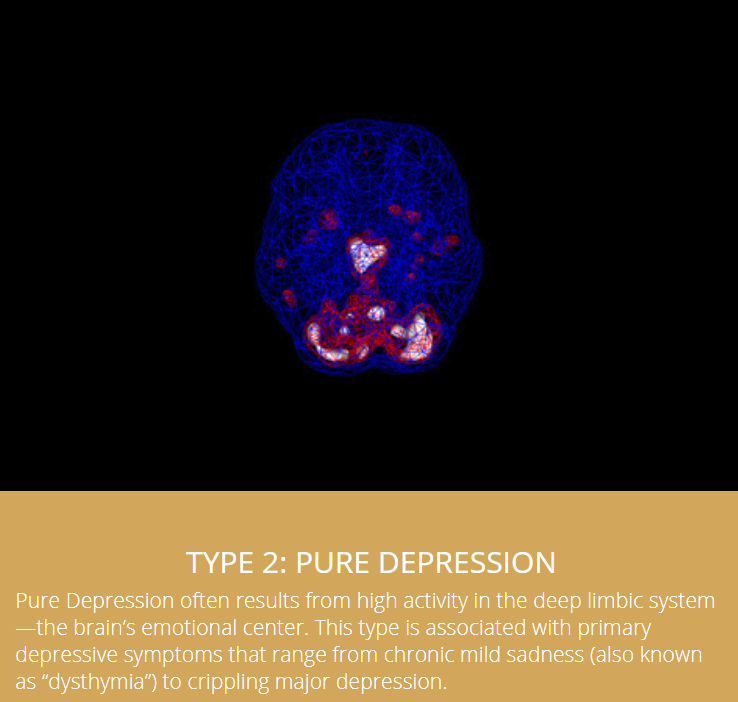
At Amen Clinics, we’ve identified seven types of anxiety and depression. The main signs of each depression vary, but pure depression contains the following symptoms:
• Persistent sad or negative mood
• Loss of interest in usually pleasurable activities
• Restlessness, irritability or excessive crying
• Feelings of guilt, worthlessness, helplessness, hopelessness or pessimism
• Sleeping too much or too little, or early morning awakening
• Decreased appetite and/or weight loss or overeating and weight gain
• Decreased energy, fatigue or feeling “slowed down”
• Thoughts of death or suicide, or suicide attempts
• Difficulty concentrating, remembering or making decisions
• Persistent physical symptoms that don’t respond to treatment, such as headaches, digestive problems or chronic pain
• Chronic low self-esteem
• Persistent feeling of being dissatisfied or bored
It’s important to remember that friendship and community play a large role in continued depression. You may experience symptoms of depression, and a turn towards suicidal depression warrants additional support from friends, loved ones and even acquaintances in the community, as every connection can play a role in helping ease the deep sense of loneliness.
Suicidal depression calls for the most urgent and comprehensive approach to care. We understand and honor that sense of urgency at Amen Clinics, and are committed to helping you on your path toward a healthier mind and body, every step of the way.
Overcoming Suicidal Depression
First and foremost, overcoming suicidal depression calls for an ally in the battle against your illness, and we will employ whatever resources, recommendations, and advanced testing we have at our disposal. The Amen Clinics Method takes a four-pronged approach:
1. We will explore your specific biological, psychological, social and spiritual influences.
2. Perform neuropsychological tests to measure various aspects of your brain function
3. Perform two brain SPECT scans: one at rest and one during concentration
4. Order lab tests to rule out nutritional deficiencies, hormone imbalances, toxicity, etc.—if deemed necessary
We offer comfort in discovering if you may be experiencing a physical component to your depression in the brain itself. With advanced testing, we can identify physical abnormalities in the brain to help cure your suicidal depression.
Brain SPECT Imaging: The Amen Clinics Difference for Suicidal Depression Help
Brain SPECT Imaging provides an essential layer of insight that is missing from many other depression treatment plans, allowing us unparalleled clarity in regards to what your depression actually looks like.
Oftentimes, there is a functional problem in your brain that is an integral component of your suicidal depression. Not many people know that brain injury is a leading cause of depression. Chances are good that any possible previous attempts to tackle your depression did not consider and address this functional issue. As well-meaning and well-developed as those previous treatment plans may have been, it is often the additional information and insight we learn from your SPECT scan that is the missing piece of the puzzle in treating your depression.
Are SPECT Scans a New Tool?
We understand that many of the people we work with have never heard of SPECT scans, and that it sounds like a new technology, which can cause a certain degree of apprehension. SPECT is a proven imaging technology that helps measure the way an organ works, such as by mapping blood flow.
We are proud to say that the SPECT imaging scans Amen Clinics offers are not new technology, rather they have served as the backbone of our health care clinics for nearly three decades. We are the best in the world when it comes to administering and reading brain SPECT imaging, and have performed more than 150,000 brain SPECT scans over the past 30 years.
Many of the people we’ve worked with arrive at Amen Clinics after months, years, or even decades of being misunderstood. You may have been told everything from “it’s all in your head” to “don’t sweat the small stuff.” You will never be treated that way at Amen Clinics. That is our enduring commitment and promise to help you through your suicidal depression
Our team has nothing but the utmost respect and compassion for your journey, and the significant step you have taken in trusting us to help you move past suicidal depression into the life you so deserve. A range of patients enter our facility with illnesses varying from postpartum depression, borderline personality disorder, panic disorder, reactive attachment disorder, toxic exposure, PTSD, dementia, and many who are undiagnosed with a problem aside from experiencing depression and anxiety.
We are honored to be your partner and care provider and will apply our extensive knowledge and tools in helping you become free from suicidal depression. Depression may have been such a huge part of your life for so long that you can’t remember a time before it and can’t envision a life without it. But we urge you to consider that just because you’ve been living with something for a long time does not mean that it’s the only way. It simply means that you haven’t yet found the right treatment plan for you. But that was then, and this is right now.
Amen Clinics Treatment for Suicidal Depression
The team of experienced professionals at Amen Clinics brings extensive knowledge, compassion, empathy, and an unwavering commitment to your treatment in all they do. We understand that you are a complex individual whose suicidal depression has been shaped by many things, including your life experiences, your physical and mental health, a possible family history of mental health issues or other issues that contribute to depression, and, importantly, your brain itself.
Through extensive research, our clinics have come to understand how brain SPECT imaging can predict treatment outcomes in depressed patients. We will thoughtfully study your scan to see which personalized treatment plan is most likely to help your unique situation.
We are strong proponents of highly individualized plans that might include a physical wellness plan, dietary recommendations, transcranial magnetic stimulation, psychotherapy including hypnotherapy and cognitive behavioral therapy, traditional antidepressants only as needed, and more. We are steadfast in our commitment to design the plan that will work for you.
Find Suicidal Depression Help with Amen Clinics
To be sure, sometimes depression can feel like such an integral part of who you are that you fear what will remain if you overcome it. But we promise that you are so much more than your depression.
You deserve more than your depression wants for you.
You deserve to be in charge of your present and your future.
You deserve to take the time and necessary steps to get at the root of your suicidal depression and work towards unraveling yourself from its web.
You are a whole, complex, one-of-a-kind person that deserves a life free from suicidal thoughts and depression. You deserve the help that Amen Clinics can provide.
If you or someone you love is suffering from suicidal depression, please reach out to us online or call us at 888-288-9834. If you fear that your life, or the life of someone you know, is in imminent danger, please dial 911 or reach out to one of the rescue lines below immediately:
In the US:
Crisis Text Line: Text HOME to 741741 from anywhere in the USA, at any time, about any type of crisis
The National Suicide Prevention Lifeline: 1-800-273-8255
The Trevor Project: 1-866-488-7386
Outside the US:
The International Association for Suicide Prevention lists several suicide hotlines by country.
For more information on the Amen Clinics approach to anxiety and depression, watch the following intimate talk between Dr. Amen and his wife, Tana Amen.
As a leader in the field of mental health, Amen Clinics has treated an array of psychiatric conditions over the past 30 years and has amassed the world’s largest database of brain scans at 150,000 and growing. Though many people have come to know about us due to the remarkable results we’ve seen with brain SPECT imaging, we also offer a wide range of therapy options at the nationwide Amen Clinics locations. One of the brain health and wellness services we are excited to recommend is IV Nutrient Therapy.
What is IV Nutrient Therapy?
Intravenous (IV) nutrient infusions can help replenish your body’s essential vitamins, minerals, antioxidants, and amino acids, and help to restore balanced brain functioning. IV nutrient therapy is ideal for those seeking to detoxify their body, increase immune function, reduce symptoms and improve overall health.
How Does It Work?
At the beginning of a session, a patient will enter the treatment room and sit in a comfortable chair. An IV solution (fluid of vitamins and nutrients) is then administered directly into a vein. The patient will remain seated until the IV bag has been depleted.
Who Does It Treat?
IV therapy is used to treat a variety of conditions and is ideal for individuals who are tired, dehydrated, stressed or struggling with a chronic illness. Treatments are customized based on a patient’s needs. Below are just a few of the conditions IV therapy has been used to treat:
• Autoimmune and Neurological Conditions
• Memory Problems/Dementia
• Anxiety/Depression
• Infections
• Mold Exposure
• Migraines
• Fibromyalgia
• Heavy Metal Toxicity
• Parkinson’s Disease
• Lyme Disease
• Chronic Fatigue
What Are the Benefits?
IV nutrient therapy is a fast, effective, and natural option for improving your health and wellness. IV treatments infuse nutrients directly into the bloodstream, which allows large doses to be administered without upsetting the stomach, creating absorption issues or losing potency.
Types of IV Nutrient Therapy
Amen Clinics offers IV therapies for a variety of needs and conditions. Here are our specially formulated IVs:
CALM
Also called the Myers Cocktail, the CALM IV is a well-known and highly effective IV formulation for anxiety and relaxation that consists of high doses of B vitamins, magnesium, and other nutrients.
ANTIOX
The mother of all antioxidants, ANTIOX IV can consist of glutathione, alpha lipoic acid (ALA), or both (depending on what’s best for the patient), and can help the brain, liver, intestines and kidneys.
IMMUNE
The IMMUNE IV contains powerful doses of buffered vitamin C and is especially helpful for anyone suffering from an immune disorder or who needs a physical and mental boost.
BOOST
The BOOST IV contains high dose vitamin C and a multivitamin/mineral combination that’s great for those who are worn down by stress or illness, or just seeking to stay healthy and energized. Great for cold and flu season.
CLEANSE COMBO (CHELATION THERAPY)
The CLEANSE COMBO uses specific chelators like ethylene diamine tetra-acetic acid (EDTA) to remove toxic metals – including aluminum, cadmium and lead – from the body.
PHOSPHOLIPID EXCHANGE THERAPY (PXT)
PXT can help a range of disorders and is an effective means of detoxifying cell membranes by replacing the bad fats and oils in a person’s membranes with good essential fatty acids, creating younger, healthier membranes.
NAD+
Nicotinamide Adenine Dinucleotide (NAD) is primarily used to generate energy within your cells. NAD has been used to help improve concentration, focus, memory, mood, addiction, age-related diseases and chronic fatigue.
How Many Sessions Are Recommended?
The type of IV therapy and the number of sessions will be determined by an Amen Clinics medical professional trained in IV therapy. Sessions generally last between 30 to 60 minutes.
Is it Safe?
IV therapy isn’t safe for everyone. People with some allergies, on specific medications, or with certain conditions (such as congestive heart failure) may not be good candidates. It’s critical to have a thorough medical consultation before starting IV therapy. Choosing your own concoction, without a physician’s supervision, can be dangerous.
The Amen Clinics medical staff are highly trained experts in IV nutrient therapy. These administrators are licensed medical providers. Our infusions are made with 100% certified and sterile ingredients that are FDA registered.
Not all services are offered at each Amen Clinics location. Call us today at 888-288-9834 or inquire on our website for availability at a clinic near you. As a leader in the field of mental health, Amen Clinics has treated an array of psychiatric conditions over the past 30 years and has amassed the world’s largest database of brain scans at 150,000 and growing. Though many people have come to know about us due to the remarkable results we’ve seen with brain SPECT imaging, we also offer a wide range of therapy options at our locations nationwide. One is microcurrent therapy, utilizing the Electro-Equiscope®.
What is the Microcurrent Therapy?
Microcurrent therapy (MCT) is a non-invasive, highly effective pain relief, rehabilitation and peak performance system.
How Does it Work?
The Equiscope is designed to relieve pain via the application of small electrical currents—a trillionth of an ampere or picocurrent—to the energy pathways of the body. The human body functions through electrical signals shared from cell to cell. The Equiscope utilizes artificial intelligence based technology to detect and autocorrect electrical impedance and abnormal electrical patterns in nerve and connective tissue in the body. Once the electrical patterns are normalized, a precise biofeedback reading is achieved, and the healing process can begin in damaged tissues, accelerating recovery time at the cellular level.
Who Does it Treat?
Microcurrent therapy offers effective pain management for patients seeking treatment for a variety of health issues, including concussion, chronic pain, arthritis, sports injuries, ligament injuries, muscular strains, migraines, edema and neuropathy.
What Are the Benefits?
Microcurrent therapy can benefit patients by:
• Improving cellular metabolism of injured tissues
• Relieving pain in nerves, joints, muscles, and tendons
• Increasing circulation and decreasing inflammation
• Accelerating injury recovery
• Increasing range of motion
• Detoxing the body at a cellular level
• Providing advanced healing for sciatica, tendonitis, TMJ, fibromyalgia, bursitis, carpal tunnel, headaches, back injury, and more
How Many Sessions Are Recommended?
Equiscope has a cumulative effect, so while many people notice an increased range of motion, reduction in pain and improved sense of wellbeing after a single treatment, a minimum of three 30 to 60 minute sessions are recommended for maximum effect.
Is It Safe?
While many technologies bombard the body, the Equiscope is a non-invasive, drug-free treatment with no negative side effects. The Equiscope is an FDA Registered Class II medical device that has been used for over 30 years in mainstream and alternative medical practices.
Works Wonders for Athletes
The Electro-Equiscope is officially endorsed by the National Hockey League Alumni Association for the treatment of all NHL Alumni in the U.S. and Canada. NFL player, Branden Oliver, credits the Equiscope with his rapid recovery from a ruptured Achilles tendon. Read his story here.
Not all services are offered at each Amen Clinics location. Call us today at 888-288-9834 or contact us online for availability at a clinic near you. Even though medical doctors haven’t been able to link ‘chemo brain’ to just one cause, it doesn’t make this condition any less real or frustrating. Regardless of the type of cancer a person has been diagnosed with, chemotherapy can have a lasting impact—even after treatment. The effects on the brain can cause disruptions to daily life and relationships, and it can make maintaining work and home life very challenging. As for recovery, some patients get back to normal within a few months while some don’t see improvement for years.
The effects of chemotherapy on the brain can cause disruptions to daily life and relationships, and it can make maintaining work and home life very challenging.
If you are currently undergoing or have finished your chemotherapy treatment, it is possible that you may suffer from chemo brain.
What Is ‘Chemo Brain?’
Chemo brain is the unofficial term used by cancer patients and survivors to describe the memory and cognitive problems they experience as they undergo chemo, or after they have completed it. Some people call it chemo brain fog, and doctors and scientists may refer to it as chemotherapy-related cognitive impairment or dysfunction.
Despite the many descriptions, the reality is that your brain might simply feel damaged after chemo and cancer treatment.
Common symptoms of chemo brain include:
Difficulty concentrating, multitasking, or learning new things
An overall feeling of mental murkiness
What Causes Chemo Brain?
While the exact cause of this condition has not been pinpointed, a 2019 study published in Cancer Chemotherapy and Pharmacology surmised that the underlying causes of this condition after treatment with the chemo agent, doxorubicin, could be related to disruptions in the immune system’s response, oxidative stress, a decrease in neurotransmitter levels, and inflammation in the brain.
To make it even more complicated, in the fight against the disease, cancer patients typically do not get chemotherapy alone; it is often accompanied by other treatment interventions, such as surgery, radiation, hormone therapy, and immunotherapy, all of which can have an effect on the brain.
At the same time, patients have their own combination of risk factors or predispositions that can contribute to the probability of chemo brain. These may include gender (women may be more vulnerable than men), type of cancer, age, stress, sleep deprivation, vitamin D or other nutritional deficiencies, and preexisting conditions.
Genetics may also play a role in cognitive dysfunction related to chemotherapy. A research study published in the medical journal, Psychooncology, found that patients who carry the APOE4 gene (a genetic marker associated with Alzheimer’s disease) may have an increased susceptibility to the symptoms of chemo brain.
These various factors can work together to affect a cancer patient’s brain health and function during and after treatment.
Assessment for Chemo Brain
Many patients suffering from chemo brain come to Amen Clinics for help. Due to the multifaceted causes and variability from person to person, a standard way to treat chemo brain has not emerged in conventional medicine.
Our approach is to assess and treat every patient’s case uniquely, which is really the only way that chemo brain should be managed. If you are struggling with persistent chemo brain, your doctor at Amen Clinics will recommend brain SPECT imaging to see which areas of your brain are functioning normally and which areas are not. This will help the doctor create an individualized treatment plan specifically for you.
Strategies for Improving Brain Function During or After Chemotherapy
At Amen Clinics, we understand that as you work to recover from the effects of cancer and chemo brain, one of the most important things to do is to put your brain in a healing environment. We have found that most people can benefit from therapeutic lifestyle changes including these:
Eating a healthy diet with fresh produce, clean protein, and foods rich in omega-3s, such as avocados, nuts, and cold-water fish like salmon and tuna.
Getting regular physical exercise, to the extent you can. Start small and work your way up as you gain strength (with your doctor’s permission).
Doing brain exercises, such as online brain games and word-finding or jigsaw puzzles.
While the process of regaining your pre-chemotherapy brain function may take a while, making some effort each day with a few different strategies can accumulate and eventually lead to the positive changes you want.
The effects of chemo brain can’t wait. At Amen Clinics, we’re here for you. We offer in-clinic brain scanning and appointments, as well as mental telehealth, remote clinical evaluations, and video therapy for adults, children, and couples. Find out more by speaking to a specialist today at 888-288-9834 or visit our contact page here.
It is no wonder the anti-aging industry is worth hundreds of billions of dollars with the myriad of popular creams, lotions, and supplements. But, there is one cutting edge treatment you might not have ever heard of and it’s called Hyperbaric Oxygen Therapy (HBOT). HBOT has been proven effective in treating virtually any condition in which poor circulation plays a role including everything from traumatic brain injury to ADD/ADHD, but the latest buzz on HBOT pertains to anti-aging.
HBOT has been a growing choice of many top actors, actresses, and models, whose skin is constantly in the limelight. Have they found the secret to looking young? Depending on how you define aging, hyperbaric oxygen therapy may be the proverbial “fountain of youth.” HBOT promotes cell repair, age spots, saggy skin, wrinkles, poor collagen structure, and skin cell damage by increasing circulation to the most peripheral areas of the body, which is your skin. In a recent study, mice were exposed to UVB rays, known to prematurely age your skin, and when placed in oxygen chambers developed fewer wrinkles and showed fewer signs of tissue damage overall.
What is Aging?
So, what is aging and how do you define it? Aging appears to be a genetically programmed event. Biologically, scientists have found that the chromosomes in our cells progressively shorten each time the cell divides. Eventually, the chromosomes can shorten no further and stop dividing.
When this happens, the cells become sleepy and die. If this were the sole determinant of the length of a human life, then we would all live about the same length of time, plus or minus some genetic variation. In fact, as we all know, people’s life spans can vary widely, and this wide variation is largely due to the cumulative insults that a person’s body experiences over the course of a lifetime.
Hyperbaric Oxygen Therapy for Premature Aging
Premature aging is a shortened lifespan due to the effects of various stressors on the human body. Most commonly known are alcohol, tobacco, and drugs. Tobacco alone causes a 15% average reduction in lifespan. Using the figure of 80 years for an average American adult’s lifespan, the smoker usually lives to 68 years of age, sometimes cut short from cancer and other health risks like emphysema and heart attacks. When alcohol, drugs, chemicals from food or environmental pollution, trauma, systemic infections, and myriad other insults are added, the reserve capacity of the human body is progressively lost resulting in a shortened life.
Insults to the human body cause progressive wounding of the body. This is easiest to see on brain blood flow scans such as SPECT and PET. Wounds in the brain on these scans are registered as areas of low blood flow/low oxygenation, which cause decreased neurological function. Most commonly, this decreased neurological function leads to the premature aging diagnosis called dementia. HBOT is a generic drug for repair of these brain wounds. Regardless of the causes of the brain insults or injuries, the end product is a stereotypical chronic wound that responds to low pressures of hyperbaric oxygen treatments. What research has shown in the past 30 years is that these “premature aging wounds” can be repaired and the patient improved neurologically, cognitively, behaviorally, and emotionally.
Repair of these chronic wounds is a reversal of premature aging by use of HBOT as an anti-aging treatment. This was illustrated with the brain scans of Dr. Harch’s dementia patients as presented to the House of Representatives in 2002 and 2004. The general dementia patient required 24-hr/day supervision and was facing institutionalization. After a two-month course of HBOT treatments, he returned to independent living that was unchanged four years later. With hyperbaric oxygen, the Alzheimer’s patient experienced the first improvement in cognitive function in the three years since his diagnosis. Hyperbaric oxygen therapy slowed the progression of his disease until he succumbed to a heart attack 4 years later. In both cases, HBOT helped prolong their lives and gave them the quality of life, thus functioning as an anti-aging tool.
Hyperbaric Oxygen Treatments for “Normal” Aging
The question in this modern day is whether or not there is such a thing as “normal” aging. Given the pollution of our air, food, environment, ubiquitous exposure to automobile exhaust, second-hand smoke and carbon monoxide, heavy metals, dental amalgams, vaccines, anesthesia, chemicals, food additives, etc., one could make a case that we all age prematurely. If this is true, everyone could benefit from the restorative effects of Hyperbaric Oxygen Therapy.
There is evidence from the Russians that continued intermittent hyperbaric oxygen treatments in stroke patients resulted in a decreased incidence of recurrent strokes. This is purportedly due to the health effects of hyperbaric oxygen on blood vessels. In animal experiments, it has been shown that HBOT helps stabilize the inside lining of injured blood vessels. Hyperbaric oxygen treatments stimulate angiogenesis, growing new blood vessels into tissue, and in 2007 has been demonstrated to cause stem cell release from our bone marrow into our circulation. HBOT has been shown to have detoxification effects and suppresses inflammation, this is beneficial since most of our chronic diseases can be stemmed from chronic inflammation.
The Fountain of Youth?
In the meantime, for all of us who have some degree of accelerated or premature aging, Hyperbaric Oxygen Therapy may, in fact, be an anti-aging tool since it plays a major role in acting as a stimulant promoting and activating gene sequences that code for growth and repair hormones. Many have suggested that HBOT will likely become appreciated as the fountain of youth by the Baby Boomer Generation whose life spans have been compromised by years of drug experimentation in the 1960’s and 1970’s. Hyperbaric Oxygen Therapy will be able to restore waning brain function and prevent premature dementia.
We have our own hyperbaric oxygen chambers at many of our clinic locations where we treat a wide array of conditions such as traumatic brain injury, post-traumatic stress disorder, stroke, head injury, cerebral palsy, sports injuries, multiple sclerosis, Lyme disease, healing after cosmetic surgery, ADD/ADHD, autism, psoriasis and many more. If you would like to book an appointment or would like more information, please call 888-288-9834 or schedule a visit for an HBOT session today. Tom Ferry was desperate to get better. He felt like his mind was slipping. He started having trouble remembering names and places. At first, he thought it was normal. But when he started misplacing important things like his keys and phone more frequently, he knew something else was wrong. He immediately went to see Dr. Daniel Amen.
Tom Ferry’s Journey
Tom Ferry is a top-performing motivational speaker, self-help author, investor, and founder of Tom Ferry – Your Coach. He is recognized as the #1 Educator in Real Estate. Needless to say, he has a lot of people depending on him to be mentally sharp.
When Dr. Daniel Amen scanned Tom’s brain, the areas with memory lapses clearly showed on the SPECT scan. The blood flow to his left and frontal temporal lobes was low. An important and critical part of your brain, the left temporal lobe is in charge of memory and mood stability. Your frontal lobes are in charge of focus, forethought, judgment, and impulse control.
His scans also showed the negative effects of this in his cerebellum. Critically located in the back bottom of your brain, it makes up 10% of the brain’s volume and contains half the brain’s neurons. In healthy active scans, this level of activity shows up white and red. In Tom’s, it was a very weak red.
Dr. Daniel Amen refers to the cerebellum as the processing speed of a computer. He says, “When I got my first computer it was a 286 processor. It was really slow, and then there was a 386 & 486 Pentium. When your cerebellum is low like yours (Tom’s) in the first scan, it’s as if you have a 286 computer processor when you are living in a fast Pentium world.”
Tom’s brain health needed work and seeing the lack of blood flow in his own brain was the wake-up call he needed.
The Next Steps To Improving Brain Health
As a famous and highly in-demand coach, Tom’s life was at times chaotic and stressful. To say his plate was full would be an understatement. His schedule was tightly packed with meetings, travel, events, and demands. A healthy lifestyle and a healthy diet were luxuries and at the bottom of his priority list. To make things worse, his anxiety and stress levels skyrocketed because of his forgetfulness.
After 16 months of following a structured brain health routine consisting of a brain-healthy diet, supplements, hyperbaric oxygen treatment, and a sleep routine, Tom saw measurable results. His cerebellum was healthier, more active, and even his scans showed lower levels of stress. It wasn’t easy, but Tom dedicated the time and put in the work to optimize his brain. He is determined to fix his memory issues. Tom is a brain warrior.
By sticking to your goals and custom treatment plan towards a healthier brain, you can also achieve the brain you want and deserve.
What Amen Clinics Can Do For You
Continuing brain fog and memory loss aren’t normal. In fact, similar to Tom’s case, excessive stress is a major risk factor for dementia. When memory risk factors like high stress, lack of sleep, and a bad diet aren’t addressed, it can lead to memory loss and symptoms of Alzheimer’s and dementia. Strengthen your memory and get it back before it’s too late. Contact Amen Clinics today at 888-288-9834 or schedule a visit today.
According to the Centers for Disease Control and Prevention (CDC), autism spectrum disorders (ASD) are a group of developmental disabilities characterized by communication challenges, abnormal social skills, learning disabilities, and behavioral problems. Since ASD are “spectrum disorders,” they affect each person in different ways and can range from very mild to severe.
Your Vitamin Levels & Autism
For some time, autism has been correlated with low levels of serotonin and vitamin D. One study shows that vitamin D, which is actually a hormone, activates a genetic sequence that converts the essential amino acid tryptophan into serotonin in the brain. These findings confirm the importance of adequate vitamin D for serotonin production in the brain, where it acts as a neurotransmitter, affecting brain development, mood stabilization, cognitive flexibility, social behavior, and sleep patterns.
Another study found that pregnant women with low vitamin D levels increase their chances of having a child with autistic traits. This reiterates the importance of regularly measuring vitamin D and maintaining optimal levels in pregnant women and people of all ages, which is easy and affordable through dietary supplementation.
Supplements to Help Improve Autism Symptoms
In addition to vitamin D3, here are ten supplements that are known to improve the symptoms associated with autism:
Calcium– A must for those on a dairy-free diet. Taking an additional supplement is necessary since multivitamins typically don’t contain enough calcium.
CoQ10– This heart-healthy supplement helps to convert food into energy and is also a powerful antioxidant that fights free radicals.
DMG/TMG– Helps with methylation by improving speech production and behavior patterns.
Folate– An essential vitamin that plays a vital role in DNA synthesis and repair by encouraging cell and tissue growth.
L-carnitine– Plays a crucial role in the production of energy in cells and increases mental focus.
Magnesium– Is used as a sleep aid and can also relieve anxiety.
Omega-3 fatty acids– Essential for brain development, omega-3s can also help to reduce depression.
Probiotics– These microorganisms are a benefit to the immune system and gut function.
Vitamin B6– As one of the B complex vitamins, B6 is a metabolic aid that maintains healthy nerve function.
Vitamin E– Boosts the immune system and helps to detoxify the body.
Zinc– Supports a healthy appetite and strengthens the immune system.
Due to the variability of the underlying brain function problems in ASD, SPECT brain imaging is extremely useful for revealing otherwise hidden information, which helps us select the best course of treatment for each person with the disorder. Along with SPECT scans, a detailed clinical history, neuropsychological testing and laboratory studies may be used to target treatment specifically to the brain using the least toxic, most effective means.
Autism is a multi-faceted and misunderstood condition. Amen Clinics can help decipher the right treatments and protocols. If you would like to learn more, please visit us online or call 1-888-288-9834.
We all know the feeling. The desperation and frustration as we watch someone we love struggling in a fight that they can’t seem to win by themselves. It can make you feel hopeless, dejected, and helpless as you are stuck on the sidelines, watching them suffer.
And it isn’t just themselves they are hurting, whether they are struggling with ADD, alcoholism, or any other mental health issue, oftentimes the person with the problem has no idea how it is affecting those around them.
They need help, but they either don’t know it yet or don’t know how to ask. But it doesn’t have to be this way. The first step is always the most difficult, and by knowing what to do and simply reaching out, it will not only show that person that you care, you may have just helped them over their biggest hurdle.
Think about how you felt at their stage in life. Was there something you were struggling with? Or a problem you had yet to face? Think about how incredibly daunting that problem felt before you tackled it, were you scared? Anxious? Depressed?
At Amen Clinics, we see many patients every day who know that feeling, but because we are seeing them in our offices, they have at least taken the first step, and many of them can’t believe how relieved they felt once they admitted their problem and took the first step towards fixing it. They often talk about how incredible it feels to have that looming weight lifted from their shoulders, and I have seen just how determined they are once they finally decide to change their brains, and change their lives.
Do you have a loved one who needs a little help helping themselves? Asking for help can be hard, but it is nothing to be ashamed of. Help them take the first step today.
Amen Clinics is here to help you understand the brain and provide treatment options that address more than just symptoms. Call us today at 888-288-9834 or visit us online to schedule a visit. If you struggle with symptoms of a brain-based disorder, ask yourself these questions:
Do you want a natural approach to treating your symptoms?
Are you suffering unwanted side effects of medication?
Do your symptoms interfere with your daily life?
Are you dissatisfied with the results from medications and therapy alone?
At Amen Clinics, we understand that no two people are alike and treatment is not a one-size-fits-all approach – especially in psychiatry. Where medication is indicated and appropriate, Amen Clinics doctors will prescribe them. But did you know that some psychiatric medications are actually toxic to brain function? As we formulate individual treatments plans, Amen Clinics doctors follow a simple guiding precept: find solutions that will treat the condition most effectively while imposing the least possible toxicity. This is why we offer many natural therapies for patients as they make brain-healthy life changes. Once such highly effective, non-medication treatment is called transcranial magnetic stimulation, or TMS.
What is TMS?
TMS is an innovative form of brain stimulation used to treat certain psychiatric and neurological disorders that have not improved through traditional approaches. TMS uses a non-invasive, painless, highly focused, brief magnetic pulse that stimulates activity in different areas of the brain – without the troubling side effects people often experience from taking medication. Sessions last about 40 minutes and patients can resume their normal activities immediately after each session.
The Importance of Imaging First
Amen Clinics is the only clinic in the world where you can get a SPECT image of your brain before innovative treatments, like TMS, so that we can help predict if a certain treatment is going to be successful. Research demonstrates that SPECT scans effectively help predict if a person is going to positively respond to TMS. Why is this so important? Because we know that depression, for example, is not one thing. For some people, their brains work too hard, and they can’t stop thinking about bad things. For other people, their brain activity is too low, and they can’t think at all. Thanks to imaging, we know if your brain is not working hard enough, we can use TMS to stimulate it in a way that increases brain function. But if it is working too hard, we can use TMS to calm it. If you treat every person with depression in the same way with TMS, it is no different than giving everyone with depression the same medication – you are NOT going to have the most effective results.
Amen Clinics results are better than other TMS clinics because we look before we treat. That way, we know how to treat more effectively. In fact, scan guided TMS results in an 80-85% success rate at Amen Clinics. Research supports our experience: that scan guided TMS provides better results than non-scan guided TMS.
“I basically have my life back. I feel so good; I will actually sing along with the radio. And I’m able to manage the demands of a busy working mom. The TMS therapy is truly a life-changing experience.”~Susan, a TMS patient
Although TMS was originally FDA approved for and used to treat depression, there is now substantial evidence that TMS can be helpful in treating a wide range of brain-based issues including addiction, anxiety, ADD, OCD, mild cognitive impairment and tinnitus (ringing in the ears).
“TMS was a permanent solution. Instead of taking drugs for the rest of my life, I could do TMS for a month and see significant results that were permanent. I am happy, I’m losing weight, and I just feel like I have a life again. I believe that TMS gave that back to me.”~Vivica, a TMS patient
Imaging changes everything. To learn more about TMS or other natural therapies for depression, ADD/ADHD, anxiety, or memory issues, contact Amen Clinics today at (888) 288-9834 or visit us online.
Are you tired of hearing people say that ADD/ADHD isn’t real, and that people with it just need to try harder? As you probably know, that’s just not true.
ADD/ADHD is real—we can see it in the brain.
Here are 5 facts about ADD/ADHD:
1. ADD has been described in the medical literature for over one hundred years. In 1902, pediatrician George Still described a group of children who were hyperactive, impulsive and inattentive.
2. ADD is found in every country and has been studied. We’ve seen patients from Ethiopia. One who had been expelled from his tribe for being easily distracted and impulsive.
3. Many people with ADD are never hyperactive. The non-hyperactive or inattentive ADD people are often ignored because they do not bring enough negative attention to themselves. Many of these children, teenagers, or adults earn unjust labels: “willful,” “lazy,” “unmotivated” or “not that smart.” Females, in our experience, tend to have Type 2, Inattentive ADD, and it can be devastating for their daily life.
4. The harder many people with ADD try, the worse things get for them. Brain imaging studies show that when people with ADD try to concentrate, the parts of their brains involved with concentration, focus and follow-through (prefrontal cortex and cerebellum) shut down—just when they need them to turn on.
5. Ineffective parents or teachers cannot cause a child’s ADD. However, ADD behaviors can make even the most skilled parents and teachers appear stressed and inept.
Does Your Child Suffer from ADD?
If you suspect that you or your child might have ADD, don’t wait to get help. Effective treatment does not make those with ADD different people: It removes the barriers hindering them from being the people they already are and allows them to reach their potential.
We like to think of effective treatment for ADD like glasses for people who have trouble seeing. The glasses do not change the person; they just make the person’s vision more effective.
We Can Help
Imaging changes everything. At Amen Clinics, we can help you and your loved ones overcome the stigma and suffering associated with ADD/ADHD, anxiety, depression, brain injury, weight loss, addictions, memory issues, brain fog, and other emotional and cognitive issues. If you are ready to regain control over your life or help a loved one do the same, give us a call at 1-888-288-9834 or click here to ask a question.

 We are proud to say that the SPECT imaging scans Amen Clinics offers are not new technology, rather they have served as the backbone of our health care clinics for nearly three decades. We are the best in the world when it comes to administering and reading brain SPECT imaging, and have performed more than 150,000 brain SPECT scans over the past 30 years.
Many of the people we’ve worked with arrive at Amen Clinics after months, years, or even decades of being misunderstood. You may have been told everything from “it’s all in your head” to “don’t sweat the small stuff.” You will never be treated that way at Amen Clinics. That is our enduring commitment and promise to help you through your suicidal depression
Our team has nothing but the utmost respect and compassion for your journey, and the significant step you have taken in trusting us to help you move past suicidal depression into the life you so deserve. A range of patients enter our facility with illnesses varying from postpartum depression, borderline personality disorder, panic disorder, reactive attachment disorder, toxic exposure, PTSD, dementia, and many who are undiagnosed with a problem aside from experiencing depression and anxiety.
We are honored to be your partner and care provider and will apply our extensive knowledge and tools in helping you become free from suicidal depression. Depression may have been such a huge part of your life for so long that you can’t remember a time before it and can’t envision a life without it. But we urge you to consider that just because you’ve been living with something for a long time does not mean that it’s the only way. It simply means that you haven’t yet found the right treatment plan for you. But that was then, and this is right now.
We are proud to say that the SPECT imaging scans Amen Clinics offers are not new technology, rather they have served as the backbone of our health care clinics for nearly three decades. We are the best in the world when it comes to administering and reading brain SPECT imaging, and have performed more than 150,000 brain SPECT scans over the past 30 years.
Many of the people we’ve worked with arrive at Amen Clinics after months, years, or even decades of being misunderstood. You may have been told everything from “it’s all in your head” to “don’t sweat the small stuff.” You will never be treated that way at Amen Clinics. That is our enduring commitment and promise to help you through your suicidal depression
Our team has nothing but the utmost respect and compassion for your journey, and the significant step you have taken in trusting us to help you move past suicidal depression into the life you so deserve. A range of patients enter our facility with illnesses varying from postpartum depression, borderline personality disorder, panic disorder, reactive attachment disorder, toxic exposure, PTSD, dementia, and many who are undiagnosed with a problem aside from experiencing depression and anxiety.
We are honored to be your partner and care provider and will apply our extensive knowledge and tools in helping you become free from suicidal depression. Depression may have been such a huge part of your life for so long that you can’t remember a time before it and can’t envision a life without it. But we urge you to consider that just because you’ve been living with something for a long time does not mean that it’s the only way. It simply means that you haven’t yet found the right treatment plan for you. But that was then, and this is right now.