New Genetic Study Could Transform Approach to Mental Health
Facebook-f X-twitter Youtube Table of Contents A massive new genetic study is challenging the way we define mental illness, and confirming that the brain is
Are there moments when your child yells at you in public, hits their sibling, or throws things across the room in frustration? You’re not alone, and it doesn’t mean you’re a bad parent. Studies show that it’s normal for children experience outbursts from time to time, which is part of their developmental journey.
That said, a child’s anger can sometimes become so intense that it begins to affect their daily life, relationships, and school performance. When aggressive behavior in kids becomes frequent and disruptive, it may signal something deeper than just a phase you can simply “wait out” as a parent.
Some outbursts may be early signs of behavioral problems that call for intervention and tailored child anger management strategies.
In this blog, we’ll explore potential underlying neurological or mental health conditions and offer practical approaches to help your child manage big emotions effectively. Plus, you’ll find a quiz to help you gauge if your child’s anger is a problem.
Anger in kids isn’t always just a phase. Sometimes, it’s a sign of something deeper—like ADHD, anxiety, or even a brain issue. Take the quiz to find out what your child’s temper might really mean.
Sometimes, child anger issues are not just about defiance or frustration. Intense or hard-to-manage anger could be rooted in the way a child’s brain functions. These brain differences may be linked to mental health conditions like:
Consider the story of Denise, a 13-year-old girl who once pulled a knife on her mother during a temper outburst. Upon realizing that this was beyond the usual teenage behavior, her parents decided to take her to Amen Clinics for mental health assessments for children to understand what could be causing her distress.
A brain-imaging scan using a technology called SPECT showed that Denise had abnormal activity in her left temporal lobe.
The temporal lobes of the brain are involved in mood stability, memory, and learning. Abnormal activity in this region is associated with aggression, dark or violent thoughts, and emotional instability. It’s also seen in reading difficulties.
Denise always had school problems, especially when reading, and that caused intense frustration. She would blame herself, thinking, “If I just try harder, I won’t be so stupid.”
But trying harder wasn’t the real issue. Her brain simply required support. Through a tailored treatment plan and educational therapy, her child anger problems subsided.
Her academic and emotional well-being greatly improved. Since then, her mother no longer had to worry about her daughter threatening her with a knife.
If your kid’s anger is out of control, it’s important to get a complete evaluation to see if it may be due to child behavioral disorders, a traumatic brain injury (even a mild one), or a temporal lobe problem.
With proper treatment of the underlying issue, your child can stop feeling so angry and start feeling better fast. This will help them perform better at school, make friends more easily, and get along better with the whole family.
Press Play to See How a Young Boy Stopped Being So Mad All the Time
In this video, watch as a caring mother tried desperately to find a solution to her son’s explosive temper tantrums without success. Then see what turned it all around.
Click below to tune in:
Anger is a natural human emotion that both adults and children experience. But when it becomes frequent, intense, and disruptive to your child’s daily life, you need to look beneath the surface.
When you understand what causes anger in children, you become more empowered to respond with empathy and compassion rather than frustration.
Here are some of the common triggers for anger in children:
Do you always find yourself asking,” Why is my child so angry?” especially whenever they explode over issues that appear small? Research shows that exhaustion, overstimulation, hunger, or feeling ignored are needs that, when unmet, can escalate into outbursts.
Kids with explosive tempers are usually not able to express what they are feeling, more so when embarrassment, fear, or jealousy are at play. Being unable to find the right words or feeling misunderstood can make your child’s frustration build up so quickly that it results in yelling, defiance or aggression.
Signs of anger issues in children can also emerge as a result of them being in an environment that feels unstable or overwhelming. Events like moving to another home, starting a new school, the arrival of a new sibling, or parental conflict can disrupt their sense of stability and safety.
Such stressors can spark insecurity and confusion, making the child easily irritable.
Research shows that some of the stages in child development are more emotionally intense compared to others. For instance, during the “terrible twos,” your toddler may want to do things by themselves, but they are yet to learn the skills to manage frustration.
Likewise, adolescents have social pressure and identity to deal with, which can make them more sensitive and reactive.
Both stages are characterized by a strong desire for autonomy, which may lead to frustration, anger, and power struggles, especially when they feel restricted or misunderstood.
In some children, chronic anger may be the result of deeper issues. Mental health issues like anxiety, ADHD, sensory processing difficulties, and oppositional defiant disorder (ODD) can alter how a child processes stimuli and regulates their emotions.
In such cases, anger may be a sign that a neuropsychological issue needs attention. If a child’s temper is leading to behavioral or school problems, it’s a sign there may be an underlying mental health problem.
Related: A Parent’s Guide to Children’s Mental Health
Understanding how to deal with an angry child is an important step towards helping them through difficult emotions. So here are ways in which you can empower your child:
Reassure your child that it’s OK to talk to you about how they feel at any time, even if they are angry. Frustrations in a child begin to ease when they feel heard and understood.
You can achieve that by using open-ended questions, for example, “Can you help me understand what happened?” and “What do you need right now to feel better?”
You can gently guide your child on how to manage emotions like anger by introducing coping tools that are simple and age appropriate. Help them regain control using techniques like:
Studies show that children thrive in routines. Knowing what to expect can make your child feel safer.
You can lower your child’s anxiety and reduce their anger flare-ups by establishing regular mealtimes and bedtimes. Also, when change is unavoidable, try notifying them in advance.
Your child will mirror how you handle stress in their presence. If you respond with self-control and calmness, they will start doing the same over time.
Try naming your emotions, too. For example, “I’m feeling so disappointed right now, so I’m going to take a deep breath.”
If your child’s anger is frequent, feels overwhelming, or affects their relationships in school or at home, it’s time to reach out for professional support.
Functional brain imaging, such as SPECT, and child mental health assessments can be very instrumental in identifying underlying issues. Such evaluations can guide mental health experts in creating tailored treatment plans that work long-term.
Take this quiz to see if your child’s anger is out of control.
If you answered yes to any of these questions, it’s likely that your child would benefit from an evaluation. This doesn’t mean you’re a bad parent, and you definitely aren’t alone.
In fact, anger issues are one of the most common reasons why parents take their children to see a child and adolescent psychiatrist. Seeking help is a sign of strength, not weakness.
Anger issues, aggressive behavior, and other mental health conditions can’t wait. At Amen Clinics, we provide personalized, science-backed treatment plans designed to target the root causes of your symptoms. Our 360-approach includes brain SPECT imaging, clinical evaluations, innovative therapeutic techniques, medications (when necessary), and holistic lifestyle recommendations to promote the health of your brain, body, and mind. Speak to a specialist today at 888-288-9834 or visit our contact page here.
National Center for Health Statistics. (2019). Health, United States, 2018 – Mental health. U.S. Department of Health and Human Services, Centers for Disease Control and Prevention. Retrieved from https://www.ncbi.nlm.nih.gov/books/NBK544286/
Rao, V., Rosenberg, P., Bertrand, M., Salehinia, S., Spiro, J., Vaishnavi, S., Rastogi, P., Noll, K., Schretlen, D. J., Brandt, J., & others. (2009). Aggression after traumatic brain injury: Prevalence and correlates. The Journal of Neuropsychiatry and Clinical Neurosciences, 21(4), 420–429. https://www.ncbi.nlm.nih.gov/pmc/articles/PMC2918269/
Kaźmierczak, I., Zajenkowska, A., Rajchert, J., Jakubowska, A., & Abramiuk-Szyszko, A. (2023). The Role of Anger Expression in Unmet Expectations and Depressive Symptoms. International Journal of Environmental Research and Public Health, 20(15), 1–20. https://doi.org/10.3390/ijerph20155900
Sukhodolsky, D. G., Smith, S. D., McCauley, S. A., Ibrahim, K., & Piasecka, J. B. (2016). Behavioral interventions for anger, irritability, and aggression in children and adolescents. Journal of Child and Adolescent Psychopharmacology, 26(1), 58–64. https://doi.org/10.1089/cap.2015.0120
Selman, S. B., & Dilworth‐Bart, J. E. (2024). Routines and child development: A systematic review. Journal of Family Theory & Review, 16(2), 272–328. https://doi.org/10.1111/jftr.12549
Have you ever had an ant infestation in your house? A couple of ants are no big deal, but when there are hundreds or even thousands of them swarming in your kitchen, it can ruin your day. The same goes for ANTs in your mind.
Automatic negative thoughts (ANTs) make you feel mad, sad, worried, nervous, lonely, or out of control. Examples of ANTs include thoughts like:
We all have a few ANTs from time to time. That’s normal. However, if you have an infestation of these pesky thoughts inside your head, it could be a sign of mental health problems. ANTs (automatic negative thoughts) can rob you of peace, fuel anxiety, and lead to depression.
Too many automatic negative thoughts means it’s time to do something about your mental hygiene. You need to disinfect your thoughts and kill the ANTs to overcome anxiety, depression, obsessive-compulsive disorder (OCD), trauma, and grief.
Disinfect your thoughts and kill the ANTs (automatic negative thoughts) to overcome anxiety, depression, trauma, and grief.
Psychiatrist Dr. Daniel Amen, the founder of Amen Clinics, coined the term ANTs (automatic negative thoughts) to describe how negativity can infest your brain. The idea for the ANTs Dr. Amen describes came after a hard day at work when he had seen four suicidal patients, two teenagers who ran away from home, and two couples who hated their spouses.
When he went home that evening, he was met with an ant infestation in the kitchen. Thousands of the tiny insects were crawling all over. As he cleaned them up, it made him think that his patients were also infested with ANTs (automatic negative thoughts) that were driving their feelings of depression, hopelessness, helplessness, and irritability.
He realized that if he could teach his patients to eliminate the ANTs, it would help them feel happier, have less anxiety, and be better able to get along with others.
Every thought you have triggers the release of neurochemicals, which are involved in rewiring your brain.
Negative thoughts cause your brain to immediately release chemicals that affect every cell in your body, making you feel bad. The opposite is also true—positive, happy, hopeful thoughts release chemicals that make you feel good.
Your thought patterns can also have long-term effects. Repetitive toxic thinking may promote the buildup of the harmful deposits seen in the brains of people with Alzheimer’s disease. It may also increase the risk of dementia, according to a 2020 brain-imaging study in the Alzheimer’s & Dementia.
For decades, experts have known that negative thinking is also tightly linked to other mental health disorders, such as clinical depression. In fact, research shows that the reciprocal connection between ruminating thoughts and depression leads to a vicious cycle that prolongs and intensifies symptoms of depression.
ANTs also fuel anxiety, posttraumatic stress disorder (PTSD), grief, and other mental health issues. Being plagued by worrisome thoughts can make you feel like a negative person and makes it harder to overcome these problems.
Learn to spot the different species of ANTs that create emotional distress and fuel negativity. Here are some of the most common negative thought patterns seen among the tens of thousands of patients at Amen Clinics.
This involves thinking that things are either all good or all bad.
These ANTs pop up when you compare yourself negatively to others.
This is when you only see the bad in a situation.
Using “should,” “must,” or “ought to” language that leads to guilt and emotional pressure.
Assigning harsh or derogatory names to yourself or others, distorting reality and self-esteem.
Predicting the worst-case scenario without real evidence, a common pattern in people with anxiety and panic disorders.
Assuming you know what other people are thinking even though they haven’t told you, often damaging relationships.
Arguing with the past and longing for the future.
Shifting responsibility onto others, reinforcing a victim mindset and powerlessness.
To stop negative thinking, you need to develop an internal ANTeater. This is critical for your mental health and well-being. Here’s why.
Just because you have a thought has nothing to do with whether it is true. Thoughts lie. They lie a lot, and it is your uninvestigated or unquestioned thoughts that steal your happiness.
If you do not question or correct your erroneous thoughts, you believe them, and you act as if they are 100% true. Allowing yourself to believe every thought you have is the prescription for anxiety disorders, depression, relationship problems, and prolonged grief.
You can learn to eliminate negative thought patterns and replace them with more helpful thoughts that give you a more accurate, fair assessment of any situation. This skill alone can completely change your life if you embrace and practice it.
Reducing repetitive negative thinking can improve symptoms of anxiety and depression, according to a 2023 study in Psychological Medicine.
Take note, however, that positive thinking is not the answer. It kills way too many people, because they don’t think about the consequences of their actions.
Some anxiety is absolutely critical to good health and success. Pie-in-the-sky thinking and low levels of anxiety are associated with underestimating risks, a lackadaisical attitude toward your health, and making bad decisions.
The best approach is to adopt accurate, honest thinking. To do so, you need to learn to kill the ANTs.
The ANT-killing process used at Amen Clinics is based on the work of two mentors:
Related: Cognitive Behavioral Therapy? What Is It and Who Can Benefit?
If you want to learn how to challenge negative thoughts, follow these steps. Whenever you feel sad, mad, nervous, or out of control, do the following:
Killing the ANTs takes practice. You can’t just do it once and think you’ve mastered your thinking patterns. When you make it a daily practice to question your thoughts, you will feel freer, less anxious and depressed, and less trapped in past hurts or losses.
If you’re looking for antidepressant alternatives, look no further than killing the ANTs. A 50-year retrospective study comparing the impact of cognitive behavioral therapy to antidepressant medication found that CBT is, on average, as effective as antidepressants.
This means that learning how to challenge negative thoughts is just as beneficial as medication for treating depression and anxiety. And as an added bonus, it doesn’t come with any of the common side effects of antidepressants, such as sexual dysfunction, weight gain, and sleep disturbances.
Eliminating ANTs reduces overwhelm, lifts mood, strengthens relationships, and creates lasting emotional resilience. It’s one of the keys to rewiring the brain for greater positivity and happiness.
What are Automatic Negative Thoughts (ANTs)?
At Amen Clinics, we define ANTs as automatic negative thoughts (ANTs), those unhelpful, distorted messages your brain sends that fuel anxiety, depression, and emotional pain. These thoughts often happen without your awareness, but with the right tools, you can identify, challenge, and replace them.
How do I stop negative thoughts once they start?
The first step is awareness. At Amen Clinics, we teach patients to spot their ANTs, name them (like mind reading or fortune telling), and use logic to “talk back.” This process is part of what we call ANTeater Training a cognitive strategy that helps rewire the brain toward healthier patterns over time.
Is it true eliminating ANTs works as well as medication?
In many cases, yes. Research shows that learning to identify and challenge negative thought patterns can be just as effective as antidepressants for some people without the side effects. That’s why we include cognitive strategies like ANTeater Training as part of our integrative treatment plans, guided by brain SPECT imaging and your individual needs.

Centers for Disease Control, Childhood Lead Poisoning Prevention. https://www.cdc.gov/lead-prevention/php/data/index.html
Bouchard MF, Bellinger DC, Weuve J, Matthews-Bellinger J, Gilman SE, Wright RO, Schwartz J, Weisskopf MG. Blood lead levels and major depressive disorder, panic disorder, and generalized anxiety disorder in US young adults. Arch Gen Psychiatry. 2009 Dec;66(12):1313-9. doi: 10.1001/archgenpsychiatry.2009.164. PMID: 19996036; PMCID: PMC2917196.
Reuben A, Schaefer JD, Moffitt TE, Broadbent J, Harrington H, Houts RM, Ramrakha S, Poulton R, Caspi A. Association of Childhood Lead Exposure With Adult Personality Traits and Lifelong Mental Health. JAMA Psychiatry. 2019 Apr 1;76(4):418-425. doi: 10.1001/jamapsychiatry.2018.4192. PMID: 30673063; PMCID: PMC6450277.
Sancar F. Childhood Lead Exposure May Affect Personality, Mental Health in Adulthood. JAMA. 2019;321(15):1445–1446. doi:10.1001/jama.2019.1116
Reuben A, Caspi A, Belsky DW, et al. Association of Childhood Blood Lead Levels With Cognitive Function and Socioeconomic Status at Age 38 Years and With IQ Change and Socioeconomic Mobility Between Childhood and Adulthood. JAMA. 2017;317(12):1244–1251. doi:10.1001/jama.2017.1712
Combs A, Freeland RE, Alfaro Hudak KM, Mumford EA. The effect of occupational status on health: Putting the social in socioeconomic status. Heliyon. 2023 Oct 28;9(11):e21766. doi: 10.1016/j.heliyon.2023.e21766. PMID: 37954338; PMCID: PMC10638021.
World Health Organization. Lead Poisoning. https://www.who.int/news-room/fact-sheets/detail/lead-poisoning-and-health
Decades of Leaded Gasoline Tied to U.S. Mental Health Crisis, by Denis Storey, December 10, 2024. https://www.psychiatrist.com/news/decades-of-leaded-gasoline-tied-to-u-s-mental-health-crisis/
McFarland MJ, Hauer ME, Reuben A. Half of US population exposed to adverse lead levels in early childhood. Proc Natl Acad Sci U S A. 2022 Mar 15;119(11):e2118631119. doi: 10.1073/pnas.2118631119. Epub 2022 Mar 7. PMID: 35254913; PMCID: PMC8931364.
If you’re experiencing anxiety, you may be inclined to reach for prescription anti-anxiety pills to make those jittery feelings stop. Although these medications may work in the short-term, they don’t get to the root cause of your anxiety. And in some cases, they can lead to long-term problems.
In general, it’s best not to start taking something you may not be able to stop. After the pandemic, anxiety disorders more than doubled in children and teenagers.
Statistics show that prescriptions for anti-anxiety medications such as benzodiazepines—including alprazolam (Xanax) and clonazepam (Klonopin)—dramatically increased. The problem is that they are addictive, and once you start them, they are often very hard to stop.
That’s not the only bad news. Brain-imaging studies at Amen Clinics show that some anti-anxiety pills harm the brain. Why take a temporary solution that will create lasting problems?
Related: What You Don’t Know About Anxiety Medication
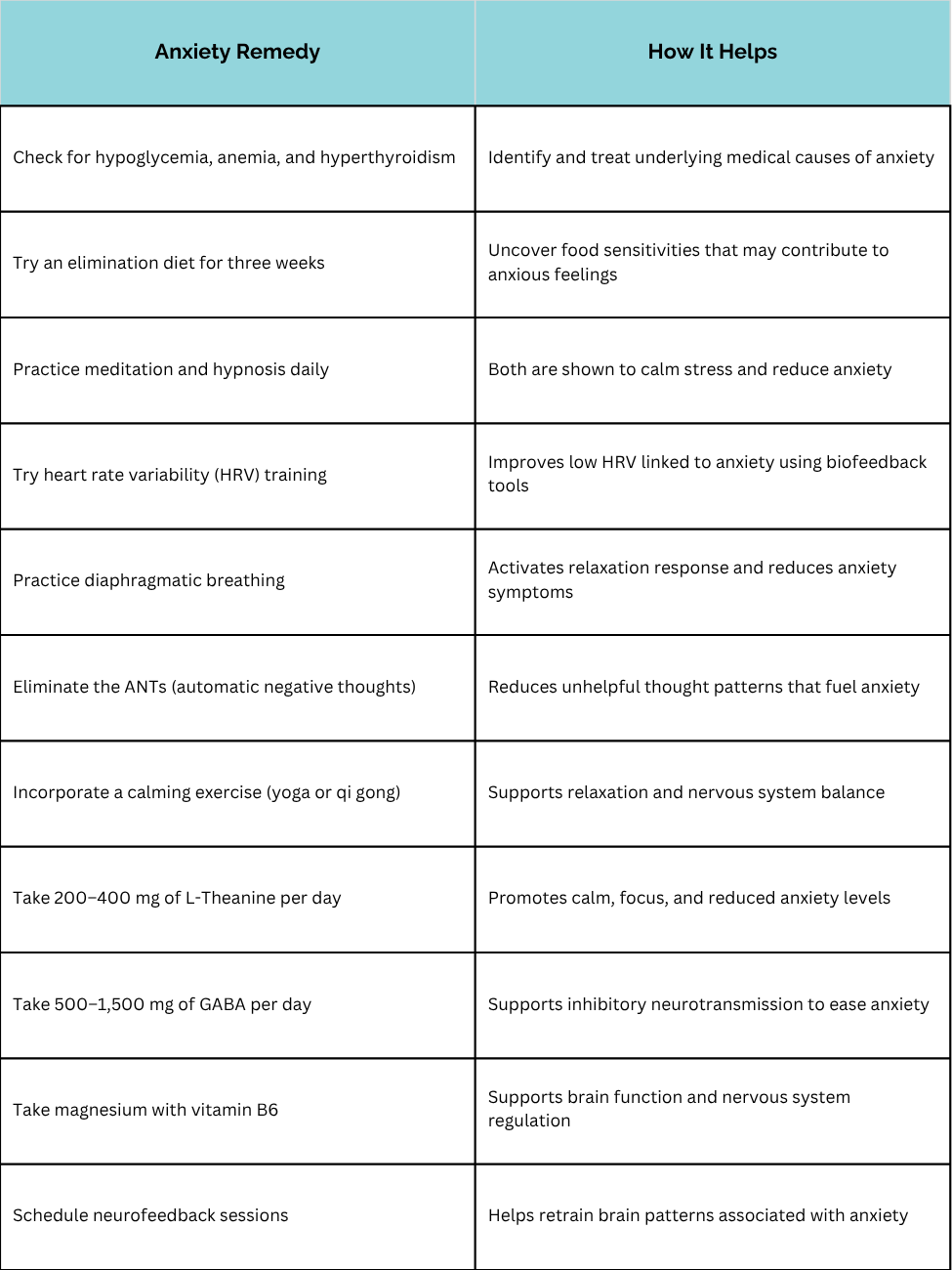
The good news is that there are natural remedies for anxiety that provide long-term benefits, and they don’t damage the brain. In this blog, you’ll learn more about the brain’s role in anxiety, as well as 11 natural anxiety treatments.
After the pandemic, prescriptions for antianxiety medications, such as benzodiazepines, dramatically increased. The problem is that they are addictive, and once you start them they are often very hard to stop.
Anxiety is not merely a fleeting feeling of nervousness. It’s a complex emotional state deeply rooted in the brain’s intricate networks. To effectively manage anxiety, it’s essential to comprehend how our brain contributes to these sensations.
Based on the brain SPECT imaging work at Amen Clinics, it’s clear that abnormal blood flow and activity levels in certain brain regions are associated with anxiety disorders. Here’s a brief overview of the main brain areas involved in anxiety and panic disorders.
The basal ganglia are large, deep brain structures that sit near the limbic system and play a crucial role in coordinating thoughts, emotions, and physical actions. They help regulate movement, especially when it comes to initiating and transitioning between actions smoothly.
Studies show that the basal ganglia are key players in habit formation. At Amen Clinics, brain imaging has revealed that these structures also help regulate the brain’s overall anxiety level.
When the basal ganglia are overactive, it’s commonly linked to symptoms such as chronic worry, muscle tension, hyperawareness, and fearfulness. In fact, one of the most statistically significant findings from the neuroimaging work is that individuals with heightened activity in the basal ganglia are more likely to engage in nail biting—a common, habit-driven response to anxiety.
At the core of our emotional responses lies the limbic system, a collection of structures including the amygdala, hippocampus, hypothalamus, and thalamus. This system is pivotal in processing emotions, forming memories, and orchestrating stress reactions.
Neurotransmitters are chemicals that transmit signals across nerve endings. Imbalances in certain neurotransmitters are linked to anxiety disorders:
Related: Try These 9 Natural Serotonin Boosters for Happier Moods and Less Worry
Prolonged stress can alter the brain’s structure and function—a concept known as neuroplasticity. Chronic anxiety may lead to:
By delving into the brain’s role in anxiety, we can adopt natural strategies that not only alleviate symptoms but also promote enduring mental well-being.
Press Play to Discover Foods That Help Calm Anxiety
In this video, Amen Clinics integrative nutritionist Cindy Santa Ana reveals foods that can soothe anxiousness while promoting healthy moods.
Click below to tune in:
Anxiety disorders are very painful, but too often people reach for marijuana, alcohol, or prescribed benzodiazepines. These can be of short-term benefit but cause long-term problems with addiction and memory issues.
If the above interventions are ineffective or only partly effective, you may want to consider other anxiety treatment options. Seek help from a mental health professional for a targeted treatment plan.
Anxiety disorders, panic attacks, and other mental health conditions can’t wait. At Amen Clinics, we provide personalized, science-backed treatment plans designed to target the root causes of your symptoms. Our 360-approach includes brain SPECT imaging, clinical evaluations, innovative therapeutic techniques, medications (when necessary), and holistic lifestyle recommendations to promote the health of your brain, body, and mind. Speak to a specialist today at 888-288-9834 or visit our contact page here.
Seger, Carol A, and Brian J Spiering. “A critical review of habit learning and the Basal Ganglia.” Frontiers in Systems Neuroscience vol. 5 66. 30 Aug. 2011, doi:10.3389/fnsys.2011.00066
Stathis, P et al. “Connections of the basal ganglia with the limbic system: implications for neuromodulation therapies of anxiety and affective disorders.” Acta Neurochirurgica. Supplement vol. 97,Pt 2 (2007): 575-86. doi:10.1007/978-3-211-33081-4_67
Cisneros T. Fills for Mental Health Prescription Drugs Rose During COVID and Remain High. GoodRx, February 21, 2023. https://www.goodrx.com/healthcare-access/research/fills-for-anxiety-and-depression-prescription-drugs-rose-during-covid-pandemic
Fortuna, Lisa R et al. “The Impact of COVID-19 on Anxiety Disorders in Youth: Coping with Stress, Worry, and Recovering from a Pandemic.” Child and Adolescent Psychiatric Clinics of North America vol. 32,3 (2023): 531-542. doi:10.1016/j.chc.2023.02.002
It’s normal to feel a few butterflies before a big moment. But when your heart starts pounding like a drum before public speaking, your hands go clammy before a friendly pickleball match, or your mind goes completely blank before a test—you may be dealing with performance anxiety.
Also known as stage fright, competitive anxiety, or “choking,” this intense fear of being judged or failing in high-stakes situations can affect anyone—students, athletes, executives, musicians, even romantic partners. And it’s far more common than most people realize.
In fact, up to 60% of individuals experience performance anxiety at some point in their lives, according to research in Frontiers in Psychology.
The good news? You don’t have to keep living at the mercy of your nerves. With the right strategies, you can train your brain and body to respond with calm instead of panic when you’re under pressure.
In this blog, we’ll explore science-backed stress management strategies to reduce performance anxiety—so you can step into the spotlight, the arena, or the boardroom with confidence and clarity.
Also known as stage fright, competitive anxiety, or “choking,” performance anxiety involves an intense fear of being judged or failing in high-stakes situations. And it can affect anyone.
Performance anxiety is not considered a diagnosable mental health condition. Rather it falls under the umbrella of anxiety disorders, such as social anxiety or generalized anxiety disorder.
It typically occurs in situations where you’re expected to perform, be evaluated, or deliver results under pressure. It can show up in a wide variety of settings:
While a little nervous energy can motivate you, excessive anxiety can interfere with your ability to think clearly, communicate confidently, and perform at your best. You may experience common symptoms like:
In some instances, it can lead to a full-blown panic attack. If any of this sounds familiar, you’re in the company of some high-performing athletes, executives, and actors. The key to overcoming this is learning tools to manage those reactions and retrain your mind and body.
One of the most effective ways to overcome performance anxiety is through intentional relaxation techniques that calm your nervous system. These methods help shift your body out of fight-or-flight mode and into a calmer, more focused state mentally, emotionally, and physically.
When you’re anxious, your body releases stress hormones such as cortisol and adrenaline. This ramps up those physical symptoms and can make your thoughts race faster than you can think through them.
Relaxation techniques have been shown to reduce anxiety naturally by soothing your parasympathetic nervous system, which results in slower breathing, lower heart rate, and easing muscle tension.
Here are a few simple stress management strategies you can try:
Practicing relaxation regularly trains your body to respond more calmly in high-pressure situations wherever you are. Over time, these techniques can reduce anxiety naturally and become your go-to tools for navigating stress in healthier (and easier) ways.
Another powerful strategy to overcome performance anxiety is through visualization—mentally rehearsing success. Visualization is one of the top boost confidence techniques used by athletes, public speakers, and performers because it works.
Visualization helps you tap into your brain’s ability to simulate experiences. When you vividly imagine yourself performing well, your brain fires off the same neural pathways as it would if you were actually doing it.
By making the event or goal feel familiar and less threatening, you end up reducing performance anxiety and achieving more than you thought you would.
Visualization strengthens the mind-body connection by reinforcing positive expectations. When you “see” yourself succeeding, your body follows suit in action, which reduces performance anxiety and boosts self-trust over time.
You can also try guided imagery to help you relax and fall asleep when needed. Basically, this technique involves envisioning yourself in an imaginary environment—a tropical beach, a flower-filled meadow, or a cozy fireplace, for example—and taking in the sights, scents, and sounds. After visiting this imaginary place, you feel more relaxed.
Cognitive behavioral therapy, or CBT, is a psychological approach that helps you identify and challenge the unhelpful thoughts driving your anxiety. By shifting your mindset, CBT allows you to reduce anxiety naturally and respond to stress with a plan.
Related: Cognitive Behavioral Therapy: What Is It and Who Can Benefit?
One of the best stress management strategies CBT offers is cognitive restructuring. Instead of thinking…
“I’m going to fail.”
…CBT can help you reframe your thoughts to…
“I’ve prepared for this, and I can handle it.”
This mental shift allows you to take back the mental control you need to reduce panic and restore balance in your life.
Try these CBT-inspired tools to help manage your performance anxiety:
Related: Gain Control Over Negative Self-Talk
If you’re struggling to cope with persistent performance anxiety, working with a mental health professional can help you apply CBT principles in a more personalized way. Therapy offers a safe space to explore deeper fears and reduce anxiety naturally over time.
Mindfulness—the practice of being present without judgment—is one of the most reliable stress management strategies for reducing anxiety naturally. You can learn to stay focused during high-stakes moments by taking a moment to recenter yourself.
Mindfulness interrupts that spiral of anxious thoughts by grounding you in the present. This helps reduce anxiety naturally by shifting your attention away from what could go wrong and toward what is happening right now.
These can boost confidence techniques that help you center yourself before stressful events. Choose one or more to use when you need them:
Consistent mindfulness practice improves emotional dysregulation, sharpens focus, and builds stress resilience. It makes this one of the most sustainable stress management strategies for managing performance anxiety long-term.
Your everyday habits—how you eat, sleep, and move—play a major role in how your body responds to stress. Healthy routines can help you stay grounded and reduce the intensity of performance anxiety.
Research shows that eating the wrong foods can trigger anxiety at the moments when you need to be at your best. For example, eating a high-fat diet, getting inadequate amounts of protein, and consuming excessive amounts of sugar and refined carbohydrates can negatively impact focus, energy, and memory—all things you need when it’s time to perform.
Press Play to Learn How Caffeine Affects Anxiety
If you struggle with performance anxiety, you may want to check your caffeine intake. Too much java may be giving you the jitters.
Click below to tune in.
Decades of research on physical activity shows that it boosts mood-enhancing brain chemicals like serotonin and dopamine. Regular exercise is a beneficial way to reduce anxiety naturally, improve sleep, and help you feel more capable and in control.
You may already know that a lack of sleep and poor nutrition spikes cortisol (stress) levels. But did you know that they can also make you more reactive to stress?
Prioritizing rest and eating balanced meals can help your brain and body perform optimally. Proper sleep and nutrition help calm your body’s nervous system, so you don’t get so fearful when you need to perform.
To recap, here are a few simple habits that enhance your daily stress management strategies to calm anxiety:
Fortunately, even these small changes can add up to greater emotional balance and resilience.
In most cases, no single method will solve performance anxiety overnight. The most effective approach is to combine multiple confidence-boosting techniques that work for your unique personality and lifestyle.
To manage your performance anxiety, feel free to mix and match strategies that you’ll enjoy doing again and again:
Performance anxiety doesn’t have to control your life. Creating your own personalized toolkit will help you be better prepared to handle any high-pressure situation with clarity and confidence.
Performance anxiety isn’t classified as a formal mental health disorder, but it falls under the broader category of anxiety-related issues. It’s closely related to social anxiety and can significantly impact quality of life if left unaddressed.
Yes. Performance anxiety isn’t limited to public speaking or performing on stage. It can show up during athletic competitions, academic testing, work presentations, romantic relationships, and even one-on-one conversations—any situation where you feel pressure to perform.
Try deep, slow breathing or box breathing to reset your nervous system. These techniques calm your body’s fight-or-flight response in minutes, helping you feel more grounded and in control when the pressure is on.
National Center for Health Statistics. (2019). Health, United States, 2018 – Mental health. U.S. Department of Health and Human Services, Centers for Disease Control and Prevention. Retrieved from https://www.ncbi.nlm.nih.gov/books/NBK544286/
Rao, V., Rosenberg, P., Bertrand, M., Salehinia, S., Spiro, J., Vaishnavi, S., Rastogi, P., Noll, K., Schretlen, D. J., Brandt, J., & others. (2009). Aggression after traumatic brain injury: Prevalence and correlates. The Journal of Neuropsychiatry and Clinical Neurosciences, 21(4), 420–429. https://www.ncbi.nlm.nih.gov/pmc/articles/PMC2918269/
Kaźmierczak, I., Zajenkowska, A., Rajchert, J., Jakubowska, A., & Abramiuk-Szyszko, A. (2023). The Role of Anger Expression in Unmet Expectations and Depressive Symptoms. International Journal of Environmental Research and Public Health, 20(15), 1–20. https://doi.org/10.3390/ijerph20155900
Sukhodolsky, D. G., Smith, S. D., McCauley, S. A., Ibrahim, K., & Piasecka, J. B. (2016). Behavioral interventions for anger, irritability, and aggression in children and adolescents. Journal of Child and Adolescent Psychopharmacology, 26(1), 58–64. https://doi.org/10.1089/cap.2015.0120
Selman, S. B., & Dilworth‐Bart, J. E. (2024). Routines and child development: A systematic review. Journal of Family Theory & Review, 16(2), 272–328. https://doi.org/10.1111/jftr.12549
It’s easy to brush off a bad mood, poor sleep, or constant stress as “just life.” But what if these are early warning signs of something deeper?
Mental health problems often start quietly—subtle changes in thinking, feeling, or behavior that are easy to dismiss. Yet catching these mental health red flags early can make all the difference.
Whether you’re concerned about yourself or someone you care about, understanding the early symptoms of mental health issues is crucial. Ignoring them can lead to worsening symptoms, strained relationships, and even long-term consequences.
Here are 11 mental health warning signs you should never ignore—and what to do if you recognize them.
Mental health problems often start quietly—subtle changes in thinking, feeling, or behavior that are easy to dismiss. Yet catching these mental health red flags early can make all the difference.
When your sleep patterns start to change drastically, it could signal a potential mental health issue. For example, significant shifts in your circadian rhythm or physical health—such as insomnia or oversleeping—often point to conditions like depression or anxiety.
In a 2019 study, up to 90% of people with depression experienced sleep disturbances. Sleep problems can exacerbate feelings of stress and become a cycle that’s difficult to break.
Similarly, whether eating too little or too much, changes in your appetite can indicate underlying mental health conditions like depression, anxiety, or eating disorders. Sudden weight gain or weight loss can also be a sign of a mental disorder.
For example, research shows that appetite and weight fluctuations are common in people with major depressive disorder. Some people lose their appetite while others feel hungrier than usual.
If you’re experiencing low moods or having rapid or dramatic shifts in mood, it could be an indicator of a mental disorder. Persistent feelings of sadness, emptiness, or irritability are common signs of depression, which affects 29% of US adults at some point in their lives, according to a recent Gallup Poll.
On the flip side, feelings of euphoria that come and go may make you feel amazing in the short-term but might be a sign that something’s wrong. For example, people with bipolar disorder might fluctuate between high-energy manic states and deep depressive episodes.
If you or someone you know is experiencing chronic low moods or extreme emotional ups and downs, it could be time to seek help from a mental health professional.
Press Play to Discover the Warning Signs of Mood Disorders
In this video, Amen Clinics psychiatrist Dr. Jay Faber reveals a specific behavior pattern that’s a common sign of bipolar disorder.
If you’re increasingly isolating yourself from social activities or withdrawing from relationships you once enjoyed, it could signal a deeper issue that needs to be evaluated. Loss of interest in previously enjoyed activities or avoiding interactions with friends and family can be a sign of depression or other mental health conditions.
Understand that this is not about the natural progression of certain relationships or growing out of certain hobbies. This is about having the desire to want to enjoy those parts of your life again—except your mind isn’t allowing you to feel that desire and continue enjoying it.
Social withdrawal is often linked to a lack of energy or motivation, both of which are common when dealing with mental health disorders. A NIMH report showed approximately 20% of U.S. adults experience some form of mental illness annually, with social withdrawal being a hallmark symptom.
If you are someone who previously excelled at work, school, or social activities, but you’re suddenly struggling to keep up with your tasks, it could indicate mental health issues. Research shows that it’s important to pay attention to daily functioning problems, such as:
These may be signs of mental health issues, such as depression, anxiety, bipolar disorder, or attention deficit hyperactivity disorder (ADHD), also known as attention deficit disorder (ADD). When these are left untreated, your ability to work and interact socially can be significantly and negatively impacted.
If your performance has noticeably decreased in one or more areas of life, it’s important to explore the possibility of a mental disorder with a trusted and qualified mental health professional.
Everybody experiences times when it’s challenging to stay on task. But if your problems with focus and concentration persist and get in the way of your success, it could be a sign of trouble. Focus and attention problems are hallmark signs of ADHD, but they can also be linked to other mental health disorders.
For example, research shows that cognitive issues like poor focus are experienced by nearly 50% of people with depression and anxiety disorders. If these symptoms interfere with work or daily life, you need to seek professional help to assess potential mental health disorders.
Related: 5 Simple Ways to Boost Your Focus
A heightened sensitivity to environmental stimuli—think light, sounds, smells, or textures—can signal an overactive nervous system. This is then often triggered by stress, anxiety, or trauma.
If you find yourself avoiding public places, loud environments, or large crowds because you become overwhelmed by external stimuli, it could be a red flag. Your hypersensitivity may be a sign of posttraumatic stress disorder (PTSD), ADHD, or anxiety.
The Anxiety and Depression Association of America (ADAA) reports that anxiety disorders affect 40 million adults in the U.S. Many of those struggling with anxiety disorder also experience sensory sensitivities or overload as part of their condition.
When you start to feel detached from yourself or your surroundings, or lose interest in life, it’s important to give yourself space to learn why. This feeling of disconnection, also known as depersonalization, can make a person feel as though they are observing life from the outside.
This symptom is common in those with major depressive disorder, where emotional numbness can take over and result in apathy toward daily activities or people. If you find yourself or a loved one lacking initiative or experiencing emotional numbness, it’s important to seek help from a mental health professional.
Mental disorders like bipolar disorder or schizophrenia can cause illogical thinking or delusions that lead people to believe in exaggerated or false thoughts about themselves or the world. These beliefs might include thoughts of grandeur or the idea that you have special powers to control events around you.
According to the World Health Organization, approximately 1 in 300 people worldwide experience schizophrenia in their lifetime, often manifesting as distorted thinking and perceptions. If someone’s beliefs seem out of touch with reality or become more outlandish, it may indicate a serious mental health condition that requires intervention.
Excessive nervousness, fear, or paranoia can be symptoms of anxiety disorders, including generalized anxiety disorder (GAD) or social anxiety disorder. Uncharacteristic behavior like erratic speech or avoiding everyday tasks due to irrational fears, often points to an underlying issue.
The NIMH reports nearly 30% of adults in the U.S. experience an anxiety disorder in their lifetime. Most of them report symptoms such as hypervigilance and hyper-avoidance of triggering situations. If you or someone you love seems to be living in constant fear, it may be time to seek professional mental health guidance.
Related: 4 Steps to Break an Anxiety Attack
A sudden change in your performance at school or work can be an early warning sign of a mental disorder. Such changes may include:
If your productivity isn’t what it used to be, you may want to take a deeper dive to investigate what’s causing the drop in performance.
Recognizing mental health symptoms early can be critical to getting the right help and support. They should not be dismissed lightly. Getting an early diagnosis means early intervention, so you can better manage your symptoms and improve your overall quality of life.
Anxiety, depression, and other mental health conditions can’t wait. At Amen Clinics, we provide personalized, science-backed treatment plans designed to target the root causes of your symptoms. Our 360-approach includes brain SPECT imaging, clinical evaluations, innovative therapeutic techniques, medications (when necessary), and holistic lifestyle recommendations to promote the health of your brain, body, and mind. Speak to a specialist today at 888-288-9834 or visit our contact page here.
Stickley, A., Leinsalu, M., DeVylder, J.E. et al. Sleep problems and depression among 237 023 community-dwelling adults in 46 low- and middle-income countries. Sci Rep 9, 12011 (2019). https://doi.org/10.1038/s41598-019-48334-7https://www.nature.com/articles/s41598-019-48334-7#citeas
Simmons, W Kyle et al. “Depression-Related Increases and Decreases in Appetite: Dissociable Patterns of Aberrant Activity in Reward and Interoceptive Neurocircuitry.” The American journal of psychiatry vol. 173,4 (2016): 418-28. doi:10.1176/appi.ajp.2015.15020162
Witters D. U.S. Depression Rates Reach New Highs, GALLUP. May 17, 2023. https://news.gallup.com/poll/505745/depression-rates-reach-new-highs.aspx
National Institute of Mental Health. (2024, September). Mental Illness. www.nimh.nih.gov/health/statistics/mental-illnesshealth
Keller AS, Leikauf JE, Holt-Gosselin B, Staveland BR, Williams LM. Paying attention to attention in depression. Transl Psychiatry. 2019 Nov 7;9(1):279. doi: 10.1038/s41398-019-0616-1. Erratum in: Transl Psychiatry. 2020 Feb 12;10(1):64. doi: 10.1038/s41398-020-0748-3. PMID: 31699968; PMCID: PMC6838308
Perini G, Cotta Ramusino M, Sinforiani E, Bernini S, Petrachi R, Costa A. Cognitive impairment in depression: recent advances and novel treatments. Neuropsychiatr Dis Treat. 2019 May 10;15:1249-1258. doi: 10.2147/NDT.S199746. PMID: 31190831; PMCID: PMC6520478
National Institute of Mental Health. (2024). Any Anxiety Disorder. Retrieved from www.nimh.nih.gov/health/statistics/any-anxiety-disorder
While the terms “neurodivergent” and “neurodiversity” are not new, they’ve gained significant traction in recent years. Still, many people harbor confusion about their exact meaning and the conditions they describe.
Diagnoses for neurodiverse conditions such as autism spectrum disorder (ASD) and attention deficit hyperactivity disorder (ADHD)—also called attention deficit disorder (ADD)—are on the rise. At the same time, growing research and awareness are helping to shed light on other neurodiverse traits, such as dyslexia, and how they affect thinking, learning, and behavior.
With increased awareness, we now recognize that these brains are simply wired differently. At Amen Clinics, we’ve seen this firsthand. For decades, we’ve used functional brain scans with SPECT (single photon emission computed tomography) to reveal the unique activity patterns that distinguish neurodivergent brains from neurotypical brains.
For decades, Amen Clinics has used functional brain scans with SPECT (single photon emission computed tomography) to reveal the unique activity patterns that distinguish neurodivergent brains from neurotypical ones.
Since the 1970s, SPECT scans have helped medical experts understand how the brain works. Today, this state-of-the-art imaging tool evaluates blood flow and activity in different regions of the brain. SPECT shows what areas of the brain are working well, too hard, or not hard enough.
Meanwhile, the terms neurodivergent and neurodiversity have been used since the 1990s. They are frequently credited to Australian sociologist Judy Singer, as well as (in more recent research) to the collective of neurodivergent people themselves. Neurodivergence refers to brains that developed differently.
As the U.K.-based organization ADHD Aware points out, neurodevelopmental conditions like ADHD and ASD present symptoms, behaviors, and traits that result from these developmental differences. They can occur before birth or in the early stages of childhood.
This distinguishes neurodivergence from a mental health condition. In the latter, patterns of behavior or state of mind deviate from the “normal self.” But neurodevelopmental conditions denote a different “normal” altogether.
ADHD Aware adds that the roots of neurodevelopmental conditions may be found in:
While these brains work differently, they can also have unique strengths. Let’s look at some ways neurodiversity can affect brain function, according to findings from SPECT scans at Amen Clinics.
Related: The ABCs of the Human Immune System
An estimated 7 million (11.4%) U.S. children from ages 3-17 had ever been diagnosed with ADHD in 2022, according to the Centers for Disease Control (CDC). That reflects a 1-million increase compared to statistics compiled in 2016.
Over decades of performing brain scans, Amen Clinics has determined that there are actually seven types of ADD. Each has its own unique set of symptoms, but generally ADHD brains show differences when trying to concentrate.
In the neurotypical brain, concentration would increase blood flow in certain regions—especially in the prefrontal cortex (PFC). This region is key in planning, focus, organization, and follow-through.
However, during moments of concentration, people with ADHD will experience a blood flow decrease in the PFC. Trying harder to concentrate actually makes the task more difficult.
Related: What Is the Executive Center of the Brain
Here is an overview of differences in brain function for each of the seven types of ADHD:
Type 1: Classic ADD is often called ADHD, due to the presence of hyperactive behavior. Hallmark traits include being inattentive, easily distracted, and restless or fidgety.
Type 2: Inattentive ADD, the second most common type, is associated with being quieter, more introverted, and prone to daydreaming. These individuals can also have trouble focusing but don’t usually show the behavior problems that characterize Classic ADHD.
In Types 1 and 2, the brain appears normal at rest. But during times of concentration, there tends to be decreased activity in the underside of the PFC, as well as in the cerebellum and basal ganglia.
Type 3: Overfocused ADD relates to difficulties with shifting attention. Brain scans show increased activity, even at rest. Increased activity occurs in the anterior cingulate gyrus (the brain’s “gear-shifter”), while decreased activity affects the underside of the PFC, the cerebellum, and the basal ganglia.
Type 4: Temporal Lobe ADD can create issues with learning and memory, unstable mood, and aggression. SPECT scan findings highlight decreased (and occasionally increased) activity in the temporal lobes, both at rest and during concentration.
Concentration also triggers decreased activity in the underside of the PFC, the cerebellum, and the basal ganglia.
Type 5: Limbic ADD involves an underactive prefrontal cortex during concentration, while the deep limbic area (involved with mood) is overactive. SPECT scans typically show increased deep limbic activity at rest, and decreased activity in the PFC, cerebellum, and basal ganglia during concentration.
Type 6: Ring of Fire ADD is associated with overall high activity in the brain, which can lead to overwhelming thoughts and emotions. These patchy areas of increased activity often affect multiple areas of the brain, creating a “ring” shape, but patterns can vary from person to person.
Type 7: Anxious ADD corresponds with areas of low activity as well as overactivity—and the resulting anxiety can aggravate ADHD symptoms. Brain scans show increased activity in the basal ganglia at rest and during concentration. In the PFC and cerebellum, activity decreases during concentration.
Like ADHD, autism diagnoses are also increasing. According to the CDC’s Autism and Developmental Disabilities Monitoring (ADDM) Network, about 1 in 31 (3.2%) 8-year-old children had been identified with autism spectrum disorder in 2022. In 2020, that number was 1 in 36.
Any of the following symptoms, ranging from mild to severe, can accompany ASD:
The differences in early brain development associated with ASD relate to the way neurons communicate with one another. This can lead to a variety of issues, including difficulty performing everyday tasks.
However, ASD does not point to a single brain problem in adults and children. In fact, a suspected eight to 10 factors can influence abnormal brain function and lead to this type of neurodivergence.
Brain-imaging studies of people with autism reveal that their brain patterns tend to have areas of high activity, low activity, or areas of both. Abnormal activity often affects the cerebellum, anterior cingulate gyrus, amygdala, and the temporal, frontal, and parietal lobes.
Therefore, there are high and low activity patterns in ASD. High activity patterns describe increased activity in the anterior cingulate gyrus and lateral prefrontal cortex. This is linked to symptoms such as repetitive speech and behavior. Increased activity in the brain can also contribute to mood instability or anxiety.
Low activity patterns, meanwhile, tend to accompany a smaller, less active cerebellum. This is associated with diminished motor skills and problems with learning and thought coordination. Overall, the surface of the brain, as well as the parietal and temporal lobes, have decreased activity, affecting communication, language, and social skills.
In addition to ADHD and autism, neurodivergence can take numerous other forms. Here are some of the most common types:
Dyslexia, which describes reading impairment and affects about 20% of the population. SPECT scans of individuals with dyslexia often show decreased activity in two brain regions: the prefrontal cortex and the left temporal lobe.
Dyslexia is a type of specific learning disorder (SLD), a grouping that includes other neurodivergent conditions, such as:
The American Psychiatric Association (APA) estimates that 5-15% of school-age children have a learning disability.
Dyspraxia, also called developmental coordination disorder (DCD), affects motor abilities. In the past, researchers struggled to pinpoint its best diagnosis and management. Today, while more research is still needed, studies have linked several brain areas to this condition: the cerebellum, basal ganglia, parietal lobe, and parts of the frontal lobe.
The APA defines neurodiversity as a “concept that regards individuals with differences in brain function and behavioral traits as part of normal variation in the human population.” Therefore, this definition includes, in addition to all of the above:
Neurodivergence can easily be misdiagnosed or simply remain untreated. And, because disorders like autism and ADHD are complex and assume multiple forms, brain imaging is instrumental in guiding accurate diagnosis and effective, targeted treatment plans.
Press Play to Learn About ADHD Interventions
In this video, Amen Clinics psychiatrist Dr. Steven Storage reveals natural ways to heal ADHD—without medication.
Click below to tune in:
Through improved understanding of the neurodivergent brain and neurodivergent thinking, mental health professionals can provide brain-based interventions to minimize this growing population’s challenges and optimize its strengths. The ultimate goal is to best equip neurodivergent individuals for success—regardless of their differences.
Botha M, Chapman R, Giwa Onaiwu M, Kapp SK, Stannard Ashley A, Walker N. The neurodiversity concept was developed collectively: An overdue correction on the origins of neurodiversity theory. Autism. 2024 Jun;28(6):1591-1594. doi: 10.1177/13623613241237871. Epub 2024 Mar 12. PMID: 38470140.
ADHD Aware. What Is Neurodiversity: Neurodevelopmental Conditions. https://adhdaware.org.uk/what-is-adhd/neurodiversity-and-other-conditions/
American Psychiatric Association. Exploring a Strengths-Based Approach to Neurodiversity. April 11, 2022. https://www.psychiatry.org/news-room/apa-blogs/exploring-a-strengths-based-approach-to-neurodiver
CDC. Data and Statistics on ADHD. November 19, 2024. https://www.cdc.gov/adhd/data/index.html
CDC’s Autism and Developmental Disabilities Monitoring (ADDM) Network. Data and Statistics on Autism Spectrum Disorder, May 27, 2025. https://www.cdc.gov/autism/data-research/index.html
APA, What Is Specific Learning Disorder? https://www.psychiatry.org/patients-families/specific-learning-disorder/what-is-specific-learning-disorder
Gibbs J, Appleton J, Appleton R. Dyspraxia or developmental coordination disorder? Unravelling the enigma. Arch Dis Child. 2007 Jun;92(6):534-9. doi: 10.1136/adc.2005.088054. PMID: 17515623; PMCID: PMC2066137.
Biotteau M, Chaix Y, Blais M, Tallet J, Péran P, Albaret JM. Neural Signature of DCD: A Critical Review of MRI Neuroimaging Studies. Front Neurol. 2016 Dec 16;7:227. doi: 10.3389/fneur.2016.00227. PMID: 28018285; PMCID: PMC5159484.
If your brain feels like it’s running a marathon with no finish line in sight, everything else in your life can start to spiral out of your control. Racing thoughts can feel overwhelming no matter how hard you try to stop them. Things get worse when they interrupt your sleep, focus, and peace of mind.
Overthinking is more common than you may expect. In fact, according to statistics, overthinking occurs in roughly 73% of young adults and in over 50% of adults. Among older people aged 65 to 75, however, only 20% fall into the overthinker category. Based on these numbers, you could argue that the more life experience you have, the less worried you are about what you can’t control.
Other factors that can increase worry and rumination include anxiety disorders, major life changes, and lifestyle habits. You may think you need to reach for anti-anxiety pills or antidepressant medications to calm your mind, but these aren’t the only solutions. And they aren’t necessarily the most effective either.
Fortunately, there are natural ways to calm your mind and regain your mental clarity. In this blog, you’ll find science-backed practices you can use to get those calming brain chemicals flowing and reduce anxiety naturally.
Racing thoughts can feel overwhelming. Fortunately, there are natural ways to calm your mind and regain your mental clarity.
Racing thoughts are more than just mental noise. Although they’re commonly associated with mental health conditions such as anxiety and depression, they can also take a toll on your body.
Constant worrying can trigger a cascade of physical symptoms like muscle tension, rapid heartbeat, and sleep disturbances.
When your mind won’t slow down, your body often stays in a constant state of alert, also known as “fight or flight” response. Over time, this increases your risk for chronic health conditions, including autoimmune disorders like Hashimoto’s thyroiditis, rheumatoid arthritis, or lupus.
That’s why learning how to calm racing thoughts is essential to restoring your mind-body connection.
Mindfulness techniques are all about being fully present in the moment. When you’re mindful, you’re not ruminating about the past or worrying about the future—you’re simply aware of what’s happening right now. This awareness is a powerful way to quiet mental chatter.
If you want to calm racing thoughts with mindfulness, start small with these three simple steps:
This practice, even for just five minutes a day, can help train your brain to slow down and focus on the present instead of ruminating on your to-do list.
Mindfulness helps reduce anxiety naturally by lowering the stress hormone cortisol, improving focus, and activating the parasympathetic nervous system—the “rest and digest” mode that counteracts stress. It also increases self-awareness, making it easier to notice when your thoughts are spiraling.
Related: The Stress Hormone: How Cortisol Crushes Mental Health
Other mindfulness lifestyle techniques include:
One of the simplest and most powerful tools to calm racing thoughts is your breath. Deep breathing exercises activate the body’s natural relaxation response, helping you shift out of stress mode.
Studies show that deep breathing meditation can increase sustained attention, decrease negative thoughts, and lower cortisol levels.
Slow, deep breathing signals to your brain that you’re safe, which helps calm racing thoughts. When your breathing slows, your heart rate follows—and your mind can slow down.
Try box breathing (inhale for 4, hold for 4, exhale for 4, hold for 4) or 4-7-8 breathing (inhale for 4, hold for 7, exhale for 8). These deep breathing exercises can reduce anxiety naturally and give your mind a much-needed pause.
Here are a few natural ways to calm your mind through breathwork throughout the day:
Make this part of your daily rhythm to gain long-term health benefits.
Exercise isn’t just for your body to be healthier. It’s actually one of the most powerful tools you can use to reduce anxiety naturally and release mental tension. A meta-analysis of nine studies published in 2023 in the journal Frontiers in Psychology found that physical activity alleviated anxiety in college students.
Movement helps metabolize stress hormones and releases endorphins, which are your brain’s feel-good chemicals. Whether it’s a brisk walk or a yoga class, increasing your physical activity can quiet the noise in your mind and offer a mental reset.
Just be sure to find ways to incorporate movement that you enjoy so you keep the habit (and those endorphins) going.
Choose activities that have those elements of meditation to calm racing thoughts and keep you engaged like:
These forms of movement offer both physical and mental grounding while improving strength in the shorter muscles that support posture, stability, and joint alignment—all of which are negatively impacted by stress. The meta-analysis mentioned above concluded that aerobic exercise was particularly helpful in calming anxiety.
Decades of research show that over time, consistent movement improves your mood and reduces anxiety naturally. It also helps build resilience to stress. In fact, it’s one of the most sustainable natural ways to calm your mind and gives you the tools needed to feel better.
Related: 5 Ways to Boost Stress Resilience
Redirecting your attention to the good in your life is a surprisingly powerful way to calm racing thoughts. When you shift your mental focus, your mind becomes less preoccupied with fear and worry.
Gratitude is one of the most underrated mindfulness techniques because its simplicity often masks its powerful effect on mood and stress levels. Reflecting on things you’re thankful for redirects your attention to what matters most and calms your nervous system. It grounds you in the present to help you feel safe and content, no matter the situation.
One of the best techniques to soothe your mind is to train your brain to be more positive. Here are simple ways to do it:
Another effective method is positive affect journaling (PAJ), where you write about meaningful or uplifting moments from your day. It’s an emotion-based way to learn how to self-regulate what you feel and identify areas that need support.
To turn gratitude into a habit, make it part of your nighttime ritual to shed the mental stress of the day.
These small moments help strengthen your emotional resilience and make room for more natural ways to calm the mind.
The quality of your sleep and amount of anxiety you hold are deeply connected. One of the most frustrating things about racing thoughts is how they seem to ramp up the minute your head hits the pillow.
That’s because when your mind is tired but still active, it struggles to switch off due to your brain’s default mode. This makes it hard to fall asleep and makes anxiety feel even more intense at night.
Lack of sleep fuels anxiety—and anxiety leads to more racing thoughts, creating a vicious cycle. Sleep is essential to help your brain regulate emotions and process stress.
If you’ve struggled with insomnia or restlessness at night, there are ways to reduce anxiety naturally before bed:
One highly effective tip is to schedule “worry time” to allow your brain to offload ruminating thoughts before bed. Schedule about 10 to 15 minutes in the evening to write down your worries and leave them on the page.
You can use mindfulness techniques at night to enhance your sleep quality, such as:
These create a soothing bedtime routine that helps you calm racing thoughts and drift into restful sleep.
While each of these strategies works on its own, combining them can bring even greater relief from anxiety and mental overload.
You can build a strong foundation of emotional balance and clarity by mixing these natural ways to calm the mind daily.
If you’ve tried these techniques and still struggle to calm racing thoughts, it might be time to speak with a mental health professional. Therapists can help you explore the root causes of anxiety and develop a personalized plan that works for your brain and lifestyle. Find the inner peace you deserve by getting the support you need.
Racing thoughts often stem from heightened stress, anxiety, or major life transitions. They can also be fueled by poor sleep, stimulants like caffeine, or underlying conditions such as ADHD, depression, or trauma.
At Amen Clinics, we often see that imbalances in brain activity can contribute to mental overactivity.
For many people, yes. Practices like mindfulness, breathwork, and exercise can effectively calm the brain and improve emotional regulation. These natural strategies can work alongside therapy to maximize benefits. The key is personalizing your approach based on your unique brain.
If your thoughts feel uncontrollable, interfere with daily life, or lead to anxiety, panic, or insomnia, it’s time to seek support. Persistent racing thoughts may signal an underlying condition that needs expert care.
At Amen Clinics, we use brain imaging to identify the root cause so you can get targeted treatment that brings lasting relief.
Michigan News. Most women think too much, overthinkers often drink too much, https://news.umich.edu/most-women-think-too-much-overthinkers-often-drink-too-much/
Toussaint L, Nguyen QA, Roettger C, Dixon K, Offenbächer M, Kohls N, Hirsch J, Sirois F. Effectiveness of Progressive Muscle Relaxation, Deep Breathing, and Guided Imagery in Promoting Psychological and Physiological States of Relaxation. Evid Based Complement Alternat Med. 2021 Jul 2;2021:5924040. doi: 10.1155/2021/5924040. PMID: 34306146; PMCID: PMC8272667.
Maulik PK. Workplace stress: A neglected aspect of mental health wellbeing. Indian J Med Res. 2017 Oct;146(4):441-444. doi: 10.4103/ijmr.IJMR_1298_17. PMID: 29434056; PMCID: PMC5819024.
Lin, Y., & Gao, W. (2023). The effects of physical exercise on anxiety symptoms of college students: A meta-analysis. Frontiers in Psychology, 14. https://doi.org/10.3389/fpsyg.2023.1136900
Mahindru, Aditya et al. “Role of Physical Activity on Mental Health and Well-Being: A Review.” Cureus vol. 15,1 e33475. 7 Jan. 2023, doi:10.7759/cureus.33475
Smyth JM, Johnson JA, Auer BJ, Lehman E, Talamo G, Sciamanna CN. Online Positive Affect Journaling in the Improvement of Mental Distress and Well-Being in General Medical Patients With Elevated Anxiety Symptoms: A Preliminary Randomized Controlled Trial. JMIR Ment Health. 2018 Dec 10;5(4):e11290. doi: 10.2196/11290. PMID: 30530460; PMCID: PMC6305886.
Shen Z, Yang X, She T, Zhao G, Dou Z, Luo Y, Lin W, Dang W, Yu S. Deficits in brain default mode network connectivity mediate the relationship between poor sleep quality and anxiety severity. Sleep. 2024 Mar 11;47(3):zsad296. doi: 10.1093/sleep/zsad296. PMID: 37988563.
Despite being a naturally occurring heavy metal, lead is a silent destroyer for human beings who are exposed to this toxic element. The harmful effects are particularly damaging for the millions of children who face lead exposure at home.
And children are not the only population at risk. Childhood exposure can create serious impacts into adulthood, while adults who have been exposed to even “low” levels of lead can face serious health consequences. In fact, the Centers for Disease Control and Prevention (CDC) warns that there are no safe levels of exposure.
Long-ago lead exposure may be creating ripple effects, contributing to the prevalence of mental health disorders today. This blog will explore the connection, shedding light on how environmental factors like toxins can compromise mental health across generations.
Long-ago lead exposure may be creating ripple effects, contributing to the prevalence of mental health disorders today.
For developing brains and bodies, lead exposure can be devastating in a variety of ways. The CDC warns that childhood exposure to lead increases the risk of:
Researchers have been studying the mental health effects of lead exposure for decades. One long-term study, which tracked 579 children from New Zealand over more than 30 years, examined the link between lead exposure in childhood and mental health effects in adulthood.
Lead exposure had already been established as disrupting the behavioral development of children who were exposed, but researchers wanted to pinpoint its lasting effects. They found that with more lead exposure in childhood, individuals were more likely to exhibit mental illness across their lifetimes, as well as challenging personality traits in adulthood.
Increased levels of lead in blood were associated with increased mental health symptoms, especially internalizing and thought disorders. And personality tests revealed higher lead levels were related to increased neuroticism, as well as a decrease in agreeableness and conscientiousness.
In other words, researchers concluded, childhood exposure could have a lifelong impact on mental health and even personality.
A 2019 article in JAMA that evaluated this study added that previous research had linked prenatal or childhood lead exposure with greater risk for mental health issues in adulthood, including schizophrenia and antisocial behavior.
But the New Zealand children studied were of particular interest because their birthplace registered “some of the highest gasoline lead levels in the world,” according to the article. Therefore, unusually high levels of lead contaminated the air and soil through the exhaust from automobiles.
These same children were also shown, in a separate study, to experience negative health outcomes when tested in adulthood, at 38 years old. Their increased lead exposures were associated with more significant declines in both IQ and occupational socioeconomic status, which itself can further impact health.
It’s important to look at how lead exposure affects mental health. In 1999, a five-year study evaluated the connection between lead levels in blood and three common mental health concerns: major depressive, panic, and generalized anxiety disorders. The results showed that higher lead levels in blood increased the odds of depression and panic disorder.
Related: 10 Scary Ways Toxins Poison Your Brain
Those with the highest lead levels were 2.3 times more likely to have depression and 4.9 times more likely to develop a panic disorder, compared to subjects with the lowest levels. Higher lead levels did not show the same association with generalized anxiety disorder.
The nearly 2,000 participants were young adults (20-39 years old) who were considered to have low levels of exposure. Therefore, researchers concluded that lead exposure “at levels generally considered safe could result in adverse mental health outcomes.”
The World Health Organization (WHO) reports that lead causes devastating health impacts globally. Lead contaminates the environment through activities like mining and manufacturing, and it’s present in products from paints and toys to cosmetics and jewelry. It can even be found in drinking water.
The WHO lists numerous harms caused by this heavy metal, including:
Ultimately, environmental toxins like lead will steal your mind over time. A toxic brain, as shown in SPECT scans, tends to have a scalloped appearance, with decreased overall activity and blood flow. And because the symptoms of neurotoxicity from lead and other dangerous substances may mimic other conditions, this issue can easily be misdiagnosed or undiagnosed.
Related: 23 Everyday Toxins That Destroy Thinking
An article in 2024 noted that exposure to leaded gasoline affected millions of Americans, creating long-term impacts on mental health and personality changes. Generation X (those born between the mid-1960s and early 1980s) showed the greatest related risks for mental health issues like anxiety, depression, and ADHD.
The article also pointed to the possible connection between falling crime rates and reduced lead exposure in the 1990s and 2000s. This theory, known as the lead-crime hypothesis, links criminal behavior (including homicide) and lead exposure.
Authors cited a 2022 study with alarming stats regarding lead exposure in the United States. It estimated that more than 170 million Americans alive were exposed to high lead levels in early childhood. And several million of them “were exposed to five-plus times the current reference level.”
Leaded gasoline significantly contributed to these high exposure levels. The article explained that this increase could trigger “an estimated 151 million additional mental disorders, including heightened risks for anxiety, depression, and attention-deficit/hyperactivity disorder (ADHD).”
Authors called for more lead screening, particularly among children, and psychiatric recognition of lead poisoning as a neurodevelopmental disorder. With more awareness, they hope for increased efforts toward both prevention and intervention.
While lead poisoning at any age is devastating, there are steps you can take to heal if you suspect toxin exposure.
Centers for Disease Control, Childhood Lead Poisoning Prevention. https://www.cdc.gov/lead-prevention/php/data/index.html
Bouchard MF, Bellinger DC, Weuve J, Matthews-Bellinger J, Gilman SE, Wright RO, Schwartz J, Weisskopf MG. Blood lead levels and major depressive disorder, panic disorder, and generalized anxiety disorder in US young adults. Arch Gen Psychiatry. 2009 Dec;66(12):1313-9. doi: 10.1001/archgenpsychiatry.2009.164. PMID: 19996036; PMCID: PMC2917196.
Reuben A, Schaefer JD, Moffitt TE, Broadbent J, Harrington H, Houts RM, Ramrakha S, Poulton R, Caspi A. Association of Childhood Lead Exposure With Adult Personality Traits and Lifelong Mental Health. JAMA Psychiatry. 2019 Apr 1;76(4):418-425. doi: 10.1001/jamapsychiatry.2018.4192. PMID: 30673063; PMCID: PMC6450277.
Sancar F. Childhood Lead Exposure May Affect Personality, Mental Health in Adulthood. JAMA. 2019;321(15):1445–1446. doi:10.1001/jama.2019.1116
Reuben A, Caspi A, Belsky DW, et al. Association of Childhood Blood Lead Levels With Cognitive Function and Socioeconomic Status at Age 38 Years and With IQ Change and Socioeconomic Mobility Between Childhood and Adulthood. JAMA. 2017;317(12):1244–1251. doi:10.1001/jama.2017.1712
Combs A, Freeland RE, Alfaro Hudak KM, Mumford EA. The effect of occupational status on health: Putting the social in socioeconomic status. Heliyon. 2023 Oct 28;9(11):e21766. doi: 10.1016/j.heliyon.2023.e21766. PMID: 37954338; PMCID: PMC10638021.
World Health Organization. Lead Poisoning. https://www.who.int/news-room/fact-sheets/detail/lead-poisoning-and-health
Decades of Leaded Gasoline Tied to U.S. Mental Health Crisis, by Denis Storey, December 10, 2024. https://www.psychiatrist.com/news/decades-of-leaded-gasoline-tied-to-u-s-mental-health-crisis/
McFarland MJ, Hauer ME, Reuben A. Half of US population exposed to adverse lead levels in early childhood. Proc Natl Acad Sci U S A. 2022 Mar 15;119(11):e2118631119. doi: 10.1073/pnas.2118631119. Epub 2022 Mar 7. PMID: 35254913; PMCID: PMC8931364.

Facebook-f X-twitter Youtube Table of Contents A massive new genetic study is challenging the way we define mental illness, and confirming that the brain is

Facebook-f X-twitter Youtube Table of Contents In the last decade, the question “What is CTE?” has been asked and searched online more than ever before.
As more states enact legalization and usage increases among the American public, cannabis is often considered a “natural remedy” or a “soft drug.” But its negative impacts on the human body shouldn’t be taken lightly.
An increasing number of studies show that marijuana is far from harmless. In recent years, researchers have even drawn links between marijuana use and increased risk of heart attack, stroke, and heart failure. And because cardiovascular health is inextricably linked with brain health, that’s bad news for mental health, too.
Cannabis use boosts the risk for mental health issues. These include psychosis and schizophrenia, as well as mood disorders, such as clinical depression and anxiety disorders.
In March 2025, findings were presented at the American College of Cardiology’s Annual Scientific Session that linked cannabis use with heart attacks. This presentation combined a study with more than 4.6 million participants and a meta-analysis of 12 previous studies that, in total, involved 75 million-plus people.
The study found that cannabis users under the age of 50 were more than six times likelier to have a heart attack, compared to non-users. And the meta-analysis showed that users had a 50% increased risk of heart attack.
The study also noted cannabis users had a fourfold risk of ischemic stroke, double the risk of heart failure, and a threefold risk of cardiovascular death, heart attack, or stroke. Participants had no “significant cardiovascular comorbidities,” such as high blood pressure or cholesterol, diabetes, tobacco use, or preexisting coronary artery disease.
These findings supported a previous study that was presented at the American College of Cardiology’s Annual Scientific Session in 2023. It found that daily marijuana users were one-third more likely to develop coronary artery disease, compared with those who’d never used the drug.
Similarly, in 2024, the Journal of the American Heart Association reported research that found any use of cannabis (smoking, vaping, or eating) was correlated with an increased risk for stroke and heart attack. Again, this held true even without other underlying cardiovascular risk factors present, including smoking tobacco.
This study analyzed survey data from the Centers for Disease Control and Prevention, tracking 434,104 U.S. adults from 2016 to 2020. It found that “any marijuana use was linked to a higher risk for heart attacks and strokes, but people who used it most frequently had the highest odds.”
Daily users had 25% higher odds of having a heart attack and 42% higher odds of stroke than non-users. Among men under age 55 and women under age 65, marijuana use created 36% higher combined odds for coronary heart disease, heart attack, or stroke.
It’s no surprise that cardiovascular issues are associated with negative effects on overall cognitive function and mental health. What’s bad for the heart is bad for the brain. Marijuana and brain health don’t mix.
Amen Clinics founder Dr. Daniel Amen wrote in The End of Mental Illness about his early experience witnessing the connection between cardiovascular disease and depression. After his grandfather, Daniel Ara, had a heart attack at age 69, his personality drastically changed.
Once a happy and positive man, after the heart attack he cried easily, suffered from sleeping troubles, and lost his usual joyful attitude. Eventually, he was diagnosed with major depression and prescribed antidepressant medication.
“He’s one of the main reasons why I fell in love with helping people who are suffering from brain health/mental health issues,” Dr. Amen wrote. “I wish I had known then what I know now about sugar, blood flow, heart disease, and depression.”
Blood flow is critical for the human body—transporting nutrients, including oxygen, to cells while flushing toxins. And the brain especially needs blood flow to function. Though it makes up only 2% of a human’s body weight, it uses 20% of the body’s oxygen and blood flow.
Related: 11 Ways You’re Lowering Blood Flow to Your Brain (and Why You Should Care)
That’s one reason why marijuana, and anything else that inhibits blood flow, will damage the heart and blood vessels—and inevitably harm the brain. Conversely, maintaining heart health helps promote optimal brain health. The link between cardiovascular and mental health has been firmly established in the field of study known as psychocardiology.
Research in this field has shown that those with mental health conditions (including depression, anxiety, bipolar disorder, and schizophrenia) are more likely to develop cardiovascular diseases, even at young ages. And the relationship is bidirectional: People with cardiovascular disease are more likely to suffer from conditions like depression and dementia.
Therefore, protecting the blood vessels that feed the body’s neurons will boost not only heart health, but brain health. The result is a sharper mind as well as improved mental health.
On the other hand, low blood flow has been observed through SPECT brain scans to accompany numerous mental health conditions and symptoms. These include depression, suicide, bipolar disorder, schizophrenia, ADHD, traumatic brain injury, substance abuse, and more. Studies have shown that using marijuana is associated with lower cerebral blood flow.
The effects over time can be devastating. A study of more than 7,700 brain images found that vascular dysregulation within the brain was a key signal in the early development of Alzheimer’s disease. In fact, low blood flow (detectable by SPECT scan) is the #1 predictor that a person will develop this condition.
Clearly, the potential mental health effects of cannabis are alarming. Numerous studies have examined the links between marijuana use and brain health, with dangerous implications for mental health.
These effects are particularly insidious for young users (adolescents, teens, and young adults), whose brains are still developing. Studies have found numerous dangers of using cannabis during neurodevelopment, including:
In addition, cannabis use boosts the risk for mental health issues. These include psychosis and schizophrenia, as well as mood disorders, such as clinical depression and anxiety disorders. Users may also experience emotional dysregulation.
Related: Scary Ways Cannabis Impacts the Developing Brain
Finally, cannabis inhibits normal functioning, interfering with everyday tasks. The World Health Organization warns that the drug impairs psychomotor skills, affecting coordination and attention.
For example, cannabis can interfere with safe machinery operation for as long as 24 hours after smoking it, raising the risk of dangers like car accidents. Accidents can lead to concussion and traumatic brain injury, which trigger their own negative impacts on the brain and mental health.
Press Play to Discover More About Cannabis and Mental Health
In this eye-opening episode, Dr. Daniel Amen and Tana Amen reveal the darker side of marijuana no one’s talking about. Discover what brain SPECT scans show about its effects on brain health, mental well-being, and mood regulation—and learn why it’s important to know the full story before you decide if it’s right for you.
Legal drugs like marijuana are often construed as safe or low-consequence. But we know that legal drugs, such as nicotine and alcohol, can be just as unsafe as many so-called hard drugs.
Despite its medical uses and widespread legalization, don’t be fooled by marijuana’s “health halo.” With a long list of negative side effects, and with varieties sold now more dangerously potent than ever, avoiding or quitting cannabis is a must to maintain optimal heart and brain health.
American College of Cardiology, Cannabis Users Face Substantially Higher Risk of Heart Attack. Mar 18, 2025. https://www.acc.org/About-ACC/Press-Releases/2025/03/17/15/35/Cannabis-Users-Face-Substantially-Higher-Risk
American College of Cardiology, Frequent Marijuana Use Linked to Heart Disease. Feb 24, 2023. https://www.acc.org/About-ACC/Press-Releases/2023/02/23/18/53/Frequent-Marijuana-Use-Linked-to-Heart-Disease
American Heart Association, Marijuana use linked to higher risk of heart attack and stroke, by American Heart Association News. https://www.heart.org/en/news/2024/02/28/marijuana-use-linked-to-higher-risk-of-heart-attack-and-stroke
Amen DG, Darmal B, Raji CA, Bao W, Jorandby L, Meysami S, Raghavendra CS (2017) Discriminative Properties of Hippocampal Hypoperfusion in Marijuana Users Compared to Healthy Controls: Implications for Marijuana Administration in Alzheimer’s Dementia. J Alzheimers Dis, doi: 10.3233/JAD-160833.
CVD and mental health disorders: Link established, more research needed, by Erik Swain. Cardiology Today, November 2015. https://www.healio.com/news/cardiology/20151105/cvd-and-mental-health-disorders-link-established-more-research-needed
Iturria-Medina Y, Sotero RC, Toussaint PJ, Matteos-Perez JM, Evans AC. The Alzheimer’s Disease Neuroimaging Initiative. Early role of vascular dysregulation on late-onset Alzheimer’s disease based on multifactorial data-driven analysis. Nature Comm 2016; 7: 11934. https://www.nature.com/articles/ncomms11934.pdf
World Health Organization. Alcohol, Drugs and Addictive Behaviours: Cannabis. https://www.who.int/teams/mental-health-and-substance-use/alcohol-drugs-and-addictive-behaviours/drugs-psychoactive/cannabis

Facebook-f X-twitter Youtube Table of Contents A massive new genetic study is challenging the way we define mental illness, and confirming that the brain is

Facebook-f X-twitter Youtube Table of Contents In the last decade, the question “What is CTE?” has been asked and searched online more than ever before.
Do you feel a sense of anxiety or panic when you’re away from your tech devices? Do you have a fear of being without your phone or online access? Has excessive use of smartphones interfered with your daily responsibilities or your relationships?
As modern life increasingly incorporates technology, young people today have grown up in a world where not being connected is almost unimaginable. However, we also know that too much tech can have negative effects—from increased risk of ADHD and digital dementia to changes in brain development and addiction.
In recent years, researchers have also been exploring another way smartphone dependency can impact mental health. It’s called nomophobia: a fear of being away from or disconnected from mobile devices.
Researchers believe that nomophobia-related stress stems from smartphone users feeling socially threatened without online connectivity. Ironically, those who have nomophobia are also likely to report loneliness.
According to a systematic review in a 2021 issue of PloS One, the term nomophobia was coined by the U.K. Post Office in 2008, when it worked with research organization YouGov to examine mobile phone-related anxiety. It combines the words “no mobile phone phobia.”
Related: What Is Digital Dementia? And How to Overcome It
In that study, nearly 13 million people (53% of survey respondents) reported being anxious about their phones. Losing or forgetting their phone, running out of battery or network coverage, and not receiving calls, texts, or emails for a while were all reported sources of anxiety.
A 2019 study in the Journal of Family Medicine and Primary Care notes that nomophobia is a type of “over-connection syndrome,” wherein face-to-face interactions are reduced to accommodate virtual ones. It also relates to the term “techno-stress,” which refers to avoiding face-to-face socialization in favor of technology, leading to withdrawal and possibly depression.
The study authors outlined numerous nomophobia symptoms, including:
In addition, nomophobia can lead to larger problems in life. These include financial distress due to mobile phone charges, compromised face-to-face relationships, or physical problems like pain in the body (such as in the hands or neck) due to constant smartphone use.
A 2021 systematic review study in Addiction & Health explained that recent studies pointed to certain psychological characteristics as being associated with smartphone addiction. These include:
Does phone addiction cause anxiety or depression? According to this review, nomophobia and excess phone usage were found in various studies to be linked to traits like depression, anxiety, perfectionism, aggressiveness, impulsiveness, and neuroticism.
Press Play to Discover How Your Phone Habits Can Affect Your Mood
In this video, Dr. Daniel Amen explores how excessive use of digital devices can impact your energy and outlook.
Click below to tune in:
Nomophobia can also co-occur with other mental health conditions, such as social anxiety disorder. And it may interfere with sleep, which can create its own devastating impacts on mental health.
Generally, younger populations, females, and individuals with anxiety are more likely to experience nomophobia. According to a study published in 2023, the increased risk for mobile phone dependence among females and participants with anxiety problems was 15% and 75%, respectively.
Researchers believe that nomophobia-related stress stems from smartphone users feeling socially threatened without online connectivity. Ironically, those who have nomophobia are also likely to report loneliness.
These findings are supported by a 2022 study that used questionnaires to assess nomophobia with variables like depression, anxiety, stress, social and emotional loneliness, and emotional skills. This study determined that other factors (in addition to being female and younger in age) played a role in developing the condition.
Nomophobia was associated with:
The researchers concluded that “nomophobia and emotional skills and competence act as significant predictors in expression of distress factors.” The variance in the severity of symptoms of depression reached 30%, with the variance 24% for anxiety symptoms and 26% for stress symptoms.
Authors of the above-mentioned systematic review study in Addiction & Health explained that, in some cases, nomophobia is considered a “situational phobia.” This designation would categorize it with other phobias, like agoraphobia.
In other cases, nomophobia is considered a behavioral addiction—that is, an addiction to using smartphones—which manifests through symptoms of psychosocial and physical dependency. Let’s look closer at the neuroscience of nomophobia and the brain changes associated with phobias and behavioral addictions.
Related: Behavioral Addiction in the Brain: Types and Treatment
SPECT brain imaging studies at Amen Clinics have shown that phobic brains work differently. Understanding how phones affect brain health is a critical part of coping with nomophobia.
When an individual is faced with their phobia, abnormal activity affects several brain regions. There is increased activation in the:
Behavioral addictions have also been shown in SPECT scans to involve multiple areas of the brain:
Ultimately, numerous brain changes can occur alongside nomophobia symptoms, and additional mental health conditions often co-exist with it. Because of these complexities, a SPECT scan can be helpful to pinpoint root causes and create a personalized treatment plan.
Researchers have been advocating for nomophobia to be entered into the Diagnostic and Statistical Manual of Mental Disorders (DSM) for well over a decade. Currently, it is categorized under the umbrella designation of “specific phobia” in the subcategory of “other.”
As technological devices become ever more commonplace—and required for more functions in our day-to-day life—it is likely that this widespread issue will continue to attract more attention in the medical community.
León-Mejía AC, Gutiérrez-Ortega M, Serrano-Pintado I, González-Cabrera J. A systematic review on nomophobia prevalence: Surfacing results and standard guidelines for future research. PLoS One. 2021 May 18;16(5):e0250509. doi: 10.1371/journal.pone.0250509. PMID: 34003860; PMCID: PMC8130950.
Bhattacharya S, Bashar MA, Srivastava A, Singh A. NOMOPHOBIA: NO MObile PHone PhoBIA. J Family Med Prim Care. 2019 Apr;8(4):1297-1300. doi: 10.4103/jfmpc.jfmpc_71_19. PMID: 31143710; PMCID: PMC6510111.
Notara V, Vagka E, Gnardellis C, Lagiou A. The Emerging Phenomenon of Nomophobia in Young Adults: A Systematic Review Study. Addict Health. 2021 Apr;13(2):120-136. doi: 10.22122/ahj.v13i2.309. PMID: 34703533; PMCID: PMC8519611.
Naser, A.Y., Alwafi, H., Itani, R. et al. Nomophobia among university students in five Arab countries in the Middle East: prevalence and risk factors. BMC Psychiatry 23, 541 (2023). https://doi.org/10.1186/s12888-023-05049-4
Santl L, Brajkovic L, Kopilaš V. Relationship between Nomophobia, Various Emotional Difficulties, and Distress Factors among Students. Eur J Investig Health Psychol Educ. 2022 Jul 5;12(7):716-730. doi: 10.3390/ejihpe12070053. PMID: 35877453; PMCID: PMC9316259.
Bragazzi NL, Del Puente G. A proposal for including nomophobia in the new DSM-V. Psychol Res Behav Manag. 2014 May 16;7:155-60. doi: 10.2147/PRBM.S41386. PMID: 24876797; PMCID: PMC4036142.

Facebook-f X-twitter Youtube Table of Contents A massive new genetic study is challenging the way we define mental illness, and confirming that the brain is

Facebook-f X-twitter Youtube Table of Contents In the last decade, the question “What is CTE?” has been asked and searched online more than ever before.