


In the last decade, the question “What is CTE?” has been asked and searched online more than ever before. With a mix of curiosity, concern, and fear, this surge in interest in chronic traumatic encephalopathy has been fueled by gripping headlines about professional athletes, especially in contact sports, whose later-life struggles with mood, memory, speech, and behavior were linked to repeated head trauma. In fact, a landmark 2023 study showed that over 40 percent of young contact sport athletes who died before the age of 30 had evidence of CTE.
Rightfully so, everyone from parents and coaches to former players and clinicians want more clarity on this complex condition. Unfortunately, misinformation continues to make understanding what we know of CTE feel overwhelming. Many are forced to wonder what’s real, what’s speculation, and what truly matters to protect their brain.
This blog aims to cut through the noise and clarify what CTE is, what it isn’t, and how it truly affects the brain. By understanding CTE more accurately, you can take meaningful steps toward reducing risk, seeking appropriate evaluation, and accessing supportive care.
Medically reviewed by Kabran Chapek, ND, Amen Clinics
Chronic traumatic encephalopathy (CTE), is a progressive neurodegenerative condition linked to repeated traumatic brain injuries (TBIs), including both immediate concussive and not-so-immediate subconcussive hits. People with histories of contact sports participation or military service are at high risk.
Chronic traumatic encephalopathy (CTE), is a progressive neurodegenerative condition linked to repeated traumatic brain injuries (TBIs), including both immediate concussive and not-so-immediate subconcussive hits. It has been most often identified in people with histories of contact sports participation (especially football and boxing), military service, or other repetitive head impact exposure.
It’s important to know CTE is not simply a concussion. While concussions are a type of brain injury that may contribute to CTE risk, they are only one piece of a larger pattern of repeated head trauma believed to be an underlying cause of this condition.
CTE was first described in boxers in the early 20th century as “punch drunk” syndrome, and later brought into public awareness through high-profile neuropathological studies about former athletes. Today, it’s better understood as a condition characterized by abnormal changes in the brain that may progress over years or even decades.
So, what is CTE disease? At its core, CTE is a neurodegenerative tauopathy; essentially, a disease involving abnormal accumulation of the tau protein, a structural protein normally found inside neurons. In CTE, that protein becomes misfolded and accumulates around small blood vessels in the depths of the brain’s folds. Research shows that, over time, these deposits disrupt neural networks, which can block communication between cells and trigger inflammation.
The following three areas of the brain are impacted by CTE:
These changes can gradually interfere with cognitive processing, mood stability, behavior, and motor skills. The effects of these may show up as symptoms years after the initial injuries and trigger other neurological issues.
Football has been central to emerging CTE research. One shocking neuropathological study published in JAMA found rates of CTE as high as 99 percent in brains donated by former NFL players, where repeated collisions over seasons contribute to cumulative trauma. However, football is not the only sport where players experience CTE. The following sports have also shown significant impact on players’ brain health due to frequent head injury:
A 2022 study showed that military personnel exposed to blast injuries and physical abuse also had patterns consistent with CTE. This has helped researchers identify that risks are tied to repetitive trauma in general, rather than one sport or profession.
It’s critical to note that not everyone who plays football or other contact sports develops CTE. The relationship between exposure and disease is not absolute. Many factors, including genetics, age at the first exposure, and recovery time all influence the outcomes. If you have personal concerns about CTE risk for yourself or loved one, it’s important to talk to your doctor or medical professional about them.
CTE can only be formally diagnosed at autopsy. People found to have CTE often had histories of behavioral, cognitive, and mood changes during their life. However, since diagnosis happens post-mortem, symptoms are reported and associated with, not definitively caused by, CTE in living human beings. Reported CTE symptoms may include:
These experiences can feel deeply distressing, and they can also overlap with many treatable conditions such as depression, anxiety, PTSD, and post-concussion syndrome. For individuals suspecting CTE, it’s critical to get a full professional evaluation to rule out other conditions or diagnose co-occurring disorders.
CTE, concussion, traumatic brain injury (TBI), and dementia are all distinct neurological issues with some overlapping features. That’s why misunderstanding them can lead to unnecessary fear and delaying the right treatment. Here’s how to discern one from the other.
A concussion is an acute injury to the brain that typically resolves within days or weeks. On the other hand, CTE is thought to result from a snowball effect of repeated injuries over time, with symptoms emerging even years later.
A single moderate or severe traumatic brain injury (TBI) has lasting effects on your brain health, but it does not necessarily lead to CTE. Research shows that CTE is most strongly associated with repeated impact rather than isolated events.
A 2019 study showed that both Alzheimer’s disease and CTE involve abnormal proteins (tau and others) and can affect memory and thinking. The differences show in the patterns and locations of protein buildup.
Research shows that symptoms like emotional dysregulation or mood shifts may occur in PTSD or depression, which can also show up with CTE. These conditions are often clinically treatable, so there is a need for targeted evaluation rather than assuming CTE.
Recent research confirms that there are no diagnostic tests that can definitively confirm CTE in someone who is alive, although some protein biomarkers hold promise. Until more advancements are approved safe for human evaluations, the gold standard remains post-mortem examination of brain tissue. That being said, the research is evolving fast.
Scientists are studying these biomarkers and advanced imaging techniques could one day offer strong indicators of CTE pathology for the living. New approaches to brain imaging are supported by a study in the Frontiers in Neurology about PET scans targeting tau proteins, as well as diffusion MRI, and functional scans like SPECT. These are helping researchers spot changes linked to repeated head injuries, offering hope for earlier understanding and support. Many people with symptoms related to a history of head injuries may have other identifiable and treatable conditions, including:
These conditions are detectable and manageable with current clinical tools.
Advanced imaging, including single photon emission computed tomography (SPECT), can reveal functional brain patterns. This includes areas with reduced or excessive blood flow that correlate with history of head trauma, mood disorders, and cognitive symptoms. These insights can help guide personalized treatment plans based on how an individual’s brain is functioning rather than a clinician having to reference static images instead.
Unlike structural imaging (such as an MRI), which visualizes the anatomy of the brain, research shows that functional imaging, like SPECT, shows how your brain is working, not just what it looks like. That’s particularly helpful when structural scans appear normal despite significant symptoms.
Note: What imaging cannot do at the present moment is diagnose CTE with certainty in living human beings. A definitive diagnosis still requires post-mortem confirmation.
The seriousness of CTE underscores the need to understand risk; however, risk factors are not destiny. They should be used as a signal that it’s probable, not inevitable. Here are a few risk factors to keep in mind:
Spending years in activities like sports or combat that involve repeated head contact can increase the brain’s total exposure to injury over time. The longer this exposure continues, the more cumulative stress the brain may experience.
Research shows that for each concussion or repeated head impact, there is additional strain on brain cells and their connections. Over time, multiple injuries build on one another and raise the stress and risk level for lasting changes in brain function.
Starting contact sports at a young age can lengthen the period during which your brain is exposed to repeated impacts. Because the brain is still developing in childhood and adolescence, early exposure carries added vulnerability.
A 2025 study continues exploring whether certain genes related to inflammation and brain repair might influence who is more susceptible to long-term effects of CTE. While this science is still evolving, genetics may help explain why the outcomes differ from person to person.
Your brain needs adequate time to heal after any head injury, even a mild one. When impacts happen too close together, recovery is incomplete and increases the chance of ongoing damage and long-term issues.
If someone with a history of head trauma experiences persistent or worsening symptoms, it’s time for a professional evaluation. Early care for your concussion can make a measurable difference in quality of life. Here are some ways you can recognize when to seek help:
Ongoing irritability, depression, or anxiety can signal treatable brain or mental health concerns.
Any difficulties with concentration or memory that you find repetitive or did not happen before should be followed up immediately.
Research shows that sleep issues are an often overlooked but directly influential symptom of head trauma, so it deserves attention to promote healing.
Your loved ones can often detect shifts before you do, so take those cues and conversations seriously.
When everyday life becomes hard to manage where it wasn’t before, it’s time to partner with clinicians for support instead of relying on self-diagnosis.
At Amen Clinics, comprehensive evaluations include functional brain imaging, a thorough personal history, and clinical assessments to uncover patterns associated with past trauma, mood disorders, cognitive changes, and other treatable issues. These insights inform personalized treatment plans tailored to support brain function, improve mood, and enhance clarity, even without a definitive CTE diagnosis.
For example, our clinicians have often observed that individuals with a history of repeated head impacts show low blood flow in parts of the frontal lobes linked to impulse control and planning. A customized plan might address sleep, nutrition, stress, and brain stimulation strategies that support and optimize this area of the brain. In cases treated in this manner, our clinicians have observed improvements in symptoms and functional imaging over time. A holistic approach can make a meaningful difference.
Chronic traumatic encephalopathy is a complex, progressive brain condition associated with repeated head trauma, most commonly studied in athletes and individuals who experience repeated head injuries. While definitive diagnosis requires an autopsy confirmation, ongoing research into imaging and biomarkers will help accelerate understanding and intervention.
Any persistent symptoms deserve thorough evaluation from medical professionals because many underlying causes can be treatable, and early care has been shown to improve quality of life.
Remember that not all hope is lost. With personalized strategies, lifestyle adjustments, and professional support, you can strengthen your brain resilience and support your own well-being across your lifespan.
No. Many people with repeated head injuries don’t develop CTE. The risk involves multiple factors like total exposure, recovery, and your individual biology.
Yes. Symptoms associated with CTE can emerge long after the initial injury, sometimes decades later. That’s why regular physicals and early treatment are so important.
Not necessarily. Similar changes occur in depression, anxiety, PTSD, and other treatable conditions, so it’s essential to talk to your doctor about what those changes could mean.
There’s no guaranteed prevention, but reducing impact on your head and neck, ensuring the best recovery after any injuries, and using protective equipment may lower your risk.
No, but they can share similar symptoms in certain people. While both involve brain changes, they differ in pathology, progression, and typical clinical patterns.
Traumatic brain injury, repeated concussions, and other mental health conditions can’t wait. At Amen Clinics, we provide personalized, science-backed treatment plans designed to target the root causes of your symptoms. Our 360-approach includes brain SPECT imaging, clinical evaluations, innovative therapeutic techniques, medications (when necessary), and holistic lifestyle recommendations to promote the health of your brain, body, and mind. Speak to a specialist today at 888-288-9834 or visit our contact page here.
McKee AC, Mez J, Abdolmohammadi B, et al. Neuropathologic and Clinical Findings in Young Contact Sport Athletes Exposed to Repetitive Head Impacts. JAMA Neurol. 2023;80(10):1037–1050. doi:10.1001/jamaneurol.2023.2907
Safinia, C., Bershad, E. M., Clark, H. B., SantaCruz, K., Alakbarova, N., Suarez, J. I., & Divani, A. A. (2016). Chronic Traumatic Encephalopathy in Athletes Involved with High-impact Sports. Journal of vascular and interventional neurology, 9(2), 34–48. https://pmc.ncbi.nlm.nih.gov/articles/PMC5094259/
Orsini, F., Pollice, G., Carpano, F., Cipolloni, L., Cioffi, A., Cecannecchia, C., Bibbò, R., & De Simone, S. (2025). Advances in Understanding Chronic Traumatic Encephalopathy: A Systematic Review of Clinical and Pathological Evidence. Forensic Sciences, 5(3), 33. https://doi.org/10.3390/forensicsci5030033
Mez J, Daneshvar DH, Kiernan PT, et al. Clinicopathological Evaluation of Chronic Traumatic Encephalopathy in Players of American Football. JAMA. 2017;318(4):360–370. doi:10.1001/jama.2017.8334
Priemer, D. S., Iacono, D., Rhodes, C. H., et al. (2022). Chronic traumatic encephalopathy in the brains of military personnel. New England Journal of Medicine, 386, 2169–2177. https://doi.org/10.1056/NEJMoa2203199
Zedde, M., Piazza, F., & Pascarella, R. (2025). Traumatic Brain Injury and Chronic Traumatic Encephalopathy: Not Only Trigger for Neurodegeneration but Also for Cerebral Amyloid Angiopathy?. Biomedicines, 13(4), 881. https://doi.org/10.3390/biomedicines13040881
Katsumoto, A., Takeuchi, H., & Tanaka, F. (2019). Tau Pathology in Chronic Traumatic Encephalopathy and Alzheimer’s Disease: Similarities and Differences. Frontiers in neurology, 10, 980. https://doi.org/10.3389/fneur.2019.00980
Timmer-Murillo, S., Schramm, A. T., Geier, T. J., Mcleod, E., Larson, C. L., & deRoon-Cassini, T. A. (2023). Facets of emotion dysregulation differentially predict depression and PTSD symptom severity following traumatic injury. European journal of psychotraumatology, 14(2), 2193524. https://doi.org/10.1080/20008066.2023.2193524
Halicki, M. J., Hind, K., & Chazot, P. L. (2023). Blood-Based Biomarkers in the Diagnosis of Chronic Traumatic Encephalopathy: Research to Date and Future Directions. International journal of molecular sciences, 24(16), 12556. https://doi.org/10.3390/ijms241612556
Giarratana, A. O. (2025). From imaging to intervention: emerging potential of PET biomarkers to shape therapeutic strategies for TBI-induced neurodegeneration. Frontiers in Neurology, 16. https://www.frontiersin.org/journals/neurology/articles/10.3389/fneur.2025.1637243
Amen, D. G., & Easton, M. (2021). A new way forward: How brain SPECT imaging can improve outcomes and transform mental health care into brain health care. Frontiers in Psychiatry, 12. https://doi.org/10.3389/fpsyt.2021.715315
Khan, S., & Talley, L. (2025). Beyond the Hit: The Hidden Costs of Repetitive Head Trauma. Neuroscience insights, 20, 26331055251316315. https://doi.org/10.1177/26331055251316315
Hartman, S., Aytan, N., Nicks, R. et al. Genetic variation in TMEM106B alters microglial activation and cytokine responses in chronic traumatic encephalopathy. Acta Neuropathol150, 54 (2025). https://doi.org/10.1007/s00401-025-02955-7
Lucke-Wold, B. P., Smith, K. E., Nguyen, L., Turner, R. C., Logsdon, A. F., Jackson, G. J., Huber, J. D., Rosen, C. L., & Miller, D. B. (2015). Sleep disruption and the sequelae associated with traumatic brain injury. Neuroscience and biobehavioral reviews, 55, 68–77. https://doi.org/10.1016/j.neubiorev.2015.04.010
TL;DR
Inattentive ADHD is a commonly overlooked subtype of ADHD marked by distractibility, disorganization, mental fog, forgetfulness, and difficulty following through. Often mistaken for laziness, anxiety, or lack of motivation, it reflects differences in brain function and attention regulation. With personalized, brain-based treatment strategies, it’s possible to improve focus, clarity, and daily functioning.
Medically reviewed by Larry Momaya, MD, Amen Clinics

You sit down to pay your bills and tell yourself it will only take 10 minutes. But before you know it, you’ve noticed a pile of papers on the counter, started organizing your desk, checked a text message, and somehow ended up researching something completely unrelated online.
Hours later, the bills are still unpaid and now you’re frustrated, overwhelmed, and wondering how such a simple task became so hard to finish.
If this feels familiar, inattentive ADHD may be part of the picture. Unlike the hyperactive stereotype many people associate with ADHD, inattentive ADHD is a quieter subtype of attention deficit hyperactivity disorder, also called attention deficit disorder (ADD). It’s marked by difficulties with focus, organization, mental clarity, and follow-through.
Inattentive ADHD is often overlooked, especially in adults and women. Common symptoms of this subtype may be chronic forgetfulness, procrastination, distractibility, mental fog, or trouble completing everyday tasks, even when you genuinely want to stay on track.
This guide breaks down what inattentive ADHD really looks like, what may be driving inattentive ADHD symptoms in the brain and body, and how science-backed, personalized treatment approaches can help individuals with this type of ADHD move forward with greater clarity, focus, and confidence.
Unlike the hyperactive stereotype many people associate with ADHD, inattentive ADHD is a quieter subtype that is more common in females, girls, and adults and is marked by difficulties with focus, organization, mental clarity, and follow-through.
If your days feel scattered or mentally foggy, you’re not the only one. Research suggests ADHD affects about 5 to 7 percent of adults worldwide, which is nearly 600 million people at any given time, with inattentive presentations often underdiagnosed.
ADHD is a neurodevelopmental disorder. The challenges of inattentive ADHD reflect differences in how the brain regulates attention and executive function.
At its core, inattentive ADHD involves persistent difficulty sustaining attention, organizing tasks, and following through, even despite genuine effort and hard work.
You may begin a task fully intending to finish it, only to find your mind drifting a few minutes later. Internal distractions, like wandering thoughts, or external interruptions, like notifications or background noise, can quickly pull your focus away. As a result, staying engaged, even with tasks that are important, interesting, or meaningful to you, can feel frustratingly difficult.
Do your most important thoughts seem to disappear at exactly the wrong moment? Maybe deadlines sneak up on you, paperwork piles up, or everyday essentials like keys, wallets, or appointments are constantly slipping through the cracks. These challenges aren’t always a sign of carelessness. They may reflect deeper difficulties with organization, working memory, and consistently keeping track of details.
You may start projects with plenty of motivation and good intentions, only to lose momentum before they’re finished. Tasks with multiple steps, too many details, or unclear starting points can quickly begin to feel overwhelming, making it harder to stay consistent and follow through. Over time, this can lead to unfinished projects, missed opportunities, and frustration with yourself.
At times, you may feel mentally “checked out,” as if your brain is buffering while the rest of the world keeps moving. Even when you genuinely want to be productive, it can be hard to access the mental energy needed to get started or stay engaged. Processing information, making decisions, or recalling details may feel slower and more effortful than expected, leading to frustration and self-doubt.
Time can feel surprisingly difficult to track when you have inattentive ADHD. You may underestimate how long tasks will take, lose a sense of time while focusing on something else, or struggle to stay aware of deadlines and schedules. This pattern, often called “time blindness,” can lead to chronic lateness, rushing at the last minute, and unnecessary stress that gradually chips away at confidence.
Related: 11 Things NOT To Do If You Have ADHD
Inattentive ADHD shapes how you move through your day, your relationships, and your responsibilities. A 2025 review in Clinics and Practice found that adults with ADHD experience significantly higher impairments in occupational and social functioning compared to neurotypical peers.
You may notice a pattern of missed details, incomplete assignments, or difficulty prioritizing tasks. Over time, this can affect your job satisfaction, confidence, and career progression, especially when your effort doesn’t match the outcomes.
Inattentive ADHD can create challenges in relationships, even when you deeply care about the people in your life.
Forgetting plans, missing important details, zoning out during conversations, or struggling to stay mentally present may unintentionally come across as disinterest or lack of effort. Over time, these misunderstandings can lead to frustration, guilt, or self-criticism.
But these patterns are not character flaws. More accurately, they often reflect difficulties with attention regulation, working memory, and mental overwhelm.
Managing routines, paying bills, or making timely decisions can feel overwhelming. Small tasks pile up, creating a sense of constant mental clutter.
Unlike hyperactive ADHD, inattentive ADHD doesn’t always look disruptive. There are no easy-to-recognize, visible signs of restlessness. Instead, inattentive ADHD may seem like a more subtle internal struggle with focus and follow-through.
Too often symptoms are mistaken for laziness, low motivation, anxiety, or depression. Research shows high rates of misdiagnosis and comorbidity between ADHD and mood disorders, complicating accurate identification.
Unfortunately, individuals with ADHD attribute their symptoms to a lack of discipline, especially if they are undiagnosed. But ADHD is not a character flaw. Inattentive ADHD brains simply regulate attention differently than neurotypical brains.
The causes of inattentive ADHD are complex, multifaceted, and rooted in brain function, biology, and environmental influences. Once an ADHD individual understands what may be causing inattentive symptoms, it can be a relief to learn there are solutions too.
Your brain is a powerful organ that’s constantly adapting and responding to both internal and external stimuli shaped by your lived experiences. Neuroimaging studies on ADHD show differences in brain regions responsible for attention and executive function, particularly in the prefrontal cortex and attention networks.
Research shows that ADHD is highly heritable, with genetic factors accounting for up to 70 to 80 percent of risk. Put more simply, certain genes you inherit affect how your brain manages attention, focus, and motivation.
Prenatal exposure to toxins has been linked to increased ADHD risk, according to a 2023 study. Additionally, early life stress and environmental adversity can shape how the brain develops, particularly in areas related to attention, mood regulation, and stress response.
Sleep deprivation can mimic or worsen inattentive ADHD symptoms, which also negatively affects appetite and energy. A 2025 study in Cureus shows that poor sleep quality impacts your memory, hunger cues, concentration, and emotional regulation.
What you eat impacts brain function too. A 2023 study highlights that deficiencies in nutrients like omega-3 fatty acids, iron, and zinc have been associated with attention difficulties.
Hormonal imbalances, thyroid dysfunction, and even brain injuries can contribute to symptoms that resemble or exacerbate ADHD. These factors don’t necessarily cause ADHD directly, but research shows they influence attention, mood, and cognitive functioning in ways that may intensify inattentive ADHD symptoms.
Inattentive ADHD is unfortunately often mistaken as a behavioral issue, but brain imaging shows that it is associated with dysfunction in the following key areas of the brain:
The prefrontal cortex is responsible for planning, focus, and decision-making, which studies suggest often shows reduced activity in people with ADHD. This can make it harder to initiate tasks and stay organized.
Your brain’s attention networks may struggle to regulate focus efficiently, filter distractions, or sustain attention. A 2019 study in Psychological Research suggests this can lead to hyperfocus, which may involve time blindness and a tendency to neglect other tasks outside of whatever you are intensely focused on.
Rather than consistent underperformance, research suggests ADHD is better understood as a mix of shifting and uneven attention control. People often experience different levels of focus depending on the situation, which reflects fluctuations in the brain’s executive attention systems rather than a constant or uniform deficit.
It’s important to remember that imaging studies suggest patterns, not stand-alone diagnoses. They offer insight into how the brain functions, helping you and your clinicians customize a more personalized approach in how to treat inattentive ADHD.
Not all inattentive ADHD looks the same because not all brains function the same. Different symptom patterns can reflect different underlying brain activity.
Some people primarily experience low activity linked to inattention, while others may have mixed patterns that include anxiety or emotional regulation challenges. This kind of variability is why precision medicine matters.
Sometimes, what looks like inattentive ADHD may overlap with, or stem from, other conditions.
This may include, but is not limited to the following conditions:
Ruling out medical causes is essential before making a diagnosis. A skilled clinician will look for other contributing medical causes to inform both an accurate diagnosis and targeted course of treatment.
At Amen Clinics, evaluating inattentive ADHD involves much more than simply checking off symptoms on a questionnaire. Our clinicians look at your behavioral history, symptom patterns over time, and how attention challenges are affecting important areas of your life, including work, school, relationships, and daily responsibilities.
Conventional ADHD evaluations often rely heavily on self-reported symptoms alone, which can overlook underlying biological or brain-based factors. Because symptoms like distractibility, brain fog, and poor focus can overlap with anxiety, depression, sleep problems, hormonal imbalances, or other medical issues, a more comprehensive evaluation is essential for accurate diagnosis and effective treatment.
The good news is that you’re not stuck with these patterns. There are evidence-based strategies that can help you work with your brain chemistry and not against it.
Consistent systems reduce cognitive load. Creating predictable daily rhythms helps your brain conserve energy for focus and decision-making. Research shows that structured routines improve executive functioning in ADHD, particularly when implementing routines with children.
Large tasks can overwhelm the brain systems responsible for your attention. Neuropsychological research shows that breaking that large to-do list into smaller, actionable steps reduces avoidance and increases follow-through.
Calendars, reminders, and visual systems act as “external memory” to reduce cognitive load, according to a 2022 systematic review. Digital or physical tools like this can help compensate for working memory challenges for children and adults.
Sleep and nutrition go hand-in-hand to form the foundation for optimal cognitive function. Research published in Nutrients found that sleep quality and nutrient intake through whole foods and natural supplementation can significantly enhance attention and mental clarity.
Whether through therapy, lifestyle changes, or clinical care, personalized strategies can improve brain function over time. ADHD symptoms can improve with the right support.
Related: Natural ADHD Treatments: What Actually Works (and When)
At Amen Clinics, we believe mental health begins with brain health. That’s why our clinicians practice precision medicine by gathering a wide range of information to better understand what may be contributing to your symptoms. This often includes brain SPECT imaging, a detailed personal and medical history, neurocognitive testing, lifestyle assessments, and laboratory work when appropriate.
Rather than taking a standard ADHD treatment protocol for each individual patient, we use this information to create a personalized treatment plan tailored to your unique brain patterns and health needs.
SPECT imaging measures blood flow and activity in the brain, helping identify patterns commonly associated with ADHD and other mental health conditions. When combined with your clinical history and cognitive testing, this approach helps our clinicians arrive at a more precise diagnosis. It can also provide deeper insight into potential root causes, as well as help guide more targeted care with better outcomes.
Your brain does not function separately from the rest of your body. Because attention, mood, sleep, hormones, nutrition, and stress are all interconnected, our whole-body approach to inattentive ADHD addresses more than symptoms; it supports overall brain and body health.
At Amen Clinics, treatment plans are designed to be comprehensive and individualized. We practice holistic psychiatry. That means, depending on your needs, recommendations may include a brain-healthy diet, targeted nutritional supplements, sleep optimization, exercise, behavioral strategies, therapy, stress management techniques, and medication when appropriate.
Our clinicians focus on supporting long-term brain health and improving daily functioning, which goes beyond simply treating symptoms medication. While conventional treatment approaches often center primarily on medication, we believe lasting improvement is more likely when the whole person is considered.
If your symptoms are interfering with your ability to function on a daily basis, it’s a strong indicator that professional help is needed. If you notice persistent attention challenges, ongoing struggles despite effort, or concerns about misdiagnosis, ask about an evaluation to know what you can do to start feeling better. The right support can provide clarity and a path forward.
No two brains or ADHD symptoms are identical. Our work at Amen Clinics has revealed seven different subtypes of ADHD. Each subtype responds to a different treatment protocol. What works for one type may make another type worse.
Personalized care recognizes these differences and tailors your treatment to your unique brain patterns, lifestyle, and health factors.
When treatment is tailored to your brain and ADHD type, outcomes improve.
Inattentive ADHD is too often misunderstood, overlooked, or dismissed, especially in adults and women. Struggling with focus, organization, memory, or follow-through does not mean you are lazy, careless, or unmotivated. These challenges are real, and they often reflect underlying differences in brain function, not personal failure.
When your thoughts feel scattered, routines fall apart, or brain fog makes everyday tasks feel harder than they should, the impact can be deeply frustrating and isolating. The good news is that when you understand what’s happening in the brain, you can begin to take meaningful steps toward improving it.
At Amen Clinics, we take a brain-based, whole-person approach to inattentive ADHD because it works. By looking beyond surface-level symptoms to better understand the biological, psychological, and lifestyle factors affecting attention and mental clarity, we treat root causes.
With the right strategies and personalized support, it’s truly possible to strengthen focus, improve daily functioning, and regain confidence in yourself and your abilities.
If you’ve been searching for answers, consider a comprehensive evaluation that looks at your brain, body, and mind together so that you experience lasting relief.
Inattentive ADHD is a subtype of ADHD characterized by difficulty sustaining attention, organizing tasks, and following through without prominent hyperactivity. It often presents as mental fog, forgetfulness, and disorganization.
Common symptoms include distractibility, poor time management, forgetfulness, difficulty completing tasks, and challenges with sustained focus. These symptoms must persist over time and impact daily functioning.
Treatment for inattentive ADHD often works best when it is personalized to your specific symptoms, brain patterns, and lifestyle needs. Depending on the individual, treatment may include behavioral strategies, cognitive therapy, nutrition and sleep support, exercise, stress management, supplements, coaching, and medication when appropriate.
At Amen Clinics, we use a whole-body, brain-based approach to help identify the factors contributing to attention difficulties so treatment can target the root causes, not just the symptoms.
Yes. Symptoms often overlap with anxiety, depression, and sleep disorders. A comprehensive evaluation, which includes brain SPECT imaging, can help rule out other causes and ensure more accurate diagnosis, including your ADHD subtype.
Inattentive ADHD, ADD, and other mental health conditions can’t wait. At Amen Clinics, we practice precision medicine—using brain SPECT imaging and comprehensive evaluations to understand what’s really happening in your brain, not just your symptoms.
Our whole-body approach to holistic psychiatry combines cutting-edge neuroscience with natural ways to treat mental health conditions, including targeted nutrition, supplements, lifestyle strategies, therapy, and medications (when necessary). Every treatment plan is personalized to address the root causes of your struggles and support the health of your brain, body, and mind.
Don’t settle for guesswork. You deserve answers—and a plan built specifically for you. Speak with a Brain Health Advisor today at 888-288-9834 or visit our contact page to get started.
de la Peña, I. C., Pan, M. C., Thai, C. G., & Alisso, T. (2020). Attention-Deficit/Hyperactivity Disorder Predominantly Inattentive Subtype/Presentation: Research Progress and Translational Studies. Brain sciences, 10(5), 292. https://doi.org/10.3390/brainsci10050292
Abdelnour, E., Jansen, M. O., & Gold, J. A. (2022). ADHD Diagnostic Trends: Increased Recognition or Overdiagnosis?. Missouri medicine, 119(5), 467–473. https://pmc.ncbi.nlm.nih.gov/articles/PMC9616454/
Vega, A. J., Hernandez, G. V., Anwar, A. I., Sharafi, B., Islam, R. K., Shekoohi, S., & Kaye, A. D. (2025). Cognitive Impairment in Adult Attention Deficit Hyperactivity Disorder: Clinical Implications and Novel Treatment Strategies. Clinics and practice, 15(8), 150. https://doi.org/10.3390/clinpract15080150
Katzman, M. A., Bilkey, T. S., Chokka, P. R., Fallu, A., & Klassen, L. J. (2017). Adult ADHD and comorbid disorders: clinical implications of a dimensional approach. BMC psychiatry, 17(1), 302. https://doi.org/10.1186/s12888-017-1463-3
Yen, C., Lin, C. L., & Chiang, M. C. (2023). Exploring the Frontiers of Neuroimaging: A Review of Recent Advances in Understanding Brain Functioning and Disorders. Life (Basel, Switzerland), 13(7), 1472. https://doi.org/10.3390/life13071472
Faraone, S. V., & Larsson, H. (2019). Genetics of attention deficit hyperactivity disorder. Molecular psychiatry, 24(4), 562–575. https://doi.org/10.1038/s41380-018-0070-0
Kaur, S., Morales-Hidalgo, P., Arija, V., & Canals, J. (2023). Prenatal Exposure to Air Pollutants and Attentional Deficit Hyperactivity Disorder Development in Children: A Systematic Review. International journal of environmental research and public health, 20(8), 5443. https://doi.org/10.3390/ijerph20085443
Hyndych, A., El-Abassi, R., & Mader, E. C., Jr (2025). The Role of Sleep and the Effects of Sleep Loss on Cognitive, Affective, and Behavioral Processes. Cureus, 17(5), e84232. https://doi.org/10.7759/cureus.84232
Lange, K. W., Lange, K. M., Nakamura, Y., & Reissmann, A. (2023). Nutrition in the Management of ADHD: A Review of Recent Research. Current nutrition reports, 12(3), 383–394. https://doi.org/10.1007/s13668-023-00487-8
Chen, G., Gao, W., Xu, Y., Chen, H., & Cai, H. (2023). Serum TSH Levels are Associated with Hyperactivity Behaviors in Children with Attention Deficit/Hyperactivity Disorder. Neuropsychiatric disease and treatment, 19, 557–564. https://doi.org/10.2147/NDT.S402530
Arnsten A. F. (2009). The Emerging Neurobiology of Attention Deficit Hyperactivity Disorder: The Key Role of the Prefrontal Association Cortex. The Journal of pediatrics, 154(5), I–S43. https://doi.org/10.1016/j.jpeds.2009.01.018
Ashinoff, B. K., & Abu-Akel, A. (2021). Hyperfocus: the forgotten frontier of attention. Psychological research, 85(1), 1–19. https://doi.org/10.1007/s00426-019-01245-8
Mohamed, S. M. H., Butzbach, M., Fuermaier, A. B. M., Weisbrod, M., Aschenbrenner, S., Tucha, L., & Tucha, O. (2021). Basic and complex cognitive functions in Adult ADHD. PloS one, 16(9), e0256228. https://doi.org/10.1371/journal.pone.0256228
Frisch, C., Tirosh, E., & Rosenblum, S. (2023). Children with ADHD Symptomatology: Does POET Improve Their Daily Routine Management?. Children (Basel, Switzerland), 10(6), 1083. https://doi.org/10.3390/children10061083
Tucha, L., Fuermaier, A. B., Koerts, J., Buggenthin, R., Aschenbrenner, S., Weisbrod, M., Thome, J., Lange, K. W., & Tucha, O. (2017). Sustained attention in adult ADHD: time-on-task effects of various measures of attention. Journal of neural transmission (Vienna, Austria : 1996), 124(Suppl 1), 39–53. https://doi.org/10.1007/s00702-015-1426-0
Thomas, N., & Karuppali, S. (2022). The Efficacy of Visual Activity Schedule Intervention in Reducing Problem Behaviors in Children With Attention-Deficit/Hyperactivity Disorder Between the Age of 5 and 12 Years: A Systematic Review. Soa–ch’ongsonyon chongsin uihak = Journal of child & adolescent psychiatry, 33(1), 2–15. https://doi.org/10.5765/jkacap.210021
Al Shahab, S., Al Balushi, R., Qambar, A., Abdulla, R., Qader, M., Abdulla, S., & Jahrami, H. (2025). Efficiency of Different Supplements in Alleviating Symptoms of ADHD with or Without the Use of Stimulants: A Systematic Review. Nutrients, 17(9), 1482. https://doi.org/10.3390/nu17091482
You may call it “just stress.” A tough week. A demanding job. Financial pressure. Family tension
But your heart doesn’t know the difference between emotional stress and physical danger.
Every time you feel overwhelmed, your brain triggers a cascade of biological reactions. Your heart rate rises, blood vessels tighten, and your body floods with stress hormones. When that response becomes chronic, it doesn’t just affect your mood. It can silently strain your cardiovascular system over time.
Heart disease remains the leading cause of death in the United States, claiming 1 in every 5 lives. And a growing body of research shows that chronic stress is not just an emotional burden, but a measurable risk factor for cardiovascular disease.
How does stress increase the risk of heart disease?
At Amen Clinics, we approach this question from a brain-first perspective. Your brain controls your stress response. It shapes your hormones, influences your habits, and ultimately plays a powerful role in protecting, or harming, your heart.
Related: Psychocardiology Explained: The Overlooked Heart-Mind Connection
Medically reviewed by Kandace Licciardi, MD, Amen Clinics.

When Black, Indigenous, and people of color (BIPOC) individuals seek mental health support, an often-overlooked factor can add complexity to their condition.
They frequently experience racial trauma or race-based traumatic stress (RBTS). Indeed, at least 63 percent of Black Americans and 47 percent of Latino individuals have reported experiencing race-based traumatic events. In other studies, 58 percent of Asian adults report that they’ve ever undergone unfair treatment based on their race or ethnicity.
According to research from the American Psychological Association, unlike post-traumatic stress disorder (PTSD), RBTS is not a mental health disorder but rather a mental and emotional injury that can occur as a result of living within a racist system or experiencing events of racism.
This distinction reflects what BIPOC Mental Health Awareness Month aims to highlight: how systemic experiences can affect mental health, as well as brain health, without defining or labeling identity as illness.
When it comes to treatment, it’s important that members of the BIPOC community seek help from mental health providers who are sensitive to the effects of this type of trauma.
RBTS symptoms can look very similar to PTSD and can include depressed mood, hypervigilance, low self-esteem, and/or somatic symptoms such as headaches, GI distress, and insomnia, to name a few.
In this blog, we’ll examine BIPOC mental health disparities, key stressors, and also brain-based approaches to care.
Chronic stress can contribute to persistent inflammation and, as a result, weaken your blood vessels and lead to the build-up of plaque. Accumulated plaque and narrowed blood vessels can increase the workload of the heart, setting the stage for atherosclerosis.
When your brain senses a threat, whether it is real or perceived, it immediately releases adrenaline and then cortisol. This activates the fight-or-flight response, often called the stress response. This is your body’s built-in survival system. It prepares you to react quickly by either confronting the challenge in front of you or getting away from danger.
These chemicals trigger the physical changes you feel, such as a racing heart, faster breathing, and a surge of energy. All of it is designed to prepare you to take action quickly.
You might notice your heart pounding, a rush of energy, or your breathing becoming faster and more shallow.
Adrenaline provides your body with a quick energy boost, which then speeds up your heart and breathing. Cortisol helps in maintaining that energy so that your body can stay alert if the stress continues. Cortisol and adrenaline trigger physical changes that impact your heart and blood vessels. Your blood pressure goes up, the heart rate rises, and the blood vessels begin to tighten to support faster delivery of nutrients and oxygen.
In the short term, the stress response helps you react quickly and stay focused. However, with prolonged stress, the physiological changes can take a toll on your body.
Ongoing activation of the stress response in your body can strain the heart, fuel inflammation, and increase the likelihood of chronic heart problems. With everyday life challenges, a little stress is useful as it can sharpen your focus and energy. But constant stress keeps the fight-or-flight switch on, which can gradually strain your heart and overall health.
Research acknowledges chronic stress – including marital stress, trauma, work stress and childhood abuse – as an important and often overlooked risk factor in the development of heart disease.
Although stress alone may not be considered a direct cause of heart disease, science shows a strong correlation. In a recent longitudinal study chronic psychological pressure over time was associated with a higher risk of cardiovascular disease event among middle-aged participants – even when they were physically active and had social support.
Indeed, stress is an important piece of the heart health puzzle. When prolonged, it can indirectly contribute to heart disease by raising blood pressure, fueling inflammation, and disrupting some metabolic processes. The metabolic disruption impacts cholesterol balance and blood sugar regulation.
Such changes add another layer of strain on your cardiovascular system, particularly if they persist over a long time. Research has also identified connections between chronic stress and a high risk of major cardiovascular conditions like arrhythmias (irregular heart rhythms), heart attack, and stroke.
When stress persists day after day, hormones such as adrenaline and cortisol may remain elevated, which can keep your body in a constant state of alert. In the long run, elevated stress hormones can disrupt your normal cardiovascular function, causing your heart to work harder than it normally would.
Chronic stress can also contribute to persistent inflammation and, as a result, weaken your blood vessels and lead to the build-up of plaque. Accumulated plaque and narrowed blood vessels can increase the workload of the heart, setting the stage for atherosclerosis.
The heart rhythm can also be affected, and in some cases, lead to irregular beats or contribute to slower recovery after physical exertion. Poorly managed stress can compound other risk factors by encouraging habits like inactivity, poor sleep, and unhealthy eating, which place further strain on your heart.
Related: 10 Natural Ways to Calm Stress
Your brain has significant influence over your heart health. After all, your brain controls your stress hormones, heart rate, and blood pressure. Your brain senses or perceives threats. Your brain triggers the release of adrenaline and cortisol to prepare your body to respond. If these hormones are activated too often, it places ongoing strain on your heart and can gradually wear down your cardiovascular system.
Mental health conditions impact the brain, and vice versa. For example, depression, trauma, and anxiety can be associated with sluggish activity in the prefrontal cortex and too much activity in the amygdala. This can set the stage for a heightened stress response.
Indeed, an overactive amygdala can keep the stress response switch on. And an underactive prefrontal cortex, which is instrumental in regulating and calming the amygdala, may lack the power to calm the stress response. This contributes to chronic elevated stress hormones, causing greater wear and tear on the cardiovascular system.
Thus, the effects of mental health conditions and brain health are very much linked to your heart health. What supports brain function and mental health also helps heart health.
As mentioned, when stress goes unchecked, unhealthy coping behaviors add to the increased risk of developing heart disease. The connection between chronic stress and heart disease unfolds as follows:
While everyone goes through stress at one time or another, some people are more vulnerable to stress-related heart problems, including the following:
Your body is pretty good about giving you feedback when something is wrong. Your heart is no exception. When stress levels are affecting the heart, here’s what you might experience:
If you experience one or more of the above symptoms, seek medical attention. Do not self-diagnose. It is always better to err on the side of caution. Let a medical professional make the correct diagnosis and treatment for reducing stress.
Even if you are in good health, finding ways to reduce stress will make you feel better. Here are some effective strategies to reduce stress and support heart health:
Stress is a normal part of life. But when it becomes constant or overwhelming, that’s an indication it is time to get help.
Consider reaching out to a healthcare or mental health professional as soon as possible if you experience any of the following:
If you experience physical symptoms, start with a medical evaluation to rule out underlying conditions. If you notice emotional symptoms (such as panic attacks, ongoing anxiety, sadness, or depression), a qualified mental health professional can help you address the root causes and develop a plan for recovery.
You don’t have to wait until stress takes a serious toll on your brain or your heart. Early support can make all the difference.
Amen Clinics begins with assessing brain function, lifestyle factors, and stress patterns to get a clear picture of how your brain could be affecting your heart. Our clinicians rely on brain SPECT imaging to see activity patterns in the brain and how the blood flows. This reveals areas affected by trauma, stress, or anxiety.
Our clinicians can see areas where there’s overactivity, as well as areas that do not have enough activity. With the insights SPECT imaging provides, along with clinical assessments and your personal health history, a tailored treatment plan can be devised.
A customized plan may target emotional well-being, stress management, and behavior changes. Amen clinics work with a coordinated approach that ensures brain-focused interventions complement overall health care, supporting both mental and cardiovascular well-being.
This is achieved through the integration of lifestyle strategies like exercise, diet, nutraceuticals, relaxation techniques, and sleep, with existing medical treatments. If there are mental health conditions to be addressed, a customized plan may include any number of targeted therapies, and medication, only if necessary.
One of our patients who struggled with high blood pressure and poor sleep showed measurable improvements after brain-focused interventions. With personalized strategies targeting stress, mood, and behavior, their sleep quality improved, blood pressure stabilized, and overall heart strain decreased.
Though complex, the link between stress and heart disease is real. Chronic stress can affect heart health through multiple pathways, including emotional eating, social withdrawal, and substance abuse. Early evaluation and support can make a meaningful difference, but it’s better to prevent chronic stress by addressing stressors as soon as you notice the symptoms.
Yes. Emotional stress alone can activate the body’s stress response, increasing heart rate and blood pressure. Over time, repeated activation may strain the cardiovascular system, even in the absence of physical exertion.
Chronic stress is generally considered more concerning than short-term stress because it keeps stress hormones elevated for long periods. This ongoing strain may contribute to inflammation, blood pressure changes, and other heart disease risk factors.
Anxiety disorders may contribute to increased heart disease risk by keeping the nervous system in a heightened stress state. This can affect heart rate, blood pressure, and stress hormone levels over time.
If stress feels constant, overwhelming, or linked to physical symptoms, mental health support may help. Addressing stress, anxiety, or trauma can be an important part of supporting overall heart health.
Amen Clinics focuses on identifying brain-based stress patterns and creating personalized care plans that support emotional regulation, behavior change, and overall brain and body health.
Chronic stress, depression, anxiety, trauma, and other mental health conditions can’t wait. At Amen Clinics, we provide personalized, science-backed treatment plans designed to target the root causes of your symptoms. Our 360-approach includes brain SPECT imaging, clinical evaluations, innovative therapeutic techniques, medications (when necessary), and holistic lifestyle recommendations to promote the health of your brain, body, and mind. Speak to a specialist today at 888-288-9834 or visit our contact page here.
About the Reviewer
Dr. Kandace Licciardi is a double board-certified psychiatrist in adult and forensic psychiatry and serves as Medical Director of Amen Clinics Dallas Metro Area. She takes a comprehensive, whole-person approach to care, integrating evidence-based psychiatric treatment with lifestyle, social, and wellness factors. Dr. Licciardi has extensive experience treating depression, anxiety, bipolar disorder, psychotic disorders, and Borderline Personality Disorder, with special expertise in early psychosis intervention. She completed her psychiatry residency at Maimonides Medical Center and her forensic psychiatry fellowship at New York University.
Centers for Disease Control and Prevention. (2023). Leading causes of death. National Center for Health Statistics. https://www.cdc.gov/nchs/fastats/leading-causes-of-death.htm
Satyjeet, F. N. U., Naz, S., Kumar, V., Aung, N. H., Bansari, K., Irfan, S., & Rizwan, A. (2020). Psychological stress as a risk factor for cardiovascular disease: a case-control study. Cureus, 12(10). https://doi.org/10.7759/cureus.10757
Ajibewa, T. A., Kershaw, K. N., Carr, J. J., Terry, J. G., Gabriel, K. P., Carnethon, M. R., … & Allen, N. B. (2024). Chronic stress and cardiovascular events: Findings from the CARDIA Study. American Journal of Preventive Medicine, 67(1), 24-31.DOI: 10.1016/j.amepre.2023.12.015
Kaczkurkin AN, Foa EB. Cognitive-behavioral therapy for anxiety disorders: an update on the empirical evidence. Dialogues Clin Neurosci. 2015 Sep;17(3):337-46. https://pmc.ncbi.nlm.nih.gov/articles/PMC4610618/
Hofmann SG, Gómez AF. Mindfulness-Based Interventions for Anxiety and Depression. Psychiatr Clin North Am. 2017 Dec;40(4):739-749. https://pmc.ncbi.nlm.nih.gov/articles/PMC5679245/
Li, X., Zhou, J., Wang, M., Yang, C., & Sun, G. (2023). Cardiovascular disease and depression: A narrative review. Frontiers in cardiovascular medicine, 10, 1274595. doi: 10.3389/fcvm.2023.1274595
Barber, L. K., Munz, D. C., Bagsby, P. G., & Powell, E. D. (2010). Sleep consistency and sufficiency: Are both necessary for less psychological strain? Stress and Health, 26(3), 186–193. https://doi.org/10.1002/smi.1292
TL;DR:
BIPOC mental health patients are impacted by race-based trauma, systemic disparities, and chronic stress that can affect both emotional well-being and brain function.
This blog explores barriers to care, including stigma and misdiagnosis, and explains how trauma impacts the brain. It also highlights how a brain-based, culturally informed approach can lead to more accurate diagnosis and better outcomes.
Medically reviewed by Larry Momaya, MD, Amen Clinics

When Black, Indigenous, and people of color (BIPOC) individuals seek mental health support, an often-overlooked factor can add complexity to their condition.
They frequently experience racial trauma or race-based traumatic stress (RBTS). Indeed, at least 63 percent of Black Americans and 47 percent of Latino individuals have reported experiencing race-based traumatic events. In other studies, 58 percent of Asian adults report that they’ve ever undergone unfair treatment based on their race or ethnicity.
According to research from the American Psychological Association, unlike post-traumatic stress disorder (PTSD), RBTS is not a mental health disorder but rather a mental and emotional injury that can occur as a result of living within a racist system or experiencing events of racism.
This distinction reflects what BIPOC Mental Health Awareness Month aims to highlight: how systemic experiences can affect mental health, as well as brain health, without defining or labeling identity as illness.
When it comes to treatment, it’s important that members of the BIPOC community seek help from mental health providers who are sensitive to the effects of this type of trauma.
RBTS symptoms can look very similar to PTSD and can include depressed mood, hypervigilance, low self-esteem, and/or somatic symptoms such as headaches, GI distress, and insomnia, to name a few.
In this blog, we’ll examine BIPOC mental health disparities, key stressors, and brain-based approaches to care.
BIPOC mental health care can be more effective if it is culturally informed, comprehensive, and tailored to an individual’s brain health.
BIPOC stands for Black, Indigenous, and people of color. It refers to the communities that have historically experienced racial and ethnic marginalization.
BIPOC Mental Health Awareness Month was established in 2008 to raise awareness of the unique mental health challenges faced by these communities and also to improve access to culturally responsive mental health care. It is observed every July.
The aim of this initiative has been to underscore challenges faced by BIPOC patients, such as delayed diagnosis, limited access to care, and poorer treatment outcomes. Such disparities are showcased in the prevalence of mental health conditions across various BIPOC populations.
According to research by the National Alliance on Mental Illness, approximately 20.9 percent of Black adults in the U.S. reported to have had a mental health condition in 2023. Additionally, research from the National Survey on Drug Use and Health shows that approximately 21.4 percent of Hispanic/Latino adults reported undergoing any mental health illness in the past year.
This highlights the need for awareness and culturally responsive care.
Among the BIPOC communities, mental health disparities are driven by different evidence-based factors that affect access to timely care, the recognition of symptoms, and treatment outcomes.
Hinderances to access, like provider shortages, insurance issues, and geographical limitations, can significantly lower the likelihood that these individuals receive mental health care when it is needed.
For instance, studies have shown that white adults who report fair or poor mental health have a higher likelihood of receiving mental health services compared to Black or Hispanic adults who have the same needs, showcasing inequalities in care utilization.
Research conducted by the National Institute of Mental Health in 2022 found that approximately 56.1 percent of white adults received mental health treatment in the previous year, compared to about 37.9 percent of Black adults, 39.6 percent Hispanic adults, and 36.1 percent of Asian adults.
Cultural stigma has been a persistent barrier over the years, as a sense of shame is attached to mental health issues in BIPOC communities. This leads to individuals shying away from seeking help as they fear being judged or embarrassed. Such stigma has contributed to lower rates of treatment initiation and sustained engagement with care.
There have been experiences of inequitable treatment in healthcare systems that have caused mistrust, discouraging the use of mental health services. Implicit bias and past mistreatment in clinical settings can contribute to individuals being reluctant to seek or continue with treatment.
Language barriers are a hindrance to effective communication between providers and patients, limiting accurate diagnosis and also culturally responsive treatment planning. In some cases, clinicians lack cultural competence, which compounds the barriers. This reduces the likelihood that they’ve fully understood symptoms or that they’ll properly address them.
Underdiagnosis and misdiagnosis can occur if culturally diverse expressions of symptoms are not fully recognized or are interpreted through bias, contributing to challenges in diagnosis and treatment planning.
Social health determinants like housing instability, socioeconomic status, education, and employment influence the risk of mental health problems and access to services. Systemic inequalities in those determinants can create systemic stress, elevating vulnerability to psychological distress among BIPOC communities.
Additionally, exposure to trauma, including experiences of systemic racism and discrimination, exacerbates challenges in mental health and contributes to disparities in both incidence and outcomes. Stress and trauma impact brain function and are often associated with a number of mental health symptoms. With such exposures, there is an increased risk of conditions such as depression, PTSD, anxiety, and other mental health disorders. It highlights the need for trauma-informed, culturally sensitive care.
Traditional mental health models have been playing an important role in the process of identifying and treating mental health concerns. That said, they have been facing limitations when trying to address the full complexity of mental health challenges across diverse populations.
Many approaches primarily depend on symptom-based diagnosis, usually without incorporating neurological or biological assessments that can help clarify the underlying contributors to mental health issues.
In some instances, healthcare providers put more emphasis on medication-first approaches. While medication can be of benefit, it may not fully account for differences in how an individual patient’s brain functions, their medical history, and their environmental stressors. Not having this kind of specific data can limit personalization of treatment.
Assessment tools that are commonly used can have limited cultural nuance, which may influence the identification and interpretation of symptoms across populations. Such issues reflect how complex BIPOC mental health care can be. They highlight the need for approaches that are more comprehensive and culturally informed.
A brain-based approach views mental health symptoms through the lens of brain function. It recognizes that symptoms are often influenced by the dysfunction of certain brain regions. Thus, mental health conditions are brain-based. They are not reflective of a flaw in the individual. When this is understood by the patient, stigma and shame are reduced.
A brain-based perspective recognizes that symptoms (like depression or anxiety, for example) can arise from different underlying brain blood flow and activity patterns. That means that two people with depression symptoms can actually have different underlying brain activity patterns, which explains why people may respond in different ways to the same treatment.
Additionally, the brain-based approach highlights the importance of identifying potential medical factors that can contribute to mental health symptoms like sleep apnea, thyroid imbalances, nutritional deficiencies, and prior brain injury. Such factors can complicate diagnosis and consequently affect treatment outcomes if left unaddressed.
Brain SPECT imaging at Amen Clinics helps to evaluate the patterns of blood flow and activity in a patient’s brain. Instead of replacing clinical assessment, SPECT imaging provides additional biological context to support more individualized treatment planning.
Clinicians examine how symptom clusters correspond with different patterns of the brain to understand why conditions like depression or anxiety can present in varied ways. The framework supports the belief that brain function can be targeted and improved, and personalized interventions can help improve outcomes with time.
For BIPOC individuals who have experienced some of these unique stressors, including generational trauma, a brain-based approach is even more critical. There’s evidence that suggests trauma may impact brain function with a distinct pattern.
Amen Clinics has conducted multiple brain SPECT imaging studies on individuals with a history of trauma, including a study published in PLOS One. SPECT scans consistently reveal heightened activity in the brain’s emotional centers, forming a distinctive “diamond” pattern.
The brain regions most commonly affected include:
Anterior cingulate gyrus: This is known as the brain’s “gear shifter.” It helps you transition from one thought to another. Overactivity in this area is associated with getting stuck on negative thoughts or behaviors.
Basal ganglia and amygdala: These areas play a central role in anxiety and fear. Overactivity here is associated with heightened tension, worry, and fearing the worst.
Thalamus: This area acts as a relay center, processing incoming sensory information. Overactivity can lead to increased sensitivity to your surroundings.
In some cases, the right lateral temporal lobe may also be overactive. This area of the brain helps interpret social cues and understand others’ intentions. When it is overactive, it can lead to misreading situations or assuming others have negative intent toward you.
When you are repeatedly exposed to race-related trauma and stress, it can impact your brain and drive mental health symptoms. Treatment methods focused on addressing trauma-related brain dysfunction can get to the heart of the problem and lead to better outcomes.
Related: How Can Stress Affect Your Mental Health: 9 Key Signs You Shouldn’t Ignore
Some of the mental health patients in the BIPOC communities experience ongoing stressors that may influence their brain function and emotional health over time. These types of experiences may vary from one individual to another.
This includes prolonged vigilance or economic strain. This kind of stress can keep your nervous system in a heightened state, contributing to mood symptoms, anxiety, and sleep disruptions.
If an individual’s stress response stays activated for a long time, it can affect the brain regions responsible for attention, emotional regulation, and impulse control. Sustained activation of the stress response can also disrupt the autonomic nervous system and cortisol balance.
RBTS or discrimination-related stress results from repeated instances of bias or exclusion. Even though race-based traumatic stress may not be classified as a mental illness, it is usually associated with trauma-like symptoms that can influence mental well-being.
Such experiences can contribute to emotional exhaustion, changes in stress reactivity, hypervigilance, and difficulty feeling safe in everyday environments.
Trauma is connected to historical inequities that may impact stress responses and coping patterns across generations. According to research, being exposed to prolonged or collective adversity could influence biological stress responses and learned coping behaviors in families. It has the potential to affect mental health vulnerability over time.
This can occur as individuals try to navigate pressures so that they can adapt to a dominant culture while they maintain their cultural identity.
In the long run, that ongoing balancing act can contribute to identity conflict, emotional strain, and heightened stress responses, especially when individuals feel like they are compelled to suppress various aspects of their cultural experiences or values to feel understood or accepted.
Although they may be subtle, microaggressions can accumulate with time and increase psychological strain. Repeated exposure to microaggressions can contribute to emotional fatigue, heightened stress reactivity, and persistent vigilance, which can eventually affect self-esteem, mood regulation, and overall mental well-being.
Exposure to community violence may be direct or indirect and can affect an individual’s perceived safety and ability to regulate stress in the long term. Continuous exposure, whether through community awareness or media, can reinforce heightened threat perception, strain the emotional regulation systems and disrupt sleep, especially if safe and consistent recovery environments are limited.
It’s important to note that while chronic stress can alter an individual’s nervous system functioning and brain health in measurable ways, the changes are treatable.
Accurate diagnosis plays a crucial role in facilitating appropriate mental health care for patients in the BIPOC communities. This is essential, especially in patients with complex symptoms that overlap across conditions.
Studies suggest that delayed diagnosis or misdiagnosis can contribute to treatment gaps even among individuals who are going through significant psychological distress.
The same research has additionally shown that misdiagnosis and underdiagnosis can affect BIPOC individuals who are struggling with mental health challenges by contributing to delays in providing the right kind of care and effective treatment planning.
Sometimes conditions like behavioral and psychotic disorders are overdiagnosed, while anxiety and mood disorders can be underrecognized, even if the symptoms are present.
Different cultures express distress differently. That includes the ways stress, emotional pain, and trauma are communicated. This can influence how clinicians in standard clinical settings interpret symptoms. The accuracy of diagnosis may be reduced if these differences are not fully considered.
To ensure accurate diagnosis and effective care, it is important for BIPOC patients to undergo more comprehensive evaluations that include more than recording symptomology.
At Amen Clinics, our comprehensive evaluation takes a whole-body approach. As described earlier, it includes a detailed medical history and consideration of biological contributors and lifestyle factors, plus clinical assessments, and diagnostics, if necessary. Additionally, Brain SPECT imaging at Amen Clinics adds objective data concerning how the brain functions.
SPECT measures blood flow and activity in the brain, Specifically, it reveals problematic areas of overactivity and underactivity, as well as areas of healthy function. For example, the trauma-associated “diamond brain” mentioned earlier shows a pattern of areas with overactivity. SPECT helps our clinicians practice precision medicine as they use the information it provides, plus other collected data, to carefully consider what is happening inside your brain.
The insights provide important clues, especially with complex cases and co-occurring mental health conditions with overlapping symptoms, to help determine the most accurate diagnoses and effective treatments. Our thorough approach can help reduce diagnostic uncertainty and support more precise care.
Our clinicians practice holistic psychiatry, crafting individualized treatment plans that use primarily natural ways to treat mental health conditions, plus lifestyle recommendations, different types of therapy (including somatic therapy and EMDR, which effectively treat trauma), and medication only when necessary.
BIPOC Mental Health Awareness Month creates an opportunity to bring needed attention to the persistent disparities in mental health care. It also emphasizes the importance of recognizing how cultural, biological, and social factors intersect when it comes to care.
Keeping the focus on brain health helps to reduce the mental health stigma that is so present among BIPOC communities.
Mental health care can be more effective if it is culturally informed, comprehensive, and tailored to an individual’s brain health. With personalized treatment and the right kind of support, it is possible to improve brain function and also witness meaningful progress in patients from BIPOC communities.
If you or your loved one is experiencing mental health struggles possibly linked to race-related stressors, it’s important to seek a thorough evaluation from a qualified mental health professional who is also skilled at diagnosing and treating the complex presentations common in BIPOC individuals.
BIPOC stands for Black, Indigenous, and people of color. In mental health contexts, the term is used to highlight communities that have historically experienced disparities in access to care, diagnosis, and culturally responsive treatment.
Observed every July, BIPOC Mental Health Awareness Month raises awareness about mental health challenges and care barriers affecting diverse communities. It also encourages conversations about access, stigma, culturally responsive care, and early evaluation.
Cultural background can shape how symptoms are expressed, how help is sought, and how treatment is received. Understanding cultural context can improve communication, trust, and treatment alignment.
Yes. Without culturally informed assessments, symptoms may be misunderstood or misinterpreted. Comprehensive evaluations that consider medical, psychological, and neurological factors may help reduce diagnostic errors.
Brain imaging, such as SPECT scans, evaluates patterns of blood flow and activity. While not used as a standalone diagnostic tool, it can provide additional information for more accurate diagnosis and personalized, brain-based treatment.
Stress, trauma, anxiety, and other mental health conditions can’t wait. At Amen Clinics, we practice precision medicine—using brain SPECT imaging and comprehensive evaluations to understand what’s really happening in your brain, not just your symptoms.
Our whole-body approach to holistic psychiatry combines cutting-edge neuroscience with natural ways to treat mental health conditions, including targeted nutrition, supplements, lifestyle strategies, therapy, and medications (when necessary). Every treatment plan is personalized to address the root causes of your struggles and support the health of your brain, body, and mind.
Don’t settle for guesswork. You deserve answers—and a plan built specifically for you. Speak with a Brain Health Advisor today at 888-288-9834 or visit our contact page to get started.
About the Reviewer
Dr. Larry Momaya is a board-certified adult psychiatrist and Fellow of the American Psychiatric Association. A UC Irvine College of Medicine graduate, he completed his psychiatry residency at UC Irvine in 2004 and has helped thousands of patients at Amen Clinics Orange Country Metro Area since then. He works with mood and anxiety disorders, ADHD, emotional overeating, addictions, relationship issues, and self-esteem concerns. Dr. Momaya uses an integrative approach that may include psychotherapy, hypnosis, visualization, spirituality, meditation, breathing techniques, and thought investigation to support mental wellness and personal empowerment.
Sibrava, N. J., Bjornsson, A. S., Pérez Benítez, A. C. I., Moitra, E., Weisberg, R. B., & Keller, M. B. (2019). Posttraumatic stress disorder in African American and Latinx adults: Clinical course and the role of racial and ethnic discrimination. American Psychologist, 74(1), 101. doi: 10.1037/amp0000339
Ruiz, N. G., Im, C., & Tian, Z. (2023, November 30). Asian Americans’ experiences with discrimination in their daily lives. Pew Research Center. https://www.pewresearch.org/race-and-ethnicity/2023/11/30/asian-americans-experiences-with-discrimination-in-their-daily-lives/
U.S. Department of Health and Human Services, Office of Minority Health. (2026, January). Mental health in Black/African Americans. https://minorityhealth.hhs.gov/mental-and-behavioral-health-blackafrican-americans
Mental Health America. (2026). Latine and Hispanic mental health: Quick facts. Mental Health America. https://mhanational.org/resources/latine-hispanic-mental-health-quick-fact
Carter, R. T., Johnson, V. E., Roberson, K., Mazzula, S. L., Kirkinis, K., & Sant-Barket, S. (2017). Race-based traumatic stress, racial identity statuses, and psychological functioning: An exploratory investigation. Professional Psychology: Research and Practice, 48(1), 30.https://psycnet.apa.org/doi/10.1037/pro0000116
National Institute of Mental Health. (2024, September). Mental illness. U.S. Department of Health and Human Services. https://www.nimh.nih.gov/health/statistics/mental-illness
Panchal, N., Hill, L., Artiga, S., & Hamel, L. (2024, May 23). Racial and ethnic disparities in mental health care: Findings from the KFF survey of racism, discrimination and health. Kaiser Family Foundation. https://www.kff.org/racial-equity-and-health-policy/racial-and-ethnic-disparities-in-mental-health-care-findings-from-the-kff-survey-of-racism-discrimination-and-health/
El-Khalil, C., Tudor, D. C., & Nedelcea, C. (2025). Impact of intergenerational trauma on second-generation descendants: a systematic review. BMC psychology, 13(1), 668. DOI: 10.1186/s40359-025-03012-4
Liang, J., Matheson, B. E., & Douglas, J. M. (2016). Mental health diagnostic considerations in racial/ethnic minority youth. Journal of child and family studies, 25(6), 1926-1940. doi: 10.1007/s10826-015-0351-z
Amen DG, Raji CA, Willeumier K, Taylor D, Tarzwell R, Newberg A, Henderson TA. Functional Neuroimaging Distinguishes Posttraumatic Stress Disorder from Traumatic Brain Injury in Focused and Large Community Datasets. PLoS One. 2015 Jul 1;10(7):e0129659. https://pubmed.ncbi.nlm.nih.gov/26132293/
TL;DR: What Brain-Imaging Study Reveals About Bipolar Brains
Medically reviewed by Daniel Emina, MD, Amen Clinics.

If you or someone you love has bipolar disorder, you know how intense and unpredictable the symptoms can feel. The dramatic shifts in mood, energy, and behavior aren’t just frustrating. They can be confusing and, at times, overwhelming.
For years, many people have wondered: what’s actually happening in the brain during these cycles?
New research using brain SPECT imaging is beginning to offer answers. A groundbreaking study examining brain blood flow patterns in bipolar individuals found widespread brain overactivity, especially in key circuits involved in mood regulation.
Even more surprising, this pattern appears to move in the opposite direction of normal brain aging.
In this blog, you’ll learn what these brain scan findings mean, why the affected brain circuits matter so much, how this research may help explain the long-term course of bipolar disorder, and what you can do about it.
A groundbreaking study examining bipolar disorder brain blood flow found that people with the condition may have widespread brain overactivity, especially in key circuits involved in mood regulation.
In general, SPECT (single photon emission computed tomography) scans are not used as a stand-alone diagnostic tool. They are part of a comprehensive clinical evaluation that examines symptoms, lifestyle habits, and overall health.
Brain imaging with SPECT can be a valuable tool in diagnosing bipolar disorder. SPECT measures blood flow and activity in the brain and can help clinicians identify areas with healthy activity, too much activity, or too little activity.
When used alongside a thorough assessment, it can provide additional insight that may help clinicians better understand what is happening beneath the surface.
SPECT imaging looks at bipolar disorder brain blood flow and activity levels in different regions of the brain. This allows clinicians and researchers to see how the brain is functioning, not just how it looks structurally.
Research, including the 2023 study highlighted in this article, shows that people with bipolar disorder may have distinct patterns of bipolar disorder brain overactivity, especially in circuits involved in mood regulation.
At Amen Clinics, brain SPECT imaging is used to identify these functional patterns. This brain-based approach can help reveal differences that cannot be ascertained through documenting symptoms alone and may support more informed decision-making.
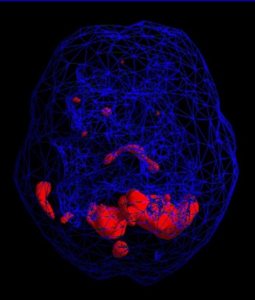
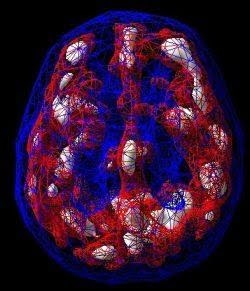
A healthy “active” scan shows the most active parts of the brain with blue representing the average activity and red (or sometimes red and white) representing the most active parts of the brain. In the healthy scan, the most active area is in the cerebellum, at the back/bottom part of the brain. In the other scan from a person with bipolar disorder, there is overactivity in many areas of the brain.
Understanding that bipolar disorder involves real, measurable differences in brain function can be life-changing.
It shifts the conversation away from blame and toward biology. Bipolar disorder is not a character flaw or a lack of willpower. It is a brain health condition that is highly heritable and can involve disruptions in how the brain regulates mood, energy, and behavior.
For many people, seeing this evidence provides relief, validation, and a clearer path forward.
One of the strengths of this research is its size. The study analyzed brain SPECT scans from 313 adults diagnosed with bipolar disorder and compared them to healthy individuals.
Participants underwent comprehensive evaluations along with brain imaging, giving researchers a detailed look at how brain function differed between the two groups. This larger sample size helps strengthen confidence in the patterns that were observed.
The most striking finding was widespread bipolar disorder brain overactivity. Researchers found elevated blood flow across many regions of the brain, a pattern known as hypermetabolism.
This is what people mean when they say bipolar brains “run hot.” It does not refer to temperature. It reflects increased activity and blood flow in the brain, which can signal that certain systems are working harder than they should.
Rather than being limited to one small area, this overactivity appeared across multiple brain regions, suggesting a more global pattern of dysregulation.
Related: The Hidden Signs of Bipolar Disorder Even Doctors Can Miss
Although the overactivity was widespread, it was especially pronounced in frontostriatal circuits. These brain pathways connect the frontal lobes, which are involved in decision-making and self-control, with deeper structures like the basal ganglia and thalamus.
These circuits play a central role in regulating mood, behavior, and impulse control. When they are overactive, it may contribute to the emotional highs, lows, and instability often seen in bipolar disorder.
This finding provides an important clue about the brain systems most involved in the condition.
Another important discovery involved how these patterns changed over time. In healthy individuals, certain aspects of brain activity tend to decrease with age.
In this study, the opposite pattern appeared in the bipolar group. The abnormalities in brain activity increased with age across much of the brain.
This does not mean that every person with bipolar disorder will experience worsening symptoms. It does suggest that, at the group level, the underlying brain changes may become more pronounced over time.
Other research using MRI also reveals structural changes over time in the bipolar brain. In particular, this multicenter study involving 1,232 individuals found faster cortical thinning, especially in the prefrontal cortex, in people with more manic episodes.
In simple terms, overactivity means there is too much activity in key brain systems. Your brain is designed to have balanced activity. Some areas should be more active at certain times, while others quiet down as needed.
In bipolar disorder, this balance can be disrupted. Certain systems stay overly active when they should be more regulated. This is what shows up on SPECT imaging as higher levels of activity across multiple regions.
It might seem like more brain activity would be a good thing. In reality, too much activity in key regions can make it harder for the brain to function smoothly.
An overactive brain can lead to increased emotional intensity, faster shifts in mood, and difficulty calming down once a reaction starts. It can also make it harder to think clearly, pause before acting, or maintain steady focus.
In this way, more activity can mean less efficiency. The brain may be working harder, but not in a way that supports stability or control.
Related: 5 Things Not to Do If You Have Bipolar Disorder
The frontostriatal circuits help regulate mood, impulse control, and decision-making. These networks play a key role in how you regulate your emotions, control impulses, and make decisions.
They help you pause before reacting, weigh consequences, and stay balanced in your responses to everyday situations. When these circuits are working well, they support stability, focus, and thoughtful behavior.
When activity is too high in these circuits, it can disrupt that balance. Instead of helping regulate emotions, the system may become overly reactive.
This can make mood states more intense or harder to shift. You may feel stuck in a high-energy or low-energy state, or find it difficult to return to baseline after an emotional reaction.
Overactivity in these regions can also affect impulse control and decision-making, which may contribute to behaviors that feel hard to manage in the moment.
These findings offer a possible brain-based explanation for some of the patterns seen in bipolar disorder.
If frontostriatal circuits are overactive, it may help explain why mood changes can feel so powerful and difficult to regulate. It may also shed light on the swings between elevated and depressed states, as well as the instability that many people with bipolar disorder experience.
The finding that bipolar brains worsened with age highlights the importance of taking bipolar disorder seriously as a long-term brain health condition. It reinforces the value of early recognition, consistent care, and lifelong strategies that support healthy brain function.
At the same time, this is not a prediction of inevitable decline. Many people with bipolar disorder improve with the right treatment and lifestyle support. Understanding the brain patterns involved can help guide more proactive and personalized approaches to care over the long term.
Not necessarily. The study found that brain activity differences increased with age in the bipolar group as a whole.
That does not mean every individual with bipolar disorder will experience worsening symptoms over time. People respond differently based on factors like treatment, lifestyle, support systems, and overall health.
At the same time, the results offer a possible explanation for why some individuals report that their symptoms become more difficult to manage as they get older.
If underlying brain activity becomes more dysregulated over time in some cases, it could contribute to greater mood instability, more intense episodes, or a harder time returning to baseline.
This does not apply to everyone, but it provides a useful framework for understanding why the course of bipolar disorder can vary so widely.
These findings reinforce the value of paying attention to brain health early and consistently over time.
Getting an accurate diagnosis, following an effective treatment plan, and supporting the brain through healthy habits may help improve stability and long-term outcomes.
There is real hope here. With the right approach, many people with bipolar disorder can feel better, function better, and build a more stable future.
Bipolar disorder is not one thing. There are multiple types, including bipolar 1 and bipolar 2, and the symptoms you experience depend on which type you have.
While symptoms help guide diagnosis, they do not always reveal what is happening in the brain. Different patterns of brain function can lead to similar outward behaviors, which is why a one-size-fits-all approach does not always work.
Looking at the brain can provide additional clues about what may be contributing to mood instability.
SPECT imaging shows patterns of activity and blood flow that may help identify overactive or underactive regions. In some cases, this added layer of information can help clinicians better understand why symptoms are occurring or why certain treatments have not been effective.
When you have a clearer picture of how the brain is functioning, it becomes easier to make more informed decisions about care.
At Amen Clinics, brain-imaging technology is used to identify patterns associated with bipolar disorder and other mental health conditions. This brain-first approach helps guide a more personalized evaluation process.
Better information does not guarantee a specific outcome, but it can support more thoughtful planning and a more targeted path forward.
At Amen Clinics, we go beyond traditional psychiatry with a whole-body approach. The focus starts with the organ that drives thoughts, feelings, and behavior: the brain.
Instead of relying on symptoms alone, this approach looks at how the brain is functioning. This helps shift the conversation from labels to underlying biology and opens the door to more targeted care.
After analyzing nearly 300,000 brain scans from more than 100,000 patients, we understand that every brain is different, and effective care often begins with understanding those differences.
By combining brain imaging with a comprehensive clinical evaluation, Amen Clinics works to build a more complete picture of each individual. This allows for a more personalized approach that considers brain function, biology, and life experience.
This 2023 SPECT study adds an important piece to the understanding of bipolar disorder. The findings suggest that bipolar disorder is associated with widespread brain overactivity, known as hypermetabolism, with especially strong effects in frontostriatal circuits involved in mood and behavior.
The research also found that these brain activity patterns may become more pronounced with age, which differs from what is typically seen in adults without bipolar disorder.
These results do not mean that every person with bipolar disorder will experience worsening symptoms over time. However, they do support a more brain-based view of the condition. Bipolar disorder is not just about mood swings. It can involve measurable differences in how the brain functions.
Understanding these patterns may help explain why consistent, thoughtful care matters. With the right approach, it is possible to support better brain health, improve stability, and build a more hopeful path forward.
Brain SPECT scans are not used as a standalone tool to diagnose bipolar disorder. At Amen Clinics, SPECT is used as part of a comprehensive clinical evaluation that includes symptoms, history, and overall functioning.
SPECT imaging shows blood flow and activity levels in different parts of the brain.
In this 2023 study, individuals with bipolar disorder showed widespread overactivity, known as hypermetabolism, especially in frontostriatal circuits involved in mood and behavior.
Although this study identified clear patterns, not every person with bipolar disorder will show the exact same brain activity.
Bipolar disorder is complex and can present differently from person to person. Brain function is influenced by many factors, including genetics, environment, treatment history, and lifestyle.
It is important to avoid assuming that one pattern applies to everyone.
“Bipolar brains run hot” is a simple way to describe increased brain activity. It refers to higher levels of blood flow and function in certain brain regions, not actual heat. The term reflects the pattern of overactivity seen in brain-imaging studies.
This study found that brain activity differences increased with age in the bipolar group, which was the opposite pattern seen in individuals without the disorder.
This does not mean symptoms will worsen for everyone. It reflects a group-level trend in brain function, not a guaranteed outcome for each person.
Frontostriatal circuits are brain pathways that connect the frontal lobes with deeper structures such as the basal ganglia and thalamus.
These circuits help regulate mood, decision-making, and impulse control. The study found that these areas showed some of the strongest overactivity in bipolar disorder, which may play a role in mood instability.
About the Reviewer
Dr. Daniel Emina is an Associate Medical Director at Amen Clinics Orange Country Metro Area and a child, adolescent, and adult psychiatrist. He earned his medical degree from the UCLA School of Medicine and completed his psychiatry residency and child/adolescent psychiatry fellowship at the University of Hawaii Department of Psychiatry. Dr. Emina uses psychotherapy, pharmacotherapy, pharmacogenomics, brain imaging, TMS, and integrative therapies to optimize brain health and function.
Belur P, et al. “A SPECT Study of Regional Cerebral Blood Flow in Bipolar Disorder.” Biological Psychiatry, Volume 93, Issue 9, Supplement S143 (2023). https://www.biologicalpsychiatryjournal.com/article/S0006-3223(23)00436-5/abstract
Clark, Luke, and Barbara J Sahakian. “Cognitive Neuroscience and Brain Imaging in Bipolar Disorder.” Dialogues in Clinical Neuroscience vol. 10,2 (2008): 153-63. doi:10.31887/DCNS.2008.10.2/lclark
Abé C, et al. “Longitudinal Structural Brain Changes in Bipolar Disorder: A Multicenter Neuroimaging Study of 1232 Individuals by the ENIGMA Bipolar Disorder Working Group.” Biological Psychiatry, Volume 91, Issue 6, (2022): 582-592. https://doi.org/10.1016/j.biopsych.2021.09.008
TL;DR
Anxiety is common, but it’s not one-size-fits-all. The same symptoms can have very different root causes, which is why some techniques work for some people but not others.
Science-backed strategies like breathing exercises, movement, better sleep, and nutrition can help calm your nervous system, especially when practiced consistently.
But lasting relief often comes from understanding what’s driving your anxiety. A brain-based, whole-body approach can uncover root causes and guide more personalized, effective solutions.
Medically reviewed by Daniel Emina, MD, Amen Clinics

Have you ever found yourself wide awake at 2 a.m., your mind racing through everything that could go wrong? Or felt constantly on edge, like something bad is about to happen, even when everything seems fine?
If that sounds familiar, you’re not alone. Millions of people struggle with anxiety that feels overwhelming, unpredictable, and hard to control. An estimated 31.1 percent of U.S. adults experience some type of anxiety disorder during their lifetime.
The good news is that there are reliable, science-backed anxiety management techniques that can help calm your mind and restore a sense of control. These tools are not magic, but when used consistently and correctly, they can make a meaningful difference in how you think, feel, and respond to stress.
At the same time, anxiety is not one-size-fits-all, and neither are the solutions. What works for one person may not work for another.
In this guide, you will learn practical strategies grounded in brain science, along with insights into what is happening inside your brain so you can find the techniques that work best for you.
Anxiety doesn’t have a single cause. It can arise from a variety of factors, including differences in brain function, biology, and life experiences.
Anxiety is your body’s natural way of responding to unease, dread, fear, or nervousness concerning future uncertainty or threats, real or perceived. In moderation, anxiety serves a purpose. It’s what motivates us to prepare for an interview or exam, or to take measures to protect our health. Too much, however, is a problem. Anxiety can become a disorder if it’s persistent, excessive, and begins to interfere with your daily life.
Common psychological symptoms of anxiety may include:
Common physical symptoms of anxiety may include:
Anxiety is prevalent. Research by the World Health Organization shows that around 359 million people in the world experienced and lived with anxiety in 2021. More studies further show that generalized anxiety disorder affects nearly 7 million U.S. adults. Indeed, anxiety is one of the most common mental health disorders globally.
Anxiety management techniques are strategies designed to help reduce excessive worry, calm the nervous system, and improve emotional regulation.
These approaches can take different forms. Some are mental, focusing on how you think. Others are physical, helping you regulate your body. And some are behavioral, centered on building healthier daily habits.
While these techniques can be helpful in moments of intense anxiety or panic, they tend to be most effective when practiced consistently over time.
It’s also important to remember that anxiety is highly individual. A technique that works well for someone else may not have the same effect for you, and that’s okay. In many cases, the most effective approach is a combination of strategies tailored to your unique needs and situation.
Anxiety doesn’t have a single cause. It can arise from a variety of factors, including differences in brain function, biology, and life experiences.
For some people, anxiety is linked to an overactive fear circuit in the brain that triggers constant false alarms. For others, it may stem from chronic stress that keeps the body’s stress response switched on.
Anxiety can also be rooted in past trauma, which may show up as physical symptoms like nausea or tension. In other cases, it may be influenced hormonal changes or underlying medical conditions. Even poor sleep can increase anxiety, research shows.
In short, two people can experience similar anxiety symptoms, but the underlying causes may be very different. Research and brain imaging have also shown that certain symptom patterns are associated with distinct brain activity and blood flow patterns.
That’s why cookie-cutter solutions don’t always work. The most effective approach is one that takes your unique brain and body into account.
You can start using any of the following techniques to manage anxiety today. Try combining different techniques to maximize the calming benefits.
Have you ever been told to “just take a deep breath” during an anxiety spike? While breathing can help, research shows that slowing down your exhalation matters more than simply taking deep breaths.
Slowing down your exhale, in particular, signals your nervous system to calm down and can quickly reduce feelings of anxiety.
One simple technique to try is the 15-second breath:
Inhale through your nose for 4 seconds, hold for 1.5 seconds, exhale slowly through your mouth for 8 seconds, then hold again for 1.5 seconds. Repeat this cycle four to twelve times.
Try it for a minute or two. Notice how your body feels.
This type of slow, controlled breathing activates your parasympathetic nervous system, the part of your autonomic nervous system responsible for rest and relaxation. It helps counter your body’s stress response and restore balance.
Grounding exercises have been shown to reduce anxiety in research. We’ve seen how anxiety can sometimes come from worrying about what will happen. When your mind is racing, grounding brings your attention back to the present moment by engaging the senses.
Here’s one technique you can use. Simply look around you and name:
By the time you identify all five of your senses, your attention will return to the here and now, and your racing thoughts will begin to settle.
You don’t need to spring for an expensive gym membership or train for a marathon. Move in any way you can. Dance to your favorite music or a YouTube workout, take a short walk, or do some simple stretching.
You might be surprised to discover how much a little regular movement helps to keep stress hormones like cortisol in check and boost brain function.
According to research, regular physical activity is proven to reduce anxiety symptoms in many different groups of people and, in some cases, more effective than conventional distraction techniques. Take a 20-minute walk today and see how you feel afterwards!
Caffeine and sugar can overstimulate your nervous system, triggering symptoms like a racing heart, shaky hands, and that wired-but-tired feeling.
One of the simplest ways to reduce these effects is to cut back gradually. Try limiting yourself to one cup of coffee in the morning, ideally before noon, and replace additional cups with water or herbal tea.
You might also consider switching to green tea. It contains about half the caffeine of coffee and includes L-theanine, an amino acid that promotes calm, focused alertness without the jitters.
When it comes to sugar, opt for whole fruits instead of processed sweets. Lower-sugar options like berries, grapefruit, kiwi, and green apples can help satisfy cravings without causing sharp blood sugar spikes and crashes.
As you make these changes, pay attention to how you feel. Even small adjustments can lead to noticeable improvements in your anxiety levels.
If you’ve been cutting back on sleep to get more done, it may actually be making it harder for you to handle stress. Think about how much bigger and more overwhelming small problems feel when you’re exhausted.
One of the most effective ways to support your mental health is to keep a consistent sleep schedule. Try going to bed and waking up at the same time every day, including weekends.
Aim for seven to nine hours of sleep each night. When your sleep is consistent, your brain is better able to regulate emotions, manage stress, and keep anxiety in check.
When you get unhelpful thoughts like, “I am going to mess this up,” even when you know you are well prepared for that moment, remember, they are just your thoughts, not reality.
The truth is that our thoughts often lie to us. Questioning them can reduce anxiety levels.
So, next time you notice one of those automatic negative thoughts, pause. Ask yourself if it is true. For example, “all-or-nothing” thinking is often flawed. Consider if there’s a more accurate, positive thought. If so, choose that thought!
Challenging yourself to see things differently is not being overly positive or fake. You’re just refusing to believe every worst-case scenario your brain throws at you.
Your worries get louder when you are alone or isolate yourself because there’s nothing to interrupt or challenge them. Being around people you trust, even for a 10-minute call or chat, helps settle your nervous system.
It helps keep you in the present moment instead of getting stuck in worried thoughts. Research shows that people with lower levels of social connection have a higher risk of developing generalized anxiety disorder.
Short, intentional breaks are highly effective to implement because they are low-pressure. They provide enough of a break from stress to help keep tension levels manageable and anxiety in check.
Examples:
You can support your brain health with your food choices. For instance, balanced meals keep your blood sugar stable, preventing the energy crashes that can trigger anxiety.
In addition, foods rich in omega-3s, such as salmon, walnuts, and flaxseeds, give your brain the building blocks it needs to function better. Research shows that people who eat more whole foods, vegetables, and omega-3 fatty acids have lower rates of anxiety disorders. On the other hand, highly processed diets can cause higher rates of anxiety.
Small daily routines, such as a morning ritual, setting a bedtime, and regular weekly grocery shopping, reduce the number of decisions your brain has to stress over. Structure and predictability calm your brain and help it relax.
The type of anxiety management technique that works depends on what the root cause of the anxiety is. Two people may both experience anxious symptoms, but one has an overactive fight-or-flight response, while the other struggles with brain fog and low energy. The first person might benefit from calming techniques like slow breathing. While the second person might need strategies to improve focus and regulation, such as structure and movement.
Same symptoms, but different anxiety management techniques. This is why personalization is critical. When one strategy is not effective for you, it does not mean that you cannot manage anxiety; it likely means that you need different techniques.
Apart from stress, there are other causes of anxiety, such as biological factors, like:
It is important to rule out medical causes. Relaxation techniques may not be able to help these types of anxiety that have biological roots.
Related: 4 Steps to Break An Anxiety Attack
Most of the approaches to anxiety focus on symptoms such as worry, restlessness, or panic. Our focus at Amen Clinics begins with brain health.
With the help of SPECT imaging, our clinicians look at patterns of blood flow and brain activity to see how different regions of the brain are functioning. This brain imaging work has revealed that there are seven subtypes or brain patterns associated with anxiety and depression, and anxiety and depression often co-occur.
In our comprehensive evaluation, our clinicians review this SPECT scan data, plus neuropsychological testing and a detailed personal health history, to better understand what may be driving your anxiety.
And what drives anxiety varies. For some people, it is connected to overactive brain regions; for others, it may be tied to focus issues, stress, or past experiences. Understanding the “why” behind your symptoms makes a real difference in finding the right treatment.
At Amen Clinics, we practice holistic psychiatry, which combines cutting-edge neuroscience with natural ways to treat mental health disorders. Our thorough and detailed evaluation helps our clinicians practice precision medicine to craft more personalized, targeted treatment plans.
Anxiety is not something that just affects your head. It also lives in your body. A whole-body approach to treating anxiety takes into account both your body and your brain. Treatment plans tend to include:
If you’ve already tried different combinations of these techniques, but it doesn’t seem to work, you may need to seek help from a qualified mental health professional.
If you are experiencing any of the following, it’s an indicator to take the next steps for support:
So, when do you know it’s time to get a professional evaluation for anxiety? Watch out for:
There is no single one-size-fits-all solution to anxiety. Your brain patterns, history, and your body are unique to you. Hence, the treatment should also be unique and customized to diverse needs.
With the right interventions that address the root causes of anxiety, brain function can significantly improve, as well as your anxiety symptoms.
Anxiety management techniques are a lifesaver when your brain is spinning. And when done consistently, they can be a long-term way to keep your anxiety in check. What helps even more is knowing the root cause of your anxiety so that you can customize management techniques depending on what you really need.
You don’t have to figure it out alone. If you’re looking for deeper answers beyond general management techniques, consider a comprehensive evaluation that looks beyond symptoms to understand your brain, body, and mind.
A combination of anxiety management techniques such as slow breathing, grounding exercises, regular movement, and consistent sleep will yield the best results.
Try the 15-second breath method. Inhale through your nose for 4 seconds, hold for 1.5 seconds, exhale slowly through your mouth for 8 seconds, then hold again for 1.5 seconds. Repeat this cycle four to twelve times.
It’s very possible to manage anxiety without medication with lifestyle changes, therapy, and stress regulation techniques. But in some cases, medication may be necessary.
There are times when the technique doesn’t align with the root cause. For instance, a breathing exercise might not help if your anxiety if its root cause is a hormonal issue or a nutritional deficiency.
Physical issues such as thyroid issues, blood sugar shifts, heart conditions, and vitamin deficiencies can cause or worsen anxiety.
Anxiety and other mental health conditions can’t wait. At Amen Clinics, we practice precision medicine—using brain SPECT imaging and comprehensive evaluations to understand what’s really happening in your brain, not just your symptoms.
Our whole-body approach to holistic psychiatry combines cutting-edge neuroscience with natural ways to treat mental health conditions, including targeted nutrition, supplements, lifestyle strategies, therapy, and medications (when necessary). Every treatment plan is personalized to address the root causes of your struggles and support the health of your brain, body, and mind.
Don’t settle for guesswork. You deserve answers—and a plan built specifically for you. Speak with a Brain Health Advisor today at 888-288-9834 or visit our contact page to get started.
National Institute of Mental Health website
Accessed April 14, 2026
World Health Organization. (2022). Mental disorders: Key facts. WHO Fact Sheets.https://www.who.int/news-room/fact-sheets/detail/anxiety-disorders
Anxiety and Depression Association of America. (2026). Facts & statistics. https://adaa.org/understanding-anxiety/facts-statistics
Pires, G. N., Tufik, S., & Andersen, M. L. (2012). Relationship between sleep deprivation and anxiety: experimental research perspective. Einstein (São Paulo), 10(4), 519-523. https://pubmed.ncbi.nlm.nih.gov/23386097/
Luo, Q., Li, X., Zhao, J., Jiang, Q., & Wei, D. (2025). The effect of slow breathing in regulating anxiety. Scientific reports, 15(1), 8417. doi: 10.1038/s41598-025-92017-5
Wolfe AHJ, Hinds PS, du Plessis AJ, Gordish-Dressman H, Freedenberg V, Soghier L. Mindfulness Exercises Reduce Acute Physiologic Stress Among Female Clinicians. Crit Care Explor. 2024 Oct 25;6(11):e1171. doi: 10.1097/CCE.0000000000001171. PMID: 39466161; PMCID: PMC11519409.
Anderson, E., & Shivakumar, G. (2013). Effects of exercise and physical activity on anxiety. Frontiers in psychiatry, 4, 27. doi: 10.3389/fpsyt.2013.00027
Taylor, C. T., Pearlstein, S. L., Kakaria, S., Lyubomirsky, S., & Stein, M. B. (2020). Enhancing social connectedness in anxiety and depression through amplification of positivity: Preliminary treatment outcomes and process of change. Cognitive therapy and research, 44(4), 788-800. doi: 10.1007/s10608-020-10102-7
Natacci, L., M. Marchioni, D., C. Goulart, A., Nunes, M. A., B. Moreno, A., O. Cardoso, L., … & M. Bensenor, I. (2018). Omega 3 consumption and anxiety disorders: a cross-sectional analysis of the brazilian longitudinal study of adult health (ELSA-Brasil). Nutrients, 10(6), 663. doi: 10.3390/nu10060663
TL;DR
Medically reviewed by Mark Filidei, DO , Amen Clinics

Have you ever felt like something was wrong in your body, but no one could tell you what it was?
Symptoms like brain fog, fatigue, headaches, anxiety, mood swings, and trouble concentrating can sometimes point to hidden issues such as toxic mold exposure. But for many people, the cause isn’t immediately obvious.
That was the reality for Juanita Martin. What began as a series of unexplained physical symptoms quickly spiraled into something much more disruptive. As her condition worsened, she found herself searching desperately for answers. Doctor visits, emergency room trips, and medical tests offered little clarity. No one could pinpoint the cause.
Over time, Juanita began to notice something else. Her symptoms were no longer just physical. They were affecting her mental and emotional well-being too.
Determined to get real answers, she decided enough was enough. She booked a visit to Amen Clinics to take a deeper look at what was happening in her brain.
This is her story or recovery.
“I started experiencing mysterious symptoms… doctors couldn’t figure it out,” says one woman who finally went to Amen Clinics for a brain scan, which showed signs of toxic mold exposure. Understanding the root cause of her issues was the first step in her healing journey.
It was late 2019 when Juanita’s health began to unravel.
“I started experiencing mysterious symptoms… doctors couldn’t figure it out,” she says.
As time went on, the uncertainty about her condition became overwhelming. Not knowing what’s wrong can be just as distressing as the symptoms themselves.
After months of unexplained symptoms and failing to get the right help, something unexpected happened. “I discovered water damage near the baseboard of my floor. They discovered mold,” Juanita recalls. Suddenly, her world flipped upside down.
She realized she was experiencing mold toxicity symptoms. “I’ve heard of people having toxic mold exposure, but I didn’t know how, physiologically, it was affecting the body. I’m severely allergic to mold,” Juanita explains.
Juanita and her husband were forced to leave their home for five months so that the mold could be fully remediated.
There are so many types of molds. What is toxic mold?
Toxic mold refers to certain types of fungi that produce poisonous substances called mycotoxins. These molds often grow in damp, water-damaged environments, such as homes with leaks, flooding, or poor ventilation.
In terms of brain health, research suggests that exposure to toxic mold may trigger inflammation in the brain, interfere with the brain’s ability to produce healthy new brain cells, and contribute to problems with memory, concentration, mood, and emotional well-being.
Toxic mold exposure has been linked to a range of symptoms, including:
Although black mold (Stachybotrys chartarum) is the most well-known, many types of mold can produce harmful toxins.
A mold allergy occurs when the immune system overreacts to mold spores that are normally harmless to most people. Symptoms can include coughing, sneezing, itchy or watery eyes, congestion, wheezing, skin irritation, and trouble breathing.
Mold allergies are surprisingly common. Research estimates that between 3 and 10 out of every 100 people have them. People with asthma, respiratory conditions, or a family history of allergies may be at greater risk.
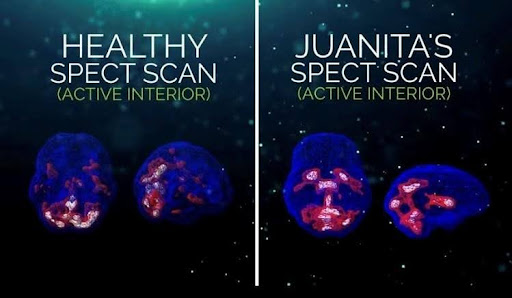
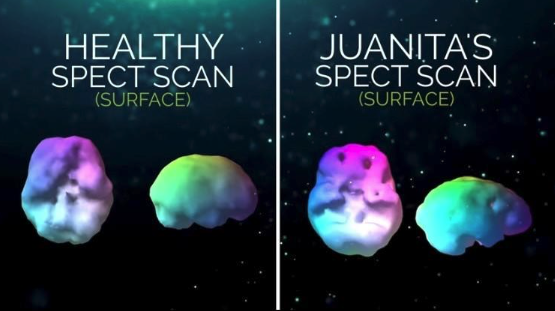
Juanita’s active brain scans show overactivity in the emotional and fear centers of the brain. In the surface scans, there are signs of low blood flow in the prefrontal cortex and a “scalloping” appearance consistent with toxic exposure. When seeing this pattern on SPECT scans, it leads Amen Clinics physicians to ask why the brain looks toxic and what might be causing it.
With this new insight, Juanita and her husband were able to begin personalized treatment plans designed to support their brains. By increasing blood flow and addressing the root cause, they were finally able to move forward into a healthier, happier chapter of their lives.
One of the most transformative moments came during brain SPECT imaging.
SPECT (single photon emission computed tomography), is a specialized brain imaging technology that measures blood flow and activity patterns in the brain.
At Amen Clinics, SPECT scans are used to help identify areas of the brain that may be overactive or underactive, providing insights that can guide more personalized treatment plans for mental health, cognitive function, and behavioral issues.
In Juanita’s case, seeing her SPECT scan had a meaningful impact. For the first time, she could see what was happening in her brain as a result of the mold exposure. “I felt validated that it was literally in my head, and I wasn’t going crazy,” she says.
This is a powerful turning point for many patients. Brain imaging provides objective evidence of how the brain is functioning, helping to explain symptoms that may otherwise feel confusing or dismissed.
Research and clinical experience show that, in addition to toxic exposure, SPECT imaging can reveal brain patterns linked to other conditions including:
Instead of guessing based on symptoms alone, Amen Clinics’ clinicians take a whole-body approach to treatment that is based on looking at the entire person and all the factors that impact brain health and mental well-being.
Our clinicians use SPECT scan results, plus a personal health history that explores lifestyle factors, and other clinical assessments, which sometimes may require additional lab work, to closely examine all contributing factors and fully understand what might be happening in the body and brain.
Targeted treatment plans are then created based on what the brain actually needs.
Related: Toxic Mold Syndrome: “It Was Like I Lost My Personality”
For Juanita, the effects of exposure didn’t stop at physical toxic mold symptoms.
The ordeal also impacted her marriage.
Before understanding the root cause, she and her husband struggled in their interactions. But brain-based insights changed how they saw each other and reduced their marital conflict.
“It was like this little boy and this little girl trying to interact in adult bodies,” Juanita explains.
That shift in perspective created space for empathy, compassion, and healing.
When you understand that behavior is often driven by brain function, not character flaws, it becomes easier to:
This is one of the most powerful lessons from brain health work: relationships improve when understanding increases.
Feeling hope for the first time, the feeling of being stuck dissipated. Juanita and her husband began to move forward together. Juanita recalls that she felt, “We can walk through this together.”
With guidance and support, they learned how to:
Brain health and mental health issues don’t exist in isolation. They affect families, relationships, and daily life.
The collaborative healing process was powerful for the Martins.
With treatment at Amen Clinics, Juanita began to notice meaningful changes over time. “My flare-ups are less… I’m listening to my body and what my brain needs,” she says. She now has a brain health tool kit that she uses.
Her recovery wasn’t instant, but it has proved to be real and lasting.
Healing from toxic exposure and brain dysfunction often involves:
This personalized, whole-person approach is key to long-term improvement.
Juanita’s journey didn’t end with treatment. It truly began a new chapter in her life filled with connection and purpose.
She joined the Amen Clinics Brain Warriors Alumni Network, a community where patients share experiences, encouragement, and hope.
“I want other people to know… they don’t have to stay stuck,” she says.
By hearing others’ stories and sharing her own, she feels a deep sense of gratitude and purpose that has enriched her life.
While Juanita’s healing began as symptom relief, it has become so much more.
One theme stood out throughout Juanita’s experience at Amen Clinics: safety. She explains, “It was a safe space. I felt at home. I felt safe.”
When you’re dealing with complex, misunderstood symptoms, feeling safe and supported can mean everything.
At Amen Clinics, the goal is not just to treat symptoms, but to create an environment where healing can truly begin.
If you’re struggling with unexplained symptoms, mood changes, or cognitive issues, this story carries an important message: you are not alone, and you are not out of options.
Sometimes, the root cause lies deeper than standard testing reveals. Whether it’s toxic exposure, brain dysfunction, or another underlying issue, identifying the cause is the first step toward healing.
As this patient’s journey shows:
By addressing the root causes of symptoms, including environmental toxic mold exposure, Amen Clinics provides a comprehensive, science-backed path to recovery.
With tools like brain SPECT imaging, personalized treatment plans, and ongoing support, patients can move from confusion and frustration to clarity and hope.
Toxic mold refers to certain types of fungi that produce harmful substances called mycotoxins. These molds commonly grow in damp, humid, or water-damaged environments.
Exposure to toxic mold can trigger inflammatory responses that directly affect brain regions responsible for memory, emotion, and coordination. Although black mold is the most well-known, many different mold species can produce toxins that affect health.
Toxic mold exposure can affect both the body and brain. Symptoms of mold toxicity may include brain fog, fatigue, headaches, memory problems, anxiety, mood swings, trouble concentrating, sleep issues, chronic inflammation, and increased sensitivity to stress.
In some people, symptoms can become severe enough to interfere with relationships, work, and daily functioning.
Yes. Research and clinical experience suggest that toxic mold exposure may contribute to mental health symptoms such as anxiety, depression, irritability, panic, mood changes, and cognitive difficulties.
Because mold can impact brain function, many people experience emotional and psychological symptoms in addition to physical ones.
At Amen Clinics, evaluations include brain SPECT imaging, detailed clinical assessments, and a review of environmental, medical, and lifestyle factors. SPECT scans measure blood flow and activity patterns in the brain, helping clinicians identify areas that may have been affected by toxic exposure.
They then create personalized treatment plans to heal the brain in the areas affected and strengthen brain health.
In many cases, yes. The brain has an incredible ability to heal and change when underlying causes are addressed.
Recovery may involve removing environmental toxins, supporting detoxification pathways, improving blood flow to the brain, optimizing nutrition and sleep, reducing inflammation, and following a personalized treatment plan designed to support brain health.
Harding CF, Pytte CL, Page KG, Ryberg KJ, Normand E, Remigio GJ, DeStefano RA, Morris DB, Voronina J, Lopez A, Stalbow LA, Williams EP, Abreu N. Mold inhalation causes innate immune activation, neural, cognitive and emotional dysfunction. Brain Behav Immun. 2020 Jul;87:218-228. doi: 10.1016/j.bbi.2019.11.006. Epub 2019 Nov 18. PMID: 31751617; PMCID: PMC7231651.
López Couso VP, Tortajada-Girbés M, Rodriguez Gil D, Martínez Quesada J, Palacios Pelaez R. Fungi Sensitization in Spain: Importance of the Alternaria alternata Species and Its Major Allergen Alt a 1 in the Allergenicity. J Fungi (Basel). 2021 Aug 3;7(8):631. doi: 10.3390/jof7080631. PMID: 34436170; PMCID: PMC8398619.
TL;DR:
Medically reviewed by Steven Storage, MD, Amen Clinics.

Many adults struggle with anxiety, depression, or substance use without fully understanding why. If this sounds familiar, your past may hold important clues. A growing body of research is helping answer a powerful question: can childhood trauma be seen on a brain scan?
At Amen Clinics, a large study of adult patients found that higher levels of adverse childhood experiences (ACEs), such as abuse, neglect, or household dysfunction, were linked to clear, measurable patterns in brain function on SPECT imaging. These brain changes were also associated with a greater likelihood of conditions like anxiety, depression, and substance use disorders.
In this article, you’ll learn what ACEs are, what brain SPECT scans reveal about the lasting impact of childhood trauma, and why these findings offer new hope for healing and personalized treatment.
Having a high number of adverse childhood experiences (ACEs) increases your risk for mental health issues. Although your past may help explain your struggles, it doesn’t have to limit your future.
Adverse childhood experiences (ACEs) are potentially traumatic events that occur before the age of 18. These early experiences can shape how your brain develops, how you respond to stress, and how you relate to others later in life.
Understanding ACEs is an important first step in recognizing how your past may still be influencing your present, and how healing is possible.
Related: The Long-Term Impact of Adverse Childhood Experiences
ACEs generally fall into three main categories: abuse, neglect, and household challenges.
These experiences don’t just affect emotions in the moment. They can influence how the brain develops and functions over time.
Researchers often measure ACEs using a simple score based on how many of these experiences a person has had. The higher your ACE score, the greater the potential impact on your long-term health.
Decades of research, including the latest findings from Amen Clinics, show that higher ACE scores are associated with increased rates of mental health conditions like anxiety, depression, and substance use disorders.
One study on twins found that individuals who were exposed to more ACEs had a higher risk of mental disorders compared with their twin who had lower ACE scores.
Studies show that higher ACE scores are also linked to a higher risk of physical health problems, from heart disease to chronic inflammation.
The new research builds on this foundation by showing that these early experiences are not just psychological, but they are also reflected in measurable patterns of brain function.
It’s important to be clear: ACEs increase risk, but they do not determine your destiny.
Even though the study found strong associations between higher ACE scores, brain changes, and mental health challenges, these findings are not a life sentence. Your brain has the ability to change and heal. This concept is known as neuroplasticity.
With the right support, targeted treatment, and brain-healthy habits, you can improve how your brain functions and how you feel. Your past may help explain your struggles, but it doesn’t have to limit your future.
Video: Overcoming the Lasting Impact of Childhood Trauma: ACE Scores & EMDR Therapy
Brain scan findings are important, but what matters most is how they connect to real life. This study helps bridge that gap by showing how early adversity is linked not only to brain patterns, but also to increased risk for common mental health challenges.
The study found that higher ACE scores were associated with increased rates of anxiety-related disorders.
This aligns with what many people experience, such as chronic worry, heightened stress responses, or feeling on edge. The brain patterns identified in the scans may help explain why individuals with a history of childhood adversity are more prone to anxiety later in life.
In addition to anxiety, higher ACE scores were also linked to greater rates of depression-related diagnoses.
These findings are consistent with prior research showing that early life stress can affect mood regulation, motivation, and emotional resilience. The changes observed in brain function may contribute to symptoms such as low mood, lack of energy, and difficulty experiencing pleasure.
The study also found that as ACE scores increased, so did the risk for addictions. This included associations with substance abuse, substance dependence, alcohol-related disorders, and nicotine-related disorders.
For some individuals, substances may become a way to cope with emotional pain, regulate stress, or temporarily quiet an overactive mind.
Not all childhood experiences affect the brain in the same way. One of the most useful insights from this study is that different types of adversity were linked to different adult mental health outcomes. This adds a more personalized understanding of risk.
The study found that exposure to substance abuse in the household during childhood was specifically associated with a higher likelihood of substance-related diagnoses in adulthood.
This includes patterns such as substance abuse, dependence, and alcohol- or nicotine-related disorders. Early exposure may shape how the brain responds to reward, stress, and coping, potentially increasing vulnerability to similar behaviors later in life.
The findings also showed that psychological abuse and growing up in a household with mental illness were linked to higher rates of depression-related diagnoses.
These types of experiences may have a strong impact on emotional development, self-perception, and stress regulation, which can carry forward into adulthood as persistent low mood, negative thinking patterns, or reduced resilience.
For many people, trauma can feel invisible, something that lives only in memories or emotions. But growing research is helping answer an important question: can childhood trauma be seen on a brain scan? The answer is increasingly clear: yes, it can.
In one of the largest adult clinical cohorts of its kind, researchers at Amen Clinics used brain SPECT imaging to examine how early life experiences relate to adult brain function.
SPECT (single-photon emission computed tomography) measures blood flow and activity patterns in the brain, offering insights into how different regions are working.
In this study, scans were taken under both resting conditions and during concentration tasks, providing a more complete picture of brain function in everyday life.
By combining brain imaging data with patients’ ACE scores, researchers were able to explore how childhood adversity may be reflected in the adult brain.
The results showed a clear pattern: higher ACE scores were associated with distinct differences in brain perfusion (blood flow) across several key brain systems.
These patterns were not random. Instead, they appeared in areas involved in:
In other words, early adversity wasn’t just linked to how people felt, it was connected to how their brains functioned. The findings suggest that childhood trauma may leave measurable, lasting signatures in the brain that persist into adulthood.
These findings are powerful because they validate something many people have long felt but couldn’t explain.
If you’ve struggled with anxiety, depression, or impulsivity, it is not a personal failing. It may reflect how your brain adapted to early stress. Brain imaging shows that these challenges can have a biological basis, not just an emotional one.
That shift in understanding matters. It reduces stigma and self-blame, supports more accurate diagnosis, and opens the door to targeted, brain-based treatments that focus on healing root causes.
2024 Study on ACEs: Key Findings at a Glance
Finding | Brain Areas Involved | What It May Mean in Real Life |
Higher ACE scores were linked to more activity | Cognitive control network and default mode network | May reflect increased internal focus, overthinking, or difficulty regulating thoughts and emotions—patterns often seen in anxiety and rumination |
Higher ACE scores were linked to less activity | Dorsal striatum and cerebellum | May be associated with challenges in motivation, decision-making, coordination, and follow-through |
Higher ACE scores were linked to increased mental health risk | Whole-brain patterns affecting emotional and cognitive systems | Higher likelihood of anxiety disorders, depression, and substance use disorders |
When you read research like this, it’s easy to jump to conclusions. This section helps clarify what the findings actually show, and just as importantly, what they don’t.
The study identified patterns across a large group of people, not a single outcome that applies to everyone.
Higher ACE scores were linked to certain brain activity patterns, but individual brains vary widely.
Genetics, environment, resilience factors, and lifestyle all play a role in how the brain develops and adapts. Two people with similar childhood experiences may have very different brain patterns and life outcomes.
Although the study found increased risk for anxiety, depression, and substance use, this does not mean these outcomes are guaranteed.
Risk is not destiny. Many people with high ACE scores never develop mental health conditions, especially when they have protective factors such as supportive relationships, healthy habits, and access to effective care.
What the study does show, clearly and consistently, is that early adversity can be linked to lasting changes in how the brain functions.
These effects are measurable using tools like SPECT imaging, and they help explain why some people may feel more vulnerable to stress, emotional challenges, or certain behaviors later in life.
Understanding how childhood adversity affects the brain can shift the way we think about mental health — from blame and guesswork to clarity and personalized care.
Two people can have similar symptoms, such as anxiety, low mood, or trouble focusing, but very different underlying brain patterns.
Without looking at the brain, it’s easy to assume the same treatment will work for everyone. But symptoms are only part of the picture. They don’t always reveal what’s happening in the brain systems driving those experiences.
This is where functional imaging, like SPECT, may offer additional insight. By measuring blood flow and activity, it can help identify which brain regions are overactive, underactive, or not working efficiently.
When clinicians have a clearer understanding of how a person’s brain is functioning, it may support more personalized and effective care.
Rather than relying solely on symptom checklists, treatment can be tailored to the individual’s specific brain patterns, history, and needs.
While more research is always needed, this approach reflects a growing shift toward precision mental health, where better information leads to better outcomes.
If childhood trauma can leave lasting effects on the brain, the next question is just as important: can those effects be improved? The encouraging answer is that the brain is capable of change, especially when the right strategies are in place.
The findings from this study point toward the value of personalized care. Rather than taking a one-size-fits-all approach, this type of care considers your history, symptoms, and brain function together. This more comprehensive view may help guide more precise and meaningful interventions.
The study’s discussion highlights several approaches that may be helpful as part of a personalized care plan. These include trauma-informed therapies as well as brain-based interventions, such as:
These approaches are not guarantees, but they reflect promising directions that aim to support both emotional healing and healthier brain function. The goal is to help the brain become more balanced, flexible, and resilient over time.
Understanding the impact of trauma is only part of the story. What truly matters is how that information is used to help people heal. At Amen Clinics, the focus is on looking deeper, at the brain itself, to guide more effective care.
At Amen Clinics, we believe mental health is brain health. Instead of relying solely on symptom checklists, our approach focuses on evaluating and treating the organ involved: the brain.
This brain-based perspective helps shift the conversation away from labels and toward understanding what may actually be happening beneath the surface.
When we have more complete information about your brain, your history, and your symptoms, we can create a more targeted plan for healing.
At Amen Clinics, this means combining brain imaging with a comprehensive evaluation of biological, psychological, and lifestyle factors. The goal is to develop personalized care plans that support the health of your brain, body, and mind—because no two people are exactly alike.
This research offers a clearer picture of how early life experiences can shape the brain in lasting ways. Higher ACE scores were linked to measurable differences in adult brain activity, especially in systems involved in:
These patterns were also associated with a higher risk for anxiety-related disorders, depression, and substance use.
At the same time, these findings are not a life sentence. Perhaps the most important takeaway is this: your brain is not fixed. Even if you experienced significant adversity early in life, change is possible. With the right support, healthy habits, and targeted interventions, many people see meaningful improvements in how they think, feel, and function.
Your past may help explain your struggles, but it doesn’t have to define your future.
This study suggests that higher adverse childhood experiences (ACE scores) are associated with measurable blood flow and activity patterns in adult brain function on SPECT imaging. These patterns reflect differences in how certain brain systems are working, rather than structural “damage.”
The study found that higher ACE scores were linked to more activity in cognitive control and default mode networks, less activity in the dorsal striatum and cerebellum, and higher risk for anxiety-related disorders, depression, and substance use.
No. The study identified increased risk of mental health problems, not certainty. Many people with high ACE scores do not develop mental health conditions, especially with the right support and protective factors.
An ACE score is a measure of adverse childhood experiences, including abuse, neglect, and household instability. It reflects how many of these experiences a person had before age 18.
Yes, the brain can heal. The study’s discussion supports personalized, trauma-informed approaches to care and monitoring brain function over time. This suggests the effects of early adversity are worth addressing and may improve with the right interventions, rather than being fixed or unchangeable.
Emotional trauma, anxiety, depression, and other mental health conditions can’t wait. At Amen Clinics, we practice precision medicine—using brain SPECT imaging and comprehensive evaluations to understand what’s really happening in your brain, not just your symptoms. Our whole-body approach to holistic psychiatry combines cutting-edge neuroscience with natural ways to treat mental health conditions, including targeted nutrition, supplements, lifestyle strategies, therapy, and medications (when necessary). Every treatment plan is personalized to address the root causes of your struggles and support the health of your brain, body, and mind. Don’t settle for guesswork. You deserve answers—and a plan built specifically for you. Speak with a Brain Health Advisor today at 888-288-9834 or visit our contact page to get started.
About the Reviewer
Dr. Steven Storage is a child, adolescent, and adult psychiatrist at Amen Clinics Los Angeles Metro Area. He earned his medical degree from the UCLA School of Medicine, completed his general psychiatry residency at Stanford Hospital & Clinics, and finished his child/adolescent psychiatry fellowship at the University of Southern California, where he served as Chief Fellow. Dr. Storage is board certified in both adult psychiatry and child/adolescent psychiatry and serves as Adjunct Clinical Professor of Psychiatry at USC. His clinical expertise includes ADHD, autism spectrum disorders, anxiety, depression, bipolar disorders, OCD, PTSD, traumatic brain injury, and psychiatric symptoms in medically complex patients.
Keator DB, Salgado F, Madigan C, Murray S, Norris S, Amen D. Adverse Childhood Experiences, Brain Function, and Psychiatric Diagnoses in a Large Adult Clinical Cohort. Frontiers in Psychiatry. 2024 Oct 14;15:1401745. doi: 10.3389/fpsyt.2024.1401745
Daníelsdóttir, Hilda Björk et al. Adverse Childhood Experiences and Adult Mental Health Outcomes. JAMA Psychiatry vol. 81,6 (2024): 586-594. doi:10.1001/jamapsychiatry.2024.0039
Ross, N et al. Adverse childhood experiences: Assessing the Impact on Physical and Psychosocial Health in Adulthood and the Mitigating Role of Resilience. Child Abuse & Neglect, Volume 103, May 2020, 104440. https://doi.org/10.1016/j.chiabu.2020.104440
TL;DR
Medically reviewed by Daniel Emina, MD, Amen Clinics.

Why can depression look so different from one child to another, even when both have the same diagnosis?
One child may seem withdrawn and tearful, while another is irritable, restless, or struggling to focus. For parents, this can be confusing and frustrating. If it’s all called “depression,” why doesn’t it look the same?
Emerging research using pediatric depression brain scan technology is helping answer that question. A fascinating study using brain SPECT imaging found meaningful differences in how boys’ and girls’ brains function when they’re depressed.
The differences were specifically in patterns of blood flow and activity across key brain regions. These findings suggest that depression may not be a one-size-fits-all condition, especially in children and teens.
In this blog, you’ll learn three important things: what the brain scans revealed, how boys’ and girls’ depression patterns differed, and why these differences matter when it comes to choosing the most effective treatment.
A brain scan study shows that boys and girls with depression have wildly different brains. This is why a one-size-fits-all approach to pediatric depression often falls short.
A brain scan isn’t typically used as a stand-alone tool to diagnose depression, but it can reveal patterns of brain activity associated with mental health conditions.
When combined with a full clinical evaluation, it can provide valuable insight into what’s happening in a child’s brain.
Depression in children and teens is not just a phase, a personality issue, or something they can simply “snap out of.” It is a real medical condition rooted in the brain.
Research shows that depression is associated with measurable biological changes, including differences in how certain brain regions function. This is where brain imaging becomes especially valuable.
At Amen Clinics, brain SPECT imaging has helped identify distinct patterns of activity linked to depression, reinforcing the idea that mental health challenges are brain health issues, not character flaws.
Understanding this can be a powerful shift for families. When you see depression as a brain-based condition, it opens the door to more targeted, compassionate, and effective care for your child.
SPECT (single photon emission computed tomography) is a type of brain imaging that measures blood flow and activity levels in the brain.
Why does that matter? Because blood flow is closely tied to how active different parts of the brain are. Areas with too much or too little activity can influence mood, energy, focus, and emotional regulation, all of which are affected in depression.
By looking at these patterns, SPECT scans provide insight into how a child’s brain is functioning, not just how they appear on the outside. This makes it a valuable tool for understanding the underlying differences in pediatric depression, including why symptoms can vary so widely from one child to another.
While brain scans offer important insights, they are not a stand-alone diagnostic tool. A thorough evaluation should always include a detailed clinical history, symptom assessment, and other relevant medical information.
That said, adding brain imaging can make a meaningful difference. Research shows that incorporating SPECT imaging into a traditional psychiatric evaluation leads to a change in diagnosis and/or treatment plan in nearly 79 percent of cases.
This highlights how looking at the brain can uncover critical information that might otherwise be missed.
When used as part of a comprehensive whole-body approach, brain imaging helps clinicians move beyond guesswork, supporting more personalized, effective care for children with depression.
To make sense of these findings, it helps to understand what these brain areas actually do. Each region plays a role in how your child thinks, feels, and responds to the world, so differences in activity can shape how depression shows up in daily life.
Related: 5 Warning Signs of Childhood Depression
The cingulum (or cingulate gyrus) is deeply involved in emotional processing and self-regulation. It helps your child shift attention, manage emotional responses, and adapt to changing situations.
When this area is more active, it may be linked to increased focus on negative thoughts, emotional sensitivity, or difficulty letting go of distressing feelings. This can sometimes show up as rumination, mood swings, or feeling “stuck” emotionally.
Subcortical regions are located deeper in the brain and play a key role in basic emotional responses, motivation, and energy levels.
These areas help regulate how your child reacts to stress, experiences pleasure, and initiates action. Changes in activity here may be associated with low motivation, irritability, emotional reactivity, or a reduced ability to feel enjoyment. These are common features of depression in kids and teens.
The cerebellum is often thought of as the brain’s coordination center, but it also plays an important role in emotional regulation, attention, and cognitive processing. The vermis, a structure within the cerebellum, is particularly involved in mood and emotional balance.
Differences in these areas may influence how a child regulates emotions, processes information, or responds to stress. This helps explain why depression isn’t just about feeling sad. It can also affect focus, behavior, and overall functioning.
These regions are responsible for how your child interprets and interacts with the world around them.
When activity differs in these areas, it may affect how a child perceives situations, focuses attention, or processes experiences. In depression, this could show up as difficulty concentrating, feeling overwhelmed by surroundings, or interpreting events in a more negative way.
Together, these brain regions help explain why depression can look so different from one child to another. And they show why understanding the brain can offer valuable clues for more personalized care.
The 2023 brain-imaging study using SPECT scans took a closer look at how depression shows up in the brains of children and teens. The findings revealed clear differences in blood flow patterns between boys and girls.
To better understand how depression may differ between boys and girls, researchers analyzed brain SPECT scans from a large pediatric sample. The study included 140 females and 241 males, all diagnosed with depression, with average ages of about 14.5 for girls and 13.8 for boys.
By comparing cerebral blood flow across multiple brain regions, researchers were able to look for meaningful differences in how depression shows up in the brain.
The scans revealed that boys with depression had higher blood flow in several areas of the brain, including:
These regions are involved in functions like coordination, visual processing, sensory integration, and aspects of attention and perception. This suggests that depression in boys may involve different functional patterns than previously assumed.
In contrast, girls with depression showed higher blood flow in a different set of brain regions, including:
These regions are closely tied to emotional processing, mood regulation, motivation, and reactivity. These areas are often associated with internal emotional experience.
| Brain Differences in Boys vs. Girls with Depression | |
|---|---|
| Boys With Depression | Girls With Depression |
| Higher Blood Flow In: | Higher Blood Flow In: |
| Cerebellum | Cingulum |
| Occipital lobes | Vermis (central cerebellum) |
| Parietal lobe | Subcortical areas (deep brain regions) |
| Temporal lobe | |
| What These Areas Do: | What These Areas Do: |
| Coordination & timing | Emotional processing |
| Visual processing | Mood regulation |
| Sensory integration | Motivation & drive |
| Attention & perception | Emotional reactivity |
Importantly, these findings don’t mean that boys and girls have completely different “types” of depression. Rather, they point to distinct patterns of cerebral blood flow within the same diagnosis.
This distinction matters. It suggests that what looks like the same condition on the surface may be driven by different underlying brain processes. And that may help explain why symptoms, coping styles, and even treatment responses can vary from one child to another.
If you’ve ever wondered why depression can look so different from one child to another, these brain findings offer an important clue. The way depression shows up isn’t just about behavior, it may reflect what’s happening in different parts of the brain.
Related: A Parent’s Guide to Children’s Mental Health
One of the most important takeaways from this research is that the same diagnosis of depression can involve different brain patterns.
Two children may both be diagnosed with depression, yet have very different activity levels in key brain regions. That means their symptoms, challenges, and even what helps them feel better may not be the same.
This is why a one-size-fits-all approach to mental health often falls short. When you understand the brain, you begin to see why individualized care matters so much.
The study also suggests that these brain differences may be related to how boys and girls cope with depressive symptoms.
For example, differences in brain activity tied to emotional processing, reactivity, or attention may influence whether a child tends to internalize distress or express it outwardly.
While every child is unique, these patterns may help explain why some kids withdraw and others become more reactive or behaviorally challenged when they’re struggling.
Because different brain systems may be more involved, depression doesn’t always look the way people expect.
Some children may appear quiet, withdrawn, or low-energy. Others may seem irritable, restless, or easily frustrated. Some may struggle with focus and thinking clearly, while others feel overwhelmed by emotions they can’t easily regulate.
These differences don’t mean one child is “more depressed” than another. They simply reflect different ways the brain is affected.
Understanding this can help parents, caregivers, and clinicians respond with more clarity, compassion, and the right kind of support.
One of the most important questions raised by this research is whether these brain differences could offer a reason why depression treatments don’t work the same way for every child.
The 2023 SPECT study suggests that sex differences in cerebral blood flow may play a role in how individuals respond to treatments, such as antidepressant medications and other therapeutic options.
This supports a broader shift in how we think about depression care. Rather than relying on trial-and-error or one-size-fits-all approaches, understanding the brain may help guide more personalized treatment planning.
At its core, this study reinforces a simple but powerful idea: when you look at the brain, you get better information. And better information can lead to more targeted, effective care.
Research like this can be exciting, but it’s important to understand it in the right context. These findings offer valuable insight into pediatric depression, but they don’t tell the whole story.
Here’s how to think about what this study means:
Taken together, this study adds an important layer of understanding: depression is complex, and looking at the brain can help us better understand that complexity without oversimplifying it.
At Amen Clinics, we view pediatric depression as a brain-based condition. And research like this reinforces that it may affect boys and girls in different ways.
That’s why we focus on understanding the underlying brain patterns driving each child’s symptoms, rather than relying on a standardized approach.
At Amen Clinics, we do psychiatry differently by looking at the brain. Instead of guessing based on symptoms alone, we use objective data to better understand how the brain is functioning.
This approach helps shift the conversation from “what’s wrong with you?” to “what’s going on in your brain?” This can be more accurate, more compassionate, and more effective.
Brain SPECT imaging allows us to see patterns of blood flow and activity associated with different types of depression and other mental health conditions in children and teens.
These patterns can vary widely from one teen to another., which offers a potential reason why symptoms and responses to treatment are not always the same.
When you have better information about how a child’s brain is working, you can create a more targeted and individualized treatment plan.
At Amen Clinics, this brain-based, whole-body approach helps guide care that is tailored to each child’s unique needs. This supports better outcomes and a clearer path forward for families.
Depression in children and teens is often treated as a single condition, but this research suggests it may not be that simple. The 2023 SPECT analysis found that boys and girls with depression can show different patterns of brain activity, including higher cingulate and subcortical activity in girls and higher cerebellar, occipital, parietal, and temporal activity in boys.
These findings don’t change the diagnosis, but they do deepen our understanding of it. When depression involves different brain patterns, it may also require different approaches to care.
The bigger takeaway is this: pediatric depression is not the same for every child. Looking at the brain can help explain why symptoms vary and support a more personalized, brain-based path to healing for every child.
A brain scan can show patterns associated with depression. Research from Amen Clinics shows brain imaging can identify different brain patterns linked to depression.
Yes. In this sample, males showed higher cerebral blood flow in cerebellar, occipital, right parietal, and right temporal regions, while females showed higher blood flow in the cingulum, vermis, and subcortical areas.
No. However, the study suggests these differences may contribute to variations in treatment response. It did not directly test treatment outcomes.
SPECT measures blood flow and activity patterns in the brain, offering insight into how different regions are functioning.
Because different brain patterns may help explain why depression symptoms and responses to treatment can vary across children and teens.
Pediatric depression, anxiety, and other mental health conditions can’t wait. At Amen Clinics, we practice precision medicine—using brain SPECT imaging and comprehensive evaluations to understand what’s really happening in your brain, not just your symptoms. Our whole-body approach to holistic psychiatry combines cutting-edge neuroscience with natural ways to treat mental health conditions, including targeted nutrition, supplements, lifestyle strategies, therapy, and medications (when necessary). Every treatment plan is personalized to address the root causes of your struggles and support the health of your brain, body, and mind. Don’t settle for guesswork. You deserve answers—and a plan built specifically for you. Speak with a Brain Health Advisor today at 888-288-9834 or visit our contact page to get started.
About the Reviewer
Dr. Daniel Emina is an Associate Medical Director at Amen Clinics Orange Country Metro Area and a child, adolescent, and adult psychiatrist. He earned his medical degree from the UCLA School of Medicine and completed his psychiatry residency and child/adolescent psychiatry fellowship at the University of Hawaii Department of Psychiatry. Dr. Emina uses psychotherapy, pharmacotherapy, pharmacogenomics, brain imaging, TMS, and integrative therapies to optimize brain health and function. He is experienced in treating anxiety, depression, ADHD, autism spectrum disorders, OCD, PTSD, addiction, mood disorders, and traumatic brain injuries in both children and adults.
Stafford C, Amen D, Golden C, Willeumier K. A – 128 Sex Differences in a Pediatric Sample of Depression: a SPECT analysis. Arch Clin Neuropsychol. Oct 2023 20;38(7):1300. doi: 10.1093/arclin/acad067.145
Tozzi, L., Zhang, X., Pines, A. et al. Personalized brain circuit scores identify clinically distinct biotypes in depression and anxiety. Nat Med 30, 2076–2087 (2024). https://doi.org/10.1038/s41591-024-03057-9
TL; DR

Despite growing awareness of mental health conditions, schizophrenia often still befuddles patients and mental health professionals alike. And this condition is not uncommon: A meta-analysis released in 2026 found that the lifetime prevalence of schizophrenia is 0.62% in the general population and 10.02% in homeless populations.
Schizophrenia symptoms can be confusing, inconsistent, and highly individualized. Meanwhile, standard diagnosis still relies heavily on conventional methods such as observing symptoms and conducting interviews. The good news is, cutting-edge tools such as brain SPECT scans may help.
Can a brain scan show schizophrenia? Promising new research indicates that tools such as SPECT can help when used as part of a comprehensive analysis. When researchers employed a fully automated, fMRI-guided SPECT method, they found widespread brain-network disruptions in schizophrenia that match the patterns fMRI researchers have reported for years.
In this blog, you will learn what brain networks were shown as disrupted in schizophrenia cases, why SPECT is useful in a clinical setting, and how observing these patterns can guide more personalized, brain-based care.
In cases of schizophrenia, researchers have observed that the brain doesn’t only have isolated problems in one spot—instead, there are widespread communication issues across networks.
Like any mental health condition, schizophrenia is a complicated disorder with many potential contributing factors. Moreover, schizophrenia spectrum disorders often overlap with other mental health conditions, making accurate diagnosis and treatment even more complex. But SPECT has long been used as a tool for complex cases, and it differs from other brain scans, such as functional MRI (fMRI).
In this new research, fully automated SPECT analysis found fifteen brain networks disrupted in schizophrenia, especially those involved in cognitive control and default mode functioning. The patterns mirror what fMRI researchers have documented for years, but SPECT makes them visible in everyday clinical settings.
How SPECT shows schizophrenia brain networks points to promising possibilities for the future of schizophrenia diagnosis, effective care, and further research
Schizophrenia remains a complex disorder with no consensus biomarker, method, or test that uniquely identifies it. But researchers have long used brain scans like fMRI and SPECT to understand how the brain works in individuals with mental health conditions.
These tools can be used together. The fMRI scan looks at changes in oxygen levels in the blood to map brain activity and has been especially helpful in identifying “brain networks,” which are groups of regions that work together. SPECT, on the other hand, measures blood flow in the brain, which is another way of seeing how different areas of the brain are working (or not working well).
Both methods show that brain activity is closely tied to behavior and symptoms. Historically, however, fMRI has been used primarily to study whole-brain networks, while SPECT has more often focused on activity changes within specific brain regions.
What does schizophrenia look like on a brain scan? In cases of schizophrenia, researchers have observed that the brain doesn’t only have isolated problems in one spot. Instead, there are widespread communication issues across networks.
These patterns correspond to common schizophrenia symptoms. Individuals with this condition may experience symptoms such as:
People with schizophrenia may not be aware they have a mental health disorder. In addition, there are five subtypes of schizophrenia, and a person can shift from one subtype to another during the course of the condition.
Related: A Quick Guide to the Many Faces of Schizophrenia
Despite years of research, there’s still no single biomarker or definitive biological test that can diagnose schizophrenia. Scientists are exploring whether patterns in brain activity, especially how brain networks connect and communicate, could eventually help.
Brain imaging is not a standalone diagnostic shortcut, but it can reveal meaningful differences in brain function, connectivity, and perfusion (blood flow) that help researchers and clinicians better understand the disorder. This new SPECT study points toward possible biomarkers for schizophrenia, including disrupted blood flow and altered brain network connectivity.
The study aimed to close an important gap by applying a modern, automated network-analysis method—originally developed for fMRI—to SPECT scans. The goal was to see whether SPECT could detect the same types of network disruptions that fMRI researchers have identified for years, especially in areas involved in hearing, internal thought processes, and deeper brain structures.
Why does this matter for patients and families? It reinforces an important truth: schizophrenia symptoms are real, biological, and increasingly visible in the brain. This approach could make it easier to study brain network problems in everyday clinical settings and move researchers closer to a more precise, biology-based understanding of this often misunderstood condition.
Here are the exciting finding in the new SPECT study.
Advanced analysis tools allowed researchers to break brain activity down into different networks and examine how those networks communicate with each other. These methods have been widely used in fMRI research for years and are now being applied to SPECT scans in more advanced and clinically useful ways.
In this study, the research team used a sophisticated automated system to map brain networks from SPECT scans using patterns previously identified through fMRI research. Earlier brain-imaging studies had already linked schizophrenia symptoms to disrupted communication in areas involved in language, memory, perception, and internal thought processing.
For example, brain regions involved in hearing and language often function differently in people who experience auditory hallucinations, such as hearing voices. SPECT studies have also shown changes in blood flow during hallucinations, reinforcing that these symptoms are connected to real, measurable brain activity. Seeing the biological underpinnings associated with the disorder can help reduce stigma and unnecessary shame surrounding the condition for both patients and their families.
The recent study found differences in fifteen brain network components when researchers compared healthy controls to people with schizophrenia. The most significant disruptions involved networks tied to cognitive control, the default mode network, auditory processing, and deeper subcortical brain regions.
Specifically, the study found abnormal communication between:
In simple terms, the researchers examined how different parts of the brain communicate with each other while the brain is at rest. In people with schizophrenia, many of these networks showed weaker coordination and reduced connectivity. This was especially pronounced in areas of hearing, attention, self-awareness, and internal thought processing.
The study also identified disruptions in:
Taken together, the findings suggest that the brain’s major communication systems were not working together properly in the schizophrenia group. Importantly, these SPECT findings closely mirrored patterns previously identified in fMRI studies, further validating the results and strengthening the biological understanding of schizophrenia.
Brain networks are groups of regions that work together. The brain does not operate in one spot at a time; it runs through coordinated systems that are connected and communicating. When network communication breaks down, symptoms can appear.
In schizophrenia, this network disruption can be associated with symptoms such as hallucinations, disorganized thinking, poor attention, social withdrawal, and cognitive problems. As outlined in the symptoms listed above, schizophrenia can involve positive and negative symptoms, as well as cognitive impairment.
This study is particularly valuable because SPECT-enabled network analysis can better capture a picture of the brain’s dysfunction. Older, region-by-region approaches to brain analysis may miss these patterns. Understanding the patterns is critical to developing effective treatment.

Why are these key networks relevant? The cognitive control network helps with focus, planning, and self-monitoring. When this network is not working well, thinking can feel scattered or slower. This connects with common schizophrenia-related cognitive difficulties.
The study found altered co-variation involving cognitive control connections in the resting brain, as well as cognitive control-default mode relationships in rest-task comparisons. This means that the brain at rest and during tasks—and how they correspond to each other—was not behaving as expected.
The brain’s default mode network is usually active during internal thought. But in schizophrenia, default mode disruption has been seen for years in fMRI research. This recent study’s results fits within prior schizophrenia and fMRI network findings.
This study confirms that what had often been noted through fMRI research may now be more visible by using a SPECT-based approach. And obtaining more information through SPECT can contribute to more accurate schizophrenia diagnosis and treatment.
Until now, fMRI has dominated research on brain networks and how different regions communicate with each other. These studies have played a major role in identifying the widespread “disconnectivity” patterns often seen in schizophrenia.
SPECT imaging measures cerebral blood flow, also called perfusion, which reflects how active different parts of the brain are. It does this using a safe radioactive tracer called technetium that allows clinicians to visualize patterns of brain activity.
What makes this study especially important is that it shows SPECT may now be able to do more than identify overactive or underactive brain regions. Researchers demonstrated that advanced network-analysis methods, previously used mostly in fMRI research, can also be applied to SPECT scans to examine how large-scale brain systems communicate with each other.
This is a major step forward because fMRI has traditionally been the primary tool for studying brain network dysfunction in schizophrenia, but it is used mainly in research settings. SPECT, on the other hand, is already widely used in clinical practice to evaluate brain function and blood flow.
By combining advanced network analysis with SPECT imaging, researchers may now be able to study brain communication patterns in more practical, real-world clinical settings. In schizophrenia, this could help clinicians better understand how major brain systems work together, or fail to work together, behind symptoms such as hallucinations, disorganized thinking, and cognitive impairment.
Can a brain scan show schizophrenia? In light of these recent findings, SPECT may become a useful complement to existing imaging research and clinical assessment, but not a replacement for clinical judgment. The study calls SPECT a useful complement to existing fMRI research in finding possible biomarkers for schizophrenia.
Scans can show the underlying physical reality behind a client’s lived experience, illustrating how brain patterns can be associated with different symptoms.
For example, network problems may help explain disorganized thinking; the new study reports its associations with disjointed thoughts. Meanwhile, some patterns were linked to hearing voices.
Schizophrenia appears differently among different individuals, which complicates diagnosis and treatment. But this study points to the ways in which different network disruptions may create different symptom mixes and levels of cognitive difficulty.
Earlier SPECT studies typically examined brain activity one region at a time, focusing mainly on blood flow changes in specific areas of the brain. Researchers often analyzed these scans using voxel-by-voxel mapping, a method that breaks the brain down into thousands of tiny 3-D units to measure activity levels.
This new study took a much broader approach. Instead of looking at isolated brain regions, researchers examined how entire brain networks communicate and work together across the whole brain. That is an important advancement because schizophrenia is increasingly understood as a disorder involving disrupted brain communication, not just problems in one single area.
Another major difference is the use of an automated analysis system called spatially constrained Independent Component Analysis (scICA). In simple terms, this approach uses established brain network templates to help identify patterns more consistently across patients and studies, while still preserving important individual differences. This type of automation may improve reliability and make future schizophrenia research easier to compare and replicate.
This study does not mean a brain scan alone diagnoses schizophrenia. Nor does it prove that network problems are fully “fixable,” even though they are better seen through SPECT.
However, it does suggest that better visibility could support better personalization during diagnosis and treatment. The study frames this line of work as potentially helpful for precision psychiatry and more precise clinical diagnosis.
This enables those who are facing schizophrenia, such as clinicians, patients, and their loved ones, to have more hope than ever before. Seeing the brain more clearly can help both patients and clinicians move away from guesswork or trial-and-error treatment plans.
Amen Clinics does psychiatry differently by looking at the brain. Brain SPECT imaging, employed for more than 35 years at Amen Clinics on patients of all ages, adds functional information to a client’s overall mental health picture.
While diagnosis doesn’t happen with scans alone, personalized care starts with better information. At Amen Clinics, we practice precision medicine by using brain SPECT imaging as part of our comprehensive evaluation to understand what’s really happening in your brain. Conventional psychiatry usually makes diagnoses based on symptoms and cognitive testing alone.
Schizophrenia is not simply a collection of symptoms. It is a complex brain disorder involving disruptions in how major brain systems communicate and work together.
Fortunately, this new SPECT research suggests those disruptions may now be more visible and measurable than ever before.
Using advanced automated analysis, researchers identified widespread abnormalities in brain networks involved in cognitive control, internal thought processing, hearing, emotion, and deeper brain regulation. These findings closely mirror years of fMRI research, but now they may be observable through a brain imaging tool already used in real-world clinical settings.
This matters because better visibility into brain function can lead to more precise, personalized care. As brain-network science continues to evolve, studies like this move psychiatry closer to a future where schizophrenia is understood less by labels and symptoms alone, and more by the underlying brain patterns driving them.
There is still no single accepted diagnostic biomarker or scan that uniquely identifies the disorder. However, additional information provided through cutting-edge tools like SPECT, used in evaluations for decades at Amen Clinics, can reveal the brain patterns associated with common schizophrenia symptoms. These insights can be helpful in rendering more accurate diagnoses.
The study found fifteen significantly different components and altered connectivity involving cognitive control, auditory, default mode, and subcortical networks. Many components showed reduced connectivity in patients with schizophrenia. These insights may be helpful in attaining accurate diagnosis and developing effective treatment plans.
The default mode network is a brain network involved in internal thought and self-referential processing. Prior fMRI studies and this newer SPECT study suggest that it can be disrupted in schizophrenia.
While fMRI has been widely used for brain-network research, SPECT measures perfusion (blood flow), which shows brain activity. This study used fMRI-derived prior findings to estimate the networks shown through SPECT data.
The study does not prove that. However, it suggests these disruptions may now be more visible in SPECT analyses. The ability to obtain this information may support more personalized evaluation of schizophrenia, as well as effective treatment plans and future research.
Schizophrenia affective disorders and other mental health conditions can’t wait. At Amen Clinics, we practice precision medicine—using brain SPECT imaging and comprehensive evaluations to understand what’s really happening in your brain, not just your symptoms.
Our whole-body approach to holistic psychiatry combines cutting-edge neuroscience with natural ways to treat mental health conditions, including targeted nutrition, supplements, lifestyle strategies, therapy, and medications (when necessary). Every treatment plan is personalized to address the root causes of your struggles and support the health of your brain, body, and mind.
Don’t settle for guesswork. You deserve answers—and a plan built specifically for you. Speak with a Brain Health Advisor today at 888-288-9834 or visit our contact page to get started.
About the Reviewer
Dr. Steven Storage is a child, adolescent, and adult psychiatrist at Amen Clinics Los Angeles Metro Area. He earned his medical degree from the UCLA School of Medicine, completed his general psychiatry residency at Stanford Hospital & Clinics, and finished his child/adolescent psychiatry fellowship at the University of Southern California, where he served as Chief Fellow. Dr. Storage is board certified in both adult psychiatry and child/adolescent psychiatry and serves as Adjunct Clinical Professor of Psychiatry at USC. His clinical expertise includes ADHD, autism spectrum disorders, anxiety, depression, bipolar disorders, OCD, PTSD, traumatic brain injury, and psychiatric symptoms in medically complex patients.
Zhang, S., Chen, Y., Zhang, L. et al. Global lifetime prevalence of schizophrenia: A systematic review and meta-analysis. Mol Psychiatry (2026). https://doi.org/10.1038/s41380-026-03533-3
Harikumar et al., Fully automated estimation of fMRI-guided SPECT brain networks and their functional network connectivity in schizophrenia patients versus controls: A NeuroMark ICA approach, Aperture Neuro, 2025. https://osf.io/preprints/psyarxiv/3ry6c_v4
Amen DG, Trujillo M, Newberg A, Willeumier K, Tarzwell R, Wu JC, Chaitin B. Brain SPECT Imaging in Complex Psychiatric Cases: An Evidence-Based, Underutilized Tool. Open Neuroimag J. 2011;5:40-8. doi: 10.2174/1874440001105010040. Epub 2011 Jul 28. PMID: 21863144; PMCID: PMC3149839.
Du Y, Fu Z, Sui J, Gao S, Xing Y, Lin D, Salman M, Abrol A, Rahaman MA, Chen J, Hong LE, Kochunov P, Osuch EA, Calhoun VD; Alzheimer’s Disease Neuroimaging Initiative. NeuroMark: An automated and adaptive ICA based pipeline to identify reproducible fMRI markers of brain disorders. Neuroimage Clin. 2020;28:102375. doi: 10.1016/j.nicl.2020.102375. Epub 2020 Aug 11. PMID: 32961402; PMCID: PMC7509081.