
ARCHIVE
Anxiety is the most common mental health disorder in America, and it affects nearly 1 in 3 teens between the ages of 13 and 18. The number of young people experiencing anxiety is on the rise, with a 20% jump in anxiety disorders in kids and teens seen from 2007-2012. What’s the problem?
Several factors are contributing to the increasing anxiety among teens, including the following:
1. Spending more time on social media
Teens report using the internet on an “almost constant” basis, according to statistics from Pew Research Center. And Generation Z (16-20-year-olds) logs over 4 hours a day online on their mobile phones. Much of that time is spent on social media sites like Snapchat, Instagram, and Facebook. A growing number of studies have shown a connection between time spent on social media and feelings of anxiety and depression.
Social media outlets are masterful at creating shame as they invite nonstop comparisons to other people who may or may not even be real. Shame is a painful emotion that results from negatively comparing yourself to others or not living up to your own standards. The near-constant flood of negative feelings can generate worry and anxiety about not measuring up.
How to help: Limit social media time. In a study of over a million teens since 1991, researchers found that when they limited social media, spent time with their friends in person, exercised, played sports, attended religious services, read, and even did homework, they were happier than those who spent time on the internet, playing computer games, doing social media, texting, using video chat, or watching TV.
2. Spending less time in face-to-face interactions
As teens spend more and more time on social media, they are spending less time with in-person connections. And when anxiety enters the picture, teens may be even more likely to isolate themselves from social situations in favor of scrolling through their social media feeds, which creates a negative, looping cycle.
The problem is that social media doesn’t provide the same psychological or physiological benefits as socializing face-to-face. Human bonding—eye contact, hugs, holding hands—causes the brain to release the feel-good neurotransmitter oxytocin. Instead, research shows a clear, causal link between Facebook, Snapchat, and Instagram and depression and loneliness, especially in teenage girls.
How to help: Encourage your teen to spend more in-person time with friends, family, and others. Consider volunteering with your teen at a charity where you can both interact with others.
3. Increased pressure to perform
AP classes, after-school activities, college applications—the high expectations placed on teens (and that teens place on themselves) are also fueling the rise in anxiety. Teens today can be under tremendous pressure to achieve, and a growing number of them say they feel overwhelmed by everything they need to accomplish.
How to help: Be aware of the expectations you’re placing on your teen and try to encourage realistic goals. Allow your teen time to relax rather than overscheduling their time. When you give positive reinforcement to your teen, don’t focus solely on their accomplishments. Let them know what you appreciate about them as a person.
4. An increasingly frightening society
Mass shootings on school campuses and the threat of terrorist attacks are adding to the sense of anxiety so many teens are experiencing. Just seeing news coverage of these events can cause intense fear and contribute to anxiety or post-traumatic stress syndrome (PTSD). Places where teens used to feel safe—school, movie theaters, outdoor concerts—may now be where they feel apprehension and dread.
How to help: Reduce exposure to the negative news cycles on television and online. Talk to your teen about being aware of their surroundings and noticing where exits are located so they can have some sense of control in case a situation arises. In addition, teach them stress-management techniques to soothe anxiety when it hits.
5. Poor eating habits
Food is a drug. It has powerful effects on our moods, emotions, and behavior. Teens have notoriously bad eating habits—think fast food, pizza, soda, ice cream, coffee—that can increase symptoms of nervousness. Adolescents may also be prone to skipping meals, which can promote or exacerbate feelings of anxiety.
In addition, consuming foods—such as sugar, MSG, gluten, soy, corn, and dairy—that are potential allergens may create a metabolic disorder that can lead to symptoms of anxiety, agitation, irritability, depression, and more. Considering these are found in the vast majority of processed foods, it can be hard to avoid them. And teens may not make the connection between what they’re eating and the way they’re feeling.
How to help: Feed your teen a healthy diet of small amounts of high-quality protein, fatty fish that is rich in mood-boosting omega-3 fatty acids, and pesticide-free vegetables and fruits, and minimize refined carbohydrates and junk food. You may also want to consider an elimination diet—essentially a diet free of dairy, gluten, corn, sugar, and soy for one month. Then add foods back one by one to see how they affect anxiety levels.
6. Abnormal activity in the teenage brain
Brain imaging studies show that teens with anxiety tend to have too much activity in a region of the brain called the basal ganglia. This area is involved in setting a person’s anxiety level. When there is too much activity in this area, it is associated with anxiety, nervousness, panic attacks, physical sensations of anxiety (such as a pounding heart, shortness of breath, and racing thoughts), a tendency to predict the worst, conflict avoidance, muscle tension, headaches, stomachaches, tremors, twitches, and more.
How to help: Getting a functional brain scan using SPECT technology can help identify brain patterns associated with anxiety and can also reveal any co-occurring conditions, such as depression. Imaging studies have found 7 types of anxiety and depression and knowing your teen’s type can help find a more targeted treatment plan.
Amen Clinics has helped thousands of teens overcome anxiety, panic attacks, phobias, and PTSD. We use brain SPECT imaging to help identify which type of anxiety teens have and to help find the least toxic, most effective personalized solutions as part of a brain-body approach to healing.
If your teen’s anxiety is affecting their school, home life, or relationships, speak with a specialist today at 888-288-9834 or schedule a visit online.
Over half of the U.S. population will struggle with a mental health issue at some point in their lives, which means it’s actually more common to experience some form of “mental illness” than not. The conditions affecting the most Americans are anxiety disorders (28%), depression (21%), impulse control disorders (25%), and substance use disorders (15%). Half of all cases start by age 14, and 75 percent start by age 24.
Despite how prevalent these conditions are, being diagnosed with a mental illness or psychiatric disorder insidiously taints or stains everyone who struggles with perceived issues of the mind. Our society tends to shame people with mental health problems, and the stigma attached to psychiatric disorders often prevents people from seeking the treatment they need. In fact, more than half of all people with mental health conditions go untreated. Too many people say, “I’m not going to see a psychiatrist because I’m not crazy.”
This needs to stop. Now!
Stop Playing the Shame Game
Shame holds too many people back from getting the help they need. No one is shamed for cancer, diabetes, or heart disease, even though they have significant lifestyle contributions. Likewise, no one should be shamed for depression, panic disorders, bipolar disorder, addictions, schizophrenia, or any other condition. But people with these issues are often blamed for their condition, called names, or told to “just get over it.”
Social stigma—the biased attitudes coming from family, friends, coworkers, and others—is only part of the problem. By labeling these issues as “mental health” or “psychiatric,” people suffer in silence because of the shame they feel internally. They’re more likely to isolate themselves from their support network, which can exacerbate symptoms. In addition, they mistakenly think that having a condition like depression or anxiety is a character flaw or personal weakness. It isn’t.
Mental Health Disorders are Brain Disorders
All of these mental disorders have a biological and neurological basis. Your brain can have problems just like your heart can have problems. Looking at mental health disorders as brain disorders changes everything.
- People begin to see their problems as medical, not moral.
- It decreases shame and guilt.
- It increases forgiveness and compassion from families.
- It is a more accurate explanation of the biology involved.
- It elevates hope.
- It increases the desire to get help.
- It increases compliance with treatment plans
- It encourages people to make the necessary lifestyle changes.
Diagnosing Mental Illnesses Like Medical Illnesses
One of the most powerful ways the healthcare arena can help reduce shame and stigma is to use some of the same tools and strategies to evaluate mental health conditions that are used to diagnose medical conditions. These include looking at family history and genetics, performing bloodwork and other lab tests, and using functional imaging tools to look at the brain.
Seeing is believing. Functional brain imaging studies using SPECT technology show that mental health problems are actually brain health problems. Without imaging, physicians miss important clues about factors that may be contributing to symptoms of mental illness, including past traumatic brain injuries, exposure to toxins (such as toxic mold, drugs, or alcohol), and infections (such as Lyme disease). All of these underlying issues are treatable when properly diagnosed. When these factors go undiagnosed and untreated, however, symptoms can fester.
The more we can shift the discussion, diagnosis, and treatment of mental health to brain health, the sooner we can end the stigma and stop the shame.
At Amen Clinics, we use SPECT brain imaging as part of a comprehensive brain-body evaluation for people struggling with mental health (or rather, brain health) conditions. Our integrated approach to diagnosis and treatment includes scanning your brain, lab tests, and exploring any biological, psychological, social, or spiritual factors that could be contributing to your symptoms. With the Amen Clinics Method, we have helped tens of thousands of people optimize their brain to overcome their symptoms. To learn how we can help you, call 888-288-9834 to talk to a specialist today or schedule a visit.
If you’ve lived through a traumatic event, it’s natural to think that as time passes, you’ll get over it and move on with your life. But that doesn’t always happen. Symptoms of post-traumatic stress disorder (PTSD) can occur right after a terrible event, or they can emerge weeks, months, or even years after a traumatic incident. PTSD can also be chronic after years of abuse or growing up in an unpredictable and stressful home, such as with an alcoholic or drug-abusing parent. Persistent early childhood trauma can set kids up for PTSD later in life.
Because PTSD symptoms may not emerge immediately, you may not connect your distressing symptoms with the trauma you experienced.
5 Types of Symptoms that May Indicate You’re Suffering from PTSD
1. Memory Issues
PTSD can impact your memories in a number of ways. You might experience recurrent upsetting thoughts or dreams of a past traumatic event. Flashbacks can pop up at any time—even when you’re in a familiar place—and make you feel like you’re experiencing the trauma all over again. You may find that you’re unable to stop thinking about the event, and distressing thoughts loop incessantly in your head. In other cases, you may have lapses in your memory regarding certain aspects of a traumatic event.
2. Increased Anxiety
It’s common for people with PTSD to feel constant anxiety or to experience panic attacks. You may be easily startled or feel like you’re always on guard, expecting something bad to happen at any moment. Some people with PTSD say they feel “jumpy” or “jittery.”
3. Avoidance
If you purposely steer clear of anything—people, places, or things—that reminds you of the traumatic event, it could be a sign of PTSD. You may avoid talking about the event and refuse to share your feelings about what happened.
4. Mood Changes
If you experience a persistent sense of hopelessness, feel emotionally numb, or lose interest in things you used to enjoy, it could be connected to the trauma. You may not make that connection though and might mistake these symptoms as depression rather than PTSD. You may also feel shrouded in a strong sense of guilt and shame.
5. Behavioral Issues
Having PTSD can change the way you behave. You may isolate yourself from your friends and family, which robs you of an important support network and compounds your other symptoms. Increased irritability can cause you to lash out at others in anger. Or you may engage in self-destructive behavior, such as abusing drugs or alcohol.
If you’ve experienced any of these symptoms, it’s a good idea to seek help. However, because many of these symptoms are also associated with other conditions, such as anxiety, depression, or even traumatic brain injury (TBI), it can make it more challenging to diagnose PTSD based on symptoms alone. If PTSD is misdiagnosed, you may be given medication or other treatments that not only don’t help, but that also make your symptoms worse.
Getting an accurate diagnosis is critical to healing from PTSD. Brain imaging can help. Brain SPECT studies can identify patterns associated with PTSD so you can get the right treatment plan to help you begin the healing process.
SPECT Imaging of PTSD Before & After Treatment
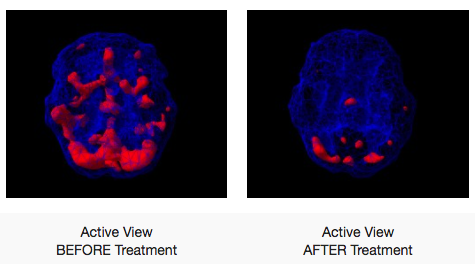
If you or a loved one has experienced a traumatic event and is experiencing symptoms of PTSD, it’s important to seek help. At Amen Clinics, we perform brain SPECT scans as part of a complete evaluation to diagnose and treat PTSD with the least toxic, most effective solutions.
Don’t let PTSD steal your life. Call one of our brain health advisors at 888-288-9834 to see how Amen Clinics can help or schedule a visit online.
When you think about hypnosis, what’s the first thing that comes to your mind? A stage act where some celebrity hypnotist makes you do stupid and embarrassing things in front of the audience just for laughs? You’re not alone.
Many people are unaware of what hypnosis can do for you, especially when it comes to using it as a mental health treatment or for medical conditions. The American Medical Association recognized hypnotherapy as a standard medical treatment back in 1958, and the American Psychological Association followed suit by endorsing it as a branch of psychology in 1960. Since then, it has been used to help people overcome a variety of symptoms and conditions, including:
1. Soothe anxiety
If you’re suffering from anxiety, hypnosis can help. Think of hypnosis as your body’s natural soothing power source. It can help you change your state of mind from anxious to calm.
2. Lose weight
Hypnosis can help you change the way you think, feel, and react to food. It can also alter the way you view exercise and other lifestyle habits that can contribute to achieving and maintaining a healthy weight.
3. Stop smoking
Smoking is highly addictive, but hypnosis can help you break the habit. Even people who have tried quitting several times without success have given up cigarettes through hypnosis.
4. Conquer chronic pain
Research shows that hypnosis can help you take control of your thought patterns and breathing methods to manage and overcome chronic pain.
5. Get better sleep
Hypnosis and self-hypnosis can calm a busy brain, so you can fall asleep faster and get a better night’s rest.
In a 4-part series on The Brain Warrior’s Way Podcast with special guest Dr. Jeffrey Zeig, the founder and director of the Milton H. Erickson Foundation, who has studied with one of the world’s most famous hypnotists, you’ll discover more about the many benefits of hypnosis.
In this remarkable series, you’ll learn:
- What hypnosis does in the brain (hint: it doesn’t decrease brain activity)
- The many ways hypnosis is used in the medical field for pain relief
- How hypnosis can help people with depression, panic disorders, and other psychiatric conditions
- How the principles of hypnosis can help you make your adolescents more responsible
- Why psychologists don’t use hypnosis to give their patients information
- How hypnosis can help you stop smoking, stop gambling, or stop any unwanted habit
- Why some elite athletes use hypnosis as part of their training
Listen to the 4-part series on hypnosis with Dr. Jeffrey Zieg on the Brain Warrior’s Way Podcast.
At Amen Clinics, we have used hypnosis as part of a comprehensive treatment plan to help thousands of people with mental health issues so you can minimize your symptoms and stick with a brain-healthy program. If you or a loved one might benefit from a brain-body approach to healing, call 888-288-9834 or schedule a visit online.
Some anxiety is a good thing. It’s what makes your child do their homework on time, look both ways when crossing the street, and do their chores. But when kids have too much anxiety, it can make them suffer.
Six-year-old Sam was terrified of dogs. Seeing one, even a small dog, would make him run away or cry out in fear. Sam had never been bitten or attacked by a dog, so there was no reason for his irrational anxiety about dogs. One day, when Sam was walking hand-in-hand with his mom, a dog came toward them. Sam panicked, dropped his mom’s hand and ran across the street to avoid the dog and narrowly missed being run over by a car. That’s when his mom took Sam for an evaluation.
A fear of dogs wasn’t Sam’s only issue. He was intensely shy and would become very nervous whenever anyone would fight at school or at home. He also bit his fingernails, complained of frequent stomachaches, and had trouble sleeping most nights.
Brain imaging studies using SPECT technology show that children with anxiety tend to have heightened activity in certain areas of the brain, including the basal ganglia, which is involved in setting a person’s anxiety level. Sam’s brain scan showed this same pattern.
Fortunately, there are many things you can do to change the brain to help children—like Sam—overcome anxiety.
5 Natural Ways to Help Kids Overcome Generalized Anxiety Disorder
1. ANT Therapy
Anxious kids tend to have a lot of ANTs (automatic negative thoughts). Their anxious thoughts may prevent them from living a full life. For example, they may avoid socializing with other kids because they think they will be unfairly judged or laughed at. They may not sign up for the school field trip because they think the school bus will get into a terrible accident along the way. Teaching your children to question their ANTs can help. Here’s how this simple technique worked for Sam, as he learned ways to talk back to his ANTs.
ANT: “That dog is going to attack me and bite me all over.”
Talk back to the ANT: “The dog is in its yard behind a fence, and it isn’t big enough to jump over the fence.”
Talk back to the ANT: “The dog is on a leash, and the owner is a big guy who can hold the leash tight if he needs to.”
Talk back to the ANT: “The dog is not growling at me and isn’t even looking at me.”
2. Balloon Breathing
One of the simplest forms of relaxation that you can teach an anxious child is deep breathing. Kids love balloons, so you may want to use a balloon as a visual image to guide them. Whenever your child is feeling anxious, have them take a deep breath into their belly for about 5 seconds, as if they were filling up a balloon. Then have them let the air out of the balloon by exhaling slowly for about 5 seconds. Have them blow up and empty 10 balloons (10 breaths). This immediately gets more oxygen into the body to help calm anxious brains.
3. Food as Medicine
The foods a child eats can either fuel anxiety or soothe it. If you have a kid who skips meals, it can lead to hypoglycemia (low blood sugar), which can trigger feelings of anxiety. It’s important to make sure kids eat small meals that include high-quality protein throughout the day. In addition, problems with gut health are associated with anxiety. To help boost gut health, cut out inflammatory foods like corn, soy, and processed foods from your child’s diet.
4. Nutritional Supplements
Supplements, such as magnesium, GABA, theanine, omega-3 fatty acids, and Relora, are frequently used to help calm anxiety. Check with an integrative physician who does brain health nutrition coaching for doses that are appropriate for children.
5. Biofeedback
For some children who suffer from anxiety due to emotional trauma, a biofeedback technique called EMDR (eye movement desensitization and reprocessing) can be effective. This non-invasive therapy involves holding specific memories in mind while a therapist performs hand movements to reduce the emotional response associated with the memory. This therapy helped Sam overcome his fear of dogs. For kids, it’s important to find a therapist who is trained and skilled in working with children and adolescents.
Amen Clinics has helped thousands of children and adolescents—including Sam—overcome anxiety, panic attacks, and emotional trauma. We use brain SPECT imaging to help identify which type of anxiety they have and to help find personalized solutions as part of a brain-body approach to healing.
If your child’s anxiety is affecting their daily life, speak with a specialist today at 888-288-9834 or schedule a visit online.
EMDR (eye movement desensitization and reprocessing) is a special psychotherapeutic technique that can be a very powerful treatment for people who have been emotionally traumatized. EMDR therapy uses eye movements or other alternate hemisphere stimulation to remove the emotional charges of traumatic memories.
As part of EMDR therapy sessions, a therapist may direct you to hold specific memories in mind while tracking the therapist’s hand as it moves back and forth across your field of vision. Diverting your attention in this way while you recall a traumatic event has been found to minimize the emotional response connected to the memory. Researchers believe the therapy activates mechanisms in the brain that help you process the memory and distressing emotions.
Processing Traumatic Memories in the Brain
The brain is naturally wired to help us recover from traumatic events and distressing memories. The healing process involves communication between a variety of brain regions, such as the hippocampus (memory-making center), amygdala (fear center), and prefrontal cortex (behavior center). In some people, however, events can be so traumatic it disrupts the normal flow of neural communication and memories get stuck, making you can feel like you are frozen in time. EMDR helps you get unstuck by restoring the communication process.
What Research Shows About EMDR
Numerous studies show that EMDR therapy offers benefits for emotional trauma and PTSD that typically take years to achieve in psychotherapy alone. A 2014 review of the existing research indicates that 24 randomized controlled studies point to benefits from EMDR treatment for emotional trauma and adverse life events. This review also showed that in some studies, 84% to 90% of people who have experienced a single trauma found relief from PTSD symptoms after just 3 EMDR sessions that lasted 90 minutes each.
In a controlled study by Kaiser Permanente, 67 individuals who had experienced trauma were assigned either to standard care treatment or EMDR. Compared to standard care, the EMDR group showed significantly more improvement on measures of anxiety, depression, and PTSD. In a subsequent study from the same team at Kaiser Permanente, follow-ups on the original study participants at 3 months and 6 months showed that improvements from EMDR had been maintained. The authors concluded that long-lasting benefits can be achieved with relatively few EMDR sessions.
Based on this growing body of research, the American Psychiatric Association and the Department of Veterans’ Affairs have recognized EMDR therapy as an effective treatment for PTSD. A growing body of research on EMDR therapy shows promising results in its effectiveness for other conditions, such as depression, addictions, and more.
Who Can Benefit from EMDR?
EMDR is primarily used to treat people suffering from emotional trauma, but it may also be beneficial for people struggling with other problems. According to the EMDR International Association, practitioners currently use EMDR therapy to address a wide array of issues, including but not limited to:
- PTSD
- Depression
- Bipolar disorder
- Anxiety
- Panic attacks
- Phobias
- Substance abuse
- Eating disorders
- Dissociative disorders
- Personality disorders
- Grief
What’s Involved in EMDR Therapy?
EMDR therapy involves 8 phases that incorporate a variety of elements. It includes looking at past memories, current triggers, and skills and behaviors that can help you in the future.
Phase 1: History and Treatment Planning
A therapist will review your history, identify specific memories to target, and create a treatment plan.
Phase 2: Preparation
The therapist will share several techniques to help you cope with any emotional distress that may arise during treatment.
Phases 3: Assessment
During this portion of the treatment, you will be directed to identify 3 things associated with the targeted memory to be processed:
- a visual image related to the memory
- a negative belief about yourself
- any physical bodily sensations associated with the memory
Phase 4: Desensitization
As you hold these things in mind, the EMDR processing begins. After the therapist performs the hand movements or other stimulation, you will be asked to let your mind go blank. Then you may either return to continue processing that same memory or move on to process other memories.
Phase 5: Installation
Here you replace the negative belief you had about yourself with a positive belief. For example, a victim of assault may go from believing “I am powerless” to believing “I am in control.”
Phase 6: Body Scan
During this phase, your therapist will work with you to resolve any remaining physical tension or bodily sensations related to the memory.
Phase 7: Closure
The therapist will ensure that at the end of each session, you feel better than when it started. Your therapist will also provide you with strategies to help you handle any distressing emotions that come up in between sessions and will ask you to maintain a journal where you write down any issues that arise.
Phase 8: Reevaluation
At each session, you and your therapist will assess your progress so far and adjust your treatment plan as needed.
Steven’s EMDR Story
To help you understand how EMDR can work for emotional trauma like PTSD, take a look at Steven’s story.
Steven, a 33-year-old bicycle repair mechanic working in Santa Monica, California, took an early lunch on a summer day in 2003 and walked to the local farmer’s market. Within minutes, disaster struck when an 87-year-old man lost control of his car and barreled through the throngs of people at the market. The car was headed straight for Steven, who later said, “I thought he was going to run over my legs…I thought I would lose my legs.”
At the last possible moment, Steven was able to jump out of the way, but 10 people were killed and more than 50 were injured. Traumatized, Steven went back to work. But for months, he couldn’t sleep, and he shook constantly. As in the case of most people who develop PTSD, the Santa Monica farmer’s market disaster was not Steven’s only trauma. He grew up in a severely abusive alcoholic home and also faced death as a tank commander during the Gulf War.
Steven decided to undergo an evaluation and EMDR therapy as a component of his treatment. As part of his assessment, Steven underwent 3 brain scans using brain SPECT imaging technology—before treatment, during his first EMDR session, and after 8 hours of EDMR treatments.
Initially, his brain scan showed a diamond pattern that is often seen in PTSD, with an overactive limbic area, basal ganglia, and anterior cingulate. Then with the help of a trained EMDR therapist, Steven began clearing out the traumas—one by one. His brain actually showed benefit during the first treatment and was markedly improved after only 8 hours of treatment. Steven’s shaking had subsided, and he felt significantly better. With EMDR, Steven was able to change his brain and change his life for the better.
PTSD, emotional trauma, and other mental health issues can’t wait. At Amen Clinics, we’re here for you. We offer in-clinic brain scanning and appointments, as well as mental telehealth, clinical evaluations, and therapy for adults, teens, children, and couples. Find out more by speaking to a specialist today at 888-288-9834 or visit our contact page here.
Is depression interfering with your daily life? Are you tired of trying antidepressant after antidepressant without results? Are you curious about how our approach is different than others you’ve tried?
Brain SPECT imaging provides us with a detailed map of your brain that supports the creation of a customized treatment plan based on your scan results.
Ariel had been experiencing symptoms of depression for over two years. She was tired, had trouble sleeping, was filled with negative thoughts, lacked motivation, and was beginning to have suicidal thoughts. The symptom that was most difficult for her husband though, was her complete loss of interest in sex. He was ready to leave her because he thought she wasn’t interested in him anymore.
Having her brain scanned using a technology called SPECT changed everything. The brain scan showed that a part of Ariel’s brain called the limbic system was working way too hard, which is common in people with depression. With this information, her husband realized Ariel hadn’t fallen out of love with him. She had a brain imbalance. The brain scan helped identify find the most effective solutions for Ariel and together, she and her husband kept her on track with her treatment plan, and their relationship eventually grew even stronger.
A SPECT brain scan changed Ariel’s life.
10 Ways it can Help You with Your Depression
1. Brain scans show that depression is a brain disorder.
Seeing your brain scan helps you understand that depression is not a “mental” health condition, but rather a brain health issue.
2. Brain imaging shows there are 7 types of depression.
Many people, including those in the medical field, believe that everybody with depression can be treated the same way. Wrong! Thanks to brain SPECT imaging research, it is now known that depression is not a single or simple disorder. In fact, there are 7 types of depression, and they each need targeted solutions. The 7 types of depression are:
Type 1: Pure Anxiety
Type 2: Pure Depression
Type 3: Mixed Anxiety/Depression
Type 4: Over-focused Anxiety/Depression
Type 5: Temporal Lobe Anxiety/Depression
Type 6: Cyclic Anxiety/Depression
Type 7: Unfocused Anxiety/Depression
3. Seeing your brain scan reduces stigma.
In a 2018 survey, 31% of respondents agreed that a weak personality causes depression. Sadly, the stigma surrounding what causes this condition can prevent people from seeking treatment. Seeing on brain scans that depression is a brain issue—NOT a personality weakness—can help you move past the shame you may feel to get the help you need.
4. Brain imaging helps families get more involved in healing.
Just as people with depression may think a character flaw is the cause of their condition, family members may have the same belief. When loved ones—like Ariel’s husband—finally understand that depression is a brain problem, they are much more likely to be forgiving and supportive in helping you through the healing process.
5. Brain scans can show evidence of the root cause of your depression.
Depression can have many causes. For example, concussions and traumatic brain injuries (TBIs) are associated with an increased risk for the condition, and hormones that are out of balance can lead to symptoms of depression. Brain imaging tests can point to the root causes of your depression and help find the best-personalized solutions.
6. Brain scans encourage better compliance.
Although depression is a treatable condition, many people don’t follow through on their treatment plan. They may skip or drop out of therapy sessions, neglect to fill prescriptions, or take medicine inconsistently. Research shows that depression treatment non-adherence rates are as high as 52%. When people are able to see on brain scans that there is abnormal activity in certain areas of their brain, it increases compliance with treatment plans.
7. Progress can be seen on brain scans.
Brain imaging follow-up scans provide an opportunity for you to see improvement in the health of your brain. When you have visual confirmation that the efforts you are making are paying off, it encourages you to continue with the treatment plan. And brain scans let you know if treatment needs adjusting to speed up your progress.
8. Brain imaging can show co-occurring conditions.
People with depression often have other conditions, such as anxiety, ADD/ADHD, or addiction. Brain scans provide vital clues to the existence of co-existing conditions, so you can get a comprehensive treatment plan personalized for your needs.
9. Brain scans take the guesswork out of psychiatry.
Psychiatry remains the only medical field that rarely looks at the organ it treats. Because of this, the traditional treatment strategy involves a lot of guesswork. Brain imaging provides visual data to take the guesswork out of diagnosis and treatment.
10. Before-and-after brain scans help you believe you can change your brain and change your life.
Viewing the brain scans of people who have overcome depression and improved their quality of life is a powerful motivator that gives you the belief that you can do it too.
At Amen Clinics, brain SPECT imaging is performed as a component of a comprehensive evaluation for people with symptoms of depression. The Amen Clinics Method takes an integrative approach to diagnosis and treatment includes looking at the biological, psychological, social, and spiritual aspects of your life to identify areas that can be optimized.
If you’re suffering from symptoms of depression, call 888-288-9834 to talk to a specialist today or schedule a visit.
Suicide rates among teens and young adults have skyrocketed to their highest levels in two decades, according to a study released in JAMA on June 18, 2019.
Alarmingly, suicide rates among teens ages 15-19 have seen the greatest jump, increasing by 10% from 2014-2017. Although previous studies have pointed to a rise in suicide among female teens—the number of girls ages 15-19 dying by suicide increased 8% from 2016 to 2017—this latest research found a surge in teenage boys taking their own lives. Compared to 2016, there was a 21% rise in 2017 in boys in the same age group dying by suicide.
This sobering research comes on the heels of another study showing that “deaths of despair” from suicide, drugs, and alcohol have reached a historic high. This deeply distressing news comes from a 2019 study by the Commonwealth Fund, which analyzed state-by-state data from 2005 to 2017. Here’s a closer look at the rise in deaths:
- Drug overdoses: The rate of deaths from drug overdoses—primarily due to the opioid epidemic—rose by 118% across the nation in the 12 years studied. States with the highest death rates from drug overdoses are West Virginia, Ohio, Pennsylvania, Washington DC, Kentucky, Delaware, and New Hampshire.
- Alcohol-related deaths: Deaths from alcohol rose by 37% and have been increasing at a faster pace since 2013—growing 4% annually compared to 2% prior to 2013. The Midwest and West account for the biggest jump in alcohol-related deaths.
- Suicide: Suicide rates are up nearly 30% nationally since 2005 with the most suicides occurring in states, such as Montana, the Dakotas, Alaska, Idaho, Nevada, and Colorado. Sadly, the suicide rate increased the most dramatically from 2016 to 2017.
The research stops short of explaining why these deaths of despair are skyrocketing. What’s wrong? Why are we headed in the wrong direction? Shouldn’t our mental health care system and the growing number of addiction treatment centers be helping reverse these trends?
What’s Wrong with Mental Health Care in America?
America has an outdated, stigmatizing mental health paradigm that taints people with disparaging labels, preventing them from getting the help they need. And when they do seek help, they are faced with a field that is still diagnosing patients the same way it did over 100 years ago.
Mental health as it is currently practiced in the United States—making diagnoses based on symptom clusters with no biological information, then prescribing multiple medications where the mechanism in individual patients is unknown—does not have a prayer of fixing the epidemic problems of depression, suicide, and addictions.
The Problem with Addiction Treatment in the U.S.
Similarly, most of the nation’s addiction treatment programs are missing the essential organ of intervention—the brain. Brain dysfunction is the number-one reason why people fall victim to addiction, why they can’t break the chains of addiction, and why they relapse.
Brain imaging studies using a technology called SPECT show that opioids, Vicodin, methamphetamines, cocaine, marijuana, and alcohol all seriously impair brain function. Unless we heal the brain, there’s little chance of breaking free from addiction.
We need to do better.
A New Brain-Centered Model for a Brighter Future
What if mental health was really brain health? And what if we replaced the outdated treatment model with a modern brain-based, whole-person program rooted in neuroscience and hope?
No one is shamed for cancer, diabetes, or heart disease, even though they have significant lifestyle contributions. Likewise, no one should be shamed for depression, suicidal thoughts, addictions, panic disorders, bipolar disorder, schizophrenia, and other brain health issues.
Brain imaging helps eliminate the stigma currently attached to mental illness and addiction because people see that their problems are medical in nature, not moral. They aren’t due to a personal weakness or character flaw.
It decreases shame and guilt and increases forgiveness and compassion from their families. Reframing the discussion to brain health is also more accurate and elevates hope, increases the desire to get help, and increases compliance to make the necessary lifestyle changes. Once people understand that the brain controls everything they do and everything they are, they want a better brain so they can have a better life.
Brain Imaging Reveals Hope for Healing
The good news is that brain imaging studies show that the brain can heal. People with depression and suicidal thoughts can change their brain and change their lives. And people suffering from addictions have the potential for some of the most dramatic improvement in terms of brain function. In fact, before-and-after scans often reveal a stunning level of recovery.
Now is the time to adopt this new paradigm of brain-centered healing, so we can put the brakes on these staggering statistics and start reversing these trends.
If you are having suicidal thoughts, call the National Suicide Prevention Lifeline at 1-800-273-TALK (8255).
At Amen Clinics, we have the world’s largest database of functional brain scans related to behavior. We use brain SPECT imaging in addition to assessing the biological, psychological, social, and spiritual factors that may be contributing to mental health/brain health disorders and addictions. With this comprehensive evaluation, we are better able to accurately diagnose and personalize treatment solutions for your needs.
If you are struggling with depression, suicidal thoughts, or addiction, we’re here for you. We have helped thousands of people change their brain and get their life back. Find out more about our unique approach to mental health care by speaking to a specialist at 888-288-9834 or you can schedule a visit online.
Post-traumatic stress disorder (PTSD) gets a lot of press, especially regarding military veterans who return from combat. For example, it’s estimated that 11-20% of veterans who served in the recent wars in Iraq and Afghanistan have PTSD in a given year.
However, you don’t have to see combat in the military to be vulnerable to PTSD, a potentially debilitating condition that can lead to intrusive thoughts and flashbacks, avoidance of reminders of the traumatic event, feelings of guilt, a sense of being on edge at all times, being easily startled, anxiety or depression, problems sleeping, as well as other symptoms.
You may be surprised to discover that PTSD can affect anyone—any ethnicity, nationality, or age—although women are 2-3 times more likely to develop the condition than men. Approximately 3.5% of adults in the U.S. are affected by the condition, and about 7-8 people out of 100 will have PTSD in their lifetime.
What’s even more surprising is that in some cases, you don’t even have to be involved first-hand in a traumatic event. Simply hearing about a traumatic event or repetitive viewing of violent news stories on television can increase the risk of PTSD.
10 Types of Traumatic Events That Can Lead to PTSD
- Military combat
- Rape or other physical assault
- Childhood abuse
- Natural disasters
- Automobile accidents
- Sudden death of a loved one
- Seeing someone get seriously hurt or killed
- Being held at gunpoint
- Terrorist attack
- Mass shooting
Not everybody who is exposed to a traumatic event will develop PTSD. Certain things can make you more vulnerable to the condition, including having little or no social support in the wake of a traumatic event, as well as coping with additional stresses due to injuries, the death of a loved one, or the loss of your home.
What the Media Gets Wrong About PTSD
Most media articles talk about PTSD as a psychological problem, but that isn’t accurate. Although it does cause psychological consequences, PTSD is, in fact, a brain disorder. Brain imaging studies using a technology called SPECT show PTSD is associated with changes in the brain. Without brain imaging, PTSD is often misdiagnosed because symptoms overlap with other conditions, such as traumatic brain injury. Research shows that brain scans help differentiate PTSD from TBI to help you get an accurate diagnosis and more effective treatment.
If you or a loved one has experienced a traumatic event and is experiencing symptoms of PTSD, it’s important to seek help. At Amen Clinics, we perform brain scans using a technology called SPECT as part of a complete evaluation to diagnose and treat PTSD with the least toxic, most effective solutions.
Don’t let PTSD steal your life. Call one of our brain health advisors at 888-288-9834 to see how Amen Clinics can help you or schedule a visit online.
Does your child get irritable and upset if they don’t get their Fortnite fix? Are you worried they might be addicted to video games? You could be right.
In a landmark 2019 decision, the World Health Organization (WHO) has declared that video game addiction is officially a mental health disorder. “Gaming disorder” has been added to the WHO’s International Classification of Diseases, putting it on a par with depression, anxiety disorders, bipolar disorder, and other mental illnesses.
Gaming Disorder Can Steal Your Life
Research shows that 97% of Americans 12 to 17 years old play video games, and as many as 23% of gamers of all ages show signs of addictive behavior. According to the WHO, these signs include impaired control over gaming and “continuation or escalation of gaming despite the occurrence of negative consequences.” And these repercussions can be seen in a person’s personal relationships, career, schoolwork, or daily life.
Gaming disorder also puts people at greater risk for other detrimental issues, including:
- Depression
- Anxiety
- ADD/ADHD
- Sleep disturbances
- Irritability
- Bad moods
- Fatigue
- Fearfulness
- Suicidal thoughts
The link between gaming and ADD/ADHD goes both ways. In addition to gaming contributing to the condition, a 2019 study shows that people who have ADD/ADHD may be at increased risk for developing a gaming addiction.
The Risk for Addiction Lies in the Brain
It’s important to understand that gaming addiction is not a character flaw or personal failure. Brain imaging studies using a technology called SPECT show that addiction is, in fact, a brain disorder. The health of your brain plays a major role in your risk for addiction—whether it’s to alcohol, drugs, or video games.
In particular, it is your brain’s self-control circuit that helps you rein in your behaviors or that drives you to addiction.
The brain’s self-control circuit includes:
- Neurotransmitters: These chemical messengers, including dopamine, drive you to pursue your passions.
- Nucleus accumbens: The pleasure and motivation center of the brain, the nucleus accumbens is one of the primary drivers of behavior.
- Deep limbic system: Housing your brain’s emotional memory centers, the deep limbic system can push you to repeat pleasurable actions and gives you motivation so you can plan and follow through on your goals.
- Prefrontal cortex (PFC): The prefrontal cortex (PFC) is responsible for impulse control and judgment and is intended to keep the brain’s drivers in check. It acts as the brain’s brake, making you think twice before doing something you might regret.
When this self-control circuit is in balance, you can be motivated, focused, goal-oriented, and have control over your gaming and other behaviors. In the addicted brain, the PFC is weakened, allowing the drive systems to take control.

Not All Gaming Addicts are the Same
Designating video game addiction as a mental health disorder is a powerful first step in encouraging people to seek treatment. But most healthcare professionals will view it as a single or simple disorder and will treat everyone the same way. This will never work because not all people with gaming addictions are the same. In fact, SPECT brain scans reveal that there are 6 types of addicts.
Type 1: Compulsive Addicts
Type 2: Impulsive Addicts
Type 3: Impulsive-Compulsive Addicts
Type 4: Sad or Emotional Addicts
Type 5: Anxious Addicts
Type 6: Temporal Lobe Addicts
Knowing your type is essential to getting the right treatment plan to help you regain control of your life.
4 Key Ways to Break Free from Addiction
The brain is the ultimate key to overcoming gaming addiction and other bad behaviors. Strengthening your PFC is one of the best ways to balance your brain’s self-control circuit. Here are 4 ways to boost your PFC.
1. Get your heart pumping.
Regular aerobic exercise boosts blood flow to the PFC and has been shown to improve focus and impulse control. Aim for 30-45 minutes a day of fast walking (walk like you are late for an important appointment.)
2. Practice saying no.
Every time you say no to extra gaming time, you train your PFC and help create new neural pathways that strengthen your control. Eventually, saying no to unhealthy gaming behavior becomes easier and can even feel automatic.
3. Eat a brain healthy diet.
Did you know that a sugar-filled junk-food diet can fuel your addiction? Getting a quick sugar rush from soda, cookies, or candy weakens the PFC and can make you more impulsive. Eating lean protein throughout the day and eliminating sugar can help stabilize blood sugar levels, which is beneficial for your PFC, moods, and impulse control.
4. Supplement your diet.
Nutritional supplements, such as omega-3 fatty acids, green tea, and Rhodiola can boost blood flow to the PFC and help you stay focused on your goals.
If you or your child is struggling with addiction to video games or any other substance, we’re here for you. At Amen Clinics, we have helped thousands of people overcome bad behaviors and improve every aspect of their life. We use brain SPECT imaging to help identify your addiction type in addition to assessing the biological, psychological, social, and spiritual factors that may be contributing to addiction. With this comprehensive evaluation, we are able to personalize treatment solutions for your needs.
Don’t let addiction steal your life. Speak to a specialist today at 888-288-9834 or schedule a visit online.