

TL;DR:
Hormonal fluctuations throughout a woman’s life, including during puberty, the menstrual cycle, pregnancy, perimenopause, and menopause, can intensify ADHD symptoms.
Changes in estrogen can affect brain chemicals involved in focus, mood, motivation, and executive function, which may help explain why ADHD can feel worse at certain life stages.
Recognizing the hormone-ADHD connection can help women seek more personalized treatment and support.
Medically reviewed by Kandace Licciardi, MD, Medical Director, Amen Clinics
Do you find it difficult to stay focused? Do you struggle with disorganization? Or do you frequently have anger outbursts or start conflict?
These are the most well known symptoms associated with attention-deficit/hyperactivity disorder (ADHD), also called attention-deficit disorder (ADD).
But they are not the only ones.
In fact, there are additional symptoms of ADHD experienced by women many people are not aware of. For this reason, they can and do get overlooked. This may explain why many women struggle with undiagnosed, untreated ADHD well into adulthood.
Women with undiagnosed, untreated ADHD may have challenges with school, work, mental health, relationships, and sexual health. Adding another layer of complexity, these challenges can be made worse by the shifting hormones women experience at different stages of life, new research shows.
On a positive note, with greater understanding and awareness, hormonal influences in female ADHD can be addressed and symptoms can be improved.
In this blog, you will learn what the latest research reveals about how female hormonal changes worsen ADHD symptoms and what women can do to help prevent or reduce them.
Female ADHD can be impacted by hormonal fluctuations during puberty, pregnancy, post-partum, perimenopause, menopause, and post-menopause — in addition to hormonal changes during the monthly menstrual cycle.
ADHD in females tends to present in a different way than ADHD in boys, who are more likely to be diagnosed. Primarily, inattentiveness is a predominant symptom in females with ADHD. Unfortunately, many girls and women with this type of ADHD are labeled as slow, lazy, spaced-out, or unmotivated.
Such symptoms point to one of the seven types of ADHD identified through the brain imaging work at Amen Clinics. Rather than the more obvious ADHD symptom of hyperactivity, girls and women are more likely to have symptoms of Type 2, Inattentive ADD.
Symptoms of Inattentive ADD include:
Research also suggests that females with ADHD may remain undiagnosed because they develop better coping strategies than males to mask their symptoms. Co-occurring mental health challenges, such as depression and anxiety (both common in female patients with ADHD), can contribute to their cases being overlooked or misdiagnosed.
Females with ADHD can additionally develop self-esteem issues, assuming personal failure or weakness rather than understanding that their brains are simply wired differently. They may exhibit behavioral issues or underperform at school or work.
In his book Unleash the Power of the Female Brain, Dr. Daniel Amen describes meeting a patient named Catherine. She initially came to Amen Clinics with her 18-year-old son, who was experiencing symptoms that were interfering with his schoolwork.
When evaluating children and teens at Amen Clinics, parents also complete an intake questionnaire for themselves, since mental health issues often run in families. In Catherine’s case, she scored very high on the ADHD portion of the questionnaire and made an appointment for herself to learn more.
During further evaluation, Catherine explained that throughout her life she had felt “stupid.” Although she graduated from college, she had been labeled a slow learner during her elementary and junior high school years.
She felt she had to try harder than everyone else on tasks like homework. She often stayed home on weekends because she felt overloaded. Even as an adult, she said household chores took her longer than she and her husband thought they should.
These issues affected many aspects of Catherine’s life. As a teenager and young woman, she struggled with bulimia and had long experienced anxiety and restlessness.
She had even stopped doing certain enjoyable activities, such as going to the movies. “I can’t sit still for more than 15 minutes at a time,” she explained. Her distractibility often caused her to interrupt the movie, asking her husband in the theater what had just happened or what was said.
Catherine also struggled with follow-through, frequently forgetting to pay bills on time, even when she had enough money. She was disorganized, having closets she described as “disaster areas,” and she was frequently late.
Meanwhile, her husband complained that Catherine often started conflicts. He said she “starts problems to have a problem.” Bickering had scarred their entire 25-year marriage.
When Catherine’s brain was scanned using SPECT technology, she and her son showed similar patterns of blood flow and brain activity. While their brains appeared reasonably healthy at rest, during moments of concentration they both showed low activity in the prefrontal cortex (PFC), a pattern associated with ADHD.
Fortunately, with proper diagnosis and treatment, Catherine responded very well. Her energy improved, she felt more focused, and she functioned more effectively in her day-to-day life. Her anxiety levels decreased.
She was able to sit through movies without distraction. Her husband reported that she was more relaxed, less negative, and less conflict-seeking. Catherine also reported significantly greater sexual satisfaction. As her focus improved, so did her ability to experience pleasure.
Over decades, Amen Clinics has observed many women who, like Catherine, have ADHD and share common characteristics.
If Catherine’s symptoms sound familiar to you, here’s a list of questions to ask yourself:
If you answered yes to more than four statements, you may benefit from being screened for ADHD.
The most common symptoms of ADHD in women are short attention span, distractibility, disorganization, procrastination, and poor internal supervision. While some females are hyperactive, many are not. And individuals with ADHD may not have a short attention span for everything.
Indeed, people with ADHD tend to have trouble with attention for regular, routine, everyday tasks, such as doing homework, paying bills on time, cleaning the house, or listening to their spouse. But when things are new, novel, highly stimulating, interesting, or frightening, people with ADHD can pay attention very well.
This trait can lead to poor life choices, such as engaging in high-risk activities or seeking conflict in relationships. Females may face life-altering consequences, such as unplanned or teenage pregnancy.
And, when individuals with ADHD are upset, they can focus, and oftentimes overfocus, on their problems. This is especially true for women, whose brains are naturally designed for getting stuck on certain thoughts or behaviors, such as worrying or holding grudges.
Related: Unleashing the Power of the Female Brain
Moreover, females have a more active anterior cingulate gyrus (an area deep in the prefrontal cortex). This region of the brain is involved with detecting errors.
As a result, women can sometimes overfocus on what is wrong in life, in their relationships, career, children, bodies, etc. They can also blame themselves, leading to feeling not good enough, mental health issues like depression and anxiety, and even self-harm and suicide.
A 2024 study published in Hormones and Behavior examined ADHD symptoms and the menstrual cycle specifically. Researchers noted that girls with ADHD have increased symptom severity, comorbidity, and impairment starting in adolescence and persisting into adulthood.
Females with ADHD were found to be at higher risk for numerous issues, including:
These risks appear to be heightened during periods of major hormonal change. Therefore, researchers believe that biological factors, especially reproductive hormones, may play a critical role in shaping ADHD symptoms across the female lifespan.
The study noted that females with ADHD experience a “double whammy” of hormonal effects. Long term, there are organizational effects of puberty on brain development. In the short term, fluctuating hormones create temporary effects across the menstrual cycle.
Looking deeper into the link between female hormones and ADHD, researchers explain that estrogen appears to generally protect and support important brain functions. These include cognition, emotion regulation, executive functioning, and dopamine activity in key brain regions.
On the other hand, rapid declines in estrogen may interfere with executive functions. Females then experience impairments in attention, impulse control, and emotional regulation.
Mid-cycle, these changes can lead to increases in risk-taking behaviors. Just before menstruation, there may be an increase in avoidance tendencies and negative emotions. This contributes to inattention, low motivation, and depressive symptoms.
In other words, estrogen levels can contribute to both positive and negative affect. Post-ovulation, women may notice increasing hyperactivity and impulsivity symptoms. Issues with focus and attention may also arise before menstruation.
These interactions, the study added, may be exacerbated by other female-related factors. They include “organizational pubertal effects on relatively overdeveloped limbic circuitry and adolescent-specific social pressures magnified in females with ADHD.”
Individual differences — such as impulsivity, emotional urgency, and hormone sensitivity — likely influence how strongly these changes affect ADHD symptoms. But evidence suggests that some women experience significant fluctuations in ADHD symptoms across their cycle.
In addition, adolescence can be a particularly vulnerable period for females with ADHD. At this stage, hormones reorganize brain circuitry and introduce cyclical changes. Meanwhile, the PFC is still developing. The limbic system, involved in emotion and reward, is very active, which increases the risk for impulsivity and emotional dysregulation.
An early puberty may further heighten these risks. It is associated with a premature decrease in plasticity and thus “early closure of sensitive periods for cognitive development.”
Ultimately, this study highlights the importance of considering hormonal changes as a key factor in understanding ADHD in females. These shifts have the power to influence ADHD across different developmental and menstrual stages.
Related: 5 Ways Menopause Can Change Your Brain Health
As exemplified in Catherine’s case, a comprehensive approach is essential for effective treatment of ADHD. Interventions such as education, support, exercise, nutrition, and dietary supplements may all play a role. Medication can be helpful when warranted.
To optimize the ADHD brain, these lifestyle recommendations are applicable to all types:
Of course, ADHD is not one single or simple condition. For example, SPECT imaging conducted at Amen Clinics has revealed that Type 2, known as Inattentive ADD, is typically associated with decreased activity in the prefrontal cortex and cerebellum, especially when concentrating.
For this type, Amen Clinics recommends naturally stimulating nutritional supplements that boost dopamine in the brain. These might include supplements with green tea (l-theanine), l-tyrosine, or rhodiola. If these are ineffective, stimulant medications may be recommended by a qualified medical professional.
Additionally, a diet that is higher in protein and lower in simple carbohydrates can be very helpful to individuals with ADHD.
Knowing your ADHD type is the first step in securing the most effective, customized treatment plan. A brain SPECT scan determines the underlying brain activity patterns of ADHD, including how they may fluctuate over time, such as with women’s hormonal shifts.
This data, plus a thorough personal history and detailed clinical assessments provide the foundation for our clinicians to craft a personalized treatment plan that works.
Awareness and education about how hormones impact ADHD symptoms in females allows clinicians to better understand and adjust treatment protocols. Receiving accurate diagnosis and tailored treatment leads to better outcomes. This creates a positive ripple effect in every aspect of life — and at every life stage.
Empty heading
The natural hormone fluctuations across the female lifespan influence these ADHD symptoms. Female ADHD can be impacted by hormonal fluctuations during puberty, pregnancy, postpartum, perimenopause, menopause, and postmenopause — in addition to hormonal changes during the monthly menstrual cycle. That’s a lot of changing hormone levels!
Recent research has focused on this important but understudied topic. New research published in January 2026 aimed to expand the previously “limited knowledge about experiences of females with ADHD across hormonal life phases,” including menstrual cycle phases.
In this study, a cross-sectional sample of 600 female participants with ADHD diagnoses and symptoms completed an online survey. They were asked about ADHD, depression, anxiety and stress traits, and the symptom changes they noticed at different hormonal life stages.
Survey respondents reported their ADHD symptoms worsened during the postpartum period (70.4 percent) and menopause (97.5 percent).
A majority (88.6 percent) of participants who were premenopausal and not taking hormonal therapy reported changes in their ADHD symptoms across the menstrual cycle. Most reported having worse symptoms during the luteal phase (after ovulation and before menses begins) of the menstrual cycle.
The researchers called for further investigation on this topic. They emphasized the need to understand more about how women’s hormonal phases may influence ADHD symptoms so that women can obtain the most effective ADHD management and treatment.
An earlier 2024 review also examined ADHD symptoms and hormones in females. It determined that the eleven included studies pointed to a relationship between women’s ADHD symptoms and sex hormones. This was especially notable in puberty and throughout the menstrual cycle. Again, researchers called for further study in this area, especially regarding how menopause interacts with ADHD symptoms.
Yes. Across a woman’s lifespan, events such as pregnancy and menopause usher in significant hormonal changes. And because these shifts can influence cognition and mood, they may potentially intensify ADHD-related symptoms.
Hormonal shifts that occur during a female’s monthly menstrual cycle, and at certain life stages (such as puberty, postpartum, or menopause) may intensify ADHD symptoms. Studies have indicated that women often experience ADHD symptom changes during the luteal phase (post-ovulation and before menstruation). Additionally, research shows that ADHD symptoms worsened in women during the postpartum period (70.4 percent) and menopause (97.5 percent).
Amen Clinics recommends a holistic, personalized approach that treats the whole person, not just ADHD symptoms. Lifestyle strategies are often the first line of care and may include a brain-healthy diet, regular exercise, therapy, and clinically studied nutritional supplements. This tailored approach can also help address hormonal imbalances that may worsen ADHD symptoms across the menstrual cycle and different stages of life.
Brain SPECT imaging at Amen Clinics, which measures brain blood flow and activity, has revealed there are seven different types of ADHD. When combined with a detailed personal history, cognitive testing, and a comprehensive evaluation, this brain-based approach supports more precise diagnosis and treatment.
Knowing a woman’s ADHD type is essential for effective care. What helps one ADHD type may be ineffective — or even make symptoms worse — for another. This is especially true with medications, which are helpful with certain types of ADHD and not others.
Quinn PO, Madhoo M. A review of attention-deficit/hyperactivity disorder in women and girls: uncovering this hidden diagnosis. Prim Care Companion CNS Disord. 2014;16(3):PCC.13r01596. doi: 10.4088/PCC.13r01596. Epub 2014 Oct 13. PMID: 25317366; PMCID: PMC4195638.
Osianlis E, Thomas EHX, Li Q, Bellgrove M, May T, Chapman D, Kulkarni J, Gurvich C. ADHD in females: Survey findings on symptoms across hormonal life stages. J Psychiatr Res. 2026 Feb;193:208-215. doi: 10.1016/j.jpsychires.2025.11.035. Epub 2025 Nov 28. PMID: 41330200.
Osianlis E, Thomas EHX, Jenkins LM, Gurvich C. ADHD and Sex Hormones in Females: A Systematic Review. J Atten Disord. 2025 Jul;29(9):706-723. doi: 10.1177/10870547251332319. Epub 2025 Apr 18. PMID: 40251875; PMCID: PMC12145478.
Ashley G. Eng, Urveesha Nirjar, Anjeli R. Elkins, Yancey J. Sizemore, Krystina N. Monticello, Madeline K. Petersen, Sarah A. Miller, Jordan Barone, Tory A. Eisenlohr-Moul, Michelle M. Martel, Attention-deficit/hyperactivity disorder and the menstrual cycle: Theory and evidence, Hormones and Behavior, Volume 158, 2024, 105466, ISSN 0018-506X, https://doi.org/10.1016/j.yhbeh.2023.105466. (https://www.sciencedirect.com/science/article/pii/S0018506X23001642)
Female ADHD, hormonal imbalances, and other mental health conditions can’t wait. At Amen Clinics, we practice precision medicine — using brain SPECT imaging and comprehensive evaluations to understand what’s really happening in your brain, not just your symptoms.
Our whole-body approach to holistic psychiatry combines cutting-edge neuroscience with natural ways to treat mental health conditions, including targeted nutrition, supplements, lifestyle strategies, therapy, and medications (when necessary). Every treatment plan is personalized to address the root causes of your struggles and support the health of your brain, body, and mind.
Don’t settle for guesswork. You deserve answers — and a plan built specifically for you. Speak with a Brain Health Advisor today at 855-378-3998 or visit our contact page to get started.
About the Reviewer
Kandace Licciardi, MD, Medical Director, Amen Clinics
Dr. Kandace Licciardi is a double board-certified psychiatrist in adult and forensic psychiatry and serves as Medical Director of Amen Clinics. She takes a comprehensive, whole-person approach to care, integrating evidence-based psychiatric treatment with lifestyle, social, and wellness factors. Dr. Licciardi has extensive experience treating depression, anxiety, bipolar disorder, psychotic disorders, and borderline personality disorder, with special expertise in early psychosis intervention. She completed her psychiatry residency at Maimonides Medical Center and her forensic psychiatry fellowship at New York University.
TL;DR:
Medically reviewed by Kandace Licciardi, MD, Medical Director, Amen Clinics

The high-profile Lindsay Clancy case has brought renewed attention to the serious mental health challenges women can face after giving birth.
Clancy, a Massachusetts mother who killed her three young children in 2023, had sought psychiatric help and received numerous medications in the months before the tragedy. Her defense argued that she was experiencing postpartum psychosis and had not received appropriate treatment, while prosecution experts disputed this claim.
It has sparked a critical conversation about postpartum mental health care and how biology factors into psychiatric diagnosis and treatment. For example, are there functional brain differences between postpartum depression vs depression?
Postpartum depression, like most psychiatric conditions, is diagnosed primarily based on symptoms, not biological information about how an individual patient’s brain is functioning. Yet, two women can meet the criteria for the same diagnosis while having very different underlying brain patterns, which may need different treatment approaches.
Now, new research from Dr. Daniel Amen and colleagues, currently in preparation for publication, is using brain SPECT imaging to more fully understand the underlying brain function patterns associated with postpartum depression (PPD). Using SPECT, the researchers examined whether women diagnosed with PPD share a common brain pattern and whether their patterns differ from those seen in depression more broadly.
What they found challenges the idea that PPD looks the same in every brain and could potentially have implications for more targeted treatment.
Related: Paternal Postpartum Depression: Signs, Symptoms, and Support
New Amen Clinics research showed women with postpartum depression had several distinct patterns of brain function, which differed significantly to those in a larger depression group.
Postpartum depression is a serious and treatable mental health condition that occurs after childbirth. Recent statistics estimate that about 1 in 8 women with a recent live birth report symptoms of PPD. Yet, only half of women with symptoms get treatment.
PPD is different from the “baby blues,” which can cause worry, sadness, and fatigue in the days following childbirth but typically resolve relatively quickly. Postpartum depression is more intense, lasts longer, and can interfere with daily functioning and a mother’s ability to care for herself or her baby.
Although postpartum depression is the more familiar term, psychiatry’s diagnostic manual does not classify it as a separate disorder. Instead, PPD falls under the broader umbrella of perinatal depression, which includes depression that occurs during pregnancy or after childbirth.
Symptoms can include:
There is no single cause of postpartum depression. Instead, a combination of factors may play a role in its development, including dramatic hormonal shifts after childbirth, sleep deprivation and physical exhaustion, the physical demands of recovery, emotional stress, and the major life transition of caring for a newborn. Of course, genetic factors and a personal or family history of mental health conditions strongly influence the development of postpartum depression as well.
And although PPD shares symptoms with major depression, the new brain imaging findings from Amen Clinics suggest there may be meaningful differences in the brain activity patterns associated with the two conditions.
Postpartum depression should not be confused with postpartum psychosis.
Postpartum psychosis is a rare but severe psychiatric condition that can involve a loss of contact with reality. Symptoms may include severe confusion, disorganized thinking, delusions, hallucinations, paranoia, dramatic mood changes, and unusual beliefs or behaviors.
Like PPD, there is no single known cause of postpartum psychosis; experts believe it is triggered by a combination of genetic, biological, and physical factors following childbirth. Women with a personal history of bipolar disorder or a prior episode of postpartum psychosis are at a higher risk of developing the condition than the general population.
Unlike typical postpartum depression, postpartum psychosis is a psychiatric emergency because it can put the mother and her baby at immediate risk.
Anyone experiencing signs of psychosis or thoughts of harming themselves or their baby needs immediate medical attention.
When postpartum depression goes untreated, it can affect a mother’s well-being, interfere with bonding, and make it harder to care for and engage with her baby.
Research has also linked maternal postpartum depression with developmental, cognitive, and emotional difficulties in children, including problems managing stress and an increased risk for anxiety and depression later in life.
For mothers, the consequences can be serious, including an increased risk of suicide. Getting an accurate diagnosis and appropriate treatment as early as possible can help protect a mother’s mental health while supporting her child’s healthy development and well-being.
New research from Amen Clinics, currently in preparation for publication, is examining whether postpartum depression is associated with distinct patterns of brain function and how those patterns compare with depression more broadly.
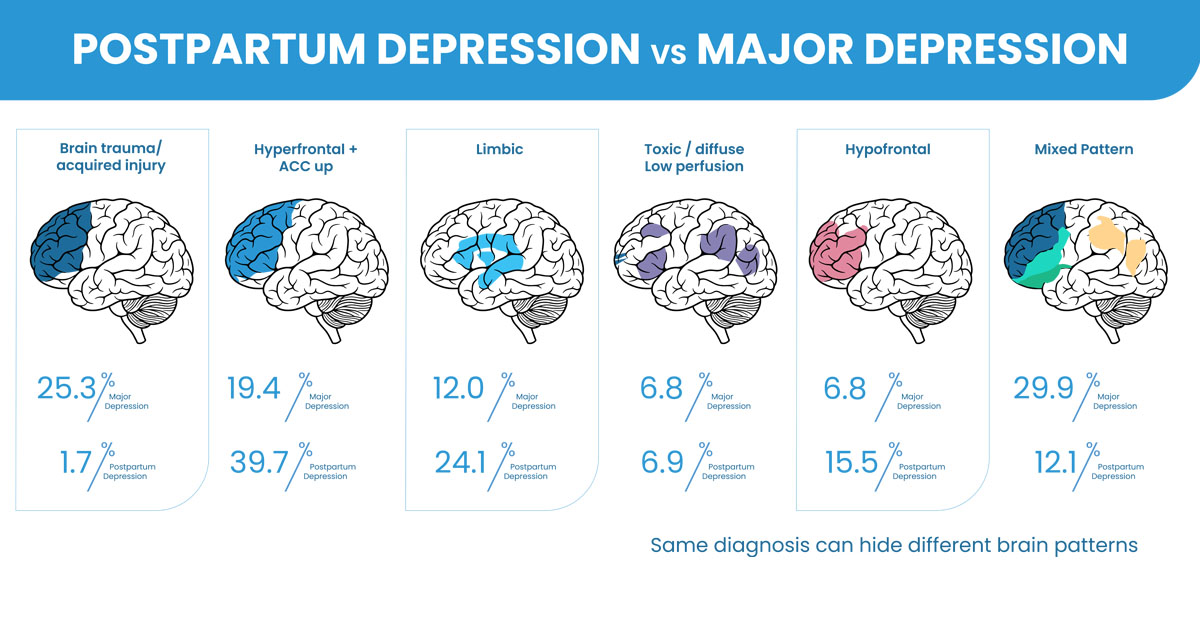
Dr. Amen and colleagues reviewed brain SPECT scans from 58 women with postpartum depression and compared them with scans from 26,077 people with major depression. The scans were grouped into six brain-function patterns, including hyperfrontal/anterior cingulate cortex (ACC), limbic, hypofrontal, toxic/diffuse low perfusion, brain trauma/acquired injury, and mixed patterns.
The findings showed that women with postpartum depression did not all have the same brain pattern. Nearly 40 percent showed a hyperfrontal/ACC pattern, compared with 19.4 percent of those with major depression. Limbic patterns were also about twice as common, occurring in 24.1 percent versus 12 percent, while hypofrontal patterns appeared in 15.5 percent versus 6.8 percent.
One of the most striking differences involved the brain trauma/acquired injury pattern. It appeared in 25.3 percent of the major depression group but just 1.7 percent of the postpartum depression group.
These new research findings from Amen Clinics reinforce an important point: The same psychiatric diagnosis can encompass different patterns of brain function. Understanding those differences may help explain why women with similar symptoms can respond differently to treatment and why a more individualized approach to care may be beneficial.
The new Amen Clinics research adds to a growing body of evidence suggesting that psychiatric diagnoses based on symptoms alone may not tell the whole story. Women with postpartum depression in the study showed several distinct patterns of brain function, and those patterns differed significantly from those seen in the much larger major depression group.
Why does that matter? Because people who share the same diagnosis may not necessarily have the same underlying biology. Looking at brain function as part of a comprehensive evaluation, alongside symptoms, medical and mental health history, neurocognitive testing, lifestyle factors, and other clinical information, may provide additional clues about what is contributing to an individual’s symptoms. That information can help clinicians move toward more personalized care rather than assuming that everyone with the same diagnosis needs the same treatment.
This concept is gaining attention throughout psychiatry. A 2026 paper in the American Journal of Psychiatry notes that the DSM remains largely based on descriptive symptoms and explores how validated biological markers could eventually be incorporated into psychiatric assessment. The authors suggest that integrating biological information could help advance more tailored treatment, as well as earlier detection and prevention.
The Lindsay Clancy case brings some important questions to light. In the months before the deaths of her children, Clancy repeatedly sought psychiatric help and received a changing combination of medications. Testimony at her trial documented diagnoses including generalized anxiety disorder, adjustment disorder with depressed mood, insomnia associated with a mental health condition, and a history of suicidal thoughts. Her defense maintained that she was suffering from postpartum psychosis, while clinicians and prosecution experts disputed aspects of that diagnosis.
Clancy was prescribed thirteen different psychiatric medications over approximately four months, including antidepressants, benzodiazepines, sleep medications, a mood stabilizer, and an antipsychotic. Her symptoms nevertheless continued to be a concern, and the adequacy and effects of her treatment became major points of dispute at trial.
What if symptoms alone are not giving clinicians enough information about how an individual patient’s brain is functioning? Without looking at brain function, there is no way to know whether Clancy had one of the patterns identified in the new postpartum depression research or an entirely different pattern. Nor can we know whether brain imaging would have changed her diagnosis, treatment, or the tragic outcome.
But that uncertainty is precisely the point. How would we know unless we looked?
For decades, Amen Clinics has used brain SPECT imaging as part of a comprehensive evaluation of mental health conditions.
SPECT, which stands for single photon emission computed tomography, is a functional brain imaging technology that measures blood flow and activity patterns. Unlike structural scans, such as CT or MRI, which primarily show brain anatomy, SPECT provides information about how the brain is functioning.
It can reveal areas with normal, healthy activity — as well as areas of dysfunction, showing either too much or too little activity.
Based on a database of more than 300,000 SPECT scans, Amen Clinics clinicians have identified certain brain patterns, or brain dysfunction, associated with different mental health conditions.
Below are SPECT images showing healthy function on the left and abnormal activity on the right associated with a particular mental condition:
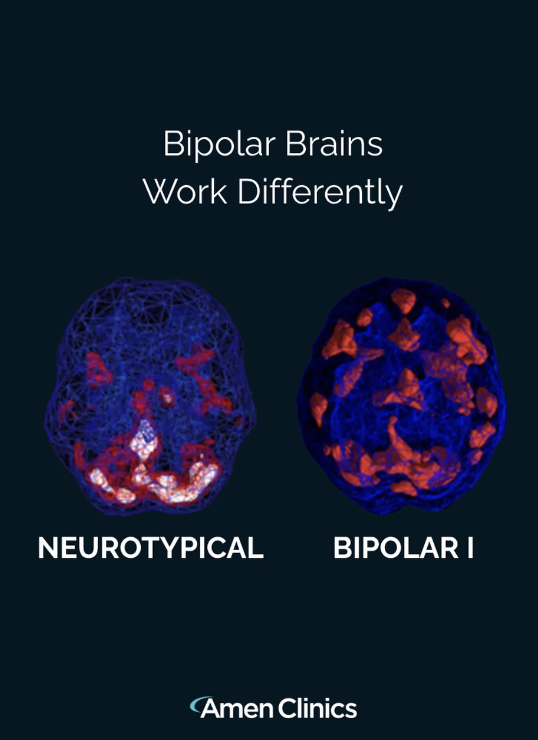
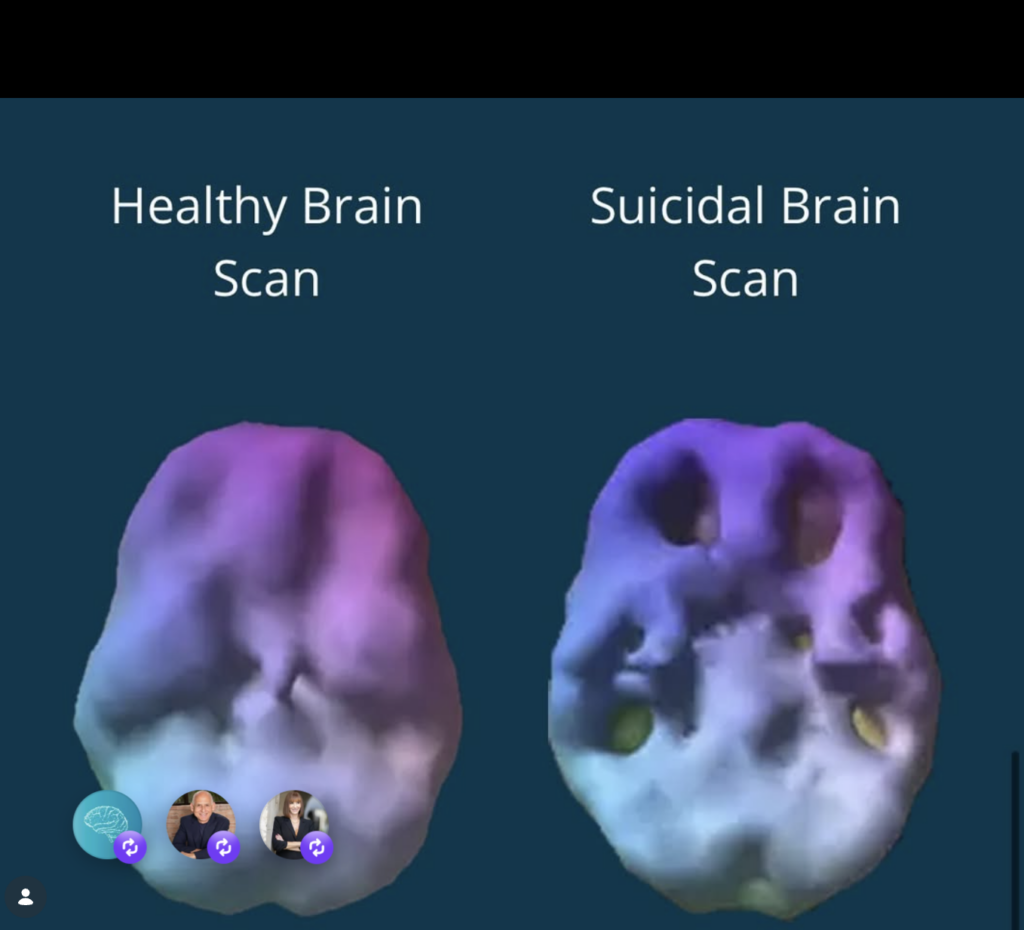
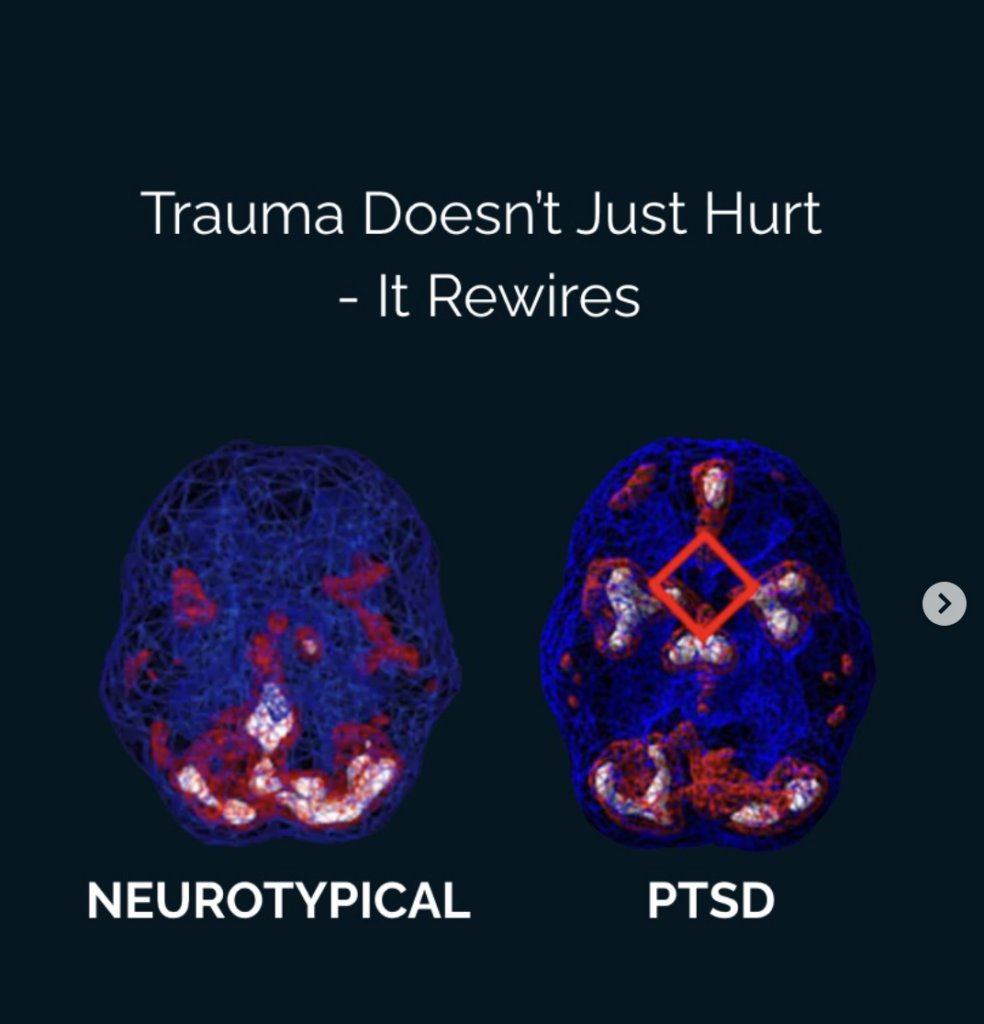
In many cases, such as depression, there are several types of patterns associated with one diagnosis. That means that two people with the same diagnosis may have very different underlying brain patterns, which respond to different treatments.
These nuanced differences prove to be very significant when considered alongside symptoms, personal history, neurocognitive testing, clinical evaluation, and other relevant data.
This whole-body approach informs how our physicians develop personalized, holistic treatment plans that combine natural ways of treating mental health conditions with cutting-edge neuroscience.
At Amen Clinics, brain SPECT imaging is not used in isolation to diagnose postpartum depression or determine treatment. It is one component of a comprehensive evaluation designed to provide clinicians with more information about the individual patient.
The emerging postpartum depression research suggests why that additional information may matter: The same symptoms and diagnostic labels can be associated with different patterns in the brain, and understanding those differences may ultimately help support more individualized care.
No. Postpartum depression shares many symptoms with major depression, including persistent sadness, fatigue, changes in sleep or appetite, and difficulty concentrating. However, PPD occurs in the context of pregnancy and childbirth and may involve unique hormonal, physical, sleep, and psychosocial factors. Preliminary Amen Clinics research also found differences in the distribution of brain SPECT activity patterns between women with PPD and a much larger group of people with depression.
In an internal Amen Clinics study of 58 women with postpartum depression, the three most common SPECT patterns involved overactive frontal lobes/anterior cingulate, limbic system overactivity, and underactive frontal lobes. The findings suggest that PPD is associated with multiple brain patterns rather than a single pattern. These preliminary findings have not yet been published in a peer-reviewed journal.
No. SPECT imaging is not a standalone diagnostic test for postpartum depression. It measures brain blood flow and activity and can provide additional biological information as part of a comprehensive evaluation that also includes clinical history, symptoms, neurocognitive testing, and other relevant assessments.
Postpartum depression typically involves symptoms such as persistent sadness, anxiety, irritability, exhaustion, guilt, and difficulty bonding with the baby. Postpartum psychosis involves a loss of contact with reality and may cause delusions, hallucinations, severe confusion, disorganized thinking, or bizarre beliefs. Postpartum psychosis is a medical emergency and requires immediate psychiatric evaluation.
Postpartum depression, depression, and other mental health conditions can’t wait. At Amen Clinics, we practice precision medicine—using brain SPECT imaging and comprehensive evaluations to understand what’s really happening in your brain, not just your symptoms.
Our whole-body approach to holistic psychiatry combines cutting-edge neuroscience with natural ways to treat mental health conditions, including targeted nutrition, supplements, lifestyle strategies, therapy, and medications (when necessary). Every treatment plan is personalized to address the root causes of your struggles and support the health of your brain, body, and mind.
Don’t settle for guesswork. You deserve answers—and a plan built specifically for you. Speak with a Brain Health Advisor today at 888-546-3124 or visit our contact page to get started.
About the Reviewer
Kandace Licciardi, MD, Medical Director, Amen Clinics
Dr. Kandace Licciardi is a double board-certified psychiatrist in adult and forensic psychiatry and serves as Medical Director of Amen Clinics Dallas Metro Area. She takes a comprehensive, whole-person approach to care, integrating evidence-based psychiatric treatment with lifestyle, social, and wellness factors. Dr. Licciardi has extensive experience treating depression, anxiety, bipolar disorder, psychotic disorders, and borderline personality disorder, with special expertise in early psychosis intervention. She completed her psychiatry residency at Maimonides Medical Center and her forensic psychiatry fellowship at New York University.
ABSTRACT
Objective: We wanted to see whether postpartum depression shows different brain patterns, and whether those patterns are different from depression in general.
Methods: We looked at brain SPECT scans from 58 women with postpartum depression. Each scan was placed into one of six brain pattern groups: overactive frontal lobes/anterior cingulate, limbic system overactivity, underactive frontal lobes, toxic or diffuse low blood flow, brain injury-like pattern, or no clear pattern. We compared these results with a larger depression group of 26,077 people.
Results: The women with postpartum depression did not all have the same brain pattern. The most common patterns were overactive frontal lobes/anterior cingulate, limbic overactivity, and underactive frontal lobes. Compared with depression in general, postpartum depression had more of these three patterns and fewer brain injury-like or no-clear-pattern cases. Five of the six pattern differences were still statistically significant after correction for multiple tests.
Conclusion: Postpartum depression is not one single brain pattern. It appears to include several different brain types. This may help explain why women with postpartum depression can have different symptoms and may need different treatment approaches.
Postpartumdepression.org
https://www.postpartumdepression.org/resources/statistics/
Accessed September 18, 2026
Slomian J, Honvo G, Emonts P, Reginster JY, Bruyère O. Consequences of maternal postpartum depression: A systematic review of maternal and infant outcomes. Womens Health (Lond). 2019 Jan-Dec;15:1745506519844044.
Cuthbert B, et al. The Future of DSM: Role of Candidate Biomarkers and Biological Factors. Am J Psychiatry. 2026 May 1;183(5):317-324.
New Amen Clinics Research on Postpartum Depression vs. Depression
Dr. Daniel Amen, Dr. Dave Keator, et al.
September 21, 2026
There’s a name you can’t say without your chest tightening.
Maybe it’s a family member who wounded you years ago. A friend who betrayed a confidence. A church split that left scars. An ex-spouse, a former boss, a parent who never said sorry. You’ve prayed about it. You’ve told yourself you’ve moved on. But the resentment still lives somewhere in you, quietly running in the background—and you may not realize how much it’s costing you.
Here’s what the science reveals, and it’s remarkable: that unresolved conflict isn’t just an emotional burden. It’s a brain health issue. The people in your life—and the state of your relationships with them—shape your brain as powerfully as what you eat or how you sleep.
This is the circle most of us neglect. And healing it may be one of the most transformative things you ever do for your mind, your body, and your soul.

We tend to sort life into categories: physical health over here, relationships over there. But your brain doesn’t work that way.
Every interaction you have—every argument, every embrace, every silent grudge—registers in your brain and body. Loneliness and social isolation are now recognized as serious risks to physical and mental health, while strong, supportive relationships are consistently linked to greater resilience and well-being.
This is why the whole-person model used at Amen Clinics—the Amen Clinics Method—has always included the social circle alongside the biological, psychological, and spiritual. You are not four separate people. Your relationships and your brain rise and fall together.
Let’s be precise about what happens when we hold on to a hurt.
Resentment isn’t passive. It’s an active process—and its engine is rumination, the replaying of a painful event over and over. Researchers have found that rumination is linked to higher depressive and anxious symptoms, anger problems, PTSD, and obsessive-compulsive patterns.
In brain terms, this looks familiar:
The old saying turns out to be neurologically true: holding a grudge is like drinking poison and expecting the other person to suffer. The person who wronged you may be sleeping fine. Your brain is the one paying the bill.
Now for the hopeful part—and the evidence here is genuinely striking.
In the largest study of its kind, researchers ran a randomized controlled trial of a self-guided forgiveness workbook with nearly 4,600 participants across five high-conflict countries. Harvard’s Human Flourishing Program reported that the workbook not only increased forgiveness—it lowered depressive and anxiety symptoms, increased hope, and improved multiple aspects of human flourishing, including happiness, health, meaning, character, and relationships.
The study included more participants than all previous forgiveness intervention research combined, and it worked in just a few hours of self-guided effort.
Additional research suggests forgiveness works in part by reducing anger and increasing hope—the very mechanisms that keep people stuck.
The takeaway is powerful: forgiveness is not weakness, and it’s not just a nice spiritual idea. It’s one of the most effective mental health interventions we know of.
This is where many people get stuck, so let’s be clear—because a wrong definition of forgiveness keeps people in bondage.
Forgiveness is:
Forgiveness is not:
That last point matters enormously. You can forgive someone and still maintain a boundary. Forgiveness releases you; it does not obligate you to re-enter harm. If you’re in an abusive situation, please seek qualified help—forgiveness is never a reason to stay in danger.
What’s striking is how precisely the research confirms what Scripture has taught all along.
“Be kind and compassionate to one another, forgiving each other, just as in Christ God forgave you” (Ephesians 4:32). “Do not let the sun go down while you are still angry” (Ephesians 4:26)—which reads like a prescription for interrupting rumination before it takes hold.
And consider what Paul wrote about where to fix your attention: “whatever is true, whatever is noble… whatever is lovely, think about such things” (Philippians 4:8). Modern neuroscience says the same thing in different words: where your attention goes, your brain grows. Rehearse the offense, and you strengthen the pathways of bitterness. Rehearse grace, and you strengthen something else entirely.
Faith and brain science, once again, telling the same story.
Healing relationships takes courage, but it starts with small, concrete moves. Here’s where to begin:
That last point deserves emphasis. A tired, inflamed, undernourished brain is a reactive brain. Sometimes the most spiritual thing you can do for a strained relationship is go to bed on time.
If bitterness has worn a groove in your brain, here’s your good news: grooves can be re-carved.
Thanks to neuroplasticity, your brain can rewire itself throughout your entire life. Dr. Amen has proven it across decades of imaging: you are not stuck with the brain you have. You are not condemned to carry this forever. The resentment that feels permanent today can genuinely loosen its grip.
Which sounds a great deal like the promise made two thousand years ago: “Be transformed by the renewing of your mind” (Romans 12:2).
Understanding that your relationships shape your brain is one thing. Actually healing them—doing the hard, holy work of forgiveness and repair—is another. And nobody should have to do it alone.
That’s exactly why the Amen WHOLE-4 was created. Developed by Dr. Daniel Amen and offered through Amen University, it’s a transformative program that weaves together brain science and Scripture to renew all four circles of life—including a dedicated session on Social Circle Healing, where participants learn to break free from toxic patterns and rebuild the life-giving relationships God designed us for.
Alongside restoring energy and vitality, renewing your thinking, and deepening your walk with God, WHOLE-4 helps your church, small group, or counseling center do this work together—in community, where forgiveness is modeled, practiced, and made possible. You can explore the vision behind it in Where Brain Science Meets Scripture: Inside Amen WHOLE-4 and Find a New Path to Whole-Person Healing with Amen WHOLE-4.
That name that tightens your chest? It doesn’t have to have that power forever. Discover the Amen WHOLE-4 and begin healing your social circle today.
TL;DR:
Is hormone replacement therapy safe? For many women, the answer is more nuanced than outdated research once suggested. When started at the right time and tailored to the individual, HRT can safely relieve symptoms like hot flashes, brain fog, sleep disruption, and mood changes.
Because risks and benefits vary, the best approach is a personalized, whole-body evaluation that considers your brain, hormones, and overall health.
Medically reviewed by Kandace Licciardi, MD, Medical Director, Amen Clinics
Hot flashes that wake you in the middle of the night. Brain fog that makes it hard to find the right word. Mood swings, anxiety, or irritability that feel unfamiliar or hard to control.
For many women, these symptoms of perimenopause and menopause can be disruptive, frustrating, and even alarming. But this once-overlooked stage of life is finally getting the attention it deserves, and more women are feeling empowered to seek answers and find solutions that help them feel like themselves again.
One option that often comes up is hormone replacement therapy (HRT), also known as hormone therapy (HT).
But with decades of conflicting information, many still wonder: Is HRT safe?
Much of the concern around HRT can be traced back to the 2002 Women’s Health Initiative (WHI) study, which reported a potential link between HRT and increased risks of breast cancer, heart disease, and stroke. Following these findings, HRT use declined sharply.
Today, however, medical experts acknowledge the WHI study was flawed and believe the warnings were overstated. Indeed, both research on HRT and treatment options have evolved.
It is now accepted that HRT can be safe and effective for many women when used appropriately. Its safety depends on factors such as age, health history, timing, and the specific type of therapy used. That means many women struggling with symptoms like hot flashes and disrupted sleep, brain fog, anxiety, discomfort during sex, and low mood could find relief with HRT.
Understanding what’s true and what’s outdated is key.
In this blog, you’ll learn about the risks and benefits of HRT, how it may affect brain health and mood, and why a personalized, whole-body approach is essential during this stage of life.
Experts increasingly believe that HRT can be safe for many women when prescribed appropriately. However, its safety depends on factors such as age and health history, as well as the HRT’s timing and formulation.
For most women, experts agree that HRT can help manage moderate to severe menopause symptoms such as hot flashes when initiated within 10 years of onset of menopause or under age 60.
One of the critiques lodged against the WHI study was that the subjects studied were older (an average age of 63, or post-menopausal).
Experts now advise women to work closely with a qualified healthcare professional to weigh your individual benefits and risks based on your medical history, age, and symptoms.
HRT safety varies based on several factors. these include:
In the early 2000s, the WHI findings created widespread concern. According to a report from the Yale School of Medicine, nearly 15 million U.S. women were taking an estrogen-based menopausal treatment in the 1990s. Within six months of the WHI study being published, HRT usage declined by nearly 50 percent.
However, research has since revealed that the safety and risks of HRT vary by factors like age, formulation, and timing. In light of these findings, the U.S. Food and Drug Administration (FDA) recently clarified labeling changes regarding the benefit-risk considerations of HRT in an official statement.
In 2025, the FDA removed warnings that linked HRT products with cardiovascular diseases, breast cancer, and probable dementia, as well as endometrial cancer (except in systemic estrogen-alone drugs). It also removed a previous dementia-related warning while adding that HRT is suitable for moderate to severe symptoms in women under 60 years old, or fewer than 10 years since menopause.
HRT can offer relief for women who are experiencing perimenopause and menopause symptoms, including sleep disruption from hot flashes and night sweats, cognitive problems, pain during sex, and mood issues.
The potential documented benefits of HRT include:
While HRT does not prevent or cure any disease, it can also offer positive long-term effects. A recent article in JAMA pointed to evidence linking hormone therapy, initiated within a decade of the onset of perimenopause, with various health benefits, including:
There are many indirect benefits that come from HRT as well. When hot flashes and night sweats are reduced, sleep is not disrupted. Restful sleep is essential to emotional regulation and good decision making. There’s a ripple positive effect that happens when sleep is improved.
Additionally, sexual intimacy and satisfaction are important aspects of well-being for women. In perimenopause and menopause, women may experience any of the following symptoms that can have a dramatic negative impact on their sex lives:
In one study, more than 91 percent of the participating menopausal women experienced sexual dysfunction, and this was found to negatively impact their marriages.
Research shows that there are types of HRT that can help to increase libido in menopausal women. In other studies, HRT has been shown to help with vaginal dryness, thinning, and related pain during intercourse. These are significant benefits for a woman’s overall mental well-being.
While HRT is associated with easing symptoms around perimenopause and menopause, many still ask: Is HRT safe for women?
Like with any medication, there are risks to consider. Some of the possible dangers of HRT include:
On the whole, these risks are very small. Factors such as the timing of treatment (considering a woman’s age as well as years since menopause) are associated with lower risks.
This is true for increased breast cancer risk. It varies based on the type of HRT, duration of use, and age. For example, the risk is generally higher when HRT involves both estrogen and progestogen, or with a longer duration of use, according to the Breast Cancer Research Foundation.
Of course, individual risk factors (such as smoking, family history, and clotting disorders) should also be taken into consideration before starting HRT.
Experts agree that, when deciding to take HRT, it’s important to weigh both risks and benefits.
That said, HRT is generally not recommended for women with a history of breast cancer, endometrial cancer, or other estrogen-dependent cancers. It is also contraindicated for those with active liver disease, stroke, cardiovascular disease, blood clots, or unexplained vaginal bleeding.
As a woman transitions through perimenopause and menopause, reproductive hormone levels, estrogen and progesterone, naturally fluctuate and then drop. Eventually, her ovaries stop releasing eggs and she has her last menstrual period.
Perimenopause takes place over months or years, starting from the first signs and symptoms of menopause. Menopause officially occurs when 12 consecutive months pass without menstruation, after which a woman is considered postmenopausal.
During this menopausal transition, hormonal shifts impact the brain, influencing the prefrontal cortex, hippocampus, hypothalamus, and amygdala. These areas are associated with key functions, including sleep regulation, learning, memory, and temperature regulation.
Estrogen also interacts with serotonin, dopamine, GABA, and brain blood flow. Therefore, in addition to symptoms like hot flashes, women may be more vulnerable to mental health disturbances, as well as sleep disorders. Progesterone, meanwhile, affects calming pathways of the brain and offers neuroprotective benefits, research shows.
During menopausal hormonal shifts, women may experience irritability or effects that mimic:
As menopause takes place, many of these symptoms are simply a byproduct of changing hormones and can be stabilized.
Related: Reproductive Mental Health: PMS, Perimenopause, and More
Considering hormones’ effects on the brain, it’s no surprise that the hormonal changes around menopause and perimenopause can take a toll on mental health. For example, they may trigger mood shifts, as well as sleep disruption (which, itself, can negatively affect mood and increase anxious symptoms).
What shows up as depression and anxiety can indeed be symptoms of underlying hormonal changes.
A 2023 study pointed to the risk of thyroid dysfunction in perimenopausal and postmenopausal women, which can also trigger mood-related symptoms. The researchers noted that thyroid dysfunction is common in women but can be overlooked due to overlapping symptoms during menopause, making diagnosis more difficult.
But it is not just anxiety and depression.
Changes in cortisol levels are also associated with menopause-related hormonal fluctuations. According to a 2025 study, elevated cortisol in midlife is “correlated with increased amyloid deposition, specifically in post-menopausal women.” Therefore, researchers concluded that post-menopausal women with high midlife cortisol have an increased risk of Alzheimer’s.
With hormonal changes impacting brain and mental health in so many ways, it’s important to rule out medical causes for symptoms before making any psychiatric diagnosis.
If you are in perimenopause or menopause and are struggling with mental health symptoms, mood, memory issues, brain fog, or cognitive issues, a comprehensive evaluation at Amen Clinics may help identify what’s underlying your symptoms.
This can be very helpful when there are multiple factors influencing symptoms such as hormonal changes, an existing mental health condition, poor sleep, or stress.
We take a whole-body approach to mental health, using precision medicine. Our clinicians look at the brain and the entire person, not just symptoms. We use brain SPECT imaging as part of our comprehensive evaluation to determine the underlying brain blood flow and activity patterns behind symptom clusters.
Additionally, our clinicians take time to get to know you by getting a detailed personal history, as well as administering neuropsychological testing.
This combined data is analyzed and with the insights gained, our clinicians develop a tailored treatment plan geared to optimize your brain and body. Practicing holistic psychiatry, they combine cutting-edge neuroscience with natural ways to treat mental health conditions.
A treatment plan may include lifestyle recommendations, like diet, nutrition, exercise, sleep, and relaxation. It may also include therapy or medication, when appropriate. It is designed to address and heal what’s going on in your brain and body that is fueling your symptoms.
In addition to our comprehensive evaluation, for those interested in HRT, Amen Clinics also offers hormone evaluation and replacement therapy.
Our specialists in hormone therapy have a depth of experience in understanding how hormones affect the regulation of the body and brain. Based on your history, age, genetics, potential lab work, and current health status, risks and benefits can be assessed and discussed with you.
If you should decide to go ahead with HRT, our specialists are highly trained in balancing and optimizing hormone levels to restore health and get you back to feeling like yourself again. This can be a monumental relief if you have been struggling with hormone fluctuations during perimenopause and menopause.
At Amen Clinics, we recommend bioidentical hormones, rather than synthetic ones, at individually customized dosages for maximum safety and effectiveness. In some cases, this can be referred to as bioidentical hormone replacement therapy (BHRT).
Our personalized approach to treatment offers more than a “one size fits all” approach. Our clinicians understand that no two people are exactly the same and effective treatment needs to be personalized. And, since our bodies are so sensitive to hormone levels, our doctors order specific lab tests to help gauge the most precise dose for your unique needs.
Related: 7 Tips to Manage Emotional and Physical Menopause Symptoms
Weighing the risks and benefits of HRT, certain populations may be good candidates. You may consider HRT if you:
If you’re considering hormone replacement therapy, consider getting a professional evaluation to evaluate whether it’s right for you.
While HRT can be safe in many cases, some women should use caution and be aware of risks. Factors to consider include:
Again, medical supervision will help you determine if HRT benefits outweigh the risks, or vice vers, so you can make the most informed decision.
Even today, many people are misinformed or confused about HRT. Here are some common myths, as well as the facts that help clarify them:
| MYTH | FACT |
|---|---|
| HRT is unsafe for all women. | HRT safety depends on an individual’s risk profile, timing, and other factors. |
| HRT causes cancer in all cases. | Cancer risk varies based on HRT type, duration, and personal health history. |
| Hormone therapy is only cosmetic. | Hormone therapy can help address physical, neurological, and mental health symptoms, not just appearance. |
Clearly, HRT is a nuanced topic, which is why professional evaluation is crucial for women considering this option as they transition through perimenopause and menopause.
Instead, seek a professional evaluation that includes:
Like with any medication, it’s important to weigh an individual’s unique risks and benefits when considering hormone replacement therapy. However, for many women, studies indicate that the benefits can outweigh the risks. This underscores the importance of receiving a thorough and professional evaluation before taking HRT.
In the past, studies raised concerns about HRT among older women. However, research published in 2024 suggests that the risks of HRT beyond age 65 vary, with HRT type, delivery, and dosage all being factors to consider.
As hormone fluctuations affect brain and mental health, some menopausal women may experience depression symptoms. HRT may help reduce or prevent these symptoms and improve mood.
A large U.K. study published in 2024 indicated that hormone therapy might have moderate effects on brain health. These benefits depend on certain factors, including the duration of treatment and a woman’s age.
Before stopping HRT, consult your doctor. Some women continue taking HRT over the long term, while others lower dosage or stop altogether after a certain amount of time. A brain health-focused, whole-body approach, as offered at Amen Clinics, will help you evaluate risks and benefits and make the most informed recommendations about starting, reducing, or stopping HRT.
With research ongoing over decades, experts now believe that HRT can be safe for many women when prescribed thoughtfully.
However, brain health matters when it comes to making decisions about taking hormones, and personalized care leads to better outcomes. Women in perimenopause or menopause who are experiencing persistent mood or cognitive symptoms should seek evaluation.
If you have noticed mood changes, brain fog, or other disruptive menopausal symptoms, consider a comprehensive evaluation that looks at both hormones and brain health. Amen Clinics’ holistic, whole-body approach considers the individual, risks, and benefits to make the most informed treatment recommendations possible regarding hormone replacement therapy.
Menopause-related brain fog, mood changes, anxiety, and other mental health conditions can’t wait. At Amen Clinics, we practice precision medicine—using brain SPECT imaging and comprehensive evaluations to understand what’s really happening in your brain, not just your symptoms.
Our whole-body approach to holistic psychiatry combines cutting-edge neuroscience with natural ways to treat mental health conditions, including targeted nutrition, supplements, lifestyle strategies, therapy, and medications (when necessary). Every treatment plan is personalized to address the root causes of your struggles and support the health of your brain, body, and mind.
Don’t settle for guesswork. You deserve answers—and a plan built specifically for you. Speak with a Brain Health Advisor today at 888-288-9834 or visit our contact page to get started.
About the Reviewer
Kandace Licciardi, MD, Medical Director, Amen Clinics
Dr. Kandace Licciardi is a double board-certified psychiatrist in adult and forensic psychiatry and serves as Medical Director of Amen Clinics. She takes a comprehensive, whole-person approach to care, integrating evidence-based psychiatric treatment with lifestyle, social, and wellness factors. Dr. Licciardi has extensive experience treating depression, anxiety, bipolar disorder, psychotic disorders, and borderline personality disorder, with special expertise in early psychosis intervention. She completed her psychiatry residency at Maimonides Medical Center and her forensic psychiatry fellowship at New York University.
Rossouw JE, Anderson GL, Prentice RL, LaCroix AZ, Kooperberg C, Stefanick ML, Jackson RD, Beresford SA, Howard BV, Johnson KC, Kotchen JM, Ockene J; Writing Group for the Women’s Health Initiative Investigators. Risks and benefits of estrogen plus progestin in healthy postmenopausal women: principal results From the Women’s Health Initiative randomized controlled trial. JAMA. 2002 Jul 17;288(3):321-33. doi: 10.1001/jama.288.3.321. PMID: 12117397.
https://jamanetwork.com/journals/jama/fullarticle/195120
WHI clinical trial revisit: Imprecise scientific methodology disqualifies the study’s outcomes. Ostrzenski, Adam et al. American Journal of Obstetrics & Gynecology, Volume 193, Issue 5, 1599 – 1604. https://www.ajog.org/article/S0002-9378%2805%2901186-5/fulltext
Yale School of Medicine. After Decades of Misunderstanding, Menopause is Finally Having Its Moment. By Kira Berman. April 14, 2025. https://medicine.yale.edu/news-article/after-decades-of-misunderstanding-menopause-is-finally-having-its-moment/
FDA Requests Labeling Changes Related to Safety Information to Clarify the Benefit/Risk Considerations for Menopausal Hormone Therapies. https://www.fda.gov/drugs/drug-safety-and-availability/fda-requests-labeling-changes-related-safety-information-clarify-benefitrisk-considerations
Makary MA, Nguyen CP, Høeg TB, Tidmarsh GF. Updated Labeling for Menopausal Hormone Therapy. JAMA. 2026;335(2):117–118. doi:10.1001/jama.2025.22259
Yildirim F, Duman NB, Kulakaç Ö. The Effect of Menopause on the Sexual Functions and Marital Adjustment of the Spouses. J Midlife Health. 2023 Jul-Sep;14(3):170-175. doi: 10.4103/jmh.jmh_90_23. Epub 2023 Dec 30. PMID: 38312762; PMCID: PMC10836430.
Scott A, Newson L. Should we be prescribing testosterone to perimenopausal and menopausal women? A guide to prescribing testosterone for women in primary care. Br J Gen Pract. 2020 Mar 26;70(693):203-204. doi: 10.3399/bjgp20X709265. PMID: 32217602; PMCID: PMC7098532.
Tomczyk K, Chmaj-Wierzchowska K, Wszołek K, Wilczak M. New Possibilities for Hormonal Vaginal Treatment in Menopausal Women. J Clin Med. 2023 Jul 18;12(14):4740. doi: 10.3390/jcm12144740. PMID: 37510854; PMCID: PMC10380877.
Breast Cancer Research Foundation website, “Does HRT Increase Your Risk of Breast Cancer?”, Accessed April 3, 2026. https://www.bcrf.org/about-breast-cancer/hrt-breast-cancer-risk/
Guennoun R. Progesterone in the Brain: Hormone, Neurosteroid and Neuroprotectant. Int J Mol Sci. 2020 Jul 24;21(15):5271. doi: 10.3390/ijms21155271. PMID: 32722286; PMCID: PMC7432434.
Frank-Raue K, Raue F. Thyroid Dysfunction in Periand Postmenopausal Women-Cumulative Risks. Dtsch Arztebl Int. 2023 May 5;120(18):311-316. doi: 10.3238/arztebl.m2023.0069. PMID: 37013812; PMCID: PMC10398375.
Salardini A, Himali JJ, Abdullah MS, et al. Elevated serum cortisol associated with early-detected increase of brain amyloid deposition in Alzheimer’s disease imaging biomarkers among menopausal women: The Framingham Heart Study. Alzheimer’s Dement. 2025;21:e70179. https://doi.org/10.1002/alz.70179
The Menopause Society. Women aged older than 65 years may be able to safely continue taking hormone therapy. April 10, 2024. https://menopause.org/press-releases/women-aged-older-than-65-years-may-be-able-to-safely-continue-taking-hormone-therapy
eLife Sciences Publications: Study highlights complexity of menopausal hormone therapy’s impact on brain health. https://elifesciences.org/for-the-press/2925efa3/study-highlights-complexity-of-menopausal-hormone-therapy-s-impact-on-brain-health
TL;DR:
There’s a reason you feel different after scrolling. Your digital life isn’t just entertainment, it’s influencing how your brain manages mood, attention, and stress.
Social media platforms have quietly become one of today’s biggest mental health disruptors, affecting teens and adults alike. Its impact is evident in self-esteem dips, rising anxiety, and worsening depression.
Through our work with tens of thousands of patients at Amen Clinics, we’ve seen firsthand how digital habits can either support your mental wellness or slowly erode it.
Medically reviewed by Kandace Licciardi, MD, Medical Director, Amen Clinics
In this blog, we’re pulling back the curtain on how your online interactions have been shaping your mind without your permission.
First, we’ll expose the hidden ways social media can manipulate your mood and hijack your focus. Then, we’ll share practical strategies to help you build a healthier, more empowering relationship with the digital world.
In short, you’ll discover how social media affects your mental health — and what you can do right now to protect your brain and well-being.
Learning how social media affects mental health equips you to recognize the patterns that impact your emotional and cognitive well-being.
Let’s take a closer look at what happens to the brain when you scroll through social media.
One of the surprising harms of social media is that it can actually make you feel lonelier.
As humans, we’re hardwired to connect socially. It’s how we survived for millions of years, by sticking together, avoiding danger, pooling resources, and forming strong bonds.
Dopamine is your brain’s feel-good hormone and a critical component of its reward circuitry. When your brain releases dopamine in response to something life affirming, such as connecting socially, the good feelings motivate you to repeat actions that ensure your survival.
When connecting socially online, every comment, like, or share on your posts triggers a small release of dopamine. However, when you return again and again, it can cause a not-so-healthy dopamine loop.
That’s when you compulsively check your social media apps in response to notifications or you stay on for the next exciting video for too long, all to get more of the feel-good neurochemical dopamine.
But the more you do it, the more dopamine hits you need to reach the same level of feeling good. While terrible for your brain and mental health, the dopamine loop serves the social media apps by keeping you engaged and online.
Eventually, your brain gets overstimulated by the constant exposure to images, videos, and updates. But this overstimulation reduces your attention span, making it harder for you to focus on important but ordinary tasks that do not offer the dopamine hit social media does. It also leads to mental fatigue and poorer cognition.
Additionally, seeing other people’s success through “polished posts” can lead to comparison-based stress responses. More simply, it leads to a “compare and despair” mindset.
You may start feeling like your appearance, achievements, or lifestyle aren’t good enough. All these can lower your self-esteem, increase anxiety, and contribute to depression.
But that’s not all. Late-night scrolling can disrupt your sleep. When you get exposed to blue light at night, it interferes with melatonin production, making it difficult for you to fall asleep. Poor sleeping patterns affect your attention, mood, and overall brain function.
Brain imaging studies on individuals struggling with screen overuse at Amen Clinics show changes in the brain regions responsible for emotion regulation, attention, and reward processing. Such findings might explain why symptoms like anxiety and focus difficulties worsen for patients with heavy digital use.
Related: 5 Most Addictive Social Media Features
To better understand the impact of social media on mental health, let’s take a look at what researchers have found.
Research associates frequent and excessive social media use with heightened levels of anxiety, depression, loneliness, and diminished self-esteem. The constant updates, notifications, and comparisons can keep your brain in a state of high alert, triggering worry and stress cycles.
Constantly comparing your life with others’ “perfect” moments or highlight reels can make you feel inadequate and depressed. Indeed, studies have witnessed a rise in depressive symptoms for social media users, as online interactions can reduce real-life connections and increase feelings of isolation.
For teens, in particular, both the online vitriol, and tendency to compare oneself to others who appear prettier, happier, and more successful can be damaging. In survey research, teens report that this can make them feel overwhelmed by the drama they witness, pressure to post content, excluded by friends, and generally worse about their own lives.
One of the surprising harms of social media is that it can actually make you feel lonelier. Even though you could be interacting with many people online, it’s possible to feel emotionally disconnected. Studies affirm that heavy digital interactions may replace in-person relationships and lead to loneliness.
Heated online discussions, pings, and alerts can overstimulate your brain, elevating stress and irritability. That huge emotional overload can negatively impact your mood without you realizing it.
Negative comments and other forms of online harassment can lead to poor mental health. Studies show that cyberbullying victims usually experience low self-worth, anxiety, and depression.
Related: Is Social Media Causing the Youth Mental Health Crisis?
Some people are more sensitive to the psychological and emotional effects of social media than others. Here are the most vulnerable groups:
Knowing these effects, it’s natural to wonder: Is social media bad for mental health in the long run?
The truth is that social media doesn’t always cause harm. Its impact depends on your brain’s wiring, how you use it, or even your mental health history.
Common red flags that indicate your social media use may be a problem include losing sleep from being online late at night, experiencing mood swings following scrolling, or feeling an uncontrollable urge to constantly check your apps.
There are some positive aspects of social media, too. It can offer social connection, learning opportunities, and support.
How you use it appears to determine whether it is helpful or harmful.
Mental health experts have found that the following basic and practical steps can help you minimize the negative effects of social media and help you to enjoy it in a more balanced way.
When social media-related lack of focus, anxiety, or depression symptoms begin to interfere with your daily life, it’s time to reach out to a qualified mental health professional for help.
Look for the most obvious signs like constant worrying, irritability, difficulty focusing, disrupted sleep patterns, or persistent low mood.
Also, look for less-obvious signs of mental health trouble, such as having extreme fear, sadness, or uncontrollable intrusive thoughts. These reactions may resemble the symptoms seen in obsessive-compulsive disorder (OCD), attention deficit hyperactivity disorder (ADHD), depression, and anxiety.
In extreme cases, scrolling can become so addictive that you can’t stop yourself. You might lose control over your time and ignore important responsibilities.
At Amen Clinics, we look at social media-related mental health issues through the lens of brain health.
As part of our initial evaluation, we conduct a number of assessments including your personal health history. Unique to our clinic we also look closely at your brain function with brain SPECT imaging, which reveals areas of too much activity, low activity, and areas of normal activity.
From these measures, we can create a personalized treatment plan that may include lifestyle recommendations, therapy, nutritional supplements, and, when necessary, medication — all geared at balancing your brain and improving your overall well-being.
We once walked this journey with one of our patients who was struggling with severe compulsive behaviors that had affected his relationships and work. Through brain SPECT imaging, we were able to detect patterns of low activity in areas of the brain that guide impulse control.
The scan helped guide a treatment plan designed to improve healthy activity in the areas of the brain that control impulsivity and judgment. With time, our patient regained his stability and was able to rebuild crucial parts of his life.
Similarly, problems related to social media use — like heightened anxiety, compulsive scrolling, and mood instability — may be a result of underlying brain patterns. SPECT imaging helps clinicians to identify:
The whole-person model at Amen Clinics includes:
Your journey toward protecting your mental health while you experience the benefits of social media doesn’t have to feel overwhelming. Becoming fully aware of your digital habits and setting healthy boundaries are the first steps.
If you are struggling with anxiety or depression, be sure to seek the help of a qualified mental health professional. Remember that brain-based treatment can help address how brain function may be playing a role in impulse control or behavioral addiction. It can also effectively address the problems with brain function underlying anxious and depressive symptoms.
Whatever your social media habits or mental health symptoms you may have, there is help available. With the right strategies, you can strengthen your emotional resilience and enjoy a healthier relationship with social media.
Not always. Social media isn’t inherently harmful. It depends on how your brain is wired, how you use it, and your mental health history. Intentional use can support connection.
However, overuse, comparison, and emotional overload can worsen anxiety, depression, and attention issues. The relationship between social media and mental health can be a positive one if used in a balanced manner.
Many social platforms trigger dopamine loops, comparison cycles, and emotional overstimulation. These effects activate the brain’s stress centers, making you feel on edge, “less than,” or disconnected, even when nothing in your offline life has changed.
Yes. At Amen Clinics, clinicians look at digital overuse through a brain-based perspective. SPECT imaging can show whether overactive, underactive, or reward-driven brain patterns are contributing to anxiety, impulsive scrolling, or mood instability. This information helps guide personalized treatment plans.
The effects of social media overuse, attention issues, anxiety, depression, and other mental health conditions can’t wait. At Amen Clinics, we practice precision medicine—using brain SPECT imaging and comprehensive evaluations to understand what’s really happening in your brain, not just your symptoms.
Our whole-body approach to holistic psychiatry combines cutting-edge neuroscience with natural ways to treat mental health conditions, including targeted nutrition, supplements, lifestyle strategies, therapy, and medications (when necessary). Every treatment plan is personalized to address the root causes of your struggles and support the health of your brain, body, and mind.
Don’t settle for guesswork. You deserve answers—and a plan built specifically for you. Speak with a Brain Health Advisor today at 844-810-8413 or visit our contact page to get started.
About the Reviewer
Kandace Licciardi, MD, Medical Director, Amen Clinics
Dr. Kandace Licciardi is a double board-certified psychiatrist in adult and forensic psychiatry and serves as Medical Director of Amen Clinics. She takes a comprehensive, whole-person approach to care, integrating evidence-based psychiatric treatment with lifestyle, social, and wellness factors. Dr. Licciardi has extensive experience treating depression, anxiety, bipolar disorder, psychotic disorders, and borderline personality disorder, with special expertise in early psychosis intervention. She completed her psychiatry residency at Maimonides Medical Center and her forensic psychiatry fellowship at New York University.
Jing, Z., Yang, W., Lei, Z., Junmei, W., Hui, L., & Tianmin, Z. (2025). Correlations between social media addiction and anxiety, depression, FoMO, loneliness and self-esteem among students: A systematic review and meta-analysis. Plos one, 20(9), e0329466. doi: 10.1371/journal.pone.0329466
Rosen, M. L., Amemiya, J., Tashjian, S. M., Wainwright, L. M., Bolourchi, A. M., & Falk, E. B. (2024). Social media use and depressive symptoms during early adolescence. JAMA Network Open, 7(2), e2356245. https://doi.org/10.1001/jamanetworkopen.2023.56245
Pew Research Center website
Teens, Social Media and Mental Health
https://www.pewresearch.org/internet/2025/04/22/teens-social-media-and-mental-health/?
Accessed December 15, 2025
Bonsaksen, T., Ruffolo, M., Price, D., Leung, J., Thygesen, H., Lamph, G., … & Geirdal, A. Ø. (2023). Associations between social media use and loneliness in a cross-national population: do motives for social media use matter?. Health psychology and behavioral medicine, 11(1), 2158089. doi: 10.1080/21642850.2022.2158089
Nixon, C. L. (2014). Current perspectives: the impact of cyberbullying on adolescent health. Adolescent health, medicine and therapeutics, 143-158. doi: 10.2147/AHMT.S36456
Nagata, J. M., Otmar, C. D., Shim, J., Balasubramanian, P., Cheng, C. M., Li, E. J., Al-Shoaibi, A. A. A., Shao, I. Y., Ganson, K. T., Testa, A., Kiss, O., He, J., & Baker, F. C. (2025). Social media use and depressive symptoms during early adolescence. JAMA Network Open, 8(5), e2511704. https://doi.org/10.1001/jamanetworkopen.2025.11704
TL;DR:
Have you struggled with treatment-resistant anxiety or depression? Or are your lifestyle choices taking a toll on your mental health?
When you experience mental health symptoms, many healthcare providers consider medication the primary solution. Yet natural treatments for mental health are equally important, whether or not you have a diagnosed condition.
Natural treatments are part of an integrative mental wellness approach, which offers a full spectrum of methods to treat the whole person. Extensive research has indicated that non-pharmacological, natural, and holistic treatments can support mental health safely and effectively.
In this blog, you will learn what “natural treatments” entail, what you can expect, and how to safely combine them for optimal results. From mindfulness and herbal remedies to diet and neurofeedback, these 10 strategies have been well researched for their ability to boost mood and help reduce mental health symptoms.
Medically reviewed by Kandace Licciardi, MD, Medical Director, Amen Clinics

While medications can be an important aspect of mental health treatment, they have limitations as well as potential side effects. That’s why it’s important to consider treatment options that go beyond medication alone. At Amen Clinics, our holistic philosophy and integrative treatments address the whole person, not just symptoms.
We find that approaching mental health issues from many different angles contributes to better health outcomes.
Related: For Mental Health, Try Natural Treatments Whenever Possible
Natural mental health therapies are powerful, adjunctive additions to a holistic treatment plan. They can also be preventive, helping stave off symptoms by promoting whole body health.
Like any treatment, natural remedies have some limitations. They’re not always sufficient to be used alone and should be mindfully combined for optimal results. Moreover, they work best when taken based on a personalized brain evaluation, such as with brain SPECT imaging.
Indeed, many natural treatments have shown promise in research on a variety of mental health disorders, from depression and anxiety to ADHD and PTSD. Further studies will be helpful to find out more about their full potential, but the 10 solutions listed below have strong evidence behind them.
Extensive research has indicated that non-pharmacological, natural, and holistic treatments can support mental health safely and effectively.
With multiple natural mental health treatments available, it’s helpful to select several that suit your capabilities, lifestyle, and interests. Use a “menu approach,” choosing several that will make an impact—and experimenting to find those that work best.
Though it’s important to choose solutions you can stick with, smart sequencing reaps optimal results. Start with foundational options first, like diet and exercise, then add in extra efforts like breathing and meditation.
Monitor your results and adjust as needed, based on your response. Each individual is unique, and no two mental health conditions are alike. Even the same condition can have numerous manifestations.
For example, through studying thousands of brain imaging results, Amen Clinics has found seven types of ADD, seven types of anxiety and depression, and six brain patterns associated with addiction. Not all individuals will respond the same way to interventions—including natural ones.
When it comes to any type of mental health treatment, it’s important to keep in mind safety concerns, such as contraindications and possible interactions with other treatments.
As outlined above, studies show through meta-analyses and randomized controlled trials that numerous natural treatments can help with mental health symptoms. But for some cases, natural treatments are less likely to suffice, such as in patients with severe pathology.
Finally, overly relying on natural treatments without the oversight of a qualified mental health professional can lead to less-than-optimal outcomes. Seek medical supervision to guide both conventional treatment and natural solutions for mental health disorders and symptoms. This is critical for individuals who have been diagnosed with a medical condition or mental illness.
Amen Clinics conducts a brain-based evaluation, personal history, and lab assessment to devise a personal treatment plan that may combine any number of evidence-based natural interventions with conventional treatments.
Whether you call them lifestyle medicine, non-drug mental health treatments, integrative treatments, complementary therapy, or holistic wellness, natural strategies can help to improve your mental health. Here are 10 evidence-backed examples:
A variety of natural ingredients have been studied for their effects on mental health. The most extensively researched are saffron, L-theanine, curcumin, St. John’s Wort, valerian, and essential oils.
Saffron
A meta-analysis of seven studies found that saffron improved depressive symptoms. In fact, researchers deemed it as effective as synthetic antidepressants. It also worked safely, without serious adverse events.
Another review analysis determined that saffron had a significant positive effect on both depressive symptoms and anxiety symptoms. Its positive effect remained when saffron was used in conjunction with antidepressants for depressive symptoms.
L-theanine
Derived from green tea, L-theanine is a helpful natural remedy for anxiety. In one study that administered L-theanine to adults for a duration of four weeks, numerous markers of mental wellness improved, including depression, anxiety, and sleep quality.
Cognitive functions—specifically, scores on verbal fluency and executive function—also improved. Researchers concluded that “L-theanine has the potential to promote mental health in the general population with stress-related ailments and cognitive impairments.”
Curcumin
A study found that treatments with differing doses of curcumin and combined curcumin/saffron were effective in reducing depression and anxiety symptoms in individuals with major depressive disorder. Additional research has noted that curcumin absorbs better in certain forms, such as Longvida over turmeric root.
St. John’s Wort
One study, published in 2022, pointed to evidence that the effects of St. John’s Wort were comparable to selective serotonin reuptake inhibitor (SSRI) treatment, in terms of response and remission rates.
So far, findings have resulted from short-term studies, so additional research is needed. This herbal remedy can also present negative interactions with certain drugs and other possible adverse effects, so education and proper medical direction is imperative.
Valerian
This same study evaluated other herbal remedies, including valerian. It found that the plant may offer help for symptoms including mild anxiety, sleeplessness, and obsessive-compulsive tendencies.
Essential Oils
Finally, this study pointed to the mental health benefits of various essential oils: lemon balm, lavender, and peppermint. Because these have calming properties, they may help individuals with anxiety.
In our modern age, too many adolescents and adults do not spend enough time in natural settings. The alternatives —indoor living and excess screen time — can lower vitamin D levels while promoting negative mental health outcomes and even reduced brain volume.
However, a 2019 study found that spending just two hours per week in nature for recreation significantly increased feelings of well-being. A more recent review pointed to various studies that showed nature exposure was associated with improvements in:
A field called nutritional psychiatry focuses on using nutrition for better mental health. Because the brain requires proper nutrients to function at its best, brain-healthy supplements can help improve mental health. Positive results have been observed with these supplements:
Omega-3 Fatty Acids
An estimated 93 percent of Americans lack optimal levels of omega-3 fatty acids. These essential nutrients, sourced from fatty fish, include DHA and EPA.
DHA makes up about 20 percent of all brain fat and plays an important structural role in brain cell membranes. EPA supports mood and emotional balance. In addition, omega-3s improve efficiency of neuronal transmission and offer anti-inflammatory effects.
Omega-3s can be beneficial to those with ADHD, studies show. Researchers found that adequate amounts of omega-3s is associated with improved ADHD symptoms such as hyperactivity, attention, and impulsivity.
Omega-3s may also help reduce symptoms of anxiety and depression, research shows.
Probiotics
Researchers are increasingly understanding the close connection between gut health and mental health. A 2023 review study noted that probiotic supplements for balancing gut bacteria may help reduce symptoms of anxiety and depression while boosting mood
Folate, Vitamin B12, Vitamin D, Zinc, Magnesium
Deficiencies in nutrients — including folate, vitamin B12, and vitamin D — have been associated with mental health symptoms. Meanwhile, supplements with zinc (such as citrate or glycinate) as well as magnesium can be helpful for those with depression.
It’s important to choose high-quality supplements and take them under the supervision of a nutritionally informed physician. A doctor of functional or integrative medicine can help monitor and optimize nutrient levels to best support mental health.
A diet composed of whole foods, low sugar, and no additives is a crucial component for maintaining optimal mental health. Choose colorful fruits and vegetables, whole grains, legumes, lean proteins, fermented foods, and healthy fats (including omega-3s) to best support healthy brain function and reduce mental health symptoms.
Simultaneously, limit or eliminate potentially aggravating substances, including alcohol and caffeine. Experiment with avoiding gluten and dairy to see if mental health improves. And steer clear of too much added sugar and high-glycemic foods, food additives (like preservatives and food dyes), artificial sweeteners, refined carbohydrates, and unhealthy fats.
Numerous studies have established links between diet and mental health. One 2022 review noted that nutritional interventions have “psychoprotective potential.” It determined the best strategies for mental health include a well-balanced diet, physical activity, and consuming probiotics, prebiotics, and antioxidants.
Mental health conditions can respond well to numerous types of psychotherapy, including CBT. This modality is effective for changing negative thought patterns, driven by what Dr. Daniel Amen calls ANTs (automatic negative thoughts).
CBT helps identify and reframe negative thought patterns and behaviors. As a result, anxious feelings and depressive symptoms can subside.
When you choose happy, hopeful, helpful, kind, and loving thoughts rather than hopeless, helpless, angry, or worthless ones, the brain releases feel-good neurochemicals. CBT helps you learn how to make these substitutions.
A 2023 review noted that physical activity offers numerous positive effects on mental health, including:
Try aerobic movement, such as swimming, jogging, cycling, walking, gardening, or dancing, as well as resistance and strength training. Even just walking briskly for 45 minutes, four to five times a week, can help bestow benefits equivalent to antidepressants. And coordination exercise, like table tennis or pickleball, activates the cerebellum and boosts mental health.
Start with small goals and increase movement over time. Any exercise increases blood flow to your brain, which helps with brain function and mood.
Mindfulness practices — such as meditation, yoga, and tai chi — reduce stress, improve focus, and assist in emotional regulation. They can also counter symptoms of anxiety and depression.
These benefits don’t require hours of practice or years of experience. One 2024 study found that, after only 10 minutes per day of meditation over 30 days, participants reported significantly better well-being, as well as lower depression and anxiety symptoms.
Eye movement desensitization and reprocessing (EMDR) therapy can be very helpful for individuals with trauma, including PTSD. Unlike talk therapy, EMDR uses bilateral hemispheric brain stimulation to reduce or remove the emotional charge around traumatic memories.
Studies have shown that EMDR can work more quickly than other psychotherapeutic approaches on issues like adverse childhood experiences (ACEs). A study review noted research that found 84 to 90 percent of people with single-event trauma found relief from their PTSD symptoms after just a few 90-minute sessions of EMDR.
Related: 5 Conditions That Can Benefit From EMDR Therapy
Neurofeedback, a natural and non-invasive treatment, helps retrain and rewire your brain. Its benefits include improved focus and mood, reduced anxiety, and other positive effects on mental health.
This form of biofeedback analyzes brainwave activity in real time. Clients can then get better control of their brainwaves and achieve a desired brain state. One 2021 study suggested that incorporating mindfulness with neurofeedback can positively impact brain activity in those who have anxiety.
For centuries, diaphragmatic breathing and yogic breathing have been used for relaxation, focus, and stress relief. They help calm the nervous system and may even help reduce depressive symptoms.
One study from 2016 established that a yogic breathing practice helped individuals with treatment-resistant depression, making it a viable alternative to medication. With its alternating slow, calm breaths and quicker, stimulating breaths, yogic breathing also lowered anxiety symptoms.
Mental health is complex and individual. Future research will help us better understand more about how, when, and why natural treatments help improve mental health symptoms. But their potential is promising.
However, though natural treatments are powerful allies in better mental health, they must be applied thoughtfully for the best results. Explore one or more methods, measure any changes that take place, and consult health professionals to maximize their benefits.
Amen Clinics’ comprehensive evaluation offers a complete brain-based assessment, including SPECT imaging, as well as integrative support in treatment protocols. Our holistic approach combines lifestyle interventions, natural therapies, and conventional methods to support optimal results in our patients.
In some mild cases and with medical guidance, natural solutions may be enough for improvement. Some patients find that natural treatments are their best option. For example, in treatment-resistant cases or for those concerned with medication effects long term, a natural approach works well. Others find they work best in combination with pharmacological solutions.
The length of time for results will depend on the natural treatment used, but they tend to work relatively quickly. Eating properly and exercising offer feel-good benefits on the spot.
EMDR can offer benefits after just a few sessions. And meditation’s positive effects may kick in with just 10 minutes of daily practice. Benefits of therapy may take several months to a year, depending on the type.
Generally, yes, but for maximum safety, work with a qualified practitioner on your holistic treatment plan. Many studies of natural treatments have shown their benefits when used alongside medications. An integrative approach can have lasting benefits because it treats the whole person.
Professional intervention is important when symptoms are severe, persistent, or interfering with daily life. If you face treatment-resistant anxiety or depression, trauma, significant impairment, or limited relief from natural approaches, clinical care is recommended.
Amen Clinics uses a personalized, integrative approach that includes many natural, evidence-based treatments—such as nutrition, supplements, neurofeedback, psychotherapy, and lifestyle strategies—while also offering medication when appropriate.
Depression, anxiety, ADHD, and other mental health conditions can’t wait. At Amen Clinics, we practice precision medicine—using brain SPECT imaging and comprehensive evaluations to understand what’s really happening in your brain, not just your symptoms.
Our whole-body approach to holistic psychiatry combines cutting-edge neuroscience with natural ways to treat mental health conditions, including targeted nutrition, supplements, lifestyle strategies, therapy, and medications (when necessary). Every treatment plan is personalized to address the root causes of your struggles and support the health of your brain, body, and mind.
Don’t settle for guesswork. You deserve answers—and a plan built specifically for you. Speak with a Brain Health Advisor today at 844-810-8413 or visit our contact page to get started.
About the Reviewer
Kandace Licciardi, MD, Medical Director, Amen Clinics
Dr. Kandace Licciardi is a double board-certified psychiatrist in adult and forensic psychiatry and serves as Medical Director of Amen Clinics. She takes a comprehensive, whole-person approach to care, integrating evidence-based psychiatric treatment with lifestyle, social, and wellness factors. Dr. Licciardi has extensive experience treating depression, anxiety, bipolar disorder, psychotic disorders, and borderline personality disorder, with special expertise in early psychosis intervention. She completed her psychiatry residency at Maimonides Medical Center and her forensic psychiatry fellowship at New York University.
Yang X, Chen X, Fu Y, Luo Q, Du L, Qiu H, Qiu T, Zhang L, Meng H. Comparative efficacy and safety of Crocus sativus L. for treating mild to moderate major depressive disorder in adults: a meta-analysis of randomized controlled trials. Neuropsychiatr Dis Treat. 2018 May 21;14:1297-1305. doi: 10.2147/NDT.S157550. PMID: 29849461; PMCID: PMC5967372.
Wolfgang Marx, Melissa Lane, Tetyana Rocks, Anu Ruusunen, Amy Loughman, Adrian Lopresti, Skye Marshall, Michael Berk, Felice Jacka, Olivia M Dean, Effect of saffron supplementation on symptoms of depression and anxiety: a systematic review and meta-analysis, Nutrition Reviews, Volume 77, Issue 8, August 2019, Pages 557–571, https://doi.org/10.1093/nutrit/nuz023
Hidese S, Ogawa S, Ota M, Ishida I, Yasukawa Z, Ozeki M, Kunugi H. Effects of L-Theanine Administration on Stress-Related Symptoms and Cognitive Functions in Healthy Adults: A Randomized Controlled Trial. Nutrients. 2019 Oct 3;11(10):2362. doi: 10.3390/nu11102362. PMID: 31623400; PMCID: PMC6836118.
Lopresti AL, Drummond PD. Efficacy of curcumin, and a saffron/curcumin combination for the treatment of major depression: A randomised, double-blind, placebo-controlled study. J Affect Disord. 2017 Jan 1;207:188-196. doi: 10.1016/j.jad.2016.09.047. Epub 2016 Oct 1. PMID: 27723543.
Hegde M, Girisa S, Bharathwaj Chetty B, Vishwa R, Kunnumakkara AB. Curcumin Formulations for Better Bioavailability: What We Learned from Clinical Trials Thus Far? ACS Omega. 2023 Mar 13;8(12):10713-10746. doi: 10.1021/acsomega.2c07326. PMID: 37008131; PMCID: PMC10061533.
Kenda M, Kočevar Glavač N, Nagy M, Sollner Dolenc M. Medicinal Plants Used for Anxiety, Depression, or Stress Treatment: An Update. Molecules. 2022 Sep 15;27(18):6021. doi: 10.3390/molecules27186021. PMID: 36144755; PMCID: PMC9500625.
White MP, Alcock I, Grellier J, Wheeler BW, Hartig T, Warber SL, Bone A, Depledge MH, Fleming LE. Spending at least 120 minutes a week in nature is associated with good health and wellbeing. Sci Rep. 2019 Jun 13;9(1):7730. doi: 10.1038/s41598-019-44097-3. PMID: 31197192; PMCID: PMC6565732.
Jimenez MP, DeVille NV, Elliott EG, Schiff JE, Wilt GE, Hart JE, James P. Associations between Nature Exposure and Health: A Review of the Evidence. Int J Environ Res Public Health. 2021 Apr 30;18(9):4790. doi: 10.3390/ijerph18094790. PMID: 33946197; PMCID: PMC8125471.
Dempsey M, Rockwell MS, Wentz LM. The influence of dietary and supplemental omega-3 fatty acids on the omega-3 index: A scoping review. Front Nutr. 2023 Jan 19;10:1072653. doi: 10.3389/fnut.2023.1072653. PMID: 36742439; PMCID: PMC9892774.
Chang, J.PC., Su, KP., Mondelli, V. et al. High-dose eicosapentaenoic acid (EPA) improves attention and vigilance in children and adolescents with attention deficit hyperactivity disorder (ADHD) and low endogenous EPA levels. Transl Psychiatry 9, 303 (2019). https://doi.org/10.1038/s41398-019-0633-0
Derbyshire E. Do Omega-3/6 Fatty Acids Have a Therapeutic Role in Children and Young People with ADHD? J Lipids. 2017;2017:6285218. doi: 10.1155/2017/6285218. Epub 2017 Aug 30. PMID: 28951787; PMCID: PMC5603098.
Su K, Tseng P, Lin P, et al. Association of Use of Omega-3 Polyunsaturated Fatty Acids With Changes in Severity of Anxiety Symptoms: A Systematic Review and Meta-analysis. JAMA Netw Open. 2018;1(5):e182327. doi:10.1001/jamanetworkopen.2018.2327
Liao, Y., Xie, B., Zhang, H. et al. Efficacy of omega-3 PUFAs in depression: A meta-analysis. Transl Psychiatry 9, 190 (2019). https://doi.org/10.1038/s41398-019-0515-5
Bistas KG, Tabet JP. The Benefits of Prebiotics and Probiotics on Mental Health. Cureus. 2023 Aug 9;15(8):e43217. doi: 10.7759/cureus.43217. PMID: 37692658; PMCID: PMC10490379.
Grajek M, Krupa-Kotara K, Białek-Dratwa A, Sobczyk K, Grot M, Kowalski O, Staśkiewicz W. Nutrition and mental health: A review of current knowledge about the impact of diet on mental health. Front Nutr. 2022 Aug 22;9:943998. doi: 10.3389/fnut.2022.943998. PMID: 36071944; PMCID: PMC9441951.
Mahindru A, Patil P, Agrawal V. Role of Physical Activity on Mental Health and Well-Being: A Review. Cureus. 2023 Jan 7;15(1):e33475. doi: 10.7759/cureus.33475. PMID: 36756008; PMCID: PMC9902068.
Masha Remskar, Max J. Western, Ben Ainsworth. Mindfulness improves psychological health and supports health behaviour cognitions: Evidence from a pragmatic RCT of a digital mindfulness‐based intervention. British Journal of Health Psychology, 2024; DOI: 10.1111/bjhp.12745
Shapiro F. The role of eye movement desensitization and reprocessing (EMDR) therapy in medicine: addressing the psychological and physical symptoms stemming from adverse life experiences. Perm J. 2014 Winter;18(1):71-7. doi: 10.7812/TPP/13-098. PMID: 24626074; PMCID: PMC3951033.
Chen C, Xiao X, Belkacem AN, Lu L, Wang X, Yi W, Li P, Wang C, Sha S, Zhao X, Ming D. Efficacy Evaluation of Neurofeedback-Based Anxiety Relief. Front Neurosci. 2021 Oct 28;15:758068. doi: 10.3389/fnins.2021.758068. PMID: 34776855; PMCID: PMC8581142.
Sharma A, Barrett MS, Cucchiara AJ, Gooneratne NS, Thase ME. A Breathing-Based Meditation Intervention for Patients With Major Depressive Disorder Following Inadequate Response to Antidepressants: A Randomized Pilot Study. J Clin Psychiatry. 2017 Jan;78(1):e59-e63. doi: 10.4088/JCP.16m10819. PMID: 27898207; PMCID: PMC5272872.
TL;DR:
Inflammation doesn’t just affect your body. It can also impact your brain, mood, and mental health. Chronic inflammation is linked to issues like brain fog, anxiety, and depression, often driven by factors such as poor diet, stress, lack of sleep, and toxin exposure.
The good news is that inflammation can be reduced. By improving nutrition, sleep, stress management, gut health, and other daily habits, you can support better brain function and emotional well-being. A personalized, whole-body approach that looks at underlying causes offers the best path to lasting mental health improvement.
Medically reviewed by Kandace Licciardi, MD, Medical Director, Amen Clinics

Did you know that inflammation can impact your mental health?
Many people think of mental health as purely emotional, but your biology plays a powerful role. One often-overlooked factor that may be affecting how you feel, think, and function is inflammation.
A growing body of research shows that chronic inflammation is linked to changes in mood, cognitive clarity, and overall brain health. While it is not the sole cause of mental health challenges, it can be a significant contributor that often goes unrecognized.
The positive news is that inflammation is not fixed. Practical, science-backed natural mental health support is available to keep inflammation in check. When these natural strategies are part of a comprehensive, whole-body approach, they can make a meaningful difference in how you feel day to day.
In this blog, you will discover ten research-supported, natural ways to reduce inflammation and support better mental health for the long term.
In a 2026 study, about 70 percent of older adults with cognitive impairment, including Alzheimer’s disease and dementia, had elevated inflammation levels—nearly double the rate seen in those without significant cognitive decline.
Inflammation is a natural part of the human immune response. It helps protect the body in instances of injury or harmful foreign invaders, such as bacterial infections or viruses.
Inflammation becomes a concern when it lingers beyond its short-term defense role and turns into a chronic issue.
At first, chronic inflammation may affect mood regulation, energy levels, and cognitive function, contributing to feelings of brain fog and sometimes even disrupting daily functioning.
Chronic inflammation is linked to serious ailments, both physical and mental, including:
Related: 6 Biological Causes of Depression
The process of inflammation is designed to protect against an injury or invading microbe. Your immune system’s “first responders” are inflammatory cells and cytokines (which stimulate more inflammatory cells).
This response traps microbial invaders or starts healing injured tissue, then eventually reverts to a neutral state, and inflammation subsides. But when the inflammatory response doesn’t turn off, or it mistakes healthy tissue for a foreign invader and begins an attack, chronic inflammation occurs.
Multiple lifestyle factors can activate or increase the body’s level of inflammation. Lifestyle-related contributors to chronic inflammation include:
Chronic inflammation does not stay in your body. It reaches your brain and can quietly disrupt how it works.
It can impact the function of neurotransmitters, the chemicals that shape your mood, focus, and motivation. In fact, studies show that inflammatory chemicals can interfere with how key neurotransmitters like serotonin, dopamine, and glutamate are produced, released, and recycled. When these systems are out of balance, it can directly affect how you think, feel, and function.
Inflammation can also activate brain pathways linked to stress and threat detection. This can increase feelings of anxiety, heighten your sense of alarm, and reduce motivation or pleasure.
In the short term, this response is actually protective. It helps your body conserve energy, stay alert to danger, and focus on healing. But when inflammation becomes chronic, that same response can keep your brain stuck in a state of hypervigilance and low mood, contributing to anxiety and depression.
Chronic inflammation may also disrupt brain signaling, reduce healthy blood flow, and make emotional regulation more difficult. The result can feel like brain fog, low energy, irritability, or a constant sense of unease.
These findings are strong associations, not direct cause and effect. Still, a growing body of research is revealing this connection between inflammation and brain health.
For example, a Toronto-based study published in 2026 found that about 70 percent of older adults with cognitive impairment, including Alzheimer’s disease and dementia, had elevated inflammation levels. That is nearly double the rate seen in those without significant cognitive decline.
Chronic inflammation does not always show up in obvious ways. In many cases, the symptoms are subtle and easy to overlook. Over time, however, they can sneakily take a toll on both your physical and mental health.
Common signs of chronic inflammation may include:
While these symptoms can have many causes, ongoing inflammation may be an underlying factor worth exploring. If several of these sound familiar, it may be a signal that your body is under stress and could benefit from targeted support.
Traditional approaches to psychiatry often focus on managing symptoms, sometimes without fully examining the brain itself, the organ they are trying to treat. In contrast, Amen Clinics takes a deeper look at the underlying factors that may be contributing to mental health challenges, including inflammation.
Drawing on decades of brain SPECT imaging and work with more than 100,000 patients, Amen Clinics has found that mental health conditions often reflect changes in how the brain is functioning.
The encouraging news is that brain function can improve. With accurate assessment, precision medicine, and a holistic psychiatry that blends cutting-edge neuroscience and natural ways to treat mental health conditions, it is possible to create meaningful, lasting change.
There are many natural ways to improve mental health by helping prevent chronic inflammation. Consider these ten studied strategies for their anti-inflammatory benefits:
Focus on building your diet around whole foods. Colorful fruits and vegetables, healthy fats, and fermented foods can help support a healthier inflammatory response. At the same time, limit ultra-processed foods, alcohol, fried foods, refined carbohydrates, artificial sweeteners, and added sugars, which can fuel inflammation.
It is also important to check your omega-3 fatty acid levels. Research has linked low levels of EPA and DHA to increased inflammation and a higher risk of depression. If your levels are low, consider adding more omega-3-rich foods like fatty fish or a high-quality fish oil supplement.
What you eat directly impacts your brain. A nourishing, anti-inflammatory diet can support better mood, focus, and overall mental health, while a poor diet can do the opposite.
Sleep plays a critical role in regulating inflammation. When you consistently get poor sleep, your body can shift into a more inflamed state.
Research shows that even short-term sleep deprivation can have a measurable impact. One study published in 2025 found that just one night of poor sleep in healthy individuals altered immune cell activity in a way that resembled patterns seen in obesity, a condition closely linked to chronic inflammation.
Over time, ongoing sleep disruption may increase inflammation and raise the risk of a wide range of health concerns, including those that affect brain function and mood.
To support both your brain and body, prioritize good sleep hygiene and aim for seven to nine hours of quality sleep each night.
Related: How to Improve Sleep Quality: Avoid These Common Sleep Stealers
While exercise causes a temporary, acute increase in inflammation as muscles repair and adapt to stress, it lowers chronic, systemic inflammation over the long term.
On the other hand, excessive exercise can evolve into chronic inflammation if proper rest is neglected.
Physical activity also supports mood and brain function while helping lower the risk of obesity.
Aim for at least 30 minutes of some form of physical activity every day. Mix different types for the best effects: interval training (cardio) and resistance training (strength), plus coordination and balance exercises. It’s important to choose exercise you’ll enjoy or actually do. Consider partnering up with a buddy to better ensure you’ll stay consistent!
Stress increases the body’s inflammatory response. To reduce stress, practice any or all of the following techniques:
Researchers continue to uncover the powerful connection between the gut and the brain, and how gut health can influence mental well-being. The gut microbiome, which consists of trillions of microorganisms in your digestive system, plays a key role in regulating inflammation.
When harmful microbes outnumber beneficial ones, the balance in the gut is disrupted. This can weaken the gut lining and contribute to issues such as increased intestinal permeability, often referred to as “leaky gut,” along with chronic inflammation, which can impact your mood, research has found.
Supporting a healthy gut can help reduce inflammation throughout the body. In turn, this may benefit brain function, including mood, clarity, and memory.
Sugar is addictive and contributes to a long list of health problems. It is also linked to increased inflammatory responses and impacts both energy and mood stability.
To lower your intake, scan food labels for added sugar counts and reduce consumption of sugary drinks and foods. Swap sweet desserts for fresh fruit. Try a no-sugar or low-sugar diet—under 25 grams per day.
The World Health Organization (WHO) reported in 2025 that loneliness and social isolation increase the risk of:
Isolation and loneliness have been labeled modern-day epidemics. They increase both stress and inflammation. On the other hand, social connection supports emotional regulation and reduces stress, according to the WHO report.
Certain foods can trigger inflammatory responses in some individuals, even if the reaction is not immediately obvious. These sensitivities may contribute to ongoing inflammation that affects both physical and mental health.
Research continues to support this connection. A 2023 study from Northwestern Medicine found that food-related immune reactions can trigger inflammation in the stomach and small intestine. On a brighter note, participants who followed a targeted dietary intervention experienced a significant reduction in gut inflammation within just six weeks.
Identifying your personal food triggers can be an important step toward reducing inflammation. Common culprits may include dairy, gluten, corn, soy, or eggs, though triggers vary from person to person. An elimination diet, done with professional guidance, can help pinpoint which foods may be contributing to your symptoms.
By removing or reducing these triggers, you can calm the immune response, support gut health, and create a more stable foundation for better brain function and emotional well-being.
Certain supplements may help support a healthy inflammatory response, especially if you have underlying deficiencies. Common options include omega-3 fatty acids, vitamin D, and magnesium, all of which play important roles in brain function and overall health.
For example, omega-3s have been linked to reduced inflammation and improved mood, while vitamin D supports immune balance and magnesium helps regulate stress and nervous system function.
It is important to remember that supplements are not one-size-fits-all. A new supplement regimen should always be guided by a qualified healthcare professional to ensure it is safe, effective, and tailored to your individual needs.
Everyday exposures such as poor air quality, household chemicals, and environmental pollutants can contribute to inflammation in the body. Over time, this added burden may also affect brain health and mental well-being.
Reducing your exposure can make a meaningful difference. Choose cleaner air when possible, use non-toxic household and personal care products, and be mindful of the chemicals you bring into your home.
Small changes in your environment can help lower your overall toxic load, support a healthier inflammatory response, and create a better foundation for both brain and body health.
Inflammation is complex and influenced by many different factors. It is not caused by a single habit or issue, and it is unlikely to be resolved with just one change.
Because of this, reducing inflammation requires a consistent, combined approach. Nutrition, sleep, stress management, and other lifestyle factors all work together to support your brain and body. Results can vary from person to person, depending on underlying biology and daily habits.
By regularly implementing these ten natural strategies, you can begin to calm inflammatory processes, support brain health, and reduce the risk of chronic inflammation impacting your mental well-being over time.
At Amen Clinics, a brain health-first philosophy guides every step of care. This means focusing on the organ at the center of mental health and working to understand how the brain is performing.
One of the key tools used is brain SPECT imaging, which helps evaluate brain activity and identify patterns linked to mood, behavior, and cognition. However, it is only one part of a comprehensive evaluation.
Clinicians also review a detailed personal history, including nutrition, physical activity, sleep, stress levels, overall health, and neuropsychological testing results.
This thorough approach helps uncover what is really happening in your brain and body, and what may be causing inflammation. Our clinicians then apply precision medicine and develop a treatment plan tailored to your unique needs.
At Amen Clinics, we practice holistic psychiatry that combines advanced neuroscience with natural approaches to mental health care. A personalized plan may include:
This whole-body approach looks beyond symptoms to identify and address the many factors that influence health. It prioritizes targeted, individualized care rather than relying solely on medication or a trial-and-error approach.
It may be time to seek a professional mental health evaluation if you are experiencing:
Getting the right support can help uncover underlying causes and guide you toward a more effective, personalized path to healing.
Inflammation does not affect everyone in the same way, and no two brains function exactly alike. That is why a one-size-fits-all approach rarely works when it comes to mental health.
Inflammation is an important piece of the mental health puzzle, but it is only one part. While natural strategies can help reduce inflammation and support brain health, lasting improvement often requires a comprehensive, personalized approach.
The hopeful news is that change is possible. With the right insights and targeted support, you can take meaningful steps toward better mental and brain health.
If you are looking for deeper answers, consider a comprehensive evaluation that looks beyond symptoms to better understand your brain, body, and mind.
The word inflammation comes from the Latin word inflammare, which means “to set on fire.” in this process, the immune system sends out inflammatory cells and cytokines (substances that stimulate more inflammatory cells). This inflammatory response traps harmful invaders such as microbes and helps heal injured tissue. But when the system doesn’t turn off, chronic inflammation occurs.
Inflammation has been linked to numerous mental health conditions, including depression and anxiety. Chronic inflammation is also linked to changes in mood, cognition, and brain health. While it is not the only cause of mental health concerns, it can be an important contributor. Evidence suggests it can disrupt neurotransmitter balance, directly impacting mood.
Natural ways to reduce inflammation include adopting a no- or low-sugar anti-inflammatory diet, as well as getting enough exercise, sleep, and social connection. Taking supplements, managing stress, monitoring food sensitivities, supporting gut health, and reducing toxin exposure also help.
Studies have shown that inflammation can increase literally overnight, which can happen in the case of poor sleep. But it may take days or weeks to reduce inflammation through lifestyle changes. Be patient and consistent with your natural strategies for optimal results.
Nutritional supplements can help your body better keep inflammation in check, especially if you are low in specific key nutrients. Consider taking omega-3s, vitamin D, and magnesium. These are notoriously low in many Americans’ diets. Of course, it’s important to check with your primary care physician before beginning a supplement regimen to rule out any contraindications.
Chronic inflammation, anxiety, depression, and other mental health conditions can’t wait. At Amen Clinics, we practice precision medicine—using brain SPECT imaging and comprehensive evaluations to understand what’s really happening in your brain, not just your symptoms.
Our whole-body approach to holistic psychiatry combines cutting-edge neuroscience with natural ways to treat mental health conditions, including targeted nutrition, supplements, lifestyle strategies, therapy, and medications (when necessary). Every treatment plan is personalized to address the root causes of your struggles and support the health of your brain, body, and mind.
Don’t settle for guesswork. You deserve answers—and a plan built specifically for you. Speak with a Brain Health Advisor today at 888-288-9834 or visit our contact page to get started.
About the Reviewer
Kandace Licciardi, MD, Medical Director, Amen Clinics
Dr. Kandace Licciardi is a double board-certified psychiatrist in adult and forensic psychiatry and serves as Medical Director of Amen Clinics. She takes a comprehensive, whole-person approach to care, integrating evidence-based psychiatric treatment with lifestyle, social, and wellness factors. Dr. Licciardi has extensive experience treating depression, anxiety, bipolar disorder, psychotic disorders, and borderline personality disorder, with special expertise in early psychosis intervention. She completed her psychiatry residency at Maimonides Medical Center and her forensic psychiatry fellowship at New York University.
Mathur A, Li JC, Lipitz SR, Graham-Engeland JE. Emotion Regulation as a Pathway Connecting Early Life Adversity and Inflammation in Adulthood: a Conceptual Framework. Advers Resil Sci. 2022;3(1):1-19. doi: 10.1007/s42844-022-00051-3. Epub 2022 Feb 23. PMID: 35224511; PMCID: PMC8863511.
Miller AH, Haroon E, Raison CL, Felger JC. Cytokine targets in the brain: impact on neurotransmitters and neurocircuits. Depress Anxiety. 2013 Apr;30(4):297-306. doi: 10.1002/da.22084. Epub 2013 Mar 6. PMID: 23468190; PMCID: PMC4141874.
Seixas-Lima B, Rosa-Neto P, Phillips NA, Borrie M, Roncero CT, Lahiri D, Dori D, Eintracht S, Chertkow H. Peripheral inflammation in a Canadian cohort of neurodegenerative conditions: Occurrence, determinants, and impact. J Alzheimers Dis. 2026 Jan;109(2):1020-1035. doi: 10.1177/13872877251401611. Epub 2025 Dec 8. PMID: 41358624; PMCID: PMC12999994.
Klara Suneson, Gustav Söderberg Veibäck, Jesper Lindahl, Johanna Tjernberg, Darya Ståhl, Simon Ventorp, Filip Ängeby, Karl Lundblad, Owen M. Wolkowitz, Daniel Lindqvist. Omega-3 fatty acids for inflamed depression – A match/mismatch study. Brain, Behavior, and Immunity,Volume 118,2024,Pages 192-201. https://www.sciencedirect.com/science/article/pii/S0889159124002733
Fatema Al-Rashed, Halemah Alsaeed, Nadeem Akhter, Haya Alabduljader, Fahd Al-Mulla, Rasheed Ahmad, Impact of sleep deprivation on monocyte subclasses and function, The Journal of Immunology, Volume 214, Issue 3, March 2025, Pages 347–359, https://doi.org/10.1093/jimmun/vkae016
Clapp M, Aurora N, Herrera L, Bhatia M, Wilen E, Wakefield S. Gut microbiota’s effect on mental health: The gut-brain axis. Clin Pract. 2017 Sep 15;7(4):987. https://pmc.ncbi.nlm.nih.gov/articles/PMC5641835/
World Health Organization. Social connection linked to improved health and reduced risk of early death. 30 June 2025. https://www.who.int/news/item/30-06-2025-social-connection-linked-to-improved-heath-and-reduced-risk-of-early-death
Northwestern Medicine. Chicago, July 20,2023. Study: Food allergies can trigger immune system reactions in the stomach and small intestine. https://news.nm.org/study-food-allergies-can-trigger-immune-system-reactions-in-the-stomach-and-small-intestine/
As marijuana is being legalized in an increasing number of states, a rising number of people are turning to the drug to help with anxiousness, sadness, sleep, stress, relaxation, concentration, boredom, and more. Some people use marijuana only occasionally, but others partake on a regular basis.
However, marijuana use is not innocuous.
Some people who overuse marijuana can become dependent on its effects, which can negatively affect brain chemistry.
While cannabis use has become increasingly normalized, research shows that long-term use can impact memory, motivation, and emotional regulation. Over time, it can dull cognitive performance and even alter your brain’s reward circuitry, making it harder to feel pleasure without it.
The negative brain effects of marijuana use make a strong case for quitting. But quitting pot isn’t always so simple. It can lead to withdrawal symptoms that keep you from kicking the habit.
Fortunately, there are science-backed marijuana cessation steps that make it possible to retrain your brain, restore balance, and regain clarity.
Whether you’re just starting to think about quitting or have tried before and want it to stick this time, the following 11 strategies can help you stop marijuana use safely and sustainably.
Medically reviewed by Kandace Licciardi, MD, Medical Director, Amen Clinics

Whether you’re just starting to think about quitting marijuana or have tried before and want it to stick this time, there are brain-based strategies that can help you stop using pot safely and sustainably.
For many people, substance use begins as an attempt to cope. An individual may not be looking to escape responsibility, but they feel desperate to “turn off” emotional pain.
People living with untreated anxiety, depression, ADHD, trauma, or chronic stress may turn to alcohol, cannabis, stimulants, or other substances to quiet racing thoughts, numb emotional distress, or boost focus and energy. Initially, the relief can feel incredible as your brain’s reward system responds, which reinforces the addictive behavior.
Over time, however, tolerance develops. More of the substance is needed to achieve the same effect, while the brain’s natural ability to regulate mood and stress weakens. Research shows that symptoms often return stronger than before, leading to increased use, deeper dependence, and greater emotional distress.
The addictive cycle is not a personal failure. It is an entirely predictable neurobiological response.
Quitting cannabis requires your brain and body to adjust to functioning without THC, the psychoactive compound in marijuana. THC binds to cannabinoid receptors in the brain’s endocannabinoid system, a signaling network that helps regulate mood, memory, reward, stress, sleep, and other functions.
With regular cannabis use, the brain adapts to repeated THC exposure, which can contribute to tolerance and dependence and affect pathways involved in pleasure and reward.
If you’re trying to stop marijuana use, you may experience symptoms such as irritability, low mood, sleep issues, and cravings. These symptoms are typically temporary and can occur as your body adjusts to being without cannabis. With time, consistency, and the right support, they can improve.
Every recovery journey begins with a decision: how you choose to stop. Some people go “cold turkey,” quitting completely and immediately, while others choose to taper off gradually to minimize withdrawal effects.
Going cold turkey means stopping all cannabis use at once. A 2019 study suggests that while abrupt cessation can lead to stronger early withdrawal symptoms, it’s linked with higher short-term success when combined with therapy and support.
Tapering, on the other hand, involves slowly reducing your dosage or frequency of use over time. This approach may help your body adjust more gently and reduce cravings.
Wondering if you should choose cold turkey vs tapering? Choose the method that best suits your health status, personality, lifestyle, and support system. Consulting with a healthcare provider or addiction specialist can help you determine which approach is safest and most effective for you.
Many people use marijuana to soothe emotional pain, stress, or trauma. Addressing the root cause through therapy or medical care helps reduce dependence long-term.
Talking with a mental health professional can help uncover underlying issues like anxiety or depression that often fuel cannabis use.
Work with your healthcare provider to identify the best approach, whether it’s going cold turkey or a tapering process. Understanding your triggers, current stress levels, and support network can help guide this decision.
If you decide to stop abruptly, set a date and prepare your home and work environment. Tell trusted loved ones about your plan so they can help you stay accountable.
Remove access to cannabis and schedule support activities like exercise or therapy, especially during the first two to three weeks.
If tapering, reduce your dose or frequency over time. Research suggests that structured tapering can lessen substance abuse withdrawal discomfort and improve long-term success. You can start by trying these strategies:
Neuroscience shows that goal setting activates the prefrontal cortex — the brain’s “motivation center.” By committing to a date, you engage the same brain regions involved in decision-making and impulse control.
Write down your quit date and visualize the benefits of a cannabis-free life each day.
Keeping old paraphernalia like bongs or pipes nearby can trigger cravings. A 2022 study published in JAMA Psychiatry found that visual cues linked to past substance use can activate the brain’s reward circuits and increase relapse risk.
It’s best to clear out all marijuana-related items to reduce temptation and symbolically start fresh.
It’s essential to remember that withdrawal is temporary but can be uncomfortable. Marijuana withdrawal symptoms may include:
Studies show that withdrawal symptoms begin a day or two after quitting, peak on days 2 through 6, and last up to three weeks or more in heavy cannabis users.
The best way to achieve a goal is to be prepared. Focus on getting your mind and body ready for any obstacles to come:
You can build new routines that strengthen your brain function and emotional resilience by incorporating the following habits:
Stay encouraged by understanding that relapse doesn’t mean failure and instead see it as data. When setbacks happen, pause and ask yourself why. Were you tired, stressed, or socially pressured?
Identifying your triggers allows you to build new coping strategies with confidence in knowing yourself versus guilt and shame. Also, consider joining a support group or therapy to reinforce progress and accountability.
Related: The #1 Strategy When Things Go Wrong: Be Curious, Not Furious
Traditional 12-step models often overlook the function of brain health in overcoming addiction. Psychiatrist and brain health expert Dr. Daniel Amen developed a neuroscience-based, 12-step program that integrates brain science to help rewire patterns that lead to addiction.
Dr. Amen’s approach emphasizes dopamine regulation, emotional healing, and forgiveness as a way to empower your ability to build a healthy, addiction-free identity.
Related: What’s Missing in a 12-Step Program for Addiction Treatment?
When quitting cannabis, withdrawal can show up physically, psychologically, and behaviorally. Some common symptoms may include:
If you’ve found yourself struggling with any of these symptoms, talk to your doctor and be intentional about creating coping strategies, such as:
Your healing journey doesn’t end when you stop using cannabis. Think of it as a time to start addressing underlying causes, such as mental health conditions like anxiety and depression, ADHD, or emotional trauma.
Staying cannabis-free means developing habits and environments that support your new lifestyle. Here are a few strategies for success:
Sustained recovery often requires reshaping your identity, so seeing yourself not as “someone trying to quit” but as someone actively choosing brain health makes all the difference.
Breaking free from marijuana use is not about deprivation, it’s about restoration. With structure, support, and science on your side, quitting cannabis strategies are absolutely doable.
Whether you’re struggling with daily use or occasional dependence, taking the first step toward healing can transform your life and brain health.
At Amen Clinics, we understand that quitting marijuana is a mix of willpower and modern medicine to effectively heal the brain. Using advanced brain SPECT imaging, we identify areas of overactivity or underactivity that may drive cravings, anxiety, or low motivation.
Our addiction specialists then design a personalized recovery plan that supports brain repair through targeted nutrition, supplementation, therapy, and lifestyle changes, helping you restore focus, mood, and motivation naturally.
Withdrawal can trigger irritability, anxiety, insomnia, and brain fog as your system recalibrates. At Amen Clinics, we use integrative strategies to ease this transition such as optimizing sleep, balancing blood sugar, regulating neurotransmitters with nutrients like magnesium and L-theanine, and teaching relaxation techniques like deep breathing or neurofeedback.
These brain-based methods help calm overactive stress circuits and reduce relapse risk.
Many people use cannabis to self-medicate deeper issues like anxiety, trauma, or depression. Brain imaging at Amen Clinics often reveals overactivity in emotional centers or underactivity in focus and motivation regions that make people vulnerable to substance use.
By identifying and treating these underlying brain patterns, we help you develop healthier coping mechanisms so you can feel calm and balanced without needing marijuana.
Marijuana addiction and related mental health conditions can’t wait. At Amen Clinics, we practice precision medicine—using brain SPECT imaging and comprehensive evaluations to understand what’s really happening in your brain, not just your symptoms.
Our whole-body approach to holistic psychiatry combines cutting-edge neuroscience with natural ways to treat mental health conditions, including targeted nutrition, supplements, lifestyle strategies, therapy, and medications (when necessary). Every treatment plan is personalized to address the root causes of your struggles and support the health of your brain, body, and mind.
Don’t settle for guesswork. You deserve answers—and a plan built specifically for you. Speak with a Brain Health Advisor today at 844-810-8413 or visit our contact page to get started.
About the Reviewer
Kandace Licciardi, MD, Medical Director, Amen Clinics
Dr. Kandace Licciardi is a double board-certified psychiatrist in adult and forensic psychiatry and serves as Medical Director of Amen Clinics. She takes a comprehensive, whole-person approach to care, integrating evidence-based psychiatric treatment with lifestyle, social, and wellness factors. Dr. Licciardi has extensive experience treating depression, anxiety, bipolar disorder, psychotic disorders, and borderline personality disorder, with special expertise in early psychosis intervention. She completed her psychiatry residency at Maimonides Medical Center and her forensic psychiatry fellowship at New York University.
American Cancer Society. (2025, July 11). Possible benefits of cannabis for people with cancer. https://www.cancer.org/cancer/supportive-care/integrative-medicine/cannabis/benefits-of-cannabis.html
Tu, L. (2025, June 1). The changing marijuana landscape: What you need to know. Monitor on Psychology, 56(4). https://www.apa.org/monitor/2025/06/marijuana-potency-policy-risk
Burggren, A. C., Shirazi, A., Ginder, N., & London, E. D. (2019). Cannabis effects on brain structure, function, and cognition: considerations for medical uses of cannabis and its derivatives. The American journal of drug and alcohol abuse, 45(6), 563–579. https://doi.org/10.1080/00952990.2019.1634086
Solinas, M., & Melis, M. (2024). Developmental exposure to cannabis compromises dopamine system function and behavior. Current Opinion in Behavioral Sciences, 59, Article 101442. https://doi.org/10.1016/j.cobeha.2024.101442
Tan, J., Zhao, L. & Chen, H. (2019). A meta-analysis of the effectiveness of gradual versus abrupt smoking cessation. Tobacco Induced Diseases, 17(February), 9. https://doi.org/10.18332/tid/100557
Lowe, D. J. E., Sasiadek, J. D., Coles, A. S., & George, T. P. (2019). Cannabis and mental illness: a review. European archives of psychiatry and clinical neuroscience, 269(1), 107–120. https://doi.org/10.1007/s00406-018-0970-7
Brellenthin, A. G., & Koltyn, K. F. (2016). Exercise as an adjunctive treatment for cannabis use disorder. The American journal of drug and alcohol abuse, 42(5), 481–489. https://doi.org/10.1080/00952990.2016.1185434
Kuntz, J. L., Dickerson, J. F., Schneider, J. L., Firemark, A. J., Papajorgji-Taylor, D., Slaughter, M., Reese, K. R., Thorsness, L. A., Sullivan, M. D., Debar, L. L., & Smith, D. H. (2021). Factors associated with opioid-tapering success: A mixed methods study. Journal of the American Pharmacists Association : JAPhA, 61(3), 248–257.e1. https://doi.org/10.1016/j.japh.2020.12.019
Vafaie N, Kober H. Association of Drug Cues and Craving With Drug Use and Relapse: A Systematic Review and Meta-analysis. JAMA Psychiatry. 2022;79(7):641–650. doi:10.1001/jamapsychiatry.2022.1240
Matta, N., Generes, W. M., & Kelley, R. (2025, April 17). Marijuana withdrawal symptoms, timeline, and treatment. American Addiction Centers. https://americanaddictioncenters.org/withdrawal-timelines-treatments/weed-marijuana
De Felice, M., Renard, J., Hudson, R., Szkudlarek, H. J., Pereira, B. J., Schmid, S., Rushlow, W. J., & Laviolette, S. R. (2021). l-Theanine Prevents Long-Term Affective and Cognitive Side Effects of Adolescent Δ-9-Tetrahydrocannabinol Exposure and Blocks Associated Molecular and Neuronal Abnormalities in the Mesocorticolimbic Circuitry. The Journal of neuroscience : the official journal of the Society for Neuroscience, 41(4), 739–750. https://doi.org/10.1523/JNEUROSCI.1050-20.2020
Priddy, S. E., Howard, M. O., Hanley, A. W., Riquino, M. R., Friberg-Felsted, K., & Garland, E. L. (2018). Mindfulness meditation in the treatment of substance use disorders and preventing future relapse: neurocognitive mechanisms and clinical implications. Substance abuse and rehabilitation, 9, 103–114. https://doi.org/10.2147/SAR.S145201
Walther, L., Gantner, A., Heinz, A., & Majić, T. (2016). Evidence-based Treatment Options in Cannabis Dependency. Deutsches Arzteblatt international, 113(39), 653–659. https://doi.org/10.3238/arztebl.2016.0653
Connor JP, et al. (2021) Clinical management of cannabis withdrawal. Clinical Management of Withdrawal. https://doi.org/10.1111/add.15743
You see them every week.
The man in the third row who’s been slipping—forgetting names, losing his spark. The young mother running on four hours of sleep and pure adrenaline. The faithful servant who’s grown irritable and cynical and doesn’t know why. The elder whose memory is fading, and the family quietly terrified about what comes next.
As a pastor, counselor, or ministry leader, you carry these people in your heart. You pray for them. You counsel them. But sometimes you sense that something deeper is happening—something a sermon alone can’t reach.
Often, it’s their brain.
Dr. Daniel Amen has spent decades studying what damages the brain and steals people’s minds, memory, and joy. Through nearly 300,000 brain SPECT scans at Amen Clinics, he identified 11 major risk factors—and gave them a name that’s easy to remember: BRIGHT MINDS.
Understanding these risk factors won’t turn you into a physician. But it will help you see your people more clearly, love them more wisely, and point them toward hope that’s both spiritual and practical. Here’s what every faith leader should know.

Before we walk through the letters, consider the stakes. Roughly one in five U.S. adults lives with a mental illness—which means a significant portion of the people in your pews are struggling right now, many of them silently.
Here’s the hopeful part: many of these risk factors are modifiable. Dr. Amen has noted that a substantial share of Alzheimer’s cases could be prevented through lifestyle changes. These aren’t fixed fates. They’re areas where wisdom, community, and better choices can genuinely change someone’s future.
And this is squarely within your calling. You’re not diagnosing anyone. You’re doing what shepherds do: helping your people steward the body and mind God gave them.
Here they are, in plain language—and what each one might look like in your congregation.
Blood flow is life. Every brain cell depends on it, and Dr. Amen has called low blood flow the number one brain-imaging predictor of future Alzheimer’s disease. What hurts it: a sedentary lifestyle, high blood pressure, heart disease, smoking, and excess weight.
When you stop learning, your brain starts dying. New learning builds new connections; disengagement lets them wither.
Chronic inflammation is a quiet destroyer, and it’s been linked to higher rates of depression and cognitive decline. Common drivers include poor diet, low omega-3s, gut problems—even untreated gum disease.
Family history matters. But as Dr. Amen puts it, genetic risk is not a death sentence—it’s a wake-up call.
This may be the most overlooked factor of all. Concussions, falls, sports injuries, and car accidents—even ones without loss of consciousness—can affect mood, memory, and behavior for years. The CDC confirms that even a single concussion can change how a person thinks, feels, and behaves. Amen Clinics has found head trauma to be a major, frequently missed cause of psychiatric problems.
Alcohol, marijuana, and other drugs prematurely age the brain. So do less obvious toxins: mold, lead, mercury, and hormone-disrupting chemicals in everyday products.
Depression, anxiety, chronic stress, and trauma all damage the brain over time. Untreated, they compound.
Chronic infections and autoimmune conditions can profoundly affect brain function—and are often missed entirely.
Thyroid, testosterone, estrogen, cortisol—when hormones go out of balance, mood, energy, and memory follow.
The combination of diabetes and obesity is devastating to the brain, and it is epidemic in our churches.
Sleep is when the brain repairs itself and clears waste. Chronic sleep deprivation and untreated sleep apnea are brain-damaging, and can fuel vicious cycles of pain and exhaustion.
Read back over those 11 factors and notice something remarkable: most of them are things people can actually change.
That’s the hope at the center of Dr. Amen’s work, echoed in his brain health rules to live by. Thanks to neuroplasticity, the brain can heal, rewire, and strengthen. As he says: you are not stuck with the brain you have.
And that scientific truth has a familiar ring: “Be transformed by the renewing of your mind” (Romans 12:2). What Scripture called renewal, science calls plasticity.
Here’s what makes this so exciting: you already have what most health programs desperately lack.
You don’t need to become a doctor. You just need the knowledge to recognize what you’re seeing, the wisdom to refer when it’s needed, and a framework to lead your people toward health.
That framework exists, and it was built for exactly this. The Amen WHOLE-4 is a transformative program from Dr. Daniel Amen, offered through Amen University, that weaves together brain science and Scripture for churches, counseling centers, and faith communities.
In fact, the BRIGHT MINDS risk factors are the heart of the program’s second session—BRIGHT MINDS, Strong Bodies—where your people discover the key risks stealing their health and learn exactly how to overcome them. From there, the journey continues through renewing the mind, healing relationships, and deepening the walk with God, so transformation reaches every part of the person.
It’s fully turnkey, with ready-to-present sessions, a leader’s guide, small-group curriculum, and BRIGHT MINDS resources for your congregation—so you can lead this without building it from scratch.
You can explore the vision behind it in Where Brain Science Meets Scripture: Inside Amen WHOLE-4 and Find a New Path to Whole-Person Healing with Amen WHOLE-4.
The people you shepherd are struggling with things a sermon alone can’t fix. Now you have a way to help. Bring the Amen WHOLE-4 to your community today.
TL;DR:
Sexual wellness is more than physical function. It reflects how your brain, hormones, emotions, and lifestyle work together to support connection, desire, and energy.
Factors like stress, poor sleep, hormone imbalances, and nutrition can quietly disrupt sexual health by affecting brain chemistry and overall well-being.
The good news is that supporting brain health through lifestyle habits such as exercise, sleep, stress management, and nutrition can improve both emotional and physical intimacy.
For persistent or complex concerns, a comprehensive, brain-based evaluation can help uncover underlying causes and guide more personalized, effective care.
Medically reviewed by Kandace Licciardi, MD, Medical Director, Amen Clinics

Sexual wellness is a fundamental part of overall health and what it means to feel fully alive. Yet a surprisingly high number of men and women struggle with sexual concerns, and few realize how closely brain health is connected to sexual health.
According to one study, about 43 percent of women and 31 percent of men in the U.S. experience sexual dysfunction. This includes physical or psychological challenges such as low desire, arousal issues, pain, or difficulty reaching orgasm.
So, what is sexual wellness? It’s more than the absence of dysfunction. It reflects how your brain, hormones, emotions, and daily habits work together to support energy, connection, and desire.
When sexual wellness is out of balance, the signs may be subtle at first. You might feel more tired than usual, less connected to your partner, or not as present in moments that once felt effortless. It is easy to blame stress or a busy schedule, but over time, these mild shifts can begin to affect how you experience closeness and intimacy.
Research published in Frontiers in Public Health highlights the importance of viewing sexual health through a more holistic lens. Factors such as stress, sleep, hormone balance, and brain chemistry all play a role.
That is why a whole-body, brain-first approach, like the one used at Amen Clinics, focuses on optimizing brain health to support mood, vitality, and overall well-being, which includes sexual wellness.
Here’s what can harm your sexual health and what you can do to improve it.
While many people think sexual desire begins in the body, it actually starts in the brain. Processes like emotional bonding, pleasure, stress response, and hormone signaling are all guided by neural pathways and neurotransmitters.
Essentially, sexual wellness is the state of physical, emotional, mental, and relational well-being related to sexuality and intimacy. It’s not defined by frequency or performance but by how supported, connected, and balanced you feel.
It includes your:
It should come as no surprise that sexual wellness is deeply intertwined with your overall mental and brain health. When your brain is supported through balanced neurotransmitters, stable mood, and regulated stress, your ability to experience connection, pleasure, and intimacy often improves naturally.
The same brain chemicals that help you feel safe, connected, and emotionally bonded also influence your sexual experiences. These neurochemicals shape how you connect with others, linking your relationships not just to your emotional state, but to your brain function as well.
While many people think sexual desire begins in the body, it actually starts in the brain. Processes like emotional bonding, pleasure, stress response, and hormone signaling are all guided by neural pathways and neurotransmitters.
The neurochemicals in your brain act like conductors, shaping how you experience desire, pleasure, and connection.
Dopamine drives anticipation and reward. It fuels desire and plays a central role in motivation and sexual interest. A 2026 study published in the Journal of Psychosexual Health confirms its central role in activating brain pathways involved in sexual arousal, goal-directed behavior, and reward processing.
Often called the “love hormone,” oxytocin strengthens emotional bonds, deepens trust, and enhances feelings of closeness during intimacy. A 2019 study suggests it plays a key role in forming and maintaining social and pair bonds over time.
Serotonin helps regulate mood and emotional balance, shaping how present, relaxed, and connected you feel in intimate moments. Interestingly, when serotonin signaling increases, which can occur with certain medications like SSRIs, research shows it can reduce sexual desire, arousal, and satisfaction.
Serotonin inhibits sexual function mainly by suppressing neurotransmitters (dopamine and norepinephrine) critical for desire, arousal, and orgasm
Chronic stress can disrupt sexual wellness by altering both brain chemistry and hormone balance. Elevated cortisol, the primary “stress hormone,” directly interferes with sex hormones and hampers the brain’s ability to experience pleasure and arousal
Over time, stress may lower testosterone and estrogen levels while also dampening dopamine signaling. This can create emotional distance and physical disinterest, often showing up as:
Research published in the International Journal of Clinical and Health Psychology found that higher stress levels in one partner significantly affected both partners, leading to lower sexual satisfaction and desire. Chronic stress affects your mood and impacts how your brain prioritizes intimacy.
Related: What Do Hormones Have To Do With Sex, Stress & Energy?
Sometimes, the biggest disruptors of sexual wellness are hiding in plain sight. They are often knit into your everyday habits. Many people think intimacy begins with a feeling in the moment, but what happens before and after often has a greater impact.
These less obvious factors influence not only how connected you feel, but also how your brain and body respond to closeness.
With busier schedules, more time spent on digital devices and online, and societal stressors, it seems quality sleep has become more elusive. Sleep deprivation disrupts hormone production, brain function, and emotional regulation.
Sleep quality can impact testosterone production. A 2019 study in Sleep Health found that sleep restriction reduced testosterone levels by 15 percent in healthy men when they slept five hours per night.
Additional research in Maturitas linked poor sleep with reduced arousal, sexual dysfunction, and increased fatigue in women.
Quality sleep is a universal need for health and longevity that supports:
Without quality sleep, the brain struggles to stay balanced, making intimacy feel like an effort rather than something that comes naturally from a place of well-being.
Certain medications can affect libido or sexual performance. They tend to affect people differently, so taking them doesn’t necessarily mean you will be affected, but you may be. It’s important to be aware so you can discuss it with your doctor. Some examples may include:
If any changes occur, discussing options with your healthcare provider can help identify safe adjustments or alternatives.
A healthy diet and proper nutrition play an important role in regulating your energy and mood, which impacts your mental and sexual well-being.
Blood sugar imbalances can contribute to fatigue, mood swings, and reduced libido. When your body experiences frequent spikes and crashes, your brain shifts into survival mode which prioritizes stability over connection.
That means your nutrient intake also plays a key role. Studies show that deficiencies in zinc, magnesium, and omega-3 fatty acids have been associated with hormone imbalance and mood dysregulation.
Chronic inflammation, often linked to processed foods and poor diet, can further impair circulation, disrupt hormone signaling, and affect brain function, all of which play a role in sexual wellness.
Getting consistent restorative sleep is essential to sexual well-being. Think of sleep as your brain’s nightly reset and repair system. It restores hormonal balance, stabilizes mood, and replenishes your energy.
Research consistently shows a strong connection between sleep quality and sexual health.
A study published in The Journal of Sexual Medicine found that each additional hour of quality sleep increased the likelihood of sexual activity the following day in women.
Poor sleep may contribute to a number of different issues that affect your sexual drive, stamina, and mood including:
Hormones act as chemical messengers in your body, regulating everything from desire and bonding to stress and temperature. They also shape how your brain experiences pleasure and connection, influencing both the physical and emotional sides of intimacy. Balanced levels of the following hormones are essential to sexual health:
Even small hormonal shifts can affect mood, energy, and overall sexual wellness. These imbalances may be influenced by:
Over time, these changes can impact both physical intimacy and emotional connection.
Your daily habits play a powerful role in supporting hormonal balance and overall sexual wellness. The encouraging news is that simple, natural strategies can help support these systems and improve how you feel, think, and connect.
Here are some natural ways to support your hormonal balance and sexual wellness:
Exercise is one of the most effective ways to support healthy sexual function. A 2023 study showed that physical activity boosts blood flow, supports hormone production, and enhances dopamine release, which boosts sexual satisfaction and positively impacts sexual intimacy.
Moderate resistance training can both improve self-confidence and body awareness and, according to research, boost testosterone levels, which can increase libido.
Consistent sleep supports testosterone production, emotional regulation, and cognitive clarity. A well-rested brain is more responsive to connection and pleasure. Contrary to popular belief, good sleep is not a luxury. Sleep is a biological requirement for balance and harmony within the body, which includes sexual health.
Stress management techniques like mindfulness, breathing exercises, and therapy helps regulate cortisol and supports healthier hormone signaling to improve emotional openness. A 2024 study showed that mindfulnessbased interventions can lower stress and normalize hormone patterns tied to improved sexual desire in women.
Whole foods rich in healthy fats, lean protein, quality fiber, and antioxidants nourish both your brain and endocrine system. Consistent energy and a stable mood go a long way to creating harmony with your hormones, sexual wellness, and mental health.
Connection can be a physical act, but it all starts with your emotional health. It’s built through trust, communication, and shared vulnerability. Emotional safety enhances oxytocin release, deepening both relational and physical intimacy.
Research suggests that, particularly in women, relationship satisfaction and secure attachment are closely linked to sexual function, including arousal and overall experience.
In some cases, sexual behavior may feel difficult to control. A 2018 study showed about 8.6 percent of U.S. adults report clinically relevant distress related to difficulties controlling sexual feelings, urges, or behaviors.
These behaviors may include, but are not limited to:
If you struggle with sex addiction, a comprehensive evaluation from a qualified medical professional can help uncover root causes and help you find the appropriate support for your specific needs.
Related: Overcoming Sex Addiction and Compulsive Cheating: Jose’s Story
Maintaining sexual health starts with supporting the systems that influence it most. This includes managing stress, prioritizing quality sleep, supporting hormone balance, nurturing emotional connection, and caring for your brain.
When these areas are in balance, sexual wellness tends to feel more natural and less effortful. Instead of forcing desire or connection, you’re able to experience them more easily from a well-supported mind and body.
When something feels off, it’s easy to focus on the symptoms you can see or feel. But challenges with desire, connection, or intimacy are frequently signs of deeper imbalances involving brain function, hormones, stress, and overall health.
Traditional psychiatry is often where people start, but it typically focuses on symptom-based diagnosis and treatment without fully exploring these underlying factors.
At Amen Clinics, clinicians take a more comprehensive approach. Using brain SPECT imaging as part of a full evaluation, along with a detailed personal history and neuropsychological testing, they work to understand what’s really happening in your brain and body.
Just as importantly, clinicians assess key lifestyle and biological factors that can directly impact sexual wellness, including sleep quality, stress levels, nutrition, hormone balance, medications, and relationship dynamics. These influences are often overlooked, yet they play a critical role in energy, mood, and connection.
This whole-body, precision medicine approach allows for more accurate diagnoses and personalized treatment plans, which may include:
By identifying and addressing root causes, this approach supports overall brain and body health, helping improve not just symptoms, but your ability to experience connection, energy, and sexual wellness more fully.
If something feels off, it’s worth paying attention to. Consider seeking support if you are starting to experience:
A comprehensive evaluation at Amen Clinics would consider multiple areas of potential root causes, including:
Mental health challenges or concerns around sexual wellness are not character flaws. They are often complex issues influenced by a combination of brain function, biology, and life circumstances. Rather than ignoring them, view these changes as important signals. With the right support, they can be understood and effectively addressed.
Sexual wellness is layered, dynamic, and deeply personal. Understanding the full picture can make all the difference. Here are some key takeaways:
If stress, mood changes, or low energy are affecting your sexual well-being, your brain, biology, or lifestyle may be contributing in unseen ways. A provider that takes a whole-body approach can help.
Sexual wellness is a state of physical, emotional, mental, and relational well-being related to intimacy. It reflects how balanced and connected you feel to yourself and a partner, not just as a physical function.
Chronic stress increases cortisol, which can suppress sex hormones and reduce dopamine. This often leads to lower libido, fatigue, and emotional disconnection.
Sleep supports hormone production, mood regulation, and energy levels. Poor sleep is linked to lower testosterone, fatigue, and reduced sexual interest.
Hormones like estrogen, dopamine, and oxytocin influence desire, mood, and bonding. Imbalances in these hormones can disrupt emotional and physical aspects of intimacy.
The brain plays a central role in regulating desire, pleasure, and emotional connection. When brain function is out of balance, it is often influenced by lifestyle factors such as sleep, nutrition, and exercise, as well as biological factors like hormone levels, nutrient deficiencies, or past brain injury. By identifying and addressing these underlying influences, optimizing brain health can help improve sexual function, intimacy, and overall well-being.
Sexual wellness and other mental health conditions can’t wait. At Amen Clinics, we practice precision medicine—using brain SPECT imaging and comprehensive evaluations to understand what’s really happening in your brain, not just your symptoms.
Our whole-body approach to holistic psychiatry combines cutting-edge neuroscience with natural ways to treat mental health conditions, including targeted nutrition, supplements, lifestyle strategies, therapy, and medications (when necessary). Every treatment plan is personalized to address the root causes of your struggles and support the health of your brain, body, and mind.
Don’t settle for guesswork. You deserve answers—and a plan built specifically for you. Speak with a Brain Health Advisor today at 888-288-9834 or visit our contact page to get started.
About the Reviewer
Kandace Licciardi, MD, Medical Director, Amen Clinics
Dr. Kandace Licciardi is a double board-certified psychiatrist in adult and forensic psychiatry and serves as Medical Director of Amen Clinics. She takes a comprehensive, whole-person approach to care, integrating evidence-based psychiatric treatment with lifestyle, social, and wellness factors. Dr. Licciardi has extensive experience treating depression, anxiety, bipolar disorder, psychotic disorders, and borderline personality disorder, with special expertise in early psychosis intervention. She completed her psychiatry residency at Maimonides Medical Center and her forensic psychiatry fellowship at New York University.
Ford, Jessie & Ivankovich, Megan & Coleman, Eli. (2023). Sexual health indicators for the United States: Measuring progress and documenting public health needs. Frontiers in Public Health. 10. 10.3389/fpubh.2022.1040097.
Ravish H, Rao TSS. Neurochemical and Stress Response Mechanisms in Sexual Health and Dysfunction: An Integrative Review. Journal of Psychosexual Health. 2026;0(0). doi:10.1177/26318318251414629
Bosch, O. J., & Young, L. J. (2018). Oxytocin and Social Relationships: From Attachment to Bond Disruption. Current topics in behavioral neurosciences, 35, 97–117. https://doi.org/10.1007/7854_2017_10
Dagostin Ferraz, S., Kuyunga, L., Rech, P. et al. Sexual dysfunction associated with selective serotonin reuptake inhibitors in adults with depression: a systematic review and meta-analysis. Eur J Clin Pharmacol 82, 82 (2026). https://doi.org/10.1007/s00228-026-04011-z
Girouard, A., Bergeron, S., Huberman, J. S., & Rosen, N. O. (2025). Daily perceived stress and sexual health in couples with sexual interest/arousal disorder. International journal of clinical and health psychology : IJCHP, 25(2), 100582. https://doi.org/10.1016/j.ijchp.2025.100582
Smith, I., Salazar, I., RoyChoudhury, A., & St-Onge, M. P. (2019). Sleep restriction and testosterone concentrations in young healthy males: randomized controlled studies of acute and chronic short sleep. Sleep health, 5(6), 580–586. https://doi.org/10.1016/j.sleh.2019.07.003
Andersen, M. L., & Tufik, S. (2025). Sleep disorders and sexual function in women. Maturitas. Advance online publication. https://www.maturitas.org/article/S0378-5122(25)00433-5/abstract
Hoepner, C. T., McIntyre, R. S., & Papakostas, G. I. (2021). Impact of Supplementation and Nutritional Interventions on Pathogenic Processes of Mood Disorders: A Review of the Evidence. Nutrients, 13(3), 767. https://doi.org/10.3390/nu13030767
Kalmbach, David & Arnedt, J. & Pillai, Vivek. (2015). The Impact of Sleep on Female Sexual Response and Behavior: A Pilot Study: Sex and Sleep. Journal of Sexual Medicine. 12. 10.1111/jsm.12858.
Almuqahwi, A., Alabdrabulridha, H., Aljumaiah, R. M., Alfaifi, A. J., Alnaim, M. F., Alfaifi, I. A., Alsaleh, N. A., Abdullah Alsalem, N., Alsuwaylih, F., Ahmed Ali Almana, A., Altaweel, F. I., Alsalman, S. M., & AlAli, Y. (2023). A Systematic Review on the Relationship Between Physical Activity and Sexual Function in Adults. Cureus, 15(12), e51307. https://doi.org/10.7759/cureus.51307
D’Andrea S, Spaggiari G, Barbonetti A, Santi D. Endogenous transient doping: physical exercise acutely increases testosterone levels-results from a meta-analysis. J Endocrinol Invest. 2020 Oct;43(10):1349-1371. doi: 10.1007/s40618-020-01251-3. Epub 2020 Apr 15. PMID: 32297287.
Brotto, Lori & Basson, Rosemary & Grabovac, Andrea & Chivers, Meredith & Zdaniuk, Bożena & Bodnar, Tamara & Weinberg, Joanne. (2024). Impact of mindfulness versus supportive sex education on stress in women with sexual interest/arousal disorder. Journal of Behavioral Medicine. 47. 1-13. 10.1007/s10865-024-00491-5.
Kokka, I., Sotiropoulou, P., & Mourikis, I. (2025). The Attachment Type, Relationship Characteristics, and Sexual Function of Women: Insights from a Cross-Sectional Analysis. International Journal of Environmental Research and Public Health, 22(5), 794. https://doi.org/10.3390/ijerph22050794
Dickenson JA, Gleason N, Coleman E, Miner MH. Prevalence of Distress Associated With Difficulty Controlling Sexual Urges, Feelings, and Behaviors in the United States. JAMA Netw Open. 2018;1(7):e184468. doi:10.1001/jamanetworkopen.2018.4468