
ARCHIVE
Have you ever banged your head and seen stars for a fleeting moment or blacked out? Have you ever fallen off your bike, had a car accident, taken a helmet-to-helmet tackle in a football game, or experienced an explosion in military combat? If so, you may have had a concussion, even if you never got diagnosed with one. Unfortunately, many mild concussions go undiagnosed. But any kind of head injury—even one that doesn’t make you lose consciousness—can lead to lasting problems that ruin lives. Many people are aware of concussion symptoms—such as headache, confusion, and passing out—that can occur immediately. But very few people realize that many things we consider to be signs of a psychiatric condition are actually concussion symptoms. Look what happened to Will.Will: Concussions Changed His Mental Health
At age 16, Will was such a good soccer player, it looked like he was on a path to becoming a professional. But then he got kicked in the head during a match. It wasn’t the first time. In fact, it was the fourth concussion he had sustained from playing the sport. The other three times, he had eventually gone back to playing and everything seemed normal. But this time was different. He became irritable, moody, and easily distracted, and he started making poor decisions. It got so bad, he had to take a year off from school.What Will’s Brain Scan Revealed
Will underwent brain imaging technology called SPECT that showed significant damage to his prefrontal cortex, which is located in the front of the brain, as well as damage to his occipital lobes, which are in the back of the brain. Seeing his brain scan made Will rethink his future, and he made the decision to give up the game he loved so much. “I love soccer, but I know I’ll love my future wife and children more. I have to do a better job of protecting my brain,” he said. Using a concussion treatment protocol, Will improved over time and his mood, irritability, and decision-making dramatically improved.Will’s Concussion Brain Scan: The holes indicate damage to the front and back of his brain.

Healthy Brain Scan: Full, even, symmetrical activity.

Here are 5 concussion symptoms that are often misdiagnosed as simple mental health symptoms:
1. Anxiety:
Many people who have a concussion develop increased anxious feelings and distressing thoughts—sometimes months or years after the incident. Research shows that people who have had a head injury are more likely to develop anxiety and panic disorders.2. Depression:
In the first and largest brain imaging study on active and retired NFL players, high levels of brain damage were evident. In addition, depression was very common in the NFL players in this study—four times higher than the national average.3. Problems with focus and organization:
After a concussion, people often struggle with attention and have trouble with organization. This can affect your performance at work or school, and it can have negative consequences in your personal relationships. Research reveals that head injuries increase the risk of ADD/ADHD.4. Memory problems:
Having trouble remembering things is very common in people who have had a head injury, such as a concussion. The risk for memory issues is even more likely in those who have suffered multiple concussions.5. Anger and irritability:
Some people, like Will, tend to become more aggressive or have angry outbursts in the months and years following a head injury. People often don’t realize this is connected to a concussion they suffered in the past. Unfortunately, many doctors treat these symptoms as simple psychiatric disorders. They don’t ask about previous head injuries or concussions and don’t actually look at the brain with imaging, so they don’t understand the root cause of these symptoms. And traditional psychiatric treatment alone is not going to heal the brain. Treating the underlying biological problem is key to the healing process. At Amen Clinics about 40% of our patients, including Will, have experienced head injuries. But many of them don’t remember suffering a concussion until they see the damage in their brain scan. Seeing the underlying biology of the brain allows us to create an individualized treatment plan that helps heal the brain to address the root cause of symptoms. If you think a concussion may be contributing to your symptoms, don’t wait to seek professional help. Schedule a visit today or call 888-288-9834. Within the span of a week, two survivors of the mass shooting in Parkland, Florida, sadly died by apparent suicides. One had been a bubbly cheerleader prior to the horrific massacre but afterward, reportedly struggled with survivor’s guilt and posttraumatic stress syndrome (PTSD). This is a somber reminder that these tragedies can continue to ruin the lives of the survivors and the victims’ families long after the shooting stops. Even when mental health resources are available, it isn’t always enough. What makes some people able to find a way to cope with unspeakable grief and loss while others suffer more deeply?All Brains are Unique
First, every brain is wired differently. It’s important to take into consideration each person’s individual brain type. It’s also imperative to understand that mental health disorders, such as PTSD or anxiety and depression, are not one simple or single disorder. In fact, there are 7 types of anxiety and depression that have been identified in the brain. Using the same antidepressant treatment for everyone won’t work.What is Brain Reserve?
Second, every person has a different level of something called brain reserve. Brain reserve is the extra cushion of brain function you have to help you deal with the stress life throws at you. In general, the more brain reserve you have, the more resilient you are and the better your brain can handle challenges. The less brain reserve you have, the harder it is to cope and the more vulnerable you are to depression, anxiety, PTSD, and suicidal thoughts.What Lowers Brain Reserve?
Depending on your life experiences, brain reserve can either increase or decrease during your lifetime. For example, exposure to chronic stress, falling off a bike and hitting your head, or getting into a car accident can lower reserve. Living through a traumatic event can further deplete brain reserve.Can Brain Reserve Be Increased?
The good news is, it is possible to increase brain reserve even if you have experienced trauma and are suffering from PTSD. You need to follow 3 simple yet powerful strategies:1. Love your brain. You must care about your brain health.
2. Avoid things that hurt your brain, including:
• head injury • chronic stress • negative thinking3. Do things that help your brain, including:
• good nutrition • rational thinking • meditation • stress-management techniques • neurofeedback (for PTSD) Understanding that you are not stuck with the brain you have and believing that you can change your brain and change your life is a critical step in the healing process after a traumatic event. Although the Parkland survivors who died by suicide were not treated at Amen Clinics, we have treated thousands of trauma survivors with individualized treatment plans, helped them increase their brain reserve and regain control of their lives. If you are having suicidal thoughts, call the National Suicide Prevention Lifeline at 1-800-273-TALK (8255). If you or a loved one has experienced a trauma and is suffering from PTSD, depression, or anxiety and would like more information on treating your individual brain and increasing brain reserve, call us at 888-288-9834 or schedule a visit online. As the legalization of cannabis expands in the U.S., interest is skyrocketing in the drug’s potential as a therapy for physical and psychological issues. Many teens see legalization as a green light to light up. But even though some research suggests possible therapeutic effects for people with anxiety, depression, and PTSD, other studies point to marijuana’s negative effects on young, developing brains.1. Increases the risk of depression and suicidal behavior
Using marijuana before the age of 18 significantly increases the risk of developing depression, suicidal thoughts, or suicide attempts in young adulthood, according to a 2019 review of 11 studies involving more than 23,000 people. The study concluded, “This is an important public health problem and concern, which should be properly addressed by health care policy.”2. Impairs cognitive function
Decades of research shows that marijuana impairs brain functions, such as memory, learning, and attention. Adolescents who use cannabis frequently have been shown to experience a decline in IQ, perform more poorly in school, and are more likely to drop out. Later in life, they have higher rates of unemployment and tend to have lower rates of satisfaction with their life in general.3. Disrupts the brain’s maturation process
During the teenage years, the brain is undergoing rapid development. A process called myelination takes place, coating neurons with a protective white-colored sheath that helps speed communication in the brain. This important process, which gives the brain’s white matter its color, isn’t completed until a person’s mid-20s. Heavy cannabis use as an adolescent can interfere with this process, damage the brain’s white matter, and result in a higher incidence of impulsivity, especially in teens who started smoking marijuana prior to the age of 16.4. Reduces blood flow to the brain
A 2016 brain imaging study on nearly 1,000 cannabis users showed overall decreased blood flow compared to a healthy group of nonusers. The brain region most likely to be affected in marijuana users in this study was the hippocampus, which is involved in memory, moods, and learning. Low blood flow on brain SPECT imaging has also been seen with ADHD, depression, suicide, bipolar disorder, schizophrenia, and more. Any addictive substance can ruin lives and ruin families, and marijuana is no exception. Amen Clinics takes a 360-degree approach to treating addictions — addressing any co-existing conditions and using a whole suite of strategies to enhance overall brain health. If you’re concerned about an adolescent’s cannabis use, reach out today to make an appointment online or by calling 888-288-9834. Most of us think of our teens and 20s as the years when life is full of parties and good times. But it isn’t always fun and games for every 14- to 27-year-old who make up “Generation Z”. Disturbing research shows that teens and young adults are more likely to feel stressed, depressed, or even suicidal compared with millennials when they were the same age. The researchers noted a 71 percent increase in young adults reporting psychological distress and a 63 percent jump in those with symptoms of depression. Among adolescents, the incidence of depressive symptoms jumped by 52 percent. And nearly twice as many in the GenZ population have thought about suicide. And that was before the pandemic! The stress, fear, worry, boredom, and frustration since the arrival of COVID-19 is hitting adolescents and young adults harder than any other age group. According to a survey by the CDC, young adults ages 18-24 are experiencing the highest levels of depression and anxiety, and 25% of them have had serious thoughts about suicide. Aside from the obvious effects of the pandemic, what’s behind the rise in mental illness in young adults? Researchers point to two likely culprits.2 Biggest Drivers of Mental Health Issues in Young Adults
1. Excessive Tech Use
Being tethered to our smartphones isn’t helping our mental health. Several studies have found that heavy social media use is associated with a greater risk for anxiety and depression, loneliness, feelings of isolation, self-esteem issues, and suicidal thoughts. In a study of over 1 million teens, researchers found that those who had less time screen time and more face-to-face time with friends were happier than those who spent more time on the internet, playing computer games, doing social media, texting, using video chat, or watching TV. Another study from 2018 found that when college students limited social media time to no more than 30 minutes a day for three weeks, they reported significant reductions in depression and loneliness, as well as less anxiety and FOMO (or “fear of missing out”). Tech addiction is real, and teens are particularly vulnerable to it. With the pandemic, tech usage has skyrocketed even higher. One study showed that internet providers have seen increases in usage of 40% to 100% compared to pre-pandemic statistics.2. Lack of Sleep
Sleep is vital for mental health, and teens need more of it than adults. For optimal cognitive function, teens require about 8 to 10 hours of sleep each night, but less than 9% are getting adequate shut-eye. Research has found a link between a lack of adequate sleep and mental illness in teens. One study that looked at nearly 28,000 high school students found a 38% increase in symptoms of depression and a 58% rise in suicide attempts for every hour of sleep lost. This same study also found that sleep deprivation was also tied to a 23% increased risk for substance abuse. Addiction is often associated with co-existing mental health issues. An online survey from Harvard Medical School about how the pandemic is affecting the mental health of young people found that sleep disruption is the most common symptom. In May 2020, over 75% of young adults experience trouble sleeping. By October, that percentage had dipped slightly to about 72%. Addiction to technology and lack of sleep not only increases the risk of mental illness but can also disrupt the important processes that are taking place in the developing brain. The brain continues developing until a person’s mid-20s, so it’s critical to address issues that could interfere with healthy development. Mental health issues in young people can’t wait. At Amen Clinics, we use brain SPECT imaging as part of a comprehensive evaluation to identify any underlying brain health issues. As an essential medical practice, Amen Clinics locations are open and available for in-clinic brain scanning and appointments, as well as mental telehealth, remote clinical evaluations, and video therapy. Find out more by speaking to a specialist today at 888-288-9834 or visit our contact page here. Mental health problems are often challenging to diagnose. Depression is a very common mental illness that can be related to many brain disorders. Treatment for depression depends on the root cause of the patient’s diagnoses and calls for a thorough examination. At Amen Clinics, we strive to identify the root cause of depression. Treatment for depression begins with a four-pronged method designed to give you the best possible individualized care. We are unique in using brain SPECT imaging to diagnose all types of depression.Diagnosis & Treatment for Depression: Find the Root Cause
Most psychiatrists do not look at the organ they treat. This is why Amen Clinics has developed a system of looking at all aspects of a patient’s mental health, revealing many specific brain health problems. Brain SPECT imaging allows health experts to see where abnormalities are occurring in the brain.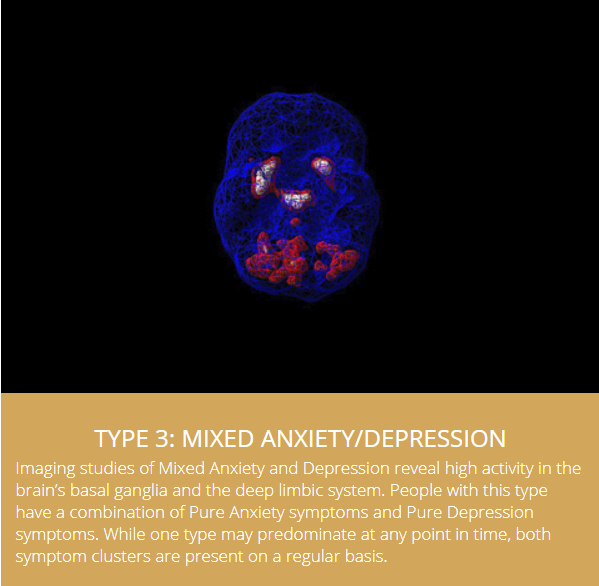 Our clinic’s approach includes an advanced four-step assessment:
• We will begin by taking the time to explore your specific biological, psychological, social and spiritual influences.
• Next, we will perform neuropsychological tests to measure various aspects of your brain function.
• Then, we will perform two brain SPECT scans: one at rest and one during concentration.
• Finally, we will order lab tests to rule out nutritional deficiencies, hormone imbalances, toxicity, etc.— if deemed necessary.
Not only does SPECT help identify proper treatment for depression with imaging, it also allows patients to overcome the emotional burden of seeking help for a problem they may not believe is physical.
Our clinic’s approach includes an advanced four-step assessment:
• We will begin by taking the time to explore your specific biological, psychological, social and spiritual influences.
• Next, we will perform neuropsychological tests to measure various aspects of your brain function.
• Then, we will perform two brain SPECT scans: one at rest and one during concentration.
• Finally, we will order lab tests to rule out nutritional deficiencies, hormone imbalances, toxicity, etc.— if deemed necessary.
Not only does SPECT help identify proper treatment for depression with imaging, it also allows patients to overcome the emotional burden of seeking help for a problem they may not believe is physical.
Natural Treatments for Depression vs Antidepressants
It is our goal to focus on natural treatments for depression. In some cases, antidepressants might be prescribed, but only when deemed necessary. Many people suffering from depression do not find SSRIs to be effective, and Amen Clinics is committed to finding treatments that work for you. Many of our recommendations include healthy changes to diet, exercise, supplementation, and positive strategies for coping with stress. Treatment options will depend on your unique assessment and include the following options: • Coaching • Hormone Replacement Therapy • Talk Therapy / Psychotherapy • Neurofeedback • IV Nutrient Therapy • Hypnotherapy • Nutrition Counseling • Supplements and Medication Brain reserve is a concept we often talk about when a person has run out of the capacity to cope with stress. When lifestyle changes are not enough, we do not stop to help patients on their path to become better and have many treatment options available.Depression Symptoms & Causes
Depression is not the same as situational sadness, however, grief can send a person into a deep depression as well. Losing a loved one, suffering a chronic illness, enduring a sudden injury, and taking on immense emotional burdens all cause stress to the body and can cause depression. Treatment for depression depends on the cause. Anxiety and depression are closely related. Amen Clinics often views these two mental health issues as two sides to the same problem, categorizing them together into 7 types. These are some of the most common symptoms: • Feelings of guilt, worthlessness, helplessness, hopelessness or pessimism • Decreased appetite and/or weight loss or overeating and weight gain • Decreased energy, fatigue or feeling “slowed down” • Disruption in sleep patterns • Persistent sad or negative mood • Loss of interest in usually pleasurable activities • Restlessness, irritability or excessive crying • Frequent feelings of nervousness or anxiety • Excessive fear of being judged or scrutinized by others • Being easily startled or tendency to freeze in anxiety provoking or intense situation • Shyness, timidity and getting easily embarrassed • Thoughts of death or suicide, or suicide attempts Identifying your symptoms of depression and anxiety are the start to finding the root cause. Amen clinics is experienced with a diverse range of causes to depression and prepared to meet you individual needs.Depression Treatment with Suicidal Depression
Suicidal depression requires immediate help. If you or a loved one suffers from suicidal depression, there are steps to take today to find treatment. Learn to recognize suicidal depression and prevent a tragedy for yourself and a loved one. Some suffering from suicidal depression choose to hide their pain while others show it and must be taken seriously. The most important aspect to overcoming suicidal depression is to offer help or seek help. Talking about depression is the first step to finding treatment for depression.Depression Treatment with Mood Disorders
Bipolar disorder treatment is not straightforward. Around 4% of Americans suffer from bipolar disorder, but at Amen Clinics we often find patients have been underdiagnosed or misdiagnosed. Many bipolar disorder patients suffer from ADD/ADHD, brain injury, or other problems which mimic and exacerbate the symptoms of bipolar disorder. Depression is very common with mood disorders as people experience manic and depressive states. These are serious brain disorders which must be properly diagnosed in order to identify treatment for the root cause of their depression. Following through on treatment for depression in mood disorders is challenging as patients often feel they are cured or never needed treatment once the treatment is effective. Finding professional help and a support network to aid with following through is essential.Depression Treatment with Brain Injury
One common symptom of a brain injury is depression. When we are young, we sometimes take a tumble during an important phase of development. When we grow older, we partake in activities such as football and driving, which can lead to a head injury. You might have memories of a head injury prior to a dramatic shift in your personality. Symptoms might be accompanied by: • Confusion • Difficulty with concentrating • Memory problems • Difficulty with word choice • Mental or physical fatigue • Sleep problems • Moodiness • Anger outbursts • Anxiety • Vision problems • Balance problemsDepression Treatment with Postpartum Depression
During pregnancy and after childbirth, women are at serious risk of developing postpartum depression. It’s important to view depression as an illness and not as a lack of will to be a good mother. Symptoms include: • Sadness or hopelessness • Sudden anger or rage • Anxiety or difficulty with decision-making • Feelings of failing to adopt “motherly instincts” • Self-isolation from friends and family • Sleeping too little or too much, and out of sync with the baby • Eating too little or too much • Difficulty forming an attachment to the baby • Thoughts of self-harm or harming the baby Fluctuations in hormones, major life changes, and biological triggers all come into play when diagnosing depression for mothers. Postpartum depression treatment is offered by Amen Clinics to help mothers feel pride in their lives again.Find Treatment for Your Depression
Those with depression experience similar symptoms to each other, but depression has many root causes. To find the right treatment for depression, it is essential to diagnose the problem. Amen Clinics is prepared to help you on your unique journey. Make an appointment by calling 888-288-9834 today or scheduling online, and review our locations to find the nearest clinic to your home.Many people believe that the holidays are the “most wonderful time of the year.” But for others, the holiday season is a time of stress, anxiety, loneliness, and depression. The holiday blues are real. And they have an especially strong effect on people with mental health conditions. In fact, 64% of people with a diagnosed mental health condition say the holidays make their symptoms worse, according to a survey by the National Alliance of Mental Illness. In this survey, 75% of respondents admitted that the holiday season contributes to feelings of sadness or dissatisfaction.
With shorter days and longer lines, it’s no wonder people are more likely to struggle with low moods during the winter months. The holidays seem to be filled with unrealistic expectations and unforeseen pressures that can cause mood and sleep dysregulation. The holidays can also be particularly painful if you’ve lost a loved one. Grief over the death of a spouse or other close family member tends to hit hardest during the holiday season. Unaddressed, these forces have the power to steal your joy, sabotage your health, and trigger unproductive behaviors, which can absolutely ruin your holiday.
But with some easy-to-implement strategies, it’s possible to overcome the holiday blues and keep depressive symptoms under control. To help you put a smile on your face this season, follow these mood-boosting, stress-busting tips.
12 Ways to Fend Off the Holiday Blues
1. Talk It Out
Many people aren’t comfortable talking about their feelings. However, opening up about personal struggles can have big benefits for those who deal with depression. Let friends and family know when you’re emotionally overwhelmed. And if you don’t have family or live too far away to connect with them, seek out a support group or see a therapist. Talking it out can help reduce your sense of isolation and provide relief from your symptoms. Seek professional help if necessary, but don’t fight your battles on your own.
2. Take A Time Out
Almost 50% of all American women experience increased stress during the holidays, according to the American Psychological Association. And this leads to some unhealthy coping mechanisms, such as eating or drinking alcohol. It’s important to find better ways to deal with the added stress. For example, spending just 15 minutes a day by yourself—without distractions—may refresh your thoughts. Find something that reduces stress, clears your mind, slows your breathing, and restores inner calm. Repeating simple words like “May I be safe and secure” can increase positive emotions and decrease negative ones. Research has shown that such Loving Kindness Meditations (LKM) can minimize pain, migraine headaches, and the symptoms of PTSD.
3. Just Say No
Saying yes when you should say no can leave you feeling resentful and frustrated. Colleagues and friends will understand if you can’t participate in every project or social gathering. The holidays can make people feel out of control and at the mercy of traditions or expectations. But you can take control of the holidays by refusing to let them control you. Say no to events and activities that aren’t making you happy or are causing holiday stress.
4. Reach Out
Though isolating yourself during tough times may feel like the safest option, closing yourself off from the world can further aggravate your problems. Resist the urge to shut out the individuals who can offer you encouragement and support—friends, family, and trusted community or religious leaders. Spending time in a positive community of like-minded people is a wonderful way to boost your bliss hormones, such as oxytocin.
5. Stick To Your Plan
Don’t abandon your daily healthy habits. Refuse to let the holidays become an excuse to put your diet on hold until the New Year. This kind of binge mentality has contributed to a 37% increased risk for a heart attack on Christmas Eve, according to research in the British Medical Journal. Though it’s common to have that second helping of stuffing or an extra slice of pie during the holidays, don’t lose sight of your nutrition plan. Your heart and life may depend on it.
6. Bring A Healthy Snack
To avoid overeating at holiday parties, bring a few healthy snacks with you. Emergency rations can be a lifesaver in the case of cravings brought on by low blood sugar. Brain healthy snacks include sugar-free dried fruits (blueberries or goji berries), raw vegetables (baby carrots, celery, or snap peas), nuts (almonds or walnuts). These good-for-you foods contain bliss-enhancing nutrients, which can elevate your mood and help stave off hunger until your next healthy meal.
7. Get Quality Sleep
There’s a strong correlation between sleep disturbances and depression. Research shows that about 75% of people with depression also have insomnia. And the association goes both ways. During the hectic holiday season, many people skimp on sleep, which can lead to increased irritability and moodiness. To enhance your moods, make sure you’re getting 7-9 hours of sleep each night.
8. Take It Outside
Instead of wasting the holidays watching marathons on TV or playing video games, get the whole family outside for brain safe activities, like a long, brisk walk. Walking can help you clear your mind, decrease anxiety, improve your mood and burn some calories all at the same time. Physical activity accelerates blood flow to all parts of the body, including the brain, and research shows that exercise is an effective antidepressant. It’s recommended to get 30 to 45 minutes of exercise daily.
9. Practice Gratitude
Did you know that practicing gratitude can make your brain work better? Research has demonstrated that people who express gratitude on a regular basis are healthier, more optimistic, make more progress toward their goals, have a greater sense of well-being, and are more helpful to others. Focusing on the things you’re thankful for helps to calm the deep limbic or emotional areas of your brain. Write down three things that you’re grateful for every day. Then experience the joy that gratitude can bring.
10. Relaxing Music
There are a variety of relaxation methods, including meditating, diaphragmatic breathing, and listening to brain-enhancing music. Remaining in a blissful state of mind is easier to accomplish when you have a happy tune running through your head. Listen to brain enhancing music specifically composed to enhance mood, memory, focus, motivation, and inspiration.
11. Learn To Laugh
When all else fails, laugh. Laughing releases stress-reducing endorphins into your bloodstream. Scientific evidence shows that laughter truly is the best medicine and can work wonders in relieving anxiety and depression. Enjoying humor enhances the brain’s pleasure centers without wearing them out. Having fun and laughing are some of the best ways to lower stress and release feel-good neurotransmitters.
12. Take A Look
Knowing how your brain works is critical to getting the help you need. One of the keys to overcoming depression is to know which type you have. Brain imaging studies have shown that there are 7 types of depression, and each type requires a different treatment plan. Brain SPECT imaging can help identify your type so you can get the most effective treatment.
If you need help overcoming the holiday blues or more serious depression, Amen Clinics can help. We use brain SPECT imaging to more accurately diagnose and treat the 7 types of depression and we also look at the other biological, psychological, social, and spiritual factors that may be contributing to your symptoms.
If you want to join the tens of thousands of people who have already enhanced their brain health and overcome their symptoms at Amen Clinics, speak to a specialist today at 888-288-9834. If all our specialists are busy helping others, you can also schedule a time to talk.
Depression is often difficult to see until the affected person seeks help. When it comes to ABC’s hit show “A Million Little Things,” a friend commits suicide and leaves a wake of confusion behind. The show has brought attention to the nature of suicidal depression. Those who are affected by suicidal depression sometimes present a pattern of not revealing their illness. Each day, they contemplate the moment of suicide as a deliberate and well-thought act. While the event shocks friends and family, the idea has been present all along. The help for depression could have come much sooner, and this is the premise of “A Million Little Things” depression. The show unravels reasons why the character, Jon, committed suicide and the plans he put in place for after his death.