

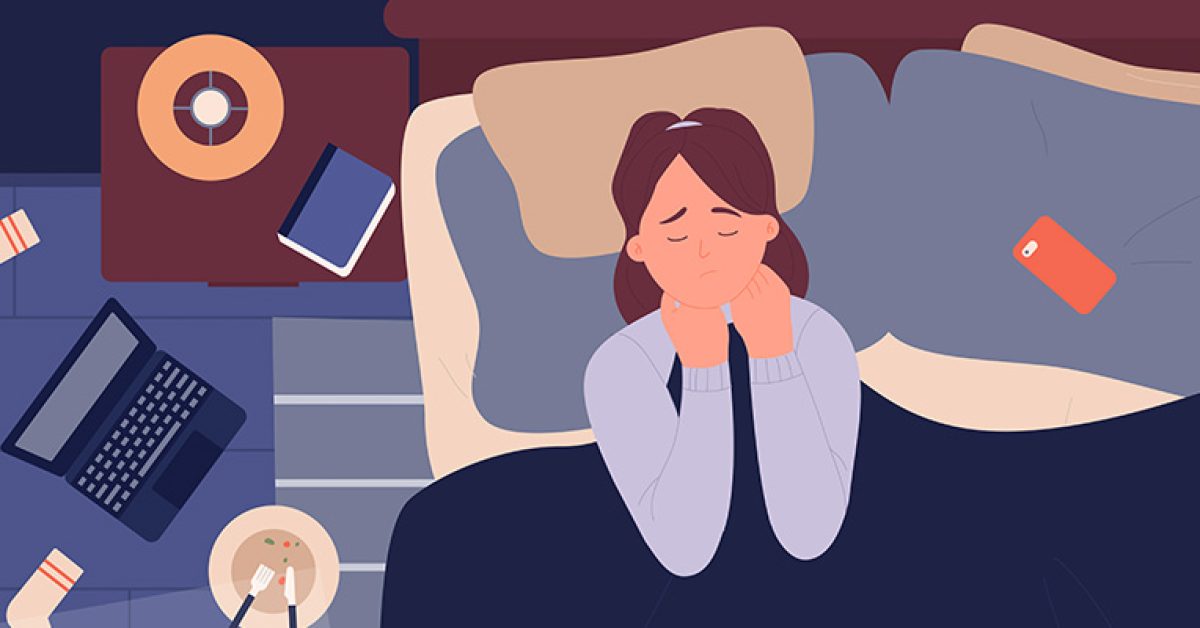
Feeling blue? You’re not alone.
Millions of people struggle to balance life’s demands while learning how to cope with depression. According to a 2025 Gallup poll, about 18.3 percent of U.S. adults—roughly 47.8 million people—report currently having or being treated for depression.
And an even higher percentage of young people struggle with low mood. About 19.2 percent of adolescents (age 12-19) experience depression as well, according to figures from the CDC.
Depression’s constant feeling of fatigue, emotional stress, and low mood can make life feel heavy. In these moments, it’s easy to fall into habits that can unintentionally make symptoms worse.
Depression’s constant feeling of fatigue, emotional stress, and low mood can make life feel heavy. Even the simplest parts of daily life can feel overwhelming.
Over time, you may slip into survival mode—doing just enough to get through the day. In these moments, it’s easy to fall into habits that can unintentionally make symptoms worse.
The good news? With the right support and strategies, you can avoid these painful patterns and begin making choices that help you regain a sense of control.
In this blog, we’ll explore practical structures and guidance to help you feel supported—not alone—as you work toward reducing emotional overwhelm and feeling better.
When dealing with depression, it’s natural for you to want to do what feels easiest and most comforting.
Sadly, even well-intended choices can sometimes work against you. Understanding what not to do in depression is just as important as knowing what to do.
For instance, you may decide to protect yourself by withdrawing from others, avoiding difficult emotions, or pushing through with negative self-talk. Unfortunately, such patterns cause more harm than good.
While coping with depression, it’s important to steer away from behaviors that can make recovery harder without you even realizing it. Here’s how:
Too much loneliness and isolation are highly associated with depression, according to research. That’s because humans are social beings. Satisfying social relationships are the antidote to low mood.
When you don’t get enough sleep, the regions responsible for focus, emotional control, and mood regulation in your brain become less efficient. This can cause you to become easily irritable and moody.
Alcohol or marijuana may provide temporary relief, but ultimately, they can depress brain function and make you feel worse.
Studies have shown that heavy alcohol use can worsen anxiety and depression. Brain SPECT imaging at Amen Clinics shows reduced cerebral blood flow in both marijuana and alcohol users. Lowered blood flow to the brain can negatively impact your brain function and mood.
Related: Alcohol or Marijuana: Which is Worse for Your Brain?
Research has shown that automatic negative thoughts (ANTs) are a hallmark feature of depression. Our thoughts lie to us a lot when we are experiencing low mood. Don’t believe them. Learn to question their accuracy and correct or reframe them.
Staying sedentary when depressed can worsen fatigue, low mood, and rumination. Light movement, like stretching, gentle yoga, or short walks, can help regulate your mood and boost your energy.
If you eat a poor diet, you are adding insult to injury. Research shows that a diet high in red and/or processed meat, refined carbohydrates and sweets, saturated fats, and low in fruits and vegetables is associated with an increased risk of depression.
During depressive episodes, you can easily assume that no one will understand your feelings. You might also worry that sharing your struggles will burden others. The truth is that shutting out support will only intensify the feeling of hopelessness and loneliness. Sharing your challenges with a trusted friend, family member, or therapist is a critical step in finding relief.
Another common depression pitfall is not seeking help early enough. Don’t get tempted to wait it out, hope it passes, or convince yourself that you can handle it. Delaying support often deepens the symptoms, making recovery feel even harder.
During depression, you begin to replay situations, feel guilty for things that aren’t your fault, or criticize yourself harshly. Guilt spiral and self-blame will only make you feel worthless and cause you to feel pain that you don’t deserve.
Beware of taking too much on when dealing with depression. It can drain the little energy you have. Accept your limits and avoid pushing yourself beyond your capacity, as it can lead to guilt, overwhelm, and deeper exhaustion.
Getting out of bed or taking a shower is a sign of resilience, not weakness. Don’t dismiss them as insignificant. That can make you feel stuck and hopeless. Take note of the small things you manage to do.
Related: Why are we so negative
Biologically, these behaviors disrupt your brain’s ability to produce, release, and use serotonin and dopamine, the neurotransmitters that regulate your mood and motivation.
Psychologically, patterns like isolation, self-blame, or avoidance can reinforce the negative thought circuits, which can make the low moods feel permanent.
Behaviorally, overcommitting, staying sedentary, or skipping sleep can increase your stress and fatigue. For example, someone who prefers to isolate themselves and stops engaging in small daily tasks may feel temporary relief but will likely end up stuck in deeper sadness and low energy.
The main goal when it comes to depression self-help is acknowledging how you feel at any given time and choosing gentle ways to support yourself. Here are steps you can take:
Reach out to support groups, family, or friends. Connecting with people will provide emotional relief, reduce loneliness, and strengthen your brain’s resilience to stress and anxiety.
Eat a brain-healthy diet, full of vegetables, fruits, whole grains, healthy fats, and lean protein. The right nutrition will balance your blood sugar and support your overall physical health, mood, and cognitive function.
Take a short walk, engage in light yoga, or stretch a little. Incorporating gentle movement in your day will help increase serotonin and dopamine, improve your motivation, and break cycles of rumination. Manage the difficult emotions with tools like deep grounding exercises and deep breathing.
Challenge negative self-talk and practice self-compassion. Treat yourself as you would a friend and rephrase the thoughts that reinforce blame, guilt, or hopelessness.
Establish a calming bedtime routine that will help you get consistent sleep. Minimize the time you spend on the screen and create a restful environment. Adequate sleep will help you support your neurotransmitter balance and, consequently, regulate your mood and energy.
Seek professional help early instead of waiting. Clinical evaluations, telehealth appointments, and therapy can help identify the underlying causes, guide treatment, and provide the tools you need to manage depression effectively.
Acknowledge your small wins and celebrate incremental progress. Tiny steps like getting out of bed and completing even a single task are all signs of resilience. Those are critical building blocks in your recovery path.
The following strategies will help you move forward in a steady, manageable way, even when depression feels strongest.
Start With Tiny, Doable Steps
Aim at accomplishing micro actions. Sit outside for two minutes, drink a glass of water, or stretch for 30 minutes. When you are operating on low energy, even the smallest step is still progress.
Lean on Accountability and Support
Share your goals with a friend who understands your journey or someone you trust. You could also join a support group or schedule regular check-ins with a professional. External support will help you stay grounded when motivation fades.
Choose Consistency Over Intensity
Focus on doing a little bit every day. Gentle, repeatable habits will help to strengthen your coping skills. Forget about the big, dramatic changes or the occasional bursts of effort.
Track Your Progress and Adjust Gently
Track how you feel and what habits you’re managing to keep. Adjust your expectations without judgment. Understand that progress isn’t linear, but noticing the patterns is what will help you stay on course.
READY TO BUILD HABITS THAT LIFT YOUR MOOD?
Focus on the small, manageable shifts and allow them to build over time. That one healthier choice, singular routine change, or moment of kindness is what you need to lift your mood.
While you’re avoiding the harmful habits, you’re creating room for healing in your mind and body to begin. Remember, progress in depression is slow, but absolutely achievable.
Yes. Without action, your symptoms can intensify, which can make your daily functioning harder and slow down the recovery process.
Start with one manageable action. You can get out of bed, go for a short walk, or reach out to a friend. Small, consistent steps will build momentum. Progress varies from one individual to another. However, many notice small improvements within days to a few weeks. Improvement is gradual. Consistency matters more than speed.
Seek treatment for depression if symptoms persist, worsen, or interfere with your daily life. Reach out for help if you experience thoughts of self-harm. Early guidance from a clinician will help improve the outcome.
Amen Clinics uses brain-based evaluations, including functional brain SPECT imaging, along with detailed clinical assessments to identify the specific type of depression you may be experiencing. This personalized approach helps guide more targeted and effective treatment.
Gallup website
“U.S. Depression Rate Remains Historically High,” September 9, 2025
https://news.gallup.com/poll/694199/u.s.-depression-rate-remains-historically-high.aspx
Accessed December 1, 2025
Centers for Disease Control and Prevention website
National Center for Health Statistics
https://www.cdc.gov/nchs/products/databriefs/db527.htm#section_1
Accessed December 2, 2015
Mushtaq, R., Shoib, S., Shah, T., & Mushtaq, S. (2014). Relationship between loneliness, psychiatric disorders and physical health? A review on the psychological aspects of loneliness. Journal of clinical and diagnostic research: JCDR, 8(9), WE01. doi: 10.7860/JCDR/2014/10077.4828
Schuckit, M. A. (2016). Alcohol, anxiety, and depressive disorders. Alcohol health and research world, 20(2), 81. https://pmc.ncbi.nlm.nih.gov/articles/PMC6876499/
Chahar Mahali, S., Beshai, S., Feeney, J. R., & Mishra, S. (2020). Associations of negative cognitions, emotional regulation, and depression symptoms across four continents: International support for the cognitive model of depression. BMC psychiatry, 20(1), 18. https://link.springer.com/article/10.1186/s12888-019-2423-x
Li, Y., Lv, M. R., Wei, Y. J., Sun, L., Zhang, J. X., Zhang, H. G., & Li, B. (2017). Dietary patterns and depression risk: a meta-analysis. Psychiatry research, 253, 373-382. https://doi.org/10.1016/j.psychres.2017.04.020