Best Fats for Brain and Mental Health
Remember those low-fat and no-fat diet fads of the 1980s? Some people are still holding on to those antiquated ideas—believing that fat is the enemy. As American obesity has risen in recent decades, perhaps it seemed a logical conclusion that we should be reducing our fat intake. But the problem is not fat.
The problem is that many people are consuming unhealthy fats (not to mention loads of carbs and sugar) through the Standard American Diet. Ultra-processed foods pack on pounds, lead to the never-ending spiral of craving and addiction, and create the conditions for serious health concerns over time.
Healthy fats, on the other hand, are key for our physical and mental health. After all, roughly 60% of the solid weight of your brain is made up of fat. And your entire body requires fatty acids, and “good” (HDL) cholesterol, to function at peak performance.
Healthy fats are key for our physical and mental health. After all, roughly 60% of the solid weight of your brain is made up of fat.
The important thing is to obtain fats from healthy sources. Here are some to choose for the best results in your overall health and longevity—and which ones to avoid like the plague.
WHAT ARE BRAIN HEALTHY FATS?
Omega-3 fatty acids that the body needs include eicosapentaenoic acid (EPA), docosahexaenoic acid (DHA), and alpha-linolenic acid (ALA). According to a comprehensive scientific review, various studies have linked essential fatty acids with:- Cancer prevention
- Optimal brain and vision functioning
- A reduction in cardiovascular morbidity and mortality, arthritis, hypertension, and diabetes mellitus
- Decreased risk for neurological/neuropsychiatric disorders
- DHA makes up ¼ of all brain fat, which helps build brain cell membranes. Getting enough DHA is crucial so that the brain doesn’t utilize lesser fats (like saturated or trans fats), which will dull the brain’s functioning. Getting enough DHA through diet and/or supplements may help with key functions like memory, processing speed, and attention span.
- EPA can help support a healthy mood and emotions. Along with DHA, it has been noted for its ability to reduce the severity of inflammation in the brain. Inflammation can influence the onset of major mental health issues like depression.
- ALA has been promoted by researchers as “a potential nutraceutical to protect the brain from stroke,” since it promotes neuroprotection, the vasodilation of brain arteries, and neuroplasticity.
5 BRAIN HEALTHY FAT FOODS
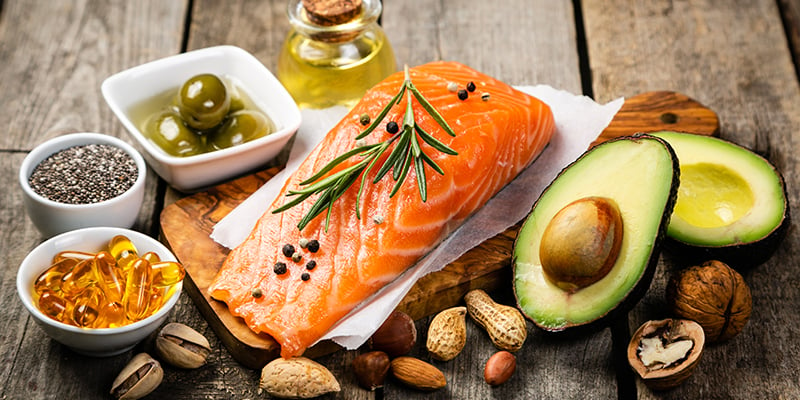
In addition to the positive effects listed above, healthy fats help you feel full and satisfied after a meal. They can help your body absorb certain nutrients and help fight oxidative damage and degenerative nerve disorders. They also assist in key functions like hormone synthesis and cholesterol reduction. Here are some healthy fats that will help your body reap these benefits and more:- Avocados have been found in numerous studies to be a powerful source of fat and nutrients. A 2022 study stated that higher avocado intake was associated with a lower risk of cardiovascular disease and coronary heart disease in both men and women.
- Coconuts are not actually fruits or nuts—they’re very nutritious and delicious seeds. Yes, coconut does have a high saturated fat content, but due to its medium-chain fatty acids, it can be digested and absorbed immediately by the body. Thus it provides an energy boost without as much danger of causing obesity or high cholesterol.
- Animal-based proteins also contain healthy fats, but you must choose the right varieties. Grass-fed beef, bison, or lamb can be safe choices, as can organic free-range poultry. For seafood, reach for anchovies, arctic char, catfish, herring, king crab, mackerel, wild salmon, sardines, sea bass, snapper, sole, trout, tuna, clams, mussels, oysters, or scallops.
- Nuts, seeds, and olives are great sources of unsaturated fats, which contribute to heart and brain health. They also help decrease the risk of heart disease, assist in blood clotting, balance blood sugar, and decrease LDL (bad) cholesterol while increasing the good kind (HDL).
- Oils for cooking or dressing are best sourced from some of the ingredients above, such as avocado oil, coconut oil, macadamia nut oil, olive oil, sesame oil, and walnut oil.
UNHEALTHY FATS AND OILS TO SKIP OR LIMIT
Just as many of the foods above—including fish that are rich in omega-3 fatty acids, nuts, and seeds— reduce inflammation in the body, others promote inflammation. This damaging group includes trans fats, some animal-derived saturated fats, and excess levels of omega-6 fatty acids. Here are some fats to limit or skip altogether for optimal health:- Canola, corn, safflower, soy, and vegetable oils are higher in omega-6 fatty acids, which are associated with an increase in inflammation. Accordingly, research has suggested a link between high omega-6 fat intake and chronic inflammatory diseases, including nonalcoholic fatty liver disease, cardiovascular disease, obesity, inflammatory bowel disease, rheumatoid arthritis, and Alzheimer’s disease.
- Industrial farm-raised meat and dairy, as well as processed meats, are unhealthy ways to obtain protein from animal sources. Some contain neurotoxins and preservatives. They often harbor large amounts of fat, salt, sugar, and fillers. Industrially raised meat is associated with cardiovascular disease, since it’s 30% higher in palmitic acid (a type of harmful saturated fat) than grass-fed meat.
- Trans fats are downright impossible to defend, which is why the FDA required food manufacturers to eliminate them by 2020. But that doesn’t mean they’re totally gone. They can still have a presence in fried foods and baked goods like cookies, crackers, and pies.