Dr. Amen on Dr. Phil: The Power of the Addicted Dragons
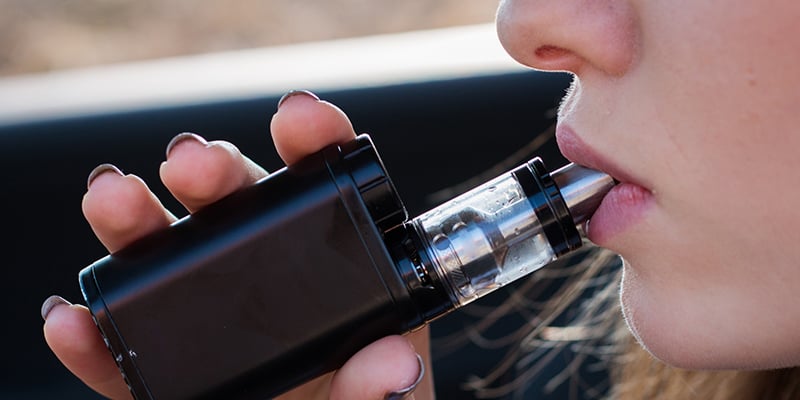
Carissa has a big problem. She can’t stop vaping. In fact, her daughter describes her mother’s 10-year vaping addiction as “absolutely insane.”
Carissa is never without her vape—except when she’s asleep. It’s the first thing she reaches for in the morning and the last thing she touches at night. She panics if she accidentally runs out of cartridges. Despite the pressure from her daughter to quit, Carissa sees no harm in the habit. Afterall, she used to be a heavy drinker and cigarette smoker—2 habits she reportedly gave up.
Carissa doesn’t believe vaping causes any health problems, because, in her mind, it’s just water vapor and nicotine. She also thinks that if there actually are any consequences, she’s likely immune to them since she’s been doing it for the past 10 years. Even though she experiences a lot of brain fog and attention problems, she doesn’t connect the dots to her addictive habit.
How Vaping Hurts the Brain and the Lungs
Carissa and her daughter, Alexa, appeared on the Dr. Phil show after Alexa had contacted them about getting help for her mom. Dr. Phil invited Dr. Daniel Amen, a well-known neuropsychiatrist and founder of Amen Clinics, to educate everyone about the dangers of vaping and to dispel any misconceptions about the real harm caused by this popular but very unhealthy habit. Dr. Amen’s important points included:- The decreased blood flow that results from vaping prematurely ages the brain.
- The changes to the brain caused by vaping lead to low motivation, depression, poor memory, and reduced concentration.
- Like all addictions, the pleasure centers in the brain—the nucleus accumbens and the prefrontal cortex—are affected by vaping and cause a release of the neurotransmitter dopamine. The release of dopamine makes you feel good momentarily, but after it passes, you feel bad until you take another hit. Over time, this wears out these parts of the brain, causing decreased functioning in them.
- In addition to nicotine being highly addictive, when people vape, they are inhaling multiple poisons that constrict blood flow and can lead to heart disease and damage to the lungs.
Vaping and the Addicted Dragons
It is not unusual for people who are hooked on alcohol or a drug (nicotine is a drug!) to deny there is any harm in their behavior. Carissa has a bad case of what Dr. Amen calls the “Addicted Dragons.” In his newly released book, Your Brain is Always Listening, he teaches us about the dragons that breathe fire onto our emotional brain and steal our joy and contentment while driving unhealthy behaviors. In this book, Dr. Amen describes 13 different “Dragons from the Past” that stem from the personal stories we tell ourselves based on our experiences earlier in life. Everyone—regardless of status or success—has at least a few dragons, and some people are better at “taming” them than others. However, if these dragons are left untamed, they can drive a person to engage in unhealthy personal and interpersonal decisions and behaviors. Such is the nature of the Addicted Dragons. They develop when the Bad Habit Dragons and the Scheming Dragons override the Dragon Tamer (the prefrontal cortex), which is the CEO and “the brakes” of the brain. Addicted Dragons are the result of the Bad Habit Dragons and the Scheming Dragons overriding your Dragon Tamer (the prefrontal cortex), which is the CEO and “the brakes” of the brain.Brain-Based Addiction Recovery
To help those who are suffering from untamed Addicted Dragons, Dr. Amen includes a section in the book with his brain-based 12-step program to overcome addiction. Among the steps, the novel approach of this program includes:- Understanding your brain type and nourishing it properly
- Learning how to protect the pleasure centers of the brain by engaging in activities and behaviors that drip, rather than dump, dopamine into your system
- Taming your dragons and killing the ANTS (automatic negative thoughts) that make you feel miserable