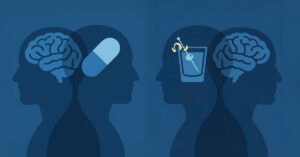
Having can negatively impact your life in many ways. Most people are familiar with the neurodevelopmental disorder’s trademark short attention span, distractibility, impulsivity, disorganization, and procrastination.
What many people don’t realize is that having
ADD/ADHD also puts you at increased risk for substance use disorders, such as alcoholism or drug abuse. In fact, as many as half of all adolescents and adults with
substance use disorders have been diagnosed with ADD/ADHD at some point during their lives, according to
research.
What’s the link between ADD/ADHD and addictions? And what can you do to reduce your risk of alcohol abuse, nicotine use, or drug dependence?
THE DISTURBING STATISTICS ABOUT ADHD AND ADDICTIONS
Decades of research show that individuals with attention-deficit/hyperactivity disorder (ADHD), also called attention-deficit disorder (ADD), are more likely to develop substance use disorders than those without the mental health disorder.
For example, adults with ADD/ADHD are about
three times more likely to struggle with a substance use disorder (SUD) than their peers. Similarly, compared to kids who don’t have ADD/ADHD, children with the condition are two to three times more likely to abuse substances, according to a
study in
Clinical Psychology Review.
In particular, research shows that children with ADD/ADHD are:
- More than twice as likely to use nicotine
- Almost twice as likely to develop a dependence on alcohol
- Almost three times as likely to use marijuana and 1.5 times more likely to develop a cannabis dependence
- Twice as likely to develop cocaine dependence
The fact that nearly
10% of school-age children have received a medical diagnosis of ADD/ADHD raises a red flag on the issue.
ADHD AND THE BRAIN
ADD/ADHD is a brain-based disorder. The brain-imaging work using
SPECT at Amen Clinics shows that the brain functions differently in people with this condition. Specifically, SPECT scans show abnormal activity in a part of the brain called the
prefrontal cortex (PFC).
This brain region is responsible for executive functions, such as planning, judgment, forethought, impulse control, and follow-through.
In the healthy brain, concentration stimulates activity in the PFC. Not so in the ADD/ADHD brain. In people with this disorder, there’s a reduction in activity in the PFC when they try to concentrate. Effectively, this makes it harder for them to pay attention. The decreased activity in the PFC also helps explain the symptoms associated with the disorder.
Brain imaging shows that having ADD/ADHD symptoms is not due to a lack of willpower or failing to try hard enough. Rather it’s related to the way the brain functions.
ADHD AND THE BRAIN’S SELF-CONTROL CIRCUIT
ADD/ADHD is also associated with other brain functions, such as the self-control circuit. This circuit involves the brain systems that drive you to seek out things that bring you pleasure and the prefrontal cortex (PFC), which puts on the brakes when you are about to engage in risky behavior.
In a healthy self-control circuit, an effective PFC provides impulse control and good judgment while the deep limbic system offers an adequate dose of motivation so you can plan and follow through on your goals. You can say no to alcohol, marijuana, cocaine, cigarettes, and other substances.
When activity in the PFC is decreased, the drive circuits take control and cause you to lose control over your behavior. When this is the case, you’re more likely to fall victim to your cravings.
Having low activity often results in a tendency for impulse-control problems and poor internal supervision. These contribute to the increased risk of addiction.
SELF-MEDICATION AND THE ADHD BRAIN
Many people with ADD/ADHD self-medicate with substances in order to feel better—more focused, less anxious, less depressed, or less overwhelmed.
Because the PFC is underactive in the ADD/ADHD brain, it can lead people to use substances as a way to stimulate brain activity. And those with hyperactivity may turn to other substances to calm down.
Although these individuals abuse substances as a way to treat their underlying problems, it is bad medicine. Over time, substance abuse often exacerbates ADD/ADHD symptoms.
The
brain-imaging work at Amen Clinics clearly shows that substance abuse is harmful to brain function. Alcohol, marijuana, nicotine, cocaine, methamphetamines, and even caffeine reduce brain activity over time. In some cases, the reduction in brain activity can be significant.
This means that when a teen with ADD/ADHD drinks alcohol to calm internal feelings of restlessness, it soothes them but only temporarily. At the same time, it damages cellular activity, which can lead to a worsening of symptoms in the long run.
One study out of UCLA found that cocaine addicts had 23% less overall brain activity compared to individuals who had never taken drugs. In this study, the people addicted to cocaine who also smoked cigarettes had 45% less activity in their brain.
Based on the clinical experience at Amen Clinics, people tend to use different substances based on which type of ADD/ADHD they have. The SPECT scans at Amen Clinics have helped identify
7 types of ADD/ADHD.
People with Classic or Inattentive ADD/ADHD tend to use stimulants, such as cocaine or methamphetamine. Individuals with Overfocused ADD/ADHD are more likely to abuse alcohol.
Having Temporal Lobe or Limbic ADD/ADHD makes people more inclined to use marijuana or stimulants. People with Anxious or Ring of Fire ADD/ADHD tend to abuse alcohol and marijuana.
ADHD STIMULANT TREATMENT AND ADDICTION
Substance abuse often complicates the treatment of ADD/ADHD. As mentioned earlier, as many as 50% of adolescents and adults with ADD/ADHD also have substance abuse issues.
Some people fear that stimulant medications may be a gateway drug to other substances. However, research has found that this is not the case. In fact, a 2016
study found that people who are taking prescription stimulants for ADD/ADHD are 7.3% less likely to develop a substance use disorder.
However, many health care providers feel uncomfortable prescribing stimulant medications such as Ritalin or Adderall to people who have a substance use disorder. Physicians have to be very careful when this is the case.
If you have an active addiction, you may need to wait until you’re enrolled in an addiction treatment program before a physician will prescribe stimulant medication for ADHD.
After showing a sustained commitment to sobriety, you may be prescribed ADD/ADHD stimulants. Be aware that you will likely need to be monitored frequently.
If you have ADD/ADHD, several lifestyle changes can also help prevent substance abuse. A healthy diet, daily exercise, and meditation are all natural ways to boost activity in the PFC to help you regain control.
ADD/ADHD, addictions, and other mental health issues can’t wait. At Amen Clinics, we’re here for you. We offer in-clinic brain scanning and appointments, as well as mental telehealth, clinical evaluations, and therapy for adults, teens, children, and couples. Find out more by speaking to a specialist today at 888-288-9834 or visit our contact page here