Landmark Endorsement for Brain SPECT Imaging in Psychiatry
In a landmark decision in May 2021, the Canadian Association of Nuclear Medicine (CANM) unanimously adopted new procedure guidelines for brain single photon emission computed tomography (SPECT) imaging for psychiatry and neurology. The prestigious scientific body endorsed brain SPECT imaging for the assessment of many common issues affecting tens of millions of people, including:
- Neuropsychiatric disorders, such as ADHD, bipolar disorder, depression, obsessive compulsive disorder (OCD), and posttraumatic stress disorder (PTSD)
- Suspected dementia, such as Alzheimer’s disease, frontal temporal lobe dementia, vascular dementia, and mild cognitive impairment
- Traumatic brain injury
- Substance abuse
- Strokes
WHAT IS SPECT?
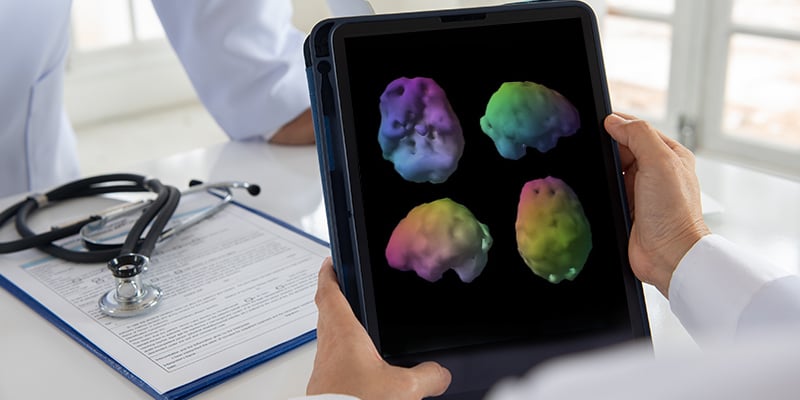
SPECT is a nuclear imaging study that measures blood flow and activity in the brain. It shows 3 things:- Areas of the brain with healthy activity
- Areas of the brain with too much activity
- Areas of the brain with too little activity
AMEN CLINICS: A PIONEER IN THE USE OF SPECT IN CLINICAL PSYCHIATRY
Daniel G. Amen, MD, founder of Amen Clinics, has been using SPECT in clinical psychiatric practice for 30 years. “When I first started to use SPECT, I felt it made me a better doctor. A 44-year-old patient was in denial about his alcohol and cocaine abuse. After seeing the ‘toxic’ pattern on his scan he completely stopped the substances. A 16-year-old teen was depressed, aggressive, and impulsive. She had seen multiple psychiatrists before getting a scan, which clearly showed a traumatic brain injury pattern. On further questioning, she remembered a bad fall from her bike a month before her symptoms began. On appropriate treatment she did much better,” Amen says. In the early 1990s, the APA and clinical psychiatrists showed increasing interest in the potential of SPECT and related neuroimaging tools. A paper in The American Journal of Psychiatry detailed how the APA once gave all-day courses on SPECT but subsequently dismissed the use of SPECT and related neuroimaging because it did not match their diagnostic bible (the DSM, which it owns and profits from). Academic psychiatrists and the APA eventually argued against using scans alone as a diagnostic tool. According to Amen, “My colleagues missed the point of imaging. SPECT scans add important information that physicians could not get from talking to patients. Getting some biological data on patients, even if imperfect, was better than getting no information at all. Researchers from Creighton University found that having a SPECT scan on admission cut hospital stays for bipolar teenagers by more than half.” A psychiatrist, neuroscientist, and bestselling author, Amen adds, “Experienced clinicians can tell if someone is likely to have ADHD, OCD, or bipolar disorder without the benefit of these tools. But what clinicians cannot do, and will never be able to do, without functional brain imaging is to know the underlying brain biology of the patients they treat.” Without functional brain imaging, a psychiatrist cannot tell if inattention, depression, or aggression is from:- Low blood flow from vascular disease
- A premature aging process
- An inflammatory process, related to low omega-3 fatty acids or gut problems
- A genetic abnormality
- Lasting physical trauma from playing football in high school
- Toxic exposure from carbon monoxide or mold exposure, which needs to be treated
- Seizure activity
- A brain infection
- Nutrient or neurohormone abnormalities
- Blood sugar abnormalities
- Undiagnosed sleep apnea
- A brain that is working too hard and needs to be calmed down
- A brain that is not working hard enough and needs to be stimulated