
Amen Clinics
  • Amen Clinics
  • About
    • Our Difference
    • Our Method
    • Founder
    • Providers
    • Locations
      • Atlanta Metro Area
      • Chicago Metro Area
      • Dallas/Fort Worth Metro Area
      • Los Angeles Metro Area
      • Miami/Ft. Lauderdale Metro Area
      • New York Metro Area
      • Orange County Metro Area
      • Phoenix/Scottsdale Metro Area
      • San Francisco Bay Area
      • Seattle Metro Area
      • Washington D.C. Metro Area
    • Reviews
    • Services
    • Team
    • Pricing
  • Conditions
    • ADD/ADHD
    • Anxiety
    • Concussion
    • Depression
    • Memory Loss
    • PTSD
    • All Conditions
  • Learn
    • Brain SPECT Scans
    • Brain SPECT Research
    • Blog
    • Newsletter
    • Podcast
    • Ebooks
    • Infographics
    • Media & Press
    • Events & Conferences
  • Resources
    • Contact Us
    • Brain MD Supplements
    • Amen University Online Courses
    • Daniel Amen, MD
    • Tana Amen Nutrition & Wellness
    • Change Your Brain Foundation
    • Brain Warrior Alumni Network
  • For Providers
    • Partner With Us
    • Provider Support
    • Refer Your Patients
    • Referral Reviews
    • Provider Newsletter
949-427-8195

Getting to Know the ADD Types—Type 3: Over-Focused ADD


amenclinics | March 13, 2024

Attention-deficit disorder, attention-deficit/hyperactivity disorder, over-focused ADD, over-focused ADHD, spect scans, amen clinics, excessive worry, types of ADHD, what is adhd, what is over-focused ADHD, obsessive-compulsive disorder, ADD types, adhd treatment, One of the most common symptoms of ADD/ADHD is having trouble with focus. Surprisingly, however, some people with this condition have a tendency to hyperfocus on certain things. At Amen Clinics, which has identified 7 types of based on more than 300,000 brain SPECT scans, this type is called over-focused ADD/ADHD. In part 3 of this 7-part blog series, you’ll learn about over-focused ADD, its symptoms, what SPECT scan reveal, and proven interventions. Some people with ADD/ADHD have a tendency to hyperfocus on certain things. At Amen Clinics, which has identified 7 types of based on more than 300,000 brain SPECT scans, this type is called over-focused ADD/ADHD.
Click to tweet

WHAT IS ADHD?

Attention-deficit disorder (ADD), more commonly called attention-deficit/hyperactivity disorder (ADHD), is a neurodevelopmental disorder characterized by attention issues, impulse-control problems, and hyperactivity (in some cases). Come people who are diagnosed with ADD/ADHD in childhood continue struggle from symptoms as an adult. The brain-imaging work using SPECT scans at Amen Clinics show that ADD/ADHD is not a singular condition. To date, Amen Clinics has identified 7 different brain patterns associated with ADD/ADHD. Each type has its own set of symptoms, and each type requires a targeted treatment plan.

WHAT IS OVER-FOCUSED ADHD?

Based on the patients at Amen Clinics, over-focused ADD/ADHD is the third most common type of the condition. Basically, people with this type can have difficulty shifting their attention. They become hyper-focused on one thing while tuning out everything else. Individuals with over-focused ADD/ADHD have troubles with cognitive processing. They aren’t inattentive, rather, they are over-attentive. People with over-focused ADHD tend to get “stuck” in negative thought patterns and behaviors. In addition, they can be argumentative or oppositional. And they may have outbursts when things don’t go a certain way. In some cases, this form of the neuropsychiatric disorder has been mistaken for obsessive-compulsive disorder (OCD). A pivotal difference between the two conditions is impulsivity. People with OCD typically aren’t impulsive, whereas those with over-focused ADD/ADHD tend to make more impulsive decisions. Another common trait among those with this type of the condition is having a substance use disorder. It is also more likely to be found in the children and grandchildren of alcoholics.

HALLMARK SYMPTOMS OF ADHD

The SPECT scans and clinical work at Amen Clinics shows that each ADHD subtype has unique symptoms. However, the following symptoms can be seen in all of the 7 ADHD types:
  • Inattention
  • Easily distracted
  • Procrastination
  • Forgetfulness
  • Problems with follow-through
  • Impulse-control issues
  • Disorganization
People who have over-focused ADD/ADHD can struggle with all of these symptoms or just some of them. Some people experience mild symptoms while others suffer with severe problems. When it comes to disorganization, people who are over-focused may not be like those with other types of ADD/ADHD. In fact, in some cases, they may be obsessively organized. In other cases, the over-focused type may appear very organized to others. They may be dressed perfectly, and their homes may look very neat and tidy. However, if you look inside their desk drawers or their closets, you may find a disaster.

OVER-FOCUSED ADHD SYMPTOMS

In addition to the hallmark symptoms mentioned above, the unique characteristics of over-focused ADD/ADHD include:
  • Excessive worry
  • Argumentative and oppositional
  • Struggle to see options
  • Get locked into negative thinking patterns
  • Tendency to hold grudges
  • Obsessive and inflexible thinking
  • Tendency toward compulsive behaviors
  • Obsessive organization
  • Hold onto their own opinion without listening to others
  • Can get locked into a course of action (even when it doesn’t serve you)
  • Must have things done in a specific way
  • May or may not be hyperactive
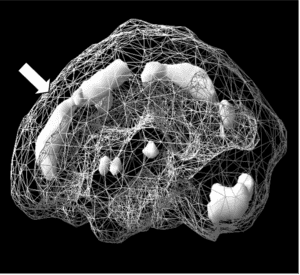
These type-specific symptoms can range from mild to severe. OVER-FOCUSED ADHD IN THE BRAIN On SPECT scans, people with over-focused ADD may have increased activity in the anterior cingulate gyrus (ACG)  when their brain is at rest or during concentration. In the scan below, the arrow is pointing to overactivity in the ACG. The ACG is the brain’s gearshift. It allows a person to shift from one thought to another thought or from one idea to the next. When the ACG is overactive, people have a tendency to get stuck or locked into negative thoughts and behaviors. SPECT scans also show that during concentration, people with over-focused ADHD have decreased activity in the underside of the prefrontal cortex, cerebellum, and basal ganglia.

Over-Focused ADD SPECT Scan During Concentration

OVER-FOCUSED ADHD TREATMENT

Strategies that can help manage the symptoms of over-focused ADD/ADHD include the following:
  1. Boost serotonin and dopamine levels.
One way to treat this type is to increase the dopamine and serotonin levels in the brain. The best way to boost both is with exercise. Exercise can help to distract from obsessive thoughts, provide relaxation for open-mindedness, and boost blood flow to the brain.
  1. Focus on complex carbohydrates.
An optimal diet for people with ADHD who tend to over-focus should include complex carbs like sweet potatoes, as well as small amounts of high-quality proteins. Too much protein in these individuals can exacerbate the tendency to hyperfocus.
  1. Ensure quality sleep.
It’s recommended that individuals with this type get 7-8 hours of sleep each night. Getting appropriate levels of sunlight during the day can also increase your body’s production of serotonin. In the evening, serotonin converts into melatonin, which aids in getting a good night’s sleep.
  1. Use the 3-thought cutoff.
If you frequently experience obsessive or negative thoughts, establish a 3-thought cutoff. Once a negative thought has repeated in your mind 3 times, get up and do a different activity. Focusing on something else will allow you to push negative thoughts to the back of your mind.
  1. Review goals daily.
One effective way to reduce over-focus symptoms is to start writing down your goals. Review these goals each day, evaluate your decisions and adjust your behavior so that you’re working toward your goals, instead of against them.
  1. Take targeted supplements.
This type of ADD seems likely due to low levels of both serotonin and dopamine. Because of this, it’s a good idea to take nutritional supplements that boost these important neurotransmitters. A combination of St. John’s Wort and L-tyrosine can be very helpful. L-tryptophan and 5-HTP, which are serotonin building blocks, are other nutraceuticals that may increase serotonin in the brain.
  1. Get a personalized treatment plan.
If you have over-focused ADD/ADHD, you need a targeted treatment program. What works for other types of ADHD may not work for you. In fact, some standard ADHD treatments could make your symptoms worse. To make sure you get the right treatment for your needs, ask yourself these questions:
  • Do you have adult ADD?
  • What is your ADD type?
To know which type of ADHD you have, consider getting a SPECT scan to learn more about your brain activity. Without looking at your brain, mental health professionals can only guess which type you have. Want more information? Download Amen Clinics’ free Getting to Know the 7 ADD Types eBook. ADD/ADHD and other mental health issues can’t wait. At Amen Clinics, we’re here for you. We offer in-clinic brain scanning and appointments, as well as mental telehealth, clinical evaluations, and therapy for adults, teens, children, and couples. Find out more by speaking to a specialist today at 888-288-9834 or visit our contact page here.

Related Articles

an image of vegetables and fruits arranged in the shape of a brain

Can Micronutrients Improve Gut Bacteria in ADHD?

Read More »
a person sitting at a table with an open book

Boost Focus with 10 ADHD Study Tips

Read More »
an image of a brain and two dumbbells

Neurofeedback for ADHD and Anxiety: A Natural Brain-Based Approach That Lasts

Read More »

All Conditions

Brain SPECT Research

Brain SPECT Gallery

Peer-Reviewed Studies

FAQ

Blog

Careers

About Your Brain

Employee Owned

Got questions? Send us a message below or call us at 949-427-8195

"*" indicates required fields

Name*
This field is hidden when viewing the form
Required Consent*
Optional Consent
This field is for validation purposes and should be left unchanged.

  • Facebook
  • Instagram
  • TikTok
  • X
  • YouTube
  • LinkedIn

© 2026 Amen Clinics | Privacy Policy